




Abstract

Dentistry is an often undervalued branch of clinical negligence. The following information has been brought together in order to help solicitors in deciding whether to undertake dental negligence claims and in order to ensure that the Claimant is adequately remunerated for the long-term costs of dental injuries.
What are the consequences of dental negligence?
Dental negligence can result in, for example:
Tooth damage or loss; Bone loss due to failure to prevent or treat periodontal disease (gum disease); Disturbance of the occlusion (bite); Nerve injury.
Undetected or untreated decay
Dentists cannot be expected to prevent all dental decay. Obviously patients need to carry some responsibility for their own dietary and oral hygiene habits, however when a dentist is found to have provided substandard care which results in decay going undetected and untreated the resultant filling placed in a tooth might be deeper than it would otherwise have been. This has implications for the long-term health of the living pulp tissue inside the tooth (Figure 1).
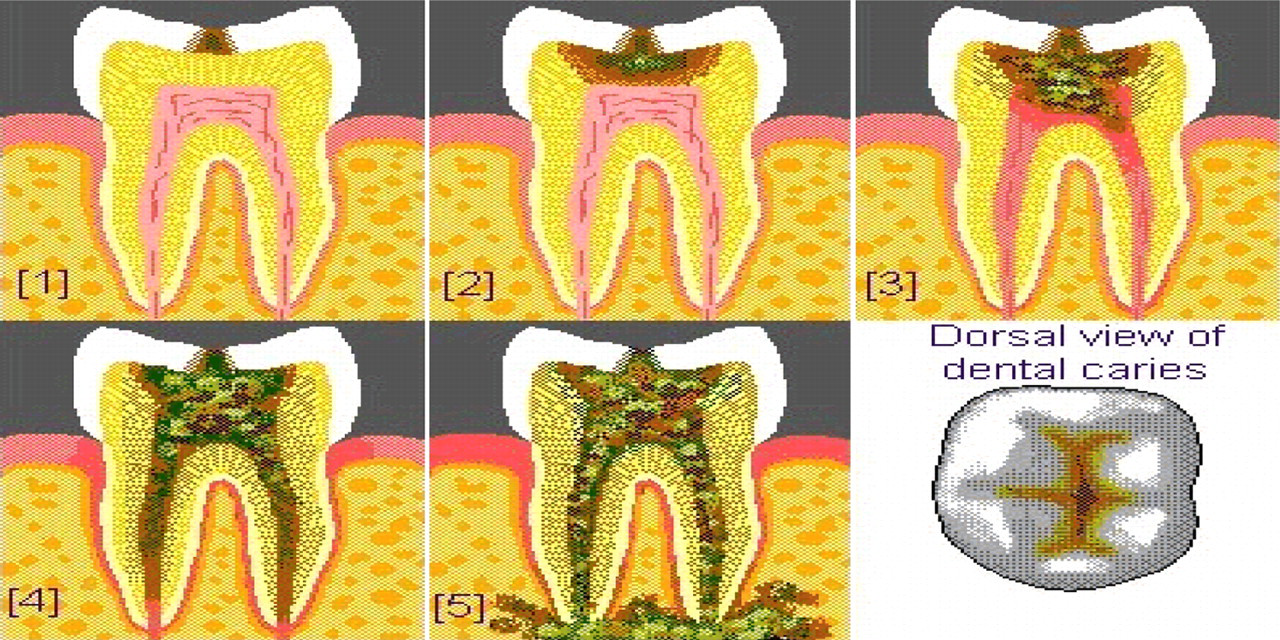
Dental decay
When treated early decay is limited to the enamel and superficial dentine layers of the tooth and the patient would not normally experience any adverse symptoms such as sensitivity to hot and cold food. If a filling is placed after a delay then the decay in the tooth can have spread deeper into the tooth getting closer to the sensitive pulp in the centre of the tooth. This means that the prognosis for the tooth might be adversely affected if the pulp is irreversibly damaged.
What it costs
The private cost of a straightforward filling would be between £110 and £220 depending on the size of the filling. This is based on an hourly rate of £220. Different practitioners charge different hourly rates and therefore the cost of placing a routine filling can vary from practice to practice. If tooth decay has spread and involves the pulp tissues then this can result in death of the pulp and the treatment required in order to save the tooth would be root canal therapy (RCT). The private cost of this varies between £300 and £700 a tooth. If carried out by a specialist endodontist then the cost of treating an anterior tooth would be approximately £500 and a posterior tooth would be in the region of £700.
Any tooth with a deep filling may ultimately require root canal therapy and this is due to the damage to the pulp tissues caused by the restoration. The closer the restoration is to the pulp the more likely it is that the pulp will eventually die and this is a process which can take many years. Therefore if a patient has untreated decay which might otherwise have been restored with a small shallow filling, but the decay is untreated and extends deep into the dentinal tissues, then it is reasonable to say that on the balance of probabilities RCT is likely to be needed in that tooth and that RCT would be a result of the original negligence.
Teeth which have been treated by RCT should be restored with a crown. The purpose of the crown is to avoid the tooth splitting which can result in unavoidable loss of the tooth. It also provides a coronal seal (a seal at the visible part of the tooth) for the root filling and this helps to ensure the success of the root filling in the long term by preventing bacteria gaining access into the root-filled canals and thus causing failure of the root canal therapy. Consequently any tooth which requires a root filling as a result of dental negligence should also be restored with a crown. The cost of this varies between £500 and £800 in private practice. Very broken down teeth could also need the provision of a cast post and core in order to support the crown and this carries an additional cost of approximately £400.
Future treatment costs
Root canal therapy
Root canal therapy does not usually need repeating if it is done well initially (Figure 2).
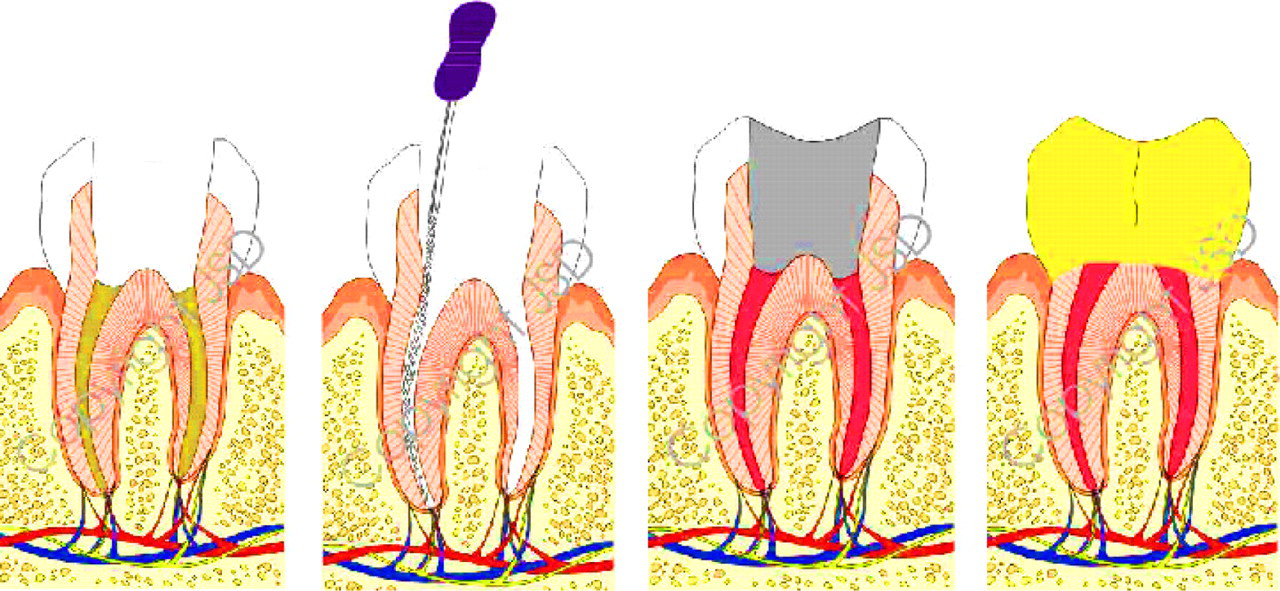
Root canal therapy
Crowns
Crowns generally need replacing approximately every 10 to 15 years. This is in order to maintain the marginal integrity of the crown, the aesthetics and due to general wear and tear (Figure 3).

A crown
To give a general idea, the cost of restoring a molar tooth with root canal therapy and a crown would cost in the region of £1500 and future replacement costs of the crown would cost in the region of £500 to £800 every 10 to 15 years.
Fillings
Fillings generally need replacing approximately every five to 10 years. At my practice the cost of replacing fillings would vary between £110 and £220.
Failure to detect and treat periodontal disease
Some members of the population are susceptible to developing periodontal disease (Figure 4). It is a disease affecting the tissues which support the teeth. A key feature of periodontal disease is bone loss around the teeth. If untreated this will lead to loosening and eventual loss of the teeth. Dentists should routinely monitor the level of bone around the teeth using probing and radiography. Failure to do this can result in progressive bone loss in susceptible patients. This can come as an extremely unpleasant shock when regular attendees find out that their regular dentist has failed to provide treatment of this disease .
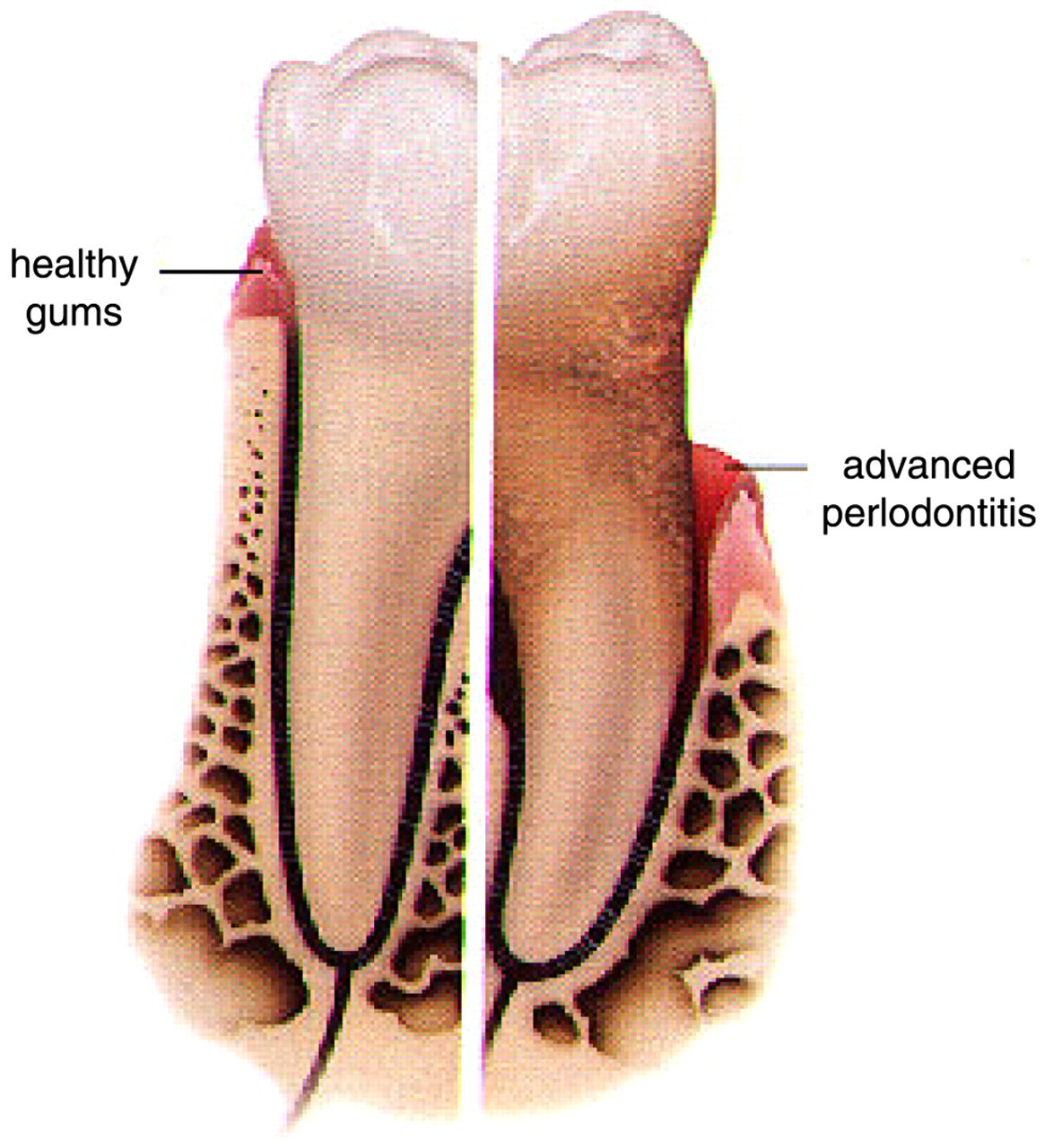
An image showing advanced periodontitis

Implants to replace missing teeth
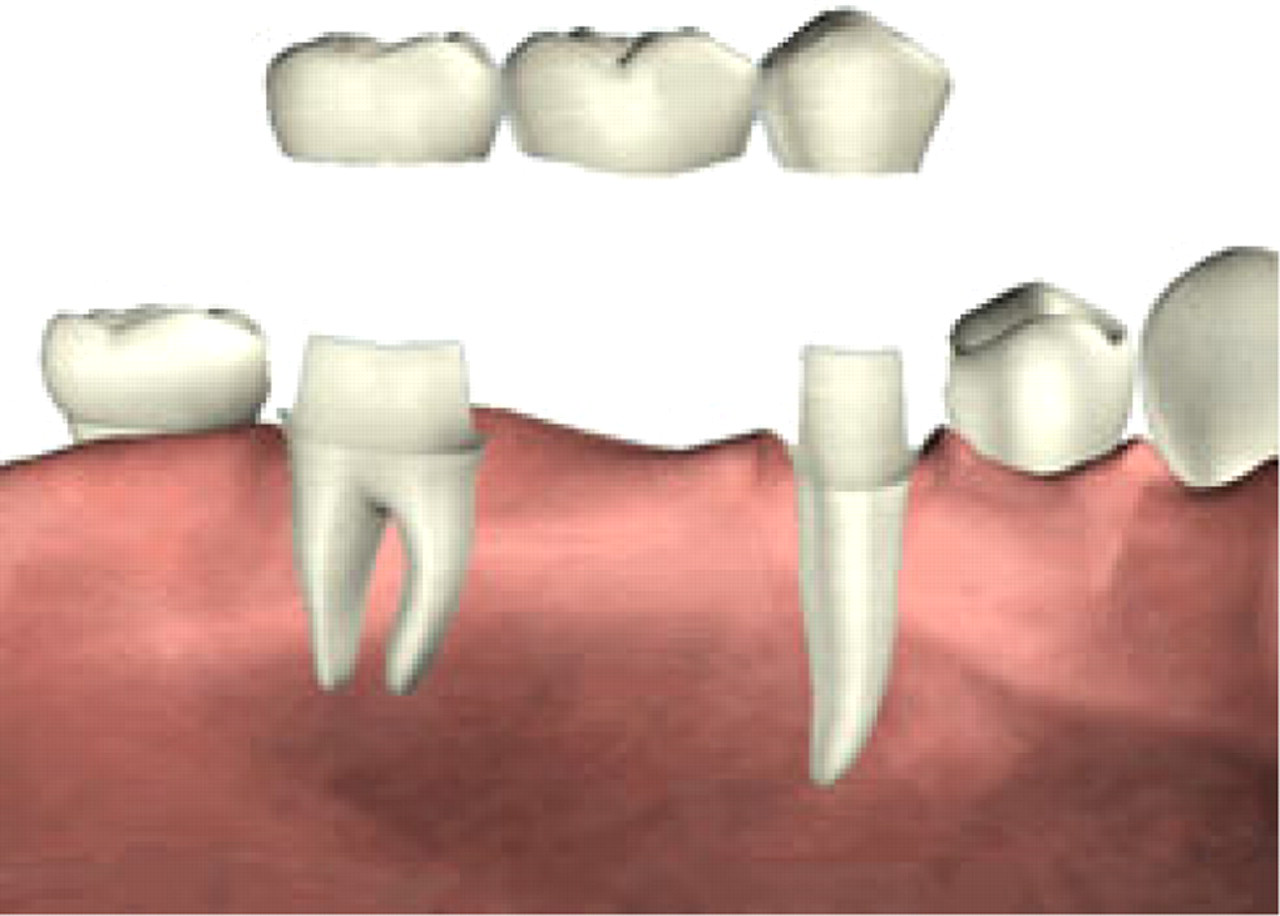
Replacing missing teeth with bridgework
What it costs
The spread of periodontal disease is controlled by thorough debridement of the root surfaces by root planning, scaling and polishing which is often carried out by dental hygienists. If periodontal disease is severe it can result in loss of the teeth and a settlement would ideally involve the placement of implants to replace the missing teeth. Implants can be inserted as single units, multiple units of bridgework or as a complete denture type fixture which is supported by a spread of implants. The cost of restoring the whole mouth with dental implants is in the region of £30,000–£40,000. It is quite unusual for a patient to lose all of their teeth as a result of untreated periodontal disease resulting from dental negligence. Most cases fall somewhere in between where some of the teeth are affected more than others. Some teeth may be lost and others saved but compromised by the bone loss. Bone loss makes long-term maintenance difficult and a reasonable settlement would include the cost of attending a specialist periodontist in order to achieve the best long-term prognosis for the remaining natural teeth.
A guide to the annual cost of providing such treatment would be approximately £360 per year in specialist fees and four sessions of hygienist therapy taking 30 minutes four times a year at £60 per session. This gives annual maintenance costs in the region of £600 per year for patients with periodontally involved teeth as a result of dental negligence. These are costs which would have been avoided if bone loss had not occurred. It could be argued that susceptible patients would need hygienist therapy two, three or even four times a year in order to maintain their periodontal health, however it is the deepening of the pockets and progressive bone loss which makes the condition more difficult to treat requiring specialist intervention. If serious bone loss does not occur in the first place then maintenance therapy can be carried out in general dental practice.
Disruption of the occlusion
The way in which the teeth naturally bite together is a careful balance between the tooth position and the oral musculature. Disturbance to the occlusion (bite) can result in failure of restorations or pain and discomfort in the region of the temporomandibular joint (jaw joint).
It is possible for poorly placed dental restorations to disturb the occlusal balance. This can allow movement and drifting of teeth which is difficult to correct. Sometimes the occlusion can be corrected simply by removing and replacing a faulty restoration or by adjusting the restoration in order to accommodate the bite. In extreme cases the effects on the occlusion, particularly if the defective restoration has present for a long time, can be very difficult to correct requiring specialist treatment from a restorative dentist.
What it costs
Private fees for consultant restorative dentists are in the region of approximately £300 an hour. Occlusal analysis would cost between £300 and £1000 including splint therapy. This helps to establish the correct biting position and then restorations would have to be replaced to the new position. The new restorations are costed out per unit. The cost could be between £700 and £800 per unit and if root canal therapy is required then the cost per tooth could be in the region of £1500. Multiplying this by the number of teeth present can result in costs as high as £30,000–£45,000 for a full occlusal rehabilitation.
Nerve damage
Nerve damage resulting from dental procedures can result in areas of altered sensation and loss of muscle tone. Nerve damage is usually temporary, any recovery taking place within the first six to 12 months following the injury. Altered sensation persisting beyond this time is generally considered to be permanent. Nerve damage can result in the following problems:
Facial disfigurement; Speech problems; Difficulties eating; Difficulties shaving; Difficulties applying make-up; Recognizing the temperature of food; Biting the numb tissues; Dribbling; Loss of confidence.
These can all be highly embarrassing and detrimental to a normal life.
Replacement of missing teeth with implants
Dental negligence will often result in loss of a tooth which could otherwise have been saved. These days the treatment of choice for replacing a lost tooth is often a dental implant (Figure 5). The cost of placing implants is between £3000 and £4500 per tooth. The treatment is only available privately and the actual cost depends on detailed assessment by an implantologist.
A temporary partial denture is often required to maintain aesthetics while the treatment is in progress. Lack of bone in the area which is to be restored with a dental implant can require bone grafting prior to implant placement. Implant placement is generally carried out under local anaesthesia, often with sedation. After a period of integration of the implant with the tissues a healing abutment is placed which protrudes through the gum tissues. After a further period of healing impressions can then be taken for construction of the permanent implant fixture. A temporary implant crown is placed while the final implant crown is prepared at the laboratory. The final implant crown is then fitted.
Future costs
There are ongoing fees for annual maintenance and hygienist therapy is also required. Implant crowns generally require replacement approximately every 15 years.
Implants have only been in common use for about 20 years, therefore the long-term prognosis of dental implants is not fully known. Implantology is a rapidly progressing area of dental practice. There is a failure rate for implants of approximately 2% which increases to around 11% in patients who are smokers, therefore many surgeons are reluctant to place implants in dental patients who are smokers due to the increased risk of failure which is due to the reduced healing capacity in this group.
After the initial £3000 to £4500 cost of placing a dental implant the ongoing costs are:
Annual maintenance – approximately £120 per year; Hygienist therapy costing £50 to £60 per session required twice a year; Replacement of implant supported crowns approximately every 15 years at a cost of between £700 and £800 per replacement.
Replacement of missing teeth with bridgework
Missing teeth can also be replaced by bridgework which is supported by the teeth adjacent to a missing tooth (Figure 6). The cost of bridgework is calculated per unit. This means that a bridge replacing one missing tooth, supported by two teeth either side, would consist of three units. The cost per unit is in the region of £700 to £800.
Complications
Placement of bridgework can be detrimental to the retaining teeth. Preparing the teeth for bridgework can generate heat within the tooth which can ultimately result in loss of vitality (death) of that tooth. This means that the supporting tooth may need root canal therapy. The cost of root canal therapy has already been discussed. Root canal therapy can never be guaranteed to be successful due to the difficulties in carrying out this often complex form of treatment. Root-filled teeth are sometimes unsuitable as bridge retainers due to weakness of the teeth following root canal therapy and also due to loss of tooth substance. Therefore if a missing tooth is replaced with bridgework then ultimately the supporting teeth may also be lost.
Bridgework will need replacing approximately every 15 years in order to maintain the aesthetics and function of the bridgework. The retaining teeth may ultimately become unrestorable.
Replacement of missing teeth with dentures
The simplest way of replacing missing teeth is with a removable prosthesis (denture). These are either acrylic or chrome cobalt. Dentures require replacement approximately every five years. The cost of acrylic dentures is between £200 and £600 and for chrome dentures the cost is between £500 and £800.
Children
Trauma
Trauma to immature teeth can present a difficult restorative scenario. The roots of teeth continue to develop for three years after the crown of the tooth is visible in the mouth. This means that children may have immature teeth which have sustained trauma. This particularly applies to the upper incisor teeth. Root canal therapy of such traumatized teeth may not immediately be possible. Such teeth may require extra supervision of the closure of the developing apex (tip) of the damaged tooth. This is undertaken by placing calcium hydroxide dressings into the immature root canal and taking radiographs every three months to observe continued closure of the apex of the tooth. This allows placement of a root filling with a better prognosis than one placed in a tooth which has an open apex. Therefore root canal therapy of an immature tooth may incur additional specialist costs.
Orthodontic correction
Long-term treatment options can therefore be different in children than in adults. For a young patient who has lost a tooth or teeth through dental negligence or personal injury, rather than automatically seeking to replace the missing teeth with implants orthodontic movement of the other teeth might provide a more suitable long-term option. This needs to be balanced against the orthodontic needs of the child which were required in any case. An existing treatment plan could be modified in order to improve a situation caused by dental negligence. This particularly applies if the wrong tooth is extracted.
If a course of orthodontic treatment is required in order to correct the effects of dental negligence, the cost of providing this orthodontic treatment privately would be in the region of £3000 to £4000 for upper and lower fixed appliances. This treatment generally takes up to two years and also requires a period of retention usually in the region of six months. Orthodontic treatment also requires adjustment of the appliance approximately every four to six weeks for the duration of the treatment.
Implants in children
In adults the treatment of choice for replacing missing teeth is usually placement of a dental implant. In children although this may be desirable it is not usually possible under the age of 17 years due to growth. If a child loses a tooth before the age of 17 years then some kind of temporary restoration will be needed in the meantime and this needs to be built into the costings. If a child loses a tooth then a temporary restoration, usually a denture or an adhesive bridge, would be required for several years prior to implant placement. This means that bone from where the tooth has been lost is likely to resorb during the interim and bone grafting is likely to be required. This makes the placement of implants more complex and also more costly. The cost of grafting needs to be considered.
Future treatment cost estimates should also include the cost of replacement implant crowns periodically in order to allow for maintaining the aesthetics. The long-term prognosis for implants is not fully known because implants have only been around for about 20 years. Therefore when placing an implant in a young person the long-term treatment needs are not fully known and this, perhaps, needs to be considered in terms of provisional damages.
Examples
Example One
Consider the scenario where a 9-year-old child loses an upper incisor due to intubation for general anaesthesia. Future dental treatment is likely to involve the following:
Treatment aimed at preserving the tooth as long as possible for example if an attempt is made to re-implant the tooth as an interim measure; Extraction of the tooth and provision of an immediate partial denture; After healing placement of an adhesive bridge supported by an adjacent tooth. Bone grafting; Implant placement; Implant crown placement; Annual maintenance of the implant; Replacement of the implant crown at 10–15 year intervals; Due to the life expectancy of a young person and the uncertain longevity of implants, replacement of the implant may also need to be considered after say 25 or 30 years?
When the child reaches maturity an implant can be considered. This would involve:
Example Two
Now consider the scenario where root canal therapy is required due to negligence. Future treatment is likely to include the following:
Any root-filled tooth should be restored with a full coverage restoration such as a crown or onlay to maintain the seal of the root filling and to prevent fracture of the tooth. Therefore the cost of a crown or similar should be included; Crowns require replacement every 10–15 years; Anterior crowns are likely to need the additional support of a cast post and core depending on how much tooth tissue remains at each crown replacement; Post crowned teeth can fracture leading to loss of the tooth and this would mean replacement with an implant, a bridge or a denture.
Conclusion
The cost of putting right dental injuries on a long-term basis can be higher than first thought. There are very few dental restorations which can be placed and then forgotten about without requiring any future replacement or maintenance. People who have been injured as a result of dental negligence are entitled to access the best treatment available to them and this will usually mean private treatment or treatment carried out by specialist practitioners in private practice. The fees charged by these practitioners can be high and settlement costs need to reflect the fees which people will be required to pay in private dental practice.