




Abstract

Over 10 years ago, a history of rectal gonorrhoea (R-GC) was identified as independent risk factor for HIV seroconversion after adjustment for sexual behaviour and other concurrent infections. 1 More recently, Bernstein et al have demonstrated a higher risk of future HIV acquisition in patients with bacterial rectal infections when compared with controls – a risk which increases with each additional infection episode. 2 This finding suggests that a single episode of R-GC may identify men who have sex with men (MSM) who are at high ongoing risk of acquiring HIV. However, it is our experience that R-GC often managed as a brief clinical episode, in much the same way as gonococcal infection at other orogenital sites, without heightened safer-sex education or enhanced behavioural interventions. We sought to review data from this London clinic to identify what proportion of MSM with R-GC later acquired HIV infection.
All R-GC diagnoses between 1 May 2005 and 30 April 2006 were retrospectively identified using laboratory databases and case-notes were reviewed. HIV status at baseline was documented (where known). All MSM of HIV-negative or unknown status at baseline were included in longitudinal analysis if they had re-attended for subsequent HIV testing. Where multiple results were available, the follow-up period was the time to latest HIV-negative test or first positive test.
One hundred and sixty-one MSM had 173 episodes of R-GC during the one-year study period. Ten patients had more than one episode. At the time of the R-GC diagnosis, 78 (48.4%) individuals were confirmed as HIV-1 antibody negative, 70 (43.4%) were already known to be HIV-positive and 13 (8.1%) were of unknown HIV status. Of the 78 HIV-negative cases at baseline, one case seroconverted a month later, and eight tested HIV-positive between 8 and 24 months later (Figure 1). The remainder tested negative. Of the 13 cases with unknown HIV status at baseline, three cases later tested positive (although the duration of these infections is uncertain).
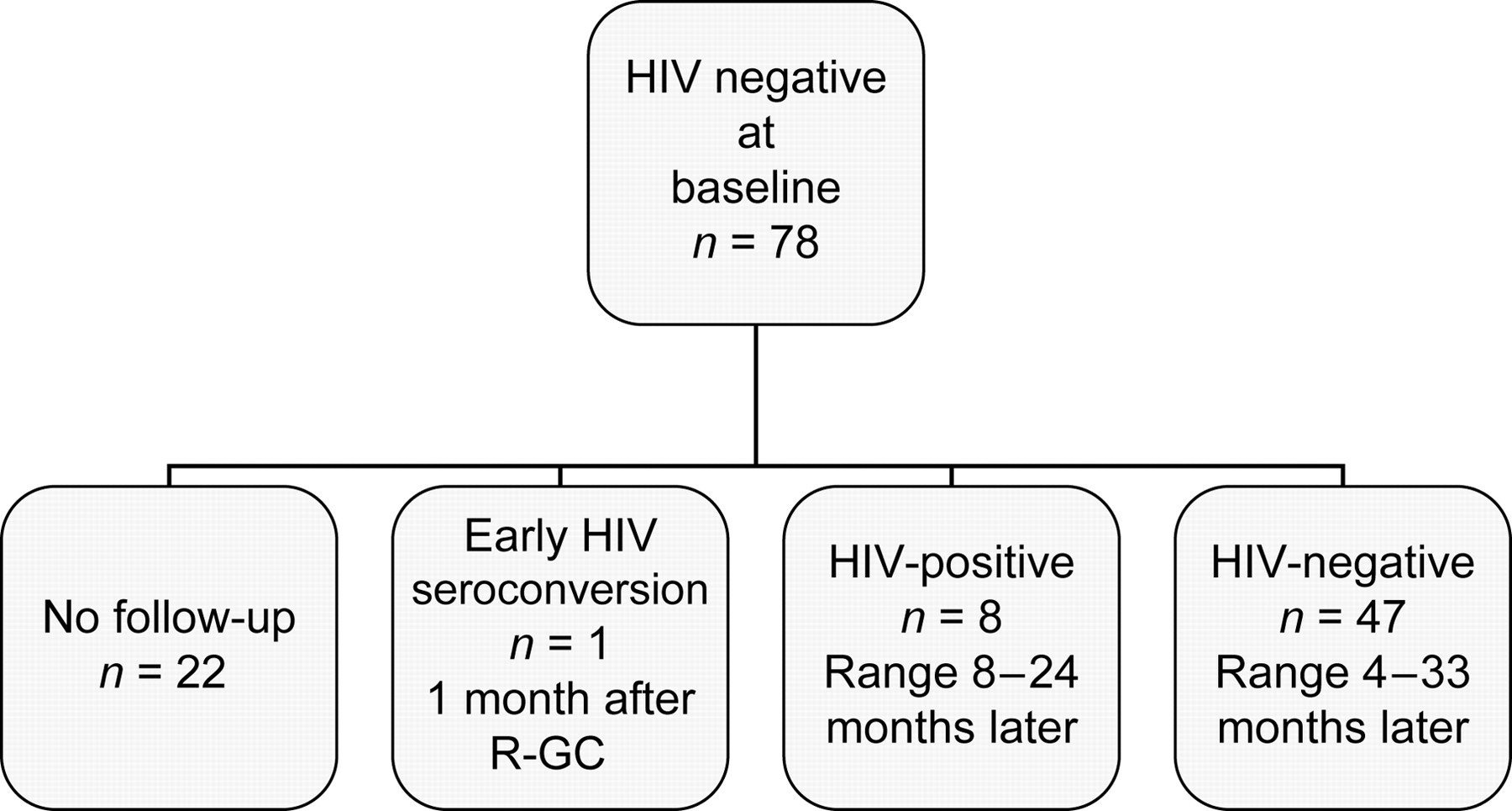
Confirmed new HIV diagnoses in men who have sex with men after episode of rectal gonorrhoea
At this centre, eight of 55 (14.5%) of HIV-negative MSM diagnosed with an episode of R-GC and followed-up at this centre, acquired HIV infection more than three months later (and within two years of episode). Confirmed new HIV infections were seen at a rate of 9.26/100 patient-years. In addition, four other HIV diagnoses were made during the follow-up period (one seroconversion shortly after R-GC and three diagnoses of unknown duration).
In summary, high rates of new HIV diagnoses are seen in MSM after episodes of R-GC and therefore clinicians should consider offering enhanced safer sex health promotion interventions to this patient group, using techniques such as motivational interviewing to encourage effective condom use.