




Abstract
A 20-year-old woman attended a genitourinary clinic with a retained vaginal Mooncup that she had inserted the night before. A Mooncup is one type of menstrual cup. On speculum examination the device was visualized high in the vagina and the cervix appeared firmly lodged within it. The physician experienced difficulty in retrieving the cup despite following product instructions. This case highlights a new adverse event with an increasingly used sanitation product. It is important that clinicians are familiar with the cup, its removal process and are able to counsel patients with retained devices on future correct placement.
CASE
A 20-year old woman attended our genitourinary clinic with a retained Mooncup that she had inserted into the vagina the night before. The patient had first used the cup successfully in her previous menstrual cycle. On speculum examination the device was visualized high in the vagina and the cervix appeared firmly lodged within it. Product removal usually requires digital insertion and minimal applied pressure along the cup's lateral margin to partly fold the device in on itself. This releases a suction pressure, thereby allowing withdrawal of the device. The physician followed these instructions but experienced resistance when releasing suction pressure. Only by firmly digitally applying pressure to the entire lateral margin of the cup, while manipulating the cup's distal stem with forceps, could the pressure be released and the device retrieved. The procedure was uncomfortable for the patient and she elected not to use this form of sanitary product again. Moderate cervical inflammation was observed after the retrieval. A full sexual health screen was negative.
DISCUSSION
The Mooncup is a re-usable, soft, silicone, two-inch long, stemmed, vaginal device that collects menstrual blood (Figure 1). The cup is folded and inserted into the vagina where it creates a light seal with the vaginal walls to maintain its position and prevent leakage and odour. The device needs emptying, rinsing and reinserting every four to eight hours until menses is complete. Its reusability secures its place in the market as a cheaper and more environmentally-friendly alternative to towels/tampons. Additional reputed benefits include: collects up to three times as much blood as tampons;
1
does not dry the vaginal walls like absorbent tampons do, so insertion/removal during times of light flow is less uncomfortable; no reports of toxic shock syndrome. The difficulty experienced by the patient and physician in retrieving the Mooncup was most likely because the cervix was obstructing the cup. The cervical inflammation observed, perhaps from repeated removal attempts, may have further increased the suction pressure.
A Mooncup, one of several types of menstrual cup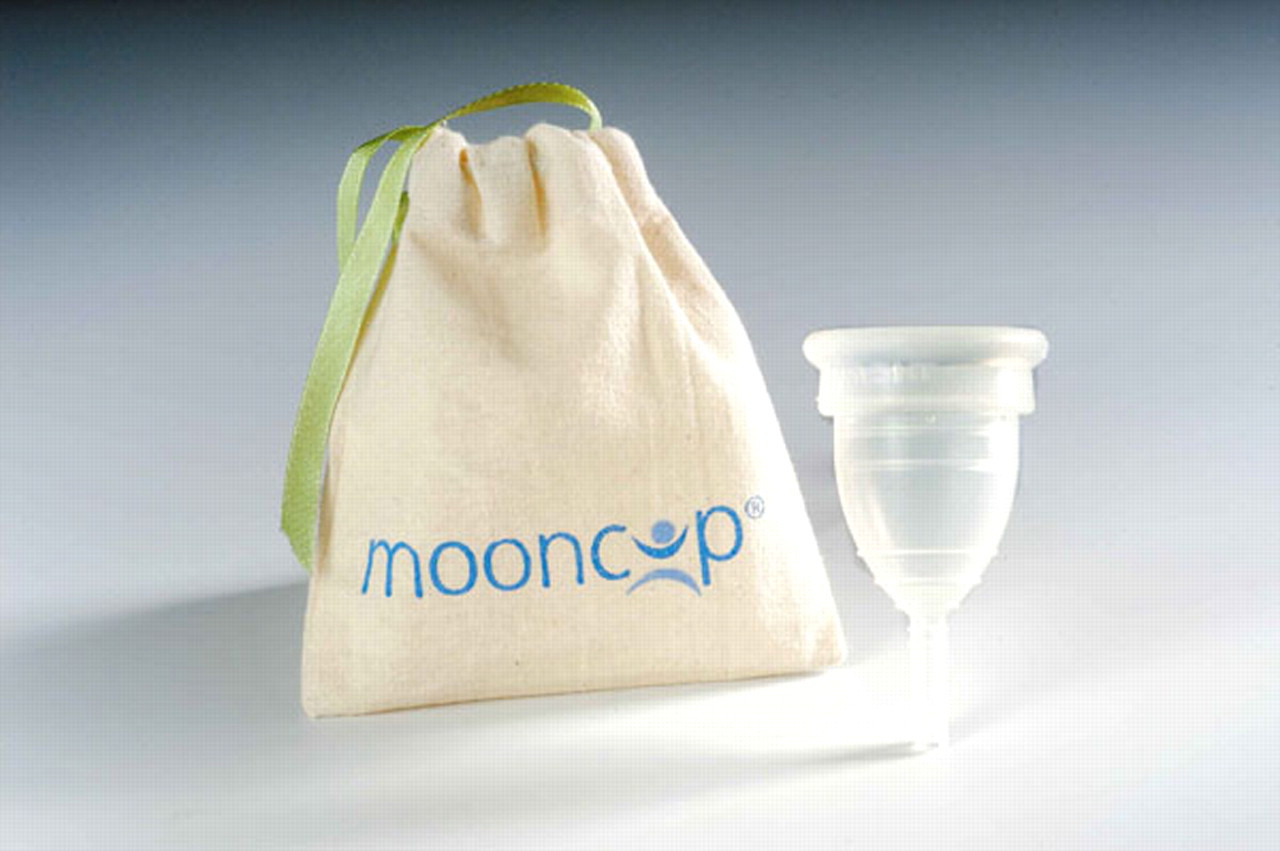
Retained menstrual cups have not been reported in the literature. This seems surprising because unlike tampons or diaphragms that are inserted high in the vagina close to the cervix, a menstrual cup should be sited lower down but high enough so it cannot be felt and is not visible/palpable externally (Figure 2). New or inexperienced users or users experienced in inserting tampons/diaphragms may inadvertently place the Mooncup too high. Such low placement facilitates collection of blood, minimizes leakage and reduces the risk of the cervix becoming lodged inside.
Correct positioning of a menstrual cup versus a tampon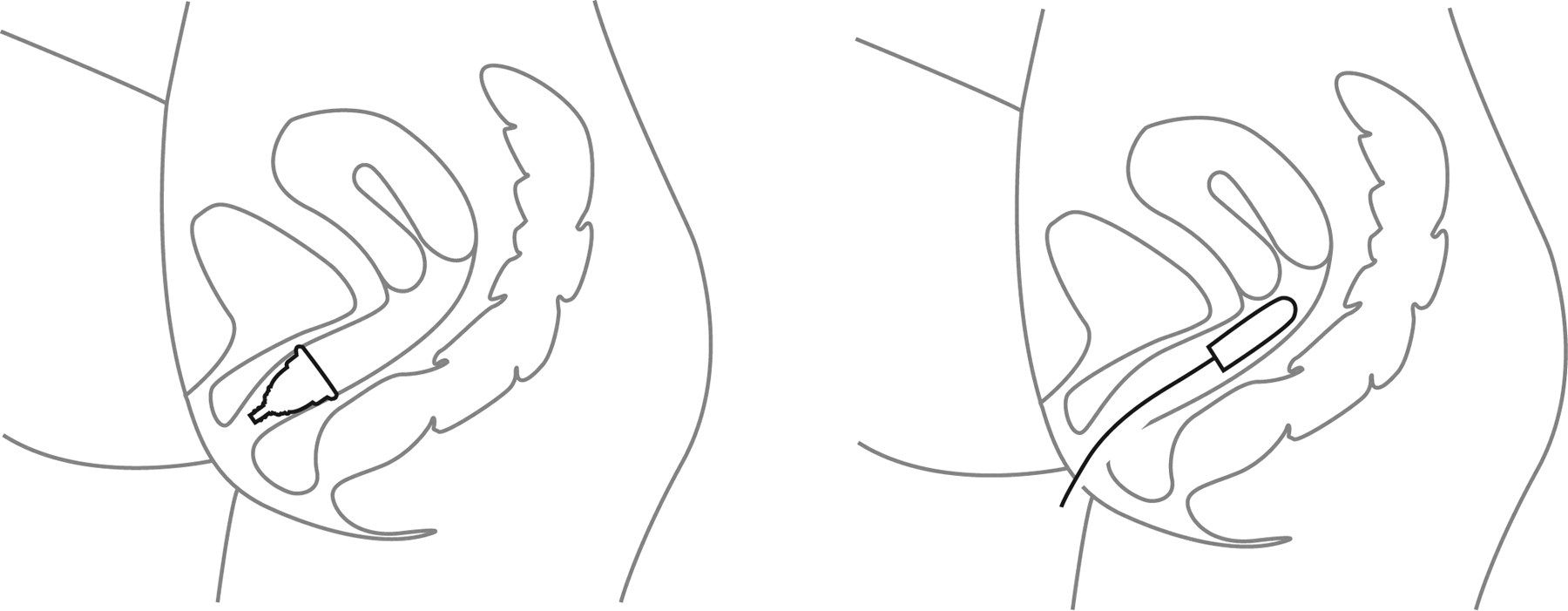
Furthermore, the product contains a stem, designed to balance the cup. The stem is long to account for varying vaginal canal lengths and needs partial/complete trimming to fit most women. Users who fail to trim the stem adequately may also be at risk of placing the device too high.
This case highlights a new adverse event with an increasingly used sanitation product and it is important that clinicians are familiar with the cup, its removal process and can counsel patients with retained devices on future correct placement.