




Abstract
Care pathways are excellent tools for quality management in health care concerning the standardization of care processes, as they promote organized and efficient patient care established on evidence-based practice.
The implementation of a care pathway project at any health-care setting means a change of the organizational culture. E-pathways (electronic pathways) are strategic resources in order to get the successful implementation of a care pathway project.
The concept of e-pathway is recent enough and there are some different experiences worldwide. In 2000, the first electronic pathways were implemented at Hospital de Mataró, in Barcelona, Spain. The benefits of using e-pathways (Eira Healthcare Server) are very clear at Hospital de Mataró: immediate records with no transcriptions, information in the palm of your hand, no prints, and rigour and reliability. Another recent and interesting experience is the development and introduction of e-pathways at Hospital General de l'Hospitalet, in Barcelona, Spain, using an SAP integrated health-care solution.
The strategy planning of hospital managers should take into account the need and priority of any pathway project linked to e-pathways. Some experiences in Spain have proven that we do really need electronic support for pathways. Electronic pathways are a basic support and should not be postponed when implementing care pathways.
Introduction
Care pathways are excellent tools for the quality management in health care concerning the standardization of care processes, as they promote organized and efficient patient care based on evidence-based practice.
The implementation of a care pathway project at any health-care setting means a change of the organizational culture. The key points for the success of such a project are the following: vision, skill, incentives, resources and action plan. When all of them are ensured, you are very likely to get the key for changing the organizational culture (Figure 1). If the hospital managers do not provide the resources needed for such a project, this could result in frustration for health-care professionals. Moreover, e-pathways (electronic pathways) are strategic resources in order to get the successful implementation of a care pathway project.

Key points for success
The concept of e-pathways
In the 20 last years, most settings have implemented care pathway projects using the conventional paper record documentation. The most common pathway records are as follows:
The validation sheet (the checklist with all the activities for a care process; The variance sheet (where the deviations are recorded, and an action plan in front of the variance is detailed); The progress notes (usually common for all health-care professionals and avoiding duplication of information from the validation sheet).
There are some difficulties of working with pathways in paper format. A difficulty is the complexity of the storage of all the information concerning the several pathways running at a hospital in a database, as well as how to manage all this information for periodic follow-ups of outcomes and variances. Usually the follow-up of care pathways is carried out manually at the archive, spending many hours browsing in the paper medical records. A further inconvenience is the need to keep pathways alive, with the updates from clinical evidence or changes in the paper format. The modification of the record documents is not easy working on paper. Another pitfall is the fact that with printed papers you cannot personalize every pathway in accordance with the specific conditions of some patients (diabetes and other chronic diseases, special requirements).
When an IT application is used for the recording and management of care pathways, then pathways become electronic pathways. An e-pathway is a care pathway in electronic format. Clinicians record these new pathway documents using personal computers available at the ward as well as mobile devices (PDA, Tablet PC, etc.), which enable them to register the information at patient's bedside.
The concept of e-pathway is recent enough and there are some different experiences worldwide. When e-pathways become more commonly used, the usual terms for pathway files will be e-matrix, e-validation sheet, e-variance sheet, e-follow-up report, etc. One of the main points of working with pathways in electronic format is the follow-up or evaluation. An advantage of this electronic format is the coding of standards and variances, as well as the systematization of both the data collection (stressing the follow-up of variances) and the information about data. It means an easier follow-up compared with the paper format, dedicating less time and analysing all the data from all pathways in established periods of time (daily, weekly, monthly, quarterly, yearly, etc.) without accessing the archive room with the medical histories. Moreover, the modification of the electronic record documents is really easier and quicker than using papers, so the update of such documents is nearly immediate.
Anne-Marie Yazbeck, a member of the European Pathway Association board, conducted a survey in 2007 about the situation of e-pathways in Europe.
1
One of the principal outcomes was the ranking of the benefits of developing e-pathways. The most valued benefits were as follows:
Improves data collection; Makes it more practical to follow complications; Improves efficiency of the work of the multidisciplinary team; Quicker access to all involved in the care of the patient on the pathway; Makes it easier to follow indicators.
e-Pathways: the Spanish experience
The first project of care pathways in Spain started in 1997 at Hospital de Mataró. In 1999 the quality plan of INSALUD (the ancient National Health Institute of the Spanish Health Ministry) fostered the development of care pathways at this network hospitals. In 2000 the first electronic pathways were implemented at Hospital de Mataró. We should take into account that nowadays 97% of general practitioners at the Spanish primary care centres have access to electronic medical records, that is to say, the e-Health at primary care is two steps ahead compared with hospital care.
The Hospital de Mataró, a general hospital in the area of Barcelona with 300 beds and covering a population of 250,000 people, has designed and implemented 88 care pathways for different diagnosis using a well-structured methodology. 2 The goal of their care pathway project was to minimize unnecessary variability and provide systematic care. In 1997, 7.5% of patients were cared using pathways. Ten years after the start of pathways, in 2007 the achieved percentage was 59%, an outstanding figure that corresponds to a real change of organizational culture.
The objectives of computerizing care pathways were to integrate computerized medical prescription, medication administration and other nursing tasks related to vigilance and control, as well as to provide a software capable of aiding in giving a quality care, while setting control mechanisms.
During the first steps in computerizing pathways, three clear premises were established for this IT application: patient-centred, shared with all professionals and an owner design. The features were also reported: dynamic and intuitive, visual management, quick access to information and full integration in realtime. Another relevant feature was the connectivity and confidentiality, with access points at every ward, wireless point access, mobile devices, applications ready to use in any computer (so anywhere), online (in realtime) and with information encrypted.
The development of such a software for e-pathways required a multidisciplinary teamwork with IT staff, physicians, nurses and pharmacists. The different stages of the project are described in Table 1.
Stages of the project at Hospital de Mataró
The benefits of using e-pathways are very clear at Hospital de Mataró: immediate records with no transcriptions, information in the palm of your hand, no prints, and rigour and reliability, provided any change is kept reflected in the system. Another benefit is the accessibility: the quick retrieval of data, anywhere and anytime. And one of the main benefits of computerized pathways is the powerful analysis of data, outcomes and variances, which supports and eases the multidisciplinary work.
Nevertheless, some disadvantages of using e-pathways are described regarding the staff: everything was possible on paper, the lack of computing skills, the impatience, the ‘waste of time’ feeling and the professional insecurity. Other pitfalls are the economic cost and the resistance of health-care professionals to any change in the daily work.
Eira Healthcare Server is the name of the software developed at Hospital de Mataró by an IT company (XMi Consultoria i Desenvolupament Informàtic, Barcelona, Spain,
In the next screenshots (Figures 2–7), you can follow a summary of the process used with this application, from the assignation of a care pathway to the follow-up report.
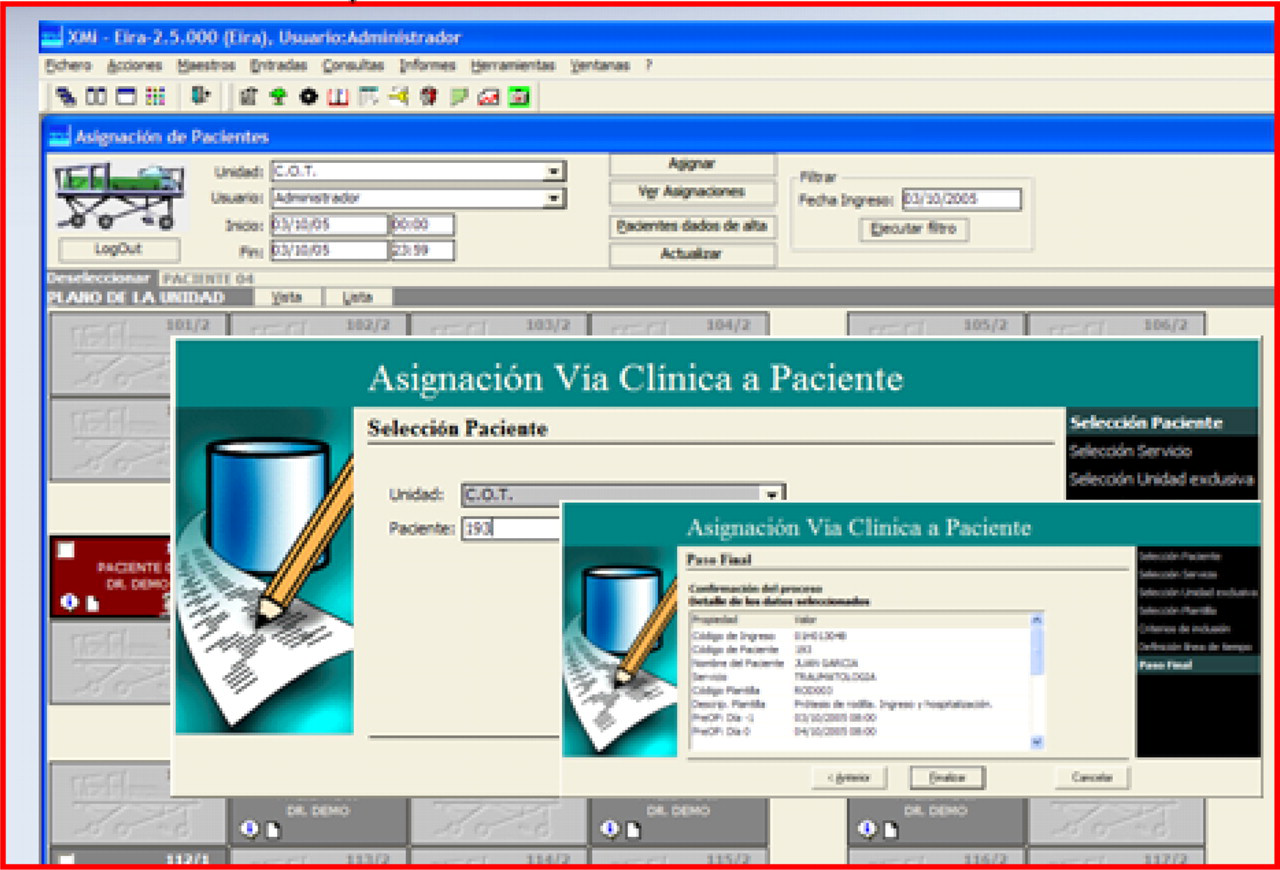
Assignation of a care pathway/e-pathways (Eira Healthcare Server). Note: Please see online article for colour version of figures
In Figure 2 the screenshot shows how a care pathway is assigned to a specific patient, after the selection of the patient in the ward map by the nurse and the choice of the specific care pathway among the different medical departments and the different pathways existing at each department. In this case the pathway assigned is total knee replacement.
The electronic validation sheet is shown in Figure 3, where the different care activities for the day 0 included in the total knee replacement pathway (including preoperative – PreOP and operative – OP tasks) must be validated with a click in each box. An automatic validation for all the activities is a possibility that may be activated, decreasing the time dedicated to this validation task.
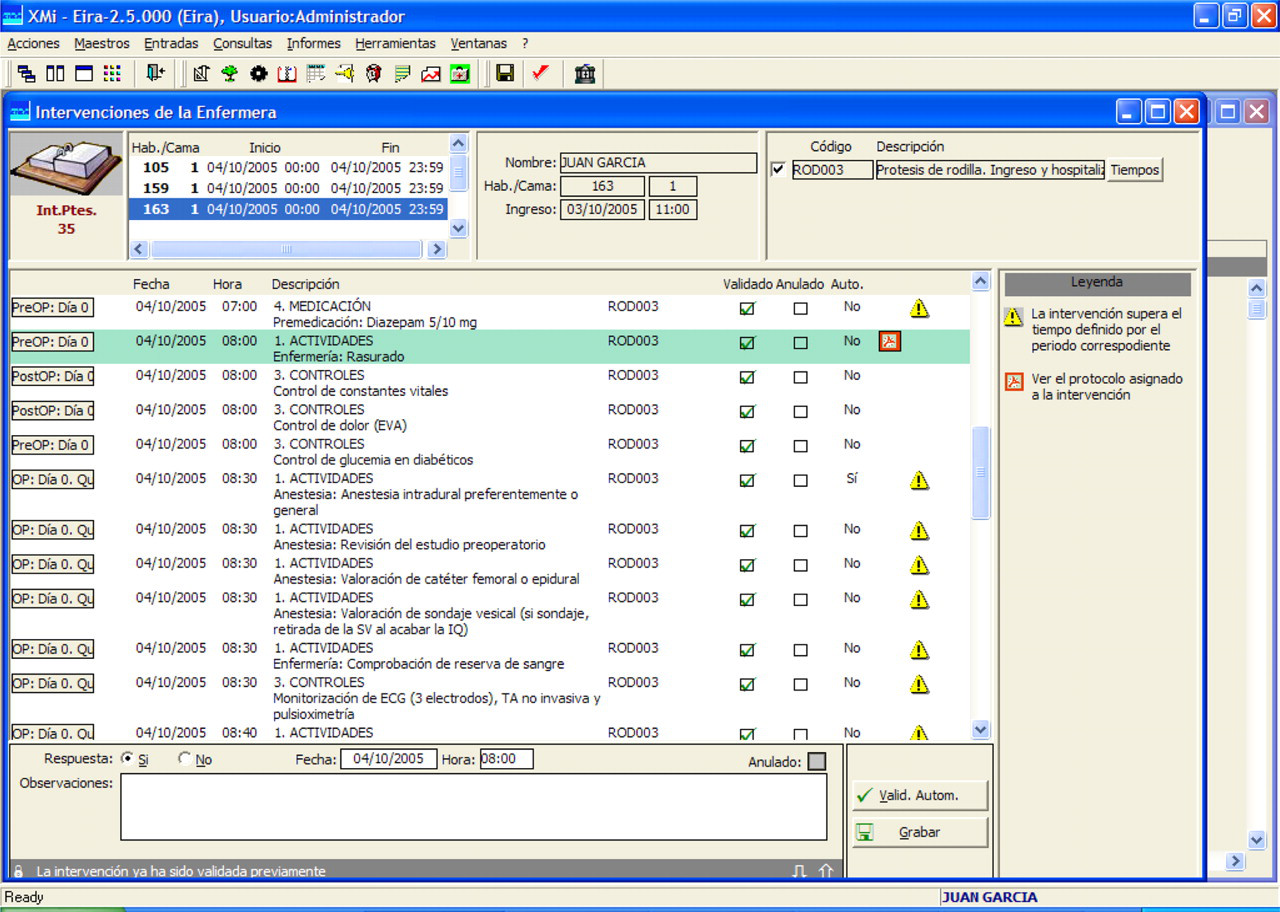
e-validation sheet from e-pathways (Eira Healthcare Server). Note: Please see online article for colour version of figures
Medical and nursing protocols in pdf format may be attached to each intervention (Figure 4), increasing the standardization of this care process. The nursing protocol for razoring in total knee replacement is displayed in this figure.
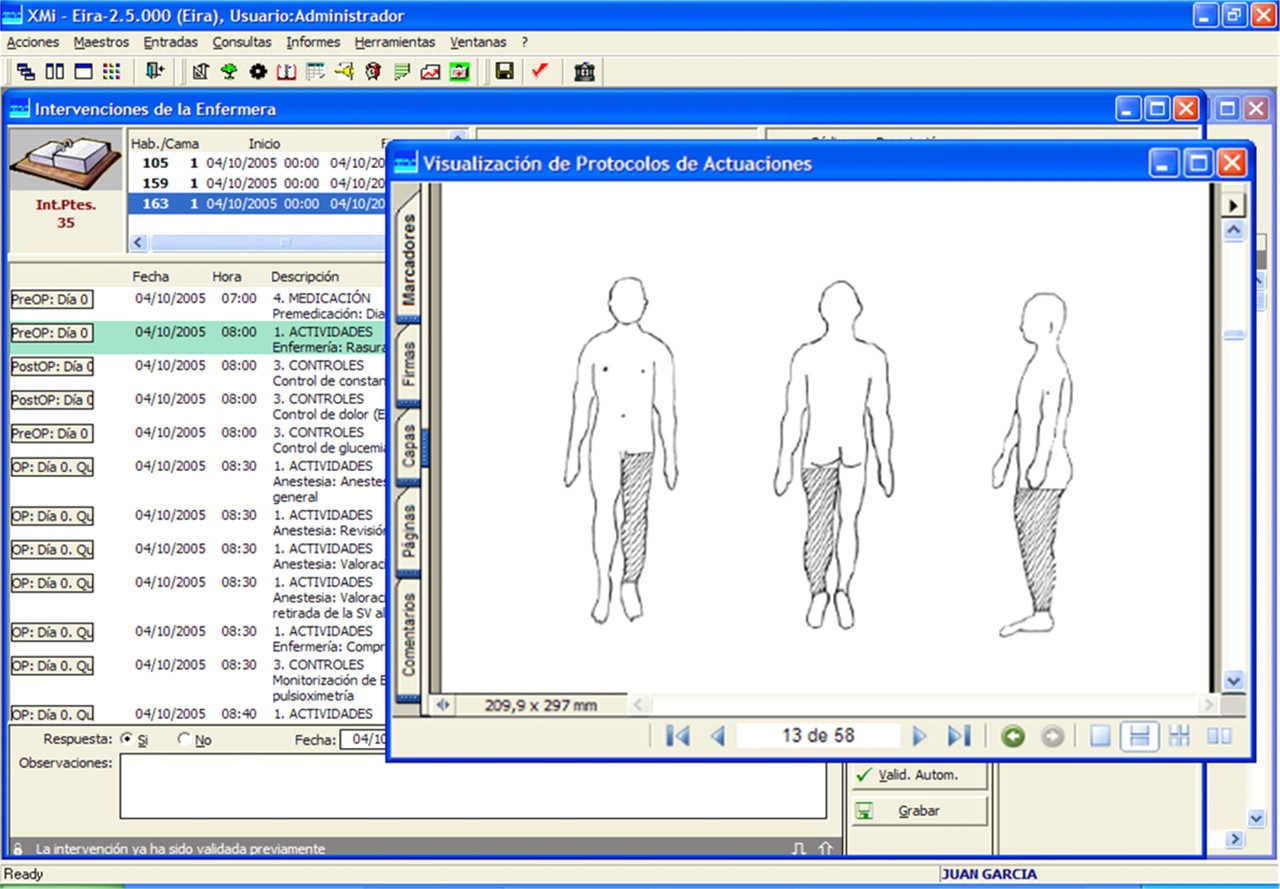
e-validation sheet with a protocol file (pdf)/e-pathways (Eira Healthcare Server). Note: Please see online article for colour version of figures
The recording of a variance in electronic format is displayed in Figure 5. The nursing intervention ‘withdrawal of the bladder drainage’ is postponed from day 1 to day 2. The reason is a bladder globus. This postponed intervention, which has been crossed out in the planned day, appears now in blue and cursive in order to be distinguished from the planned activities for that day.
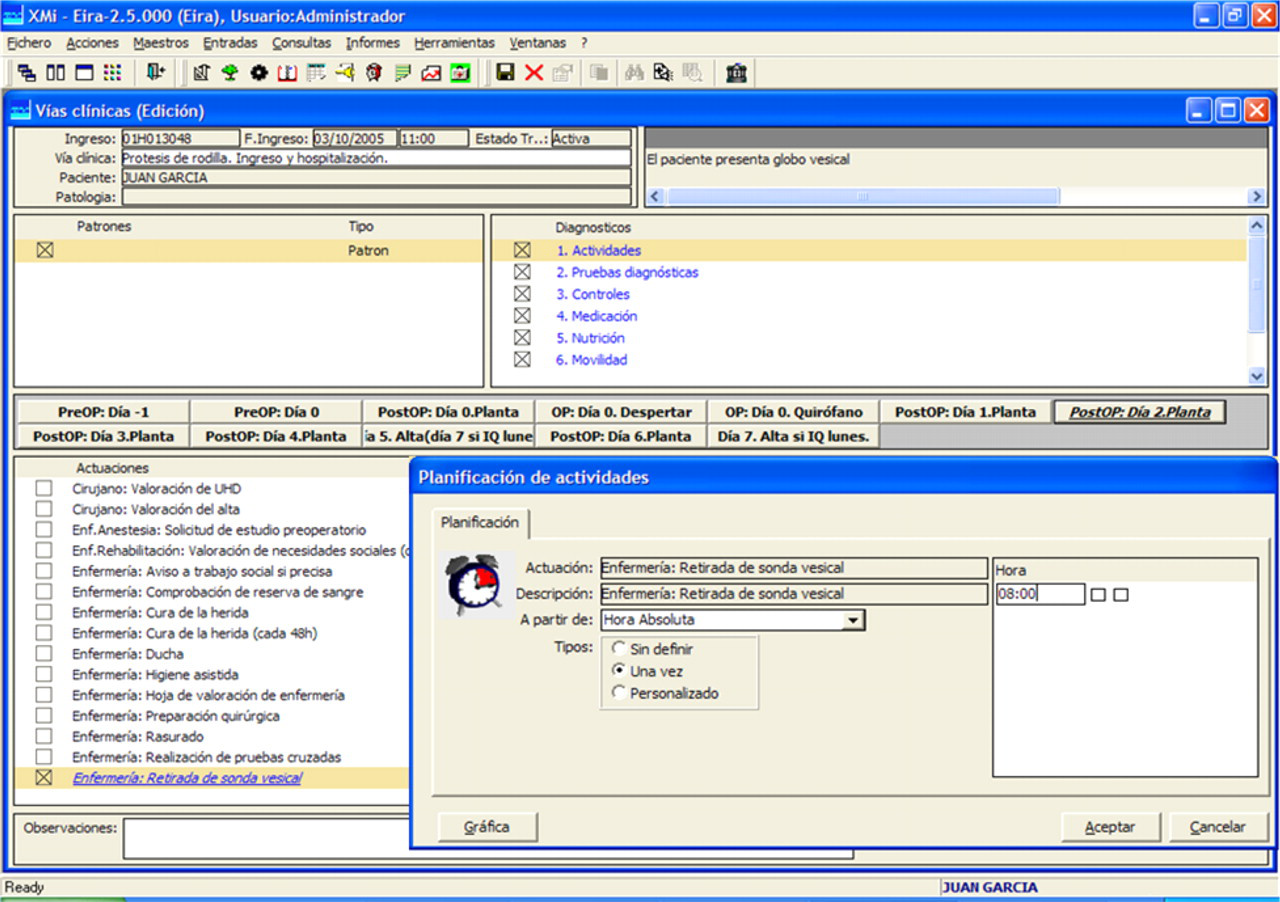
Electronic variance sheet from e-pathways (Eira Healthcare Server). Note: Please see online article for colour version of figures
The electronic format of the matrix of the total hip replacement pathway (Figure 6) shows some of the interventions for postoperative days 4–6. A variance (a deviation from the pathway) is also reflected on this document: the withdrawal of the bladder drainage (in blue and cursive) has been postponed to day 4.
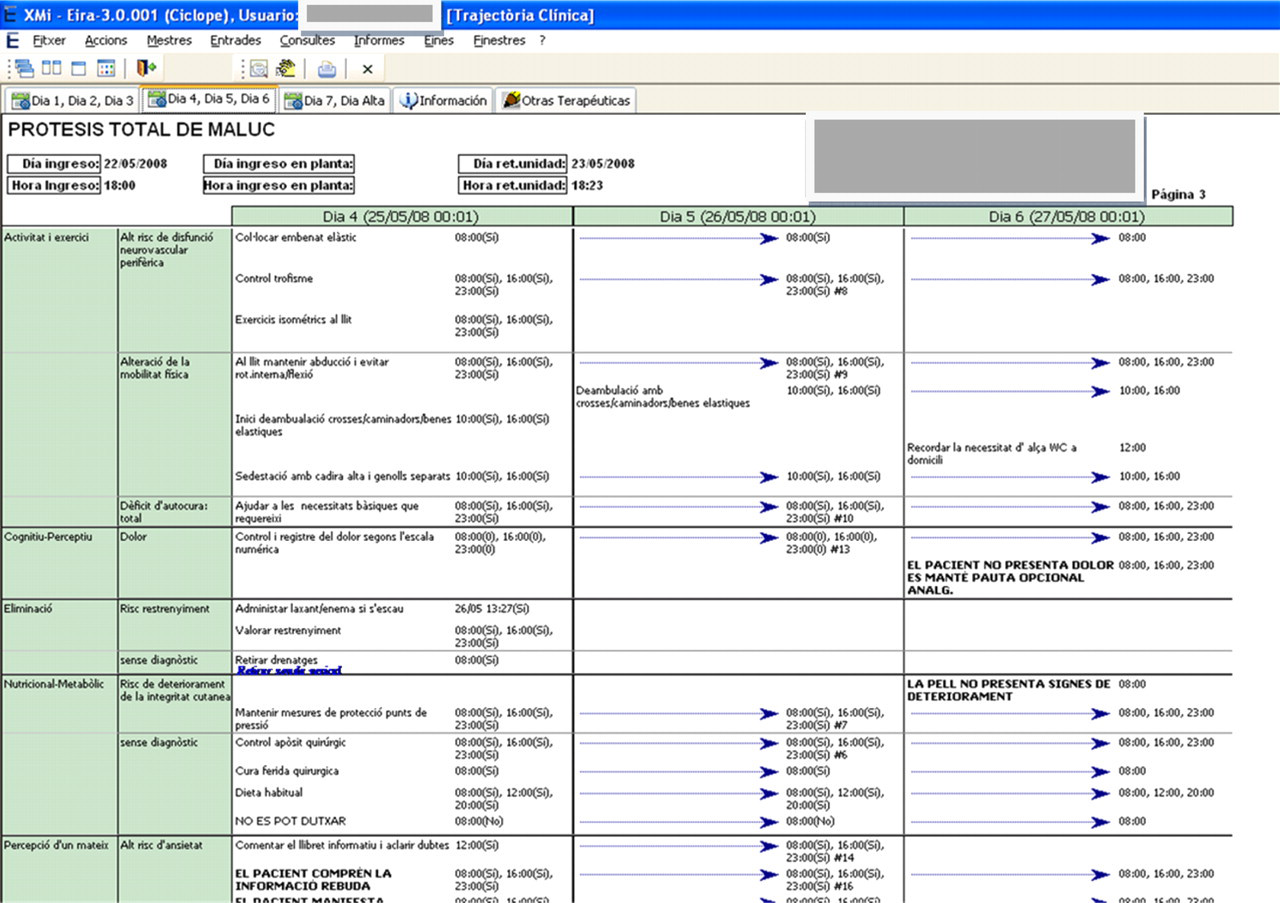
e-Matrix with a variance reflected on the document/from e-pathways at Hospital de Mataró (Eira Healthcare Server). Note: Please see online article for colour version of figures
And finally let us see in Figure 7 how a follow-up report is performed using an electronic pathway. The analysis is carried out by combining different items: wards, care pathways, departments, variances, professionals, etc.
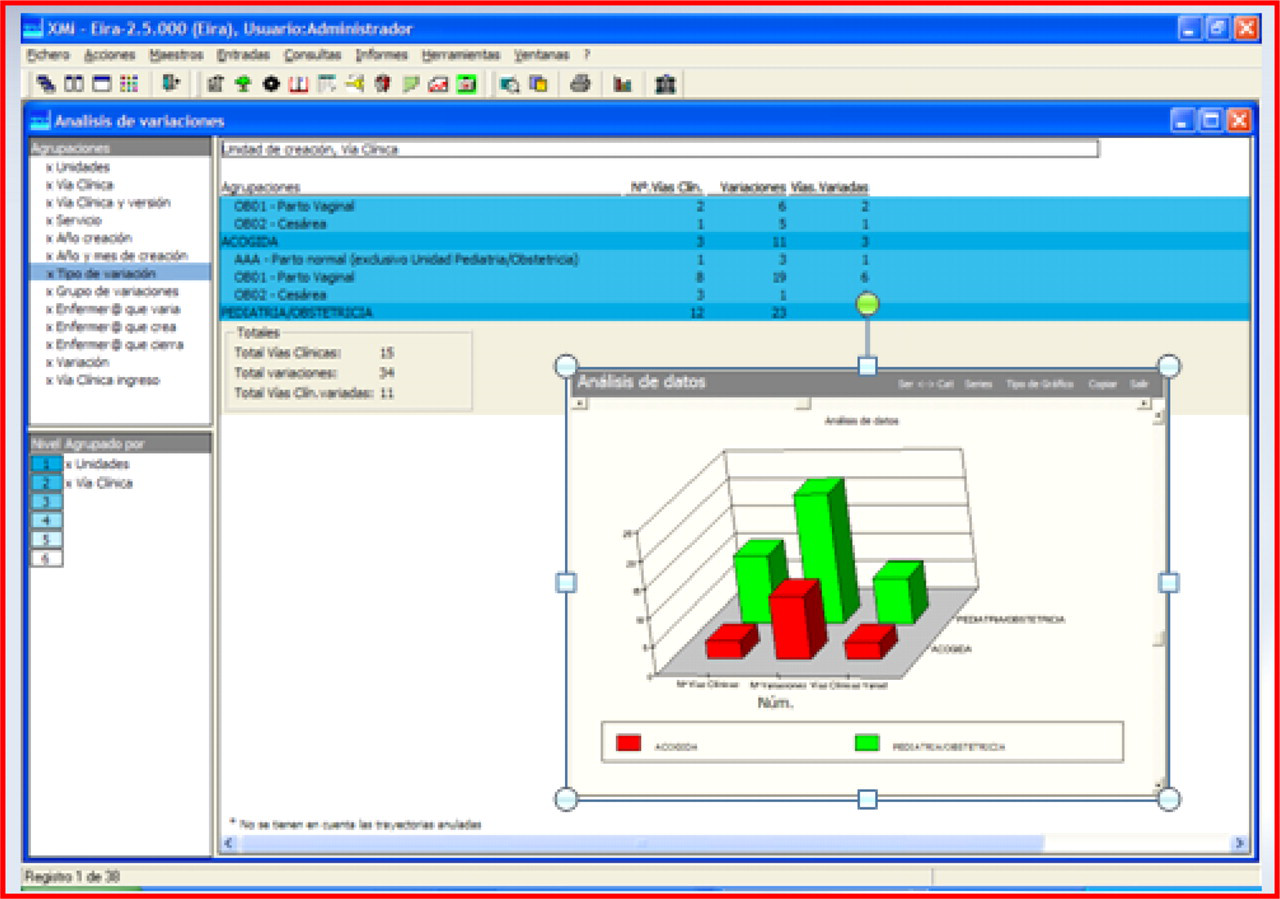
Follow-up report from e-pathways (Eira Healthcare Server). Note: Please see online article for colour version of figures
Another recent and interesting experience is the development and introduction of e-pathways at Hospital General de l'Hospitalet, a 290-bed general hospital in the area of Barcelona. Since 2000, 27 clinical pathways and 13 care maps have been introduced. The implementation of the complete electronic medical record in 2007, which was developed using an SAP integrated health-care solution (SAP AG, Walldorf, Germany,
In this section, three screenshots from this SAP solution for e-pathways are displayed.
After selecting a nursing unit, all data from the patients from this unit are displayed in the main screenshot (Figure 8). Some icons in red and green explicit those patients following a care map or a care pathway.
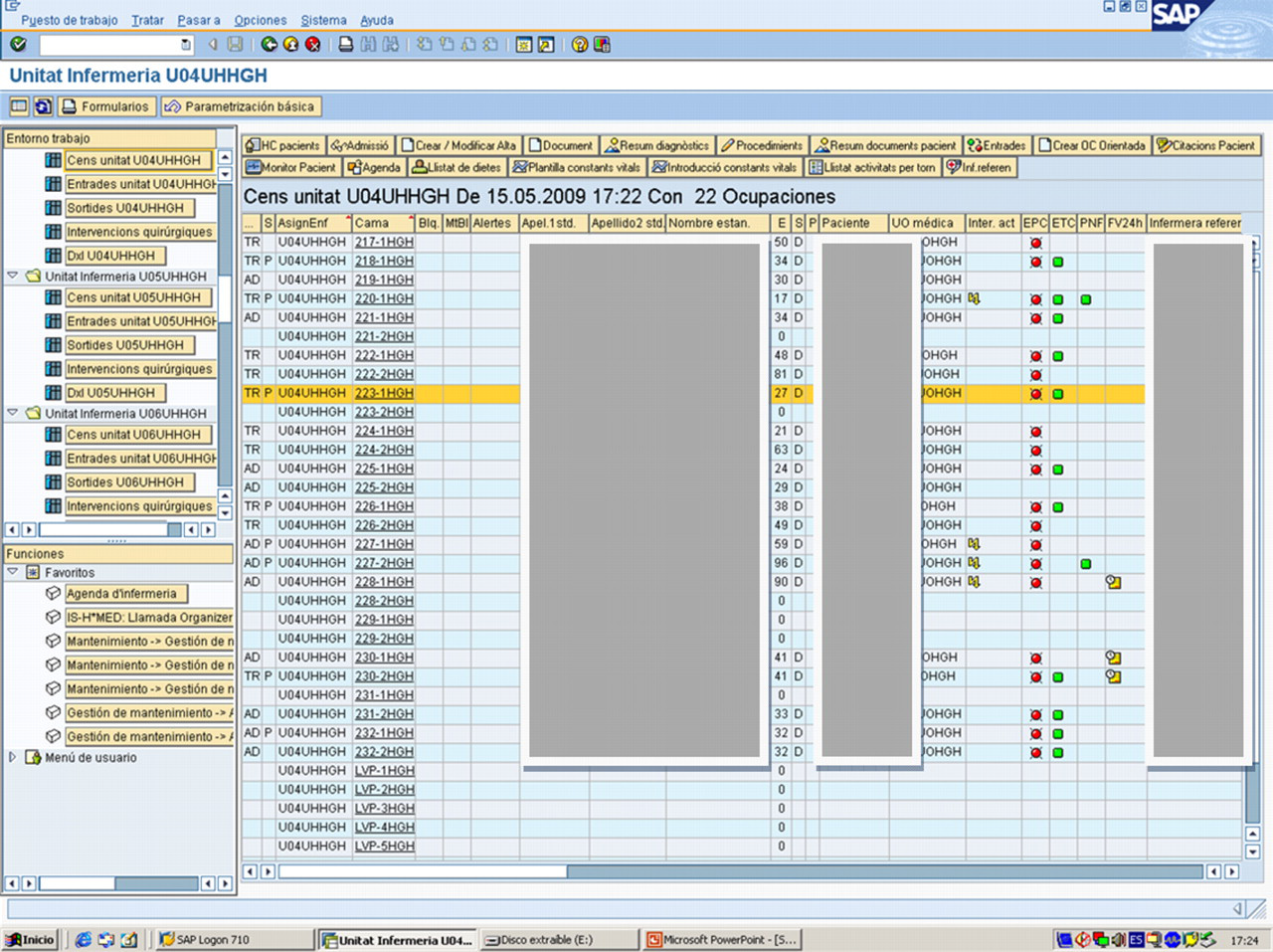
Main screenshot from e-pathways at Hospital General de l'Hospitalet (SAP). Note: Please see online article for colour version of figures
The electronic medical record includes different folders for the usual records: medical antecedents, medication, progress notes, diagnostic tests, documents, consultations, emergency room, medical orders and nursing, as well as a special folder for pathways (Figure 9). In this e-pathway folder you can assign, modify, display, link, finalize or leave (due to a variation) a care pathway.
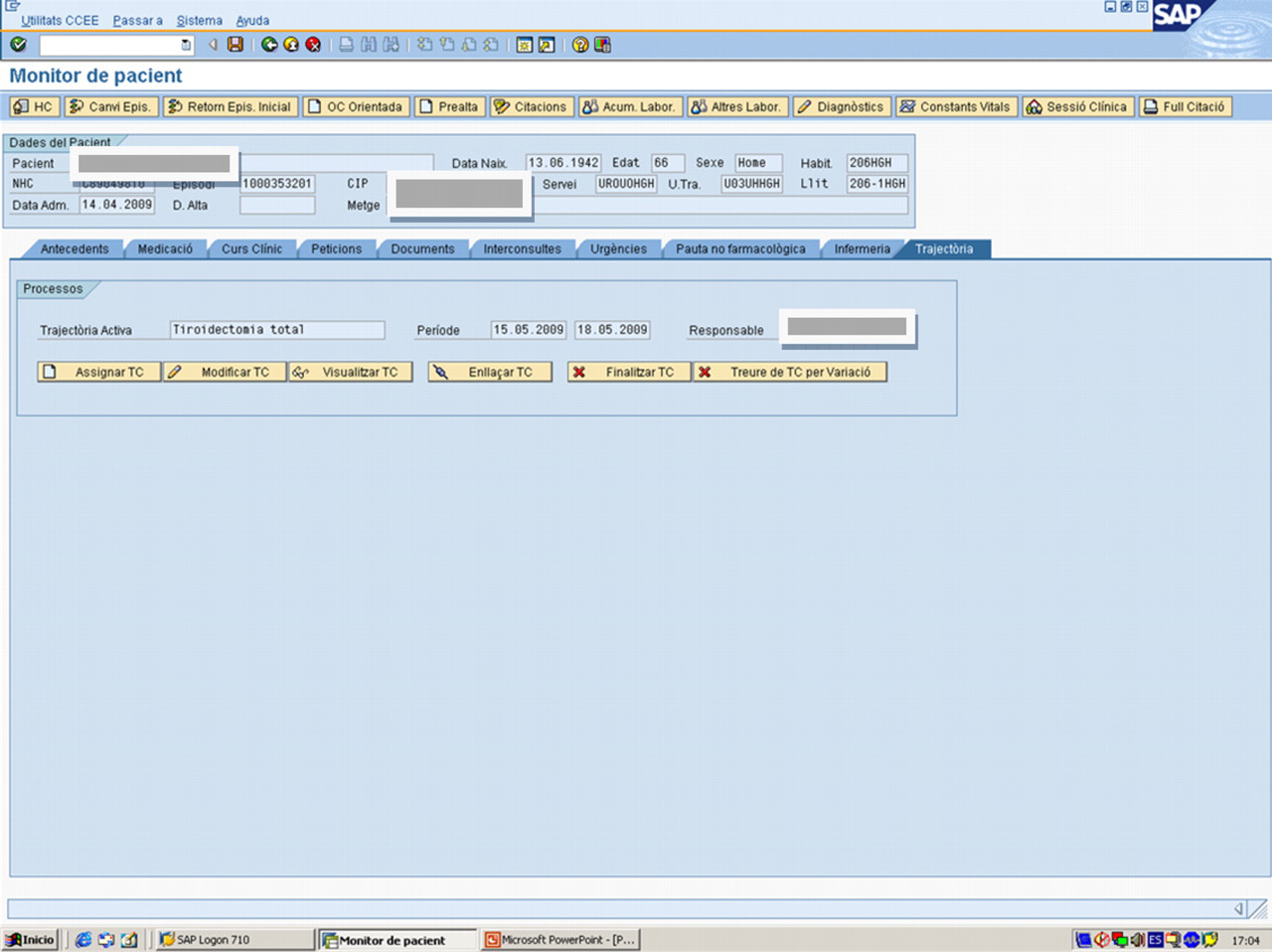
Pathway folder/e-pathways at Hospital General de l'Hospitalet (SAP). Note: Please see online article for colour version of figures
In Figure 10 you find the checklist for the total thyroidectomy pathway with the different interventions and tasks according to professionals, locations and timeline. In the same screen variations can be described and categorized by the reason: patient, social/family, professional, organization and other.
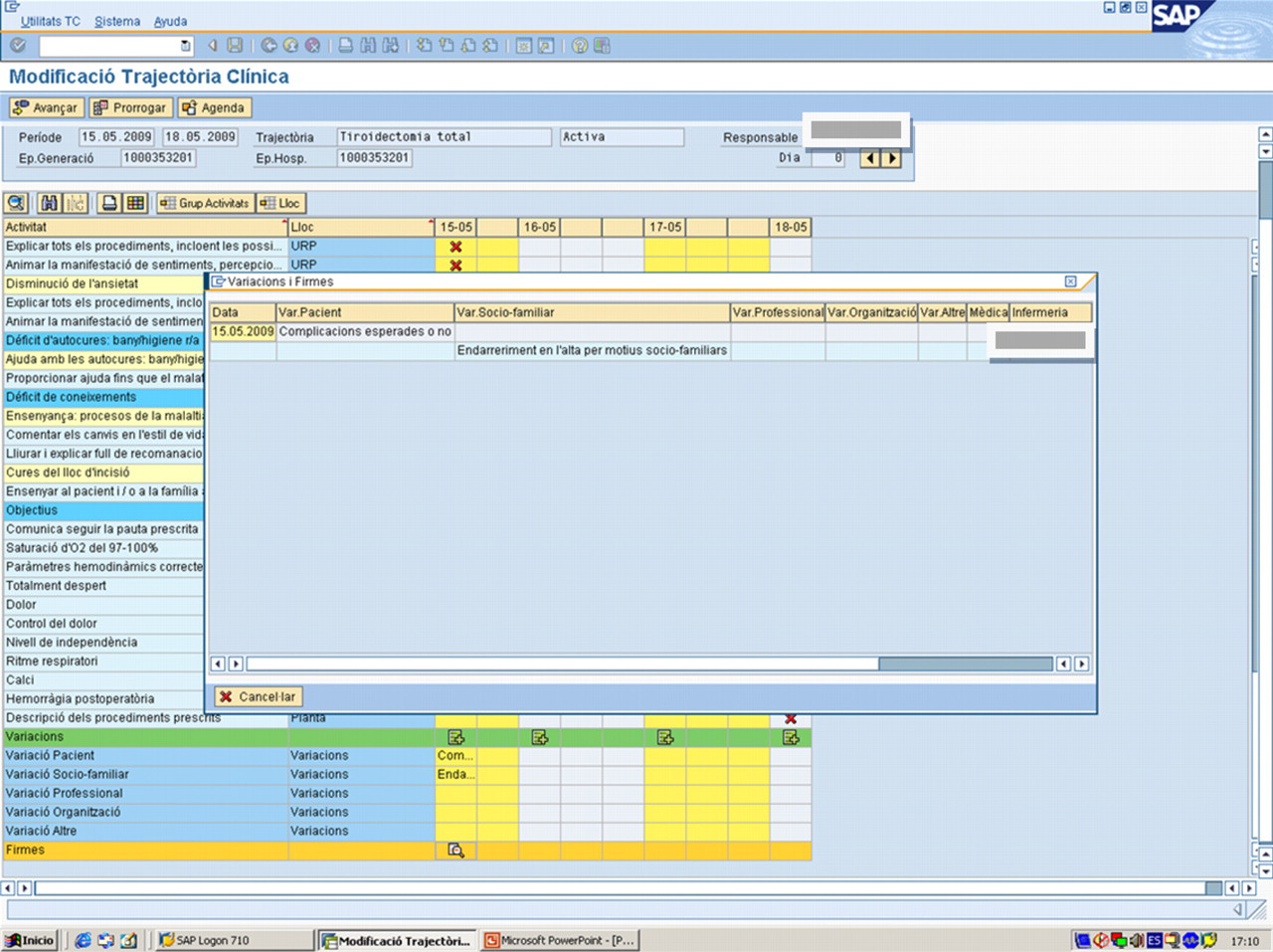
Checklist of interventions and variance record/e-pathways at Hospital General de l'Hospitalet (SAP). Note: Please see online article for colour version of figures
Discussion
The e-pathway project will face many challenges, such as the economic cost and the need to integrate the e-pathway application within the different existing hospital information systems. Sometimes the first decision is the need to implement the electronic medical history, which should have a module for computerized pathways. The strategy planning of hospital managers should take into account the need and priority of any pathway project linked to e-pathways, enhancing a faster and more successful implementation and follow-up, overcoming some difficulties just at the start of the implementation. Thus the leadership and constant motivation by hospital managers are crucial factors.
The e-pathway project team is another key point and must include IT experts from the hospital IT department, as well as physicians, nurses and pharmacists involved in the coordination, implementation and follow-up of care pathways at the health-care setting. The internal IT experts will be the technical part of the project team, supported by external consultants or experts on the commercial application that the hospital management decides to implement. All the initial requirements listed by clinicians must be adapted by IT experts. Needless to say these experts should have a good understanding of the concept and methodology of care pathways. Obviously, this process is a little easier when paper pathways already exist and the culture change is not so hard for the organization. The duplicity of documents and the increase of bureaucratic workload must be avoided.
A project for the implementation of e-pathways needs that all the phases are well defined with their different milestones, responsibilities and resources. The e-pathway users must feel they are a significant part of the project, so they must be engaged along the project. This project will give staff better access to information about patient care. A precise and detailed internal communication and a tailored training are fundamental points for achieving the expected outcomes for a satisfactory introduction of e-pathways.
Conclusion
Some experiences in Spain have proven that we do really need electronic support for pathways. Electronic pathways are a basic support and should not be postponed when implementing care pathways. Any new pathway project should not be initiated without taking into account the possibility of using computerized pathways. This consideration during the initial risk assessment may be very useful to skip difficulties in the phase of implementation of any pathway project.
Further developments are needed, considering the integration of a specific IT application for e-pathways within the global patient electronic record, which will be indeed more attractive for convincing hospital managers to buy in such an electronic tool for managing care processes with a higher quality, safety and efficiency using care pathways.
Footnotes
Acknowledgements
Special thanks to Lluís Mundet (Hospital de Mataró) and Dolors Pintado (Hospital General de l'Hospitalet) for permission to use the data about both e-pathway projects. Please note fictional patient data have been used in the screenshots in Figures 2– .
.