




Abstract
Summary
Professional institutions played an important role in the life of Birmingham surgeon James FF West and his colleagues. West held office in the Birmingham Medical Institute, the Midland Medical Society, the Birmingham Medical Benevolent Society and the local branch of the British Medical Association. He was an energetic and active participant who helped promote the principles and maintain the usefulness of the societies with which he was involved. Societies came into existence mostly thanks to the generosity and endeavours of those they served, and exclusivity was both jealously guarded and challenged. Spreading expertise through debate and fostering social intercourse was the raison d’être of most of Birmingham's societies but, when less fortunate colleagues needed support, the Birmingham Medical Benevolent Society was not the only society to provide it.
James West (Figure 1) was Honorary Surgeon to Queen's Hospital, Birmingham from 1857 and Consulting Surgeon to the town's Dental Hospital from 1871 until his death in 1883 at the age of 49 years. Like many of his colleagues, he belonged to several local organizations. With the exception of The Birmingham Dramatic and Literary Club, all were professional institutions. He was a member of the Birmingham and Midland Counties branch of the British Medical Association (BMA), the Birmingham Medical Benevolent Society and the Midland Medical Society, and a Founder Member of the Birmingham Medical Institute (Figure 2). He served as an officer in all four, took his turn as President in the local branch of the BMA and the Midland Medical Society, and was elected Vice President of the Birmingham Medical Institute just two months before he died. 1
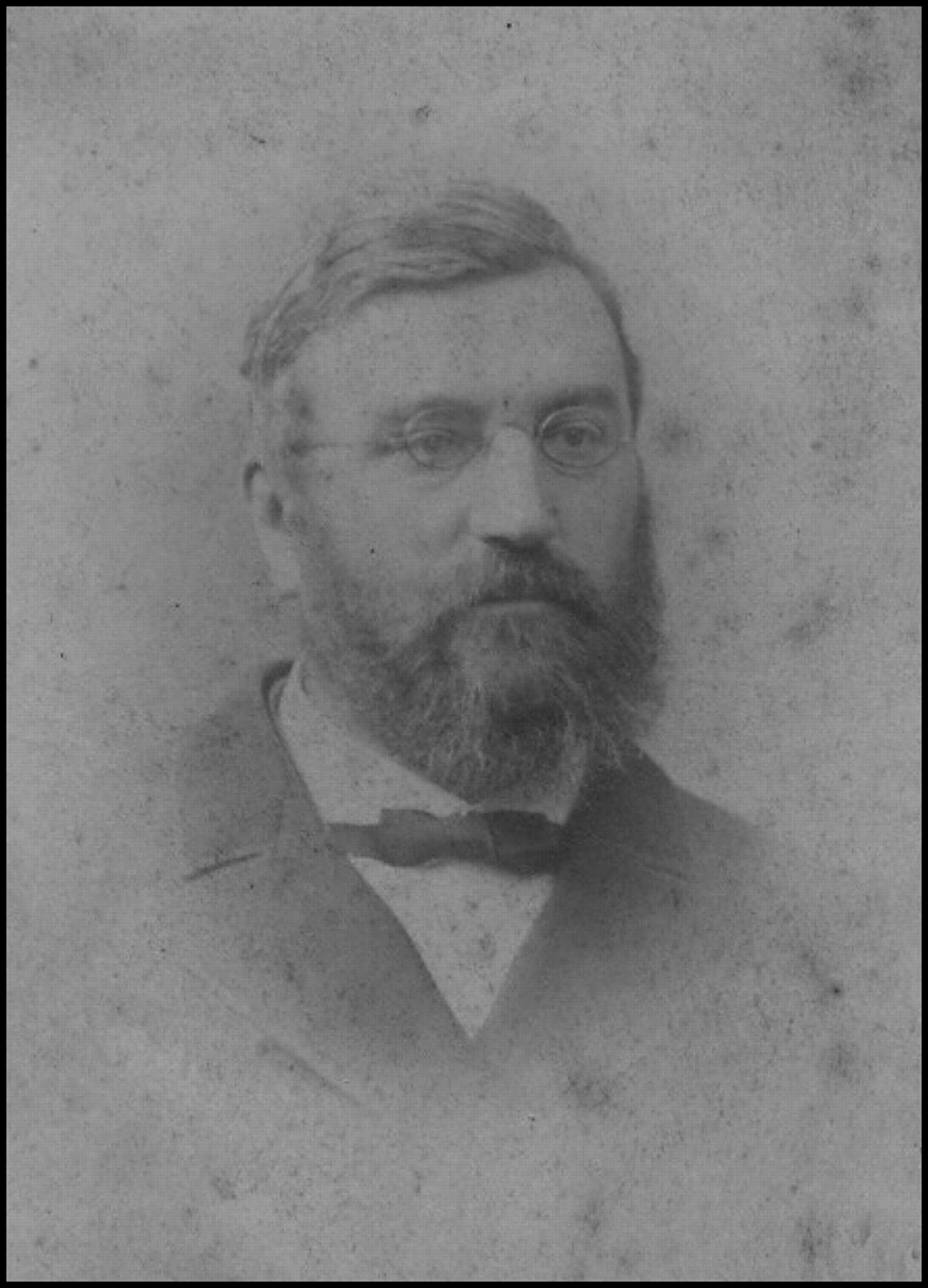
James Fitzjames Fraser West
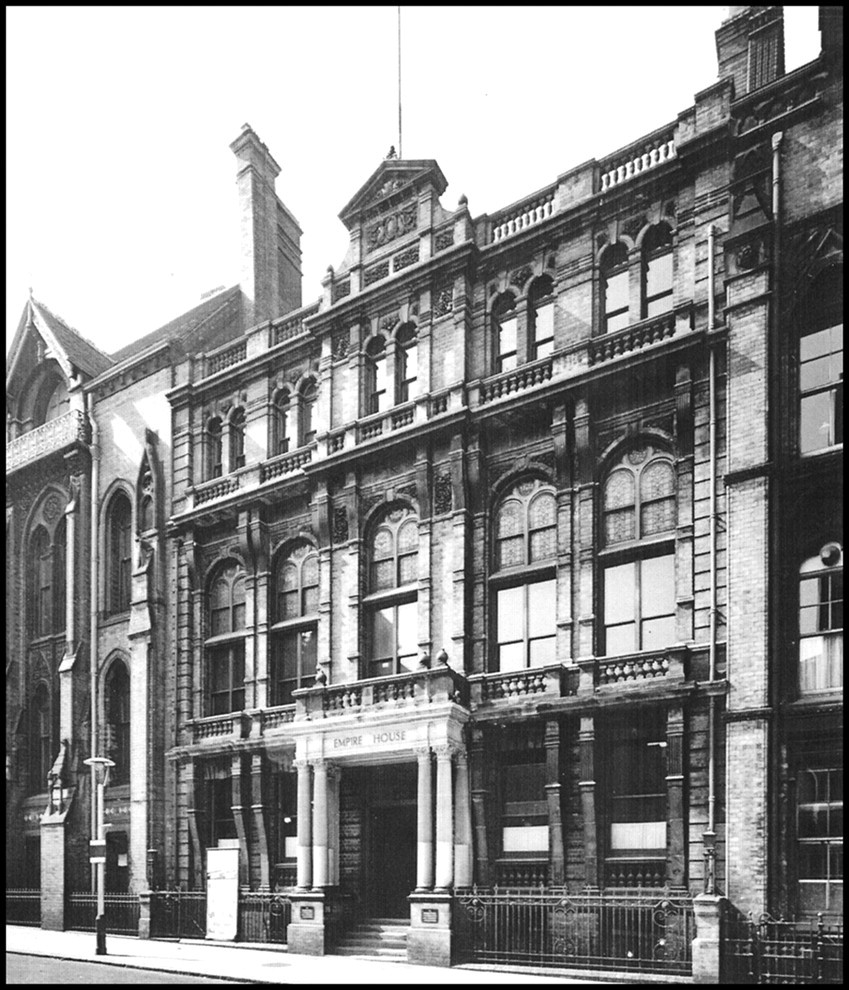
Birmingham Medical Institute
Founded to promote knowledge or, in the case of the Birmingham Medical Benevolent Society, insurance against hardship, Birmingham's medical societies bestowed upon members a sense of corporate identity and gave their officers the opportunity to serve a cause and to acquire status in Victorian England. By the time West qualified in 1854, professionals could no longer rely on social class alone for their place at the top of hierarchy. Position had to be earned and, as Elliott 2 and other medical historians have pointed out, by the end of the century social kudos could be achieved only when accompanied by philanthropic endeavour and professional expertise.
West was Chairman of the Pathological and Clinical Section of the Birmingham and Midland Counties branch of the BMA in 1881–82 and was described as an active and ‘highly esteemed member’ when he died a year later. 3 A single minute book covering 1882–90 is the only local branch archive to have survived from West's time, although meetings were reported in the medical journals. The Visitors’ Book for the Association's Annual Meeting of 1872, 4 held in Birmingham, has also survived. It was attended by at least 534 practitioners, West included. He was one of 103 who came from Birmingham and what would now be regarded as its suburbs. The town's hotels provided accommodation for many who came from elsewhere, although a surprisingly large number stayed with local men. West himself gave a bed to Mr William Adams (1827–92) of Henrietta Street, London. Adams had been demonstrator of Morbid Anatomy at St Thomas's Hospital during West's days as a student there and had written him a reference when he applied for a post as Residential Medical Officer at Queen's Hospital in Birmingham in 1854. 5
Unlike the Birmingham Medical Benevolent Society and the Midland Medical Society, the Birmingham Medical Institute continues to flourish. With a membership today of around 400, it is the only independent postgraduate centre in the West Midlands. In addition to meetings related to specialist interests, two annual dinners are held, one for all members and one for individual sections. Retired members meet occasionally for lunch and the Birmingham surgeons Joseph Sampson Gamgee (1828–86) and Robert Lawson Tait (1845–99) are commemorated in annual and biannual lectures respectively. The library, the raison d’être of the Institute's foundation, is primarily an historical library nowadays.
Birmingham Medical Institute
Medical professionals of the period, West included, subscribed readily towards the foundation and upkeep of their own medical institutions. Originally the brainchild of Dr George Fabian Evans (1806–73), the Birmingham Medical Institute's foundation was brought to fruition by the seven trustees of his Will and a further six medical practitioners. Evans himself donated £1000 to the project before he died and the sum was soon augmented by a further £5000. It was an unspecified bequest to the town's medical institutions made by the late Mr John Ingleby (d. 1845), surgeon, and was authorized for use in the enterprise by Ingleby's son, the Reverend Charles Ingleby. Ingleby junior hoped the endowment would ‘keep his father's memory green in the place where he once practised’. 6
When additional donations towards a building fund were sought, West was among the original set of 45 contributors. 7 Donations ranged from £1.1s.0d to £100 and totalled £1938.3s.0d. Twelve, almost all well-known local medical practitioners, each gave £100. They included Dickenson Webster Crompton (1805–94), 8 John Birt Davies (1799–1878) 9 and Thomas Bell Elcock Fletcher (1806–97) who would become the Institution's first President. Thomas Pretious Heslop (1823–85) and Alfred Baker (1815–93) also donated £100 each. Each would go on to argue for the admission of homoeopaths to the Institute in the weeks that followed. Oliver Pemberton (1825–97), a surgeon vehemently opposed to the inclusion of his homoeopathic brethren, was one of seven who donated £50 or just over. Edwin Chesshire (1819–1903), another opponent of homoeopaths and one of two surgeons who resigned over the incident, gave £25 along with six others. 10 West and Tait, who was to become Birmingham's most celebrated abdominal surgeon, were among the four who gave £21, whereas Gamgee 11 was among the five who each donated 10 guineas.
No donation was more controversial than that made by the homoeopath James Gibbs Blake (1833–1900) who promised a total of £25 in two annual instalments. Another homoeopath, Edward Wynne Thomas (1830–93), gave five guineas and a third, George Alexander Craig (b. 1846), assumed admittance along with his more orthodox colleagues through the payment of his first annual subscription. All the homoeopaths were fully qualified medical men.
The donation made by West in February 1875 12 suggests he supported the scheme and had confidence in it. Whether he anticipated the furore over the admission of homoeopaths days after the Institute's inception is not known. A comment made by him at a specially convened meeting on 31 March 1875, and recorded for posterity by the press, suggests he was prepared to be magnanimous over their inclusion. ‘Mr West’ we are informed ‘was quite certain that if the homoeopaths did not do so much good as they did, they did not do so much harm’. 13 His witticism was rewarded by laughter.
Pemberton's opposition to homoeopathy, on the other hand, was longstanding and he declared he was not in the habit of changing his mind. Heslop, for his part, derided Pemberton and informed him of the ‘overwhelming ridicule which would attach to a person who would dare to close a library against people holding different opinions’ 14 whereas Baker implored those assembled to back ‘generous, free-handed and free-hearted liberality’ rather than be governed by ‘the narrow views of … a factious clique’. 15 Josiah Clarkson (d 1878), another who was prepared to speak out in favour of his homoeopathic colleagues, used equally strong language when he declared that their exclusion from the Institute would make them ‘disciples of bigotry and intolerance’. 16
The matter was resolved pro tem in favour of homoeopaths. Mr Freer (presumed to be WC Freer) resigned along with Chesshire but Pemberton conceded defeat and soon became one of the Institution's officers. West knew all of the key players personally. Pemberton, like West, lived on the Hagley Road in Birmingham's most exclusive suburb, Edgbaston but they were, in any case, serving together in 1875 as officers of the Midland Medical Society. Heslop, another Edgbastonian, supported West in the election dispute and the two had become close friends. 17
We do not know how West felt about the application for membership made by homoeopath John Charles Huxley (1852–1926) five years later in 1880, an occasion that triggered a further flare up of emotions. 18 Neither is it known whether, like the majority, he supported the Institution's decision to deny inclusion to registered dentists that year. Undoubtedly, West held strong views on the latter – he had been made consulting surgeon to Birmingham's Dental Hospital in 1871 where he would have worked alongside dental practitioners who were either Licentiates of Dental Surgery or Members of the Royal College of Surgeons, or both.
Registered dentists had to wait a further 22 years before they were admitted but the Institute, to its credit, voted through applications from two women without opposition in 1880. An entry in West's diary of 1883 shows he was not hostile to women practitioners 19 and it is tempting to think he was among the majority who voted in favour of granting membership to both Annie Clarke (1845–1924) and Annie Barker (1853–1909/10), the Institute's first two women practitioners.
West did not live to see women in either The Midland Medical Society or the Birmingham Medical Benevolent Society. The former admitted its first woman in the early 1890s, while the Birmingham Medical Benevolent Society did not grant membership to its first women practitioner until 1909.
Initially the Birmingham Medical Institute held its meetings in rooms at the Birmingham Midland Institute and then in Queen's College. The town's Mayor, Richard Chamberlain, formally opened its own purpose-built premises, complete with magnificent library, central heating and telephone, in Edmund Street on 17 December 1880. West was among those present. Mr Dickenson Crompton Webster, President, occupied the chair on this auspicious occasion and a stirring address was delivered by Sir James Risdon Bennett (1809–81), President of the Royal College of Physicians, 20 in the Institute's most prized room, the library. Numerous local worthies, including George Dixon MP (1820–98) and one of Birmingham's greatest philanthropists, Miss Louisa Ryland (1814–69), 21 joined West and others for the celebratory dinner at the Grand Hotel later in the evening.
A detailed description of the proposed library had appeared in the press as early as 1878. 22 It was to be built on the first floor with a ceiling height of 20 feet and would measure 46 feet 6 inches by 31 feet. It was to be fitted out in oak and its bookcases would project into the room to a distance of 6 feet, forming bays for study. A projecting gallery running around the room at the height of 10 feet from the floor would afford access to the upper shelves. By 1881 the library contained 7206 volumes, exclusive of 2094 duplicates, as well as 45 British and foreign periodicals and it was open daily from nine to nine, Sundays excepted.
The number of books increased steadily over the years so that by the time West died in 1883 there were around 8677 volumes exclusive of 2126 duplicates. Individuals donated books during their lifetimes but the library also benefited from the bequest of entire collections, courtesy of deceased members. To avoid swelling the library's shelves with out-of-date material, the Institute's librarians accepted only recent volumes. West's widow, Sarah Hammond West (1844–1910), was subject to this very circumscription following the death of her husband. She offered the Institute 50 books from her late husband's library but, in the event, the librarians David Charles Lloyd Owen (1845–1926) and Robert Saundby (1849–1918) took just 38 of the 50 books offered.
Midland Medical Society
In the years following its foundation, the Birmingham Medical Institute was given entire libraries by some of Birmingham's other institutions. The Midland Medical Society was one. It gave the new Institute its complete collection of medical books in 1876. Its officers, of whom West was one, decided that duplicating the town's medical libraries was unwise. The Midland Medical Society had, in any case, been floundering for some time when West joined it in 1868. Founded in 1848 to provide a reading room and a forum for the exchange of expertise, it had just 63 members in 1869 and it seemed to some that its best option would be to amalgamate with the Birmingham and Midland Counties branch of the BMA. Negotiations were all but complete when Gamgee sought and achieved a reversal of the proposal. West had had a close connection with Gamgee since the election dispute of 1857. They worked together at Queen's Hospital and they belonged to the same medical societies and social circles.
West became involved in Gamgee's efforts to secure the independence of the Midland Medical Society from the start. He was part of a sub-committee of seven convened to consider by what means the objectives of the society could best be met in the future. When they reported back on 6 January 1869, West acted as Chairman. The committee identified the sharing of expertise through papers, the exhibition of pathological specimens and the provision of a well-stocked reading room as the chief objectives. They made several recommendations. One was to encourage members to bring in more specimens. The purchase of a high-quality microscope to facilitate the study of specimens was proposed, as was the appointment of sub-committees to investigate specimens of particular interest. West also told existing members and fellows that the committee believed many local practitioners were unaware of the benefits of membership and they urged further recruitment. The introduction of an annual Inaugural Lecture was suggested as an extra inducement.
Recruitment intensified over the next few weeks. The first wave of new members was procured by Gamgee who put forward the names of five individuals, by John St Swithin Wilders (1837–1907) who suggested three, by James Hickenbotham (1842–84) and West who proposed two, and by Mr Smith who named one. 23 Two weeks later, a further six were proposed by Robert Jolly (1841–94) and, a fortnight after that, 24 another eight names were suggested. On the latter occasion, West and Hickenbotham each proposed three names, whereas James (later Sir James) Sawyer (1844–1919) and Wilders each put forward one name. The renewed determination to rescue the society and the endeavours made by its officers and fellows to increase membership were rewarded. By 1879, membership exceeded 300 – a level maintained for the rest of the century. It was about 100 more than the Birmingham Medical Institute managed over the same period and one not exceeded by the Birmingham Medical Benevolent Society until 1895.
The Society met fortnightly in the Birmingham Midland Institute in the late 1860s, with meetings alternating between three in the afternoon and eight in the evening. West's support for the Society is reflected in his regular attendance at meetings and he was elected to the Council for the first time within a year. His first year as an officer was an active one. He exhibited four specimens and read papers on a novel method of removing a naevoid tumour, 25 the treatment of aneurism, St Bartholomew's, Guy's, the London Hospitals and Moorfield's, 26 and on wounds of the heart. 27 The third was the first of six papers West read to the Society on British and foreign medical schools, hospitals and spas. It was described as ‘a most interesting account’ 28 but West may have been guilty of indulging his fondness for this genre and others too much on some occasions.
The meeting had to be extended for half-an-hour on 27 November 1872 following West's paper on points of contrast between French and English surgery on account of the ‘many points of interest raised for discussion’ 29 and he was reported to have shown ‘many photographs’ 30 when he delivered a paper on Aix-les-Bains and the Sulphur Springs of Savoy 31 in February 1882. He also got carried away on another favourite topic, the resection of joints. The minutes for 18 April 1877 record that West was unable to finish a paper on the subject because time was up.
Inaugural Lectures
West remained an active member of the Midland Medical Society for the remainder of his life. The papers he contributed are listed in Appendix 1. He was elected to the Society's Council again in 1873–74, 1875–76 and 1881–82 and was its President during 1871–72. West attended the first Inaugural Lecture on Bleeding and Transfusion given by Dr (later Sir) Benjamin W Richardson (1828–96) in 1869 and, in his role as President, he hosted the second by Professor Lionel Beale (1820–1906) who spoke about ‘The Nature and Origin of Contagious Diseases’. In 1872, under the Presidency of John Bassett (1826–92), West was made responsible for making the arrangements for the next Inaugural Lecture along with his partner in private practice, Mr William Slingsby Mann (1842–1912) and three other officers. 32
These occasions were more than Inaugural Lectures right from the start. Often referred to as Soirées or Conversaziones and delivered in the town's finest hotels, Inaugural Lectures invariably commenced with exhibitions and demonstrations and culminated in a dinner. They were described in detail in the press. It is impossible to say for certain whether West attended all the Inaugural Lectures between 1869 and his death in 1883 but his presence was recorded at five out of a possible 13. In his lecture on bleeding, Richardson said he envisaged a time when nutrients could be supplied directly to the body through the veins. He also spoke of the effects of alcohol and related how he revived a rabbit he had suffocated by pumping air into its lungs. Richardson finished off his lecture by describing the properties of hydrides, nitrites, iodides and chlorides as well as commenting on the value of bichloride of methylene as an anaesthetic and on chloral which, he believed, would in time rival opium.
Richardson was the only lecturer to be invited back. His second lecture entitled ‘The Treatment of the Dying’ was delivered at The Great Western Hotel on 10 November 1875. The Society records state that more were present than ever before and that West was among them but the exact number is not recorded. West also heard Professor (later Lord) Lister (1827–1912) speak on ‘Healing Wounds without Antiseptic Treatment’ on 30 November 1878. 33 Gamgee had invited Lister at short notice because Sir William Jenner (1815–98) had dropped out unexpectedly. Gamgee had known Lister during his days as a student at University College, London, and the two had maintained contact. The Annual Report hailed the occasion as ‘one of the most successful ever held’ and states that many were frustrated in their attempts to hear the lecture.
The Soirée of 1880 took place in the Grand Hotel and the speaker, James Matthews Duncan (1826–90), spoke to an audience of 170 on The Treatment of Puerperal Fever. Gamgee's dressings, manufactured by Southall, were among the exhibits shown at the beginning of the evening. West was present although, like many of his Birmingham colleagues, it was not the first time he had seen the dressings. Comments made by West on the usefulness of Gamgee's pads, when they were first shown to Society members earlier that year, imply he had made use of them himself even then. West had been absent two weeks later when Gamgee exhibited a refined version of his pads impregnated with carbolic and benzoic acid but, as one of Gamgee's closest hospital colleagues, it is inconceivable he was not aware of them.
Bleeding
In 1858 a statement was made in the BMJ to the effect that bleeding was ‘less common’ than hitherto. Like other juniors before him, West had been expected to bleed patients in his days as medical officer at Queen's Hospital between 1854 and 1857. He may have had little time for the practice even then. There is no mention of using the cup or lancing veins in his early papers although he did refer to his own use of leeches in the 1860s. By the time the subject was being debated by members of the Midland Medical Society in the mid-1870s, it was clear that West did not mourn its demise. The debate was initiated in December 1876 by Arthur Oakes (1830–1925), President, when he asked whether any member present had bled a patient in the past 12 months. 34 Members responded with lively enthusiasm and discussion continued over the course of the next three meetings.
All agreed that its adoption should depend on the case but West had the least enthusiasm for the procedure. Mr Henry W Larkin (b. 1828) doubtless caused a smile when he recounted how the celebrated ‘Hickenbotham of Gornal’ bled everyone who consulted him and claimed no one ever died from it. Larkin favoured an open mind himself, saying that since humans have a surplus of power in both heart and lungs as well as a surplus of blood itself, bleeding was unlikely to be detrimental. James Sawyer thought its benefits should be reassessed but went further in a paper a year later 35 when he declared modern practitioners had committed a ‘grievous error’ in abandoning bleeding.
West, for his part, revealed that he had not used bleeding in his surgical practice at Queen's Hospital in the previous 12 months although he thought it could usefully be employed in cases of poisoning by carbonic acid, suffocation (especially through crushing), uraemic convulsions and where the right heart was surcharged. 36 He argued that good results had been achieved without bleeding in cases of wounds of the lung. The decline in bleeding, West asserted, followed its abandonment by John Hunter (1728–93) and John Abernethy (1764–1831) and was not, he insisted, practised in France, Germany or America.
Papers and exhibits
One event that proved popular was a demonstration given by Warren, an American contortionist. Many, including West, could not resist the spectacle. He was one of 70 members and officers who watched Warren ‘exhibit his extraordinary muscular development and power of producing voluntary dislocations’ 37 in May 1882. They were joined by 12 visitors and 20 students from Queen's College and, according to the Society records, ‘many others, whose names were not obtained’. 38
At the regular meetings, papers were read on a wide range of topics. During his presidency, for example, West heard Gamgee talk on surgical dressings, 39 Dr James Johnstone (b. 1822) on occupational diseases, 40 James Sawyer on movable kidneys 41 and Fowler Boddington (1830–1902) on the advisability of admitting women to the profession. 42 The latter concluded it was advisable. Tait, a man who later went on to speak in favour of women practitioners in his own right, seconded the motion and the resolution was carried by 13 to 12. Six others, West included, joined in the discussion later although there is no indication in the minutes as to the individual views expressed.
Like many of his colleagues, West exhibited regularly but, as a letter of complaint from the Secretary of the Birmingham Midland Institute in 1874 shows, enthusiasm for exhibiting specimens did not always extend to their removal at the end of the meeting. 43 West's most prolific year as an exhibitor was 1871–72, the year of his presidency, when he brought in 10 specimens, one living. The live subject was a patient on whom he had performed an excision of the knee – a procedure West favoured over amputation.
One of the most extraordinary exhibits ever – hair taken from the stomach of a woman aged 31 years that weighed 4 lbs 7 oz, measured 12 by 5 by 4 inches and formed a perfect cast of the stomach – was brought in by Richard Prosser (b 1841) on 25 March 1870. 44 West was absent that day but he did become embroiled in a further spectacle involving Prosser in 1880 when Dr RV O’Leary was convicted of manslaughter on evidence based on Prosser's postmortem. Though not a member, O’Leary received support from the Society. The case triggered intense activity. Meetings multiplied and a special committee demanded, and obtained, a second postmortem. The committee described Prosser's postmortem as ‘utterly useless for medico-legal purposes’ 45 by the committee and ‘most culpably insufficient and incomplete’ 46 by Robert Lawson Tait. West's involvement in the case included attendance at some of the meetings and contribution to discussion but he was not present when Prosser was finally expelled from the Society on 19 January 1881.
Birmingham Medical Benevolent Society
Prosser's failings were professional but the failings of Thomas Gutteridge (1805–80), surgeon, were personal. Gutteridge, like West, was a member of the Birmingham Medical Benevolent Society. Poverty-stricken, embittered and ostracized as a result of the animosity he had unleashed on others, he died without applying for, or receiving, any benefit from the Society. 47 The Society's officers met quarterly to assess claims and authorize or deny relief. West was one of the Society's directors when Gutteridge died but did not live long enough to sanction aid for Gutteridge's sister around seven years later. Vulnerable to loss of income through ill health, infirmity or other misfortune, recipients ranged from ex-Society officers like West's predecessor at Queen's Hospital, Mr George Knowles (1790–1866), and their dependants to outcasts like Gutteridge and his kin.
Five colleagues and three other mourners attended Gutteridge's funeral. West was not among them. The occasion was described in the press as ‘exceedingly plain’. 48 Miss Harriet Gutteridge, aged 73 years when her brother died in 1880, was reduced to accepting aid from sympathizers and friends. She, too, soldiered on without applying to the Society for relief until 1887 when her plight was brought to their attention by some of the town's most illustrious citizens 49 following a shortfall in donations. Described as ‘nearly blind, very infirm and entirely confined to her bed’, the signatories of the letter insisted that if her circumstances were made known ‘many others might be willing to save Miss Gutteridge from ending her days in a workhouse and laying aside all recollections of bygone days … think only of the blindness of this aged and forlorn woman’. 50 Miss Gutteridge died two years later after receiving from the Society aid amounting to £80.
Thomas Gutteridge and his sister were not alone in denying themselves the relief to which, as members or kin, they were entitled and Harriet was not alone in being a short-term burden on the Society. Some claimants were elderly practitioners who died within a year or two of becoming dependant on the Society's funds, whereas others were able to report improved circumstances and forgo their grants after a short time.
Mary Simons, though, lived for 39 years after making her first claim in 1857 and cost the Society a total of £837.10s.0d. She supplemented her income for many years through revenue derived from running a school and by letting part of her house but, by 83 years, was entirely dependent on payouts from the Society and was reduced to living as a lodger herself. Fanny Dixon Edwards was also burdensome: widowed at 39 years, she received £819 between 1876 and her death in 1902. Spencer Edmonds, married with seven children, was granted £20 in relief in 1878 but died later the same year. Far from being the end of the Society's involvement, it was the beginning of one of its most longstanding commitments. Edmonds’ widow, Elizabeth, 42 years at the time of his death, cost the Birmingham Medical Benevolent Society £1065 between 1878 and her death in 1913.
The longstanding recipients of relief cited above made their claims before West became a director in 1878 and continued to draw aid after he died. Eliza Davenport, 46 years, was another. She was left with 11 children, eight dependant, in 1875 following the demise of her husband, Charles. Coincidentally, West had made an independent appeal on her behalf to readers of The Lancet in late January 1875. 51 He raised more than £30 52 but it did little to supplement her meagre assets. Fortunately, the Birmingham Medical Benevolent Society considered her case ‘urgent and pressing’ and granted her £20 in aid paid half-yearly. West, as a director, played a part in approving the continuation of aid after 1878 but did not live to see the Davenport family finally become self-sufficient in 1886 after having received a total of £355 in relief.
Acutely conscious of the unequal relationship between themselves and their benefactors, many claimants described their applications as ‘painful’. Even though directors prided themselves on handling claims with discretion and compassion, 53 fear of depleting funds through aiding the undeserving or fraudulent, or of granting it to those with long lives ahead of them, fostered caution among the Society's officers.
Sarah Hammond West was just 38 years and had eight children when her husband died in 1883. Unlike those described above, she was well provided for. In common with the majority of Birmingham Medical Benevolent Society members and their dependants, she was spared the shame of having to apply for assistance. West's involvement with the society had been its net gain rather than its loss.
West's duty as a director of the Birmingham Medical Benevolent Society was to attend the Quarterly Courts. Add to that the fortnightly meetings of the Midland Medical Society, and those of the Birmingham Medical Institute and the Birmingham and Midland Counties Branch of the BMA, and we see a time-consuming programme of activity in local institutions.
The last two years
The last two years of West's life will serve as well as any to illustrate the extent of his involvement in the various organizations to which he belonged. In 1881 for instance, West was serving as a member of council or president of three societies concurrently. He was elected to the Council of the Midland Medical Society on 5 October 1881, and was President both of the Birmingham Literary and Dramatic Club and of the Pathological Section of the Birmingham and Midland Counties branch of the BMA.
Dramatic Club records indicate there were six regular meetings in 1881–82. As President, West probably attended all and it fell to him to read a paper at the annual celebration of Shakespeare's birth that year. Well researched and titled ‘Shakespeare from a Surgeon's Point of View’, the paper was 24 pages long and contained no fewer than 65 quotations.
In his role as President of the Pathological Section of the BMA's local branch, West would have felt a similar obligation to preside over their meetings. Records show he attended five of the six meetings held that year and exhibited on three occasions. With the exception of December, he had meetings at one or other medical society every month of the academic year 1881–82. The meetings that took place at the Pathological Section in 1882 aside, West attended four meetings at the Midland Medical Society, three at the Birmingham Medical Institute, three at the Birmingham Medical Benevolent Society and two of the regular branch meetings of the BMA. On 15 February 1882, the Midland Medical Society and the Birmingham Medical Institute each held a meeting on the same day. West attended both. West gave a paper on a case of rapid lithotrity, with remarks on Biglow's operation, 54 at his local branch of the BMA on 9 November 1882. It was the last paper West read to members of that organization.
West's final paper, on chronic joint inflammations and their treatment, was read to members of the Midland Medical Society on 21 February 1883, shortly before he left for the Continent with his wife Sarah. One case was illustrated by a living patient and, according to his diary, 55 the paper was well received. West performed a nephrectomy on a boy of 15 years on 3 March 1883 – a dangerous procedure he refers to in the diary as ‘difficult’. He sent an annotation on it to The Lancet on 7 March and next day he proclaimed proudly ‘My case of nephrectomy, which is still talked about as the last new thing, exciting some attention’. 56 This remark refers no doubt to the reception it received when George Jordan Lloyd (1854–1913) 57 exhibited the kidney on his behalf at the Midland Medical Society meeting the day before.
West only attended one meeting at the Birmingham Medical Institute after he was elected Vice President on 29 March 1883. It took place on 10 April, the day after he returned from a month-long trip to the Continent. Tired after his travels or not members voted him on to a House sub-committee along with Thomas Hiron Bartleet (1837–91), Dickenson Webster Crompton, Joseph Priestley Smith (1845–1933), William Archer (1848–90), Arthur Oakes and James Russell (1818–85).
An illness of 35-days duration struck three days after the last entry in West's diary. The final four entries, from 14 to 17 April, were spent catching up with work, playing tennis with friends, entertaining a colleague, eating out two days in succession and beating Councillor James Baldwin at billiards – hardly the behaviour of an ailing man and yet the obituaries indicate that, although his death was unexpected, West's health was already compromised. The Birmingham Medical Review refers to him in its obituary as ‘a kind-hearted, plain-dealing and hard-working member of his profession’ adding ‘this Review has lost one of its oldest and most constant contributors, and the surgical profession of this town one of its leaders’.
In July, the Committee of the Birmingham Medical Institute presented Mrs West with an address of condolence emblazoned upon vellum and bound in black and silver. 58 Sympathy for the ‘irreparable loss’ she had sustained was duly expressed and her husband's numerous professional offices recorded for posterity. The signatories 59 also allude to the promise of 50 volumes that Mrs West had offered to the library. Of the 38 accepted, now just two remain; they are housed in the Barnes Medical Library at the University of Birmingham, along with a collection of 4000 other historical books that were moved there when the Birmingham Medical Institute moved to its present premises in 1957.