




Abstract
Dr Percy Charles Edward d'Erf Wheeler, a medical missionary of the London Society for Promoting Christianity Amongst the Jews, spent 24 years (1885–1909) as head of the English medical institution in Jerusalem. Wheeler dedicated the years he served in Palestine to promote the medical condition of the Jews as a means of missionary work. The most significant of his achievements was his leading role in the founding of the new British Hospital for the Jews in Jerusalem, the flagship of the British presence in Palestine, to be inaugurated in 1897.
Percy Charles Edward d'Erf Wheeler (Figure 1) was born on 14 December 1859, the firstborn son of Captain d'Erf Wheeler, Chief of Police in Mauritius. His parents died within weeks and Percy, with his two brothers, was brought up in India by an aunt. Wheeler was set on becoming a medical missionary from childhood and began his training at the Madras Medical College. Returning to England, he studied at St Thomas's Hospital where he passed his primary examinations in anatomy and physiology in the spring of 1884 as an outstanding student.1, 2 His longstanding dream came true when he joined the London Society for Promoting Christianity Amongst the Jews (LJS).
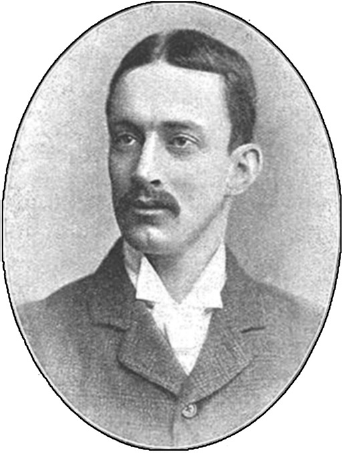
Dr P C E d'Erf Wheeler
The missionary society
The missionary society was founded in London in 1809, prompted by a deep sympathy for the Jewish people deriving from the Holy Scriptures. The idea of the restoration of the Jews served as a means of atonement for the sins committed by the Church against them. More practical members of that society considered the Jews a useful tool in the process of hastening the advent of the Messiah. In general, the Society actively supported the return of the Jews to their homeland by attempting to make Palestine a habitable place and by promoting the welfare of the Jews living there. 3
From 1820 the London Society despatched a dozen missionaries to Palestine but the Ottoman regime, which did not allow any Protestant activity in its realm, prevented them from settling permanently in Jerusalem. Only in the 1840s had the Society begun to flourish and for a while it was the most significant foreign factor in Palestine. It was then that British missionaries started to arrive and thrive in Palestine. 4
The missionaries used a variety of means in their attempt to draw the Jews of Palestine closer to the Christian faith by establishing book depots, forming a secular school system and the like. But the institutions that proved most successful in terms of religious conversion were the hospitals of the London Society. Its leaders were well aware of the poor standard of health among the Palestinian Jews and of the complete absence of any Jewish medical facilities. In the early stages of their missionary activities, they had sent physicians to their Mission Stations, opening dispensaries for the sale and distribution of medicines and clinics to provide first-aid services. Once the Mission Stations were well established in Palestine and the real medical needs of the local population were grasped, hospitals were built in Jerusalem and saved. 5
On 12 December 1844 the first Hospital for the Jews was inaugurated in Jerusalem and within days it was filled to capacity. For the missionaries the new institution was a source of great pride that found expression in their frequent reports to London. The founder of the hospital, Dr Edward Macgowan (1795–1860), 6 served as head of the medical institution until his death in 1860. He was succeeded by Dr Thomas Chaplin (1830–1904) who served for another 25 years from 1861 to 1886. 7
In the Holy Land
When Wheeler arrived in Jerusalem in 1885, the British hospital was indeed the jewel in the crown of the missionary endeavour and the medical work of the London Society in Palestine 5 but it was still located in a modest building inside the city walls. The need for a new hospital in Jerusalem arose as early as the mid-1870s because of the dilapidated state of the old hospital building and the increasing rate of occupancy during that period. The initial practical step to set up this new institution was taken only at the end of 1889, now by Dr Wheeler and through the generosity of an Englishwoman who anonymously donated £1000 to the building fund. 8 Planning of the new hospital was entrusted to a British architect, Beresford Pite (1861–1934), who completed the assignment at the end of 1891. 9 The new Hospital for the Jews in Jerusalem, the flagship of the London Society in Palestine and the institution in which most of the funds and attention were invested, was inaugurated on 13 April 1897. 10
In 1872 Wheeler married Grace, the second daughter of Reverend George Francis Popham Blyth (1832–1914), Anglican Bishop of Jerusalem and the East, on 5 July 1893 at Christ Church in Jerusalem.11, 12 They had a daughter and three sons. The older two sons died in the First World War. One son, Percival Francis Crommelin (1894–1917), a captain in the Dorset Regiment, was killed in action on 24 July 1917 at the age of 23. He was buried at St Paul's, Hammersmith. 13 The youngest son fought in the Second World War from 1940. 1
In November 1891 Wheeler was informed that he had passed the final examination for the FRCS. 14 In 1892 he was awarded honours in Medicine and Surgery. 15 In 1906 he became a Fellow of the Royal Institute of Public Health in London. 14 He was nominated Honorary Local Secretary for the Palestine Exploration Fund in Jerusalem, succeeding the late Archdeacon, T E Dowling. Wheeler held this post from 1896 to 1909.
On several occasions Wheeler was sent back to England by the London Society to give lectures and raise funds; his tours in 1891 and 1897 raised money for the new hospital in Jerusalem.16, 17 The texts of his lectures in England and Ireland provide information on his work as a medical missionary and attest to his affection for the Jewish People, especially since he served in the Holy Land at the time of its rebuilding by the Jews. His enthusiastic descriptions of the new Jewish settlements are historically accurate, sincere and vivid.18, 19
His attitude to the Jews of Jerusalem and the importance he ascribed to the missionaries’ medical initiatives are well reflected in his own words. He analysed Jewish frustration and the remedies the missionaries were ready to provide:
For nineteen centuries the Jews were persecuted and persecuted and persecuted. They say, ‘There is no use to talking to us. You tell us that God is holy and that Christ is love, where is the love?’ Now we tell them, ‘Yes, that is what we come out here for – to show you that Christ loves you and that we love you in a practical way’. You have no idea of the power that the hospital has over them. When they come to us to relieve them, and they find we do all we can for them, they are so grateful. 20
Wheeler's scholarly descriptions helped the Society to emphasize what was required and to raise the necessary funds to develop more medical institutions in the Holy Land. 18
Another way of presenting the work at the Jerusalem hospital was by publishing pictures in the London Society's Journal, The Jewish Missionary Intelligence. In the June 1907 issue, four pictures show several patients in different rooms of the new hospital wards; the captions describe the facilities and hard work of the medical staff, and the journal publicised the contributors of the Society and the help they provided for the sick and needy at the Holy City. The article concludes with a sentence written by Wheeler:
This is the work that is so potent, and hoping to destroy prejudices against Christianity. It wins the heart of the most bigoted Jew – for he is still human – and conquers where everything else fails. Those … cases are in themselves lessons to both Jews and Christians, and these are a few amongst many we have during the year … 21
The medical activities in Jerusalem did not concentrate on the hospital or the dispensary alone: Wheeler and his fellow physicians paid home visits to their Jewish patients as well. 22 In 1896, immediately after the Society had inaugurated its new hospital outside the Old City of Jerusalem headed by Wheeler, the old hospital within the walls continued to function as a dispensary for the inhabitants of the Jewish quarter. In January 1900 Dr Ernest William Gurney Masterman (1867–1943), who had served since December 1892 under Wheeler, became the director of this modest institution. Masterman also practised in a clinic in the village of Siloam near Jerusalem, treating the Yemenite Jews who had immigrated to Jerusalem a few years earlier. 4
In October 1909 Wheeler, the senior medical missionary of the London Jews’ Society in Jerusalem since 1885, retired after 24 years of ‘most active and strenuous service’. 23 He was succeeded by Dr Masterman. 24 In 1910, after his return to England, Wheeler undertook the task of working among the Jews of North London and was appointed ‘Honorary Consulting Physician to the Society’. 25
On 30 March 1910 Wheeler received a moving letter from his friends and colleagues in Jerusalem and London entitled ‘Testimonial to Dr d'Erf Wheeler'; the content sheds light on Wheeler's personality and character:
On the occasion of his leaving Jerusalem after twenty-four years of excited service as Head of the Medical Mission of the London Society for Promoting Christianity amongst the Jews, the friends of Dr Percy d'Erf Wheeler, in Palestine and at home, desire to show their sincere regard for him and their high appreciation of his work. They therefore beg his acceptance of this address and the accompanying purse of money. They pray that the blessing of God may rest upon him and his, and trust that he may still be granted many years of happy life and service.
The testimonial was signed by the British Consul in Jerusalem, the Anglican Bishop in Jerusalem and dozens of friends in England and Palestine. 26
Some excerpts from Wheeler's in reply, published in the London Society's journal, tell us more about the physician:
A few days ago I received an address beautifully illuminated, and accompanied by your generous gift of money. I wish it were in my power to write to each one of you, to tell you how deeply touched I am by your thought of me. But I must content myself with these few words which I am sending to the magazine to thank you, one and all, most warmly for such a generous and practical appreciation of my service in Jerusalem … I always look back with happy remembrances on the years I spent in Jerusalem … My time is so fully occupied now in my new work, that very little is left me for correspondence … 26
In 1913 Dr Wheeler was nominated by the Royal Society of Medicine to a small Reference Committee formed at the request of the Privy Council. In 1915, during the First World War, he joined the Royal Army Medical Corps and served in Egypt. For his work later at Canterbury and Shoreham he received the Army Council's thanks for ‘his excellent work’.
During the First World War the British hospitals in Palestine were taken over by the Turkish military and British doctors had to return home. After the war, in September 1919, Wheeler left England for Palestine with his wife and daughter, and in October 1919, after renovations, he reopened one of the hospital wards in Jerusalem. 27 His successor in years to come, Dr HJ Orr-Ewing, described in the Society's journal the process of resuming medical work after the war, referring to the role assumed by Wheeler: ‘No one could have reopened the work in such a glorious way … The magic of his [Wheeler's] name was still a mighty force in Jerusalem, and his return was the sign to the Jews that the Hospital really was to reopen as before’. 28
Wheeler left the Holy Land in 1921 and continued to work among the Jews in East London until 1937. He died on 28 November 1944.
Conclusion
Dr Percy Charles Edward d'Erf Wheeler dedicated the many years he served in Palestine to promote the medical condition of the Jews as a means of missionary work. To this end he practised as a physician and made the work undertaken by his staff common knowledge in England by presenting lectures and publishing articles in the Society's journal for the purpose of fund raising. The most significant of his achievements was his leading role in the founding of the new British Hospital for the Jews in Jerusalem. He was known especially for procuring the endowment of most of the beds and cots, and for ensuring medical staff salaries.
Wheeler's detailed reports on the work in the Mission hospital in Jerusalem from 1907 to 1909 (treating some 500 in-patients and 4400 out-patients, making 1500 home visits, applying 6000 dressings, writing 9000 prescriptions and having 20,000 receipts) gives us more than a clue to the hard and important work undertaken by the physicians, nurses and other staff of the hospital and dispensary.29–31
Unlike other European physicians serving in Palestine, including Dr Chaplin who preceded him 6 and Dr Masterman who succeeded him, 23 Wheeler did not engage in scientific work or publish scientific articles or books. Nevertheless, his knowledge of Jewish history, character and customs was unique and helpful. Full of love for the people of Israel and his medical practice, he considered the 24 years he spent in Jerusalem as ‘the happiest of his life’. 1