




Abstract

Sir Harold Gillies' (1882–1960) association with this instrument reflects his considerable stature as a plastic surgeon, yet he is not its sole inventor. The asymmetric handles were introduced by Theodor Kocher (1841–1917) in the late 19th century, enabling scissors to hang from the ring finger when not in use and, in the absence of skilled assistance, their rotation to engage the thumb for cutting sutures. The addition of a needle-holding termination was registered before 1912 by Charles James (1863–1944), of the Indian Medical Service, as the ‘Patiala scissors’ (Figure 1); James, medical advisor to the State of Patiala in the Punjab from 1903–12, acknowledged his modification of Kocher's scissors.
1
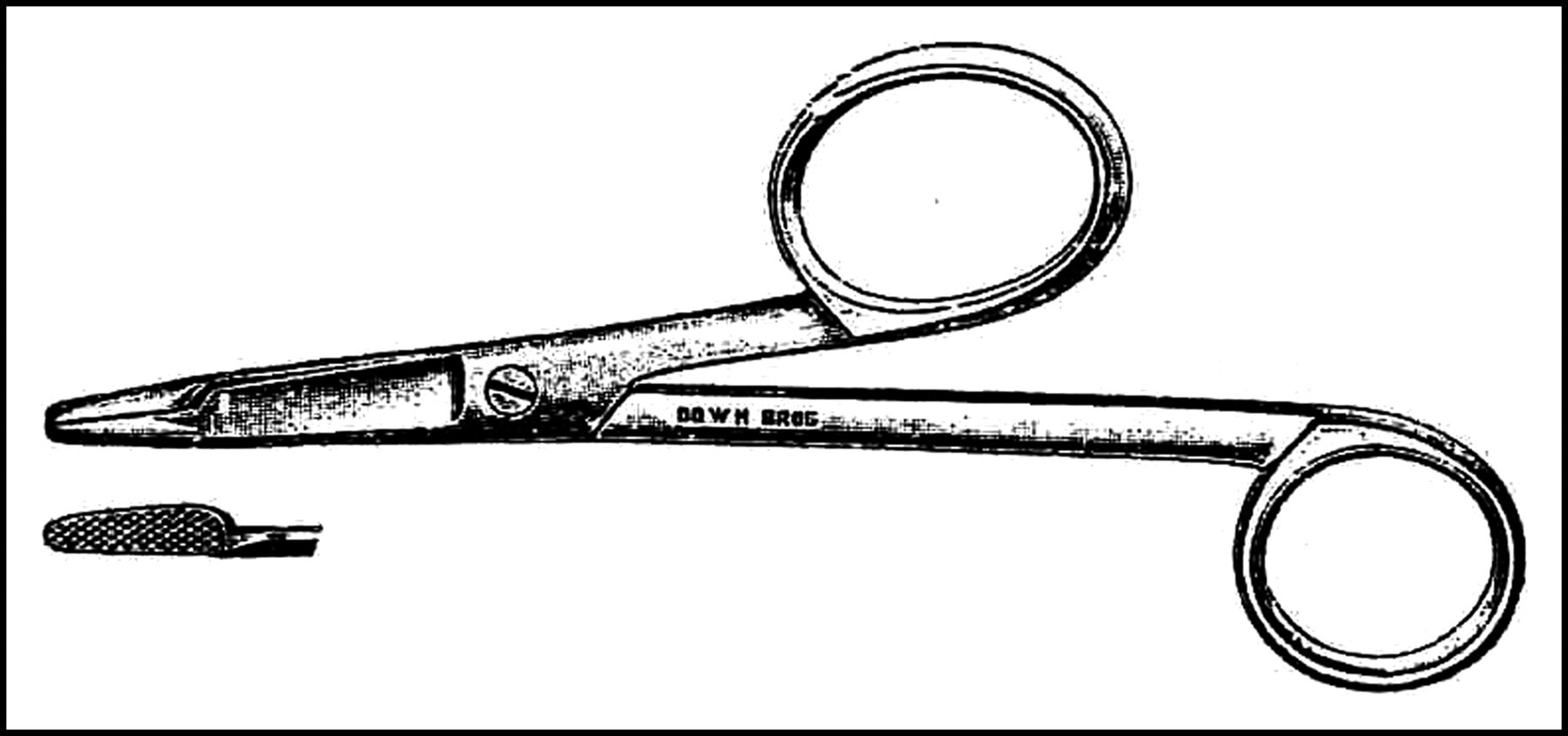
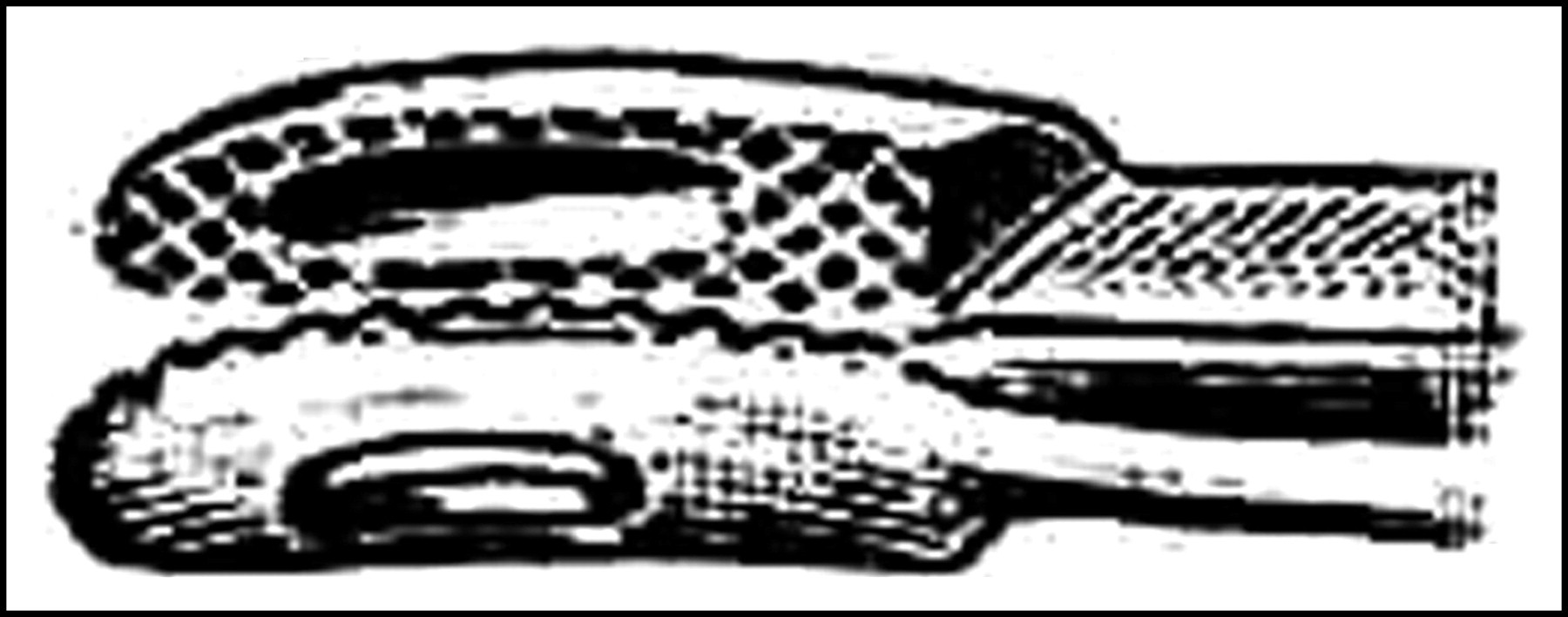
Exactly when Gillies introduced similar needle-holder/scissors is not clear before their illustration in his book Plastic Surgery of the Face published in 1920 (Figure 2) and their modification before 1929 when one jaw was fenestrated and the other excavated to secure needles in-line (Figure 3). Both the Patiala and Gillies instruments accelerated wound closure; later versions were unfenestrated with diamond or tungsten jaw surfaces.
‘Patiala scissors’ (Down's Instrument catalogue, 1929) Gillies' first version of needle-holder scissors (Down's Instrument Catalogue, 1929) Jaws of Gillies' second version of needle-holder scissors (Down's Instrument Catalogue, 1955)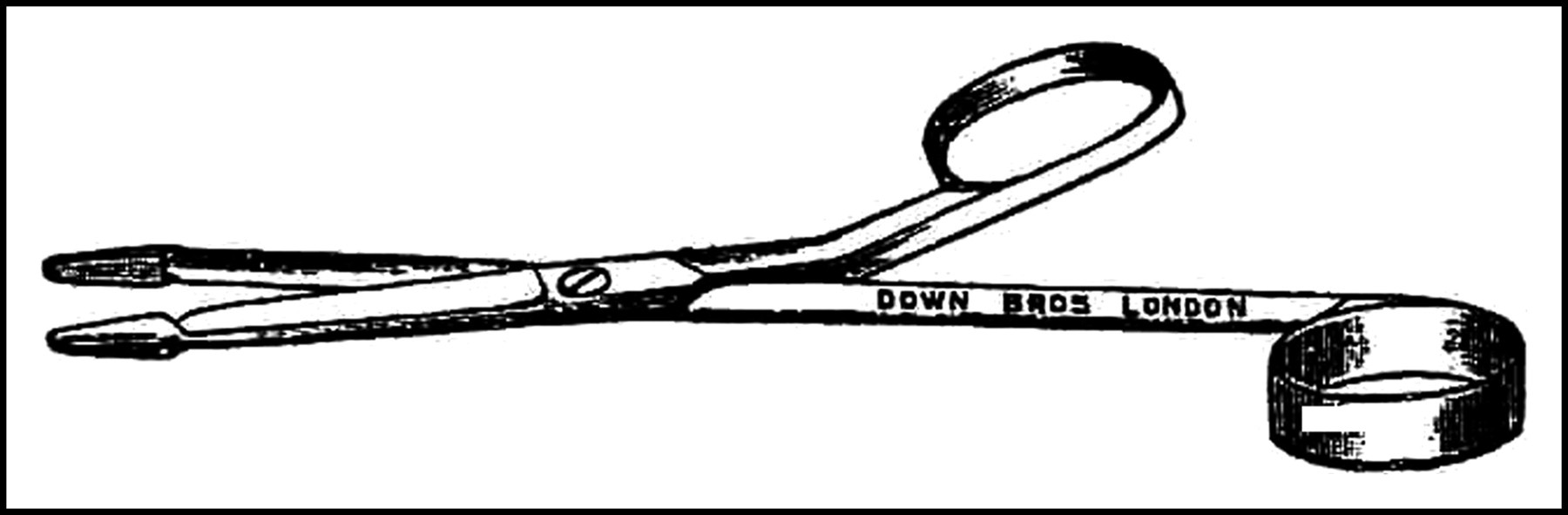
Born in New Zealand, Gillies studied medicine at Cambridge, gaining Blues for rowing and golf. He qualified at St Bartholomews' Hospital in 1908 and became FRCS in 1912. He specialized in otolaryngology but in 1914 volunteered for general duties with the Red Cross in Flanders where he recognized the neglect of severe maxillo-facial wounds. Persuading the Army to provide special facilities for facial trauma, first in Aldershot and then at Sidcup, Gillies developed skin, bone and cartilage grafting techniques, often by multiple stages requiring great patience on the part of victim and surgeon. Remarkable results were achieved for former hopeless cases. 2 After the War he practised in London, trained future plastic surgeons, acquired an international reputation and was knighted in 1930. During World War II he organized plastic surgical units throughout the UK and continued repairing the shattered faces of the war-injured. Post-war he founded the British Association of Plastic Surgeons, becoming its first president and also president of the International Society. In 1957 he co-authored The Principles and Practice of Plastic Surgery. He was still operating at the age of 78, when he died suddenly. 3
Gillies needle-holder/scissors retains its name and not just in Britain, for the members' tie of the Dutch Plastic Surgical Society is emblazoned with his instrument – an instrument that illustrates how a powerful personality and successful contributor eliminates the memory of original innovators.