




Abstract
Dr William Allen Miller developed an early interest in science and astronomy at secondary school. Although qualifying in medicine, he pursued a career in Chemistry at King's College, London. A particular interest in spectrum analysis led to a collaboration with Dr Huggins in examining the spectra of stars. For this work they each received the Gold Medal of the Royal Astronomical Society. His subsequent work at King's College, the Royal Society, the Courts of Law and for various Government enterprises earned him an outstanding scientific and advisory reputation.
William Allen Miller 1 was born in Ipswich, in Suffolk on 17 December 1817 (Figure 1). His early education was conducted by his mother, a 1ady of remarkable sagacity, good sense and religious feeling. Those who had the privilege of her friendship could trace in her son many points of mind and manner in which he resembled her closely. He attended Merchant Taylors' School for one year and, subsequently, at Ackworth in Yorkshire for two years at a school belonging to the Society of Friends. William Allen (1770–1843) FRS, the manufacturing chemist and author, conjointly with Mr William Hasledine Pepys (1775–1856), of well-known researches on respiration, was the friend after whom Miller was named. It was at Ackworth that Miller first distinctly remembered having acquired a taste for science and a desire to devote his life to it. This was not so much from the chemistry lessons as from the fact that Miller occasionally was invited to look at the stars through a telescope belonging to one of the masters. These early impressions bore fruit in the study of the chemistry of stars with which his name is now associated.
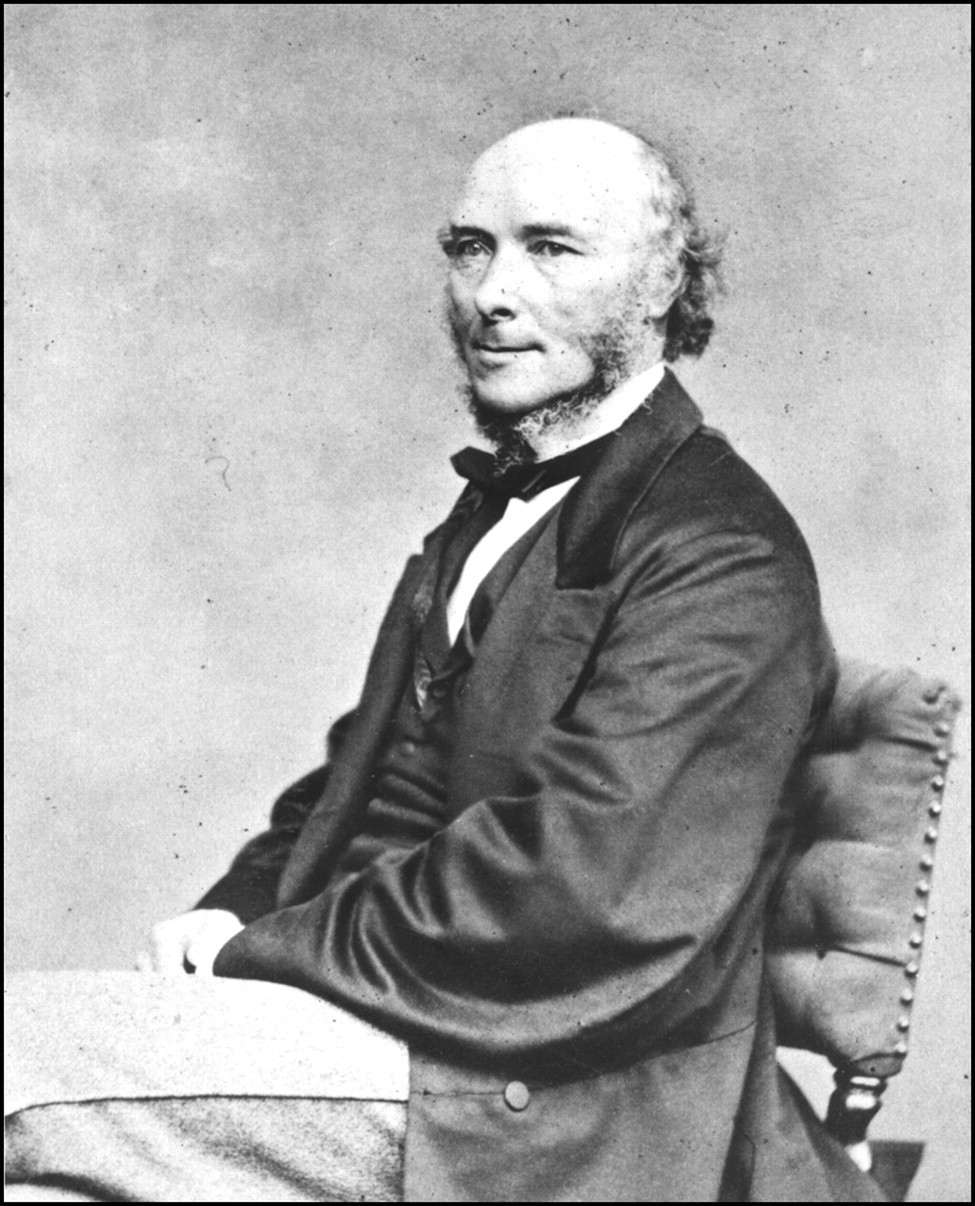
Portrait of WA Miller (reprinted courtesy of the Royal Astronomical Society Library)
At the age of 15 he was apprenticed to his uncle, Mr Bowyer Vaux (1782–1872), one of the Honorary Surgeons in the General Hospital at Birmingham of which, during nearly 20 years, his father, Mr William Miller, was Secretary. After five years he entered the medical department of King's College, London, where his superior knowledge of chemistry over that of the other students attracted the attention of Professor JF Daniell (1790–1845). Miller had no taste for surgical practice and preferred, when possible, to obtain employment in the laboratory of a manufacturing chemist rather than become a medical practitioner. But when the laboratory assistant at King's College became disabled by illness, Daniell engaged the services of Miller. In 1840 he visited Germany and passed some time in Liebig's laboratory at Giessen. In the same year, when the office of Demonstrator in the laboratory became vacant, Miller was appointed to the post. Incidentally, in 1839 Miller obtained the Warneford Prize for the encouragement of theological studies among medical students. In 1841 he became Assistant Lecturer for Professor Daniell and also took his degree of MB in the University of London, proceeding MD the following year. He assisted Professor Daniell in various scientific inquiries and conducted experiments on the electrolysis of saline compounds. Miller married Eliza Forrest of Birmingham in 1842.
In 1845 he was elected a Fellow of the Royal Society and, on the death of Professor Daniell, succeeded to the vacant Chair of Chemistry in King's College. Dr Miller was engaged about this time in experiments on Spectrum Analysis that were conducted in a sort of lumber-room beneath the Chemical Theatre and formed the subject of a paper that was read before the British Association and published in 1845, 2 and thus he became interested at an early period in the subject of spectrum investigation.
Miller continued for several years to teach using Professor Daniell's textbook Introduction to the study of Chemical Philosophy, supplemented at a later period by George Fownes' (1815–49) Manual of Chemistry. But he finally decided to produce a new work and the first volume was devoted to Chemical Physics. He stated ‘he decided to leave untouched the work of his late master, as the true exponent of his views, upon some of those branches of science which his researches had contributed to advance and adorn’. The two subsequent volumes on Inorganic Chemistry and Organic Chemistry that appeared in 1856 and 1857 respectively were written from Miller's lecture-notes, as was Chemical Physics.
The three volumes of Miller's Elements of Chemistry 3 passed through several editions and were reprinted in the USA. While not professing to set forth any marked original views, the work affords a clear and comprehensive exposition of the science and soon became deservedly popular. In the later editions Miller adopted the new method of notation in chemistry.
As a lecturer Miller was more successful in style and expression than he was as a writer. One outstandingly brilliant lecture was that on Spectrum Analysis, given before the British Association at Manchester in 1861 at a time when Kirchhoff's researches had made the subject more than usually popular. One part of this lecture was devoted to an historical review of that remarkable branch of chemico-physical research; and such little attention had been paid to this part of the subject that when a large audience was collected to hear, as they supposed, an account of Kirchhoff's discoveries, they were surprised to find the German physicist Gultav Robert Kirchhoff (1824–87) occupying the end of a long series of illustrious names, from Newton in 1701 to the English chemist William Hyde Wollaston FRS (1766–1828) and the German optician Joseph von Fraunhofer (1787–1826) in 1815, while the various other names were arranged after the fashion of a genealogical tree, under the four heads of: (1) Cosmical lines, (2) Absorption-bands, (3) Bright lines produced by the electric spark, and (4) by coloured flames; the four branches uniting in the names of Kirchhoff and the German chemist Robert Wilhelm Eberhard Bunsen (1811–99). The lecture was illustrated by several experiments, at that time as remarkable for their novelty as for their brilliancy. At this meeting he presided over the Chemical Section and read a short paper on ‘Photographic Spectra of the Electric Light’. The full account of his researches on this subject, based upon many experiments, was laid before the Royal Society and is published in the Transactions for 1862.4 These researches seem hardly to have received the attention they deserve.
This lecture was repeated before the Pharmaceutical Society of London on the evening of 15 January 1862 and printed in the Society's Journal for February of that year. 5 The historical details given in it have largely been used by subsequent writers, presenting, as they do, in a very clear manner the results obtained by the earlier workers on the Spectrum. It was on returning from this lecture to his house at Tulse Hill, with his friend and neighbour Dr William Huggins (1824–1910) [Figure 2], that Miller agreed to a proposal made by Dr Huggins that they should unite in carrying out a series of experiments on the spectra of the heavenly bodies. At this time Miller was engaged in an elaborate series of experiments that formed the subject of a paper read before the Royal Society on 19 June 1862, ‘On the Photographic Transparency of various bodies’ and on the ‘Photographic effects of metallic and other Spectra obtained by means of the Electric Spark’. 6

Portrait of Huggins (reprinted courtesy of the Royal Astronomical Society Library)
The joint work of Miller and Huggins lasted for more than two years. Since the observations could only be made at night, they must have been exhausting for two very busy men. The first results of their observations are given in a note on ‘the lines in the spectra of some of the fixed stars’ dated February 1863 7 from which it appears that a considerable time was devoted to the construction of an apparatus for this study and they had at length ‘succeeded in contriving an arrangement which has enabled them to view the lines in the stellar spectra in much greater detail than has been figured or described by any previous observer’. They further commented ‘during the past 12 months, they had examined the spectra of the Moon, Jupiter and Mars, as well as of between 30 and 40 stars’. When their studies were sufficiently advanced, they published their results in a memoir entitled On the Spectra of some of the Fixed Stars. 8 At a later date there were further joint notes in the Monthly Notices of the Royal Astronomical Society and in the Proceedings of the Royal Society, dated 1866. 9
Messrs Miller and Huggins, for their ‘conjoint discoveries in Astronomical Physics’, each received the Gold Medal of the Royal Astronomical Society in 1867; and on the occasion of presenting these medals, the President, the Reverend Charles Pritchard (1808–93), Savilian Professor of Astronomy at the University of Oxford remarked that the progress of science had led to the query ‘What is a star?’ ‘For the first dawning of a distinct and intelligent reply to this question we are indebted to Messrs Huggins and Miller. We find them associated in the examination of the spectra of stars by means of an admirable and newly contrived apparatus which required much thought and labour to construct. With this instrument attached to the telescope it was possible not only readily to divide the sodium line D into its two compartments, but to exhibit also the nickel line, which Kirchhoff had observed between them. The spectra of the stars were now, in the first instance, compared approximately with the superposed atmospheric spectrum for the purpose of suggesting what metallic lines probably existed in the star under observation; and then were compared directly, by actual juxtaposition, with the actual spectra of those metallic vapours, which had been already determined. It seems impossible to conceive any process more rigidly or conscientiously exact than that which Messrs. Huggins and Miller thus skilfully adopted; the attainment of the ultimate object of the research depended, not on any approximation, however close, of the stellar with the metallic spectra, but on the certainty of their absolute coincidence. In this way, during the space of two years and a quarter, many of the midnight hours of these gentlemen were passed in the scrupulous examination and measurement of the spectra of upwards of 50 stars; but in several instances the number of the fine dark lines, the inevitable indices of the material constitution of these distant worlds, were so numerous, that to measure and map them all the labour months would barely suffice. The physical result of all this scrupulous and conscientious care was to discover the fact, or it may be to confirm the suspicion, that those mysterious lights with which the firmament is spangled are in strict reality worlds fashioned, in their material constitution at least, not altogether differently from the fashion of the little orb on which we live; beyond the question of a doubt they are proved, by the investigations of our medallists, to contain at least the hydrogen, the sodium, the magnesium, the iron with which all terrestrial creatures are so familiar’.
Miller gave three courses of lectures at the Royal Institution, in 1854, 1859 and 1867, the latter comprising four lectures on ‘Spectrum Analysis, with its applications to Astronomy’. 10 He also delivered three Friday Evening Discourses on ‘The Theory of Bleaching’ (1843), ‘Research in Electrical Decomposition’ (1844) 11 and ‘The Photographic Transparency of Bodies’ and ‘The Photographic Spectra of the Elemental Bodies’ (1844). 12
The breadth of Miller's interests and knowledge was extraordinary; one such was the subject of water analysis. In conjunction with Professors Thomas Graham FRS (1805–69) and August Wilhelm Hofman (1818–92), he prepared a report for the Government ‘On the Chemical Quality of the Supply of Water to the Metropolis’. 13 This was printed in 1851. At a later period he undertook an investigation ‘on the Combined Action of Air and Water on Lead’, and in 1865 gave a lecture before the Chemical Society ‘on Some Points in the Analysis of Potable Waters’. 14
The Royal Society consulted Miller frequently as a referee for publications and the many subjects upon which he advised were as disparate as his knowledge. 15 He was, incidentally, a very stern critic of poor science!
Having been elected to the Fellowship in 1845, Miller served on the Council of the Royal Society during the years 1848–50 and 1855–57, and was elected Treasurer and Vice President on 30 November 1861 and he served on the Council in this official capacity until the time of his death. His methodical and punctual habits, his knowledge of affairs and his excellent judgement, with the earnest and lively interest he took in the welfare of the Society, rendered his special services as Treasurer of the utmost value; whilst the same qualities, combined with his attainments in science, fitted him singularly well for the various duties he had to perform as Member of the Council and a Chief Officer of the Society. In 1866 Dr Miller was nominated a Member of the Committee then appointed for the purpose of superintending the Meteorological Observations made by direction of the Board of Trade and he served until the time of his death. He was also an active Member of the Committee of the British Association for superintending the Kew Observatory and he devoted much time to that work.
While a Member of the Committee appointed to advise on the scientific arrangements for the marine researches carried on during the voyage of the Porcupine in 1869, Dr Miller designed a thermometer adapted for taking deep-sea temperatures. 16
Miller was one of the original founders of the Chemical Society of London in 1841 and often presided over its meetings, as well as occupying a place on its Council Board. Dr Miller was a Member of the Senate of the University of London, to which he was appointed on the recommendation of Convocation in 1865 and his sound judgement and knowledge generally, as well as his accomplishment in chemical and physical science and his experience as a teacher, gave great weight to his opinion in the deliberations of that body.
In addition to the various honours that recognized Miller's position as an outstanding scientific man, he received the degree of LLD at the University of Edinburgh, DCL at the University of Oxford in 1868 and LLD at the University of Cambridge in May 1869 (after giving the Reade Lecture which on this occasion was on the Coal-tar Colours).
Perhaps the most marked feature in Miller's character was wisdom combined with a deep sense of religion. His religious views may be determined from an address entitled ‘The Bible and Science’ delivered at the Church Congress in Wolverhampton in 1867 and also from his ‘Introductory Lecture’ on the opening of the Medical Session at King's College in 1859, published under the title Hints to the Student on Commencing his Medical Studies.
A notice in Chemical News at the time of Miller's death summarizes the outstanding qualities of the man: ‘During a quarter of a century Miller continued to lecture with unceasing activity and to take part in the management of King's College; everyone, from the Principal and Professors to the youngest student, being anxious to obtain his advice and assistance. It was impossible to come in contact with him without feeling one's self in the presence of a man of pure nature, of spotless integrity, of sound and sagacious judgement, and of true gentlemanly feeling. His loss will be deeply felt, especially in King's College, in the Royal Society, in the Mint, and the Bank of England, where he was one of the Assayers. He will be missed in the Courts of Law, where his clear perception of patented processes, and his strong sense of justice, made him respected alike by judge and counsel. He will be missed by the many manufacturers who sought his advice.’
Miller died on 30 September 1870 from apoplexy on the anniversary of his wife's burial, at the comparatively early age of 53. They are both buried in the cemetery at Norwood in South London. They were survived by a son and two daughters. Miller's name lives on today, since he was the nominated discoverer of a crater on the moon.17
Footnotes
Acknowledgements
I am indebted to the librarians of the Royal Society and to Mr Peter Hingley, Librarian of the Royal Astronomical Society for all their help and tolerance and wish to acknowledge the help of those at the Royal Society of Medicine, the Royal Pharmaceutical Society, the Royal Society of Chemistry and the Royal Institution. I have drawn gratefully and considerably on the Obituary Notice of the Royal Society and the Presidential Address on Presenting the Gold Medals to Huggins and Miller.
Be careful about reading health books. You may die of a misprint. Mark Twain
We sow what we reap, both as individuals and as societies.Wilson AN. The Victorians. Arrow Books. 2003:17