




Abstract
Nikolai Kulchitsky is best remembered for his identification of the Kulchitsky (enterochromaffin) cell. His life spanned a teaching and scientific career at Kharkov University, employment as the Imperial Minister of Education for all Russia, work in a soap factory and flight from the Russian Revolution to London, and a position at the University College with Elliot Smith. His subsequent contributions to the anatomic delineation of dual nerve-endings in the muscle were highly regarded, although his identification of the enterochromaffin cell (1897) remains his enduring scientific legacy. The observation of a cardinal neuroendocrine cell of the gut formed the basis for the subsequent delineation of the diffuse neuroendocrine system and provided the cellular framework on which the discipline of gut neuroendocrinology would be established. Kulchitsky's mysterious demise in a bizarre lift-shaft accident at UCL on his 69th birthday tragically terminated a life of service to science.
Background and early life
Nikolai Konstantinovich Kulchitsky was born on 29 January 1856 in Kronstadt, 30 km west of St Petersburg, on the small island of Kotlin near the head of the Gulf of Finland. Kulchitsky's genealogy harbours a rich tradition of military, aesthetic and scientific practice dating back to 1377 where the first written record of the Kulchits clan was in a village near Lvov, in present day Ukraine. Among notable ancestors was Yuri Kulchitsky (1640–94), a celebrated defender of Vienna who was imprisoned by the Turks in the late 1660s and immersed himself in Turkish culture. In 1683, during the final crucial months of the siege of Vienna, his Turkish language skills allowed him to penetrate the Turkish forces and guide the Austrian troops through the lines to defeat the Ottoman army. As a reward Yuri received 300 bags of Turkish coffee beans and became the patron of the first kaffeehaus in Vienna on 13 August 1684.
Nikolai was the younger of two sons of Konstantin Kulchitsky, a junior officer in the Czar's Army. His elder brother Pyotr (1854–1921) was a captain in the Belevsky 71st infantry division before promotion to Colonel on 11 April 1908 (Figure 1). Upon retirement in 1912, Pyotr was promoted to General-Major. Following the Bolshevik Revolution of 1917, he worked in the Kazan's communal department where he was arrested on 28 October 1920 and labelled a ‘critic and opponent of the Soviet government’; he succumbed in a concentration camp on 21 March 1921. On 31 May 2002 his official rehabilitation was recognized formally.

Nikolai Kulchitsky (1856–1925) (right) with wife Evgeniya Vasil'evna (1862–1932) (left), brother Pyotr (1853–1921) (centre) and daughter Ksenya (1883–1946) (centre) in Warsaw, Poland, where Pyotr was stationed, c. 1890
Unlike Pyotr and all their cousins, Nikolai declined to follow his father's footsteps, eschewing a military career in favour of academic science. His elementary education was undertaken at the Tambov Gymnasium, a well-recognized nurturing ground for exceptional students and he graduated in 1874 with high honours and a silver medal. Such was the legacy of Tambov that one of Russia's great romantic poets, Mikhail Lermontov (1814–41) memorialized it in The Tambov Treasurer's Wife (1838). 1 Shortly thereafter, Lermontov perished in a duel that many considered to be little more than a czarist conspiracy to eliminate the agitator.
Kulchitsky's career at Kharkov
Upon completion of his studies at Tambov, Kulchitsky enrolled at the medical faculty of Kharkov University (founded in 1804 by Vasyl Nazarovych Karazin [1773–1842]) in Southern Russia, regarded then as the premier medical and intellectual research centre of Imperial Russia (Figure 2). Kharkov University had produced scientific luminaries including Ilya Ilyich Metchnikov (1845–1916), recipient of the 1908 Nobel Prize in Medicine for the description of phagocytosis and contributions to the elucidation of the mechanisms of immunity. 2 In 1880 Kulchitsky was awarded an undergraduate degree with distinction and published his first manuscript describing the terminations of motor nerves in muscle entitled On the structure of nerve endings in motor muscles. 3 This was followed by On the origin of red blood corpuscles in mammals. 3 In 1882 he was awarded an MD for his thesis on the structure and function of tactile corpuscles in the papillae of the beak and tongue of birds, On the structure of corpuscles of Grandry. 4 Thereafter he joined the staff of Kharkov University where he remained for 27 years earning a substantial reputation as a teacher and scientist. In November 1883 Kulchitsky was promoted to the rank of Privat-Docent and began to lecture on histology and embryology. Such was his success as a teacher and mentor that within the decade, on 16 June 1890, he was appointed Professor- Extraordinarius and three years later, on 17 August 1893, elevated to the full Professorship of Histology; a position he retained for 17 years until 1910.

University of Kharkov Medical Faculty building (c. 1910)
The scope of Kulchitsky's initial histological investigations was broad although, in most instances, not especially novel or creative. He described the presence of leukocytes in the tonsillar and gut epithelia, and contributed to the assessment of the fertilization process in Ascaris nematodes. Indeed his work might generally be characterized as a careful elaboration of observations documented initially by others. Of particular importance, however, was his description of the presence of three varieties of cells in the cardiac glands of the mammalian stomach (mucous neck cells, parietal cells and chief cells) and his proposal that different physiological (digestive) functions were possible within one gland. In 1897 his most important report documented the delineation of the ‘peculiar’ cells of the intestinal epithelium 3 that subsequently were referred to as ‘Kulchitsky’ cells. He identified these structures first at the surface of the intestinal villi and in the glands of Lieberkühn and drew a parallel to studies that had been undertaken earlier by Rudolf Peter Heidenhain (1834–97), albeit failing to comment upon key similarities. Both scientists were somewhat unclear as to whether the cells they identified were components of the gut mucosa or had migrated from elsewhere. ‘Equal to Heidenhain, I tried to elucidate under which conditions the epithelial cells with the acidophil granules emerge. The results of my observations are slightly different from those that Heidenhain obtained from his work on leucocytes.’ 3
By 1902 Kulchitsky's scientific contributions had earned him a national and international reputation amplified further by publications of books on the subject of histology and microscopy (Teachings of Microscopy and Techniques of Microscopic Investigations) 5 and methods of research. His texts, especially the Foundations of Histology in Animals and Humans completed in 1902, 6 were regarded as the standard Russian texts on the subject and by 1912 had encompassed five editions. These contributions were recognized by the award to Kulchitsky of the Zagorsky Prize of the Army-Medical Academy in St Petersburg (1912). Apart from descriptive histology, Kulchitsky was an accomplished histochemist and responsible for several modifications of the Weigert-Pal method of haematoxylin staining for medullated nerve fibres. The subsequent widespread adoption of this methodology and its relevance to the characterization of diverse lesions of the central nervous system led to his global recognition and appreciation by neurologists.
Family life in Kharkov
Nikolai, his wife Evgeniya Vasil'evna (1862–1932) and their four children, daughters Ksenya (1883–1946) and Mariya (1896–1972) and sons Aleksandr (1894–1970) and Dimitry (1898–1985), lived modestly in an old residential neighbourhood near Kharkov's city centre. Their house had been bequeathed to Evgeniya Vasil'evna by a distant relative who was a widow of a wealthy merchant. In his memoirs, Nikolai's youngest son Dimitry noted: It had three bedrooms with two windows each looking on to the street. It looked small from outside. It had [a] ground and first floor, with a big courtyard. There were two wings, one on each side. One was used by our family and the other was rented by a certain Mrs Johansson, who sublet it. Because of its location in the old part of the city, and because of its big courtyard and the large number of people living there, the house attracted all kinds of strange characters: street hawkers, buskers, and so on.
7,8
In the evenings Nikolai established an atmosphere of aesthetic, musical and literary appreciation, characteristic of the Russian intellectual community at the time. Dimitry wrote further: When I was born, my father was a conscientious University lecturer who loved the theatre. He also had an interest in literature and would read us famous literary works. He was a tenor – although he did not have a trained voice – and a self-taught violinist. Unfortunately, he could not pursue a musical career as such because he had lost a finger due to an accident in the University laboratory. He would play at times, and when I was skilful enough on the violin we would play together, with my sister accompanying us on the piano. We played pieces such as Braga's Serenade and Glinka's less complicated works. Sometimes when my father's friends were visiting they would also join in. It was a marvellous time.
7,8
Kulchitsky's efforts to promote appreciation of art and music left a deep impression on Dimitry (known later by his stage name Dimitry Rostov). As a youth Dimitry studied gymnastics and, after enlisting as a junior officer in the White Army on the German front in 1918, exercised his talents further as a singer in the army's music and dance groups. His subsequent career evolved as a professional dancer and he toured widely including Berlin, Rome (where he also took a law degree at the University of Rome), South Africa and Australasia before he finally settled in Lima, Peru, in 1943. Dimitry was widely recognized for his lead role in Fokine's ballet Paganini based on the life of the virtuoso Niccolo Paganini (1782–1840). This part had especial attraction to him given his own personal skills as a violinist. 9
Educator and administrator
In 1910 Kulchitsky, in a magnanimous gesture, retired voluntarily from administrative duties at the University of Kharkov to ensure that younger members of his staff might have better prospects of promotion. He remained on the faculty and continued to lecture and administer exams. In a letter dated 30 September 1911 to Ksenya (Sevastopol), Nikolai wrote: I am required to spend all my time administering exams, all other affairs have been moved aside and became as though not mine at all … Nonetheless, I continue to teach while awaiting my replacements. Yesterday's lectures had an immense turnout and concluded to a vociferous applause and pleadings not to abandon lecturing.
7
Although permanently retired from Kharkov University, Kulchitsky was not idle and, at the request of the Government, on 27 February 1912 he accepted the position of Director of Education in Kazan, the capital city of the present day Republic of Tatarstan.
10
At the time, Kazan's educational infrastructure was well organized, consisting of four universities, 124 middle schools, 27 pedagogical facilities and a thousand professional and elementary schools. Kulchitsky is quoted on this infrastructure as saying: This, of course, is quite fine and attractive; however, we are not to terminate the progress, for much like everything else in life, education needs to develop without a momentary indication of a delay. Pedagogues should not be interrupted by the thought that they've achieved everything.
11
On 30 June 1914 Kulchitsky was promoted to the prestigious responsibility of Director of Education for the St Petersburg district and on 27 December 1916 he achieved the dubious distinction of being appointed the last Minister of Education of all Russia, assuming thereby the educational leadership for the entire nation of 182 million people.
12
It is important to note that at the time of his appointment Kulchitsky, although not exhibiting a particular political philosophy, was characterized as a conservative administrator. His son Dimitry notes that Nikolai was a prominent right-wing university lecturer.
7,8
Such an outlook can best be described as corresponding to a belief that ‘freedom and democratic reforms in institutions of higher education should be limited’ as they have a tendency to initiate Revolutionary movements. Unfortunately, this particular perspective, as history demonstrates, can have an ironically adverse effect on an already tense majority. Nevertheless, Kulchitsky himself was not politically active and did not publicly claim support of one or other political party. He was, as he stated, ‘a believer in lawfulness, order, and peaceful and conscientious labour for the benefit of the Russian people’. Such principles can be inferred from a speech he delivered in 1897 at the monument to Nikolai Ivanovich Pirogov (1810–81), the Russian surgeon who introduced the teaching of applied topographical anatomy in Russia and was among the first to use ether in Europe: Pirogov had a limitless resource from which he sought inspiration and energy – an eternal and noble love of his motherland. He held a profound conviction that all he ever did belonged to his people first and the rest of the world second.
7
However, Kulchitsky's tenure as Minister of Education was short-lived, lasting only 67 days! His appointment came immediately after the murder of Grigory Rasputin (1869–1916) on 16 December 1916 as Nicholas II (1868–1918) vainly sought to replace his cabinet of ministers with a more conservative group. 13 Despite conforming to this general characterization, Nikolai was noted also for his liberal decisions, particularly the admission of 17 Jewish students from Warsaw to a veterinary school in Novochersk where Jews had previously been denied admission. In addition he had formalized the much-delayed appointment of two Jewish Privat-Docents who previously had been blocked by Kulchitsky's predecessor Pavel N Ignat'ev (1870–1926).
Unfortunately, the educational influence that Kulchitsky might have exerted remains conjectural since the turbulent times that thereupon enveloped him and his family sundered the political and social infrastructure of the Russian Empire. The Royal family and numerous aristocrats were murdered, and the politics of anarchy and war held sway as the intelligentsia and education were dimmed in the gloom of the revolution.
The revolution and Kulchitsky's flight
On 3 March 1917 Kulchitsky was arrested and sent to the Petropavlovskaya Krepost (Peter and Paul Fortress), built in 1703 as the original stronghold of St Petersburg. During the Czarian rule and the revolution it served as a prison for members of the high cabinet. In his diary, Colonel GA Ivanishin, a guard at Petropavlovskaya Krepost, noted that Kulchitsky was held captive in the 61st cell of the Trubetskoy bastion from 4 to 12 March. 14 Although fortune favoured the Minister of Education, many of Kulchitsky's colleagues were less fortunate and executed by the Bolsheviks. These included the Minister of Internal Affairs, A Protopopov (1918), the Military Minister, M Belyajev (1918), and the Minister of Justice, N Dobrovolski (1918), as well as the Chairman of the Department of Ministers, N Golitsin (1925). How or why Kulchitsky was spared remains unknown. Kulchitsky attributed his good fortune to his accomplishments as Minister of Education and particularly his resolutions involving the Jewish intellectuals but it is likely that his international scientific reputation saved him from an ignominious death.
Despite his survival, the respite was bittersweet in that he was stripped of all property, positions and personal assets. Nevertheless, the family remained physically unscathed although Kulchitsky, his wife and his youngest daughter, Mariya, were banished to Kharkov. Ksenya and her husband, Eugenie Petrovich Goloubinov (1880–1937), escaped to Sevastopol and the two sons, Aleksandr and Dimitry, were drafted for frontline military duty. In Kharkov Kulchitsky, who had previously acquired experience making soap for embedding histological tissues, laboured at the Technical Institute of Kharkov supervising the production of commercial soap, at that time a scarce and expensive commodity. Doubtless, the irony of cleansing the aristocracy was not lost upon the revolutionary supervisors of the Kharkov soap factory!
During the summer of 1918, pillaging Bolshevik armies created appalling conditions at Kharkov and forced Kulchitsky and his family to flee the city, embarking on an arduous 394-mile journey by foot and cart (18 miles a day for 22 days) to Sevastopol where his eldest daughter Ksenya and her husband (Eugenie Petrovich) resided with their two children, Natalja (1907–21) and Vladimir (1912–68) (the father of Victor Goloubinov – a co-author of this manuscript) at 5 Admiralskaya Street. Ksenya was an economist and her husband Eugenie, a decorated officer (2nd and 3rd degree medal of St Anna and 2nd degree medal of St Stanislav) and military doctor resided here (Figure 3). Kulchitsky's sons were then drafted into the military: Aleksandr to the Eastern Front in Irkutsk under General Kolchak (1874–1920) and Dimitry to Poland.
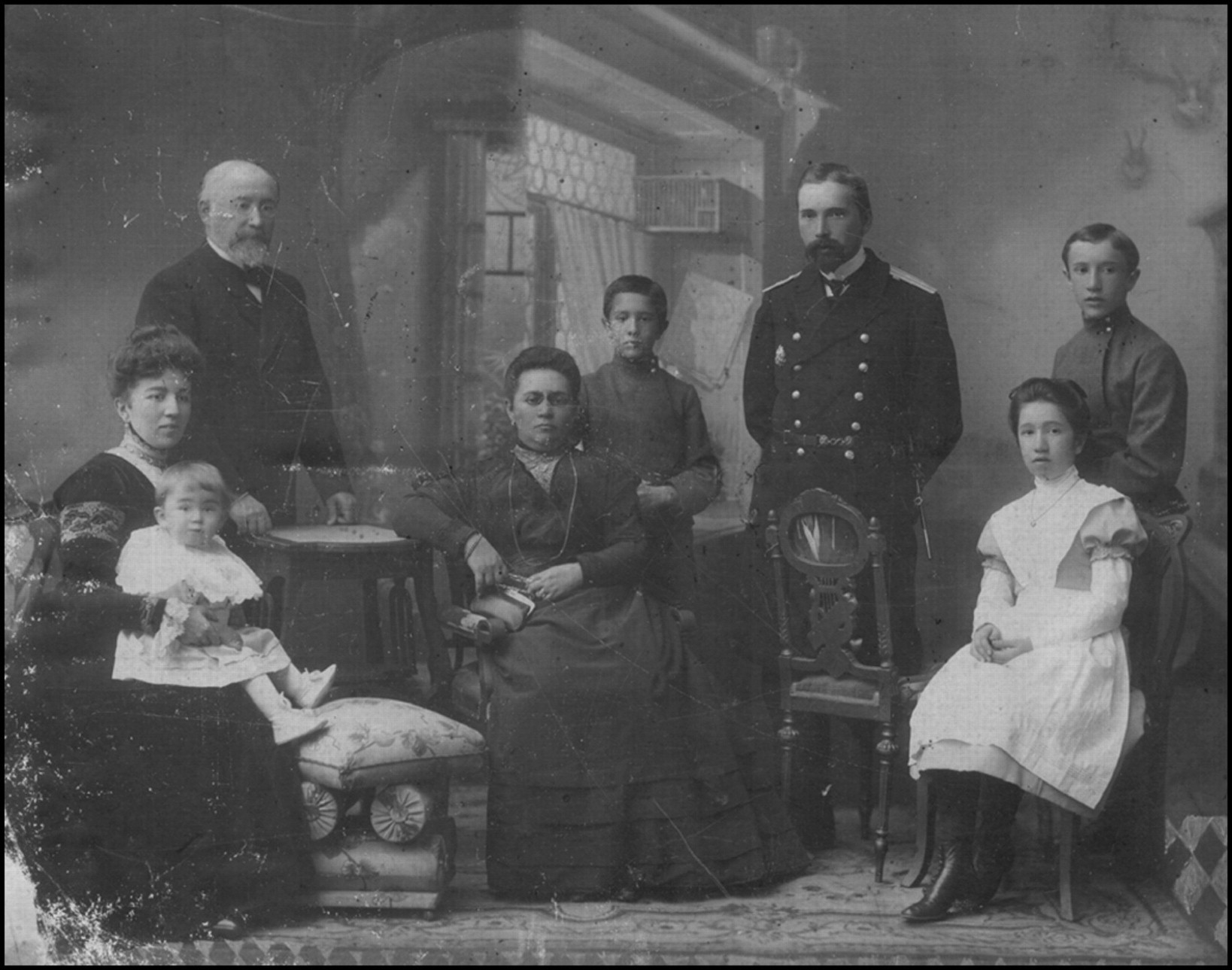
Kulchitsky and family in Kharkov (c. 1908). From left to right, Ksenya holding her daughter, Natalja, Nikolai Kulchitsky, Evgeniya Vasil'evna, Dimitry, Eugenie Petrovich Goloubinov, Mariya and Aleksandr
Despite the brief reprieve afforded by their flight from Kharkov, the political stability in Russia deteriorated inexorably as the Bolsheviks, in an attempt to maintain the control of Moscow, defeated General Anton Denikin's (1872–1947) army in October 1919 at Orel. Faced with the prospect of being over-run by the southern advance of the Bolshevik front, Kulchitsky reluctantly fled to Malta with his family. As members of the elite, they were afforded passage on the English Iron Duke-class battleship HMS Marlborough commanded by Captain CD Johnson, which the British government had provided to rescue members of the Russian Imperial Family. Other fugitives included, most notably, Her Imperial Majesty Empress Mariya Feodorovna (1847–1928), the aunt of King George V (1865–1936) of England, as well as Prince Felix Felixovich Yusupov (1887–1967) who had plotted the death of Rasputin.
In April of 1920 Denikin's successor, Baron General Pyotr Wrangel (1878–1928), assumed the command of the anti-Bolshevik forces in the Crimea and Kulchitsky, ever the monarchist optimist, returned to Sevastopol and once more resumed soap-making, albeit now for the Russian Fleet. This obsession with returning to his homeland was characteristic of many Russian academics and patriots of the time, reflecting both their failure to accept the demise of the old order as much as their intrinsic national pride. Any hope that stability might be restored was dashed when, in December 1920, General Wrangel's strategic front collapsed and further chaos supervened. Despairing of a solution and fearing for the safety of his family, Kulchitsky, Evgeniya and Mariya fled once more, joining about 5000 Russian refugees who comprised the remnants of the defeated White Army, civilians, aristocrats and academics. This motley group embarked aboard a squadron of 33 Russian War ships, the remnants of the Black Sea Fleet, and fled to the port of Bizerte, a French stronghold in Tunisia. After three months at the Bizerta refugee camp, it became apparent that the schism between the Bolsheviks and the Russian aristocracy was irreparable and Nikolai, Evgeniya and Mariya, together with 74 other scientists, 31 of Professorial status, were accorded safe passage to England in April of 1921. 15
Ksenya and Eugenie Petrovich remained with their two children in Sevastopol. Eugenie, being an officer and having the same evacuation privileges as Kulchitsky, declined to leave his typhoid-stricken and wounded troops and remained in the assigned hospital, denouncing emigration. In 1930 Eugenie and Ksenya were arrested and sentenced to 10 years and three years, respectively, in separate labour camps. Ksenya, having served her sentence in Kazakhstan, sought Eugenie and finally identified his labour camp adjacent to the village of Obor on the river Bira, Khabarovsk Krai, 30 km from the Chinese border. Despite the desperate conditions, she acquired a position as a servant at the camp in an attempt to provide some support. However, Eugenie Petrovich Goloubinov perished in 1937 while still a prisoner of the GULAG, a cipher among the 1.76 million people annihilated by the GULAG machine in the years between 1930 and 1953. 16 After the demise of her husband, Ksenya moved to Saratov and lived there until her death in 1946.
Kulchitsky in London
On arrival in London Kulchitsky, an Imperial Minister of the Czar, found himself unemployed, penniless and unable to speak English. Fortunately, rumours of his arrival and his scientific reputation had preceded him, reaching the neuroanatomist Elliot Smith (1871–1937) who swiftly secured Nikolai's services for the newly created Department of Anatomy at University College, London (UCL). 17,18
Since there were no vacancies that fitted Kulchitsky's level of expertise and he lacked knowledge of English, he was assigned initially as an assistant to the Australian anatomist, Raymond Dart (1893–1988). In his company Kulchitsky resumed his scientific investigations at UCL and soon was fondly referred to as the ‘Old Professor’. Despite his age and the language impediment, Kulchitsky proved to be a source of inspiration and invigorated the anatomic histology group. Dart later would recount: I ran to the laboratory where I found the bold intellectual. Only recently, during the Czarist regime, he was the Minister of Education in Russia and additionally one of the most renowned explorers of the microstructure of the nervous system. Soon, we learned to communicate in broken French and German. Although, and unjustly so, he was a meagre assistant in my laboratory, it was from him that I learned so much, which in 1923, upon my arrival to Johannesburg, allowed me to present lectures in micro- and macrobiology.
19
In 1921 Professor Jan Boeke (1874–1956) of Utrecht, a well-known neurohistologist, anatomist and historian, visited London and shared his expertise on the dual innervations of striated muscle. Following the lectures, Kulchitsky's intellectual curiosity was aroused and within six months he had prepared a series of superb gold chloride demonstration slides of python muscle that culminated in the publication of Nerve Endings in Muscle. 20,21 The paper elegantly demonstrated the presence of two distinct types of nerve endings in snake muscle, typical motor end-plates connected with medullated nerve fibres and more diffuse grape-like endings connected with non-medullated fibres which Kulchitsky regarded as possibly sympathetic. 21
Despite the major translocation from an Imperial administrator and Senator of the Czar to the role of a modest university fellow, Kulchitsky adapted without demur and was well-received by the scientific community and the University faculty. On 11 July 1924 he was informed of his reappointment to the Anatomy Department at UCL, which he accepted with gratitude despite the fact that only a few years previously he had been responsible for overseeing hundreds of academic institutions and the entire education system of the country a thousandfold larger than England! In October 1924 he produced his second UCL paper on Nerve Endings in the Muscles of the Frog 3 which utilized the methylene blue technique upon which he was a well-known authority. Kulchitsky was cautious in his work and rarely speculated upon his findings, noting, ‘Young men can afford to make mistakes, they have time to correct them but that is not possible for me’. In this respect Kulchitsky appears to have been consistent throughout his career in preferring to describe and define rather than opine. Possibly in later years this reflected the maturity of a dedicated scientist coupled with the insecurity of his tenuous position in London and the concern that scientific errors might culminate in dismissal and a return to penury.
Family life in London
On arrival in London, Kulchitsky, Evgeniya and Mariya acquired an apartment at 37 Fellows Road, in Hampstead NW3 (Figure 4). In an attempt to reach out to their sons, Nikolai and Evgeniya posted a note in Russian and European newspapers hinting at the place of their current residence and, shortly thereafter, Dimitry joined them in England. However, Aleksandr chose to remain in Irkutsk and thereafter in Moscow where he worked as an economist until 1970.
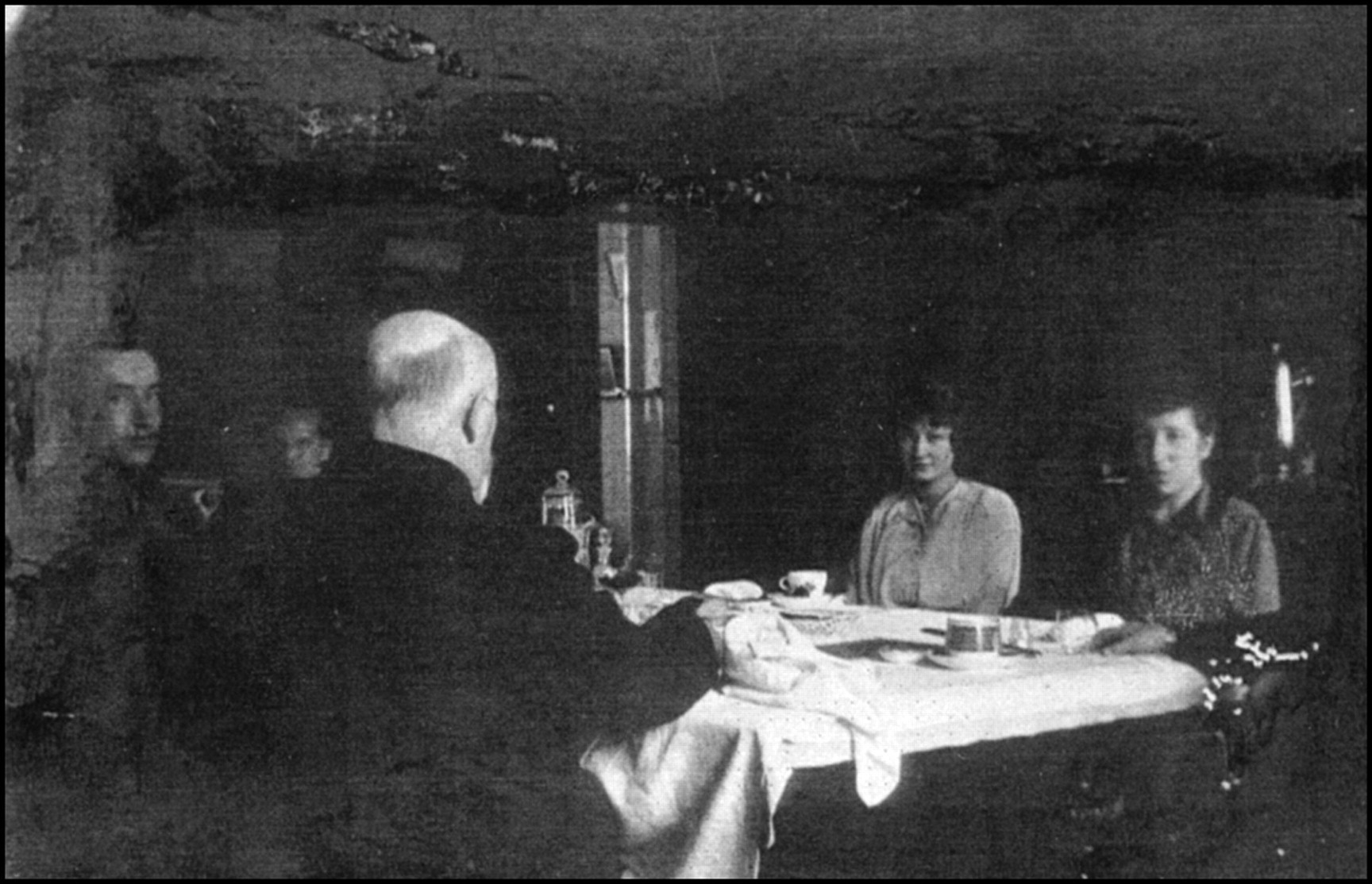
Kulchitsky (back to camera) with son Aleksandr (left), daughter Mariya (dark dress facing camera) and unidentified woman (light dress) in St Petersburg (c. 1915)
However, the grief of separation from his eldest daughter Ksenya had turned the Professor to melancholy and anxiety. In a letter to Sevastopol Nikolai wrote, ‘I work of course quite a lot, but most importantly, I'm worried constantly about everyone and often with no particular reason. I come home, eat my dinner and further cannot do anything’. 7 All correspondence Kulchitsky attempted to send to Sevastopol, including worn clothes and some money, was lost and Ksenya was forced to borrow in an effort to protect her family and to fight for the life of her daughter Natalja who subsequently perished from diphtheria.
Dimitry continued to pursue his dancing career but such an endeavour was not easy. Kulchitsky noted: Mitya is beginning to earn a substantial living. He is a lead actor in ballets, but his finances are poor. His dress is also unacceptable. Some things are still non-existent, so our prosperity and well being are far away, nonetheless, thank God! He is very taken in by his role and exhausts all of his strength, he lost weight substantially and recently became unwell – most likely a consequence of exhaustion. He is busy 8 hours daily doing physical work and that's a great effort. He does not return home before 12 am, dines on the go, sleeps very little since rehearsals begin promptly at 10 and it's a half an hour from us to the theatre.
7
A tragic ending to a long journey
On the morning of Thursday, 29 January 1925 employees of the Waygood-Otis Lift Company undertaking their monthly inspection of the elevator in the Anatomy Department at UCL left the ground floor lift gate open without the elevator parked at that level and thus ensued the tragedy that would terminate the life of Kulchitsky. JP Hill (1873–1954), Professor at the Embryology Department, noted in his letter to the Provost of UCL, Lord Chelmsford that ‘The Professor, apparently assuming that the lift was there, walked into the well and fell two floors to the sub-basement’. 22 The fact that it was his birthday and that he had risen from a modest family on a Baltic island to become an Imperial Minister of the Czar, and survived the Russian Revolution, may have crossed his mind briefly as he plummeted to his fate in a gloomy lift shaft. Kulchitsky died at UCL Hospital on the evening of the following day at 12:20 hours and the funeral service took place on Thursday, 5 February at 9:45 hours at the Russian Church at 188 Buckingham Palace Road (the present day site of Victoria Coach Station).
How Kulchitsky came to walk into that empty lift shaft will forever remain a mystery. Possibly he was reminiscing about the dream of the night before where he saw Ksenya and woke up in tears. Evgeniya wrote to Ksenya: January 29th, Thursday, daddy woke up as always, told me that saw you in his dream, talked to you, and woke up in tears … Afterwards he got all ready to leave, began to put some clothes on, did not put on a coat yet, but in a scarf and hat walked into the kitchen and said: ‘My dearest soul, I will return late … ‘[probably because of his histological work]. I was busy with something and didn't even glance at him and did not see him out – I was clueless that he was leaving for good ….
7
In the aftermath of the tragedy, a series of correspondences between UCL, legal representatives and the Waygood Lift Company plumbed the depths of morbid reflection and mundane bureaucratic preoccupation with minutiae and mendacity. Finally an agreeable resolution was reached: ‘The accident was clearly caused by the negligence of Waygood-Otis Co Ltd who was repairing the lift at the time’. 23 Of concern was the question of liability and damages, particularly since the Kulchitsky family was impoverished. Waygood-Otis proffered a meagre sum of £50 and a further munificent sum of £41 was provided by UCL to cover the expenses of the funeral. Evidence has not been found to indicate that the Lift Company's money was accepted but the family's legal representative, JJ Withers, noted in correspondence that the sum was absurd. 23 Legal action did not follow despite the impoverished circumstances of the Kulchitsky family since his wife had not mastered English. A further issue that obfuscated the resolution was that UCL's legal counsel concluded that since Waygood-Otis had been invited on to the property of UCL, technically it was UCL which was ‘legally responsible’ for the accident! Thus, to prevail in a court of law Mrs Kulchitsky would have to successfully sue UCL who then in turn would be forced to sue the elevator company! Although all correspondence was addressed to Madame Kulchitsky, all responses (gracious and elegant in composition) emanated from Nikolai's youngest daughter Mariya who, at 29, was the only family member fluent in English and whose role included caring for her mother. The emotionally devastated Madame Kulchitsky, unwilling to negotiate monetary compensation after suffering such a painful loss, must surely have reflected bitterly on the fate of the family. A decade earlier they had been confidantes of the Czar of all Russia and now they needed to borrow funds for a funeral! While rumours of the involvement of a Russian secret society Cheka (the first of Soviet secret police organizations dedicated to the eradication of aristocrats and politicians who had escaped revolutionary justice) abounded, these were never established as related to the demise of Kulchitsky (Figure 5).
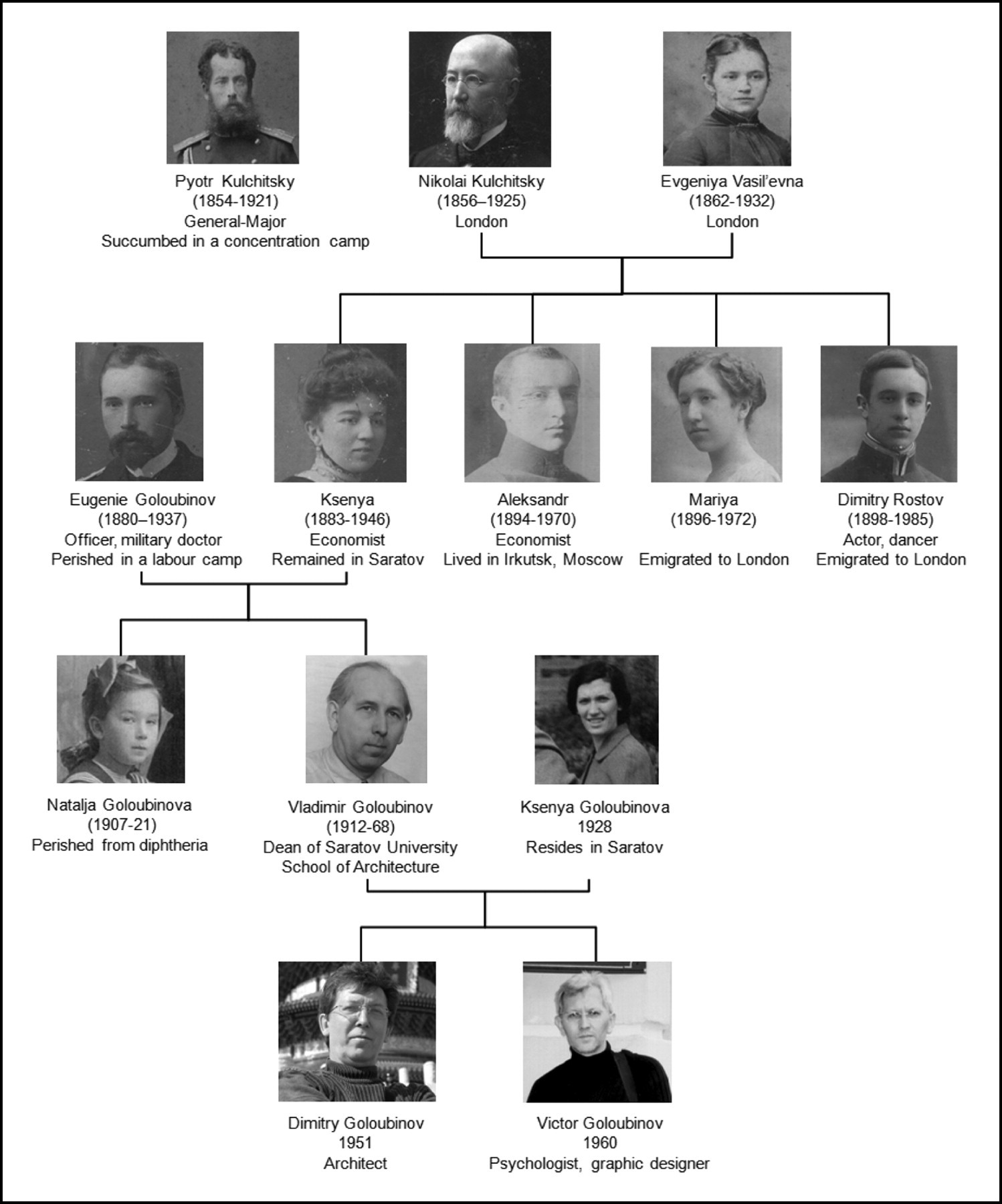
The Kulchitsky family legacy. Nikolai Kulchitsky's older brother Pyotr, a General-Major in the Czar's army, was sentenced to a concentration camp where he succumbed on 21 March 1921. Aleksandr Kulchitsky never emigrated and lived in Irkutsk and later Moscow, working as an economist. Dimitry Rostov developed a successful acting career travelling to France, Italy, Peru, Australia, Africa and finally settling in London, England. Nikolai Kulchitsky's youngest daughter, Mariya, emigrated with the family to London and remained there until her death in 1972. Kulchitsky's eldest daughter Ksenya, having served a three-year sentence in a labour camp, moved to a village of Obor 30 km from the Chinese border to find her husband Eugenie Goloubinov who was serving a 10-year sentence there. Eugenie perished in the labour camp and Ksenya moved to Saratov and worked as an economist. Natalja, the daughter of Ksenya and Eugenie, died of diphtheria at the age of 14 while in Sevastopol. Their son, Vladimir, became a Dean of the School of Architecture at Saratov University. Vladimir has two sons, Dimitry (named in honour of Nikolai Kulchitsky's youngest son) – a decorated architect – and Victor – a psychologist and a graphic designer. Dimitry has three children, Phillip, Yekaterina and Mariya, and Victor has a son, Vsevolod
Kulchitsky's cremated remains lie interred with his wife Evgeniya and daughter Mariya at Beckenham Cemetery, London marking the final destination of an extraordinary journey and a life dedicated to service, science and education.
Nulla Crux, Nulla Corona.
Footnotes
Acknowledgements
This work was supported by the Bruggeman Medical Foundation. We would like to express our gratitude to Victor V Goloubinov, the great-grandson of Nikolai Kulchitsky, for providing us with access to previously unpublished primary family documents and sharing his personal knowledge of the family and the times.