




Abstract
Summary
The chemistry of light examines the work of Dr Theobald Palm. After his graduation from Edinburgh University, Palm joined the Edinburgh medical mission and was sent to Niigata in Japan where he remained for 10 years. During this time he noted the absence of rickets (a disease rife in Britain) in Japanese children and instituted a survey from which he deduced that sunlight deficiency was implicated in the aetiology of rickets. Unfortunately, he was largely ignored by the medical world. This paper seeks to contextualize his work. By placing Palm's study within a historical and social framework, its reception can be explained more easily.
Rickets is essentially a form of malnutrition … sunlight is essential to the healthy nutrition of growing animals and is the most important element in the aetiology of rickets. – TA Palm 1
Theobald Adrian Palm was born on 22 January 1848 in Colombo, Sri Lanka, into a missionary tradition, his father and grandfather both being Presbyterian missionaries. 2 In 1874 after his graduation from Edinburgh University he joined the Edinburgh Medical Missionary Society and became their first and only representative to be sent to Japan. 3 Initially he lived in Tokyo for a year with his wife Miss Collas before moving to Niigata, a small treaty port on the west coast of Honshu where he remained until his return to the UK in 1884. With the help of his assistant, Mr Amenomori, Palm introduced antiseptic practice to Japan and began to observe the effects of sunlight on rickets, which resulted in his letter to The Practitioner in 1890. 4 He died on 11 January 1928. 2
A brief history of rickets
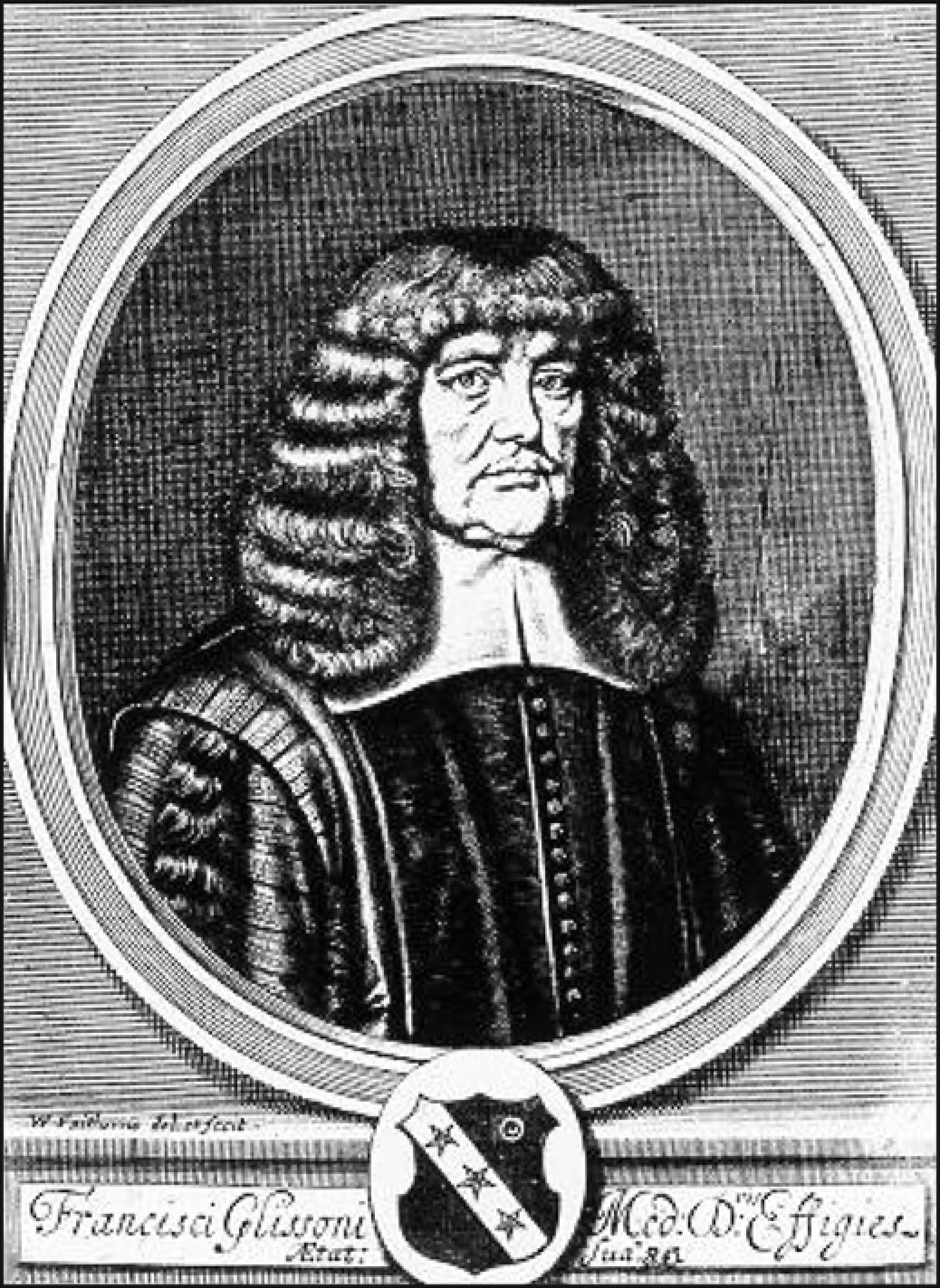
In 1634 a new disease by the name of rickets was included in the mortuary tables of England. 5 Hitherto this disease was unknown to the majority of doctors. In 1645 Daniel Whistler (1618/9–84), a medical student, wrote the first book on the condition. However, Whistler's work was believed to be based largely on speculation and hearsay as opposed to personal experience and therefore was disregarded. 6 Five years later, in 1650 Francis Glisson (1597–1677), a physician (Figure 1), wrote his treatise on rickets, ‘De Rachitide’, which was translated into English in 1651. Critically acclaimed and held in high regard even in the present day, Glisson gave detailed descriptions of the effects of rickets upon the bones and viscera. His work was the result of a study performed by him and seven other physicians this previously undescribed condition. 5
A portrait of Francis Glisson (1597–1677), British physician and anatomist and author of ‘De Rachidite’ (reproduced courtesy of the Clendening History of Medicine Library, University of Kansas Medical Centre)
Rickets soon spread throughout northern Europe but its incidence in England was so high that it became known as ‘The English Disease’. 7 This name was never more fitting than in the 19th century. The end of the 18th and beginning of the 19th centuries heralded a new era – the ‘industrial revolution’. Industry boomed and the factories that were built to accommodate this change emitted waste from their coal furnaces into the sky. In London and other major cities, much of the 19th century was spent in partial darkness under a cloud of smog. The lack of sunlight meant that the incidence of rickets increased rapidly in the major cities and affected all classes (although it was predominant in the poorer working classes). 8
Until the beginning of the 20th century, the cause of rickets was not known although many hypotheses were offered ranging from too much alum in bread 9 to lack of exercise. 10 In 1918 Edward Mellanby (1884–1955) showed an antirachitic vitamin present in cod liver oil 11 and in 1919 Kurt Huldschinsky (1883–1940) cured rickets using ultraviolet lamps. 12 The isolation of vitamin D in 1922 by Elmer McCollum (1876–1967), 13 and the subsequent realization that it could be synthesized in the skin, helped bring the era of rickets to an end, as milk and margarine in Europe and America were fortified with vitamin D by irradiation, 14 thus practically eradicating the disease.
Rickets in the 19th century
As the incidence of rickets increased, so did endeavours to discover its cause and treatment. Before the advent of the industrial revolution, rickets was chiefly a disease of the poor, associated with poor diet and living conditions including overcrowding and poorly ventilated housing. As the disease broke the class boundaries and ‘spread’ to the wealthier classes, alternative causes began to be investigated.
A paper by J McDonald Brown clearly summarizes the three theories of the time: dietetic, hygienic and diathetic. 15 The dietetic argument surmised that inadequate diet was the cause of rickets with the popular belief that early weaning and lack of phosphorus and lime in the diet were causative factors. The hygienic theory inferred that rickets could be attributed to ‘any cause that impairs or lessens the general well-being of the child during the early months of life’. 15 The diathetic hypothesis presumed a constitutional predisposition to rickets. That is, a rachitic inclination that could not be avoided. Those who believed rickets to be largely hereditary supported this theory.
However, even though new avenues of thought were being explored, the established focus on diet would define the path that 19th century research into the aetiology of rickets would largely follow.
Walter Butler Cheadle (1835–1910), an eminent paediatrician, was particularly involved in research into rickets. In 1882 he was famed for distinguishing between scurvy and rickets. 16 Until then they had often been referred to as one, a disease named ‘scurvy-rickets’. In his paper of 1888 Cheadle concluded that rickets was ‘primarily a diet disease which can be caused at will by rachitic diet … and cured as certainly by antirachitic diet’. 17 Cheadle stated that a lack of animal fats constituted a rachitic diet. He then asserted that defects of hygiene, which included a lack of sunlight, were important but only in severe rickets. It is also important to note that ‘defects of hygiene’ are always referred to as a collective implying that a singular defect would not be sufficient to cause rickets. However, Cheadle's reasoning was that defects of hygiene, although an exacerbating factor, could not be a primary cause as children from wealthy families who lived in sanitary conditions also suffered from rickets.
An experiment in which rachitic lion cubs at London Zoo were cured using cod-liver oil seemed to confirm Cheadle's hypothesis. 6 Previously, in the mid-19th century an investigation into the low prevalence of rickets in Jewish children had concluded that their diets were higher in fats and oils, thus granting them immunity from rickets. 18
Interestingly, Palm replied to Cheadle's article. In his response he declared: ‘Only a passing message was made to the want of light as one factor of the disease and one to which little importance was attached’. 19 He continued: ‘our smoke laden atmosphere … helping to exclude the rays of the sun are the direct opposites of the conditions prevailing in the “Land of the Rising Sun” [and] the most rational treatment would be the systematic use of sun-baths’. 19
Influences
So, we may ask, in the midst of a nutritional mindset what inspired Palm to investigate the relationship between sunlight and abnormal bone development? In his article Palm cites two studies that had already been conducted into the geographical distribution of rickets, one confined to the British Isles and the other on an international scale.
The former was an article published in the British Medical Journal in 1889, only one year before Palm's own article was published in The Practitioner. The editorial was entitled ‘Reports of the collective Investigation committee of the British Medical Association. Geographical distribution of rickets, acute and sub acute rheumatism, chorea and urinary calculus in the British Isles’. 20 The results of this report were displayed in a series of maps which unfortunately were neither reprinted in the journal nor available to view. However, from reading the article and reading Palm's work it is possible to decipher the map's legend. Three colours indicated disease prevalence: purple, red and blue. In blue areas the incidence was high, in red areas relatively lower, and in purple areas it was negligible. The survey confirmed that rickets was prevalent in highly industrialized regions. Aside from the wealthy, residential Royal Borough of Kensington and Chelsea, London was predominantly blue. The busy northern territories of York, Lancashire, Derby and Cheshire and the midland county of Birmingham were also blue. It was noted that ‘two definite principles of distribution' 20 were apparent. ‘Blue accumulating in large towns and thickly peopled districts especially where industrial pursuits are carried on, while red prevails in the rural districts’. 20 Surprisingly, the journal did not attempt any explanations or hypotheses for this distribution pattern.
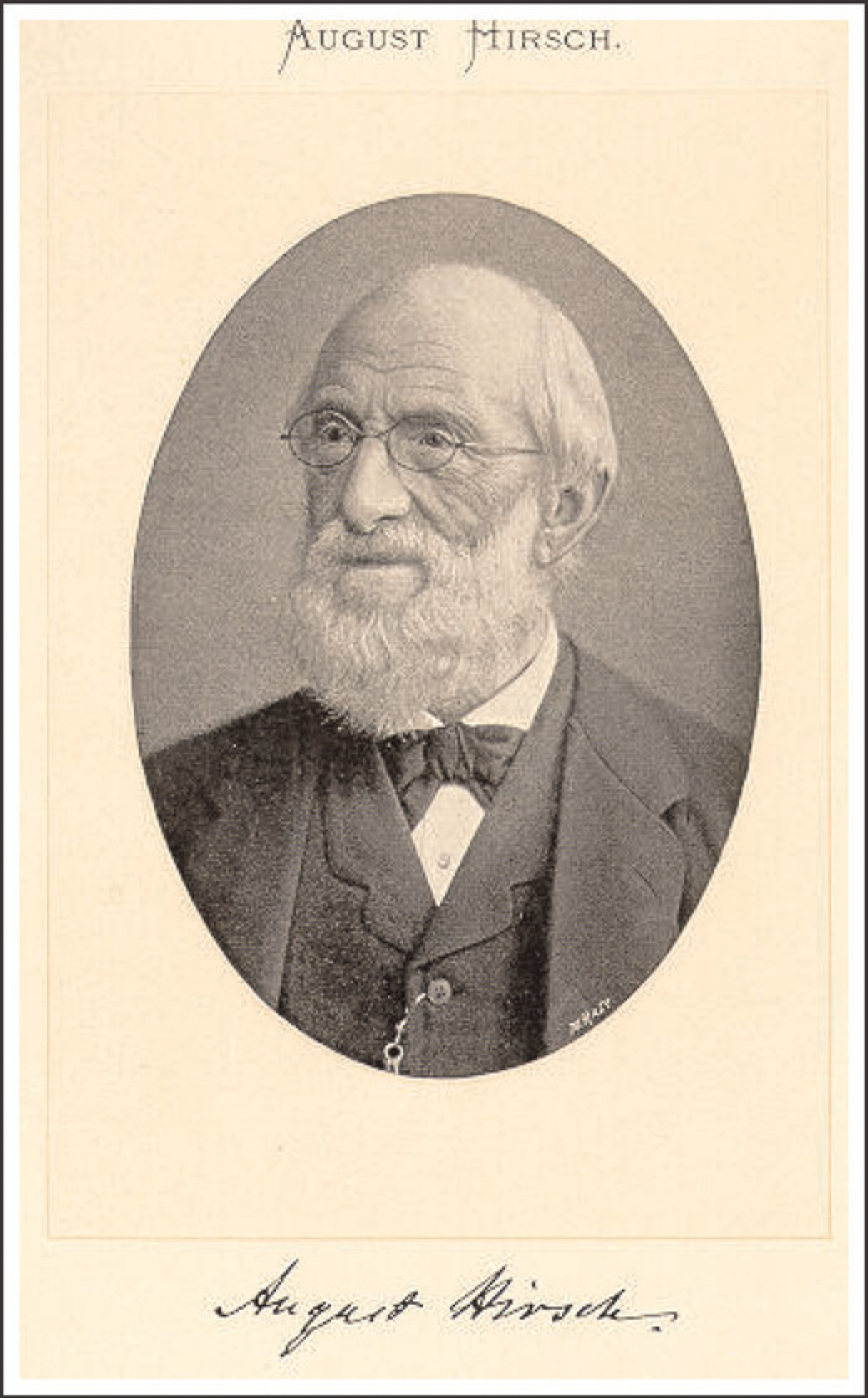
The latter was the third volume of August Hirsch's (1817–94) (Figure 2) Handbook of Historical and Geographical Pathology 21 published in 1886. Here Hirsch mapped the geographical distribution of many common diseases, rickets included. Hirsch reiterated the already widely known fact that rickets was commoner in the temperate zones of northern Europe and the north of the USA while rare in tropical regions including Madagascar and the Pacific islands. Hirsch drew attention, as did many physicians of the time, to the fact that differing climates contribute to the incidence of rickets not by reference to sunlight but by reference to the quality of the air and, more unusually, the soil. Temperate regions with rachitic children were deemed to be badly ventilated and contained impure air and the soil was damp. In hotter climates Hirsch alludes to the lower prevalence of rickets to the fact that people walk around in the open, clean air and to the dry soil. 21 This is supported by his reference to children in cities being moved to the countryside and the practice in some European countries of sending children to Java where they could be cured of rickets without need of medical intervention. 21
A portrait of August Hirsch, German physician and medical historian (1817–94) (reproduced courtesy of the Clendening History of Medicine Library, University of Kansas Medical Centre)
So was Palm's work entirely original if Hirsch had already suggested the possible role of sunlight deficiency? It is important to note that, although Hirsch does refer to climate, reference to sunlight is not made directly; Hirsch focuses on the quality of the air and the soil.
To perform such a large-scale epidemiological study, Hirsch used data collected from children's hospitals and dispensaries which, according to their country of origin, varied in reliability. Hirsch himself stated that there were ‘meagre contemporary data on the geographical area of rickets' 21 and he relied therefore on historical data which was also insufficient. Undoubtedly this would have inspired Palm to collect ample contemporary information to ensure the credibility of his hypothesis.
Survey
Palm wrote:
If we find the disease to be unknown where the diet and sanitary conditions are even worse than where the disease prevails, we can no longer regard them as prime factors in producing the disease. On the other hand, if we can point out any condition common to those climates or localities where the disease is unknown, which is at the same time markedly deficient where the disease prevails, we may infer it to be the most important element in the case. 1
In essence, Palm's hypothesis was based on a process of elimination. Did he design his survey with his theory of sunlight in mind or was this finding incidental? The letter he wrote to the British Medical Journal in reply to Cheadle's article was dated 1888 19 and, although we do not know when Palm started his study since he makes no mention of it in his letter, it is reasonable to assume it was commenced after that time. Although copies of the questionnaire are not available to view, Palm notes what it contained. He states:
With a view to eliciting information first hand from medical men practicing among the native populations in China, India and elsewhere, the writer has addressed a series of questions to medical missionaries in these countries with regard to the prevalence or absence of rickets, the habits of the people, and their climatic and sanitary conditions. 1
Palm's study spanned eight regions of China, four of India, parts of Morocco and, of course, Japan.
In China only one case of rickets had been seen, in Shautung province by Dr Shrubshall and that was out of 4387 patients. It was unanimously agreed that sanitation in China was poor as was diet. The people lived chiefly on rice. The infants were often nursed for two or three years. With regard to the climate, aside from two months of rain it was always hot and sunny. The people lived in small, badly ventilated accommodation; coal was used in cooking and due to the inadequate ventilation, smoke usually filled the room, doing nothing to ameliorate the already close conditions. However, much of their time was spent outdoors in the sunshine and until they reached six years of age many of the children walked about unclothed. Exceptions were in Hangchow and Canton where the houses were said to be well-ventilated. Although the Chinese did not suffer from rickets, they had all the other afflictions common in Europe. 1
India was very much the same, with the highest incidence being reported in Kashmir where Dr Arthur Neve (1859–1919) saw perhaps one case a year; he remarked: ‘I regard the altitude and mountain air as the two chief points of dissimilarity between the condition of this and the English cities. Do these account for immunity?’ 1 Once again the obvious difference of sunlight had been overlooked.
In Rajpuntana, Palm was in correspondence with Dr William Huntly (1859–1913) who was himself conducting a study into the aetiology of rickets. In fact, Huntly's brochure Habits and Diets of the natives of Rajputana, with reference to the Aetiology and Treatment of rickets was published in 1889, 22 a year before Palm's article but importantly a year after he sent his reply to the British Medical Journal. Huntly had only seen one case of rickets in 10,000 children. He chronicled the diets of his patients and it became apparent that they lived almost entirely on a starchy carbohydrate diet. He drew attention to the fact that his observations ‘afford a complete contradiction of Dr Cheadle's view …’ 1 After giving a review of the poor sanitation and ventilation in the region, he concludes: ‘What have they to counterbalance the evil of the filth and dirt surrounding them? The answer, I think, is sunlight’. 1
The other correspondents in India confirmed the previous reports on the lack of sanitation and the poor ventilation of the housing, worsened by the burning of coal fires indoors. Like the missionaries in China, they relayed that the Indian people spent much of the time outdoors, merely using their houses as sleeping chambers and to cook food.
In Morocco, Dr Churcher of Tangier told of how those in the rural districts resided in homes without windows and he described cleanliness as ‘nil’. 1 However, he had not seen a case of rickets among the indigenous people.
Finally, Palm reported at length his own findings in Japan. He recounted how he had seen a degree of pigeon breast (one of the clinical symptoms of rickets) but was unable to recall a marked case of rickets. The Japanese were said to live in extremely poor sanitary conditions with lack of sewage and ‘effluvia passing into the dwellings’ 1 due to the situation of the lavatories. Although the houses were badly ventilated, he noted that the use of paper in the windows as opposed to glass partially compensated for this as it allowed some exchange of gases.
The climate was said to vary between regions with some areas colder than Northern Scotland during the winter months. However, in Niigata in the summer it was fairly hot with temperatures reaching 25°C. Palm describes how the climate produced ‘miasmatic poisons favoured by the heat’ and there was a high prevalence of malarial diseases. 1 However, by noting the absence of rickets it is implicit that rickets is not caused by poor quality air, and thus the theories of Hirsch and many others were rendered invalid.
Palm deduces that ‘seeing that rickets is essentially a form of malnutrition it is most natural to think first of food in studying its aetiology. But a comparison of the dietary [sic] of non-rachitic with that of rachitic populations does not show any advantage to the former’ 1 and thus ‘we can only infer that, after all, the food plays a secondary part in the malnutrition of rickets’. 1
To explain his findings, Palm alludes to ‘The Chemistry of Light’ 1 and surmises (albeit not so succinctly) that if deficient or excessive light upon plants has an effect on the plant's life the same must be true of humans. Light must have an effect in morbid conditions of the human. Palm concludes that sunshine recorders be placed in the midst of cities so that their exposure to the sun's rays could be measured and that rachitic children be removed to the countryside, and he suggests the use of sunbaths as a preventive or therapeutic measure and the education of the public in the redeeming qualities of sunlight. 1
How was Palm's revelation received?
Although Palm is now credited with a great discovery, at the time he was not so well-received. His article was not met with the worldwide acclaim that we might expect. Upon reading the high impact journals of the time (the Lancet and British Medical Journal) released after Palm's article, there is no mention or discussion of his theory and he is not included in the index catalogue of the library of the Surgeon General of the USA, 23 which listed most medical articles of the time from all over the world. The first reference to Palm in such journals is in a paper in the Lancet of 1899 by Charles Elgood, entitled ‘A note on the aetiology of rickets’. 24 Elgood cites Palm to support his statement that the rural poor have poorer dietary conditions than the urban poor; however, he does not make an argument for sunlight in the causality of rickets. Rather, his article puts forward the view of inherited susceptibility; Elgood does render a degree of support to Palm's theory: ‘… bad food and what is probably of much more importance, want of sunshine operate with greater force on children with inherited susceptibility.’ 24
However, Palm's work is used to support his own theory as opposed to being viewed as a valid causation in its own right. So why was Palm essentially ignored?
In the late-19th century, much work on the aetiology of rickets was focused upon the effects of diet. Physicians and scientists alike had noted the impact of changing diet upon the incidence of rickets. It was not thought there would be two causes. Carter suggests we bear in mind that the latter part of the 19th century was the bacterial age and concerned with positive effects on aetiology (i.e. the consequences of pathogens); to explain how deficiency could cause disease was a feat which was opposite to popular thought at the time. 25 It would not have been thought that two completely different deficiencies could lead to one disease, especially without knowledge of vitamins.
It could be that lack of experimental evidence, in the eyes of his contemporaries, led to the dismissal of Palm's ideas. Although Palm advocates the use of sun-baths as a cure for rickets, he does not present conclusive proof that the therapy would work. In his high profile article of 1908, also entitled ‘The aetiology of rickets’, 10 Dr Leonard Findlay (1878–1947) concludes: ‘Not one of the many theories which have been elaborated to explain the cause of rickets has been universally accepted and they all lack … from the experimental aspect, unequivocal proof’. 10 Perhaps this is why Kurt Huldschinsky was later credited with proving the link between sunlight and rickets; his paper, published in the German journal Deutsche Mediziniche Wochenschrift, used experimental evidence to prove that administering ‘sun baths’ to rachitic children using ultraviolet lamps cured rickets. The results could not be disputed.
That is not to disregard entirely the value of epidemiological evidence. However, at the time of Palm's investigation, the field of epidemiology and its perceptions were changing.
Epidemiology began as an undefined science in the 1840s ‘without an assured sense of method’. 26 It developed into a practice that specifically sought to determine the reasons for the occurrence of an epidemic by ascertaining historical, spatial and temporal conditions. Explanations were sought among environmental factors. However, around 1880 and with the advent of germ theory, this was to change. Epidemiology became more biomedically oriented and was seen as a way of discovering the methods of disease transmission as opposed to disease aetiology. ‘Increasingly, emphasis was placed on the character and behaviour of the infective agent of disease … and on the pathogenic activity of the disease’. 26 After the arrival of germ theory ‘the medical profession tended to take a cautious approach to … the epidemiological implications of aetiology’. The role of environmental factors in epidemiological investigation was greatly reduced. As Coleman states: ‘With surprising rapidity, epidemiology became and long remained the science of infective diseases’. 26 This might contribute to an understanding of Palm's reception. Since it was known that rickets was not infectious, perhaps it was thought that Palm had used an incorrect or inappropriate method to come to this conclusion and thus it could not be construed as totally credible.
To support his claim, Palm used the effect of light upon plants as proof that light could affect living things. He based these observations upon the works of Charles Darwin (1809–82) in his book The Power of Movement in Plants. This could have accounted partially for the poor reception of his article. Darwin's theories about plant movement are based upon ideas expressed in his controversial writing On the Origin of Species. In one of his letters, Darwin states:
In accordance with the principle of evolution it was impossible to account for climbing plants having been developed in so many widely different groups unless all kinds of plants possess some slight power of movement of an analogous kind. 27
Is it possible that citing such a controversial author for the basis of his theory could have worked against Palm? Palm was a diligent supporter of Darwin, possibly because they were in similar situations, both being religious men who believed a scientific basis of evolution. In his later years he wrote the book entitled The Faith of an Evolutionist. 28 Admittedly, this is a rather tenuous speculation. A fuller account of Palm's theory and reception could benefit from more research into contemporary work on plants by Darwin and others.
Darwinism aside, Palm's lengthy and rather convoluted explanation of light theory using plants as opposed to humans or even mammals probably lowered the credibility of his writing. Other studies of the time on the aetiology of rickets each used case studies and experimental evidence to support their claims and Palm's work is notably devoid of these factors.
Conclusion
As surprising as it is today that such a remarkable discovery should go relatively unnoticed, the lack of recognition with regard to Palm's work was a result of his lack of experimental evidence to support his ideas and his use of epidemiology as means to discover causation. Palm's work was ignored because his methods were not concurrent with the aetiological methodology of the time. As Findlay said in 1908: ‘The history of rickets has been enriched by a wealth of new hypotheses but few new facts’. 29 At a time when numerous theories in the aetiology of rickets were being proffered, indisputable evidence was necessary to determine the most credible contributions. Huldschinsky's later experiments did confirm that Palm's hypothesis was in fact correct but, although Huldschinsky was nominated for a Nobel Prize, Palm received no such honour or acclaim. Even in the present day, if such a radical concept were presented without conclusive proof, it is plausible that it too would be disregarded. It is important to remember that, without the knowledge that sunlight causes epidermal Vitamin D synthesis, it is extremely difficult to see how a lack of sunlight can affect bones and, even after Huldschinsky's experiment, this process was not known until the latter part of the 1920s. Palm was not overlooked totally though. In 1926 he became the first President of The Sunlight League. 2 This league was concerned with advocating sunbaths as a means of promoting good health.
Palm's work is still relevant today. Even though rickets was practically eliminated in the 1930s and 1940s; increased immigration, particularly from South East Asia, means that the incidence is rising again, 30 although not to a comparable level to the ‘epidemic’ of the 19th century. Rickets, as in the 18th century, is once again a socioeconomic disease, not uncommon in the third world. Although woefully overlooked in his time, Palm probably made one of the largest contributions to paediatrics in the Western world.
Footnotes
Acknowledgements
Many thanks are offered to Dr Andrew Mendelsohn and Dr Abigail Woods for their supervision and encouragement, and to the staff at the British Library and the Wellcome Library for their kind assistance.