




Abstract
Alfred François Donné is widely known in the scientific community as the discoverer of Trichomonas vaginalis, since he was the first to illustrate the parasite that later was recognized to cause vaginal infections. However, his other, less-known findings are equally important: he was also the inventor of the photoelectric microscope, with the assistance of his student Léon Foucault, as well as the first to apply photography to microscopic preparations (Daguerreotype). His research in microscopy extended to almost all human fluids that could be investigated and culminated in his famous Atlas, which was illustrated with numerous photographs. Donné was also the first to describe the microscopic appearances of leukaemia based on blood preparations acquired from patients. Finally, his work in the hygiene of child upbringing and nutrition is very significant.
French Medicine during the 19th century
During the 19th century scientific medicine began to gain popularity in the everyday life of French people: poor and rich citizens consulted doctors and became fervent consumers of various remedies. Nevertheless, they did not abandon their favourite practices, the consultation of charlatans and practical doctors. In between this cultural and scientific revolution when social demands frequently overwhelmed scientific arguments, the French medical system was established. The medical world of France was in transformation as doctors and practical therapists evolved treatment along with advances from chemists and practical herbalists.1, 2
The 19th century has been called the Golden Age of French Medicine. Eminent doctors include Xavier Bichat (1771–1802), founder of histology; Philippe Pinel (1745–1826) and Jean Esquirol (1772–1840), founders of psychiatry; Jean-Martin Charcot (1825–93), founder of neurology; René Laennec (1781–1826), inventor of the stethoscope; Françcois Broussais (1772– 1838), internist; Jean-Nicolas Corvisart (1755–1821) Étienne-Jules Marey (1830–1904) and Etienne-Louis Arthur Fallot (1850–1911), founders of modern cardiology; Dominique-Jean Larrey (1766–1842) and Pierre-Françcois Percy (1754–1824), founders of modern military surgery; Mathieu Joseph Bonaventure Orfila (1787–1853), founder of toxicology; Baron Guillaume Dupuytren (1777–1835), Auguste Nélaton (1807–73) and Jean Péan Alfred Velpeau (1795–1867), surgeons; François Magendie (1783–1855) and Claude Bernard (1813–78), founders of physiology; Édouard Brown-Séquard (1817–94), founder of endocrinology; Jean Civiale (1792–1867) and Félix Guyon (1831–1920), founders of urology; Pierre Bretonneau (1778–1862), founder of hygiene; Pierre François Olive Rayer (1793– 1867), Armand Trousseau (1801–67), famous clinicians; Jean Cruveilhier (1791–1874) clinician and pathologist; Philippe Ricord (1800–89), Alfred Fournier (1832–1914) and Joseph Rollet (1824–94), founders of venereology; Jean Baptiste Bouillaud (1796–1881), rheumatologist; Louis Pasteur (1822–95), Casimir Davaine (1812–82), Charles Louis Alphonse Laveran (1845–1922), Pierre Paul Émile Roux (1853–1933), Alexandre-Émile-John Yersin (1863–1943) and George Fernand Isidore Widal (1862–1929), founders of microbiology; Edmé Félix Alfred Vulpian (1826–87), neurophysiologist; Paul-Nicolas Menière (1745–1826), physiologist and aural specialist; Jean Antoine Villemin (1827–92) medical doctor and tuberculosis specialist; and Pierre (1859–1906) and Marie Curie (1867–1934), founders of medical physics. Among these illustrious names, the French doctor Alfred François Donné might be included now.1–3
Donné, student of law and medicine
Bom in September 1801 in Noyon (Oise), Alfred François Donné moved with his parents Adrien and Marie Anne Gély Donné to Paris at the age of 20 (Figure 1). He studied law and qualified as a lawyer but never practised. In 1826, at the age of 25 he enrolled as a late starter at Paris Sorbonne Medical School, graduating in 1829. In general he was a modest man with a low profile but his public façade betrayed a formidable intellect.4, 5
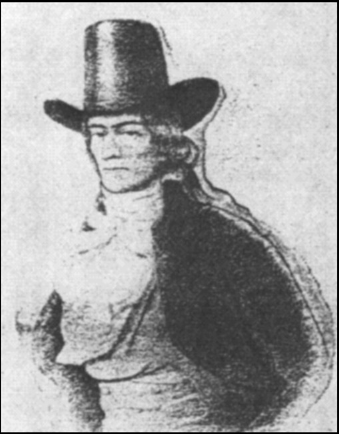
The only available portrait of Alfred François Donné (adapted by Thorburn 4 )
With his marriage to Marie Antoinette Joantho a few years later, Donné was connected to a well-known medical family, the des Essarts (Figure 2). His brother-in-law, Dr Sézille des Essarts, was a distinguished member of the medical community in Paris and Dean of Faculty of Paris Medical School. 4
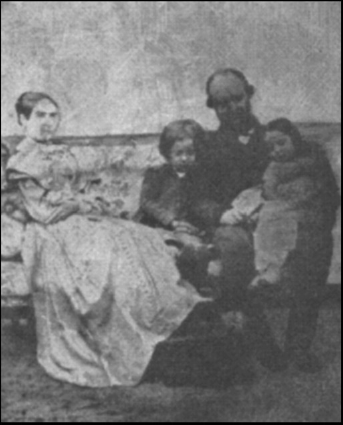
Alfred Donné and his family (adapted by Thorburn 4 )
In 1831, at the age of 30 François received his doctorate with a thesis focusing on the fields of microscopy and chemistry. 6 His doctorate was pioneering, since the French medical community strongly opposed new inventions and the use of the microscope in medicine. Nevertheless, many researchers and clinicians were deeply impressed by Donné's research and felt that microscopy should be introduced into medical practice. Donné also invented the collapsible microscope that could fit into a coat pocket.
Donné's work at La Charité and his first writings
Donné's first employment was at La Charité Hospital as a senior registrar (chef de clinique) where he worked from 1829 to 1831 with Jean-Baptiste Bouillaud. Donné also lectured on microscopy and worked briefly as a sublibrarian to the faculty of medicine in Paris. He shared the scientific outlook of Bouillaud, who also avoided medical systems and supported the application of basic sciences including microscopy and the quantification of physiological parameters and processes. Donné also worked with Pierre-Charles-Alexander Louis (1787-1872), the developer of the ‘numerical method’ who was a pioneer of medical statistics in France. Before the European Revolutions of 1848, he gained recognition as an assistant inspector (sous-inspecteur adjoint) to the sources of Enghien and general inspector of medicine at the Paris University. After the abolishment of this title he received the title of Rector of the Academy in Strasbourg and later he held the same title in Montpellier. During his prolific medical career, Donné served as an active collaborator to the Revue des deux mondes and the book of the Cent-en-Un.
Donné also authored numerous reports of the proceedings of the Academie des Sciences for the French newspaper Journal des Débats. During his tenure he was involved in a long controversy with François Arago (1786-1853), a French mathematician, physician, astronomer and politician.4, 5 Donné attacked Arago for turning the academy into a personal fiefdom. Foucault, a student and collaborator of Donné, carried on Donné's criticisms by reporting the Monday meetings of the Academy of Sciences for the Journal des Débats. Foucault's writing was usually less outspoken but his criticisms were sometimes sharp. He would pen these columns with varying regularity for more than 15 years.
Donné proved to be a prolific writer; between 1829 and 1835 he published numerous reports of relatively minor importance on a variety of subjects in medicine including antidotes to alkaloids, 7 studies on various human secretions and fluids,8–10 a study on the physiology of human respiration 11 and book reviews. 12
Donné discovers Trichomonas vaginalis
His first hallmark discovery was in 1836, the identification of Trichomonas vaginalis in scrapings, believed initially to be the causative agent of gonorrhoea but later established as a common protozoon found in the female genital tract.4,13–15 T. vaginalis was the second protozoan identified as a human parasite. It was in the 17th century that the Dutch microscopist Antony van Leeuwenhoek (1632–1723) discovered the first Giardia spp. by examining his own stools. He reported his findings in 1836 in his monograph published by the Academy of Sciences. 16
Félix Dujardin (1802–60), professor of Zoology in Rennes University, suggested the generic name of the protozoon because of the similarities with the protozoan genera Tricodes and Monas. The species-specific name vaginalis referred to its appearance in the secretions of genitalia, particularly the female genitalia. One year later in a lecture, Donné reported:
There is not the slightest doubt about the existence of those microbes and their composition. I showed them to a great number of doctors and naturalists and all agree with me for their existence … those microbes form a new species of ‘infu-soires’ [ciliated protozoans] which deserve the name ‘vaginalis’ since they were discovered within the female vagina.
Doctors and scientists including, François Magendie, Étiene Geoffroy Saint Hilaire (1772–1844), Henri Milne-Edwards (1800–85), Alfred Velpau (1795–1867) and Philippe Ricord (1800–89), confirmed Donnés findings. Christian Ehrenberg (1795–1876), Professor of Protozoology in Berlin, established the protozoan's final name, giving full credit to Donné for the discovery and he also verified its natural human habitat as the vagina.14, 15 In 1916 Ottomar Hoehne (1871–1932) 17 was the first to stress the pathological role of Trichomonas as an aetiological agent of purulent vaginitis.
Donné publishes numerous reports on microscopic studies
His fame as an expert microscopist expanded in the following years. In 1836 he published a paper 18 based on his doctoral thesis in which he described various microbes found in purulent materials; he extended the basic findings of his doctoral research in other biological materials, identifying mainly T. vaginalis in vagini-tis’ exudates. His description was precise regarding the size, the shape and the existence of posterior flagellum and cilia. Donné referred important findings regarding the physiology of this protozoon – Trichomonas required an acid environment while vaginal mucus is alkaline and he noted the vaginal mucus becomes acidic only during pregnancy.
In 1837 Donné published a short monograph on various microscopical findings entitled Rechérches microscopiques sur la nature de mucus, et la matiére des divers écoulements des organs génito-urinaires chez l'homme et chez la femme, 19 where he reported his findings regarding comparative studies on the physiology and chemistry of purulent urogenital discharges in both sexes. Donne examined syphilitic chancres and buboes, noticing the existence of animalcules in certain materials and suggesting novel treatments for syphilis. The lack of staining methods (carmine-fuchsin), discovered later in 1869 by the German botanist Hermann Hoffman (1819-91) and the pathologist Karl Weigert (1845-1904), prevented him from extending his research in more detail. 4 In the same monograph Donné noted that it is possible to differentiate between normal and pathological secretions using the microscope although he failed to differentiate between the causative agents of syphilis and gonorrhoea.
As an expert in microscopy, Donné soon realized that the device was invaluable for the proper illustration and understanding of his lectures. Facing resistance from his university, he organized a microscopy course at his own expense by installing 20 microscopes in the amphitheatre of the lecture hall. A meeting of clinical lecturers (physicians and surgeons) of Paris concluded later that year that Donné's significant discoveries should be expanded in medicine and surgery with further microscopy. 4
The construction of the photoelectronic microscope – collaboration with Léon Foucault
One of the hallmarks of Donné's life was his collaboration with one of his young students, Léon Foucault (1819–68), the famous experimental physicist who in 1851 demonstrated the Earth's rotation using a pendulum in the Panthéon in Paris. Before he became an experimental physicist, Foucault enrolled in Paris Medical School in 1839 to become a surgeon because of the remarkable dexterity of his hands. 20 When Donné started giving his courses on microscopy, he began with a lecture and then invited his pupils to observe through microscopes the various healthy and sick body fluids. However, this method proved impractical as class sizes grew. A practical solution would be the use of a projection microscope to enable Donné to show each specimen to the whole class simultaneously. The use of Lieberkühn's ‘solar microscope’ was not possible due to the frequently cloudy Parisian weather. The use of the gas microscope failed to display properly the low-contrast specimens such as bodily fluids. Foucault and Donné co-operated to invent the so-called ‘photo-électrique’ projection microscope in which they used an electric light as a brighter source of illumination. The invention of electric light was not a novelty since, in 1809, Sir Humphry Davy (1778-1829) had already demonstrated the production of large quantities of bright light by striking an electric arc between two carbon electrodes. In 1843, under the guidance of Donné, Foucault adapted the electric arc to the projecting microscope. In April of the same year they presented their instrument, the photoelectric microscope, to the Académie des Sciences in Paris. They published a full description a year later, noting that the aim of their invention was ‘not to construct a research instrument but to put scientific results before the public eyes’.
Donné and Foucault apply Daguerrotypes in microscopy and Donné publishes his monumental work, the Atlas
In 1839 Louis Daguerre (1787-1851) astonished the Parisian community with his brilliant live photographs, surpassing Nicephore Niépce (1765-1833), his fellow countryman, who had already discovered a method to create permanent records of images from sunlight. Donné was deeply impressed by Daguerre's life-like photographs and saw an opportunity to incorporate reproductions in his lectures.4, 20 He first showed Daguerreotype illustrations and then had the students study various known preparations under the microscope. In his book Cours de Microscopic 21 Donné described the educational procedure in detail.
Combining Daguerreotypes with his courses, Donné illustrated his course book using the camera's eye rather than the traditional artist's sketch, believing that a Daguerreotype would provide an impartial representation; Foucault helped him make most of the Daguerreotypes. In order to produce images of high quality, Foucault and Donné performed trials using limelight and electric light but finally they chose direct sunlight with exposures lasting between four and 20 seconds. 20 Donné faced a dilemma. He could etch the positive image borne by the polished metal Daguerreotype plate and (by applying printer's ink to the plate) print etchings on paper, thus losing his original photographs. Or he could ask an artist to draw the image seen on the Daguerreotype plate and publish it as an engraving. Donné chose the second option; his Atlas, the culmination of his work, included 80 engravings with most magnified 400 times (Figures 3 and 4). The book features the cellular morphology of various specimens including liquid materials (pus, blood, urine, mucus from the nose, milk), cellular debris from various sites of human body (bronchi, gastrointestinal tract, prostate, vagina, epithelia), spermatozoa, ova and other materials including starch and various crystals.

The first page of Donné's Atlas

Daguerrotype of Trichomonas vaginalis in his Atlas
In an extensive review published in Archives Générales de Medicine in 1844, 22 the reviewer noted:
Donné studied successively blood, mucous, pus, sweat, saliva, urine, sperm and human milk. Chyle, lymph, synovial fluid, cow pox fluid, amniotic fluid and stools are examined in a supplement at the end of his book. Each of the prereferred materials is examined according to its importance: as far as the blood, the urine and the milk one may think that, at a first glance, have been unnecessarily examined, but careful study can assure their importance …
Donné was also a prudent researcher since he did not declare Vibrio lineola as the causative agent of syphilis, which later was characterized as S. refrigens by Bulloch. 23 In 1905 Fritz Richard Schaudinn (1871-1906) discovered Treponema pallidum, 24 the causative agent of syphilis.
Donné's pioneering studies in the health of child upbringing and nutrition
Donné was also a pioneer in the field of child upbringing and nutrition. In 1842 he published a manual for physicians and mothers on the science of child care. 25 The book recommended breast-feeding by the natural mother to ensure safe, nutritious milk and the development of emotional bonds between mother and child. Donné's book became one of the most popular child-care manuals in France, progressing through three editions and four reprints. The book was still in print at the start of the twentieth century and was translated into both Spanish and English. 26 Although many manuals had been written before Donné's attempt, he intended his book to be different since he set out to establish the rules of infant hygiene based on the observation of facts and in accordance with scientific practices. In the introduction, Donné states that he does ‘not propose to write a treatise on moral philosophy, but to confine myself to the spheres of the physician and the physiologist’. Donné emphasized the role of the physician in taking major decisions affecting childcare and insisted on the establishment of a closer bond between physician and mother, encouraging the medicalization of childcare. Donné was also involved in the investigation of pathological conditions associated with motherhood including breast engorgement and common disorders of children including diarrhoea and constipation. Through microscopic examination, he was able to identify the presence of pus globules in pathological milk that could easily be differentiated from milk globules by chemical analysis. He was the first to suggest frequent weighing of babies as a quantitative approach of estimating child nourishment, and he also proposed that infant meals should be taken at equal intervals.
Donné's hospital work at La Charité and the Hôtel-Dieu as well as his research on human milk showed his interest in infant-feeding problems. At the Paris hospitals Donné had considerable success in dealing with premature babies. When the infant son of the Duc d'Orléans, the grandson of King Louis Phillipe (1773–1850), was not able to take either human or cow's milk, Donné was called as an expert to find a solution. After experimenting with various milks, Donné managed to prescribe a formula that could be tolerated by the baby. He constructed a lactoscope to determine the density of the milk and demonstrated that milk globules were fat molecules in a state of agglomeration. In 1837 Donné published a short report 27 in which he examined the value of human milk and other food in association with its good and bad nutritional properties. He wanted to determine the characteristics of good quality milk. He showed in his paper that milk contained all types of fatty cells that are not well formed during the 12 first days of the puerperium when human milk is secreted as colostrum. Using the microscope, Donné was able to monitor the different phases of milk composition. He observed the wide variety of nutritional values of normal human milk, noting that in some cases the colostrum continues to be secreted after the twelfth day, a condition that can lead to neonatal death when not diagnosed in time. He also observed the changes in the composition of human milk during breast inflammation and abscesses.
Donné hoped his microscopic observations and analysis of human milk would provide a scientific way to measure the composition and quality of mother's and wet nurse's milk. He also invented a device that could condense milk and preserve it by a cooling process. By the early 1840s Donné's findings on human milk were being discussed in the Royal Academy of Sciences.
In 1843 the city of Bordeaux planned to establish a municipal wet-nursing bureau and adopted Donné's Paris programme as a model. The basic features of this programme included the physical examination of both babies and wet nurses, the registration of wet nurses and the certification of age and morality, and the chemical and microscopic analysis of the milk of each wet nurse in order to assure the quality of the milk. 26
Donné discovers the blood platelets and describes microscopic leukaemic preparations
Donné was also a pioneer in haematology. In 1836 he published a short report in which he described distinct characteristics of pus and methods to identify this fluid within other fluids, especially blood. He also conducted experiments regarding the role of pus within the blood. 28 He noted that pus has basic characteristics that do not differ with the organ of origin; pus consists of numerous globular corpuscles twice the size of blood cells. When mixed with ammonia, pus becomes a transparent gel, a reaction that can be used for differential diagnosis between pus and other secretions. Microscopic examination can help in order to identify the existence of pus in blood preparations, whether or not treated with ammonia.
In an 1842 paper, Donné was first to describe blood platelets 29 but he reported them wrongly as fat globules of chyle. He also reported on the cellular content of nasal secretion and colostrum. During his work in the Hôtel-Dieu, Jean Baptiste Phillipe Barth (1806–77) and August François Chomel (1788–1858) requested his consultative services for a female patient aged 44 who died from a painless abdominal tumour filling the left side of the abdomen, actually an enlarged spleen.4, 30 Donné asked for a blood specimen and, after microscopic examination, wrote to Barth: 31
The blood you sent me, my dear colleague, shows a remarkable and most conspicuous change, despite it having been collected in unfavourable conditions, i.e. from a dead body. This fact perhaps needs some explanation. You know that normal blood contains three types of cells: 1. red cells, the essential cells of the blood; 2. white cells or mucous cells; 3. the small globules. It is the second variety which dominates so much, that, one wonders, knowing nothing about the clinical course, whether this blood does not contain pus. As you know, the pus cells cannot yet be differentiated with definite accuracy from mucous cells.
Donné's description of the leukaemic preparation is exceptionally precise. The predominance of white blood cells is the striking feature of such preparations but, due to lack of staining techniques, he could not differentiate between mucous and white blood cells.
In his classic treatise 21 in the chapter entitled Alterations of the White Blood Cells Donné also wrote the following microscopic description of leukaemic preparations:
There are conditions in which white cells seem to be in excess in the blood. I found this fact so many times, it is so evident in certain patients, that I cannot conceive the slightest doubt in this regard. One can find in some patients such a great number of these cells that even the least experienced observer is greatly impressed. I had an opportunity of seeing these in a patient under Dr. Rayer at the Hôpital La Charité. This man was affected by arthritis especially in his leg vessels. Both legs showed ecchymoses and gangrenous blisters. The blood of this patient showed such a number of white cells that I thought his blood was mixed with pus, but in the end, I was able to observe a clear-cut difference between these cells, and the white cells … In fact, I believe that the excess of white blood cells is due to an arrest of maturation of blood. From my theory on the origin of blood cells, the overabundance of white blood cells should be the result of an arrest of development of intermediate cells.
Thus, he was not only a pioneer in the description of leukaemia but also a visionary who considered a rather rough yet close-to-reality pathogenic mechanism of the disease. In 1845 Dr John Huges Bennett (1812–75) reported 32 a case of hypertrophy of the spleen and liver in the Edinburgh Royal Infirmary and stressed that his findings were founded on his apprenticeship in microscopy, indirect acknowledgement of the guidance by his tutor Alfred Donné. 30
Donné's last years
In spite of his monumental research findings, Donné was never elected to the French Academy of Medicine or the Academy of Sciences. Being a royalist and a medical advisor to the royal family, Donné was in political difficulty. After Louis Napoleon (1778–1846) ascended to power as president of the newly founded French Republic, Donné lost his office of Inspector General although later compensated. In 1853 he became Rector at the Academy of Strasbourg and in 1855 left Strasbourg and become Rector of the University of Montpellier. He stayed at Montpellier for almost 20 years and there he continued the work of the physician-naturalist Félix-Archiméde Pouchet (1800–72). At the time Pouchet and Louis Pasteur were in a dispute regarding spontaneous generation. Perhaps because of his friendship, Donné supported Pouchet's theories. After Pasteur had collected and bacteriologically analysed air from Mont Blanc, he proved his theories and won the dispute that Donné inherited. 4
After his retirement, Donné returned to Paris and led a peaceful life without stagnation intellectually or scientifically. He wrote many articles in the Revue des deux Mondes where his last monograph 33 was on hygiene for the well to do. He provided a detailed account of the most famous watering places in Europe. He died of a cerebral vascular accident in 1878 in Paris.
Conclusion
Donné's findings changed the face of medicine. Living during the Golden Age of French Medicine, Donné inaugurated a novel era in Medicine, introducing the microscope as a tool for the analysis of human secretions and the diagnosis of various diseases. His laborious research led to the discovery of T. vaginalis, the discovery of blood platelets and leukaemia, as well as his work in the hygiene of child upbringing. However, due to the technical limitations of his techniques and the lack of sensitive scientific instruments, he was hampered somewhat. Not only did he earn a place in the history of medicine but he set an example as a modest, broad-minded, laborious pioneer in science and society.
We do not have any information about the exact location of the grave. According to Thorburn, there is not a single statue of Donne in the whole of France. 4