




Abstract

Two hundred years after his birth and 150 years after the publication of On the Origin of Species, Charles Darwin's (Figure 1) reputation is at a peak. Darwin's collections, observations, industry and theory of evolution by natural selection revealed the origin of man and his history. The achievement was all the more remarkable in view of Darwin's poor health. His personal opinion was that he suffered from an inherited constitutional weakness; his friends thought he was a hypochondriac and since his death numerous theories have been advanced to account for his illness: anxiety neurosis, arsenic poisoning, an allergy to pigeons, lactose intolerance, porphyria, Chagas' disease and Crohn's disease? 1
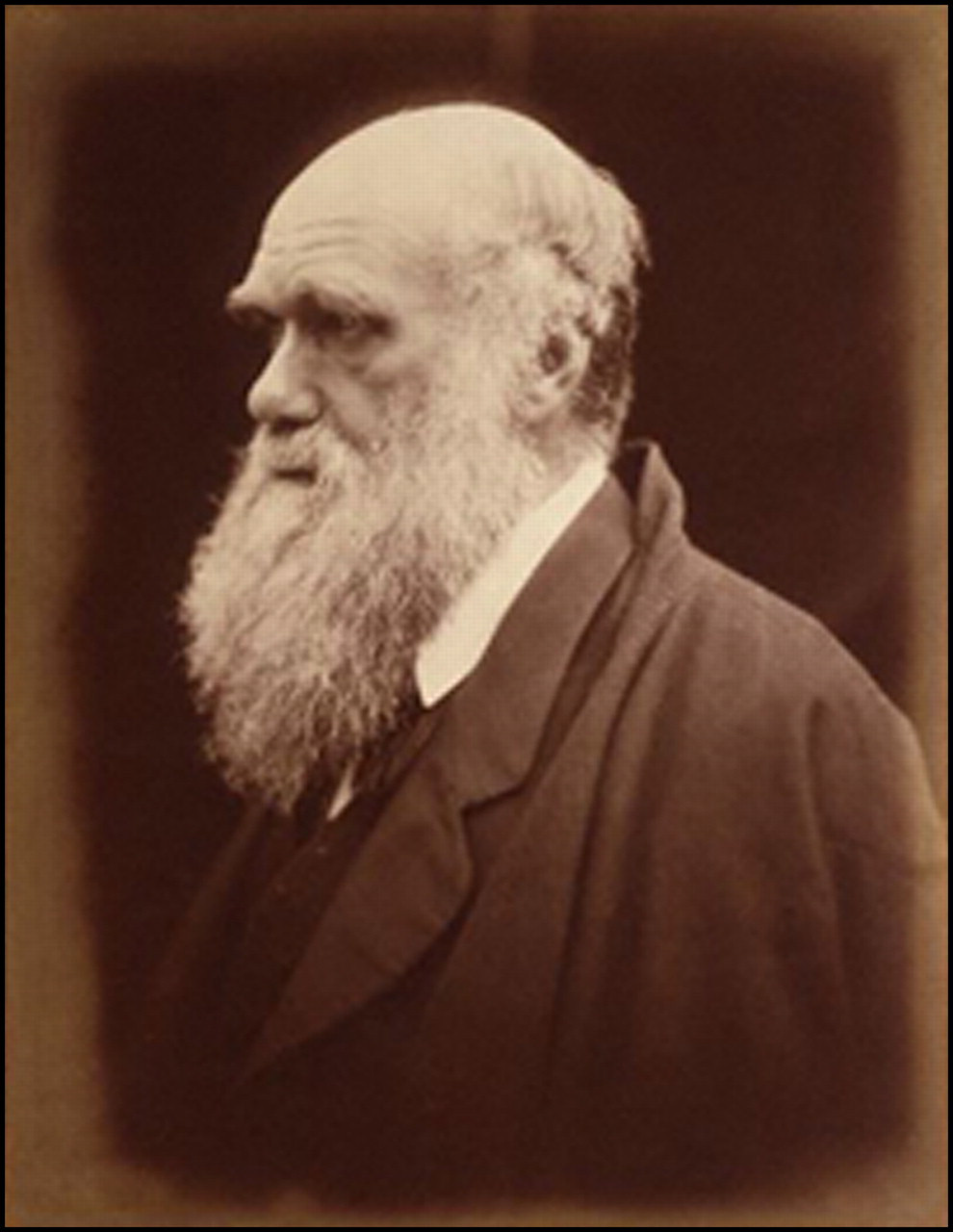
Charles Darwin was photographed by Julia Margaret Cameron, 1868, reproduced courtesy of the National Portrait Gallery, London
Born on February 1809 to Dr Robert and Susannah Darwin, Charles was their fifth child; his mother was 44 and she died eight years later. In the tradition of his father, grandfather and uncle, the young Charles studied medicine, gaining experience in his father's medical practice before enrolling as a medical student at Edinburgh University in 1825. Finding surgery distasteful, he transferred to Cambridge University to study for holy orders, a path that came to an abrupt halt when in 1813 Darwin received an invitation to join HMS Beagle on a voyage round the world.
As a student Charles Darwin had gleaned a smattering of medical knowledge and relied on his father's advice and prescriptions. After his father died in 1848, Charles kept a ‘Diary of Health’ (1849–55) and consulted a phalanx of physicians, surgeons, hydropathists, homeopathists and local practitioners about his illness. Flatulence, vomiting, palpitations, boils and skin inflammation headed the litany of complaints that dogged Darwin and bewildered his doctors.
Darwin was a robust young man with a hearty appetite and a love of field sports. He first became worried about his health while waiting to embark on the Beagle: heart pain and palpitations led him to believe he had heart disease. During the voyage he was debilitated by seasickness and on expeditions in Brazil he suffered occasionally from fever and stomach disorders for which he took cinnamon and port wine. Then in September/October 1834 he was ill for several weeks at Valparaiso – he blamed a sour new wine that had half poisoned him. It is possible that this gastro intestinal infection marked the inductive phase of Crohn's disease (named in 1932 after the gastroenterologist Burrill B Crohn, 1884–1983). The ship's surgeon, Benjamin Bynoe (1804–65), prescribed calomel (mercurous chloride) and rest, and Darwin recovered. Next year, on an expedition in Argentina, Darwin was bitten by ‘the great black bug of the Pampas’ as he described Triatoma infestans, the carrier of Trypanosoma cruzi that causes Chagas' disease. This gave rise to the theory that the tropical disease described in 1909 by Carlos Chagas (1879–1934) accounted for Darwin's ill health.
Darwin returned to England in 1836 and settled to his studies and to writing. Within the year ‘an uncomfortable palpitation of the heart’ prompted him to consult Dr James Clarke (1788–1870, later Sir James), physician-in-ordinary to Queen Victoria, who perceived Darwin was stressed and advised him to give up writing. Both Clarke and his colleague Sir Henry Holland (1788–1873), Darwin's second cousin and physician extraordinary to the Queen, recommended country air and rest. Holland's diagnosis was vague – he thought Darwin's malaise was ‘not exactly dyspepsia but nearer to suppressed gout’, a disorder then regarded as a hereditary disorder that affected the stomach.
Following marriage to his first cousin, Emma Wedgwood (1808–96), Darwin and his young family moved to Down House in Kent where Darwin's clockwork routine of work, rest, reading and walks soothed his stomach. The surgeon/apothecary at Down during the 1840s, Edgar Cockell, introduced himself to Darwin but the latter continued to rely on his father for medical advice. In 1848 his father's last illness caused anxiety, trembling, sickness and depression in the son who became so ill that he was unable to attend the funeral. Friends persuaded Darwin to try hydropathy and so in 1849 the entire household spent 16 weeks at Malvern, while Darwin was treated by Dr James Gully (1808–83) at his hydropathic establishment. Gully (an advocate of homeopathy, mesmerism and clairvoyance) convinced Darwin that daily cold-water scrubbings, compresses, dieting, walks and reduced snuff intake would cure chronic dyspepsia. He introduced Darwin to a clairvoyant who revealed that ‘the mischief’ lay in Darwin's stomach and lungs. Darwin was sceptical and lost faith in Gully, turning instead to Dr Edward Lane (c1822–89) who had written a book on hydropathy and who ran a sanatorium at Moor Park in Surrey where Darwin stayed several times. Lane witnessed the acute attacks of pain that Darwin suffered and diagnosed ‘dyspepsia of an aggravated character’.
In 1859 as he awaited public reaction to the publication of On the Origin of Species Darwin took refuge at Ilkley Wells House in Yorkshire, undergoing hydropathy under the supervision of Dr Edmund Smith (1804–64), a homeopathist. On this occasion Darwin was afflicted by fiery boils, a rash, a swollen leg and face, and he sprained his ankle. His family joined him at Ilkley and after nearly two months he felt well. As the controversy over Darwin's theory of evolution gathered force, the author's stomach caused him incessant discomfort. Dr Frederick Headland (1830–75), physician to Charing Cross Hospital, prescribed a course of nitromuriatic acid, wine and no sweet foods. With the contentious Oxford debate over The Origin looming in June 1860, Darwin admitted himself to Sudbrooke Park, Richmond, where Dr Lane had moved following his trial for alleged adultery with a patient at Moor Park. The sanctuary of hydropathic establishments calmed Darwin's symptoms temporarily, but work and controversy exacerbated stomach and skin complaints – ‘anything which flurries me completely knocks me up’, as he put it.
When incapacitated by vomiting Darwin tried various medications, carefully noting their effect. He tried croton, lemons, aloes, Indian ale, bismuth nitrate, carbonate of ammonia, phosphate of iron, mineral acids and ‘Condy's ozonised water’. He undertook harsh cold-water treatments and experimented with hydroelectric chains of brass and zinc looped round his neck and waist – when moistened with vinegar they gave electric shocks. In 1863 an outbreak of eczema drove Darwin to consult James Startin (1806–72), a surgeon who set himself up as a skin specialist. Startin prescribed some ‘muddy stuff’ – an ointment that probably contained arsenic, but Darwin's rash became so severe that he grew a full beard to disguise it and to avoid the pain of shaving.
His vomiting every morning drove Darwin back to Malvern in 1863. This time he was under the care of Dr James Ayerst (1824–85) whose regimen of wet rubbings and walks made Darwin weak and only repeated doses of brandy kept him going. The naval surgeon George Busk (1807–86) then recommended Dr William Brinton (1823–67) of St Thomas' Hospital as an authority on diseases of the stomach but neither Brinton's mineral acid nor the ‘enormous quantities of chalk’ prescribed by Sir William Jenner Bt (1815–98), the leading London consultant of the day, gave lasting relief. Wondering whether the aftermath of seasickness might account for his recurrent vomiting, Darwin sent for Dr John Chapman (1821–94), a physician, publisher and medical reformer who had written a book on seasickness. As a preliminary, Darwin described his state of health over the previous 25 years: he had suffered from flatulence day and night, vomiting, shivering, dying sensations, copious pallid urine, ringing of the ears, black dots before the eyes, nervousness, head symptoms, eczema, lumbago and tiredness. Chapman's remedy was ice treatment: three times a day for 90 minutes ice packs were strapped to Darwin's lower spine. Darwin concurred for a month before throwing away the ice packs and taking to his bed.
In 1865 Darwin sought out Dr Henry Bence Jones FRS (1813–73), known for his description of the Bence Jones protein in urine. Bence Jones put Darwin on a diet that half-starved him to death and advised daily horse riding. For some years thereafter Darwin's health improved. At Down, cosseted by Emma, he lived the quiet, studious life of an invalid, occasionally taking family holidays and visiting Stonehenge as part of his research into worms.
In 1872 loss of memory and ‘a shock passing through my brain’ led Darwin to summon WE Gladstone's physician, Sir Andrew Clark Bt (1826–93), who prescribed strychnine and iodine and persuaded his patient to follow ‘an abominable diet’. Darwin enjoyed the friendship and cheering influence of the garrulous Sir Andrew whose advice had a beneficial effect – Emma thought that only Bence Jones and Clark had done her husband any good and that Clark did him ‘great good’.
In the summer of 1881 while climbing in the Lake District, Darwin experienced dizziness and collapsed. A local practitioner, Dr F MacNalty, diagnosed angina pectoris and that winter Darwin experienced giddiness and chest pain. Sir Andrew Clark rushed to his patient's bedside in March 1882 and confirmed angina. On the other hand, the erudite Dr Norman Moore (1847–1922) of St Bartholomew's Hospital, a future baronet and President of the Royal College of Physicians, assured Darwin he did not have angina, only weakness. Over the next few weeks Darwin was seen by Moore and Mr Charles Allfrey FRCS (1839–1912), of St Mary Cray in Kent, and he took amyl nitrate (to relieve spasms of the coronary vessels), nux vomica (containing strychnine and brucine), beef tea, brandy and neat whisky. On 19 April 1882, attended by Allfrey and Dr Walter Moxon (1836–86) of Guy's Hospital, Charles Darwin died at the age of 73. His physicians attributed the cause of death to anginal attacks, heart failure and degeneration of the heart and blood vessels. An autopsy was not performed.
Darwin had endured 45 years of chronic illness during which time he had amassed and studied his collections, identified and classified species, conducted experiments, written 17 monographs, presented the world with his theory of evolution and fathered 10 children. Seeking a cure – or at least relief – from illness he had consulted a score of doctors ranging from the Queen's physicians to homeopathists. He endured rigorous water treatments, strict diets, ice packs and electrical chains, and he had taken a cornucopia of medicines, some of which may have done more harm than good to the precarious health of this sensitive genius.