




Abstract
Sarcophilia, a neologism for an attachment to human remains, is set in a review of the history of the disposal of the dead. The ancient practice of cremation was relaunched late in the 19th century by the urological surgeon cum social reformer Sir Henry Thompson. He was stimulated by Edwin Chadwick and Charles Dickens, and by Charles Darwin's observations on the earthworm. Sarcophilia is the reason for the controversial Human Tissue Act of 2004.
Sarcophilia seems a needed neologism for a loving attachment to human remains. Sarx, the Greek word for flesh, is used in ‘sarcophagus’, its only instance in ordinary English parlance, originating from an ancient belief in flesh eating of human remains by special stone coffins. Sarx features more in scientific and especially medical conjunctions and variations, viz sarcolemma, sarcoid, sarcoma, etc.
Sarcophilia would denote the motive for the erection of prehistoric burial mounds and monuments, for the building of the pyramids, for mummification, for much great architecture over the ages, for many museum pieces and reliquaries, for shrines of pilgrimage, temples, pagodas and much else, like the terracotta warriors of Xian. It means varying modes of disposal of dead bodies and of body parts, with religious rituals, related to belief in reincarnation or otherwise.
Both interment and cremation have been practised since time immemorial. Veneration of the departed could be transferred to veneration of the dead body and veneration of body parts, like the Buddha's tooth at Kandy. Relics had long entries in the Encyclopaedia Britannica until the more recent editions. In 1929, in the 14th edition Hauck 1 gave an historical account of relics from a protestant angle; in the past such veneration could culminate in a deliberate fragmentation of the bodies of the saints for veneration. Protestants would have none of this but still joined Catholic and Orthodox Christians in rejecting cremation for related reasons, until fairly recently.
Cremation is the rule, at least for the distinguished, in Greek and Roman antiquity, with accounts of the cremation of heroes by Homer and others but not so in ancient Egypt. Later in Rome it faded out with the rise of Christianity, or because of a timber shortage for pyres, as suggested by the more materialistic 2002 (15th) edition of the Encyclopaedia. 2 It was, and still is, banned in orthodox Judaism but is the rule in Hinduism. The old Christian ban could be waived as in the Naples ‘black death’ epidemic in 1656 but lasted generally until the late 19th century, and until 1963 in Roman Catholicism. 3
The revival of cremation in Britain was largely the work of the remarkable Sir Henry Thompson.
Sir Henry Thompson
Thompson (Figure 1) was the subject of ‘The Versatile Victorian’ by Sir Zachary Cope (1881–1974) 4 who hailed from a similar provincial non-conformist background. The 1995 paper as founder of British urology 5 is more eulogistic than the more recent entry in the Oxford Dictionary of National Biography. 6 He was born at Framlingham in Suffolk in 1820, the same year as Queen Victoria, and outlived her by three years. He was brought up in a rigidly sabbatarian household in East Anglia. His father, a prosperous trader, stalled his study of medicine until his 28th year because of the supposed moral temptations of the pursuit of medicine. He qualified from University College Hospital in 1850, married the concert pianist Kate Loder in the next year and ascended the surgical ladder with various prizes, becoming the top London urological surgeon and an outstanding transurethral lithotritist (Figure 2).
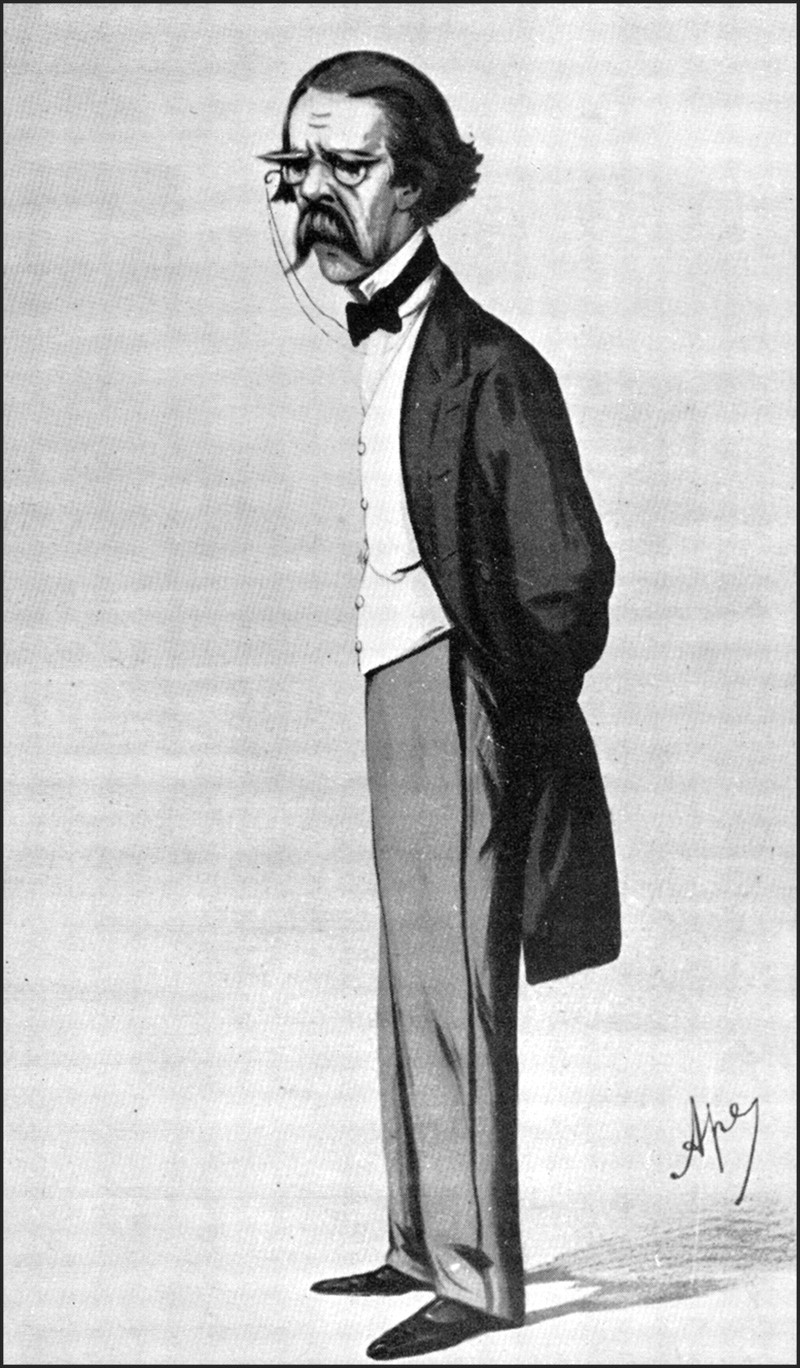
Sir Henry Thompson – cartoon by Ape, from Cope 4

Lithotrite (Museum of Royal College of Surgeons, Edinburgh)
The urologist and the artist
His most famous success was the crushing, via the urethra, of the bladder stones of King Leopold of the Belgians, the Queen's favourite relation, in 1863 under chloroform anaesthesia. Ten years later similar efforts on the ex-emperor Napoleon III coincided with the death of the patient who had probably been in terminal renal failure. His continuing lucrative urosurgical practice was criticized by Cope for his rejection of prostate surgery and for his failure to adopt cystoscopy that had just become feasible. 4
However, his urosurgery greatly speeded advance from the horrors of ‘cutting for the stone’ from the perineum, related and illustrated by Tomalin 7 in her life of Samuel Pepys.
But Thompson was much more than a urologist: 13 of his paintings were exhibited at the Royal Academy between 1870 and 1901, and three in the Paris ‘Salon’. He collected and wrote a book on Nankin porcelain as well as books on diets and on alcoholism. Two novels with medical settings proved popular. He made a habit of taking a few months off surgery every year to travel on the Continent and collaborated with his daughter Kate in a guide to the best continental picture galleries. In his last years he took up motoring (with a chauffeur) and published his final book in 1902 on the joys of motoring, 8 extolling the hygienic benefits of less horse manure. His campaign for better rubbish collecting in London may have achieved something but he succeeded in having museums opened on Sundays – a late reaction to the enforced sabbatarianism of his youth.
Cremation
For 30 years from 1874 Thompson engaged in the cause of cremation 9–11 with eventual complete success. The industrialization, urbanization and overcrowding of Britain in the first half of the 19th century, with increasing problems of disposal of the dead, caused public concern. Government and Parliament launched enquiries leading eventually to legislation. But as late as 1880 there was still occasion for an outcry by Disraeli on these matters. One of the earlier ‘Inquiries into the Practice of Interment in Towns’ published in 1843 12 was by Edwin Chadwick (1800–90), the great but controversial social reformer of the century. 13,14
Ten years after Chadwick's report, in 1853 Charles Dickens described in Bleak House 16 inadequate interment in his denunciation of other social ills: ‘… bear off the body … to a hemmed in church-yard, pestiferous and obscene, whence malignant diseases are communicated … there says Jo pointing … among them piles of bone, and close to that there kitchen winder [sic] … they put him wery nigh the top. They were obliged to stamp upon it to get it in … is this place of abomination consecrated ground?’ (Figure 3) Dickens became a friend and patient of Thompson.
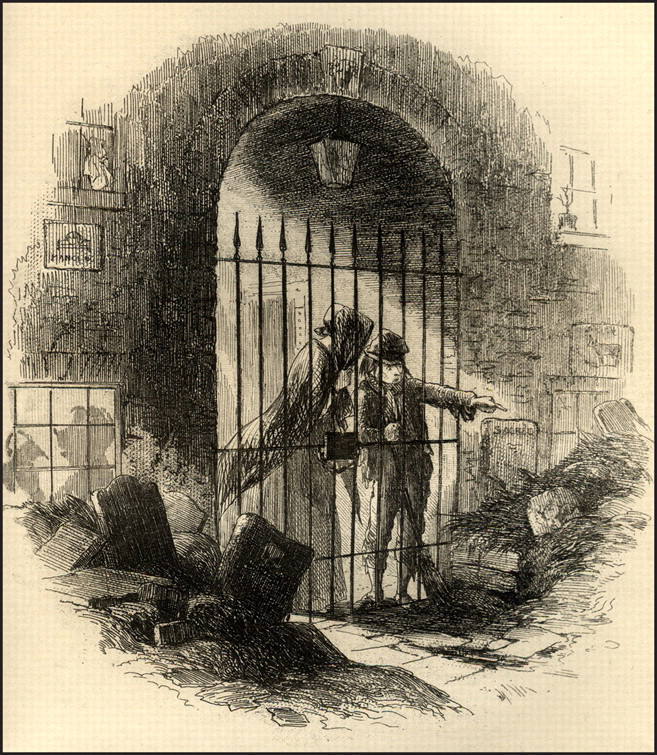
Consecrated Ground by HK Browne from Charles Dickens' Bleak House 16
Thompson had seen a demonstration of the cremation of animal corpses by L Brunetti from Padua at the Vienna Great Exhibition in 1873. The furnace had been used on a few human bodies in Italy since the late 1860s; Thompson persuaded his friend Sir William Siemens (1823–83) to construct a more expeditious furnace.
Thompson opened his campaign for cremation, in lieu of interment, with two articles in the Contemporary Review in January and March 1874. 9 The February issue published an article by Dr PH Holland, Medical Inspector of Burials, arguing there were no problems over interment. Thompson arranged to deal with the expected opposition from religious, political and even medical quarters by the creation of the English Cremation Society. 10,11 His eminence in the ‘establishment’ allowed him to staff its council with well-known doctors, clerics, peers and MPs, with himself in the chair, for life as it happened.
The Society agitated and lobbied with the aid of two dukes and in 1878 bought a site in Woking for a crematorium. The then Bishop of Rochester had blocked erection of a crematorium in the North London Cemetery and, under pressure from Woking residents, the Home Office also opposed the use of the crematorium there pending new legislation or a judicial decision on its legality.
In 1882 Captain Hanham RN on his Dorset estate privately cremated the bodies of his mother and his wife despite a coroner's objection but legal action did not ensue. But in the next year when Dr William Price in Wales did the same with the body of his five-month-old child on the day before the proposed coroner's inquest, he was taken to court by the coroner.
Mr Justice (Sir James) Stephen (1829–94) directed to the jury that cremation was not illegal when it did not cause a nuisance to the public. 10 Mr Justice Stephen had not told the jury but his brother Leslie Stephen (1832–1904), the founder editor of the Dictionary of National Biography and father of Virginia Woolf, recorded in his biography of Justice Stephen 15 that ‘William Price who called himself a Druid had burnt the body of his child in conformity I presume with what he took to be the rules of the Druids’.
However in the next year, in 1884, the House of Commons still rejected a bill for better death certification and for cremation. In the following year (1885) the Cremation Society carried out the first cremation at the Woking site with impunity, based on Mr Justice Stephen's Ruling (Figure 4).

First crematorium at Woking in 1890s, from Thompson 11
Thompson's demand for improved death certification in England, where it had often been incomplete and unsatisfactory, linked to the Society's cremation preliminaries, persuaded the Home Office, under HH Asquith, to take action on this in the 1890s with a parliamentary enquiry and a ‘Blue Book’ in 1893, but a change of government delayed the Cremation Act itself until 1902. An important supporter had been the surgeon Sir Thomas Spencer Wells.
Sir Thomas Spencer Wells (1818–97), Darwin and Pasteur
Thompson had included Spencer Wells in the council of the Cremation Society. He was a pioneer abdominal surgeon, having experienced willy-nilly in the Crimean War that survival was possible after laparotomy; he was the first successful ovariotomist and was to become President of the Royal College of Surgeons in 1883. In a powerful oration in 1880 he persuaded the Cambridge meeting of the British Medical Association to support the Society's public appeal for cremation. 10 He quoted Darwin and Pasteur in his argument against interment: Darwin had addressed the London Geological Society as long ago as 1837, 17 a year after his return from the epochal journey in HMS Beagle, on the cumulative effect of the action of the earthworm in producing ‘vegetable mould’ (humus). In his usual meticulous way he credited his maternal uncle, Josiah Wedgwood (1769–1843) who had also become his father-in-law in 1838, with the original earthworm observations. Sir Gavin De Beer 18 ranked the earthworm work second to Evolution and Darwin himself expanded it into a monograph 44 years later in 1884. 19 Now he acknowledged the help of two of his sons in the later studies of the earthworm.
Spencer Wells' other supportive witness on the danger of interment was Pasteur who had injected guinea pigs with earthworm ‘extracts’ which gave them fatal ‘charbon’, i.e. tetanus.
The eventual brief Cremation Bill of 1902, 20 with explicit distancing of crematoria from human habitation, came 28 years after Thompson had started campaigning and two years before his death. Cope 4 observed tactfully that Thompson's religious beliefs 21 ‘had not been in sympathy with current creeds’.
Thompson was cremated at Golders Green (Figure 5).
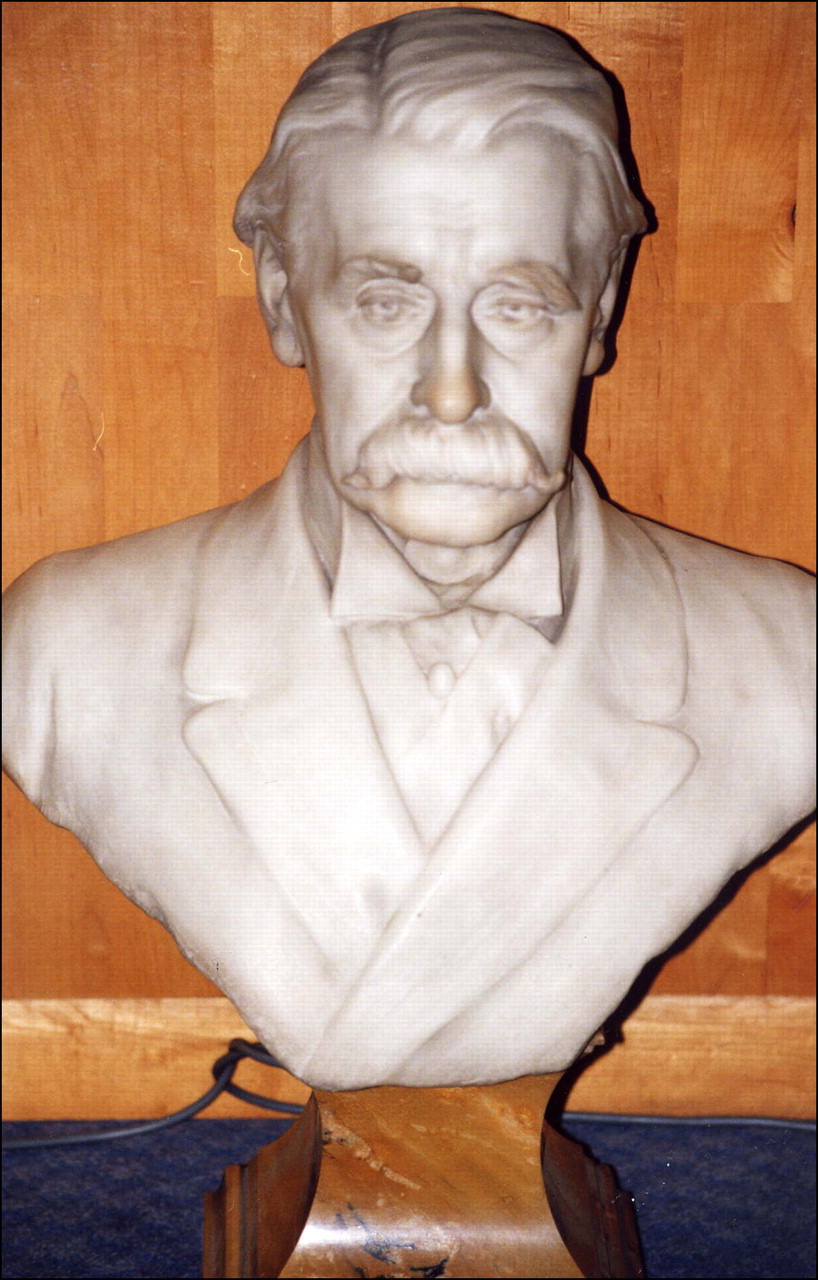
Bust of Sir Henry Thompson at Golders Green Crematorium, reproduced courtesy of The Crematorium Society
Human body parts
The excesses of sarcophilia for the retention of parts of the bodies of saints 1 and of the lesser, if dear, departed have waned over the centuries. Yet there is a very real remnant of sarcophilia in the mind of the public but much less so in the medical profession, which must have been deconditioned by the discipline of anatomical dissection during the last few centuries and by the continuing duties of morbid anatomists and pathologists. The Anatomy Act of 1832 had stilled the very proper public outcry of sarcophilia over the resurrectionists of 200 years ago. There has been no such outcry over the disposal by cremation of body parts from anatomy departments and from hospitals after amputations.
But a new bout of public sarcophilic disputation has arisen with the transplantation of body parts, linked to a new public awareness of the retention of body parts for teaching and research. The clumsy handling of the retention of dead children's hearts at Alder Hey Hospital in Liverpool produced emotive outbursts in the media. The resultant ban on the retention of organs without specific permission was codified in the 2004 Human Tissue Act. 22 Its laborious 70 pages are full of provisos and exceptions, including religious objects and tissues older than 100 years. A new Human Tissue Authority has been set up. Failure to comply could mean up to three years in prison. Implementation of the Act has been difficult and incomplete. 23
In retrospect it is hard to empathize with the strength of feeling against cremation encountered by Thompson in the late 19th century. By now it has come to be preferred to interment by the majority in most western European countries, without religious objections. It seems less popular in the USA where the profitable absurdities of the end of life have been lampooned by Jessica Mitford in The American Way of Death. 24
Almost incidentally Thompson advanced public health by provoking better death certification in conjunction with Edwin Chadwick. In advocacy of cremation at the 1880 Cambridge meeting of the British Medical Association, in supporting Thompson Spencer Wells quoted Disraeli (Lord Beaconsfield) from a House of Lords debate on a burials bill a few weeks previously: ‘… what we call God's acre is really not adapted to the country which we inhabit, or the spirit of the age … institutions very prejudicial to the health of the people … close all these churchyards … take steps for furnishing every community with a capacious and ample cemetery [with] no prejudicial influence on the public health’. Cremation has proved one way of lessening Disraeli's 1880 environmental fears.
Footnotes
Acknowledgements
Once again, the author is much obliged to the staff of the Library of the Royal College of Physicians of Edinburgh for much help and also to the Royal College of Surgeons of Edinburgh for the picture of the Victorian lithotrite which had belonged to John Bishop, the last private assistant to Lord Lister when in Edinburgh.