




Abstract
The political upheaval in Germany in 1933 and subsequent movement of medical scholars with the support of the Rockefeller Foundation allowed Manchester to benefit from the arrival of Dr Walter Deutsch, later known as Dr Walter Dale. His research background enabled him to develop a radiobiochemistry laboratory at the Christie Hospital and Holt Radium Institute where he became a world authority on the effects of X-rays on enzymes and also the protective effect of additional solutes. In 1959 he initiated and then edited the International Journal of Radiation Biology. By the time of his retirement in 1962 the strength of his research resulted in his laboratory being recognized by the Medical Research Council.
Walter Max Deutsch was born in Berlin in September 1894 and studied physics and mathematics until interrupted by World War I. He was drafted into the army and served on the Russian front where he was injured, resulting in a permanent limp. After the war he studied medicine at Berlin University, graduating in both medicine and chemistry. This reflected his scientific family background; he was the nephew of Nobel Laureate Paul Ehrlich (1854–1915). 1
Deutsch spent time in the laboratory of Otto Heinrich Warburg (1883–1970) in Berlin and then at Willstäter in Munich. He was made Privatdozent (University Lecturer in the Department of Medicine) in the Medical Academy of Düsseldorf. His research, initially clinically oriented, later revealed his interest in physiology and chemistry in relation to enzymes. 2
Academic Assistance Council for German scientists
The changing political climate in Germany when Hitler came to power in 1933 resulted in many professionals seeking a more secure future in England where the Academic Assistance Council (AAC) was set up to help displaced Professors and postgraduate staff in German Universities with funding help from the Rockefeller Foundation in New York. The Foundation had been a major supporter of international scientists from 1917, allowing many promising scientists to acquire experience in leading academic centres predominantly in the USA. The Foundation had an office in Paris dealing with European affairs. 3 The AAC was initiated in May 1933 by Sir William Beveridge (1879–1963) of the London School of Economics and supporters included Manchester University Professors Bragg, Rutherford and Schuster. It had its headquarters at The Royal Society, Burlington House, London. A major protagonist was Professor Archibald V Hill (1886–1977), Professor of Physiology, University College, London, who had held the Chair in Physiology at Manchester University from 1920 to 1923 during which time he had been awarded the Nobel Prize in Physiology or Medicine jointly with Otto Fritz Meyerhof (1884–1951) for the study of heat production by muscular activity. Hill, in his Thomas Huxley Memorial Lecture published in Nature in December 1933, denounced the attacks on German scientists. 4
The AAC wrote to the Vice Chancellor of Manchester University in May 1933 requesting help, naming individuals and the institutions from where they had been displaced. There followed the setting up of a Joint Committee on Assistance to foreign scholars (The Manchester Committee) which at its first meeting in July 1933 considered two-year grants allocating up to £250 each per annum for six individuals from funds of £2000. At the 20 September meeting the committee considered a letter from the AAC requesting extra help for another doctor, Dr W Deutsch, who had been accepted by Professor HS Raper, FRS to work in the Physiology Department of the University with a grant of £150 per annum for two years. The committee recommended that the Vice Chancellor reply to the AAC requesting that the approval by the Manchester Committee first be sought before allocating individuals in future, but agreed an extra allowance of £100 for Deutsch (the source of the extra funds to be determined). Correspondence on 22 September 1933 from Manchester to Mr JV Van Sickle at the Rockefeller Foundation office in Paris resulted in the AAC writing to the Vice Chancellor, Manchester University, Walter H Moberly, on 26 September increasing the grant for Dr Deutsch to £250, being the usual amount for a family supported by the Rockefeller Foundation. 5
Although it had been considered that Deutsch's wife, Dr Maria Deutsch-Lederer, had ‘gone away’ to Palestine, the family actually emigrated to England on 30 September 1933. 6 After Deutsch arrived in Manchester, with his medically trained wife and their baby daughter, they were grateful for the additional grant from the AAC. Deutsch was one of only 22 researchers in medicine supported by the Foundation which, as Professor Weindling commented, was proud of having nurtured the elite of emigré scholars. 7
Academic achievements
In 1935 a Professor Katz, originally from Rostock, moved from Manchester to London to further his research in psychology funded by the AAC, allowing his Manchester Committee grant to be transferred to Dr Deutsch for one year. 5
In the Physiology Department, Deutsch used his research skills to develop techniques for studying cell respiration using a modification of the Warburg method. By April 1936 Professor Raper was reporting this research to the Manchester Committee outlining the resulting five scientific publications. He concluded: ‘It is therefore clear that I value Dr Deutsch's presence in the Department’. 5
However, continuation of the research for the next two years was only secured when Mr Nathan Laski of the Manchester Jewish Committee promised £600 in June. In October 1936 Deutsch was appointed part-time Biochemist at the Christie Hospital and Holt Radium Institute Manchester, continuing part-time in the University until the following year. Gaining this more permanent footing in Manchester was no doubt in part due to the influence of Professor Raper who was also on the Scientific Research Sub-Committee at the Christie Hospital that was wishing to promote research into the biological effects of radiation. 8
Christie Hospital and Holt Radium Institute
The evident therapeutic potential of radium had resulted in the inauguration in 1913 of the Manchester and District Radium Fund with financial support of local brewer, Sir Edward Holt. A technical and scientific sub-committee of the Fund was established with scientific advice from the Manchester University physicists Professors Rutherford and Schuster, and in 1914 the Manchester and District Radium Institute, later the Holt Radium Institute, was founded. 9 In 1931 the Radium Commission designated the Institute a National Radium Centre and it moved to new premises jointly with the Christie Hospital (established a cancer hospital in 1892). 10 In 1935 the Medical Board of the Christie Hospital and Holt Radium Institute established a Scientific Research Sub-Committee that included Manchester University Vice-Chancellor (and anatomist) Professor Sir John Stopford and University Department representatives in Pathology, Physics and Physiology to coordinate research between the University and the developing research laboratory at the hospital. 11
Research block
In January 1937 the Christie Hospital and Holt Radium Institute considered plans for a new research block with three laboratories – one each for haematology, biochemistry and tissue culture. In July 1937 the Scientific Research Sub-Committee of the Christie Hospital considered a grant for full-time biochemical research, which was recommended to the Board and approved for Dr Deutsch (Figure 1). In July 1938 Deutsch was reappointed for one year following a letter of recommendation from Professor Raper.
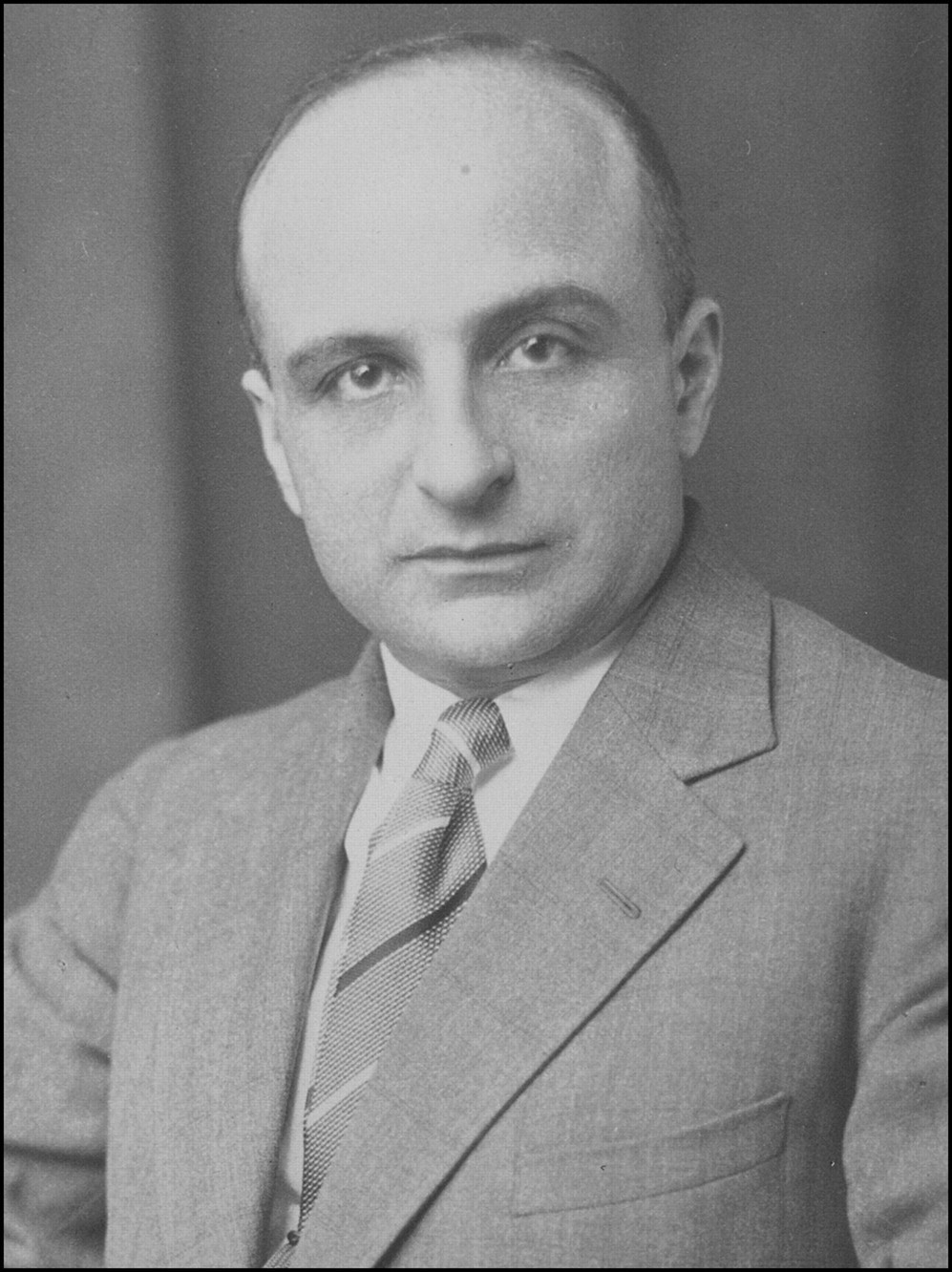
Dr Walter Deutsch in the 1930s, reproduced courtesy of Miss A Dale
Dr Deutsch becomes Dr Dale
The report of the Scientific Research Sub-Committee in February 1940 considered the biochemical research by Dr W Dale (formerly Deutsch) and reappointed him for one year. The committee regretted ‘the work in the department had not been as fruitful as had been expected but appreciated that considerable difficulty existed in applying biochemical methods to the question of irradiation action in such a way as to be related to the problem of radiation therapy’. 12
At this juncture, due to the onset of hostilities with Germany in 1939, Deutsch changed his name by deed pole to Dale, the choice of name representing respect and admiration for a personal friend, the eminent biochemist Sir Henry Hallett Dale (1875–1968) OM GBE FRS. 13 World War II resulted in many European refugees fleeing to Britain; by 1940 it was estimated there were more than 3000 medical scientists and physicians in the UK. The AAC had become increasingly concerned at the limited support from the Rockefeller Foundation which Deutsch had been so fortunate to receive. In 1940 AV Hill suggested to the Rockefeller Foundation in New York a scheme for a Royal Society Committee to administer funds to engage those medical scientists in meaningful research rather than be interned. The Rockefeller Foundation turned down the scheme in 1941. 14 Hill continued to support the AAC and its successor, the Society for the Protection of Science and Learning, becoming its Chairman in 1946 and President in 1963. 4
Dale development of radiation biochemistry
By December 1942, the tone of the Scientific Research Sub-Committee of the Christie Hospital had changed, recommending Professor Raper convey their appreciation to Dr Dale and the following year recommending he become a permanent member of staff. The research by now was progressing and June 1944 saw the appointment of Dr Vernon Davies as assistant biochemist. Davies had studied chemistry at Aberystwyth College, graduating BSc University of Wales and then PhD in organic chemistry in 1939. After spending a period at a sugar beet factory, he moved to the Dunlop Rubber Company in Manchester. He noted the advert for the Christie Hospital post and approached Professor Raper for advice since he appeared to be supporting Dr Dale's research. 15
Dale was one of the early workers on the effect of radiation on enzymes. In the late 1930s it had been considered that X-rays affected cellular enzymes only when administered in large doses. Instead Dale studied the effects of X-rays on crystalline enzymes dissolved in water. From bovine pancreas he extracted carboxypeptidase, which digests tyrosine, and the peptic digest of proteins. His experiments required knowledge of the enzyme's molecular weight and in 1944 he visited Professor Peters in Oxford to obtain the method of determining the molecular weight. 16 Dale showed that the amount of radiation energy absorbed corresponded to the amount of enzyme inactivated. Consequently the inactivating dose of X-rays will decrease with the decreasing concentration of enzyme. This coincided with the established fact that embryonic tissue had higher water content and greater radiosensitivity when compared with the lower water content and radiosensitivity of adult tissue. 17
Dale went on to demonstrate that the action of X-rays on the enzyme dissolved in water was indirect and due to some change in the molecular structure of the water. 18 A fellow German refugee scientist John Weiss, working in Newcastle, had suggested that the mechanism involved de-ionization of water to hydrogen and hydroxyl radicals. 19 These two emigrés a few years later independently published studies of irradiation-induced deamination of aqueous solutions of amino acids. Each considered the resulting production of ammonia was the potential toxic effect of irradiation on cells. 20
Dale with Davies and co-workers continued their laboratory work on the action of X-rays on biologically active compounds dissolved in water. They showed not only that irradiation of water produced an intermediary product (which they did not feel was compatible with Weiss' theory), but that the addition of a second solute to the water and enzyme reduced the effect of X-rays, providing a ‘protective effect’. 21 It seemed that the second solute acted as a competitive acceptor of free radicals, thus reducing the radiation effect on the first solute. In particular the addition of sulphur-containing compounds produced a greater effect; 22 the substitution of oxygen in urea with sulphur (thiourea) increased protective power 10,000-fold. This research with Davies on thiourea continued to be refined 23 but Dale with the help of Meredith found that the ionic yield of exposure to alpha rays was 20 times less than that of X-rays, which they considered was due to the confined alpha ray track. These experiments were important in determining the spatial distribution of ionic particles in water. 24
Doctor of Science
In 1943 Dale submitted 21 original papers published over the preceding 18 years for the degree of DSc at Manchester University. Professor H Raper FRS, as internal examiner, commented on four papers published in Germany in the 1920s on nucleotide splitting enzymes to study the nature of carbohydrates in the nucleic acid of the thymus and noted that Levene in America had solved the problem. Three recent papers on the inactivation of enzymes by X-rays were of importance and of DSc standard. The external examiners were Professor David Keilin FRS, University of Cambridge and Dr (later Professor Sir) Hans Adolf Krebs (1900–81), then Lecturer at the University of Sheffield; each considered that the nucleic acid work and three papers on the effects of X-rays were the most important in the collection of papers. For Krebs the X-ray papers showed ‘… high technical skill, continuous and original line of thought and a critical mature outlook. The problem analysed is a fundamental one and the results constitute a substantial contribution to the subject’. The remaining five papers on research performed in Germany, together with nine papers from Professor Raper's department, were on disconnected subjects. The examiners overall agreed on awarding the degree. 25
Herbert Parker (1910–84)
Dale's groundbreaking research also embraced biophysics with WJ Meredith. Jack Meredith, a Manchester graduate in physics had in 1939 succeeded Herbert Parker, the first physicist at the Christie Hospital and Holt Radium Institute. Parker had been engaged by the Director of the Holt Radium Institute, Ralston Paterson, in 1932 to develop a system to measure radium dosage and distribution across the field of therapy. Radium therapy was applied via moulds tailor-made for each patient. In 1934 Paterson and Parker developed a set of rules – the Manchester System – for distribution of radium on the mould to provide an accurate relationship between radium and the treatment area. Meredith continued this work, publishing ‘Radium Dosage: the Manchester System’ in 1947 and becoming a founder member of the Hospital Physicist Association. 26
Biophysics and AV Hill
Biophysics as a specialization had been proposed by AV Hill, first in 1937 when he suggested setting up a research institute in physics and chemistry to apply to biology and medicine. Hill in his earlier years had demonstrated a great acumen for physics and mathematics and during World War I was responsible for coordinating research in anti-aircraft gunnery. In 1945 he noted there was no university department of biophysics, despite the varied applications of physics during wartime and developments in radioactivity. In September 1951 University College London set up a Biophysics Department with Hill at its head until he retired from his Foulerton Research Professorship at the end of 1951. 4
Specialization
Dale's pre-eminence in the early years of radiation biochemistry led to lecturing at international symposia and to chapters in leading publications. He was one of three overseas speakers at a symposium in America in 1950. The symposium committee wrote: ‘… it appears appropriate again to extend our thanks to scientists Dr Walter M Dale, Dr George Hevesy (Stockholm) and Dr Raymond Latarjet (Paris) who came long distances at the expenditure of considerable time and effort'. 27 In his paper presented at the symposium, Dale commented ‘… our knowledge of the biochemical process within the cell … is the weakest link in the chain of events. It is probably the most inaccessible problem from the point of view of experimental 1950’. The symposium committee wrote: ‘… it appears appropriate again to extend our evidence and we are forced, at least for the time being, to deduce mainly from test-tube experiments what may happen within the intact cell’. 28 He continued to travel abroad as long as his health would permit but continued writing, his last contribution being in 1966 in the Encyclopaedia of Medical Radiology 29 by which time radiation biophysics and biochemistry had become well established.
Dale developed his leading role in radiation chemistry through uncompromising precisions of thought and experimental design, and in order to supervise personally the research of the laboratory he limited the number of colleagues and collaborators. The focus of research in a specific area was to change the course of radiation chemistry 30 (Figure 2).

Dr Dale in the Christie Hospital laboratory in the 1950s, reproduced by permission and vested copyright of the Christie Hospital NHS Foundation Trust
Dale became head of radiation biochemistry at the Christie Hospital and Holt Radium Institute in Manchester. 31 Research was developing to the extent that in 1956 the Medical Research Council (MRC) allocated the hospital laboratories a block grant of £10,000 per annum. This was considered a rare privilege confined to institutions undertaking projects of long-term value. By 1961 the MRC was financing 73 staff in the research departments at the Christie Hospital. 32
The International Journal of Radiation Biology in 1959
In the early days of the Association of Radiation Research, Professor Sir John S Mitchell FRS, Regius Professor of Physic at the University of Cambridge, had suggested the Association create a journal to publish papers presented at its meetings. His colleagues in London did not support this, but Dale in Manchester took up the idea and in 1959 started The International Journal of Radiation Biology. 33 Its remit was outlined in the opening editorial: ‘In this new journal we propose to bring together all interests concerned with the biological effects of ionizing radiation. The field we hope to cover … medicine, physics and chemistry, for example. Despite the existence of a few journals with programmes similar to our own, much published work still remains scattered. It will provide an additional outlet for the publication of numerous investigations carried out all over the world which might otherwise find their way into print in journals inaccessible to many workers’. 34
The journal continued to be edited at the Christie Hospital, by Dale after retirement in 1962 and then by his successor, Dr Michael Ebert, who commented that the journal had been much needed and it benefited from Dale's firm editorship. 2 On his retirement Dale was pleased with Ebert's appointment and that of Dr John Swallow as deputy director. The latter called on Dale at his home once a week to keep him abreast of developments in the department and welcomed his comments. 33
Swallow had written a definitive work on radiation chemistry in 1960 while at Imperial College of Science and Technology, London. 35 In the chapter on substances of biological interest, he discussed irradiation of enzymes and the protective effect described by Dale in the 1940s; Dale showed the relative protective power of different substances in a table from a paper in 1952. Sixteen of Dale's papers were quoted in this chapter. 36 In his conclusions Swallow commented ‘Although modern radiation chemistry only began about fifteen years ago, the main outlines of the subject are already beginning to emerge. Those radiations which do not already consist of fast charged particles give rise to charged particles in matter and it is these particles which cause the chemical changes observed’. 37 Swallow and Ebert were to make important discoveries in radiation chemistry in relation to tissue responses to short intense pulses of electrons. 38
Family
Dale's steady progress over the years at the Christie Hospital had no doubt been helped by the family background. His wife Maria, after qualifying in Heidelberg in 1923, had practised in paediatrics in Düsseldorf before having to emigrate to England. However, she was able to return to her career in paediatrics after World War II as Senior Registrar at the Duchess of York Children's Hospital, Burnage, Manchester. Subsequently she held the post of Director of Child Guidance Clinics in Greater Manchester. She trained in psychoanalysis, becoming a member of the Psychoanalytical Society, practising from home as well as becoming a Consultant Child Psychiatrist for Lancashire County Council and later Honorary Lecturer in the Department of Psychiatry, University of Manchester. 39 She died in 1983 from ischaemic heart disease and complications from a fall. 40
Their daughter Angela studied English language and literature at Oxford University, gaining BA Hons in 1953. Subsequently she taught English in school then lectured in two colleges of education before entering further education and becoming Senior Lecturer in English at St John's College, Manchester (now Manchester College of Arts and Technology). For many years she was active in the National Association for the Teaching of English (NATE) and Honorary Secretary of the Manchester branch. She also served for about 10 years on the Examinations Council of the then Joint Matriculation Board. 40
Their son Robert Henry took up medicine, studying at Leeds University and gaining a Nuffield Scholarship in Tropical medicine for three months in India before qualifying MRCS LRCP in 1964. After considering a career, in orthopaedics and trauma, he trained in anaesthetics and in 1968 took the Diploma in Anaesthetics. That same year he moved to Holland to continue his career, proceeding MD (Anaesthetics) Leiden in 1978. He was Consultant Anaesthetist and Lecturer in the Academic Medical Centre, University of Amsterdam. 41 He returned to England in 1987 to continue as Consultant Anaesthetist to hospitals in the North West until retirement in 2000. He has been active since 1969 as a Council member of the Society for the Advancement of Anaesthetics in Dentistry and a founder member of the European Society of Regional Anaesthetics from 1980. He has also been a keen participant in motor sport medicine since the 1960s. 42
Conclusion
Dale's career was one of success out of adversity. The disruption of a promising career in medicine in Germany was followed by uncertain times in Manchester, both financially and for career development. With the help of Raper he was re-introduced to physiology and then to biochemistry at the Christie Hospital. Here he was able to grind out a start on the effects of radiation, as expected by the Research Committee. Through his knowledge of physics, biochemistry, physiology and medicine he guided the research into new territories, helped by his practical skills in constructing some of the necessary equipment. He was particularly proud of his design of an oscillating machine 43 that was patented.
Injury sustained during the World War I resulted in a pronounced limp and a frailty of physique that were commented on by his colleagues in Manchester. In later years abdominal symptoms eventually resulted in surgery for a volvulus. 40,42 However, Dale's colleagues also noted his sharp intellect, attention to research detail and his ability to travel abroad to America and Europe as invited lecturer. In his private life he demonstrated keen photographic skills and was no mean watercolourist, taking his paints and easel with him on holiday. He died from a heart attack in 1969 and is buried in the Southern Cemetery, Manchester.
Professor LG Lajtha who was appointed Director of the research laboratories at the Christie Hospital in 1963 summarized his thoughts on Dale: ‘a kind and courteous host, and a kind and courteous friend – as I had the privilege of knowing him in his later years, the elder statesman in retirement, always ready to help with tactful advice whenever asked, always ready to make the right kind of encouraging and kind remark, always interested in the affairs of the laboratories his spiritual home – this is how we will remember him and miss him. His name will live in the annals of the science and in the Walter Dale Fellowships of the laboratories which owe him so much’. 1
Footnotes
Acknowledgements
I am indebted to Mrs Janet Burnett for typing the manuscript and also to Dr James Peters, Medical Archivist, John Rylands University Library, University of Manchester, for access to archives. I also thank Professor JV Pickstone, Centre for History of Science Technology and Medicine, University of Manchester, for criticism and advice concerning the manuscript.