




Abstract
Constantine Rafinesque, a French émigré to America in the early 19th century, was a forerunner of Charles Darwin and a zealous field naturalist who identified thousands of new species of plants and animals. His career was controversial in part because of his unfocused ambition to gain scientific recognition. In his later years he published in many areas apart from biology. His polymathic life ended in 1840 with his death (aged 57) from stomach cancer. In 1826 he had developed an illness he thought was consumption and which he believed was cured by a herbal mixture he devised. It may have contained one or more species of ferns related to one now known to induce human gastric carcinoma. Rafinesque's self-medication may have led to his death years later.
Introduction
Constantine Rafinesque grew up in southern France and Italy, and had neither university education nor formal scientific training. He was self-taught in natural history and became an autodidact in many other subjects. Most of his adult life was spent in the USA where he was an avid naturalist. He submitted hundreds of journal articles about his discoveries and wrote scores of other works. His eccentric behaviour, often terse botanical descriptions, occasional taxonomic errors and myriad journal submissions damaged his reputation and caused fellow naturalists ultimately to ostracize him and his work from mention in later literature. However, he was a prescient biologist in that he anticipated Darwin's theory of evolution in one important aspect, namely that new species appear continually. 1 Up through the mid-1800s the immutability of species (the Biblical Doctrine of the Creation) was held fervently by most biologists. Rafinesque's heretical view about the origin of species was another reason for him to be dismissed by his conservative colleagues. His life has been well described in recent biographies by Charles Boewe and Leonard Warren. 2,3
Rafinesque died of gastric cancer. Recent epidemiological information coupled with his medical history raises the possibility that his malignancy was unwittingly self-induced a decade earlier. Since this essay is something of a medical mystery and somewhat involved, it may suffice to summarize his career briefly below (Figure 1).
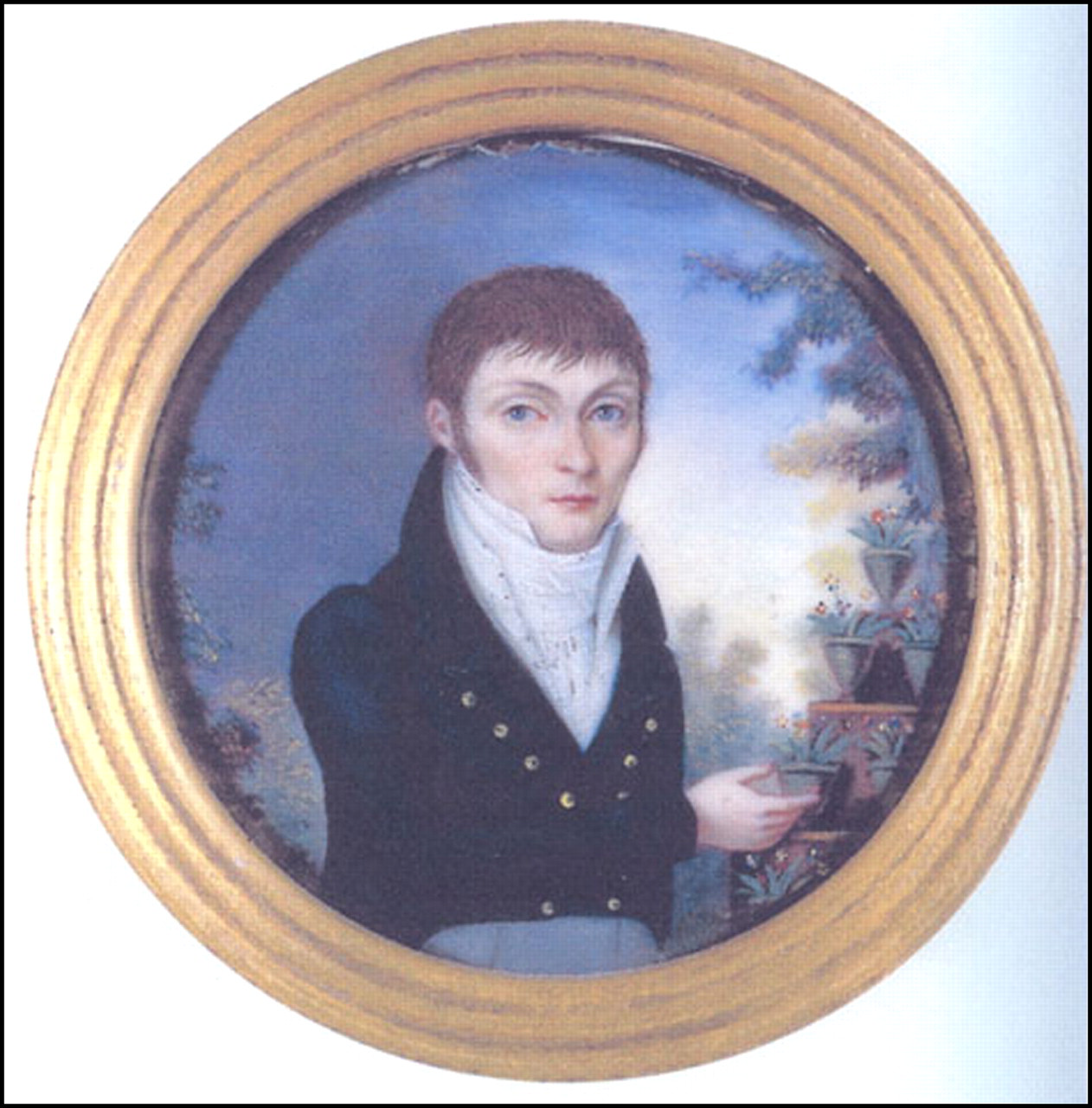
Miniature of Rafinesque, attributed to William Birch, reproduced courtesy of Transylvania University Library, Lexington, KY, USA
A brief biography
As a youth growing up in Marseille, Rafinesque was a passionate collector of plants. Wishing to research them in the botanical literature and without classical education, he mastered on his own the Latin of Linnaean taxonomy. In 1802, at the age of 18, he came to Philadelphia and worked initially in a mercantile office. He was soon less captivated by the world of commerce than by the American countryside and spent much of his time tramping around Pennsylvania and New York studying mainly the local flora. In 1804 he corresponded briefly with President Jefferson (1743–1826) on botanical matters. In 1805 Rafinesque returned to southern Europe and for a decade botanized extensively in Sicily. Fleeing from academic and marital disappointments there, he took up permanent residence in the USA in 1815, explored widely throughout the Ohio River Valley area and served from 1819 to 1826 as Professor of Botany at Transylvania University in Lexington, KY, USA. Transylvania was America's first school of higher learning west of the Allegheny Mountains, having been founded in 1780. 4
Rafinesque had a great compulsion to identify new plants and animals. During his early decades in the USA he travelled over 8000 miles in 14 eastern and mid-western states. He walked across the Appalachian Mountains five times, preferring to go by foot rather than ride since this put him closer to new flora to be found along the way. He coined the genus-species names for 6700 plants. 5 By comparison, the great 18th century Swedish botanist Carl Linnaeus (1707–78) devised names for 7700 plants.
Rafinesque also had an insatiable urge to publish his every finding in order to gain priority of discovery. He coined the names of so many new genera and species and published them in so many places (foreign, ephemeral or otherwise remote) that registering new observations became increasingly difficult for other naturalists who needed to search all the literature to verify by negative results the priority of their own finds. His responsibility for this problem led to a general hostility conveyed in the private world of letters where critical or spiteful comments about him were circulated.
During his six years in Lexington Rafinesque was derided for his French accent and manners, his ill-fitting clothes and his untidy appearance. His income then came largely from student fees for his lectures. Some liked him, others did not, and he was poorly regarded by the classical scholars and the more conventional faculty of the University. Various difficulties eventually led to his departure from Lexington in 1826 and his return to Philadelphia. There he continued his interest in taxonomy but soon pursued innumerable other subjects. He penned 200 long articles ranging over astronomy, geology, mineralogy, archaeology (the mound builders), anthropology (the origin of North American Indians), philology (American Indian linguistics), ancient Mayan hieroglyphics, consumption, financing and banking, a utopian community and the Hebrew Bible. He engaged in various botanical, medical and business ventures that yielded funds for publishing 18 books between 1830 and 1840 at his own expense. He received several impressive-sounding foreign honours but never obtained another university professorship. Jefferson tactfully avoided hiring him at the newly opened University of Virginia. 6
Rafinesque died in 1840 aged 57 years and was buried in a small cemetery in Philadelphia. In 1924, 84 years after his death, his gravesite was opened and his skeletal remains were sought for a permanent interment at Transylvania University in Lexington. 7
Rafinesque's Medical Flora
Although his taxonomic contributions were largely ignored by most naturalists, Rafinesque compiled two significant medical works, the first being popular among 19th century American physicians. His two-volume Medical Flora; Manual of the Medical Botany of the United States, published in 1828 and 1830, is a synopsis of over 600 medical plant genera in the USA compiled from years of study. One hundred of ‘the most active and efficient medical types’ are discussed in detail with one species for each genus represented in a full-page green colour woodcut. 8 Under Lexicon of Medical Equivalents he also briefly described 508 other genera. In the two groups the genera were arranged alphabetically with a variable number of species given for each genus. Here can be found their Linnean and common names plus their descriptions, histories and medical properties.
The Pulmist and Pulmel
Soon after moving to Philadelphia, Rafinesque experienced an attack of ‘catarrhal and dyspepsic consumption’ – or so he diagnosed. He treated himself with a mixture of herbs that he hoped might aid his recovery. The duration of his illness and treatment was never stated but occurred sometime between 1826 and late 1828. 9 When his health finally returned, he became convinced of the correctness of his self-diagnosis and the anti-tubercular efficacy of his herbal concoction. This episode led to his other medical work: The Pulmist; or, Introduction to the Art to Cure and to Prevent the Consumption. 10 He devised the name pulmist for a doctor treating exclusively lung diseases (mainly pulmonary tuberculosis), much as a dentist focuses on bad teeth.
The herbal mixture that he presumed to have cured him was named Pulmel – the term being taken from the Latin for lung, pulmo. He coined the word Pulmelin for its presumed active ingredients. He made available to the public 10 different preparations of Pulmel. A syrup (for ‘internal use’) and a balsam (for inhalation) were the two forms he recommended. Other preparations available included the lotion (for use as a wash or friction), wine, sweet chocolate, lozenges and Pulmelin (the ‘concentrated salt of Pulmel … dose one grain but double price’). 11
He first announced his purported remedy in a short letter to the Saturday Evening Post (16 June 1827) signed ‘Medicus’. Pulmel's action, he claimed, was ‘to prevent the formation of tubercles in the lung, or to heal them when formed’. 12 Over the next four and a half years (until 31 December 1831) he submitted dozens of short notes to the Post, reminding the readers of his new cure and mentioning that ‘further information if wanted’ could be obtained from the printers of the magazine and his ‘Medical Dissertation’. 13
His 72-page monograph, The Pulmist, was dedicated to Dr Étienne Lanthois (1767–?) in Paris who in 1818 had published a work on tuberculosis entitled Théorie Nouvelle de la Phthisie Pulmonaire, augmentée de la Méthode Préservative and who was thought by Rafinesque to be a distant relative. In The Pulmist he reviewed the history and mortality rates of phthisis, enumerated ‘60 distinct kinds or varieties’ of consumption and offered various theories of its cause. He believed that phthisis was hereditary and that ‘contagion is very rare’. 14 He listed the symptoms of phthisis and discussed its prevention and remedies, referring several times to Dr Lanthois and recommending the ‘Pectoral Syrups of Lanthois, Nos. 1 and 2’. 15,16 Rafinesque extolled the successes of his Pulmel which ‘in various forms has cured or relieved about five hundred persons out of seven hundred who have tried it’. 17 He claimed Pulmel to be ‘a new heroic specific’ although elsewhere he had written that there is ‘no such thing in nature as a general specific for consumption’, thus implying that his admixture was such. 18
His monograph ended with seven reported cures of consumption by Pulmel and advice about procuring it: ‘Orders and remittances must be sent to Prof. C.S. Rafinesque, M.D., and Pulmist, Philadelphia, sole Proprietor’. 19 He also invited ‘consultation[s] in writing’ and charged $10 for his response. 20
When registering The Pulmist for copyright protection, he designated himself as ‘C.S. Rafinesque, Ph.D. and Pulmist’. In The Pulmist and elsewhere he sometimes appropriated the title of MD but his deficient knowledge of medicine was quite evident when he wrote ‘the chest or upper cavity holds the lungs, heart, and stomach’ and when he praised ‘the new art of auscultation by percussion. 21 He would not have made these errors if he had studied medicine under Benjamin Rush (1745–1813) who, Rafinesque claimed, in 1802 ‘offered me to become his pupil’. 22 But yellow fever appeared in Philadelphia that summer and drove Rafinesque to nearby Germantown.
The business of Pulmel
Rafinesque's familiarity with medicinal plants obviously led him to seek a herbal cure for his presumed consumption. But what caused him to develop Pulmel into a commercial enterprise and to enter the health care market of his period? He had a business background in various areas and a general familiarity with pulmonary tuberculosis, an endemic disease in cities. Also he needed money and surely noticed the profitability of patent medicines, as evident in the success of Samuel Thompson (1769–1843).
Rafinesque's job when he first came to America in 1802 was with a merchant trader in Philadelphia. During his decade in Sicily (1805–15) Rafinesque had accumulated a small fortune selling feathers, rags and medicinal products prepared from various native plants, including rosemary, wormwood and bay leaves. For example ‘he manufactured nearly 200,000 lb. in a few years’ of squill (the sliced, dried bulbs of the sea onion, Scilla verna), used as a diuretic, expectorant and tonic in Europe and America. By weight the dried product brought 10–30 times the price of the bulbs. 23
In 1827 while back in Philadelphia Rafinesque began producing Pulmel commercially. In November of that year it was stocked for sale by nine local druggists and by September 1828 it was sold by 29 distributors in 18 other cities throughout the eastern and mid-western states. 24,25 The Albany NY Evening Journal ran the same advertisement for Pulmel over 50 times between 1830 and 1832, promoting it as a ‘medical specific for the consumption’. This was paid for by a local druggist, WA Wharton, who offered the remedy ‘at $1 for 20 doses, lasting 8 or 10 days’. 26 Rafinesque even sent a shipment of Pulmel to France but the bottles leaked en route and nothing came of this foreign venture.
His income from the sale of Pulmel, as recorded in his Day Book, was $206 in 1832, $364 in 1833 and $96 for the first eight months of 1834. 27 Sales of Pulmel languished after this and later he reduced the price of his postal consultations to $5.
Rafinesque's interest in tuberculosis also stemmed from his reading the current medical literature and his awareness of the high prevalence of the disease worldwide. For example, in 1821 he had reported the treatment of ‘Consumption, or Phthisis pulmonalis’ with vinegar of wood or pyroligneous acid (containing tar), a discovery made by a German chemist, Professor Meinicke. In the same brief review Rafinesque also mentioned that ‘fumigations of Tar, inhaled by the lungs’ were ‘completely efficient whenever undertaken before the last stage of the disorder’. 28 Apparently neither was used or proved effective in treating his own case of catarrhal consumption in 1826 but the idea of ‘fumigation’ may have prompted him to recommend ‘the inhalation of the Pulmel [its balsamic form] and emanations of tan bark [an auxiliary]’. 29 Indeed, on the title page of The Pulmist in italicized letters above his name is a one-sentence prescript ‘The Consumption is not an incurable disease; but its remedies are to be chiefly conveyed to the lungs by breathing or inhalation’. 30
In 1832 Rafinesque edited a short-lived journal in which he cited the mortality figures from tuberculosis in London (1 in 5 deaths), New York (1 in 6) and Philadelphia (fewer that 1 in 7). He then asked ‘Is not this difference to be partly ascribed to the Pulmel being more used there [Philadelphia] than in New York, and not yet introduced in London?’ 31
In The Pulmist (1829) he claimed to have ‘read all the principal works on the diseases of the lungs, and have found them more or less wanting in perspicuity … treatment … etc.’ 32 Here he alluded to useless cures of folk medicine, notably Thomsonianism. The last had developed into a lucrative medical sect or system in early 19th-century America. Its great panacea was Lobelia, an emetic herb (the puke weed of Indians), about which Rafinesque wrote, ‘The practice of Thomson to use it in every thing, fevers, consumption, measles, jaundice, &c. is preposterous’. 33 Rafinesque may have rejected particulars of Thomson's herbal system but not aspects of the business enterprise he had established (Figure 2).
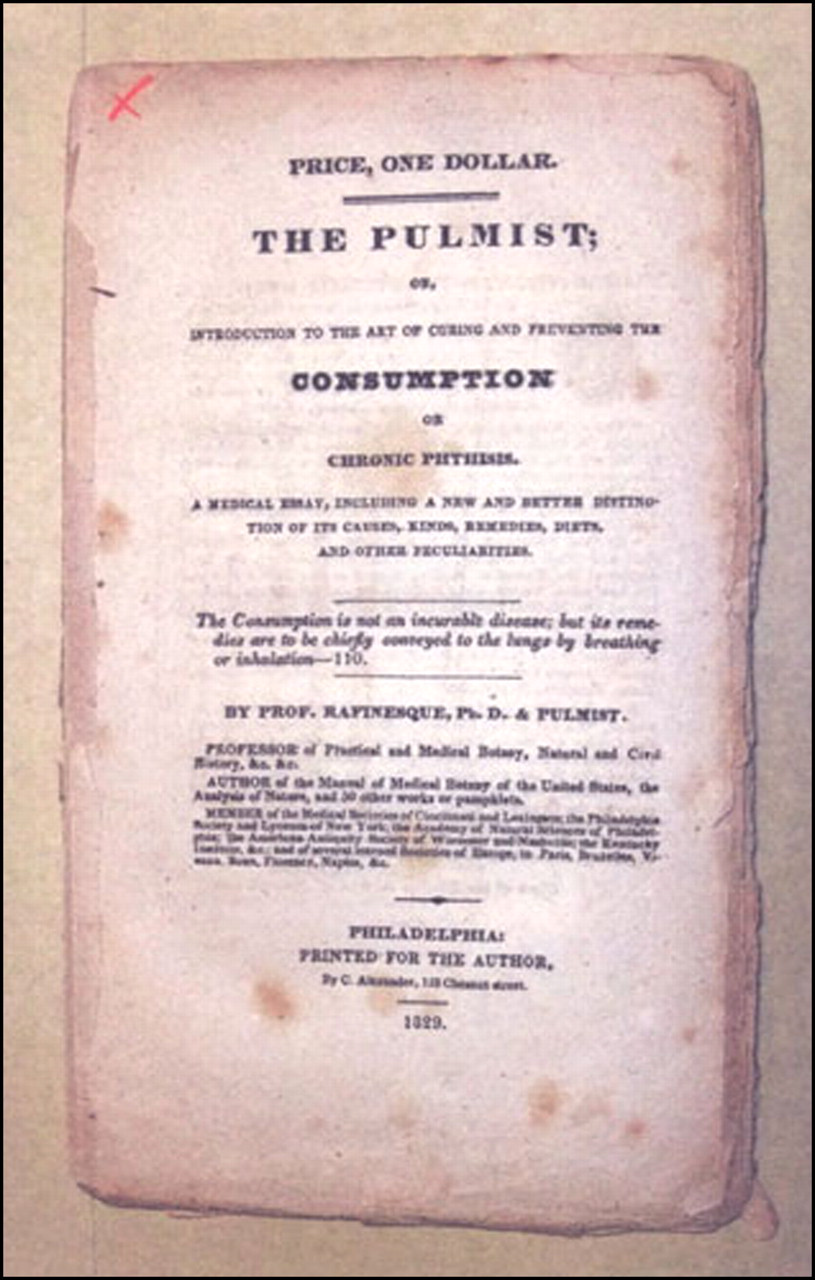
Title page of The Pulmist, 1829, reproduced courtesy of Transylvania University Library, Lexington, KY, USA
Samuel Thomson (1769–1843) and Rafinesque
Samuel Thomson grew up in rural New Hampshire. He had little education but developed a consuming interest in medicinal plants. In 1790 physicians were unable to save his mother from ‘galloping consumption’. 34 The next year a group of seven regular physicians failed to relieve his wife of complications from childbirth while two root doctors soon saved her. 35 Thomson began treating his family and neighbours with herbal remedies and by 1804 was travelling throughout New England curing people, according to his own reports. He came to believe that disease was caused by cold and that recovery required restoring the body's natural warmth with steam baths, inducing sweating with ‘hot’ botanicals including cayenne pepper, and cleansing the stomach and intestinal tract. He vigorously condemned phlebotomy and chemical drugs, including calomel (containing mercury) and tartar emetic (containing antimony), but advocated vegetable purgatives and emetics, namely Lobelia.
In 1822 Thomas published New Guide to Health; or, Botanical Family Physician that contained his approved list of medicinal ‘vegetables’, his ‘manner of preparing and administering them, and general directions for the treatment of all cases of disease’. 36 This was the basis of his new system of medicine for which a patent was first granted in 1813. 37 Persons wishing to obtain his medicines were obliged to ‘purchase a family right’ to employ the Thomsonian system. ‘Whoever makes use of [my system] without authority from me or my agents, make themselves liable to the penalties of the law’. 38 Prefixed to his New Guide was a narrative of his life along with many case reports of patients cured with his herbal medicines. Over the next decade his two works went through many editions and his new system was promoted throughout the country with an army of sales representatives whose numbers in 1833 reached 167. 39 In 1829 Rafinesque published The Pulmist which appeared to be a more professionally sound, French-oriented counterpart to the New Guide in matters relating to consumption and other pectoral (chest) diseases.
Rafinesque's promotion of Pulmel and Thomson's well-established herbal enterprise had differences and similarities. First, Thomson patented his system in 1813 and again in 1823 and 1836. Rafinesque never did so, in order to avoid the public disclosure of Pulmel's composition. 40 Second, Thomson sold contracts for his system of medicine, which then authorized the purchase of his medicines from his several stores directly or by mail. Rafinesque advertised the sale of 10 ‘officinal forms’ of his medicine by mail and also invited medical consultations by post. Third, Thomson employed an army of agents (166 at one time) while Rafinesque recruited druggists, doctors and others as sales representatives for Pulmel.
Thomson's success may have inspired Rafinesque's commercial venture with Pulmel but the latter's interest in the remedy faded after 1834 or so when it ceased being remunerative and when other subjects seized his fancy. In The Pulmist Rafinesque ‘promise[d] to disclose for the benefit of mankind, at a future period, (or when my practice shall have sufficiently rewarded my exertions,) the whole of my secret’. 41 But apparently he never did.
Pulmel's herbal ingredients
Pulmel was synonymous with any of 10 different preparations of the remedy – syrup, balsam, etc. Each contained Pulmelin (‘the active principle’) while additional (‘secondary’) herbs gave each Pulmel preparation its distinctive character. Rafinesque also recommended ‘auxiliaries’, other medicinal plants to complement the various forms of Pulmel in treating consumption. He freely named the plants in the auxiliaries – Syrup of Lycopus, Pectoral Syrups of Lanthois, medicated oak bark, etc. – but did not name those in Pulmel. 42 The undisclosed ingredients of foremost importance are those in Pulmelin. Of secondary interest are the other plants included to help characterize the 10 different forms of Pulmel.
We may pursue the herbal composition of Pulmelin by investigating first which plants he described as having medicinal value in treating consumption; second which plants are listed in records of purchases he made while promoting and selling Pulmel; third which plants he clearly excluded from Pulmel, according to his writings; fourth which plants grew where he lived and could have been collected by him locally; and fifth which plants available to him may have been carcinogenic.
First, it seems reasonable to assume that the plants in Pulmelin were among those Rafinesque had described in Medical Flora. Here he had assigned medical ‘properties’ or ‘uses’ to most. Five such uses include the following medical terms associated with pulmonary tuberculosis and employed in his book: consumption, phthisis, incipient consumption/phthisis, pectorals (any chest ailment) and haemoptysis (spitting of blood). (He never used the term tuberculosis in The Pulmist.) Twelve plants were cited under the above five uses and in the following paragraphs have been given subscript numbers (1−12) after each one to help identify its repeat listing or mention. These 12 represent the first screening for ‘candidate’ herbs in Pulmelin.
Under treatment of consumption or phthisis in Medical Flora, Rafinesque listed six candidate genera: Brasenia 1 , Convolvulus 2 , Fragaria 3, Geum4, Trillium 5 and Verbena 6. For treating incipient consumption/phthisis he cited Verbena hastate 6. For treating pectorals and haemoptysis he included eight candidate genera: Convolvulus 2, Trillium 5, Adiantum 7 , Aralia 8 , Erigeron 9 , Hedeoma 10 , Polypodium 11 and Ulmus 12. Rafinesque stated that ‘plants of the same genus have commonly the same qualities and properties’. 43 Thus he frequently omitted the names of species (Figure 3).
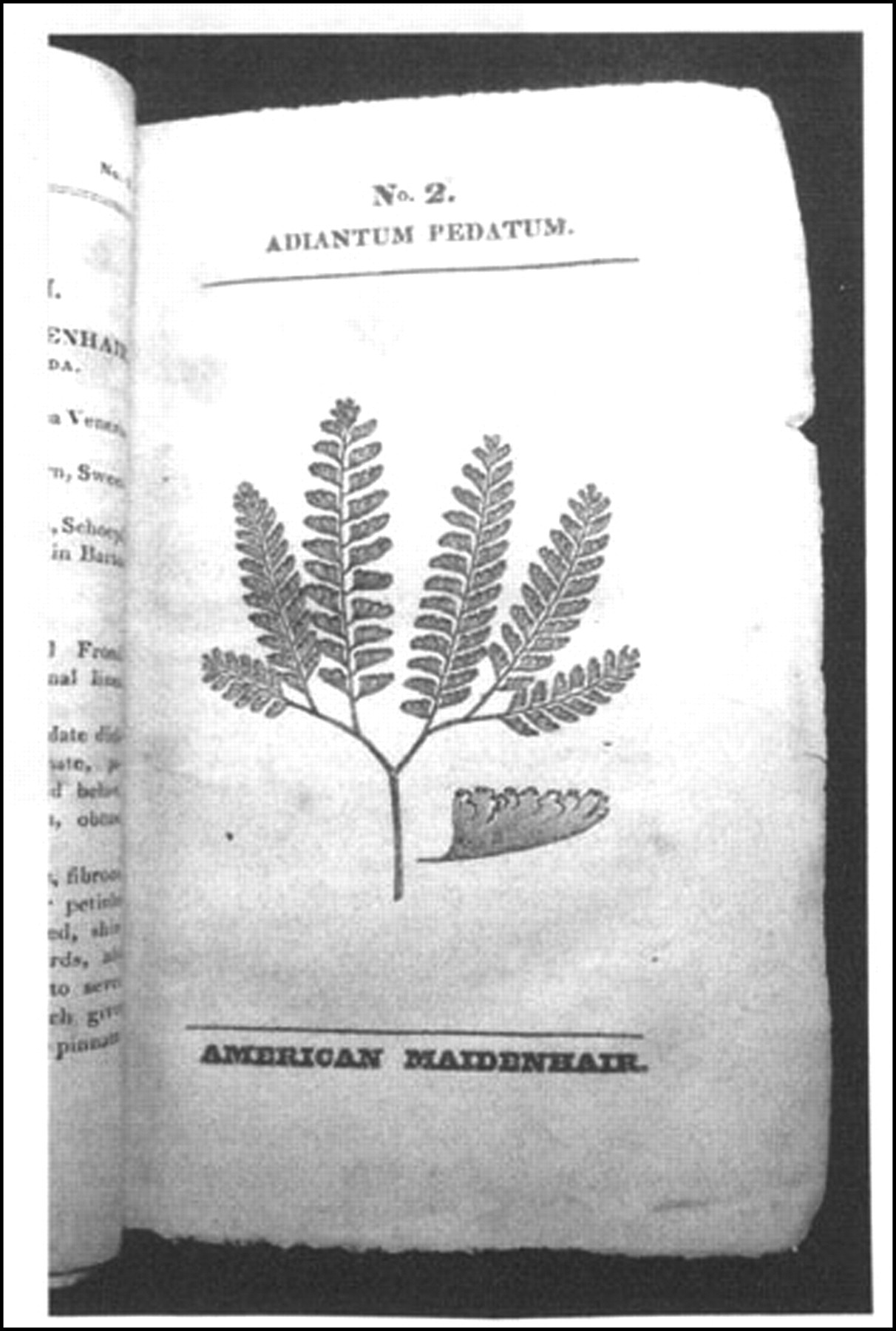
American Maidenhair fern (Adiantum pedatum), from Rafinesque. Medical Flora, vol. 1, p. 30/31
Rafinesque wrote that Pulmel was ‘composed by several heroic vegetable substances, mostly new or little known before I used them’. 44 The adjective ‘several’ connotes more than two but fewer than many. Pulmelin was not a Galenical involving myriad different plants but a ‘specific’ for consumption entailing a select few. So the investigation now concerns which of the above 12 candidate plants comprised Pulmelin. Like a Sherlock Holmes mystery whose solution comes from stray bits of information, these ‘several substances’ may be inferred from favourable comments made elsewhere by Rafinesque. Most of the 12 may be eliminated from consideration merely because he made no further mention of them in the context of consumption.
Second, we may surmise that some of the plants present in Pulmel were obtained from the Shaker Community in New Lebanon (now Mount Lebanon), NY. During one five-month period in 1828 Rafinesque was billed $20.41 for 33 pounds of 14 different plant drugs. 45 Among these were three of the above 12 herbal candidates for Pulmelin: Geum 4, Verbena 6 and Erigeron 9. He purchased some plants to flavour the different Pulmel preparations or to use as auxiliaries. 46 There are no other records at Mount Lebanon referring to Rafinesque. 47,48
However, Dr Charles Boewe noted that in April 1832 Rafinesque bought 23 pounds of slippery elm bark (Ulmus fulva 12) ‘on acct of Pulmel’ from the firm of Harlan & Sliddall in Philadelphia. 49 This was recorded in Rafinesque's Day Book, which covered his finances during the period 1832–34. Six months later Rafinesque obtained ‘100 pounds of “elm bark” and 20 pounds of its powder’ from the Shaker botanist GK Lawrence. 50
Third, records show that Rafinesque purchased Sanguinaria and liverwort (genus Hepatica) but in several Saturday Evening Post communications and also in a consultation reply to a patient he wrote that Pulmel did not contain Sanguinaria and that liverwort had no positive or lasting benefit in consumption. 51,52 Like the other drugs he obtained, these two may have been used as auxiliaries or for treating non-consumptive complaints.
Fourth, Rafinesque may well have gathered plants used in Pulmel during his own local ‘pedestrian rambles’ or commissioned others in Philadelphia to do so for him. And so it is important to determine which candidate plants were abundant in Pennsylvania. Of the 12 candidate plants, Trillium 5 species and Adiantum pedatum 7 (maidenhair fern) are among the 29 commonest perennials present on the Regional Plant List of the tri-state areas of Pennsylvania, Northern New Jersey and New York. 53 In particular, Rafinesque noted the presence of Trillium glaucum 5 ‘in Pennsylvania near Philadelphia’. 54 And Lord and Travis’ book on ferns native to Pennsylvania reports that maidenhair fern (A. pedatum7 ) and licorice root fern (Polypodium virginianum 11) are among the most common in the State. 55
Fifth, Rafinesque gave Linnean binomial names to at least 62 ferns and fern allies but many of his names have been overlooked by the botanical world. 56 He was familiar with ferns from his Gallic past, for he wrote that Adiatum vulgare 7 (maidenhair fern) was popular in France where it made a ‘pleasant summer drink’ and that ‘the celebrated Syrop de Capillaire’ was listed in the French Dispensaries. 57 He recorded that Polypodium vulgare 11 was used to expel tapeworm and that the common bracken fern (Pteridium aquilinum or his Pterilis genus) has been employed as a vermifuge. 58 But the carcinogenicity of ferns is the principal issue at hand.
Carcinogenic ferns
Rafinesque died of stomach cancer. Modern medicine is unable to explain fully the primary causes of most malignancies. Epidemiologists pursue prior exposures to potential carcinogens while molecular biologists examine mechanisms of mutagenesis. Countless studies have demonstrated the experimental induction of tumours by various chemicals or natural agents applied to the skin or introduced into the body by various routes but proven examples of the natural induction of tumours are rare. The first was that of testicular tumours in the 18th century where English chimney sweeps were exposed to coal tar in their particular work. Recently bacteriologists have implicated Helicobacter pylori, a bacterium commonly residing in normal stomachs, as possibly causing gastric cancer. But relevant to this essay is the strong epidemiological link between this particular cancer and the ingestion of bracken ferns. One group of investigators has asserted that ‘bracken’ (also called fiddlehead fern, Pteridium aquilinum) ‘is the only plant [ingested] that naturally causes cancer in animals’. 59
Throughout the world animals and people have presumably been eating ferns since prehistoric times. In medieval Europe during periods of famine, ferns were ground and mixed with flour to extend the food supply. Native Americans of northwest America pounded fern rhizomes (roots) into a paste for a bread and feasted on the leaves of local ferns. In the 18th century the Maori of New Zealand prized the taste of bracken rhizomes. Natives in the tropics have eaten various ferns, including the roots of licorice fern (Polypodium vulgare 12), for the pleasant flavour. For centuries in Japan the fiddlehead fern (Pteridium aquilinum, bracken) has been a popular cooked vegetable. Today in New York City a gourmet restaurant prepares and serves fiddleheads much like asparagus. 60
Ferns are among the most ancient flora on earth, having appeared eons before flowering plants and pines. The very earliest macroscopic fossils are Pteridophytes (ancient ferns). Over 12,000 species of fern now grow in diverse ecological niches throughout the world, from acid marshes to arid mountain ledges. 61 Bracken fern as a group is one of the five most common and widely distributed plants on earth and in many places it is regarded as an aggressive weed. Ferns often dominate the sites where they grow. To do so they (and some similar invasive plants) elaborate toxic chemicals, suppressing other flora competing for the limited resources in the immediate area – an effect termed allelopathy. Among the various toxic compounds isolated from bracken ferns is ptaquiloside (PTA) which appears to be responsible for malignancies in animal and man. 62
During the past several decades numerous medical papers have examined the incidence of gastric cancers in persons eating bracken fern or drinking milk from bracken-fed cows. 63,64 In Japan the high prevalence of oesophageal and gastric cancer is now linked to this particular fern (fiddlehead) and its carcinogen, ptaquiloside. 65 A Medline search revealed 62 such reports of ptaquiloside in various fern genera/species from Europe (UK, Ireland, Germany, Denmark, Hungary, Italy, Spain), Africa (Tanzania), South America (Venezuela, Cuba) and Asia (Australia, New Zealand, India, China, Japan). 66 So far such reports have not been identified from North America.
The carcinogenicity of bracken fern was reported initially in 1965 by Evans and Mason who found that mice fed the fresh fern developed intestinal adenocarcinomas. 67,68 The isolation of ptaquiloside was achieved first in 1983 by both Niwa et al. and Van der Hoeven et al. 69,70 Soon thereafter other investigators described its carcinogenic, mutagenic and clastogenic (causing chromosomal alterations) effects. Ptaquiloside is a glycoside with a reactive cyclopropane (a norsesquiterpene glycoside). In nature it has many derivatives, each with some slight chemical variation; the carcinogenicity of most has not been studied. 71 Potter and Baird surveyed the fern literature and determined that ptaquilosides have been found in 19 of 31 species (in 10 of 13 genera) of ferns examined. 72 Not tested here were the two ferns of concern in this paper, Adiantum pedatum 7 and Polypodium vulgare 12, nor have they been reported elsewhere in this context. 73
Rafinesque's illnesses
During his years in America Rafinesque led a vigorous, outdoor life, botanizing on foot throughout the northeastern and mid-western states. He described the rigours of travelling through thick forests and dense swamp during inclement weather, fighting off the mosquitoes, ticks and other pests. In his writings there is no mention of his having the ague (malaria) as experienced regularly by many natives in these areas, nor the intestinal illnesses (cholera, typhoid) prevalent here in the early 19th century.
However, in his A Life of Travels dated 1836 Rafinesque alluded briefly to his four non-fatal illnesses: first in Sicily in 1809, ‘a malignant bilious fever’ (yellow fever); second in Lexington in 1823, ‘very sick with the measles then prevalent’; third in Philadelphia in 1826–8, ‘my chronic complaint, which was the fatal Phthisis’; and fourth in Philadelphia in June 1835, ‘fell sick with a fever’. 74 The symptoms, signs and duration of his third illness (his so-called ‘fatal Phthisis’) were never recorded nor was the diagnosis of consumption specifically made by a physician, leading to doubt as to whether he ever had pulmonary tuberculosis. Indeed, when he died of stomach cancer in September 1840 his lungs appeared normal at autopsy. 75
This final, fifth illness began in the winter of 1839–40 when Rafinesque experienced recurrent constipation and ‘nausea with occasional vomiting and pain after eating animal food’. 76 During the early summer of 1840 he began complaining of abdominal distress. In August he noticed a small mass in the right hypochondral region. The diagnosis of stomach cancer was made by two prominent Philadelphia physicians – Dr William Ashmead (1801–88), who had attended him almost daily during the onset of symptoms in June, and Dr Edward Hallowell (1809–60), a later consultant. Hallowell first examined Rafinesque on 10 September and found ‘in the right hypochondriac region … a rounded tumour, hard to touch’ measuring ‘five and a half inches transversely by four in length’. ‘Very firm pressure upon it gives rise to pain’. Hallowell recorded his subsequent clinical course with the comment ‘that he refuses to take calomel internally in any shape, even in the smallest doses’. 76 Rafinesque, much wasted, died on 18 September. Within 13 hours the two attending doctors performed an autopsy. Hallowell published the findings in a five and a half-column report in the Philadelphia Medical Examiner of 19 September 1840: The body was emaciated. The lungs were ‘crepitant, not containing any tubercles’. 76 The heart was of normal size. The stomach was ‘greatly distended’. 76 ‘Within an inch of the cardiac orifice, along the lesser curvature, is a large tumour, about three inches in diameter … of a cauliflower shape, presenting numerous irregular pendulous masses upon its inner aspect … containing a quantity of yellowish matter’. 76 The left lobe of the liver ‘is occupied by an immense mass of altered tissue of a light yellow colour’. 76 Under the right lobe are ‘numerous whitish deposits [tumours], the largest of which is about an inch and a half in diameter’. 76 The other organs, including the brain, were amply described. Hallowell concluded that ‘the above case furnishes a well-marked example of cancer of the stomach and liver’. 76
It is impossible to ascertain from Rafinesque's writings the beginning and duration of his self-treatment with Pulmel, but the period between 1826 and 1828 is indicated. A 12-year incubation period (1828–1840) is consistent with the slow course of a carcinogen.
The year 1840 saw not only the death of Rafinesque in Philadelphia but also the transfer to Paris of the remains of Napoleon who had died in exile 19 years earlier on the island of St Helena, reportedly of gastric cancer, 77 the final interment occurred in the crypt of l'Eglise des Invalides in December 1840. However, the official party sent to retrieve Napoleon's (1769–1821) corpse left France in July 1840. In America the attention paid to these events abroad may have influenced the prompt publication of Rafinesque's autopsy describing his death from the same cause as that of the Emperor.
Conclusion
Rafinesque wrote that Pulmel contained ‘several heroic vegetable substances’. The four prime candidate genera proposed here for inclusion in Pulmelin are Trillium 5, Ulmus 12, Adiantum 7 and Polypodium 11. Each was cited in Medical Flora as useful in treating consumption/phthisis or its frequent symptom and sign, haemoptysis. Other supporting pieces of evidence are summarized below. Support for the other eight candidate plants has not been found.
Rafinesque had a particularly strong association with Trillium 5, having introduced 22 of the 34 recognized species to the botanical literature. 78 He noted the genus was ‘peculiar to North America’ and present ‘near Philadelphia’. He extolled Trillium5 for its ‘faint smell, somewhat like cedar, and a peculiar aromatic taste’. 78 Recall his prescript in The Pulmist that remedies for consumption are ‘chiefly conveyed to the lungs by breathing or inhalation’ and his favouring a fragrant balsam. 79 Also he wrote that the Indians of Missouri use Trillium5 as ‘their palliative for consumption’. 80
In 1832 he had purchased large quantities of Ulmus 12 (slippery elm bark), possibly to serve as a filler or expander in the Pulmel preparations. Parenthetically, the Catawba Indians of South Carolina used U. fulva 12 for consumption. 81 Rafinesque made a pretence of a scientific grounding for the composition of ‘the Pulmel’ and disparaged folk medicine. But he had the typical European fascination with native Americans, and Indian remedies of this sort may have influenced the final formulation of Pulmelin.
Both ferns discussed here were abundant in Pennsylvania where Rafinesque likely collected plants used in Pulmel. He was especially familiar with Adiantum 7 (maidenhair fern) because of its common usage in France in a beverage and a medicinal syrup. He extolled its virtues as ‘a popular pectoral remedy throughout Europe, although little known in America’ and wrote, ‘My own experience has tested the value of this plant and its syrup’. 82
As noted previously, there are at present no data showing that either of the two candidate ferns contains ptaquiloside although 10 of 13 fern genera do. Analyses of these two particular ferns has not yet been reported. The other weak element of this narrative is the lack of records showing that Pulmel contained either fern – maidenhair7 or licorice root11. Perhaps one day this latter uncertainty may be resolved by a chemical analysis of the dregs in a Pulmel-labelled vial found in a display case of old medicines. 83 The proof might then be found in a bottle. Meanwhile, we may entertain the paradox that Rafinesque's self-medication with Pulmel induced his cancer and his death a decade or so later.
Footnotes
Acknowledgements
I am greatly indebted to Dr Charles Boewe for his many invaluable comments on the later drafts of this paper. For access to some rare works of Rafinesque I am grateful to Mrs BJ Gooch, Special Collections Librarian, Transylvania University, Lexington, KY, USA. Finally, special thanks are due to Mrs Amanda William and Mr Mark Ingram, research librarians at the College of Medicine, University of Kentucky, Lexington, KY, USA.