




Abstract
After graduation at Trinity College Dublin in 1814 Archibald Billing, who was born in County Dublin, settled in London. His Dublin MD (1818) was incorporated at Oxford and he taught at the London Hospital where, when appointed Senior Physician in 1822, he introduced teaching at the patients' bedsides. He ceased to lecture in 1836 when he was invited to become a member of the Senate of the University of London. He published papers on a variety of clinical subjects but is remembered for First Principles of Medicine (1831) that went through six editions. His friends among the operatic artists included Niccolo Paganini, and The Science of Jems, Jewels, Coins and Medals (1867) was the work of a connoisseur. He lived in retirement for many years before he died at the age of 90 at 34 Park Lane, London, on 2 September 1881.
The ardent student
The son of merchant Theodore Billing, Archibald was born on 10 January 1791 in Crumlin (originally Croimghlinn and anglicized Cromlyn), then a parish of rolling pastures a few miles southwest of Dublin. His schoolmaster was the Reverend J Hutton. He entered Trinity College Dublin in 1807 as a pensioner (he paid his annual fees) where his tutor was Mr Wall. 1 Graduating BA (1811) and MB (1814), he studied in the Dublin, British and Continental hospitals before settling in London in 1815. He took his MD in Dublin in 1818 and was incorporated MD at Oxford (after refusal at Cambridge 1 ) in the following October. In the same year he was admitted to membership of the Royal College of Physicians, becoming a Fellow in December 1819, Censor in 1823 and serving as Councillor from 1852 to 1857 (Figure 1). From 1817 he served on the staff of the London Hospital, with its 320 beds in Whitechapel, that had been incorporated by Royal Charter on 9 December 1758; he was elected Senior Physician in 1822. 2,3
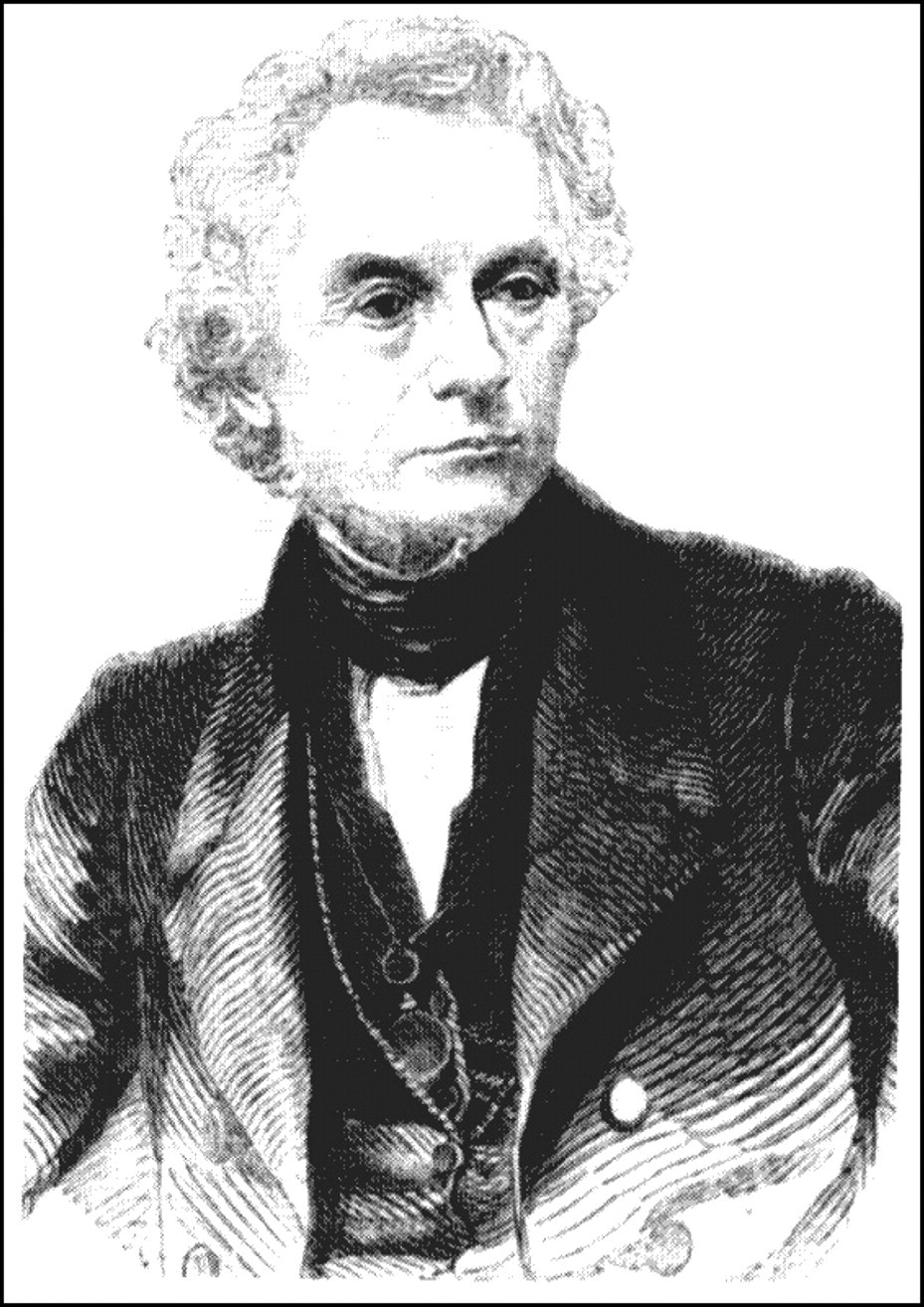
Portrait of Archibald Billing (from a photograph by Claudet) in Medical Circular 15
His first principles
When Archibald was appointed to the senior staff at the hospital, his duties included the instruction of medical students. Out of the mass of practical facts and observations encountered daily by physicians, Billing attempted to draw a continuous thread of medical principles, condensed into 130 pages for the benefit of his auditors. His First Principles of Medicine, first published in 1831, went through six editions because it helped students find their way through the maze of poorly understood or difficult to explain symptoms and signs they encountered. He introduced his little monograph by a brief survey of the leading facts in physiology but his idiosyncratic use of terms made his introduction difficult to understand. For example, in the process of repair he laid special stress on ‘inflammation’. But his concept of inflammation was not that of his contemporary pathologists: he believed that inflammation began in the nerves, on which the capillaries depend for tone and energy, only later to restrict this to morbid as distinct from healthy inflammation. The proximate cause of fever he considered to be an injured state of the brain and nerves produced by disease in some part of the body or by poisonous matter introduced from without, the effect of which debilitated the nervous system and consequently all other parts depending on it for energy. 4
There was no table of contents, no chapters or headings, and punctuation was frequently irregular. A perfunctory index appeared in the fourth edition. And yet the little book met with the approval of Georg Friedrich Louis Stromeyer (1804–76), successively surgeon and physician, who rejoiced in whatever he or his colleagues found beneficial in the limited art of healing, and Billing was glad to repeat his words in the Introduction to the second edition in 1837:
Dr Billing's book is a very clever little Pathologia generalis; his views certainly go beyond those of most Pathologists, by taking the nervous system into consideration. Upon the whole, I think it as much written for fully educated medical men as for students. Books like this are very rare; almost every writer strives, whatever little original ideas he has, to bury them in a mountain of generally known matter, whilst Dr B gives us a very intellectual (geistrich) view of his peculiarities.
4
Favourable notice by the London journals supported the approbation from Hanover.
The bedside teacher
Initiation of bedside teaching really belongs to Leiden. In a letter in 1664 Franciscus Sylvius de la Boe (1614–72) of fissure fame wrote:
My method, hitherto unknown here, and possibly anywhere else, [is to] lead my pupils by the hand to medical practice, taking them daily to see patients in the public hospital so that they may hear the patients' complaints and see them themselves. Then I question the students as to what they have noticed and ask them their opinions as to the causes of the illnesses, the rational treatment of each case, and their reasons for these opinions. Then I give my own judgment and together with me they see the happy results of treatment when God has granted to our cases a restoration of health; or they have assisted in examining the body when the patient has paid the inevitable tribute to death.
5
Hermann Boerhaave (1668–1738), when he was appointed professor in his native Leiden in 1715, taught the pure Hippocratic method – observation of every detail, not on all the patients on a ward round but on one selected patient at his bedside. 6 Bedside teaching waxed and waned until the French school, by adding percussion and mediate auscultation, established clinical examination early in the 19th century.
In 1822 there were no clinical lectures given in London. When Billing had the honour of being elected Physician at the London Hospital in that year he organized a regular system of afternoon lectures supplemented by visits to the wards. As well as receiving clinical instruction, the students attended postmortem examinations. He continued these courses for six or seven years until his ‘clinical secretaries’ relieved him and he confined himself to clinical lectures with one anatomical demonstration each week. When he was appointed to the University of London in 1837 he found it impossible to continue but he had the satisfaction of knowing that his example had been generally followed in the metropolis, besides that of witnessing the success of the school in which it was regularly begun. 4
The care with which Billing prepared his clinical lectures and assiduously built them around contrasting cases is evident in those that appeared in the Lancet in 1832: scurvy and its appearances; chronic hepatitis; diseases of the heart and treatment of dropsy by hydragogues (i.e. oedema by diuretics); cardiac hypertrophy and acute rheumatism; tubercular consumption and treatment of phthisis – recovery was possible in spite of the high mortality rate; petechial fever – epidemic meningitis; and finally hysteric diseases – amenorrhoea and vicarious menstruation, a label (then) applied indiscriminately to haemoptysis or haematemesis in any non-pregnant patient suffering from amenorrhoea. And he closed his concluding lecture by informing his students that he would continue to give less formal, though perhaps no less useful, instruction, both in the wards and in the postmortem room. Nonetheless, he recommended they attend the lectures of the other physicians and visit the outpatient department to encounter chronic diseases, especially those of the eye and skin, ‘of much consequence though not generally requiring admission to the wards’. He advised them to practise auscultation, to perceive the true value of morbid anatomy and to realize that, though some diseases are incurable, palliation ‘may prolong life’. 7 Paradoxically, for a bedside teacher who extolled the practice of auscultation, later he brought out a small volume on Practical Observations on Diseases of the Heart and Lungs in praise of auscultation but physicians did not find the exposition useful in acquiring the new art. 8 Fees, channelled through the Medical College, for the course of clinical lectures were the following: first attendance four guineas, second, i.e. repeat, three guineas; perpetual (in the sense that the student could attend over as many years as he liked) seven guineas. 9
The heart sounds
It was also in 1832 that Billing read an essay on the auscultation and treatment of affections of the heart to mark the anniversary meeting of the Hunterian Society. In it he surveyed hypertrophy with and without dilation and he dealt with the clinical presentation of valvular disease and the treatment of cardiac disease. He was pretty sure that various degrees of hypertrophy and dilation, alone or in combination, could be distinguished by alteration in the heart sounds. He was fully aware that ‘when the tricuspid valve is imperfect, either permanently, or only temporarily, so under extra action, the force of the ventricle causes a reflux, visible in the jugular vein, and the passage being once forced, the auricle also is able to produce a pulsation in the vein; so that you have this jugular pulsation twice for each pulse at the wrist, once for the reflux from the auricle, and once for the regurgitation from the ventricle, as in the case of the old woman alluded to in Spittal (pages 87 and 105)’. 10 In this interpretation he begged to differ from the Edinburgh author who ‘appears to think that the auricle pulsed twice for each pulsation of the ventricle’. In fact, Robert Spittal (1804–52) had identified two to one heart block; in a 66-year-old woman for many years subject to respiratory problems, ‘the pulse of 40 when quiet was instantly raised to 80 on the slightest exertion’; the pulsation in the left jugular and subclavian veins ‘took place immediately before that of the subclavian artery, twice for once of the latter, when the pulse was 40, only once when the pulse was 80’. 11 Further, Billing went on to incriminate the aortic valve (on the left side of the heart!). 10 He also outlined the bruits (murmurs) accompanying diseases of the valves, more especially regurgitation. Though he did not use the terms systolic and diastolic, he was clearly aware of the timing of murmurs in the cardiac cycle and of the role of ossification, vegetations on the edges and rupture of the leaflets from various causes. 10
The Hunterian lecturer prefaced his remarks on auscultation by considering the cause of the beat and sounds of the heart:
I have elsewhere stated that the beat, or push of the heart, was between the first and second sound… Now these phenomena are caused by the ventricles and the valves … the push is caused by the swelling up of the ventricular muscles in their systole to expel the blood; the first sound is caused by the tension produced in the shutting of the auriculo-ventricular valves, and the second sound is caused by the tension produced in the shutting of the ventriculo-arterial valves…The first sound is loudest and longest, the second sudden, and terminates instantaneously because the semilunar valves have a regular defined, attachment, and are smaller than the the auriculo-ventricular valves, the attachment of which is the cordae tendineae…
10
Billing's ‘simple, unsophisticated explanation’ misled him and he continued in his error. In the Advertisement prefacing the fourth edition of his Principles of Medicine he even took issue with the London Committee of the British Association, declaring that ‘the sounds are entirely valvular, neither depends on muscular noise; tympanic tension produces each sound not the surfaces of the valves flapping together as Dr Williams claims’ 12 – a pronouncement that calls for a lengthy exegesis.
There is no learned man, but will confess he had much profiteth by reading controversies. So said John Milton (1608–74) in Areopagitica in 1644 but few can emulate Milton's contemporary Sir Thomas Browne's (1605–82) sentiment in Religio Medici (1642): ‘I could never divide myself from any man upon the difference of an opinion, or be angry with his judgement for not agreeing with me in that from which perhaps in a few days I should dissent myself’. Controversies over the origin of the heart sounds led to an unhappy priority dispute between James Hope (1801–40) and Charles JB Williams (1805–84). Upon graduating in Edinburgh, they went to Paris to learn the art of stethoscopy and the science of clinicopathological correlation from René Théophile Hyacinthe Laennec (1781–1826) and his disciples before settling in London. In 1831 Hope, assisted by Williams, exposed the heart in donkeys stunned by the blow of a hammer or paralysed with the Indian poison woomara (curare, 20 grains implanted into a flank incision) provided by Sir Benjamin Brodie (1783–1862). Without attempting any intracardiac manipulation, Hope came to the wrong conclusion about the second heart sound as expressed in his Treatise on Diseases of the Heart and Great Vessels (1831, the year of Billing's address to the Hunterian Society). Williams wrote a very favourable review of the monograph even though he did not neglect to point out defects in the experimental procedures. Williams had published a small treatise on Rational Exposition of the Physical Signs of Diseases of the Chest in 1828 and while preparing a third edition in 1835 he asked his friend Hope to undertake some further experiments directed towards discovering the physical causes of the cardiac sounds and murmurs. Hope delayed (he was suffering from phthisis) and Williams carried out some experiments himself; he was not as dexterous as Hope and he seems to have lost more animals without making any worthwhile observations. 13
The crux of the subsequent argument between the two friends arose over whose idea it was to pass a dissecting hook into the pulmonary artery or a shoemaker's awl into the aorta in order to prevent movement of the flaps (cusps) of the semilunar valves. This manoeuvre silenced the second heart sound and indicated that the second sound was associated with closure of the semilunar valves. The third edition of the Rational Exposition came out in March 1835, a month after the second edition of Hope's Treatise that had carried an Appendix describing the controversy. Adjudication by Brodie was indecisive and ineffectual. In August Hope turned his attention to the auriculo-ventricular valves and the first sound at the start of ventricular contraction. (When Williams contemplated opposing Hope for appointment as full physician at St George's Hospital in 1839 the rupture was complete, and Hope's prior claim to elucidation of the causation of the second heart sound had not been firmly established.) 13
A Circular digression
The Medical Circular was founded in January 1852 to provide an index of every medical journal with critical remarks, a list of new publications with brief notes and a medical directory with biographical notices and portraits. The founder was Dr James Yearsley (1809–69) and the editor was George Ross (1815–75), a general practitioner. In a departure from the custom in The Lancet and Medical Press, the new periodical promised it would abstain from discord. But the biographical notices soon led to trouble: they were unequal in length and depth and the Medical Press alleged that the quality and quantity of the memoirs depended on the favouritism of the editor. They were abandoned in the middle of 1854, so they must be taken with a grain – or two – of salt. 14
The edge of ambiguity
On Wednesday 30 June 1852 the sketch on Archibald Billing, in which there is just a hint of jeu d'esprit if not frivolous irony, began:
There are few men in the profession of more original powers, and at the same time of a more highly cultured intellect than the subject of this notice. It is not often that the two qualities are found in union. Nature and art are not so frequently joined together. The vigorous spring of mind, associated with facility of thought and novelty of conception, is often impatient of slow training and austere self-subjection which wear down the inequalities of genius, and give it a grace and polish that enhance its native power. Dr Billing is an Irishman, and has much of the vis animi that distinguishes his countrymen. … His … writing is a model of strength and grace [and] with true independence of mind Dr Billing has not reduced his Principles of Medicine to a system, but has contented himself with laying down principles … and the book is original on every page. By his zeal he extended the use of the stethoscope among his students at the patient's bedside. His extreme partiality to horse-exercise is such that he does not consider his professional dignity impaired by riding at a jog-trot to visit a patient instead of travelling in his old-fashioned very smart cab at the same respectable jog-trot pace. Serious and unassuming in aspect, this most amiable man is without any pretension or affectation. The peculiar refinement of his mind, musical taste, and sympathies with the beautiful give him a considerable practice among theatrical folk, with whom he is very liberal in his dealings.
15
Paganini's friend
His service to operatic performers went beyond earning thankful missives from stars, including soprano Giulia Grizi (1811–69) and coloratura Adelina Patti (1843–1919). By the age of 18 Niccolo Paganini (1782–1840) was celebrated as a violinist in his native Italy and by the end of the Napoleonic Wars his fame had spread throughout Europe with concerts in all the musical capitals. His concert tours aroused ire and jealousy among other artists but he worked ceaselessly to maintain his virtuosity: ‘If I go a week without practice, the audience notices it. If I go a day without practice I notice it’.
When he arrived in London from Paris a week before his English debut in May 1831, his first concern was to acquire a comfortable set of dentures from Samuel Cartwright who had been recommended as the finest in London. Among the musical friends invited by Cartwright to the dinner he arranged in honour of the maestro was Dr Billing. A friendship quickly developed and as well as partaking in musical evenings Niccolo went with Archibald to the London Hospital to witness a surgical operation (in the 19th century the tiered benches in an operating theatre were a public gallery; they were not exclusively reserved for medical students). In June 1832, during the Reform Bill debates, Paganini wrote to Billing with sentiments of tenderness ‘for you and all your estimable family’ asking him to withdraw £3200 from Mr Heath's bank and hold it for him. In May 1833 Felix Mendelssohn (1809–47), Robert Lindley (1775–1855), then the finest cellist in Britain and Niccolo performed a trio at a soirée given by Billing that was noticed the next day in the Morning Post. A year later when his big viola that had been lost in London Customs was found, under the maestro's instructions the instrument was held in the care ‘of my friend Dr Billing’ to await his arrival in April. While he was in Paris in 1834 Paganini was found to be suffering from phthisis and in September he ended his concert career. With exemplary medical etiquette his physician-friend never divulged a word about his case (if in fact he had been a patient of Billing). A haemorrhage carried the virtuoso off in May 1840 at Nice whence he had repaired for his health's sake. 16
Full of years and honours
The First Principles of Medicine gained for Billing an extensive reputation as an original thinker and a clear but terse writer at home and abroad. It went through six editions, was translated and published in Germany and France, and republished in America. Even though he discontinued his lecture courses in 1836, he did not resign his physicianship at the London Hospital until 1845. Upon the foundation of the University of London in 1836 he became a fellow and for many years was examiner for the Degree of Medicine there and a Member of the Senate, and 1844 saw his election to the Royal Society. 17
He was a fair artist, and a connoisseur of engraved gems and antique coins. In 1867 he published The Science of Jems, Jewels, Coins and Medals, Ancient and Modern. This handsome textbook, illustrated with photographs and with an index prepared by Mrs Billing, reached a second edition. 18
One of his old pupils told his obituarist:
He was not a fluent lecturer, but his matter was always a profound record of the subject upon which he was speaking, and I never knew anyone who could convey so much original and practical information in so few words. He was literally beloved by the students, and greatly respected by his colleagues. He always invited his class after lecture to accompany him round the wards in order that he might demonstrate the facts he had just been teaching. He was an advocate of the ‘one-faculty system’ and on one occasion publicly declared that he ‘despised the man who was incapable of practising his profession from the administration of a glyster upwards’. He was a man of wide culture and artistic tastes.
17
At a time when physicians and, indeed, all medical men were expected to dress in sombre colours, he used to habitually wear a blue coat, a primrose-coloured waistcoat and trousers of Oxford mixture, ie a dark-grey woollen mixture. He was a man of honour and generous disposition, much beloved professionally and in private life, 17 and deservedly esteemed in the College. 18,19 He kept his horse-exercise long after he retired from practice, was able to enjoy his old age and at last passed quietly away in his sleep on Friday 2 September 1881 at his house at 34 (now 97) 16 Park Lane, London. 17
The London Hospital Medical College that Billing served so dutifully was the first organized medical school in London associated with a hospital. 9 From a lukewarm start in 1785 it established a trend that spread with enviable distinction across the metropolis. 20
Footnotes
Acknowledgements
Ellen O'Flaherty, Mary O'Doherty and Robert Mills in the libraries of Trinity College and the Royal Colleges in Dublin have helped us in the preparation of this paper.