




Abstract

The tragedies of incursions into Central Africa are marked by many graves along the Zambezi River and its tributaries. Those from the first Universities' Mission of Central Africa, under the leadership of Bishop Mackenzie (1825–62), are marked by a series of marble crosses along the Shire River and into modern day Malawi. Of common design and sculpted by the London firm Farmer and Brindley, some robust marble markers were placed in 1915. In Magomero, the first mission site, is that of Reverend Henry de Wint Burrup (d. 1862); close to the National Park of Majete is that of Richard Thornton (1838–63), the geologist for David Livingstone's Zambezi expedition (1858–64); and downriver, past the burial place of Herbert Rhodes (1845–79) [Cecil Rhodes' older brother], is one shared by the Reverend Henry Scudamore (d. 1863) and Dr John Dickinson. 1
John Dickinson was born in Jarrow on 18 March 1832. He was one of the first to obtain the MB (not the MD as on the gravestone) at the University of Durham in 1859 (Figures 1 and 2). Though in ill health he volunteered and was accepted as doctor to the Mission and he joined it in Magomero somewhat late in 1861 at a critical time just before the demise of Bishop Mackenzie. With his death the Mission retrenched to Chibisa (modern day Chikwawa, Malawi) to await a new leadership. By 1863 the Mission was in a parlous state with missionaries constantly ill with fever and dysentery, surrounded by hostiles and in the grip of famine and facing starvation. Despite these, Dickinson refused to leave until a replacement had arrived and continued to treat the sick. Dr David Livingstone (1813–73) and Dr (later Sir) John Kirk (1832–1922) both responded to information that Dickinson was in a terminal state of what is now thought to have been blackwater fever and arrived shortly after his death on 17 March 1863. Both probably attended the burial.
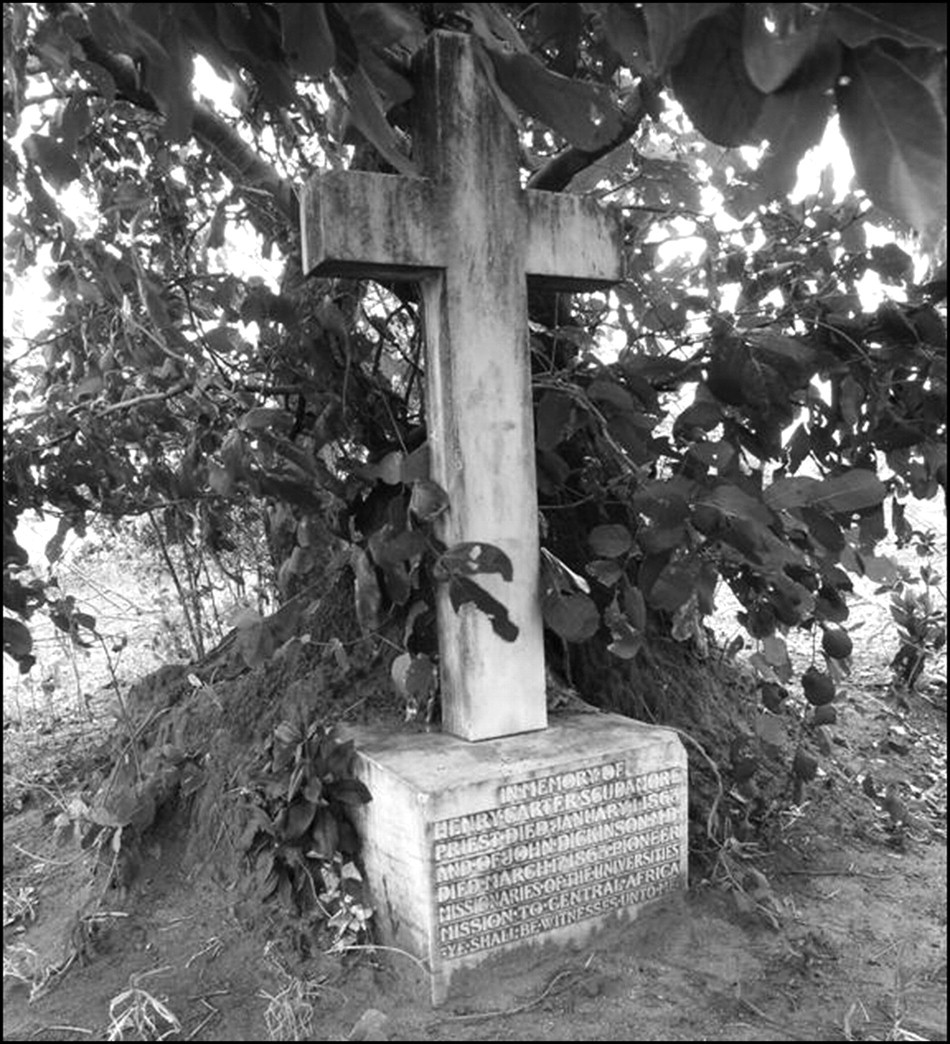
The marker for the burial site of Henry Scudamore and John Dickinson. The termite mound has been cleared subsequently. Photograph by the author, July 2009

Plinth of marble marker erected in 1915. Photograph by the author, 2009
In Dickinson's memory, a Newcastle upon Tyne College of Medicine and University of Durham scholarship was funded, a plaque erected and a stained glass window placed in a Jarrow church. The scholarship still exists in an attenuated form: the plaque got damaged in a move to a new medical site in 1984 or thereabouts and now rests in pieces in a storeroom and the window was destroyed in a bombing raid in 1940. Among the specimens of birds that were deposited in the Natural History Museum from Livingstone's Zambezi Expedition are those of Dr John Dickinson. These contained a species new to science and named in his honour Falco dickinsoni – Dickinson's Kestrel (Figure 3).
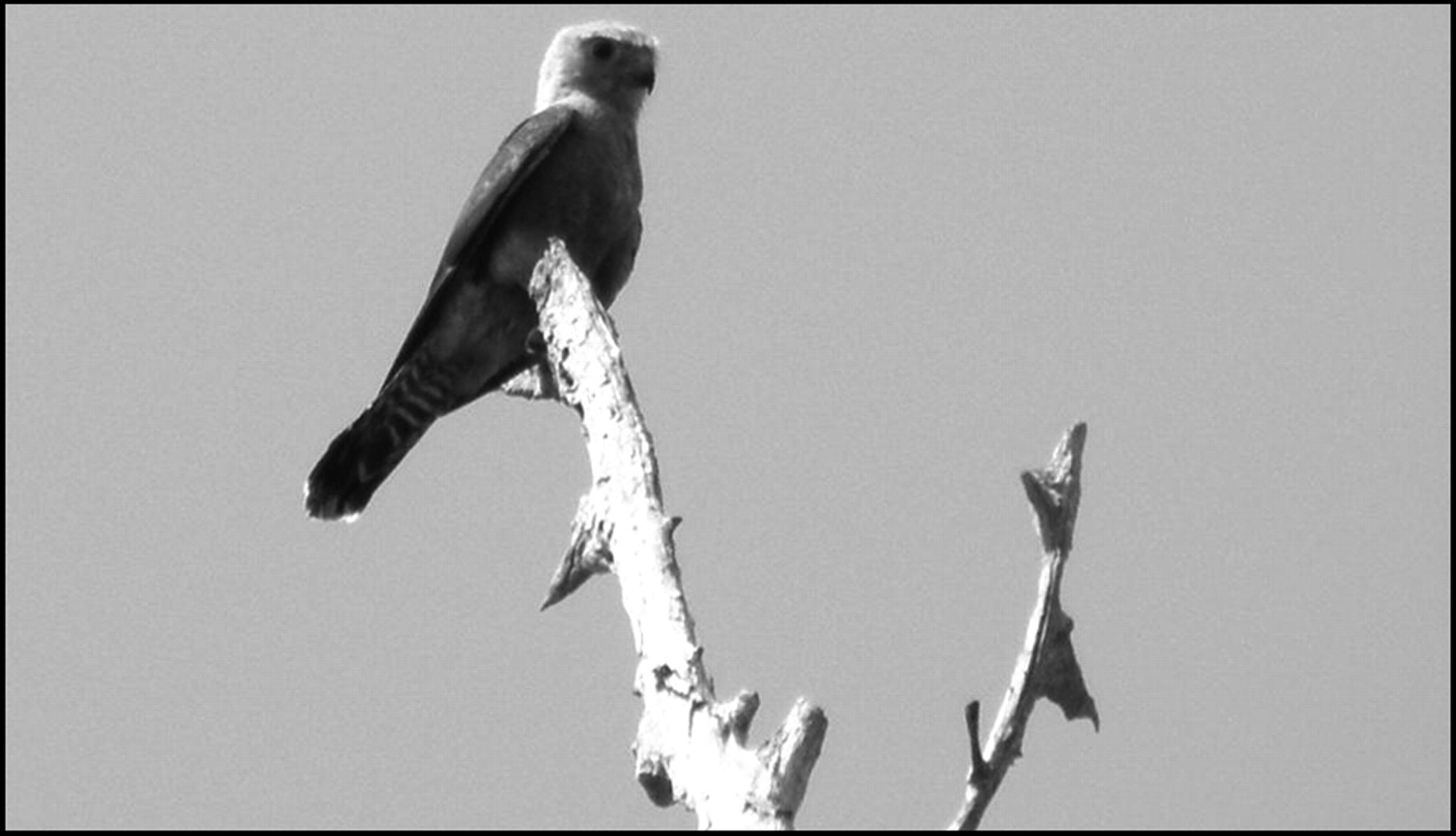
Dickinson's Kestrel in Liwonde National Park, Malawi. Photograph by the author, 2009