




Abstract
Edward Harrison was a distinguished and innovative physician, an educationalist who had a profound influence on the treatment of spinal deformities. He founded the first infirmary for the treatment of spinal diseases in London in 1837. Little is known of this institution but much of Harrison's legacy rests with his disciples who followed Harrison's principles of treatment to treat spinal deformity. Like Harrison they were unconventional individuals, influenced by religious beliefs and liberal political and social ideologies. After his death, initially they followed his methods of treatment but subsequently they were not afraid to pursue new forms of treatment including homeopathy at a time when traditional medicine had little to offer.
Edward Harrison was born in Lancashire and studied medicine in Edinburgh where he qualified in 1784. He pursued his studies in Paris and in London at the Great Windmill Street School of Anatomy. He settled in Lincolnshire where he practised for 30 years and he founded the Horncastle Dispensary in 1789. An industrious and philanthropic man, he founded the Lincolnshire Benevolent Medical Society and became President of both the Royal Medical Society and the Royal Physical Society. When conducting a local survey he was horrified by the number of unqualified practitioners, estimating that there were nine ‘quacks’ to every qualified practitioner. In 1821 he was invited to London to extend this survey to the whole country.
Despite his strenuous efforts for medical reform, he lacked diplomacy and his forceful suggestions were rejected particularly by the Royal College of Physicians which pursued a vendetta against him and tried to stop him practising by means of a lawsuit. Harrison won his case but, bitterly disappointed and frustrated in his efforts to reform the medical profession, he devoted himself to his medical career. His interest in spinal deformity came late, after successfully treating his wife's cousin who suffered from curvature of the spine. In 1827 Harrison published a comprehensive book on his treatment methodology. 1 A charismatic and successful physician, he founded a spinal institute in London in 1837 (Figure 1) a year before his death. 2,3 Little is known of this spinal institute but much of Harrison's legacy lies in the work and publications of his many disciples, associates and friends who repeatedly refer to his methods of treatment. This paper explores their personalities, their interests and their association with Harrison's Institute at a formative period of medicine.
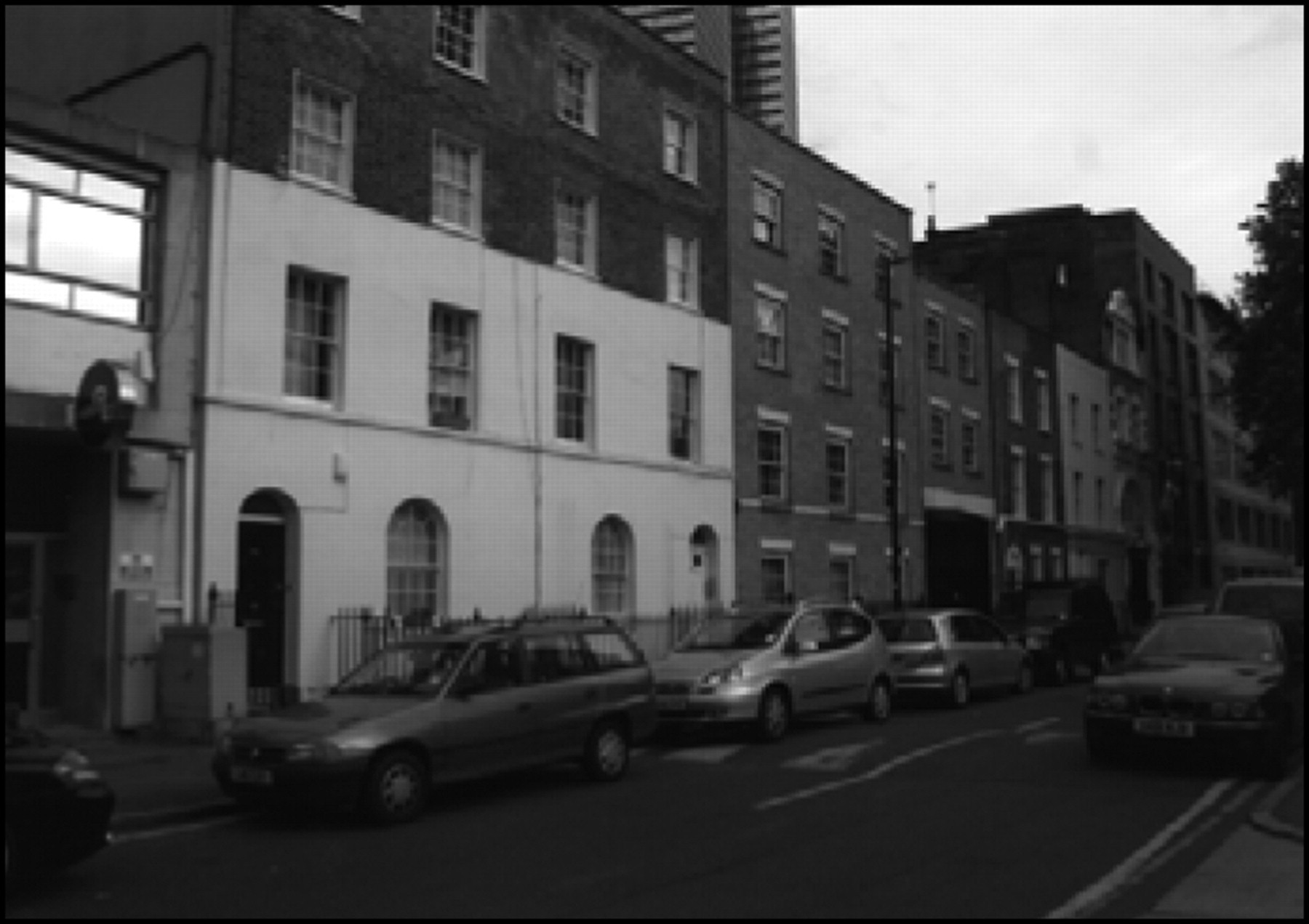
A recent photograph of the location of Harrison's infirmary for spinal diseases in Stanhope Street. Although many of the original houses have been replaced, four houses from this period are still standing
Thomas Engall (1808–87)
A cabinet-maker, Thomas Engall decided to study medicine but continued to work in his trade and attended classes at a mechanics' institution in the evenings. He obtained his diploma from the Royal College of Surgeons in 1843. He never met Dr Harrison who died in 1838 but his friendship with Dr John Epps, himself a friend and advocate of Dr Harrison, led him to adopt Harrison's methods of treatment of spinal curvature and deformity and to develop an interest in homeopathy.
Engall supported Harrison's views on the importance of the damage to the ligaments as a cause of spinal curvature and distortion and the importance of compression of the nerves at the intervertebral foramina. He described the use of a mechanical traction table. In 1847 he described the mechanical and homeopathic treatment of spinal curvature and distortion and he praised Harrison's methods of treatment, regarding them as superior to treatments used in medicine at that time. He was the proprietor of an institution for the treatment of spinal disorders which he ran in conjunction with his sisters. Later he abandoned the treatment of spinal deformity to concentrate on his general practice. Engall practised in London's Torrington Place and then Euston Square. For several years he was Surgeon to the West London Homeopathic Dispensary, treating the poor. Engall belonged to several philanthropic and educational societies for promoting the comfort and education of the working class. He died of carcinoma of the liver and gall bladder on 18 July 1887 in his 80th year. 4–6
The Epps brothers, John Epps (1805–69) and George Napoleon Epps (1815–74)
John and George Napoleon Epps were half-brothers whose father was a butcher. The first doctors in their family, they initiated a dynasty in the field of homeopathy comprising doctors, chemists and pharmacists who were responsible for founding the first homeopathic hospital in London (Figure 2). Both worked with Harrison at his spinal institute, George as Surgeon and John as Consulting Physician.
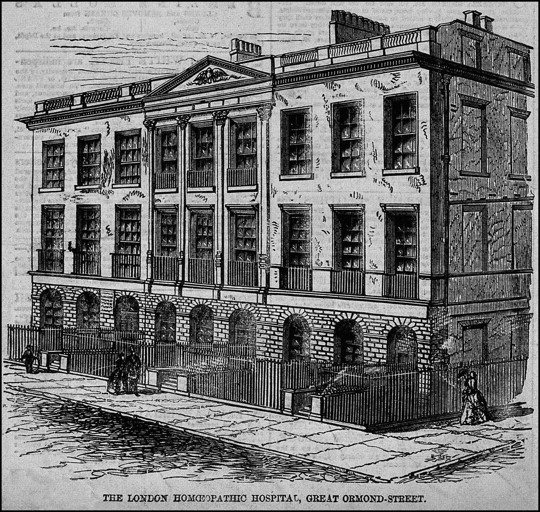
The London Homeopathic Hospital, Great Ormond Street (circa 1858) where John and George Epps practised. The hospital is still active today and treatments are paid for by the National Health Service
John Epps (1805–69)
After the death of his mother, John's father remarried and John was brought up with his half-brother George in Kent (Figure 3). He was apprenticed at the age of 16 to Dr Durie, a London medical practitioner who introduced him to phrenology. He graduated from Edinburgh University as a physician at the age of 21 and then lived in London. Initially, he lectured in chemistry, phrenology, botany and physiology at the Great Windmill Street School of Anatomy, the Westminster Dispensary and the Westminster School of Medicine. With Hoyland and Harrison he was present at the inaugural meeting of Harrison's spinal infirmary held in the Gothic Hall in 1833. As a Consultant Physician at Harrison's Spinal Institute he was a firm advocate of Harrison's recumbency method for the treatment of spinal affections.
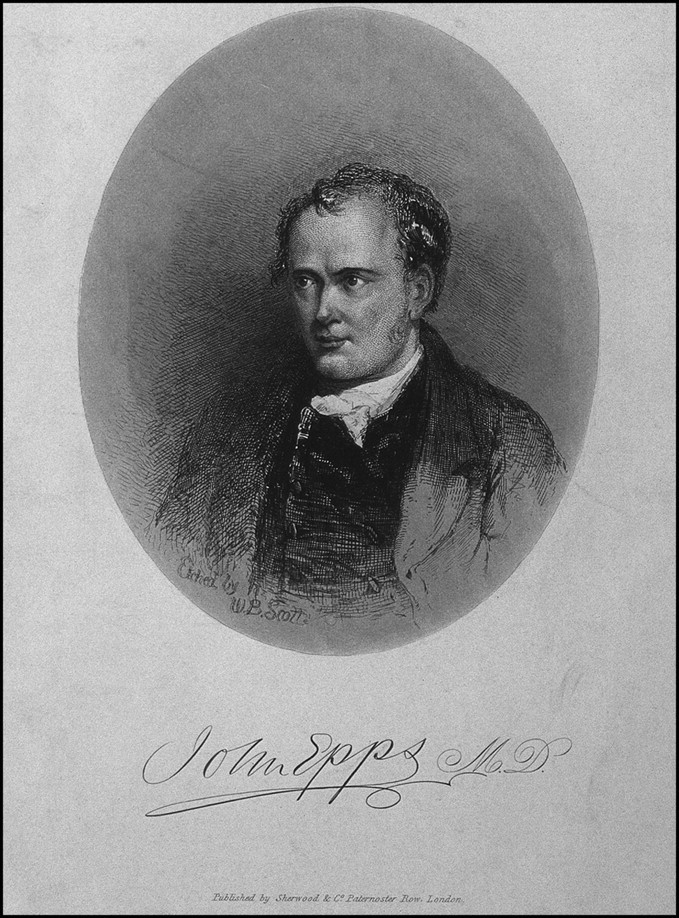
Portrait of John Epps, an etching by WB Scott
After Harrison's death and without its charismatic leader, the Spinal Institute waned and John Epps pursued other interests. His wide interests led him to lecture on a variety of topics including education, criminal legislation and prison discipline and to preach on many contentious religious and moral issues but he never wavered far from his strongly held Christian beliefs. Despite a strict Calvinist upbringing, John Epps was a radical liberal reformer who espoused the cause of the poor and the oppressed, both at home and abroad. Epps, a charitable man, firmly believed in the liberating value of medicine. 7
He was an active campaigner for an array of liberal causes including the Anti-Slavery Movement, the emancipation of Catholics, the education of women, the movements against the Corn Laws, the death penalty and the House of Lords. He was labelled as an agitator against the establishment of the day. He joined numerous societies with dubious titles including ‘The Common Good Society’ and ‘The Practical Truth Seekers’ Society'. 7 Like his mentor Harrison, John Epps campaigned for medical reform alongside his friend Wakley (1795–1862), the Founding Editor of the Lancet, although that friendship ceased when Epps adopted homeopathic principles of medicine and Wakley distanced himself from him, fearing controversy. 8
John Epps wrote at length in his diary on the benefits of homeopathy as opposed to conventional medicine and he joined The English Homeopathic Association. He believed that some cases of spinal curvature could be cured by homeopathy alone. In 1841 he published an extensive review on homeopathy in which he referred to treatment in other countries, described various lawsuits against homeopathic practitioners, explained the basis of homeopathy, described treatment in cattle and addressed the importance of diet, giving a very thorough analysis of the subject. 8 He advocated the establishment of a homeopathic hospital and was critical of ‘medical men's claim that no one shall be allowed to prescribe medicine unless he has been educated for the medical profession’. 7 It is interesting that, at the time when he was deeply involved with homeopathy, on the front page of his book he still advertised himself as Consulting Physician to the Harrison Institute. 9
George Napoleon Epps (1815–74)
George Epps was born 10 years after John, on 22 July 1815 in Sevenoaks, Kent but it was not until 1843 that he started his medical studies. After leaving Mill Hill School, George became his brother's pupil, John assisting him with lectures in chemistry, botany and materia medica. In 1845 George qualified as a surgeon and was appointed like his brother before him to the Homeopathic Dispensary in Hanover Square. Later he became Surgeon to the Jennerian Vaccine Institution where his brother also worked. In 1847 his aptitude and interest in the treatment of spinal curvature and deformity led to his appointment as Surgeon to Harrison's Spinal Institute. An inventive mechanic, he developed a device for the reduction of dislocations. After Harrison's death and the subsequent demise of the Spinal Institute, George Epps dedicated himself to homeopathy in his large London private practice. He remained a loyal follower of Harrison's methods and wrote a book in which he described the cures he achieved. 10 There were beautiful illustrations (Figure 4) and particular reference to the dramatic case of Sarah Hawkes whose spinal deformity was so extreme that her legs were wrapped around her head. He published several works on orthopaedics including the treatment of accidents and club foot. 11,12
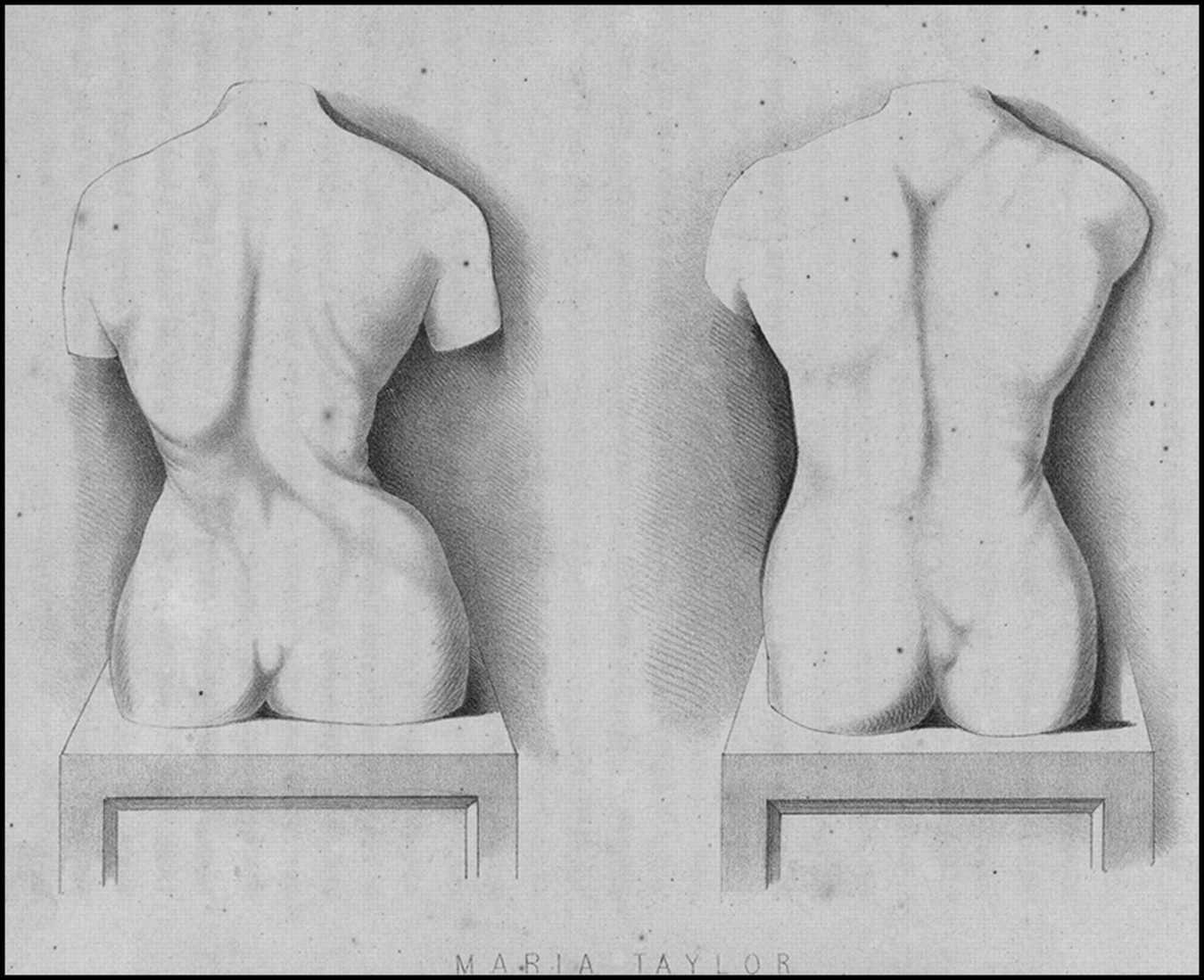
Treatment casts of Maria Taylor who had developed curvature of the spine attributed to a fall and she was referred to George Epps for treatment. She was admitted to Harrison's spinal institution and after 11 months of treatment she resumed a normal life. The improvement in her condition can be seen by the casts taken before and after treatment
Charles William Hoyland (1807–89) FRCS
Charles Hoyland, a Licentiate of the Society of Apothecaries in 1832, qualified as a surgeon and became a Fellow of the Royal College of Surgeons in 1855. 13 He was a founder member of Harrison's Spinal Institute, working there in an honorary capacity together with Serney and William Thornber. 14 Despite his interest in spinal deformity, he did not publish on the subject. He left Harrison's Institute and became a Surgeon to Queen Adelaide's Lying-in-Hospital in Dublin. Subsequently he became Superintendent of the Seaman's Hospital in Constantinople where he developed an interest in the occult. Upon his return to England, he immersed himself in the study of the Kabbalah, an esoteric branch of Hebrew Mysticism which is shrouded in mystery and orthodox Jews will not study it unless they are of mature age and under supervision. There were English Kabbalah students but it is unlikely he could have pursued this study alone as it would require a knowledge of Hebrew, Aramaic and the Jewish religion and so he would have needed advice from a Rabbi. 15 His other mystical studies are on the pyramids and the lost tribes of Israel. Clearly Religion greatly influenced Hoyland's medical career and he constantly tried to reconcile science and religious scripture.
Study of his archival material at the Wellcome Library shows page after page of tight copperplate-written notes in which he outlines in detail his studies of the Kabbalah. There is a detailed section on his studies of gematria – explaining a word or group of words according to the numerical value of the letters or substituting letters of the alphabet following a set system. 16 He drew convoluted diagrams to illustrate his theory (Figure 5). He described metals as living things, explaining the importance of the Sun and the Moon and the way in which you lay so that you could become wise – and he quoted Rabbis to this effect. 17 He practised in London until his death in 1889.
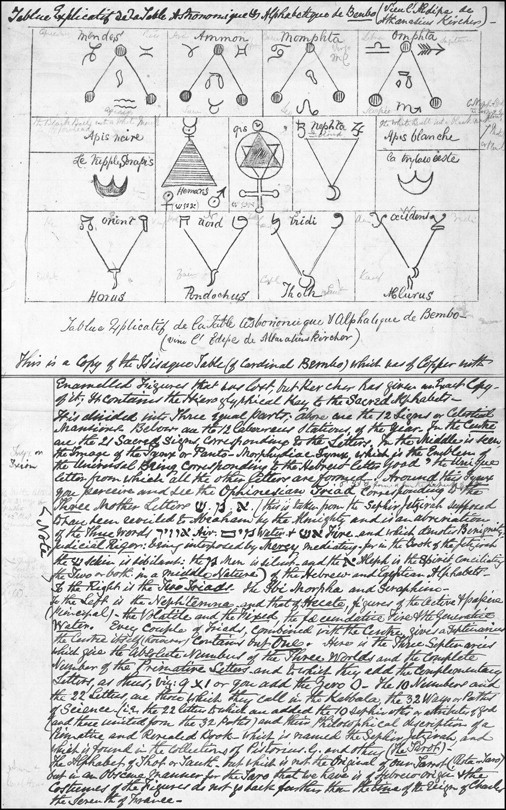
Hoyland's studies of Gematria whereby Hebrew letters are allocated a number and complex calculations and interpretations are performed upon the text, circa 1875. Wellcome Library Archives
John Evans Riadore (died 1861)
John Evans Riadore trained in Geissen, Germany where he obtained his MD. He was a Fellow of the Royal College of Surgeons in London and a Lecturer in Surgery. He had a hospital career as a medical officer to the Bangor Infirmary and the Royal Metropolitan Infirmary for Sick Children and the Middlesex Infirmary. Riadore practised at 73 Harley Street in London. He first showed an interest in the treatment of spinal afflictions in 1835 when he published a book on spinal irritation. 18 Although Riadore was not acquainted with Harrison, he was friends with Serney and would have been familiar with Harrison's methods of treating spinal disorders. Riadore's treatment consisted of counterirritants and constitutional measures and in 1842–43 he referred to the late Dr Harrison's methods and described Serney's accounts of the cases of Emma Wood and Sarah Hawkes. 19
In 1841 Riadore treated a 20-year-old patient with a lateral curvature of the spine and, together with Dr Epps and Mr Thornber, he witnessed Dr Serney perform a subcutaneous operation on her. 20 Riadore suffered personal attacks from his colleagues who accused him of self-aggrandizement. 21 His second book 19 was criticized by The Medical Chirurgical Review, a journal that had criticized Harrison in the past, the editor writing that he had seldom reviewed anything more contemptible, more utterly devoid of interest and value, and that he felt it degrading that a titled member of the profession could write such a book. 22 Later Riadore was vindicated by the Lancet which reviewed the book favourably and recommended it for its own merits. 23 Riadore died on 18 August 1861. 24
John Robinson (1778–1837)
Dr John Robinson was apprenticed to Harrison. Born at Cawood Hall near Spalding in Lincolnshire, he trained under Harrison, obtaining his degree at Edinburgh on 24 June 1800. He was admitted as an Extra-Licentiate of the College of Physicians on 5 March 1807 and practised for 30 years at Doncaster, unlike the others who settled and practised in London. He followed Harrison's principles on the treatment of the spine and worked with him in Horncastle. 25 Contemporary accounts endorsed his methods as successful and Levison, who had been an opponent, acknowledged that Dr Robinson was a talented and respectable physician who cured many patients by adopting Harrison's methods. Robinson contributed one pound to the charitable fundraising project for the benefit of Harrison's Spinal Institution, through the promoting and selling of Harrison's Letter to Benjamin Brodie. 26 Robinson died aged 59 at his house in Hall Gate, Doncaster on 10 January 1837.
John Baptiste de Serney (1779–1852)
Serney's life, in the words of John Epps, ‘was somewhat peculiar’. He mounted guard at the Louvre at the first French Revolution in the time of Louis XVI. He was one of the Noblesse of France and therefore obliged to flee for his life. He escaped to England where he studied medicine. He served as House Surgeon at the Westminster Hospital and then practised in Lincolnshire.
Seeking a milder climate, Serney came to London and became acquainted with Harrison, becoming his pupil and later his partner for the last seven years of Harrison's life. Together they treated spinal curvature and deformity by means of recumbency, massage, extension, traction, manipulation and sustained pressure on the prominent vertebrae involved. In the preface in his Letter to Sir Benjamin Collins Brodie on ‘Lecture on Spinal Complaints’, Harrison described the plaster casts of the patients Sarah Hawkes and Emma Wood as having been ‘cast under the direction of my ingenious colleague, Dr Serney’. 26 When he was informed of Harrison's illness, Serney travelled from London to Marlborough a few days before Harrison's death. In his last Will and Testament, among others, Harrison entrusted Serney to oversee his Spinal Institute: ‘And it is my wish that Dr Serney and the other medical Gentlemen, who have acted with me or under my directions, and who are well acquainted with my practice, do draw out, in writing, a statement of the leading principles of my practice; the same to be signed by Dr Serney, and the president, John Underwood, Esq, and be adopted, as nearly as may be, in the treatment to be pursued in the said Infirmary’. 27
Serney described Harrison's methods of treatment and praised Harrison for his original ideas on the treatment of the spine. 28 He described the operation of subcutaneous tenotomy of the spine for the treatment of lateral curvature. 20 Riadore was acquainted with Serney and spoke highly of his methods of spinal treatment, admitting to himself adoption of the method of subcutaneous division of the muscles of the spine with utmost success.
When Astley Cooper (1768–1841) failed in a case of caries of the spine, Robinson asked Serney to treat the patient. 29 Although Harrison entrusted his institute to Serney in his Will, Serney called himself ‘a spaniel’ and lacked the leadership necessary to succeed. He had eclectic interests and wrote on electric fluids produced by electroscopes in relation to the nervous system. 30 Serney died in London in 1852.
Discussion
Their antecedents were unremarkable and they were from humble backgrounds. They were not from medical families nor did they follow the traditional path of walking the wards of prestigious hospitals, Guys or St Thomas's. Engall, George Epps and Hoyland took the surgical diploma at the Royal College of Surgeons, the lowest medical qualification that suited them only for general practice (although Hoyland and Riadore later proceeded to FRCS). Riadore had a degree from Geissen, Robinson and John Epps qualified in Edinburgh and Serney studied medicine in London. Riadore had several hospital appointments and Serney was House Surgeon to the Westminster Hospital but the others did not hold a hospital appointment at any stage.
They were not part of the establishment and did not have a favoured career made for them, unlike Astley Cooper's nephew, or patronage as bestowed on the Edinburgh ‘clique’ at the Great Windmill Street School of Anatomy. They did not achieve the acme of academic success, Fellowship of the Royal Colleges (with the exception of Hoyland and Riadore) or Fellowship of the Royal Society; they were outsiders at a time of intense competition in the medical arena. They chose to specialize in the treatment of spinal disorders, seeking an area of medicine that was new and innovative, which afflicted many and that would allow them to succeed professionally; spinal curvature had adverse social consequences and the result of treatment was very obvious when successful, and easily measured and recorded with ‘before’ and ‘after’ casts.
They fell under the influence of Harrison and his methods of treatment – he had a powerful personality and was successful and inspirational. He was a practitioner skilled in achieving cures for his patients. Harrison's disciples were dominated by his personality and inspired by his charisma and his success. They were driven by their liberal idealism and influenced by their philanthropic and religious convictions to offer ‘alternative’ treatment, for example, phrenology and homeopathy, often in a gratuitous capacity. They were an inquisitive, aggressive entrepreneurial innovative group, a reflection of Victorian society.
In the field of spinal disorder, Harrison was respected both by his peers and by his patients. He demonstrated that he could cure spinal deformity when judged by the waiting list of those to be treated at his Institute. He fought injustice and sought to improve medical education in London despite incurring the wrath of the medical establishment. Harrison's personality and his methods resulted in intense opposition from the Royal Colleges and from Swan, 31 Charles Bell, 32 Shaw, 33 Jemmy Johnson 34 and Coles, 35 and even from his friend and associate Tuson. 36
In common with his future disciples, Harrison held no voluntary hospital appointment, he was an outsider. He had to found a spinal institution to treat his patients. A conscientious investigator, he carried out a survey on the practice of medicine by unqualified practitioners in Lincolnshire and repeated this study in London. Later he published the results of his spinal disorder treatment and wrote a book on the subject. The patients at his institute were treated free of charge. He died when visiting a patient a great distance away from London. Leaders of the model cults are also the possessors of magnetic personalities that mark them early in their careers as not quite usual in their habits of thought. The healer is likely to have a great deal of that quality that is called ‘it’ in Hollywood.
37
The influence of Harrison upon his disciples
Serney and Robinson were trained by Harrison and steeped in his methods of treatment. John Epps and Hoyland were founding members of his Institute and, together with George Epps and Serney, they all worked with Harrison at the Spinal Institute. Riadore and Engall did not work with Harrison but were influenced by John Epps and Serney and they adopted Harrison's principles of treatment for their own patients with much success, giving credit to Harrison posthumously.
The legacy
After Harrison's death, his partner, Serney took over the institute but without Harrison's charismatic leadership the momentum was lost and the institute eventually closed. The cause of spinal deformity was then and is still unknown. Riadore, John and George Epps and Robinson carried on treating spinal patients using Harrison's principles, developing his method and using equipment and forcible reduction.
George Epps, John Epps and Engall turned to homeopathy as a means of treatment. It is most interesting that three of Harrison's disciples should pursue a career in homeopathy. Today, scientific medicine is mainstream whereas homeopathic medicine is looked upon as being an alternative, unrecognized and unscientifically proven field of medicine. The situation then was quite different. At the beginning of the 19th century, scientific medicine had little to offer, Lister had not started his work on asepsis, the stethoscope had only just been introduced and Pasteur had not discovered bacteria. In a search for effective treatments homeopathy, phrenology and mesmerism could thrive. 37 Homeopathy was regarded as a new form of treatment that could give a different insight and vision as to the cause of disease, it was mainstream. There was a desire not only to alleviate suffering but to understand and prevent disease.
The concept of homeopathy originated with Samuel Hahnemann (1755–1843) and was adopted rapidly in Germany, France and Britain. 38 In France it achieved the support of giants of the profession including Dupuytren, the finest surgeon, and Magendie the famous physiologist who encouraged Jean-Paul Tessier (1811–62) to carry out scientific trials as indeed were being carried out in Russia. 39 Although traditionalists were opposed to homeopathy, the opposition was evinced by Wakley, the College of Physicians of Edinburgh and the French Académie de Médecine. 40
Homeopathy was not the only unconventional area of medicine pursued by Harrison's disciples. Riadore was already an authority on Spinal Irritation. This gained recognition at home and abroad as far afield as the USA as it could offer a revolutionary explanation for a multitude of painful conditions. Orthodox practitioners Brodie and Romberg rejected it. 41,42 Doctors are more than willing to adopt any treatment that helps their patients and this held true for other disciplines including phrenology, homeopathy, craniometry, mesmerism and a new diagnosis – spinal irritation.
These doctors were liberal minded and 19th-century London was a ferment of new philosophical ideas including ethnology, spiritualism 43 (discoverable of the spirit, a world beyond the intellect, Emerson 1836), anthropology, evolutionism and emerging political movements including Owenism, 44 Chartism 45 and Benthamism. 46 Several Owenites and Chartists – John Epps included – were later to become spiritualists, mesmerists, phrenologists, herbalists, vegetarians and in his case a homeopath. These movements were inextricably interwoven with the social ideas of the time. 40
Scientists were also eager to reconcile scientific principles with religious beliefs. Religion was a frequent subject of discussion among scientists and this group of physicians was no exception as illustrated in John Epps's diaries. Hoyland, who had ceased to treat spinal deformity and dedicated himself to general medicine, became obsessed with the study of Kabbalah, seeking to explain natural phenomena through the study of scriptures and gematria.
This group was aligned to liberal and philanthropic movements, women's rights and the Anti-Slavery Movement. The latter was contentious since the East India Company controlled the slave trade and a huge part of the income of Great Britain was derived from the slave trade; the Secretary of the Organisation was the Secretary of Guy's Hospital, thus firmly aligning the establishment with the government of the day. 47
Five pursued esoteric forms of medical philosophy and only two remained in traditional medicine. Were they eccentric doctors for whom the treatment of spinal deformity was an episode on a career path or were they conventional doctors who after exposure to Harrison's charisma and influence changed their philosophy and approach to medicine? Before treating spinal deformity they were quite conventional but exposure to Harrison and his methods awakened enquiring minds. During the Victorian era, unconventional medicine was not limited to quacks and unqualified practitioners; traditionally trained doctors often pursued esoteric fields of medicine in order to further their scientific understanding and earn a living.
Footnotes
Acknowledgements
We are grateful to the Royal College of Physicians of Edinburgh for giving us permission to reproduce Figure 1 and the Wellcome Library's Image Department for giving us permission to reproduce Figures 2 to 5.