




Abstract
This paper is a summary of a book entitled Until Summer Comes, written by F M Al-Akl and published in 1945 by the Pond-Ekberg Company. Only two copies of this book are known, one in the Library of the American University of Beirut and the other belongs to the author. This paper brings knowledge of the subject's life to a wider audience.
Dr Fouad M Al-Akl (Figure 1) was born with a clubfoot and was preoccupied to conceal his infirmity though not blaming anyone for this. He became the second choice in the family to be a physician and continue the tradition since the eldest son, Youssif, showed no interest in medicine. The year 1924 was his last as a medical student and he was elected President of the Students’ Medical Society. In that year the medical students began a struggle with the Faculty since an extra year of studies was added to the previous four years needed to graduate. President Dodge asked the students to return to classes and promised to look into the matter. The medical students found out later that the fifth year was imposed by the French High Commisariat that fathered the only other medical school in Beirut where the course was five years and the American medical school had no choice but to obey.
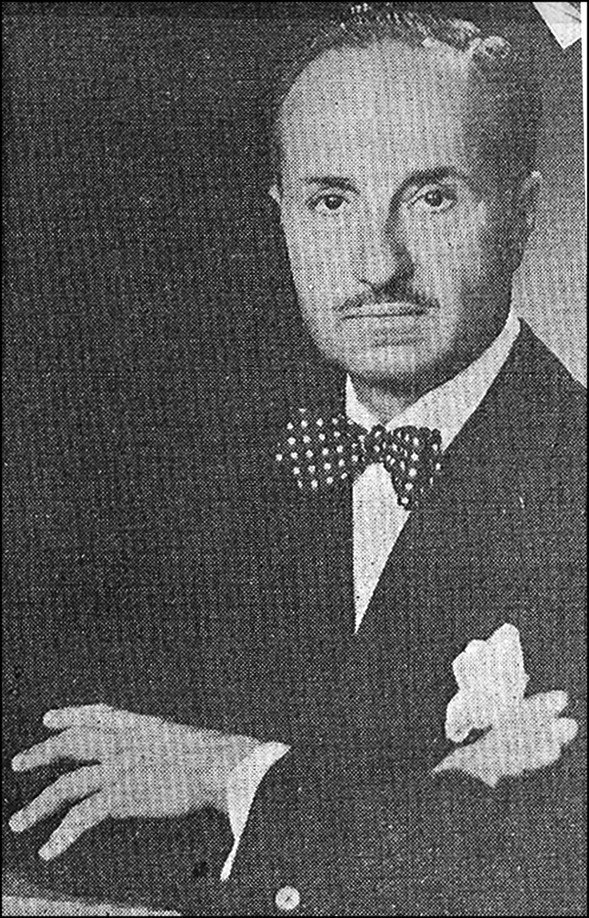
Dr Fouad M Al-Akl. Reproduced with permission from the American University of Beirut Library Archives
After graduation, he continued his studies in America which he considered an ideal country. He encountered new manners and customs in New York and realized there was no time for the possibly non-essential good manners with which he thought Orientals cluttered their daily behaviour.
After a month of unsuccessful tramping about New York where no one seemed to have heard of ‘Beirut University’ 1 he came across a charity hospital whose intendant was willing to try him out. After several months he was transferred to chronic surgery and assigned to the ulcer ward. The patients in that ward were all incapacitated with ulcers of the legs, a few bedridden but most were able to get around in wheelchairs or on crutches. He remembered one simple kindly soul who had been at the hospital for years with an ulcer that would not heal. After cleansing and dressing the wound several times, he noticed a piece of bone protruding from the centre which prevented the skin from growing together. The ulcer healed rapidly after this bone was removed. He recalled that the pathology of these conditions was not as understood generally in 1925 as it was later, which made many patients rotted in wards from year to year.
To break the monotony of these endless and laborious sessions in the ulcer ward and to alleviate his homesickness, he began telling the nurses and patients about his homeland. He talked about Lebanon and its beautiful cedars, about the birthplace of Christ and various churches established after His death. He often talked of Damascus, the oldest city known in history, and of the veiled women and the traditional bazaars. He also talked about the age-old method of trashing and harvesting wheat–how a child stood on the board poking the cow with a ‘massas’, a nail at the end of a long stick. The massas held another memory for him for Dr W Van Dyke used the word massas in physiology class to explain the word ‘stimulus’. 2
Although he was 22 years old, he dismissed romance from his mind in favour of hard application to work. Yet, one of the nurses who often listened to his stories attracted his attention because of her quietness unlike the other bolder nurses: Louise. She seemed like an ever-fresh gardenia that spread its perfume among decrepit people as she ministered to them with evident pleasure in every act and gesture. America then became a happy place for him to live. Then he left for Paris and London for further practice.
After two years in America he returned to Egypt where his family stayed nine months each year and he spent the summer in Lebanon. It was hard for him to convince his mother (since his father died when they were young) that he wished to marry an American nurse. His mother had been brought up to believe that no profession was respectable for women, least of all nursing, and she had already chosen a bride for him and had made arrangements for him meet the woman of her choice. Yet his plan to marry Louise held firm and he wrote to her to tell her that his brother Youssif had busied himself finding a home in Alexandria large enough to accommodate the entire family.
He was transfixed at the news that Louise had married and this reduced his desire for work and everything else. Poetry became a safety valve for him; he wrote
Years later he continued the poem:
He decided to go back to America for a residency in surgery in the summer, after his little sister Asma was to be married in the summer of 1929. In the meantime with his brother Fileeb, who had graduated as a pharmacist, he rendered valuable help to the poor in their village of Muhaidisat (Bikfaya). By the end of December 1928 they were both on their way to Lebanon.
He returned to New York and when on duty one night as a resident surgeon on the obstetrical service the intern told him of a woman who had a profuse haemorrhage after delivery. Instantly he offered to donate the required blood and a few days later the superintendent called him and handed him a cheque for $50, the customary price of such a donation. He thanked him and explained that his blood was not a commodity for sale but a means for him to do his duty and that he deserved neither thanks nor money.
His internship over, the opportunity of an expedition was offered to him to go to Tibet. As he had worked in Sudan, the organizers under the joint sponsorship of the Brooklyn Museum and the Explorers Club of New York hired him to take charge of the medical aspects of the venture – to conduct a thorough research into the diseases prevalent among Tibetan people and note the native treatment of the sick and also to make a collection of representative specimens of the drugs and herbs used, with notations on the preparation and use of each; and to make impressions of Tibetan teeth and to bring back samples of study for the researchers of the American Dental Association to study. 5
In November 1931 the team boarded the Tai Ping Yang mongrel vessel from Brooklyn's pier. On board, time was divided between studying Chinese and reading about Tibet. At Peking obstacles to their venture started to appear and the authorities were reluctant to grant them papers of safe conduct. While the team remained in Peking awaiting the result of the negotiations, he decided to venture into the city to explore. He noted the extremely small feet of the Chinese women who hobbled about on extremities tapering into what looked like goats’ hoofs. He also learned that Chinese women were more reluctant to expose their feet than any other part of the body which made it difficult to study this matter. Finally, a colleague at the Rockfeller Medical College arranged for him to see the feet of one of his maids. He took photographs and later wrote an exhaustive paper on the subject for a surgical journal. He thought ‘it was amazing to note what social compulsion can drive humans to endure’. 6 He found out that a bound foot elongates the rest of the leg by erecting the bones of the foot and exaggerating its arch. As a result, the entire torso is elevated and the woman is thought to acquire more aesthetic proportions. The resulting hypertrophy of the muscles of the thighs and buttocks that develops in order to help balance the body on the crippled feet seems to have fascination for Chinese men.
Literature revealed that in 1100 BC an Empress Takii made it mandatory for all females in her domain to have their feet bandaged tightly. The Empress herself had been born with clubfeet. To overcome her self-consciousness at public functions, it seems she issued the order that the feet and manner of walking of her female subjects would resemble her own. Since that time Chinese mothers have handed the operation down to their daughters as a fashionable practice. On the other hand, the men of China believe the custom was initiated in an effort to hinder women from gadding about and to coerce them into staying at home to take care of their families.
A further venture that he took was an excursion to the Great Wall. He and the young members of the expedition took a freight train from Peking to Kawgan in the North and from there they hiked to the Great Wall. While standing on top of this amazing structure he pondered the centuries of history behind the Wall and its builders. On the back of a film carton he wrote some verses of Horace:
While thinking of the bodies of the labourers who perished during the construction and filled with their bodies the space between rubble and dirt, he remembered why the Wall was often called the longest grave in the world. By then, it was certain the expedition would not take place and it was time to go back.
Late in the summer of 1932 he went back to New York. It was the time of the Great Depression that affected even the business of the family in Egypt. In New York he went to a Medical Placement Bureau to be told there were no openings anywhere. Medical men who had retired from practice were returning to it, having lost their lifelong savings. What work they could get was scant while the free and cheap clinics were jammed with poor and destitute patients. He thought of teaching in medical schools but teachers were being discharged rather than hired. Before leaving Egypt he considered applying for a position in his Alma Mater but he was always reminded of the puritanical air that tinged the school atmosphere and the privileges that were given to American instructors.
With other roads barred, he made up his mind to engage in the private practice of medicine. He decided for a clinic among the large community of Arabic-speaking people in the boroughs of New York. Patients hardly came and he often went hungry. Some evenings, he felt he could spare 10 cents and made a dinner out of a glass of beer and the free sandwich that went with it. He could not eat enough and also pay the rent and telephone bill.
After suffering several months of tedious waiting, an occasional patient strayed into his office. It was a maternity case. After the routine examination, he asked her to return in a month time for another check up. She handed him a $20 bill with an apology for having nothing smaller. He had not seen a $20 bill in a long time. His entire fortune was $15, destined to pay his bills. He told her he did not have enough change and suggested that she pay for both visits the next time she came. She insisted on paying at once and took the change for the $20 bill, stating that her excess payment would cover the next visit. Then it was time for him to enjoy a motion picture and a little supper and still have a few dollars left after paying his telephone bill. As he stood waiting at the theatre box-office for the change for the $20, he felt a harsh tap on the shoulder. On turning, he beheld a huge policeman towering over him and motioning him aside. He led him to the manager's office and demanded to know where he got the $20 bill. A few days later he learned that the police had raided a counterfeiters’ hideout not far from his neighbourhood. In the ensuing gun battle three members of the gang, including a pregnant woman, had been killed.
In those days of economic depression, a common complaint was headache. ‘I cannot sleep nights’, 8 many a patient would say. The typical patient was irritable and smoked interminably. When after examination he had concluded there was nothing organically wrong with these patients, he would recommend some temporary sedative and frequently he detained them to have someone to talk to.
To solve the problem of his survival during the great depression, he thought of collective co-operation between physicians and hospitals. He adopted a specific pre-payment plan whereby he charged families with limited means two dollars monthly for which sum husband, wife and dependents would receive all the professional care he was capable of rendering. The next problem was how to get a hospital. By and large, hospitals were poorly equipped and woefully inadequate for the care of the sick. They lacked air-conditioning apparatus and during the summer months doctors saw the hospital population languishing and sweltering in the heat. Patients suffer also indirectly from the heat; the surgeon in the hot operating room perspired profusely and the sweat could drip on the sterile drapes around the wound and sometimes into the wound itself. Such institutions were destined to become the medical centres of the future. To make the job easier, he and the other physicians were fortunate to find in the plans of Dr Shadid of Oklahoma, founder of the first cooperative hospital in America, an ideal blueprint for their project. When the list of families was approached with the plan, the reaction was mixed, and soon they found out that the community could not be relied upon to help launch the plan.
In 1936, four years after he had been in New York, his practice had grown and he was able to get hospital appointments. He moved to a commodious apartment where he lived comfortably and managed to save a few dollars. Back home in Egypt things were better financially. Besides practising medicine, he and some friends formed a group called The Beacon Society. In their meetings they discussed actual events including the National Socialist Movement in Germany, the causes of decadence of nations and so on. Before long it became apparent they were getting nowhere with these discussions and they resolved to limit the subjects to suggestions regarding the reconstruction of society and to abandon faultfinding.
Years later, he reviewed his beliefs and said: Somehow, with time, while certain convictions remain as firm as ever in our minds, we seem to acquire a more liberal degree of tolerance toward the opinions of others. Perhaps it is because one becomes more aware of human fallibility that he learns to take views different from his own with better grace. And thus the years tone down, not our beliefs, but our vehemence about those beliefs.
9
Working hard at the charity hospital and at his own private practice, he felt it was time to take an extended vacation and go home to his family. About a week before leaving for Lebanon, a colleague told him that Louise was back at the hospital, not as a nurse this time but as a patient and desperately sick. That same afternoon he went to see her. The nurse in charge informed him that the diagnosis was advanced tuberculosis. When he walked into her room, he was choked with emotion at her sight. It was not his Louise he saw in that bed but someone barely resembling her. She was thin and pale and her voice was hoarse. She lay flat on her back with a weight of lead shot placed over the affected area of lung. Despite her sufferings, she maintained her smiling sweetness. She told him how it had happened; how she had had to work 12 hours a day, weeks on end, doing private nursing to support her unemployed husband and her two children and then rush back to take care of her home late into the night, only to get up at 5:30 each morning to prepare breakfast and get the children ready for school before she herself reported for duty at 7 am. He saw her several times before he went away and instructed his housekeeper to visit her frequently and to bring her flowers and whatever else she might need. A few of his friends promised to keep visiting until his return.
It was in the summer of 1937 that he arrived in Lebanon. The little village had not changed in the least. The fragrant aroma of smoke from burning pine twigs and needles was still scenting its exhilarating air. He walked out on the upper veranda of their home and the imperturbable landscape of slumbering valleys and dormant mountains stretched before his eyes as enchanting and enthralling as ever. He enjoyed the company of his family and found his mother had aged – she had lost a lot of her former matriarchal attitude. His friends and Fileeb, with whom he spent the winter in the village years ago, were waiting for him at home. During that summer in Lebanon he had the privilege of meeting Meesha (Michael Neeymeh) in his retreat at AL-Shakhroub. He found him in the wilderness, perched on a rock and meditating in the shade of a tree. His slim figure was draped in the native ghimbaz of the Lebanon peasant. They spoke together for a long time but he failed to interest Meesha in anything physical. Neither social philosophies nor economic systems seemed to matter to him. He kept dwelling on the metaphysical.
After he left Meesha, he pondered long and deeply over his words. Under different circumstances he would have envied him but he could never wish he had his wisdom and understanding as long as a single Jew remained in a ghetto or a persecuted fellow man was helpless in a concentration camp or as long as one baby went hungry while a pampered child grew fatter or while any woman was still obliged to sell her body for a livelihood because she had nothing more honourable to do. Nevertheless his day with Meesha remained as one of his treasured memories.
As soon as he returned from his vacation in Lebanon he went to see Louise. Christmas was fast approaching and Louise spoke constantly of her two children whom she loved dearly. He suggested she send for them to come and spend the holidays with him. His housekeeper could easily take care of them and they could visit their mother as often as she wished. Their father brought them over a few days before Christmas. It made him very happy to have the children with him over the holiday season. They helped make a Christmas that he enjoyed more than any he had spent in America.
After the holidays, Louise said she wanted to go back to her home as nothing at the hospital was doing her any good. She was worried how to manage the expenses with her husband not working and her own savings gone. That was taken care of. A few months later he had word of Louise's death.
His practice in New York (1939) was developing fast and he was able to move into a five-room office with a private entrance on the Avenue, to equip it fully and to employ a graduate nurse. While before he used to be depressed when he called the Doctors’ Service operator, only to learn that still no patient had telephoned, it became a great relief to be told there was no more work to be done.
With the different incidents that took place in his medical career, he reflected on his school years where never did teachers acknowledge how much is yet unknown nor did he run across textbooks admitting we do not know. As a result, one left the school in high hopes of curing every disease. However, sooner or later the doctor has to discover how little he knows about disease and how even less than that he can do for his patients. He pondered on these medical problems and especially the surgical questions engaged his attention. He invented several instruments and collected royalties on them.
A further problem disturbed him: the frequent clash of the law with the spirit that demands of the doctor to use his best judgement and ability for the benefit of his patient. The case of Ijan was an example of this clash.
Ijan had cancer of the lung. He had derived all the benefits he could from X-ray treatments and had come to the last act of his tragedy. The doctor prescribed various sedatives and attempted constantly to alleviate the condition as new symptoms cropped up. At last Ijan's sufferings became intolerable.
One day he called the doctor and talked in a deliberate sober tone. He sat up in bed and turned his face away to spare him the odour of his breath and despite the open windows the air of his room was hard to bear. First he asked him if he could cure him and without waiting long for his answer he told him that he knew he could not. Then he began telling him of his severe headaches, his constant cough, his sleepless nights and his difficulty in breathing. He spoke of old friends who came to see him and of how bad he felt when invariably they left after a brief stay under one pretext or another but he knew the real reason was the putrid atmosphere. The doctor could not answer directly the questions posed by Ijan concerning God and His mercy and he kept repeating to himself the lines from Edwin Arnold's poem:
The doctor told him he was sorry but he could do nothing more for him and gave him a prescription for enough sleeping capsules to last him for a whole month. He could take one each night with a glass of warm milk and he warned him never to take more than two at a time because of the danger from the drug. Then Ijan turned his face to the doctor for the first time and his sombre features lighted with a smile. Tears ran down his cheeks. He took the doctor's hand and kissed it as he sighed God bless you, Doctor.
He mentioned the patients he encountered with the problem of abortion and euthanasia and he thought of the possibility of institute tribunals with a medical adviser, a spiritual adviser and a presiding judge where patients could appear with their doctor's report to apply for a permit for operation when no other solution seemed possible. The tribunal would then review the circumstances and give the verdict. Such an institution would enhance the prestige of both the law and medicine and elevate the very dignity of man. He thought then of a passage from the oath of Hippocrates that medical students pronounce on graduation day
His unconventional thoughts led him to write the poem Religion
Dr Fouad M Al-Akl wrote several books including From the Faded Album of Yesteryear (1939), his autobiography, Until Summer Comes (1945) and Surgical Technigrams (1954). He was also a lover of oriental carpets and donated his 19th-century Turkoman Yomud rug to the Metropolitan Museum of Art in New York. He and his three brothers, Youssef, Farid and Philip, two of them graduates of American University of Beirut, were the donors of the Murad Al-Akl Award which was given yearly to successful contestant in debates on the theme How I Can Best Serve my Fellowmen.