




Abstract
Among the 36 bronze busts in Key West Historic Memorial Sculpture Garden, Florida, USA, including Ernest Hemingway and President Harry Truman, are two of doctors who were influential in Key West's history.
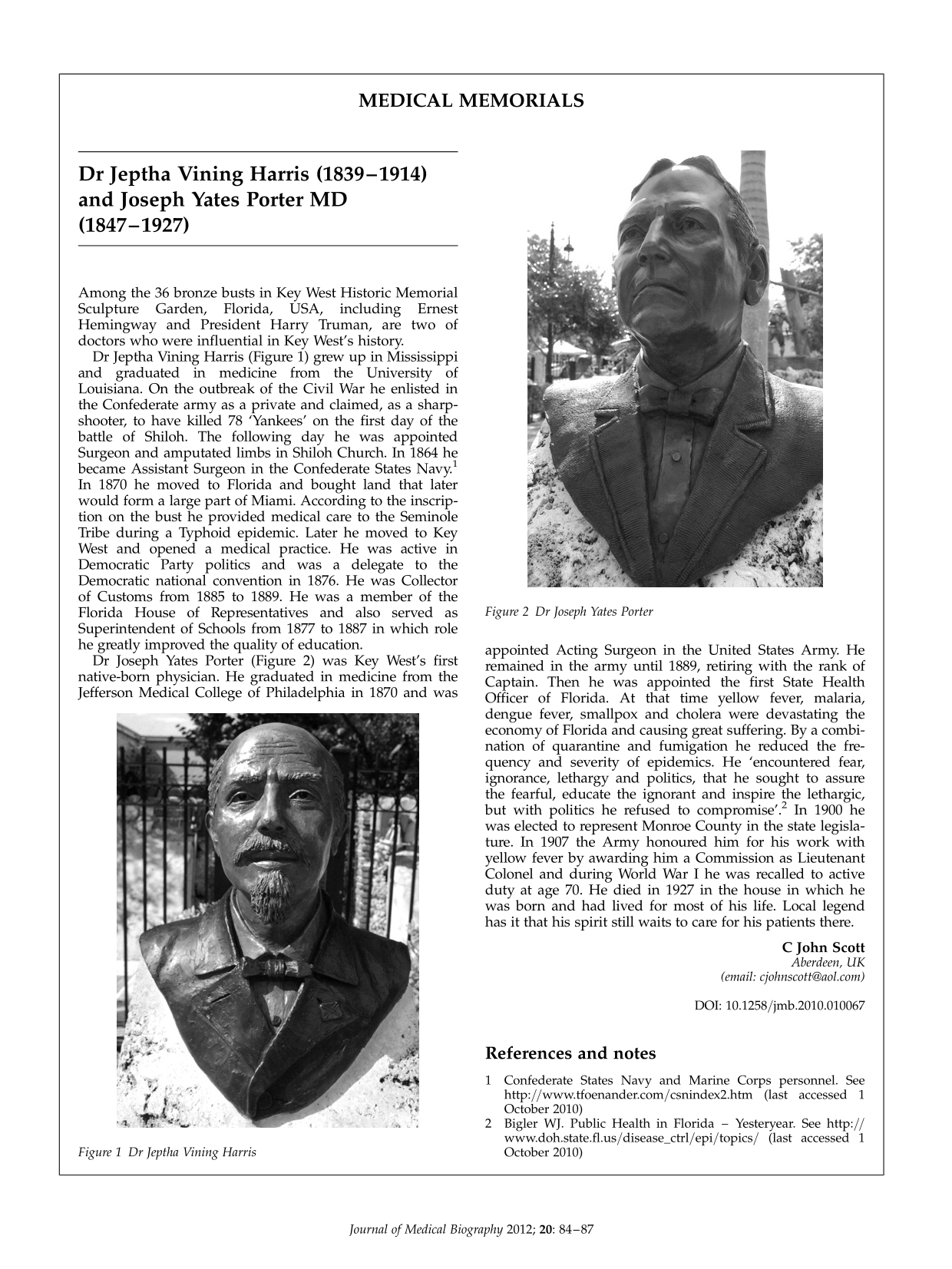
Dr Jeptha Vining Harris (Figure 1) grew up in Mississippi and graduated in medicine from the University of Louisiana. On the outbreak of the Civil War he enlisted in the Confederate army as a private and claimed, as a sharpshooter, to have killed 78 ‘Yankees’ on the first day of the battle of Shiloh. The following day he was appointed Surgeon and amputated limbs in Shiloh Church. In 1864 he became Assistant Surgeon in the Confederate States Navy. 1 In 1870 he moved to Florida and bought land that later would form a large part of Miami. According to the inscription on the bust he provided medical care to the Seminole Tribe during a Typhoid epidemic. Later he moved to Key West and opened a medical practice. He was active in Democratic Party politics and was a delegate to the Democratic national convention in 1876. He was Collector of Customs from 1885 to 1889. He was a member of the Florida House of Representatives and also served as Superintendent of Schools from 1877 to 1887 in which role he greatly improved the quality of education.

Dr Jeptha Vining Harris
Dr Joseph Yates Porter (Figure 2) was Key West's first native-born physician. He graduated in medicine from the Jefferson Medical College of Philadelphia in 1870 and was appointed Acting Surgeon in the United States Army. He remained in the army until 1889, retiring with the rank of Captain. Then he was appointed the first State Health Officer of Florida. At that time yellow fever, malaria, dengue fever, smallpox and cholera were devastating the economy of Florida and causing great suffering. By a combination of quarantine and fumigation he reduced the frequency and severity of epidemics. He ‘encountered fear, ignorance, lethargy and politics, that he sought to assure the fearful, educate the ignorant and inspire the lethargic, but with politics he refused to compromise’. 2 In 1900 he was elected to represent Monroe County in the state legislature. In 1907 the Army honoured him for his work with yellow fever by awarding him a Commission as Lieutenant Colonel and during World War I he was recalled to active duty at age 70. He died in 1927 in the house in which he was born and had lived for most of his life. Local legend has it that his spirit still waits to care for his patients there.
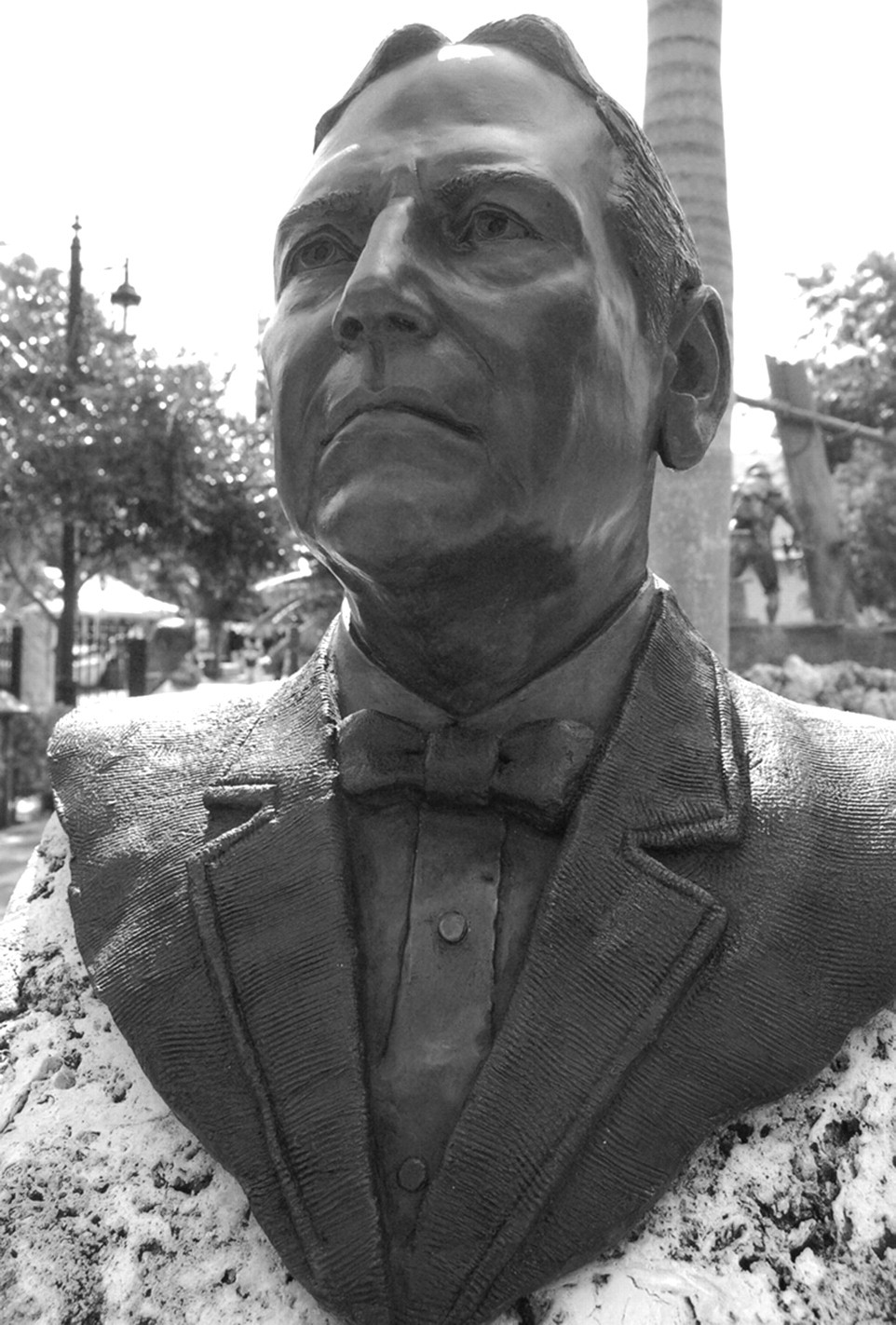
Dr Joseph Yates Porter