




Abstract
Telepsychiatry can be used in two kinds of psychiatric emergencies: one-time clinical events and public health situations associated with mass disaster. Emergency telepsychiatry delivered by videoconferencing has the potential to improve patient care in many settings. Although experience is limited, it has been found to be safe and effective, as well as satisfactory to both emergency department staff and the psychiatric patients treated. The development of comprehensive and standardized guidelines is necessary. There has been little use of acute telemedicine in disaster situations to date. However, telemedicine is becoming part of routine emergency medical response planning in many jurisdictions. Emergency telepsychiatry has the potential to reduce emergency department overcrowding, provide much needed care in rural areas and improve access to psychiatric care in the event of a natural or manmade disaster.
Introduction
There are very few mental health services that cannot be offered remotely through telepsychiatry. 1,2 A wide variety of therapies can be delivered via telepsychiatry, including individual, couple, family, multifamily and group sessions, addressing a broad range of diagnoses and mental health issues. 1–3 Treatment limitations are more likely to depend on idiosyncrasies of the specific needs of patients and providers than the diagnosis or treatment modality. 1,2
Telepsychiatry has been successfully used to treat mental health patients with limited care access in non-urgent situations for many years,
4–10
and in recent years there have been reports of its application in psychiatric emergencies.
11–14
Psychiatric emergencies can be divided into two categories:
emergency consultations with individual patients or families, where the immediate situation affecting a patient is the focus of the consultation; public health emergencies, where a large number of people or communities are affected.
Most of the literature regarding psychiatric emergencies relates to the individual patient situation, but following national disasters such as the events of 11 September 2001 and Hurricane Katrina, public mental health emergencies are now being addressed. Emergency psychiatry responses are now increasingly included in public health and mass disaster planning exercises.
15–19
Emergency consultations
Emergency telepsychiatry for individual clinical events has been defined as psychiatric care delivered by videoconferencing ‘to assess and treat patients experiencing potential imminent dangerousness to themselves (suicidal or grossly disturbed behavior) or dangerousness to others (homicidal or other violent behaviors)’. 20 Emergency telepsychiatry can also be delivered by telephone consultations, and is particularly relevant for suicide prevention and outreach. 21–23 In what follows, emergency telepsychiatry by videoconferencing is reviewed.
Emergency telepsychiatry delivered by videoconferencing has the potential to improve patient care in many settings. Although experience is limited, it has been found to be safe and effective, as well as satisfactory to both emergency department (ED) staff and psychiatric patients treated. 11–14,24 Moreover, emergency telepsychiatry consultations have been found to be safe 13 as well as reliable in treatment and diagnosis. 11–14,25
Overcrowding in emergency departments is a serious problem in the US, 26 with nearly 50% of all hospitals at or above capacity. 27 To compound matters, many emergency departments in the United States are ill equipped to deal with psychiatric emergencies, leading to improper diagnoses, prolonged emergency department stays and misuse of physical restraints for psychiatric patients. 28,29 The American Hospital Association reports that 40% of American hospitals have difficulty maintaining adequate psychiatric coverage to meet patient demand in the ED. 27 Telepsychiatry may be an effective alternative for many patients experiencing a psychiatric emergency, 20 and may help in reducing emergency room crowding and other complications that may arise in the ED such as insufficient psychiatric staffing. 14,28
There has been little research on the effects of emergency telepsychiatric services on the ED. However, the length of emergency room stay for psychiatric patients was evaluated in a recent study, before and after telemental health screening was implemented. 14 Telemental health services (similar to telepsychiatry where mental health services are provided by a licensed mental health professional rather than a psychiatrist) were successful in alleviating overcrowding due to excessive lengths of stay, and reduced unnecessary admissions for psychiatric patients. Psychiatric patient stay in the ED was reduced from an average of 4.2 days to less than one day for more than 80% of the participants screened via telemental health. Staff evaluation of the appropriateness of treatment and efficacy pre and post implementation were also recorded. Staff reported that with the use of telemental health in the ED, there were earlier and more appropriate discharges and discharge plans, and less inappropriate admissions. ED staff were found to be more comfortable with patient treatment and care with the added service than prior to the use of telemental health. 14 In other settings, positive outcomes with telepsychiatric services have been demonstrated by reduced transfers for emergencies, 30 reduced appointment waiting time, 31,32 reduced use of the psychiatric intensive care unit 32 and reduced psychiatric inpatient admissions (by 50%). 33
Public health emergencies
The process of adjustment and recovery from disasters for individuals and communities has been well researched, 34–36 but little has been written about the use of acute telemedicine in disaster situations. Telemedicine, however, is becoming part of routine emergency medical response planning in many jurisdictions, and is increasingly recognized as an essential component of emergency disaster response planning on a national level following the events of 11 September, as well as Hurricane Katrina. 37–40
In the aftermath of Hurricane Katrina, many chronically psychiatrically ill patients were ‘left behind’ and went without proper psychiatric care. 41 These individuals rapidly ran out of medication and many were unable to provide accurate information regarding their prescriptions to the available health-care providers. Others were improperly diagnosed simply due to lack of specialized care and coordination of care in the area. 41 Telepsychiatry can provide transitional or even ongoing care for those with chronic mental illness during disasters such as Hurricane Katrina, where the entire system of mental health care becomes disrupted or destroyed. In these circumstances telepsychiatry can help to provide a safety net until the system of care is re-built. Psychiatrists and other mental health professionals are needed not only to assess disturbed patients involved in disasters, but also to help first responders cope appropriately. This is crucial because first responders to disasters have high rates of PTSD and depression, 42,43 increasing the risk for additional issues including substance abuse disorders and suicide. 44
In disaster situations, standard communication channels may be overloaded or inoperable. 45 However, telepsychiatric services can be delivered via portable terminals (Figure 1), which can allow the exchange of patient data, medical images and videoconferencing. 45,46 A portable telemedicine system can be stored for emergency use at existing health-care facilities or can be brought in to expand treatment access and aid in providing patient care in the event of a disaster. 46
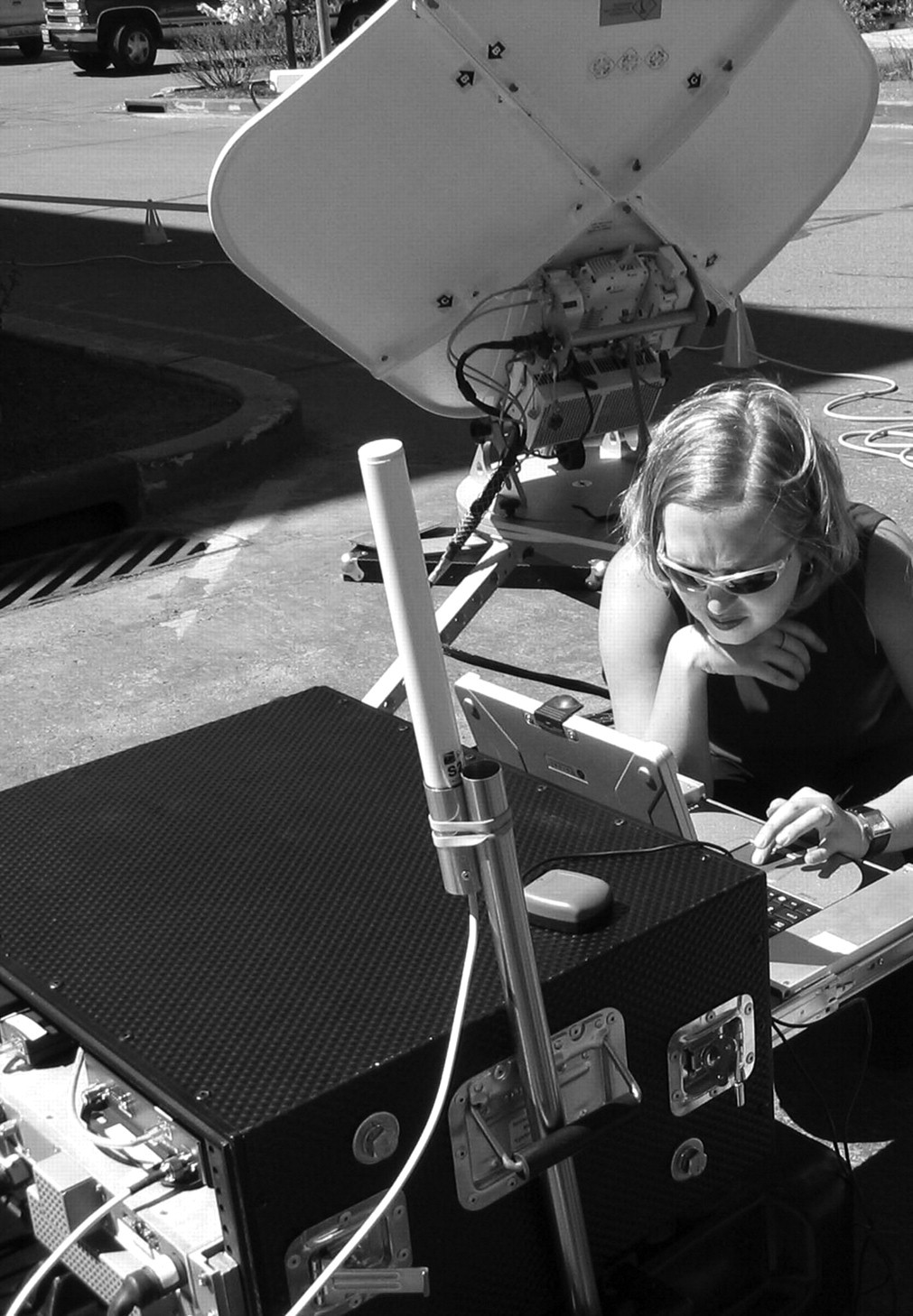
Physician assistant with a portable satellite terminal at a rural clinic
Telemedicine is increasingly playing an important role in emergency management planning. In conjunction with developing a list of available experts and services to aid affected individuals, there is a need for continuous training and disaster modelling exercises. 40 Most states are undertaking re-structuring for disaster preparedness planning including implementing disaster modelling exercises and mental health consideration. 39
Case studies
We have reviewed a number of emergency psychiatry cases seen via videoconferencing by psychiatrists at UC Davis and Colorado. Certain details in the following cases have been altered to maintain anonymity, but are representative of the types of cases seen in these two telepsychiatry programs.
Psychosis 1
A 22-year-old single mother was referred for urgent telepsychiatry assessment following an impulsive suicide attempt after a conflict with her 5-year-old daughter. She attempted to overdose, and when this failed, attempted to asphyxiate herself in the ED. She had not been able to explain why she wanted to die to the emergency room physicians. The patient's daughter was taken into care and the patient was seen urgently via telemedicine the day following the suicide attempt. The patient was assessed as having an acute paranoid psychosis. She was actively hallucinating and delusional, believing that she was being punished for having a child out of marriage, and that she had to save the child by killing herself. A Licensed Clinical Social Worker (LCSW) working in the rural community clinic accompanied her during her telepsychiatry session and consulted on the case. The patient agreed to visit the LCSW at the local clinic at least three times per week, and to take the medication that the psychiatrist recommended. A safety plan was developed during the consultation and the patient started on antipsychotic medication. She received regular follow-up visits with the psychiatrist via telemedicine. There was email and telephone contact between the psychiatrist and the local LCSW in the interim between visits. With the scheduled treatment her psychosis resolved. She continued to take medication, developed a reasonable understanding of her illness and was able to regain supervised care of her daughter some months later.
Psychosis 2
The Indian Health Service referred a 50-year-old white man living on an isolated reservation for urgent consultation via telepsychiatry. The patient had secluded himself in his dilapidated trailer for several months. His behaviour had become increasingly erratic and bizarre, so much so that the community had become afraid of him although he had not made any overt threats of violence. On examination, he was grossly psychotic with a number of longstanding paranoid delusions, active hallucinations and significant thought disorder. He refused to take oral medications, but did agree to take depot injections of antipsychotic medication given by his primary care practitioner after the telepsychiatrist, seeing him with his primary care provider via telemedicine, made it clear that the only alternative was an involuntary psychiatric admission. At follow-up six months later, the patient remained on regular depot injections and, while still exhibiting some psychotic symptoms, had been re-integrated into the local society.
Mood disorder
A 46-year-old patient with chronic depression reported an increase in depressive symptoms and suicidal ideations. The patient had weapons at home, which he would not relinquish and as a result, the patient was referred for telepsychiatry. The telepsychiatrist brought a social worker into the session, and together they convinced the patient to go voluntarily into hospital. The patient was admitted, his medications adjusted, and in less than two weeks his suicidal ideations had resolved and his depression had improved. The patient was discharged, keeping in close contact with his assigned social worker and telepsychiatrist. This particular patient was a hunter, and did not want to relinquish his firearms due to identity issues. The telepsychiatrist decided that involuntary removal of guns at discharge from the hospital posed a greater risk to doctor–patient rapport and to treatment success than to the patient's safety. The guns remained in the home, although they were kept locked up separately from the ammunition, and the patient continued to do well as an outpatient with regular long-term treatment.
Substance-induced disorder
A 33-year-old patient with alcohol dependence and post-traumatic stress disorder (PTSD) who was enrolled in a rural clinic, began experiencing an increase in PTSD symptoms. This increase in symptoms began at about the anniversary of the patient's initial trauma, and led to an increase in alcohol consumption. The patient, a veteran with weapons in his home, had a history of chronic suicidal ideations without intent since developing PTSD. With his increase in PTSD symptoms and alcohol consumption, the patient also developed suicidal intent and found himself spending time eyeing the extensive gun collection in his home. The patient was referred to a telepsychiatrist who worked with him via videoconference to develop a short-term (1–2 week) safety plan for suicide prevention. Meanwhile, the patient was enrolled at the local VA residential treatment centre for PTSD and alcohol dependence treatment. The patient required a two-month stay in residential treatment, which resulted in the resolution of his suicidal ideations. The patient continued with outpatient care via telepsychiatry and had no further acute safety problems.
Childhood behaviour disorder
A 6-year-old boy was referred urgently for telepsychiatry assessment after having been sent home from school for the third time in a week, and following an attack on his sibling that left the child requiring stitches. He was initially seen together with his mother, who gave a background history suggesting a normal upbringing and development, and no history of abnormal behaviour until she went back to work following a marital separation two months before. Since that time he had been attending an after-school child-care facility and had gradually become more withdrawn and aggressive. During the consultation he was fascinated by the telemedicine equipment and engaged easily in conversation with the psychiatrist in front of his mother. He openly explained how he watched the TV a lot at the child-care facility, although he did not see much at home. He said that he liked to be able to talk to the psychiatrist on it, more than watching ‘all the people boofing’, which is the word he used to describe the pornographic acts that he had been watching at the child-care facility. It was clear from the consultation that he had been exposed to pornographic videos, and possibly had been sexually abused in other ways. Reports were made to the child protective services by the telepsychiatrist, and the child moved to a safe day-care environment. At follow-up three months later he was behaving much better in school and at home.
Guidelines
Guidelines for emergency telepsychiatry have recently been proposed by Shore et al. These guidelines address administrative, legal/ethical, clinical and rural issues but have yet to be rigorously tested. 20 General telepsychiatry guidelines have been developed by the American Psychiatric Association 47 and the California Telemedicine and E-health Center. 48 The former guidelines provide some general advice regarding emergency telepsychiatry, but do not provide comprehensive guidance.
Discussion
Preliminary research suggests that emergency telepsychiatry can be very effective in providing improved patient care and satisfaction, as well as in reducing pressure on ill-equipped ED staff, and in improving the accuracy of diagnoses and appropriateness of admissions. In rural areas, emergency telepsychiatry may provide much more than a reduction in emergency room crowding, representing a link to wider treatment resources that would otherwise be unavailable to many patients. It appears that almost all psychiatric emergencies can be managed via telemedicine, with the exception of patients who are actively engaged in violence or self-harm, who quite clearly need to be physically restrained. However, even in such serious cases a telepsychiatrist may be able to lend useful consultative support to the on-site team managing such a patient.
There is significant potential for the use of emergency telepsychiatry in mass casualty and disaster situations to aid health-care systems in providing much needed care and minimizing the psychological suffering of surviving civilians and rescue personnel. In the face of a mass disaster, community health resources become rapidly over-strained. Specialized care may become limited or may be completely unavailable.
Although emergency telepsychiatry is promising, some limitations exist. Research to date has been mainly qualitative or anecdotal. A more structured trial of telepsychiatry delivered to the ED seems warranted. The development of comprehensive and standardized guidelines is necessary to ensure adequate patient care and to provide a framework for further research in this area.
In summary, emergency telepsychiatry has the potential to reduce ED overcrowding, provide much needed care in rural areas and improve access to psychiatric care in the event of a natural or manmade disaster.
Footnotes
Acknowledgements
We thank Elizabeth A Krupinski for helpful comments and Eugene F Augusterfer (Creative Strategies International, LLC) for providing unpublished data.