




Abstract
A telepsychiatry project was conducted to improve access to culturally appropriate care providers (i.e. culturally competent, bilingual clinicians) by the use of videoconferencing. A self-completed retrospective questionnaire survey was conducted with asylum seekers, refugees and migrants. The purpose of the referral was either for diagnostic assessment with a subsequent treatment recommendation, or for treatment via telepsychiatry. The service was free of charge for the patients involved. Over a period of 34 months (starting in January 2005), 61 patients participated in the pilot project. The patients' residency status was: refugees (n = 45), asylum seekers (n = 12), migrants (n = 3) and domestic (n = 1). A total of 318 telepsychiatry sessions (lasting 35–45 min) was conducted, with an average of 5.2 sessions per patient. Nine languages were spoken during the study period (Danish, Arabic, Farsi, Somali, Kurdish, Polish, Bosnian, Serbian and Croatian). A total of 52 patients completed the questionnaire. Patients reported a high level of satisfaction and willingness to use telepsychiatry again and recommend it to others. They preferred telepsychiatry via their mother tongue, rather than interpreter-assisted care.
Introduction
Transcultural psychiatry demands a high standard of communication between the patient and the care provider, since linguistic, cultural or even racial barriers are likely to disturb the communication. It is well known that transcultural patients, such as asylum seekers, refugees and migrants, frequently face difficulties in accessing satisfactory health services, which are commonly not tailored to their needs. 1–4 Several studies have found that language barriers are associated with lower rates of patient satisfaction and poor care delivery in comparison with care received by patients who speak the language of the care provider. 5,6
It has been reported that patients who face language barriers are less likely than others to have a usual source of medical care; frequently receive preventive services at reduced rates; have an increased risk of non-adherence to medications; are less likely than others to return for follow-up appointments after visits to the emergency room; and have higher rates of hospitalization and drug complications. 7 Language barriers are also likely to affect patients' trust in their providers. Patients who do not speak the language of respective care providers have reported feelings of being discriminated against in clinical settings, whereas communicating with health professionals in a common language is associated with increased trust and confidence. 8 Language discordance is a source of dissatisfaction to the health-care providers themselves as well. 9 In addition, the lack of a shared language affects the clinician's ability to understand symptoms and treat diseases, as well as their ability to empower patients regarding their health care. 10 Patient satisfaction rates has been reported to be significantly higher in language-concordant provider-patient pairs than in discordant pairs. 11 Clearly, language- and even racial-concordance are associated with better patient compliance, better adherence to treatment, and higher patient satisfaction within mental health as well as in other health-care settings. 12–14
Common strategies for overcoming language disconcordance and conducting reliable cross-cultural interviews are to use:
Professionally trained medical interpreters;
Ad hoc interpreters, i.e. family members, friends and bilingual clinicians; Culturally competent bilingual clinicians who have the same ethnic and cultural background as their respective patients (sometimes known as the ‘ethnic matching’ model).
The presence of a third person (i.e. an interpreter) in a confidential relationship affects patient satisfaction, as it influences both transference and countertransference between individuals involved, with unavoidable consequences on a doctor-patient relationship.
15
Despite the preference for professionally trained interpreters, non-professional interpreters are used on a large scale, commonly due to cost savings and limited access to relevant professionally trained interpreters. Mistakes in interpretation (omissions, distorted questions, additions) occur frequently due to such a practice.
16
The use of a shared language (whether that of the patient or a third language shared by both patient and clinician) seems to be the most effective approach to ensure patient satisfaction and mutual comprehension.
17
That is probably why ‘ethnic matching’ appears to be the most desirable model used in addressing language barriers and cultural disparities in mental health-care provision. Ethnic matching, supplemented by culture-competency training, emerged as a common strategy to address a number of barriers in transcultural-related health-care provision.
18,19
When the patient and the ‘matching’ clinician are located in different places then a consultation is likely to require travel, either for the patient or the clinician. Alternatively a videoconference link can be used. High user acceptance and satisfaction as well as high reliability of telepsychiatry in general are well documented. 20,21 It has been suggested that psychiatric consultation and clinical follow-up treatment can be as effective when delivered by telepsychiatry as when provided face-to-face. 22 While various applications have been tested and developed over the last five decades, there are few published reports describing the use of telepsychiatry in the provision of mental health care to transcultural patients. 23,24
The term transcultural telepsychiatry covers the delivery of culturally appropriate mental health care from a distance by the use of videoconferencing in real-time.
Mental health care in Denmark is frequently marked by long waiting times (3–6 months at private practitioners and 12–36 months at specialized centres for treatment of refugees and torture victims). A telepsychiatry pilot-project conducted from January 2005 to December 2007 aimed to improve access to scarce, culturally appropriate care providers (i.e. culturally competent, bilingual clinicians) by the use of videoconferencing. The aim of the present study was to investigate patient satisfaction.
Methods
A self-completed retrospective questionnaire survey was conducted with asylum seekers, refugees and migrants. The purpose of the referral was either for diagnostic assessment with a subsequent treatment recommendation or for treatment via telepsychiatry. The service was free of charge for the patients involved. Reimbursements to clinicians were made through project grants received. No specific inclusion criteria were required prior to participation in the project and none of the patients had tried telepsychiatry before. The exclusion criteria were aggressive behaviour, disorientation and the patient's reluctance to participate.
Over a period of 34 months (January 2005–October 2007), 61 patients participated in the pilot project: 41 men (67%) and 20 women (33%). The mean age of the men was 42 years and that of the women was 44 years. The patient's residency status was: refugees (n = 45), asylum seekers (n = 12), migrants (n = 3) and domestic (n = 1). The patients' ethnic origins are shown in Figure 1. The duration of the patients' education was 0–4 years (n = 10), 5–8 years (n = 19), 9–12 years (n = 25) and over 12 years (n = 7). Nine patients (15%) received treatment in their respective home countries, whereas 52 patients (85%) had no contact with the mental health system prior to their arrival in Denmark. A total of 38 patients (62%) had received an interpreter-provided treatment in Denmark, whereas 23 patients (38%) had not.

Countries of origin (n = 61)
All patients received written and oral information about telepsychiatry prior to the initial session. No approval from the ethics committee was required. Written information was translated into the patients' respective mother tongue while oral information was given by the coordinator at each site, either via an interpreter or in Danish for those patients whose language proficiency was satisfactory for that purpose. After a description of the study, written informed consent was obtained from the subjects. The waiting time for the initial interview is shown in Figure 2.
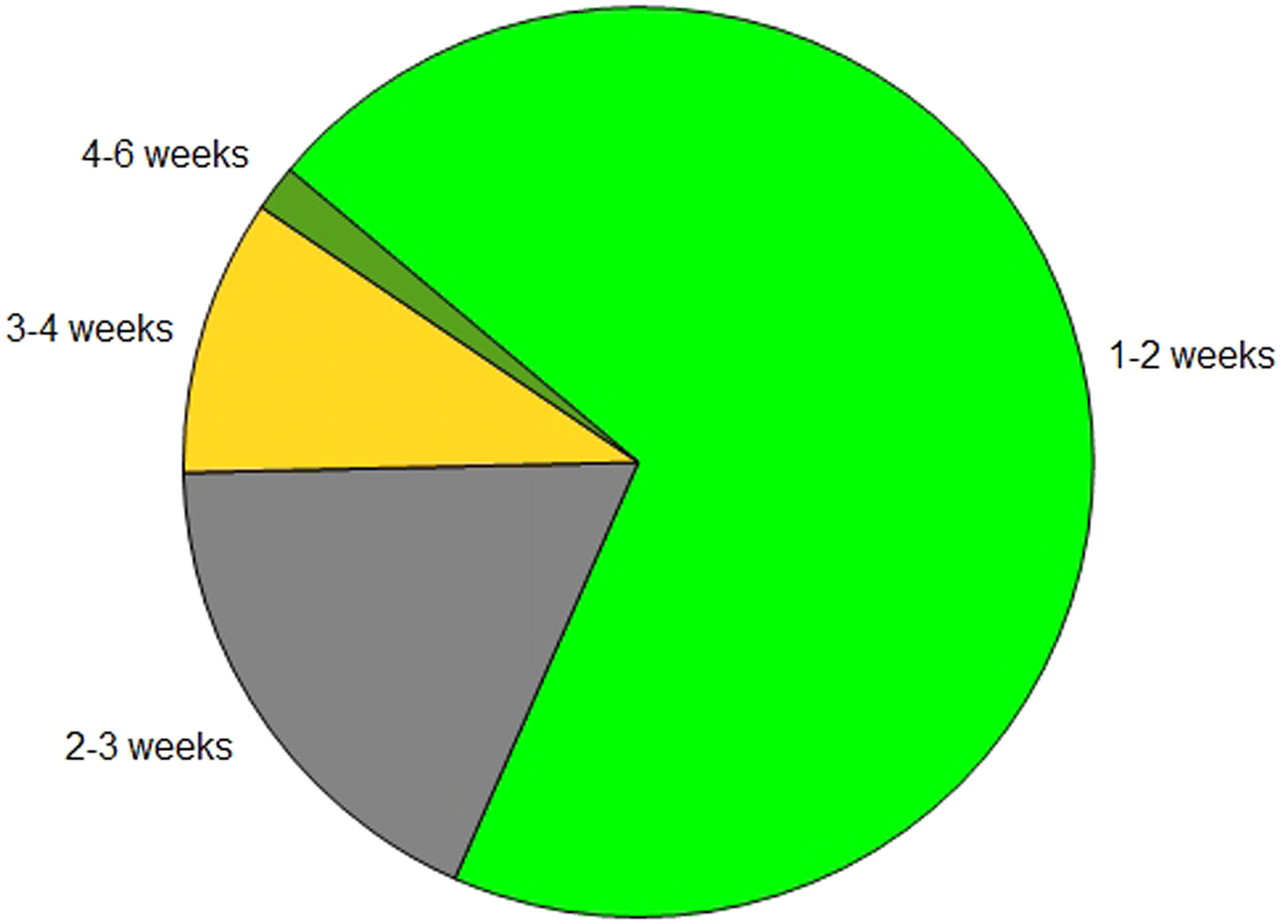
Referral waiting time (n = 61)
A total of 318 telepsychiatry sessions (lasting 35–45 min) was conducted, with an average of 5.2 sessions per patient (see Figure 3). Nine languages were spoken during the study period (Danish, Arabic, Farsi, Somali, Kurdish, Polish, Bosnian, Serbian and Croatian).
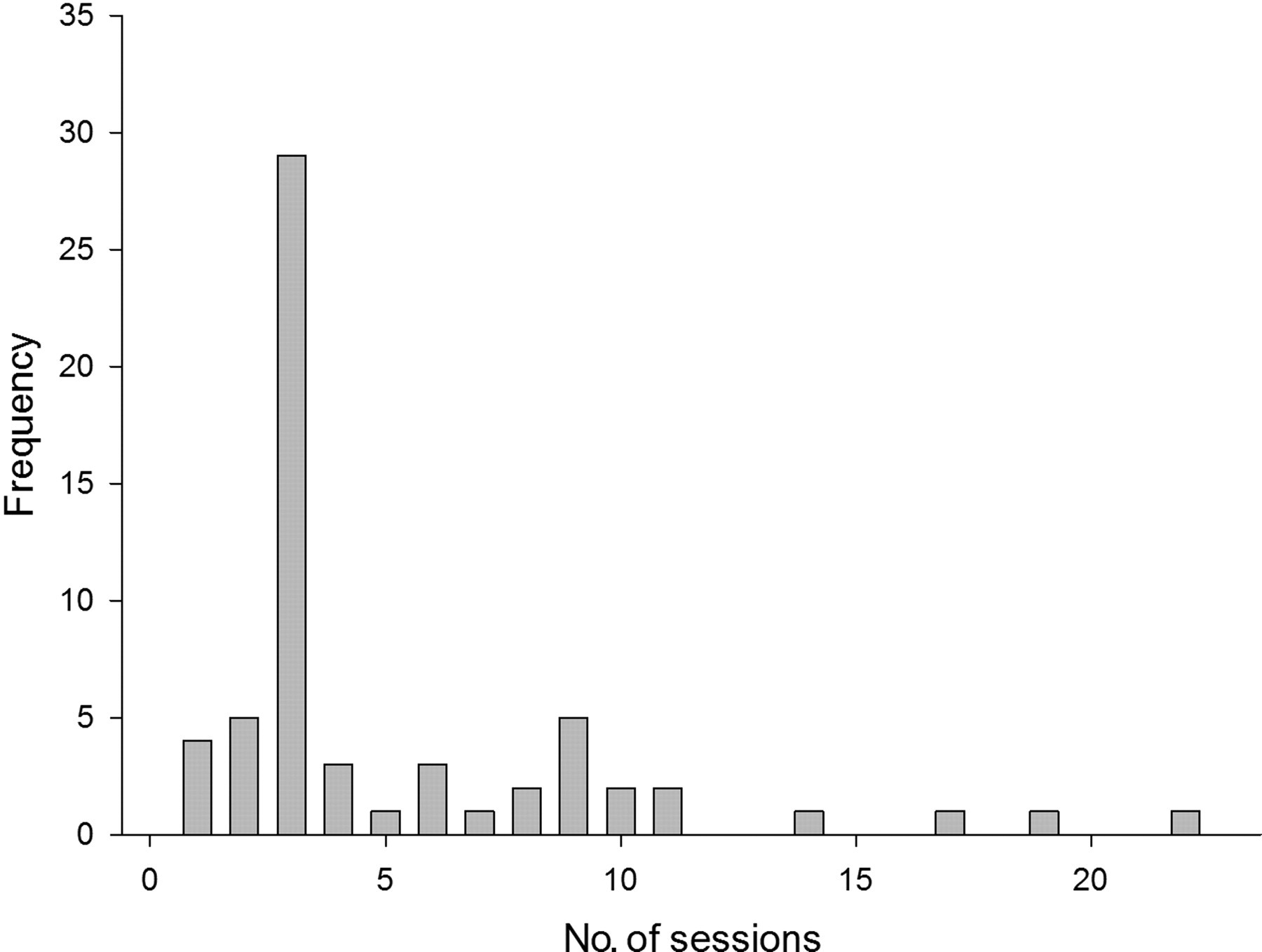
Number of sessions per patient
The participating sites added telepsychiatry to their existing activities and no additional staff or resources were allocated. The site coordinators at the referring sites were mental health nurse (n = 1), secretary (n = 2) and social worker (n = 1), respectively.
The clinicians (n = 6) involved in the project were not Scandinavian-born but educated in Denmark and Sweden respectively, where they had been practising as psychiatrists for years. The clinicians spoke Danish or Swedish fluently as well as their native languages. Thirty patients were treated by clinicians located in the neighbouring country (Sweden), while the clinicians who treated the rest of the sample were located in Copenhagen (Denmark).
At the final telepsychiatry session, the patients were asked to complete a questionnaire that explored their attitude to the telepsychiatry service. The 10-item questionnaire was translated into the patients' respective mother tongue and the patients were not familiar with the questionnaire prior to its administration. The questionnaire covered patient satisfaction with the following aspects of the telepsychiatry service: (1) information; (2) technology; (3) confidentiality; (4) preference; (5) future attitudes; and (6) advantages and disadvantages of the service. The final component of the questionnaire contained two open-ended questions relating to percieved advantages and disadvantages by the service delivery.
The responses to each item were given on a scale that allowed patients to communicate different levels of agreement with a particular item: ‘Yes, in high degree’, ‘Yes, in some degree’, ‘No, in principle not’, ‘Not at all’ and ‘Don't know’.
In addition to the items designed to assess patient satisfaction, six items were included to gather the following information: (1) name; (2) age; (3) sex; (4) pharmacy information; (5) previous contact with psychiatrists in Denmark; and (6) earlier contact with psychiatrists in the home country.
Patients were asked to complete the questionnaire either when leaving a facility or at their homes. Patients were assured that their responses were voluntary, would remain confidential, and would be used only for the purpose of the survey and that their identity would not be published. Completed questionnaires as well as earlier signed informed consent forms were collected from each of the four telepsychiatry sites and sent to the project coordinator.
All sessions within Denmark were conducted by videoconference at a bandwidth of 2 Mbit/s, while those with Sweden utilized a bandwidth of 10 Mbit/s. Confidentiality was maintained by the use of data encryption. Data analysis was performed using the Statistical Package for Social Sciences (SPSS).
Results
Telepsychiatry assessment disclosed a variety of psychiatric diagnoses, as shown in Figure 4. In total, 52 questionnaires were returned, a response rate of 85%. Nine patients (15%) were unable to complete the questionnaire due to illiteracy or a psychotic condition. The rest of the sample (n = 52) completed the questionnaire as requested. Their answers are shown in Table 1.
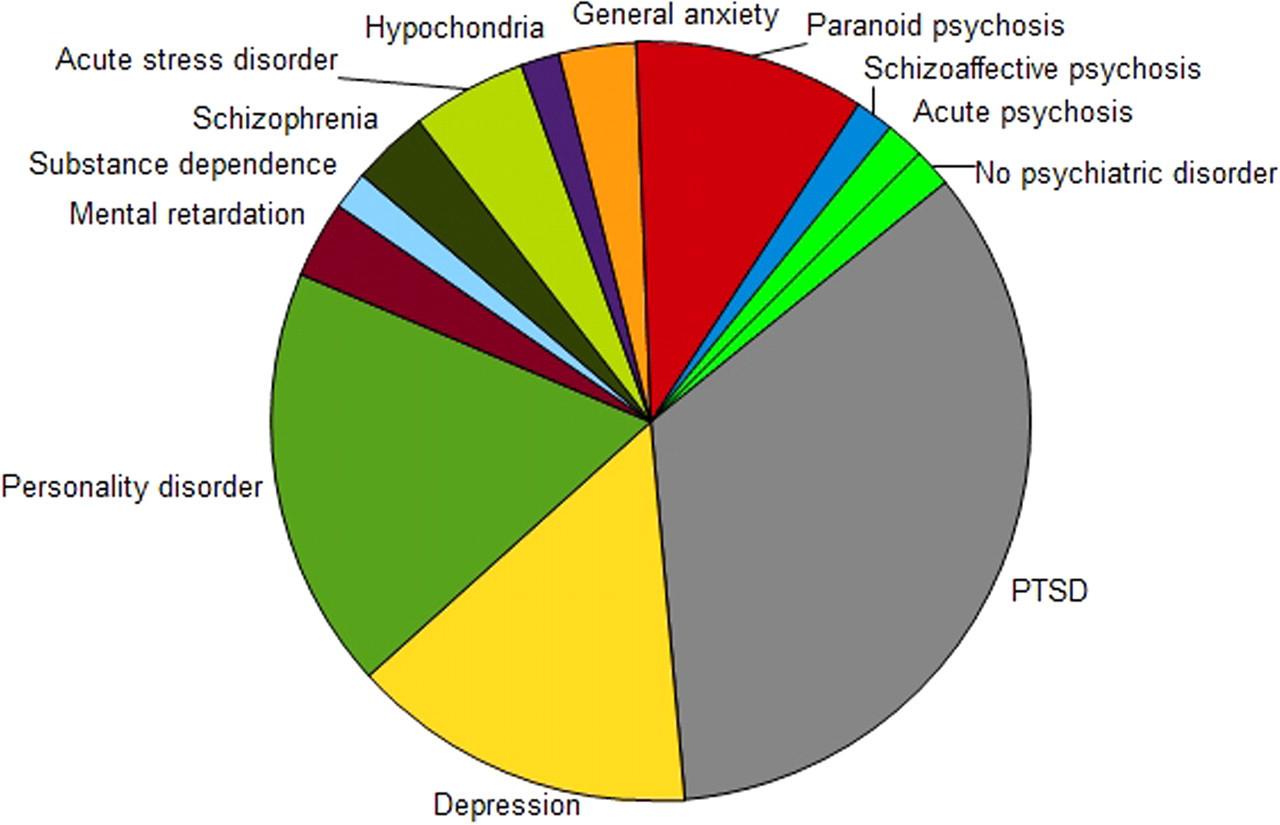
Diagnoses (n = 61)
Patient satisfaction questionnaire
Telepsychiatry allowed both assessment (1–3 sessions; n = 38) and treatment (4–22 sessions; n = 23). Patient satisfaction with sound and picture quality was very high, and the respondents reported that the information about telepsychiatry was easy to understand. However, it became apparent during the sessions that the quality of the picture was of secondary importance as the patients were more focused on the language abilities of the clinicians that contributed to improved interaction and mutual understanding.
Three patients perceived telepsychiatry as uncomfortable. Ten patients found telepsychiatry comfortable in general but also reported some degree of discomfort. The rest of the sample (n = 39) reported ‘No, not at all’ when asked if they were not comfortable with telepsychiatry. Regarding safety perceived by the service, 12 patients reported safety ‘in some degree,’ whereas 3 patients reported less or no safety at all. Lower satisfaction rates mentioned above were associated with psychotic conditions and lower educational level of the patients.
The patients' comments in open-ended questions regarding perceived advantages, indicated that their satisfaction level increased with higher frequencies of videoconferencing. The patients that received continuous telepsychiatry treatment over a longer period, wrote: ‘At the beginning it was difficult for me to get used to this method, but very soon after a few sessions I did not think about the distance any more. It was just like having you here sitting in the same room.’
The patients also reported that they were able to achieve their goal and express everything they wanted through the videoconference. All patients stated that they would recommend telepsychiatry to others, and all except one would prefer this type of contact if needed in the future, rather than an interpreter-provided service. The fact that the patients were able to access the treatment they needed via their mother tongue without travelling was reported as a significant advantage of the service.
Ethnicity did not appear to be associated with the patients' attitudes towards telepsychiatry. Differences in perception of the service were identified with respect to the patients' previous experiences with the mental health system in Denmark. Patients who had earlier received treatment via interpreters in Denmark were more favourable to mother tongue-provided telepsychiatry, compared to patients without previous interpreter-related experiences. Many of the patients reported episodes associated with lack of anonymity and confidence related to interpreter-assisted communication. Asylum seekers were more focused on confidentiality-related issues compared to other patient groups, sometimes referring to a potential interpreter's national origin. They expressed their attitudes through the following statements: ‘One can never know whether they are translated correctly or not. That's why I prefer one that speaks my language’; ‘One can never trust them. Today I speak with the doctor and tomorrow the whole city knows everything about it’; ‘They (Serbs/Albanians) have tortured me in Kosovo, so how can I trust them now?’
Perceived disadvantages
With regard to the physical environment, several of the patients reported dissatisfaction. Room design was not as good at all sites. There were no rooms designed especially for the purpose of telepsychiatry consultations. Rooms were also used for other purposes such as daily conferences, or as a doctor's or secretary's office. At two telepsychiatry stations, the consulting room was small. The patients stated that a small consultation office provoked claustrophobia and reminded some of them of the prison cell that they had been tortured in while imprisoned in their home countries. Furthermore, the sessions were sometimes moved to another ad hoc prepared room without the patients being informed about it in advance. These logistical disturbances produced a lot of frustration among the patients.
Discussion
The crucial indicators of patient satisfaction in the present survey were:
Accessibility of culturally competent care via mother tongue; Ability to express intimate thoughts and feelings from a distance, without third person involvement; Perceived safety and comfort by the service; High quality of sound and picture; Time savings associated with no need for travel; Reported willingness to use telepsychiatry again; Recommending it to others; Preference for telepsychiatry in comparison to interpreter-assisted care.
For ethnic minorities in Denmark, access to mental health care is a problem of finding a clinician who understands their language, culture and special needs. Without telepsychiatry, the patients had options either to receive interpreter-assisted care or to travel in order to see the clinicians who spoke their respective mother tongue. The use of the telepsychiatry service improved access to bilingual psychiatrists by reducing waiting time and the need for travel. However, improved access to a service does not necessarily lead to its acceptance. The use of bilingual clinicians with a similar ethnic and cultural background to their patients compensates for the distance and lack of physical presence. Furthermore, bilingual clinicians not only have the selected skills but a detailed knowledge of the mental health system in Scandinavia, as well as knowledge about health systems in the patients' home countries. The clinicians provided relevant care by taking into account the patients' ethnic background and their previous experience of care at home and in Denmark.
The study documented both initial and long-term impressions. As expected, there was a clear correlation between the number of sessions and the reported satisfaction level. Other factors that influenced patient satisfaction were the patients' educational level, severity of mental illness and previous experiences related to interpreter provided care. It seems that a severe mental condition (i.e. psychosis) and poor educational level may reduce patient satisfaction, especially perceived comfort and safety, but also received information about telepsychiatry.
The patients' judgement of the quality of interpersonal relations achieved through telepsychiatry was often influenced by their earlier experiences with an interpreter-provided contact. For example, some of the patients reported a lack of anonymity and confidence related to interpreter-assisted communication as major obstacles. Decreased level of confidentiality led to a patient's unwillingness to divulge intimate personal information, thoughts and feelings to the interpreter. Perceived safety and comfort by telepsychiatry might be due to the distance that reduces the risk of meeting the doctor on the street and the risks of spreading rumours in the patients' neighborhood (which were often reported as ‘side-effects’ of interpreter-assisted care). In a way, the distance enables closeness through the use of telepsychiatry via the mother tongue. An additional explanation might be the brief and easily understandable information received prior to the session, which was followed by reassurance that no one was listening, watching or recording the sessions, and that the setting was absolutely private and confidential.
Because of previous experiences, some patients linked small consultation offices with prison-environments related to torture. Improvements in the design of telepsychiatry consulting rooms are recommended to achieve better performance and to enhance patient satisfaction.
The present study indicates that communication via mother tongue in telepsychiatry is associated with a number of advantages, such as increased patient satisfaction and improvements in quality of care. Patient satisfaction is an individual's appraisal of the extent to which the care has met that person's expectations and preferences. Once identified, patient preferences may be used as a guide to policy makers and clinicians to develop health-care provision capable of improving patient satisfaction and quality of care. By pointing out the impact of telepsychiatry on patient satisfaction, this survey may help policy makers to identify aspects of the existing services that need to be changed or improved.
Potential limitations
The methodological limitations of the present study included the absence of a control group and the number of aspects of satisfaction measured. Randomized control trials are required to examine telepsychiatry via mother tongue versus face-to-face interpreter-assisted treatment of various migrant groups in different settings. The high levels of the satisfaction scores could be producing a ceiling effect, masking potential differences between patients. Social desirability bias might have affected the satisfaction level in the present study. Patients tend to reply in a manner that will be viewed favourably by their clinicians. Furthermore, the influence that the clinicians (i.e. ‘the reflexivity principle’) had on a study and on the patients as well, is not negligible either. The level of objectivity in this study might have increased due to self-administered completion of the questionnaires after the end of contact without any assistance from the clinicians. Unfortunately, the clinicians might have missed some valuable information as they were not able to explore the background of patients' answers in depth via subsequent semistructural interview. Finally, anonymous data collection should be considered, as well as the use of independent examiners to reduce the risk of potential bias in future research.
Footnotes
Acknowledgements
The work was funded by the Ministry of the Interior and Health, the Egmont Foundation and the Health Insurance Foundation.