




Abstract
The purpose of this study was to examine the trends and patterns of homicide in the Republic of Ireland over a five-year period (2004–2008). In total, 293 cases are covered in the survey. The majority of the victims were men. The most common age group of victims was 20–29 years old. The majority of the suspects were also men. The most common age was also 20–29 years old. Stabbing was the most common method used to kill and this often featured multiple wounds to the head and body. Shooting and blunt force traumas were also common. Homicides are more likely to occur over the weekend period. This study also explored the relationship between the suspect and the victim, the motive and the location of the fatal assault. In the majority of cases, the victim and the perpetrator were known to each other. The site of the fatal assault was most likely to be a residence and the most frequent motive was an argument/quarrelling. A small number of cases involved multiple fatalities, often involving relatives. The figures were compared with other international studies; our findings are broadly in agreement with them.
Introduction
Every civilization has tried to define crime and its punishment. In Ireland the criteria for murder are laid down by Section 4 of the Criminal Justice Act 1964, which provides:
Where a person kills another unlawfully the killing shall not be murder unless the accused person intended to kill, or cause serious injury to, some person, whether the person is actually killed or not. The accused person shall be presumed to have intended the natural and probable consequences of his conduct; but this presumption may be rebutted.
In Ireland, homicide (i.e. murder, manslaughter and infanticide) is the most serious crime in our casework domain. There is an entire range of unlawful killings and not all killings are murderous. In death, as in life, there is a sliding scale of morality and blame. There are contract killings and mercy killings, crimes of passion and domestic killings. They range from fatal arson attacks, bombings, and child killings to gross acts of negligence.
Ireland has a population of almost 4.5 million 1 and has one of the lowest rates of homicide in Europe. 2
This paper analyses data that have been derived from homicide cases submitted to the Forensic Science Laboratory, Dublin (FSL) during 2004–2008 (n = 293). Factors such as the age group of the victim and the suspect, type of injury, relationship between the victim and the suspect and the motive were analysed.
The 293 cases in this study do not include the total number of homicides recorded in the Republic of Ireland because, in a small number of instances, forensic science could not assist in the case and hence these cases were not submitted to the laboratory. An example of this would be a shooting where there is no suspect.
The paper also compares the FSL statistics with those available in the literature from other countries.
Materials and methods
This study was undertaken on the number of suspicious deaths submitted to the FSL, Dublin during the period 2004–2008.
The information used to compile the statistics came from the following sources:
FSL submission form used at the time; Information on the case file (this included suspect and witness statements); Follow-up calls to the Garda Sióchána (Police).
FSL submission form
The submission form is presented along with the items to be examined in the laboratory. The main purpose is to determine whether forensic science examinations can make a contribution to the case and can determine what examinations are to be undertaken. The form requires general information such as age, sex and type of injuries to the victim and the suspect, motive, location of crime and weapon used. This information is supplied by the investigating police officers.
Follow-up calls were made in some instances when the information supplied on the form was incomplete.
The number of homicides/suspicious death cases submitted to the laboratory between 2004 and 2008 inclusive was 293 and the total number of victims was 310.
Results and discussion
Number of victims per year
The number of homicide cases submitted to the FSL between the years 2004 and 2008 inclusive is represented in Figure 1. The total number of victims was 310 as shown in Figure 2. In a small number of cases there was more than one victim; hence the number of victims is greater than the number of cases submitted.

The number of homicide cases submitted to the FSL between 2004 and 2008
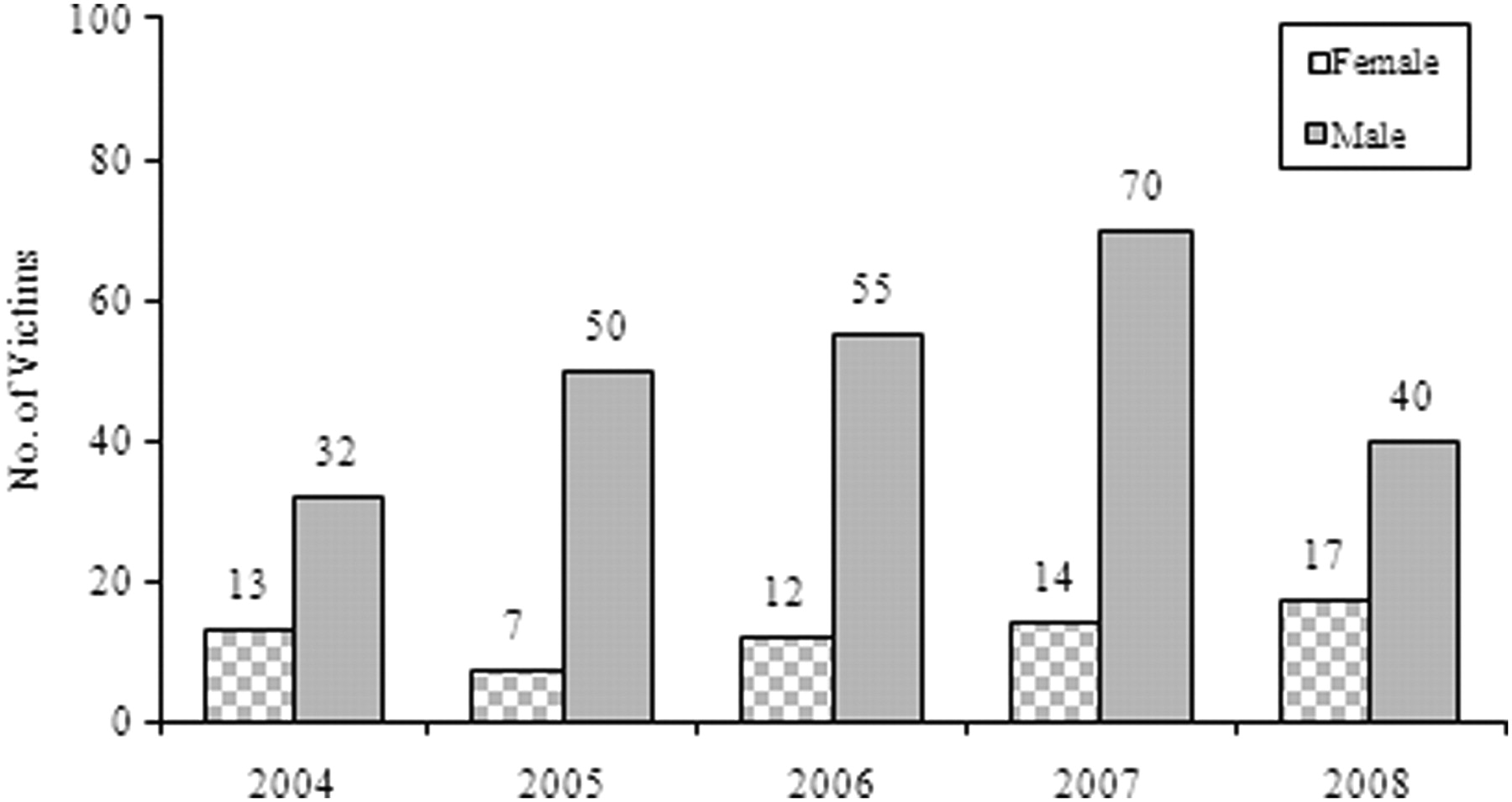
The total number of victims (n = 310)
In the 1950s and 1960s there was on average one killing per month, then doubling to two per month in the 1970s. In the 1980s there were on average 29.4 per year and in the 1990s there were almost 44.0 per year. Between 2001 and 2003 there were on average 56.3 homicides per year, more than one per week. 3 The pattern in this study shows that between 2004 and 2006 the number of killings has been rising steadily by on average 22% until 2007 and then fell back in 2008 to the 2005 numbers.
Age and gender of victim
Figure 3 shows data relating to the victims’ gender and age. The present study shows that the majority of homicide victims were men (n = 248 [80%]).

Age and gender of victim
Gupta et al. 4 stated that female victimization is on the increase worldwide, which could be due to more freedom, employment and increased social activity.
An analysis of the age of the victims in our study showed an age range from three months to 84 years with a median age of 31 and mean age of 33.9.
The principal age group for victims was the 20–29 category. The principal age group for men was 20–29 (28.6%) and about 61% of men belonged to the 20–49 age group. The largest group of female victims (4.8%) fell in the 30–39 age category. Using analysis of variance (ANOVA) analysis there was a significant difference in the age categories for male victims (F = 20.1, P < 0.05) and female victims (F = 3.6, P < 0.05).
O'Donnell shows a particular trend in his 2005 study. He states that in the 1950s, the average age of the victim was 42.5, in the 1970s it was 39.8, and in the 1990s it was 34.9. In our study the mean is 33.9. This suggests that the victims are getting younger from decade to decade.
A summary of the age and gender data from other studies was compiled and is presented in Table 1. Our findings are consistent with similar results found in other countries.
Comparison of sex, age and type of injury causing death to homicide victims encountered in this study and from previous studies published from around the world
N/A, not applicable
Age and gender of suspect
Figure 4 shows the data relating to the suspect/offender age category (n = 376). The vast majority of suspects were men, 92% (n = 347) (with female suspects representing only 7.7% [n = 29]). The largest age group was 20–29 for men (36.2%) and the largest group of women came from the 30–39 (2.7%) category. However, 11% of the suspects’ ages were not available. The overall age range is 15–65. The male age range is between 15 and 65 and female is between 18 and 53. The median age for suspects is 25 and the mean age is 28.7. Using ANOVA analysis there was a significant difference in the age categories for male suspects (F = 15.2, P < 0.05) and female suspects (F = 2.3, P < 0.05).
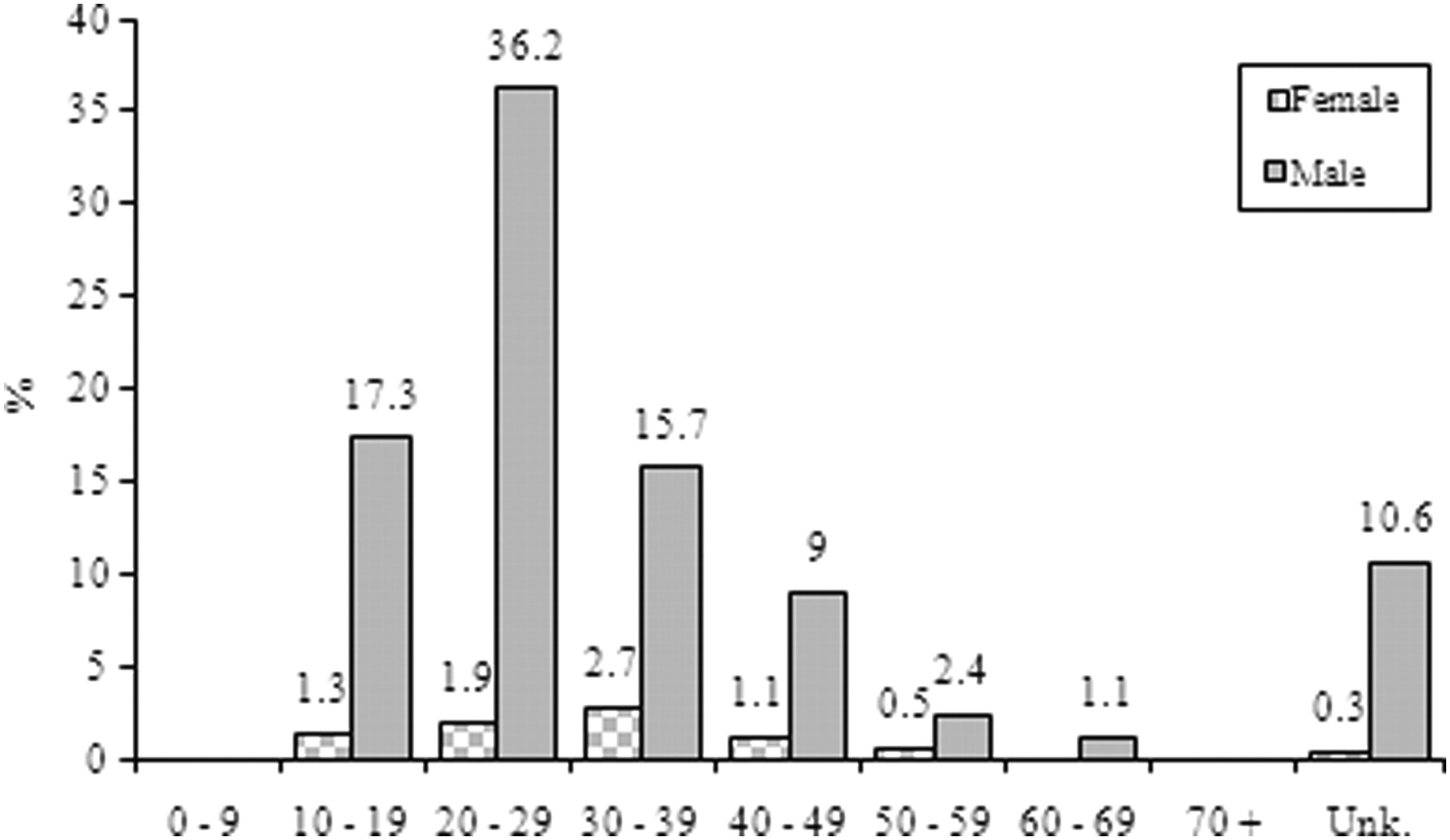
Age and gender of suspect
In Wahlsten et al. 12 the mean age for suspects is 34.1. Hunt and Cowling 14 state that the most common age group for suspects in the West of England was in the 30–39 age group category.
O'Donnell's 3 study observed that the suspects' average age was 34.1 in the 1950s, 28.2 in the 1970s and 29.6 in the 1990s. In this study the average age for the suspect was 28.7 years old. It is obvious that the suspects continue to become younger and on average they were younger than their victims.
Month of the year
Information relating to the months of the year is presented in Figure 5.

Month of the year
The number of incidences ranged between 6% and 12% over the course of the year. From the literature reviewed it appears that there is no real pattern to the month in which homicides tend to occur. There may be trends and patterns relating to climate and seasons but these tend to vary from country to country. Using ANOVA analysis there was no significant difference between the months (F = 1.2, P > 0.05).
Day of the week
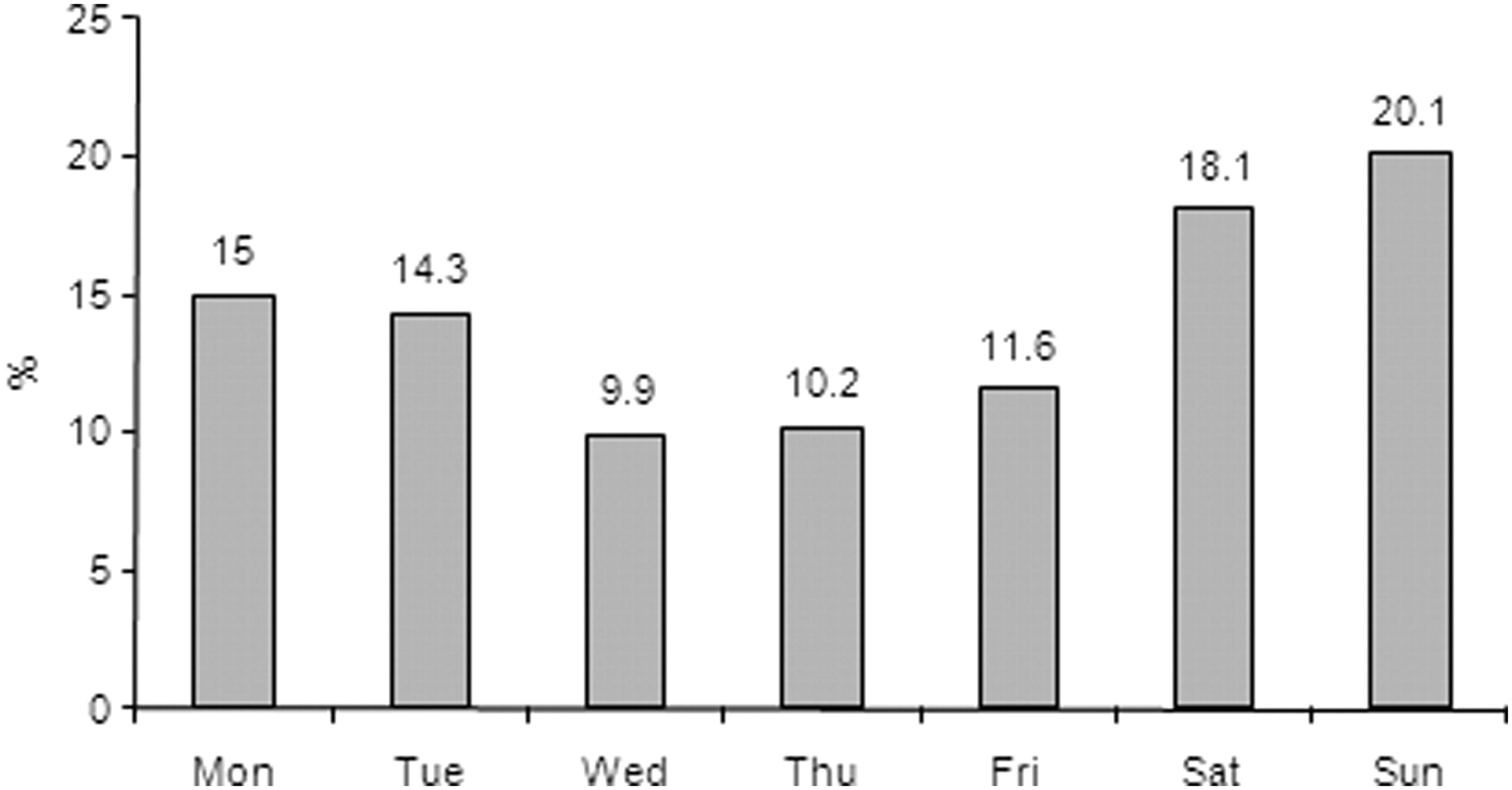
The data relating to the day of the week that homicides occurred are represented in Figure 6.
Day of the week
Saturday (18%) and Sunday (20%) emerge as the most common days for homicide to occur. Using ANOVA analysis there was no significant difference between the days (F = 1.5, P > 0.05). Studies carried out in India, 10 inner London 9 and Turku, Finland 12 showed similar findings (i.e. homicidal fatalities mostly occur between Friday and Sunday). This is in contrast with the study in Newfoundland 8 where the majority of the homicides occur on Thursday and Friday. An earlier study showed that Sunday was also the most common day on which sexual assaults occur. 15
Time of incident
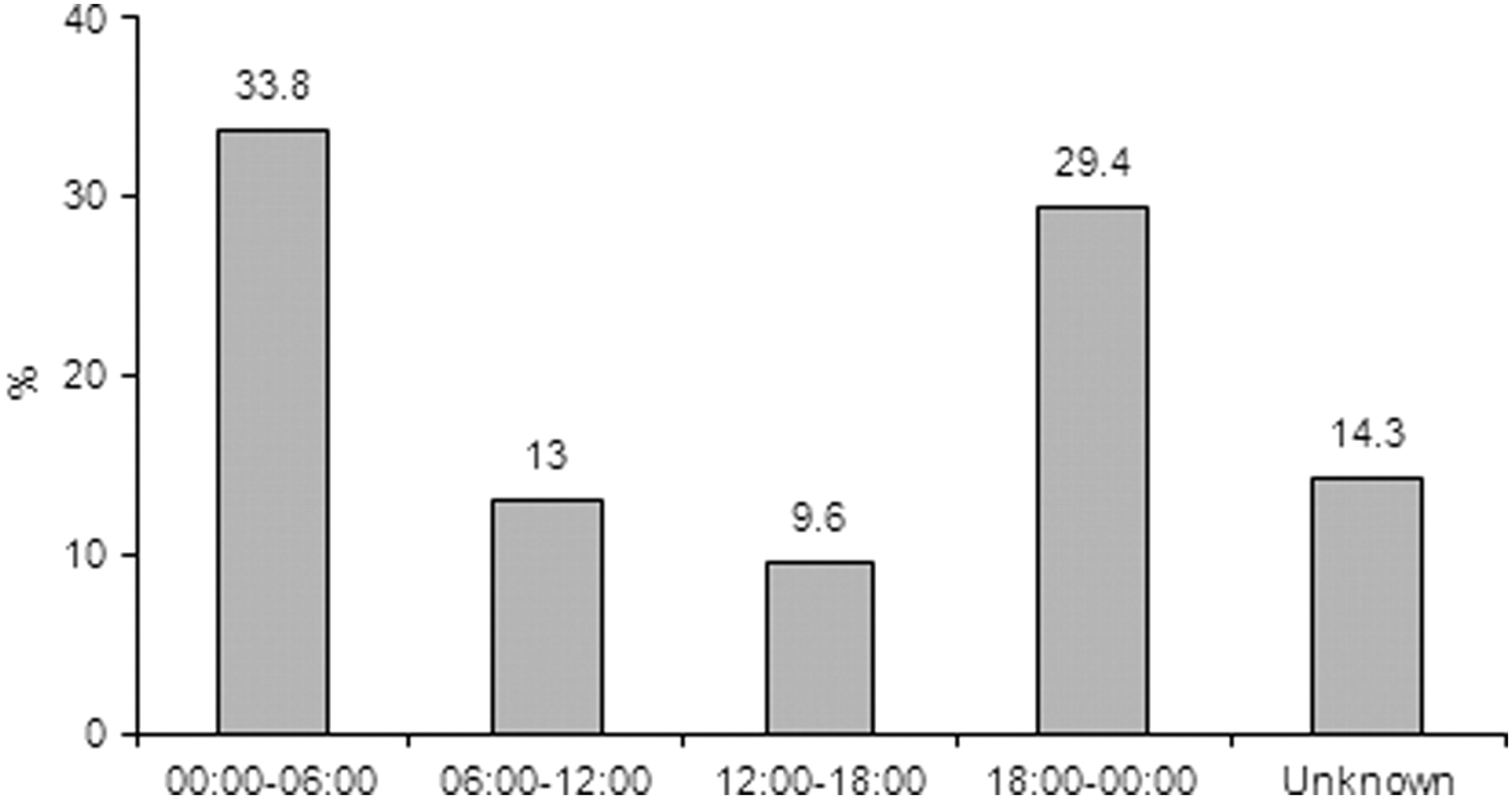
The results from the time of incident (grouped into four time periods) are presented in Figure 7. In our study the most common time of occurrence for homicides is between 18:00 and 06:00 (night time) where approximately 63% of all homicides take place. Between 06:00 and 18:00 (the daylight hours) only 22.5% of homicides occur. In 14.3% of cases the time period was unknown. Using ANOVA analysis there was a significant difference between the various time periods (F = 9.9, P < 0.05). The night time period is not surprising and reflects the social and cultural habits (such as alcohol consumption) for the majority of victims and suspects, namely young men. The fact that darkness can provide opportunities for serious offences to take place is also a factor. These observations are consistent with the findings of McDermott et al. 15
Time of incident
Homicide is therefore three times more likely to happen in the evening/night than during the daytime. These findings are consistent with the findings of Henderson et al., 9 Mohanty et al., 10 Gupta et al. 4 and Dikshit et al. 5
Cause of death
The data relating to the cause of death are represented in Figure 8.

Cause of death
The most common injuries were stab wounds produced by sharp-edged weapons, observed in 36% of cases. This study showed that gunshot wounds were the second most common form of injury and were found in 27.7% of cases followed by blunt weapon injuries in 18.4% of cases. (These are cases involving kicking and beating, with or without a weapon.)
A summary of the cause of death from other studies is presented in Table 1. Our findings are broadly in agreement with results found in other countries.
Fingerhut et al. 16 in the USA reported that the most common type of weapon in a fatal assault is a gun. Despite the restrictive laws with respect to firearm ownership in Ireland, analysis of our data showed that gun injuries have increased over the years and in particular in 2006.
Suspect–victim relationship and circumstances
The data relating to the relationship between suspect and victim are presented in Figure 9. ‘Acquaintance’ refers to when the victim and the suspect are known to each other at least by name or by sight whereas ‘stranger’ refers to when the victim and suspect do not know each other at all. The ‘other’ category includes gang members/drug dealers.

Offender–victim relationship and circumstances
Figure 9 shows that in more than 80% of the cases the attackers knew their victim. Only approximately 12% of cases involved strangers. These findings are broadly consistent with Wahlsten et al., 12 who states that 85% of victims knew their attacker and 12% were strangers. Hagelstam and Häkkänen 11 state that 58% knew their attacker and 25% were strangers.
O'Donnell's 3 study shows that killing among friends/acquaintances was the most prevalent category between the 1950s and the 1990s.
In the cases where a suspect has been identified, 93% of men were killed by men and 88% of women were killed by men. However, there were 14% of cases where the suspect was not identified.
Henderson et al. 9 state that male victims are more likely to be killed by a stranger and women more likely to be killed by a close relative or an acquaintance. There were no known incidences where a woman murdered a stranger during the period of this study.
Motives
The data on the motive for the killing are presented in Figure 10. The motive was indicated in 184 cases.

Motives
An argument and quarrelling was the most common reason why the homicide occurred.
In 60 cases the motive was specified as gangland, 48 cases as a drink-related argument, 24 cases as a domestic argument, 20 cases as a robbery, 32 cases as revenge and in 108 cases the motive could not be specified or was unknown. In some cases there are multiple motives for example gangland and financial gain, or gangland and revenge.
The literature shows that quarrelling, which may be associated with drinking, was the most common motive for homicide. 9,11,12,17
Homicide/suicide is a rare occurrence and appeared in six cases over the period of this study. Marzuk et al. 18 and Milroy 19 defined a murder–suicide event as a homicide followed by the perpetrator's suicide. Broadly speaking in murder–suicide there is death of both the victim and the assailant.
Over the course of the study, there were four cases involving multiple victim homicide/suicide, mostly occurring in family situations. The motive in these cases was associated with financial difficulties and/or mental health issues.
Location of incident
The data on the most likely location of the scene of a killing are represented in Figure 11. The findings show that a residence is the most likely place of occurrence. These findings are consistent with other studies. Rogde et al. 17 state that 78% of the women and 49% of men were killed in their own home. Hagelstam and Häkkänen 11 state that in 54% of cases the body was found indoors while 40% were found outdoors. Wahlsten et al. 12 state that the majority of homicides (59%) took place in a private residence.
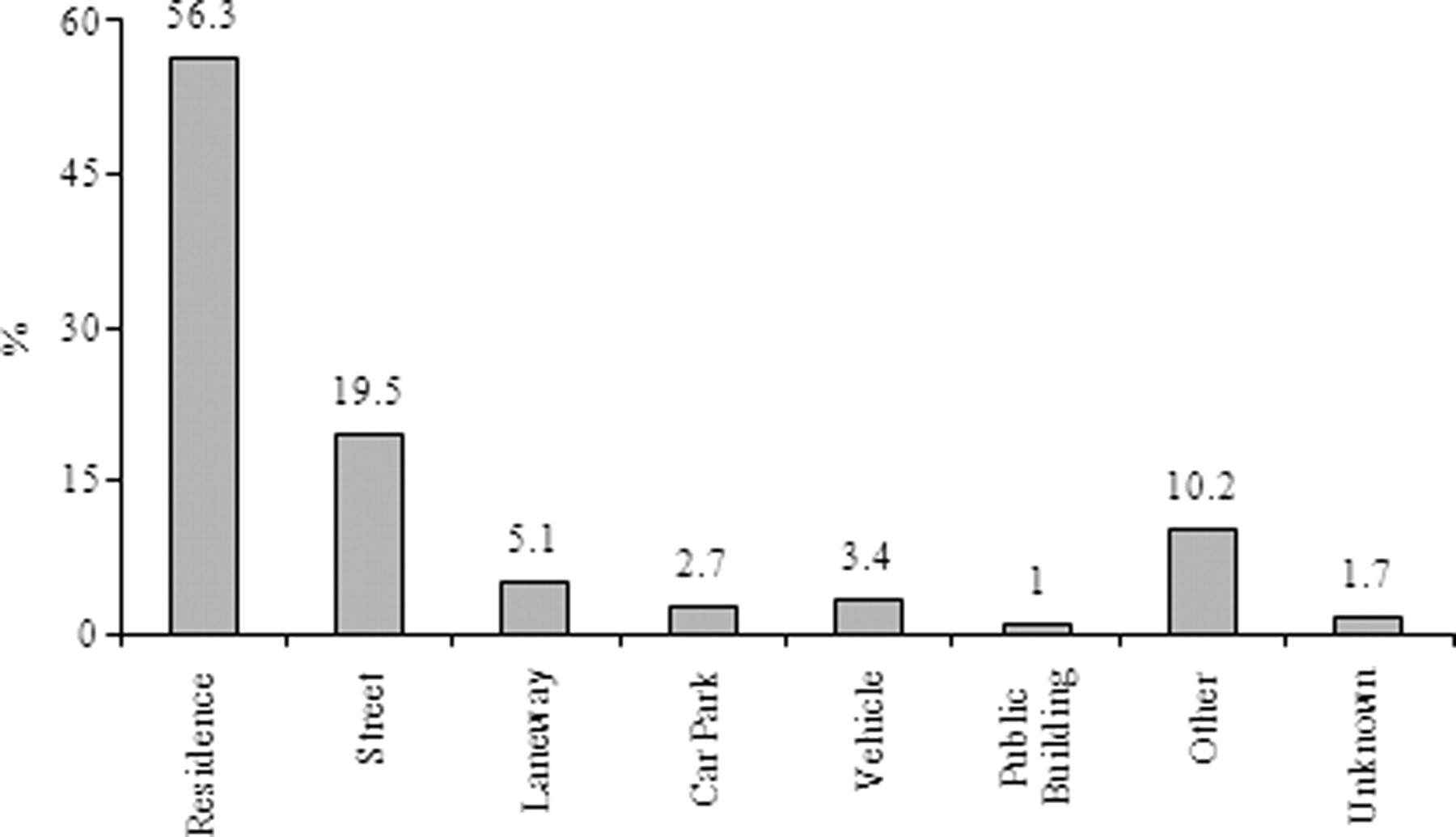
Location of incident
Conclusion
This study represents an in-depth analysis of trends, motives and relationships associated with homicides in Ireland between 2004 and 2008.
The victims and the suspects were generally young men and appear to be getting younger over the decades.
Our study shows that many of the victims were stabbed, usually on Saturday night/Sunday morning. The victim and suspect were generally known to each other. Arguments (domestic and among friends) together with alcohol consumption frequently led to fatal assaults.
This research contributes to the previously published literature associated with trends and patterns of homicide.