




Abstract
Teeth, in the living as well as the dead, are the most useful objects in the field of forensic investigation. Their ability to survive in situations like mass disasters makes them important tools in victim identification. Though the morphology and structure is similar in both men and women, there are subtle differences. Variation in dental size can give a clue about differences between the sexes. Many authors have measured the crowns of teeth in both men and women and found certain variations. Canines, reported to survive air crash and hurricane disasters, are perhaps the most stable teeth in the oral cavity because of the labiolingual thickness of the crown and the root anchorage in the alveolar process of the jaws. Measurement of mesiodistal width of the mandibular and maxillary canines provides good evidence of sex identification due to dimorphism.
Introduction
‘The real aim of forensic science is to establish individuality, or to approach it as closely as the present state of the science allows.’ 1 The question of personal identity frequently arises in the courts of law not only in the identification of criminals but also in the identification of other persons and dead bodies. 2 In the case of mass disasters resulting in loss of lives, law enforcement agencies and public safety and health officials always have responsibility for identifying the human remains found at the scene, to be handed over to their families. 3 The problem of identification of the dead arises in cases of dismembered or mutilated bodies. After confirming the remains as those of a human and belonging to the same individual, the task of establishing the primary and secondary characteristics call for a detailed investigation. 4
Assessment of sex differences from human remains would be of immense help to the investigating officer as it would narrow down his field of search to 50%. 5 The skeletal components most often investigated for gender determination are the pelvis, skull and long bones. Sometimes the diagnostic procedure may be extremely complicated as these bones are invariably fragmented or destroyed in mass disasters like train accidents, hurricanes, earthquakes and fire accidents. In such cases, teeth, being the hardest and chemically the most stable tissue (most resistant to decomposition) in the body, which gets selectively preserved and fossilized, are of great help. Their durability in the face of fire, trauma and bacterial decomposition makes them invaluable for identification. 6
Identification of humans using the unique features of teeth and jaws has been used since Roman times, because humans show dimorphism in jaw and teeth dimensions. 7 ‘Sexual dimorphism’ refers to those differences in size, stature and appearance between men and women that can be applied to dental identification because no two oral cavities are alike. 8 Variation in dental size gives clues not only about the dietary habits of a population but also differences between the sexes. 9 Whenever the jaws with teeth, fragmented jaws with teeth or teeth alone are available at the crime scene or accident, then sex determination can be made using teeth alone. This identification of gender using odontometric techniques is of real interest in cases of major catastrophes when bodies are often damaged beyond recognition. 10
Many authors have done measurements of crowns in the teeth of both men and women and found certain variations. Bossert and Marks 11 stated that the study of the permanent mandibular and maxillary canine teeth offers certain advantages. These advantages emanate from the fact that they are the teeth least used in the oral cavity, less affected by periodontal disease and least frequently extracted with respect to age. 12 The canines are commonly referred to as the ‘cornerstones‘ of the dental arches as four canines are placed at the ‘corners’ of the oral cavity. The shape of the crowns, with their single pointed cusps, their locations in the mouth and the extra anchorage furnished by the long, strongly developed roots make these canines resemble those of the carnivore. This resemblance to the prehensile teeth of the carnivore gives rise to the term ‘canine’.
Canines are perhaps the most stable teeth in the oral cavity because of the labiolingual thickness of the crown and the root anchorage in the alveolar process of the jaws. The crown portions of the canines are shaped in such a manner as to promote cleanliness. This self-cleansing quality and efficient anchorage in the jaws tend to preserve these teeth throughout life. 13 These findings indicate that canines can be considered the ‘key teeth’ for personal identification. 8 Measurement of mesiodistal width of the mandibular and maxillary canines provides good evidence of sex identification due to dimorphism. 12
The present study establishes the impact of the mandibular and maxillary canines. The results indicate that the dimorphism in mandibular and maxillary canines can be used in medico-legal identification. The study defines the morphometric criteria for mandibular and maxillary canines in the Karnataka population in India.
Materials and methods
Materials for the present study consisted of 500 students from Manipal and Udupi comprising 250 men and 250 women in the age group 15–25 years belonging to various parts of Karnataka. This age group was selected as all the canines would have erupted by this age and attrition is expected to be minimal. 10 Methods for the study consisted of measuring the maxillary and mandibular canine widths for these students.
Exclusion criteria:
Subjects with the following status were excluded from the study:
Abnormal teeth alignment; Subjects with missing anterior teeth; Crowded or excessive spacing in the anterior teeth; Abnormal overjet and overbite; Dental caries; Subjects with bad/poor oral hygiene; Canine teeth with attrition; Subjects with orthodontic treatment; Any trauma to canine tooth.
After selecting the subjects randomly, the aims and objectives of the study were explained to them and written informed consent was obtained in the prescribed form. The measurements were taken intraorally either side of the jaw using a divider with pointed tips and with the provision to fix it in position and digital callipers with a resolution of 0.01 mm with the provision to fix it into the desired position. The provision in these instruments to fix into a desired position avoided errors in recording the exact measurements of canines.
The mesiodistal crown width of mandibular and maxillary canine teeth, i.e. the greatest mesiodistal width of the crown between the contact points of the teeth on either side of the jaw 13 was measured three times on different occasions and the average of the three values was noted (Figures 1 and 2). In order to test repeatability of measurements, three authors recorded the measurements independently at different times. The intra- and interobserver variations between the three series of measurements were assessed by using an intraclass correlation coefficient and a paired t-test. P < 0.05 was considered as significant.
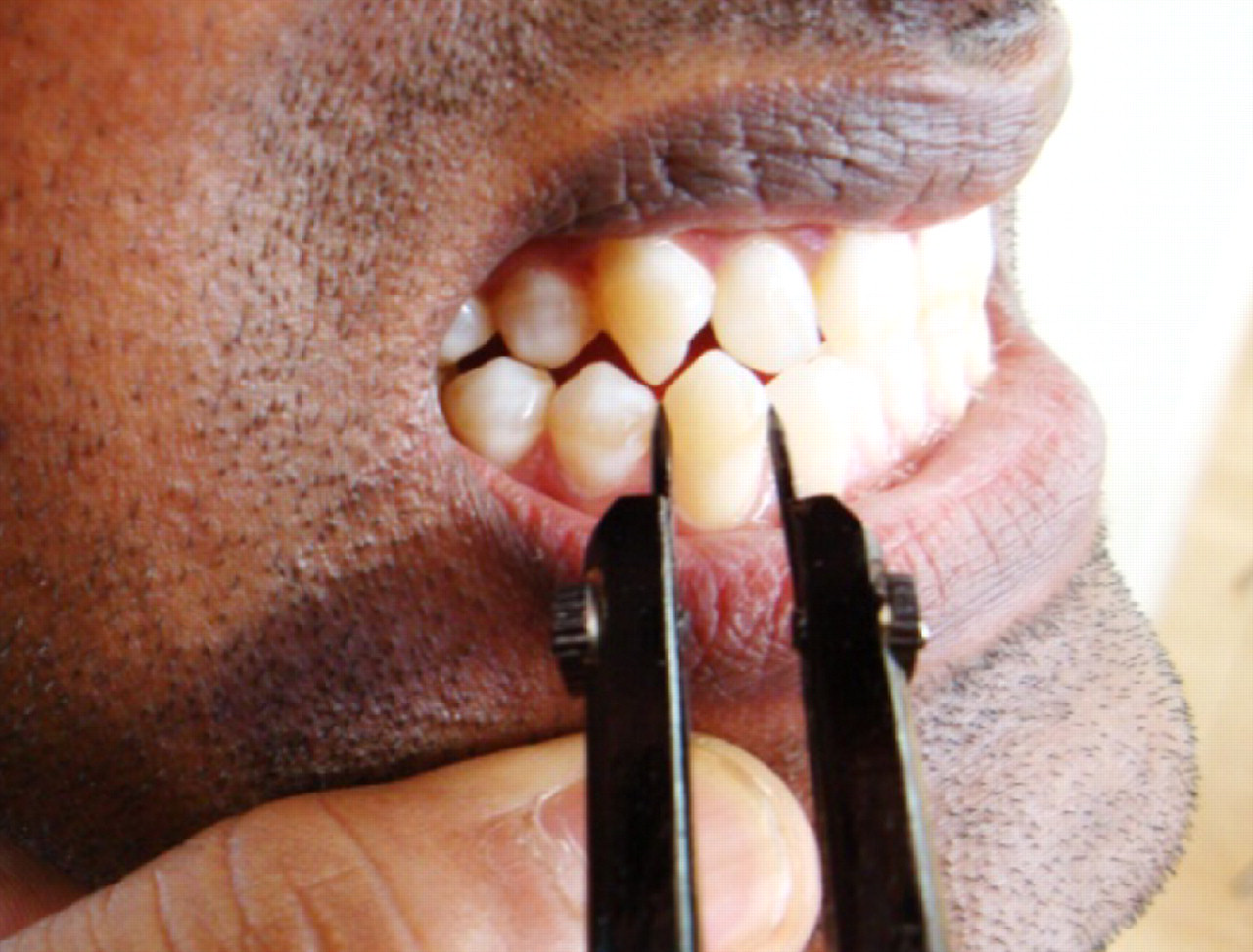
Measuring mesiodistal width of canine using divider
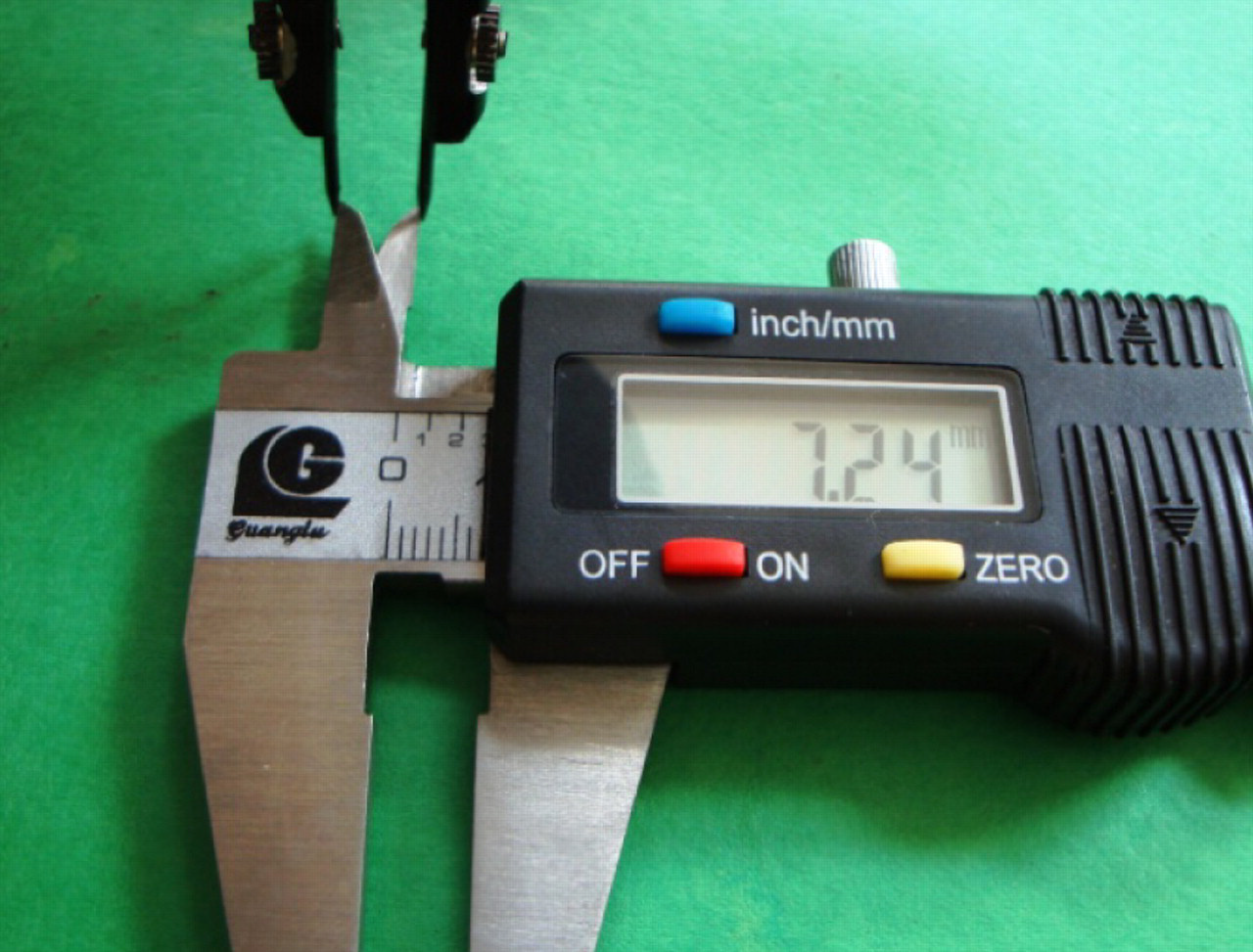
Measuring distance between two pointed ends of divider corresponding to the mesiodistal width of canine using digital caliper
The readings obtained were subjected for analysis to derive conclusions. Sexual dimorphism in right and left mandibular and maxillary canines was calculated using a formula given by Garn et al. (1967):
14

The data obtained were quantified and analysed statistically using SPSS (Statistical Package for the Social Sciences, Version 11.5) to determine the significance of differences between the sexes. This was done through the use of various descriptive statistics (mean, standard deviation, frequencies and measurement of agreement) and comparison of group means.
Observations and results
The following parameters were determined intraorally in men and women:
Mesiodistal crown width of right mandibular canine; Mesiodistal crown width of left mandibular canine; Mesiodistal crown width of right maxillary canine; Mesiodistal crown width of left maxillary canine.
It was observed that the mean value of the mesiodistal crown width of right mandibular canines was 7.2 ± 0.44 mm in men and 6.89 ± 0.41 mm in women, while the mean value of the mesiodistal crown width of left mandibular canines was 7.26 ± 0.44 mm in men and 6.94 ± 0.41 mm in women (Table 1, Figures 3 and 4). This value was statistically significant (P < 0.001).
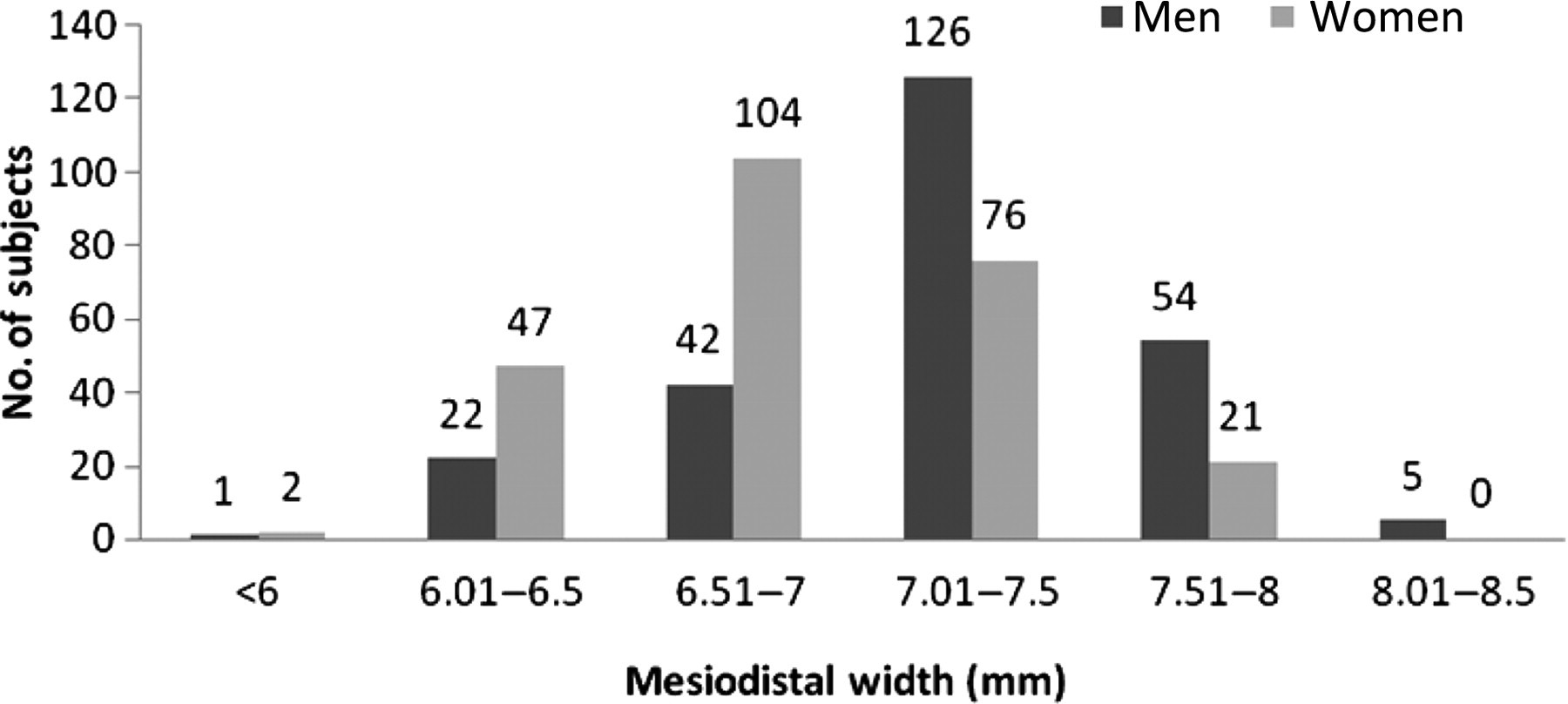
Mesiodistal crown width of right mandibular canines – gender-wise distribution
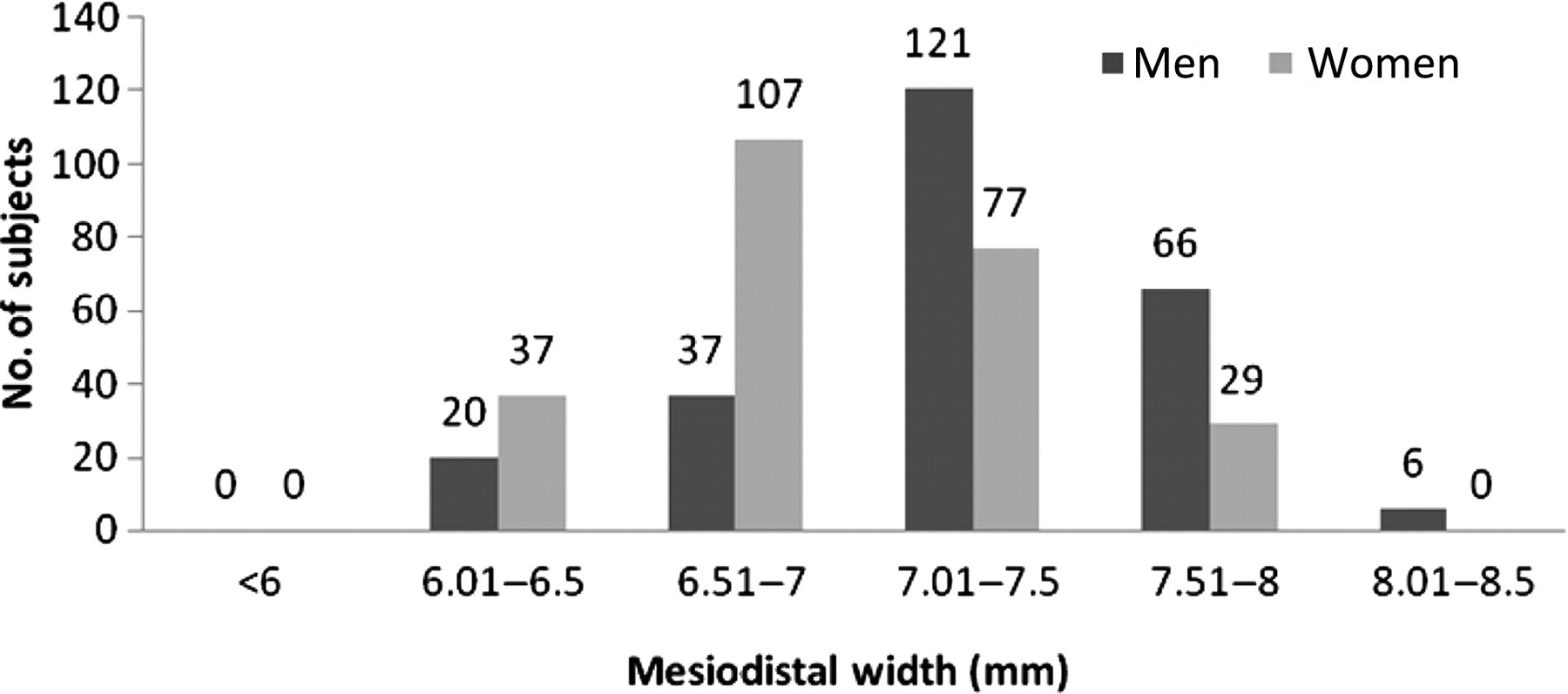
Mesiodistal crown width of left mandibular canines – gender-wise distribution
Mesiodistal crown width of mandibular and maxillary canines – gender-wise distribution
The mean value of the mesiodistal crown width of right maxillary canines was 7.8 ± 0.45 mm in men and 7.55 ± 0.45 mm in women and the mean value of the mesiodistal crown width of left maxillary canines was 7.85 ± 0.45 mm in the men and was 7.6 ± 0.44 mm in women (Table 1, Figures 5 and 6). This value was statistically significant (P < 0.001).
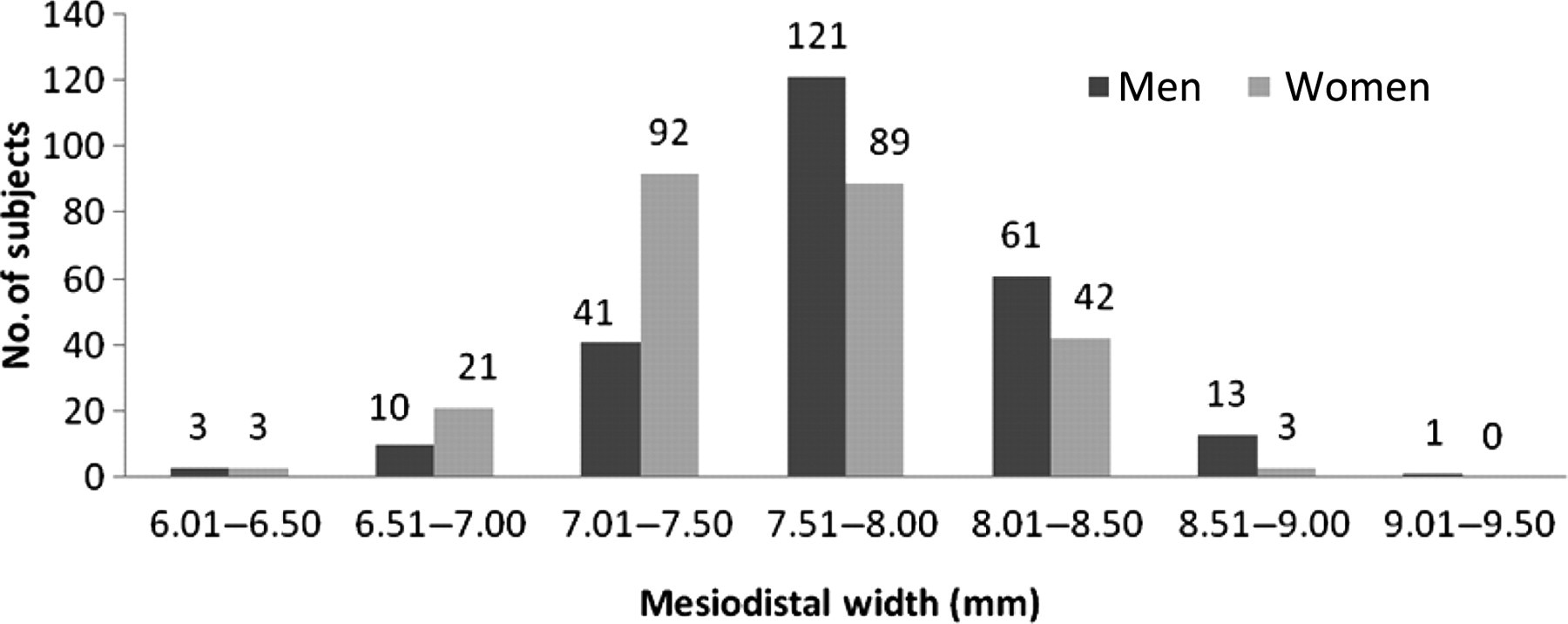
Mesiodistal crown width of right maxillary canines – gender-wise distribution
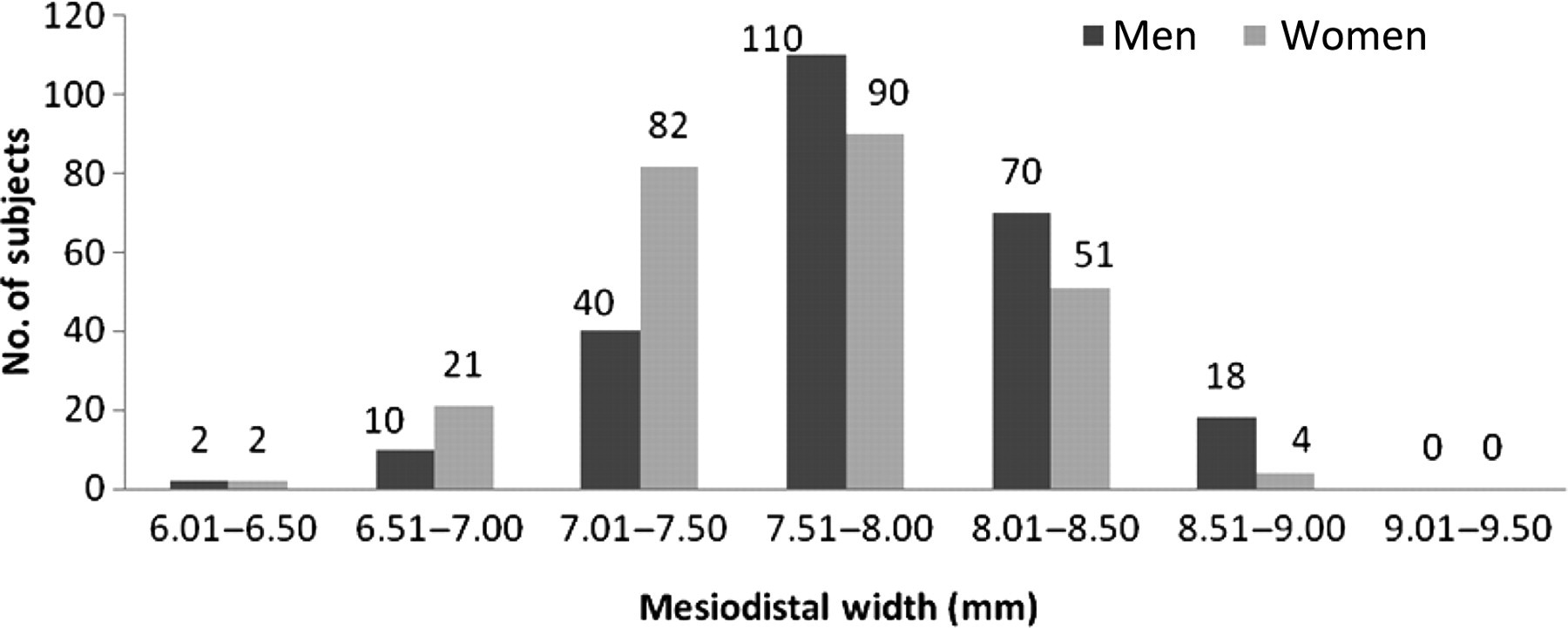
Mesiodistal crown width of left maxillary canines – gender-wise distribution
The sexual dimorphism from the mesiodistal crown width of the canine tooth was calculated by the formula
Sexual dimorphism – mandibular and maxillary canines
The sexual dimorphism of right maxillary canines was 3.31% and that of left maxillary canines, 3.29% (Table 2).
Five each mandibular and maxillary canines were collected from the skeletal remains which were brought for medico-legal examination. After determining the sex of the skeletal remains based on the characteristic features, the mean mesiodistal width of mandibular and maxillary canines was calculated by one of the authors who was not involved in the examination of the skeletal remains. The sex determined by mean mesiodistal width of mandibular and maxillary canines and the sex determined by characteristic features of skeletal remains correlated accurately in all the cases, thus establishing the reliability, credibility and relevance of this study.
Discussion
Identification through uncharacteristic features is the basis of the individuality of a person. Numerous methods of identification are in use, and most of these methods have their own merits and limitations. As teeth are the most durable of human remains, they should be frequently incorporated into forensic practice.
Teeth provide excellent models for the study of the relationship between ontogeny and phylogeny. It has been postulated that in the evolution of primates, the canines were functionally not meant for mastication but were tools of aggression. This aggressive canine function lasted until there was transfer of this aggressive intent from teeth to the fingers. Canines differ from other teeth with respect to survival and sex dichotomy. Thus, in present day humans, sexual dimorphism in mandibular canines is not merely a coincidence but can be expected to be based on functional activity too. 8 Teeth can help to estimate age and determine the sex and race of a person even in decomposed and burnt bodies. Studies of sexual dimorphism provide information about the evolution and dietary habits of a population and, for that matter, an individual, too. 5
The utility of the canines as a tool in sex determination by odontometric analyses, for example in forensic dentistry, is supported by their high level of survival in the dentition. The sex determinant factor for the canine was attributed to the influence of the Y-chromosome, which was not uniform in all teeth. On the other hand, the X-linked genetic influence on tooth width was rather uniform for all teeth. It is the Y-chromosome which intervenes most in the size of teeth by controlling the thickness of dentine, whereas the X-chromosome is concerned with the thickness of enamel. 14
Garn et al. (1966) 15 revealed the magnitude of sexual dimorphism in tooth size as well as percentage dimorphism in 117 subjects from Southwest Ohio, representing 75 families. The largest sexual dimorphism in mesiodistal tooth size was exhibited by the mandibular first and second molars, 7% and 6.2%, respectively, with the mandibular and maxillary canines next in order with 6.2% and 6%, respectively. On percentage basis, dimorphism was greatest for canines and least for mandibular incisors. But canine dimorphism was specific to mesiodistal diameter. Mesiodistally the lower canines showed the greatest difference between the sexes.
Lysell and Myrberg (1982) 16 studied the records of 530 boys and 580 girls who were born to Swedish parents and grew up in the Stockholm area, and reported expression of sexual dimorphism in the deciduous dentition as well as in the permanent dentition. Boys exhibited larger mesiodistal tooth widths than girls in both deciduous and permanent dentitions. The largest male and female tooth widths were found in permanent canines (5–6%).
Kaushal et al. (2003) 8 found a statistically significant dimorphism in the mandibular canines in 60 subjects in a North Indian population, where the mandibular left canine was seen to exhibit greater sexual dimorphism. They also concluded that if the width of the canine is greater than 7 mm, the probability of the sex of the person under consideration being male was 100%.
In this study an attempt has been made to establish the sex of a person by using the mesiodistal width of canine teeth in the Karnataka population.
In our study, there were no significant differences between the mesiodistal width of right and left, mandibular and maxillary canines among men. Similar observations were made among the female counterparts. These findings were in agreement with the studies conducted by Kaushal et al., 10 Garn et al., 14 Al-Rifaiy et al., 12 Acharya and Mainali, 17 and Anderson and Thompson. 18
The mean mesiodistal width of the right and left mandibular canines in our study was found to be greater in men (right: 7.20 ± 0.44 mm; left: 7.26 ± 0.44 mm) than in women (right: 6.89 ± 0.41 mm; left: 6.94 ± 0.42 mm), which was statistically significant with a P value of <0.001. This greater dimension of mesiodistal width of canines in men can be attributed to the Y chromosome, which is responsible for the thickness of dentine, contributing to the width of a tooth. 10,18 These findings are in agreement with the studies conducted by Kavitha 19 (men: 7.2–7.9 mm and women: 6.7–7.6 mm) for the Tamil Nadu population (South India), Kaushal et al. 10 (men: right 7.22 ± 0.28 mm; left 7.29 ± 0.29 mm and women: right 6.69 ± 0.25 mm; left 6.69 ± 0.32 mm) for the North Indian population and by Acharya and Mainali 17 (men: right 6.96 ± 0.39 mm; left 7.00 ± 0.4 mm and women: right 6.58 ± 0.35 mm; left 6.63 ± 0.35 mm) for the Nepalee population on mandibular canines. However, the studies conducted by Ates et al. 9 and Al-Rifaiy et al. 12 on Turkish and Saudi populations did not find significant gender differences for the mesiodistal width of mandibular and maxillary canines.
In our study, the value for sexual dimorphism of mandibular canines was 4.50% for the right canine and 4.61% for the left canine. These values matched with the study conducted by Garn et al. on the Tristanite population (4.1%). 14 Garn et al.'s study further reported the values for sexual dimorphism in Ohio Caucasians (6.4%), Australian Aborigines (6.8%) and Pima Indians (6.3%). The higher sexual dimorphism values, 6.2% (right canines) and 7.7% (left canines), were computed for the South Indian population by Nair et al., 20 and 7.954% for the right canines and 8.891% for the left canines computed for the North Indian population by Kaushal et al. 10 The higher values obtained in their studies could be attributed to the small sample size and use of dental casts for their study. The mandibular canines are considered to demonstrate the greatest percentage of sexual dimorphism among all teeth in their mesiodistal width. 10,14,19
The value for sexual dimorphism of maxillary canines in our study was 3.31% for the right canine and 3.29% for the left canine. The study conducted by Garn et al. on the Tristanite population showed the sexual dimorphism for maxillary canines to be 2.5%, which has lower dimorphic value than our study. However, Garn et al.'s study on different ethnic groups revealed the value to be 4.5% for Australian Aborigines, 5.3% for Pima Indians and 5.9% for Ohio Caucasians. 14 Their study showed the combined value for both canines.
Even though our study is in agreement with various studies, it can only be well applied with more accuracy in this part of the world as not only the size of teeth but also the mesiodistal widths vary with race, but the results of the study definitely help other researchers to compare their work.
Conclusion
Forensic odontology, an emerging field worldwide, depends upon a lot of easy means to identify the various parameters of identification. Gender differentiation becomes easy when the standard dental data for the particular population are available. From the observations of our study, the following conclusions were drawn:
Mesiodistal width of canines in all the quadrants for a given gender did not show any significant variation; The mean mesiodistal width of mandibular canines was greater in men (right: 7.20 ± 0.44 mm; left: 7.26 ± 0.44 mm) than in women (right: 6.89 ± 0.41 mm; left: 6.94 ± 0.42 mm); The mean mesiodistal width of maxillary canines was greater among men (right: 7.80 ± 0.45 mm; left: 7.85 ± 0.45 mm) than women (right: 7.55 ± 0.45 mm; left: 7.60 ± 0.44 mm).
The present study has been conducted on both sexes in a definite age group in the Karnataka (South India) population; it establishes the morphometric criteria of canine size for this population. This study also indicates the probability of sex determination to an extent as high as 100% (when the width of the mandibular canine is greater than 7.4 mm, the sex is male). This finding in the Karnataka (South India) population is of definite significance as the determination of sex makes identification easier. It is of immense forensic importance as it helps in assessing the sex of unknown remains in cases of mass disasters.
Also, the results of this study could be of importance to anthropologists and of help to the clinical odontologist for space assessment.
Footnotes
Acknowledgement
This study was done as part of a dissertation submitted to Manipal University for the award of an MD degree in Forensic Medicine.
We are extremely thankful to the faculty, Department of Statistics, Manipal University, Manipal for their kind help and assistance in statistical analysis of the data.
We take this opportunity to express our heartfelt gratitude to all the participants in this research who spent their valuable time in giving their teeth measurements. We thank the principals and teachers of all the schools for their kind co-operation extended during the examination of the students.