




Abstract
SUMMARY
A simple and cheap alternative to spring-loaded syringe for the identification of epidural space is described. It is easily assembled using a syringe and a rubber band. This assembly is reusable and is especially useful for beginners.
Before performing epidural anaesthesia one must first identify the epidural space. Many methods have been devised including negative pressure techniques and loss of resistance techniques. 1 A syringe filled with fluid kept at a continuous pressure is the most commonly used method, followed by the use of a syringe filled with air kept at a continuous or intermittent pressure. Most of the other methods are difficult to assemble and cumbersome to use. 2
We have devised a simple method by which a loss of resistance syringe or a disposable syringe can function like a spring-loaded syringe by simply applying a rubber band. It can be easily made by cutting two opposite slots in the plunger and two holes in the upper end of the barrel of the syringe (Figure 1). The rubber band is then tied at both holes of the barrel and runs over the plunger and through the slots (Figure 2). The air filled syringe is then attached to the epidural needle when it is fixed in the interspinus ligament and the plunger is held by the tension of the rubber band (Figure 3). When the tip of the needle enters the epidural space there is an inward movement of the plunger in the barrel caused by the tension of the rubber band. This identifies the epidural space. The syringe, along with epidural needle and its stylet, can be used many times after they have been sterilized with ethylene oxide. Just adding an epidural catheter completes the kit. A new epidural catheter costs only 100–120 Indian rupees (US$2.5–3). If the rubber band breaks it can be easily replaced.

Photograph showing two opposite slots in the plunger

Photograph showing rubber band tied at two holes in the upper end of the barrel of syringe
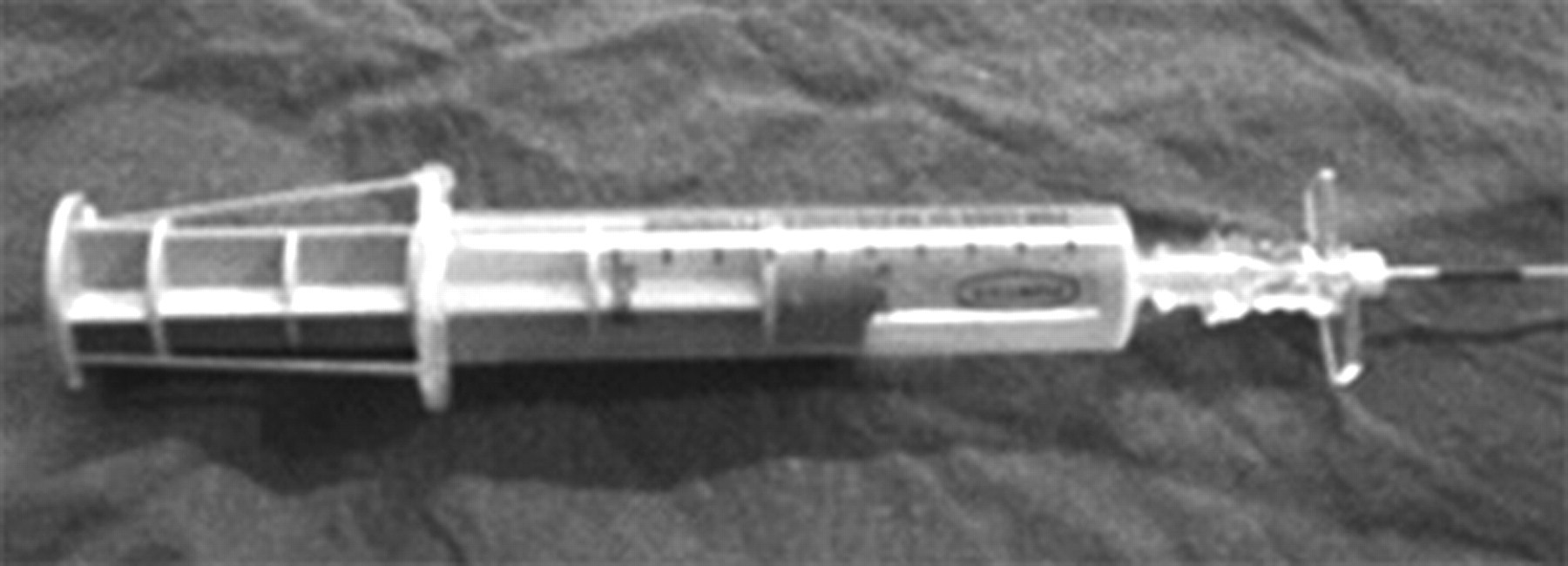
Complete assembly in situ
This method is very useful for beginners as it leaves both hands free to apply continuous/intermittent pressure on the epidural needle. Moreover, it saves a lot of money. To conclude, the application of a rubber band to a loss of resistance or disposable syringe is a simple and cheap alternative to a spring-loaded syringe for the identification of epidural space.