




Abstract
Training in minimal access surgery has always been difficult in developing countries with limited resources, non availability of formal animal labs, inaffordability of conventional endotrainers and lack of trained endosurgeons to help the amateurs. It is always difficult to start a new procedure in such places where not only the patients but the orthodox surgical fraternity are reluctant to accept new ideas and newer trends in surgery. After thorough discussions with senior surgeons, the author (who was the only trained endosurgeon to begin with) developed a training policy to train the surgeons over a period of time through various exercises before allowing them to assist him in the actual surgeries. A homemade, inexpensive endotrainer was designed for these exercises. Audio-visual seminars were held in between the training sessions. This training module can be employed by other rural hospitals to improve the skills of surgeons who are new to the art of endosurgery.
The introduction of laparoscopic surgery in the 1980s brought with it new challenges for the surgeons. Previously they looked directly at the target organ through an abdominal wall incision. Now they had to adapt to a new technique in which they had to look at a monitor displaying the intra abdominal scene. As there were no structured instructional courses available it took time for them to adapt to this method of surgery. They needed to acquire excellent hand–eye coordination. The instruments can overshoot the intended area of dissection causing the members of the surgical team to feel uneasy and embarrassed. If a complication such as bleeding occurs it is quite difficult to manage it laparoscopically. This led to a very high incidence of conversion to open surgery and biliary tract injuries.
In the developed world the finer points for the improvement of the safety of patients undergoing laparoscopic surgery were debated and guidelines were set. Unfortunately, in developing countries there were no such guidelines and there were only a limited number of trained endosurgeons. The local surgical fraternity was not convinced about the safety of laparoscopic surgery and so a training policy had to be developed which would help to develop hand eye coordination.
After thorough discussion a framework for the training of surgeons, under the guidance of the primary author (MIS) who was trained in the basic and advanced laparoscopic surgery, was formed.
Seminars were held which included video clips of the laparoscopic surgery that had ready been performed. The participants included general surgeons, gynaecologists, theatre staff and other paramedics. They were all introduced to the different hand instruments and the other laparoscopic equipment. Emphasis was laid on the safety of the patient and ways of overcoming any problems with the equipment were demonstrated.
A homemade, inexpensive endotrainer was designed to shorten the time needed to develop of hand–eye coordination (Figure 1). An empty 5% dextrose bottle carton was used for this purpose. Holes through which the telescope and the hand instruments were introduced were made in the sides of the carton. The telescope was connected to the light source and the monitor. The inside of the carton simulated an insufflated abdominal cavity. Initially, the instruments were introduced six inches from the bottom in an oblique manner towards the target from the sides. Later, the telescope and the instruments were all introduced from one side only to increase the level of difficulty. The theatre assistants were actively involved in this process as they usually act as the camera assistants.

External view of an indigenous inexpensive endotrainer
Various exercises were used to develop the surgeons' skills:
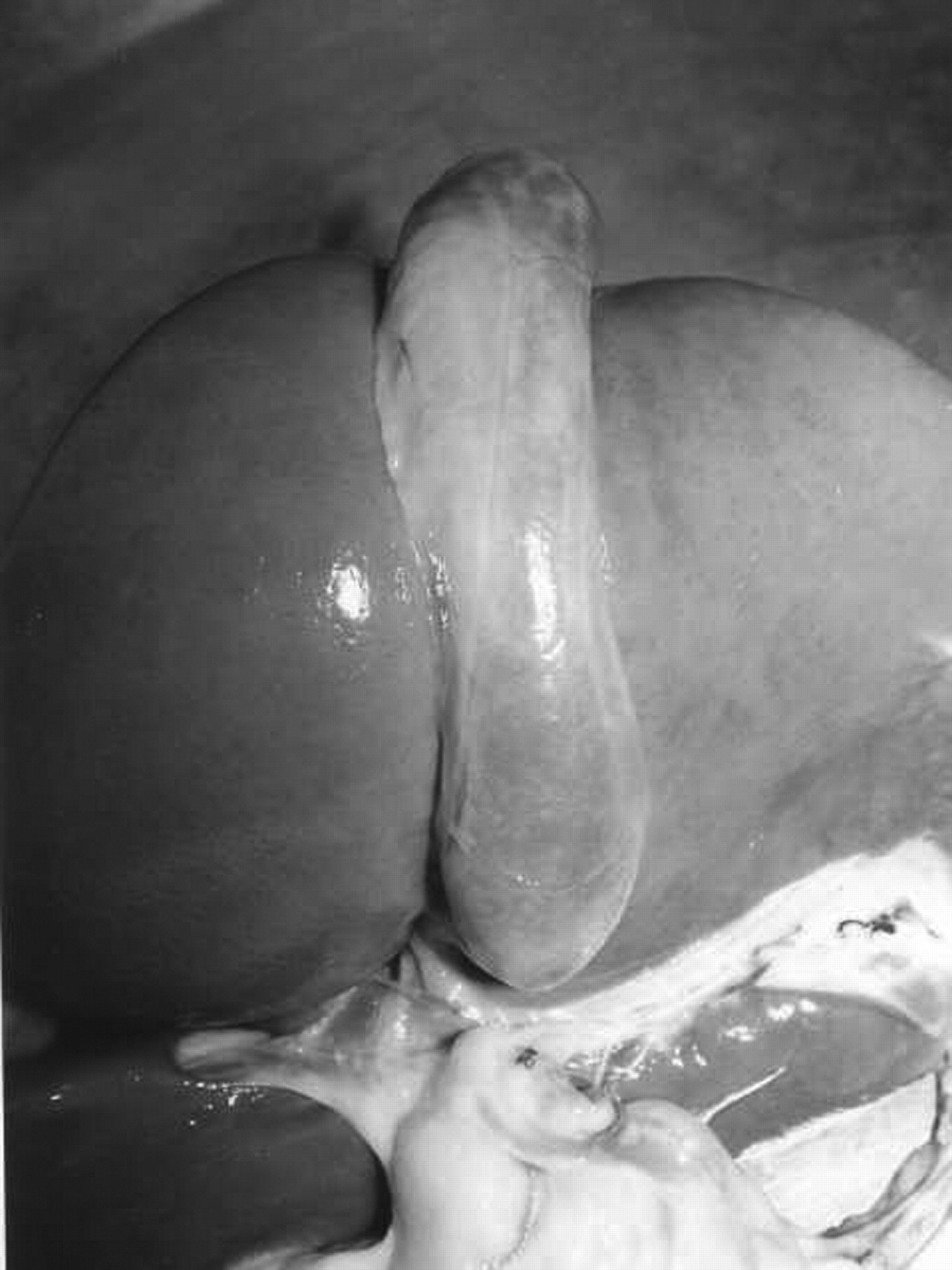
stacking one rupee coins of (local currency) on top of each other (Figure 2); shelling green peas without crushing them, in order to simulate dissection; specimens of liver with an intact gallbladder of sheep (Figure 3) were obtained from local abattoirs in order to simulate laparoscopic cholecystectomy. Finer points of the procedure were demonstrated during this phase; Endoknotting and endosuturing training was conducted on folded mackintosh sheets laid inside the carton (Figure 4). Stacking coins A liver with an attached gall bladder obtained from a local abattoir Endosuturing a tear in mackintosh sheet


The actual procedures were initially only conducted by the primary author (MIS) but as the other surgeons gained more experience they were allowed to handle the operation in the following phased manner:
removing the detached gallbladder from the abdomen either directly or in homemade endobags; dissecting the gallbladder from the liver; cutting the cystic duct and the cystic artery after it was clipped or ligated; dissecting omental or other adhesions in areas which were clear of any vital structure; trocar placement under vision; clipping the dissected cystic artery and cystic duct; posterior and anterior dissection in anatomically simple cases; Veress needle and first port insertion; endosuturing of the cystic duct and artery.
The primary author needed to supervise around 30 cases before the responsibility was able to be shouldered by the other surgeon. In this way, all the surgeons of the hospital were trained to perform basic laparoscopic surgery within a span of two to three months.
Complication rates and conversion rates noted in other reports were reduced by adhering to this phased training and now all the hospital surgeons are performing the procedures independently.
This training module can be employed by other rural hospitals to improve the skills of surgeons who are new to the art of endosurgery. The handmade endotrainer is inexpensive and disposable. It is easy to make using a 5% dextrose bottle cartons which are found in abundance in any hospital. Even a trained endosurgeon would find this to be an effective training tool for improving their psychomotor skills and dexterity of movement, especially for suturing in difficult areas. Other low cost box trainers have been used in India with good results. 1 Some authors have documented similar results with box trainers rather than the expensive virtual-reality simulators. 2,3 Surgeons learning on patients are courting disaster.