Abstract

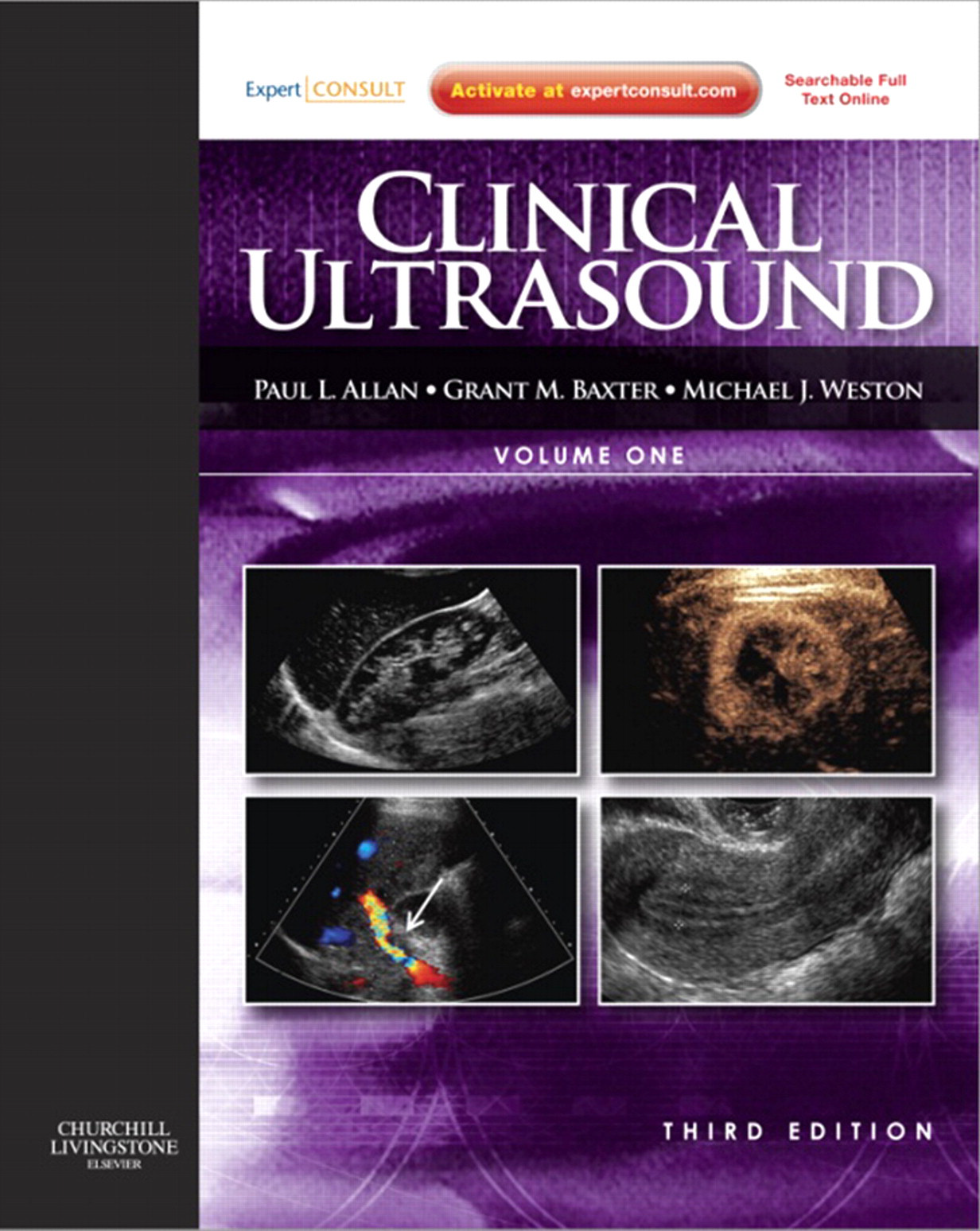
The first edition of this two-volume work was published in 1993 and was subtitled ‘Abdominal and General Ultrasound’. The editors were David Cosgrove, Hylton Meire and Keith Dewbury, assisted by Pat Farrant, who was promoted to co-editor for the 2nd edition in 2001. It was a seminal publication which differed significantly from any other multi-author textbook of radiology in that every individual contribution was scrupulously and unceremoniously edited (whatever the status or reputation of the contributing author) so that much of the text was re-written and re-organized. All illustrations were labelled with a standard system of orientation diagrams, and many scans were actually replaced by the editorial team in the interests of clarity – resulting in a hitherto unique uniformity of style and quality. The result was a work that deservedly became, and has remained, the standard reference work for all who use ultrasound in their clinical practice, not only in the UK, but also worldwide.
However, time (and ultrasound) have moved on. Those editors and many of the original contributors have now retired from active practice, and a new generation of ultrasound practitioners has emerged. The old fogies have stepped aside and the young tyros have taken over. In the twenty years since the chapters for the first edition were penned, radiology has changed dramatically and ultrasound technology has advanced immeasurably. A brave new team of editors (Paul Allan, Grant Baxter and Mike Weston) were persuaded to undertake the monumental task of producing a third edition that would not just update the previous versions, but would also address a much expanded range of applications for ultrasound, and at the same time maintain the high standards of their predecessors.
In achieving their task, the editors have coordinated an impressive array of new authors who have contributed comprehensive coverage of general ultrasound scanning in addition to specialized areas and a much expanded coverage of musculoskeletal and paediatric ultrasound. They have been ably assisted by section subeditors, Ian Beggs (musculoskeletal), David Pilling (paediatrics) and Norman McDicken (physics).
The editors and contributing authors are to be congratulated for producing a work that is a noble successor to the previous editions. Not only is there, in the words of the publishers, ‘authoritative coverage of the most recent advances and latest developments in cutting edge technologies’ but also all sections have been completely revised and brought up to date with extensive lists of references. Furthermore, there has been a determined effort to place the role of ultrasound in context with other radiological modalities such as computed tomography and magnetic resonance imaging.
Finally, a feature that certainly impressed this particular ‘old fogey’; all purchasers of the books are entitled to activate the title at
In summary, this work achieves all that the publishers and editors have set out to do. It will undoubtedly remain the standard reference work for all who use ultrasound in their clinical practice, and to repeat the words of Barry Goldberg who wrote the Foreword for the first edition, ‘this work should become a standard in every ultrasound library throughout the world’ – i.e. every department should have one.