



Abstract

To the Editor:
The presence of painful fissures or “polar hands” (see Figure) has been previously described in individuals who spend prolonged periods of time in Antarctica and at high altitudes in the Andes.1,2 These lesions tend to occur spontaneously in skin creases, nail beds, and the pulps of the fingers without evidence of local injury or infection. Treatment consists of bathing the affected areas in an antiseptic solution and applying a suitable cyanoacrylate “superglue” preparation. Fortunately, fissures tend to heal quickly and spontaneously in warm, sea-level conditions and leave minimal scarring.
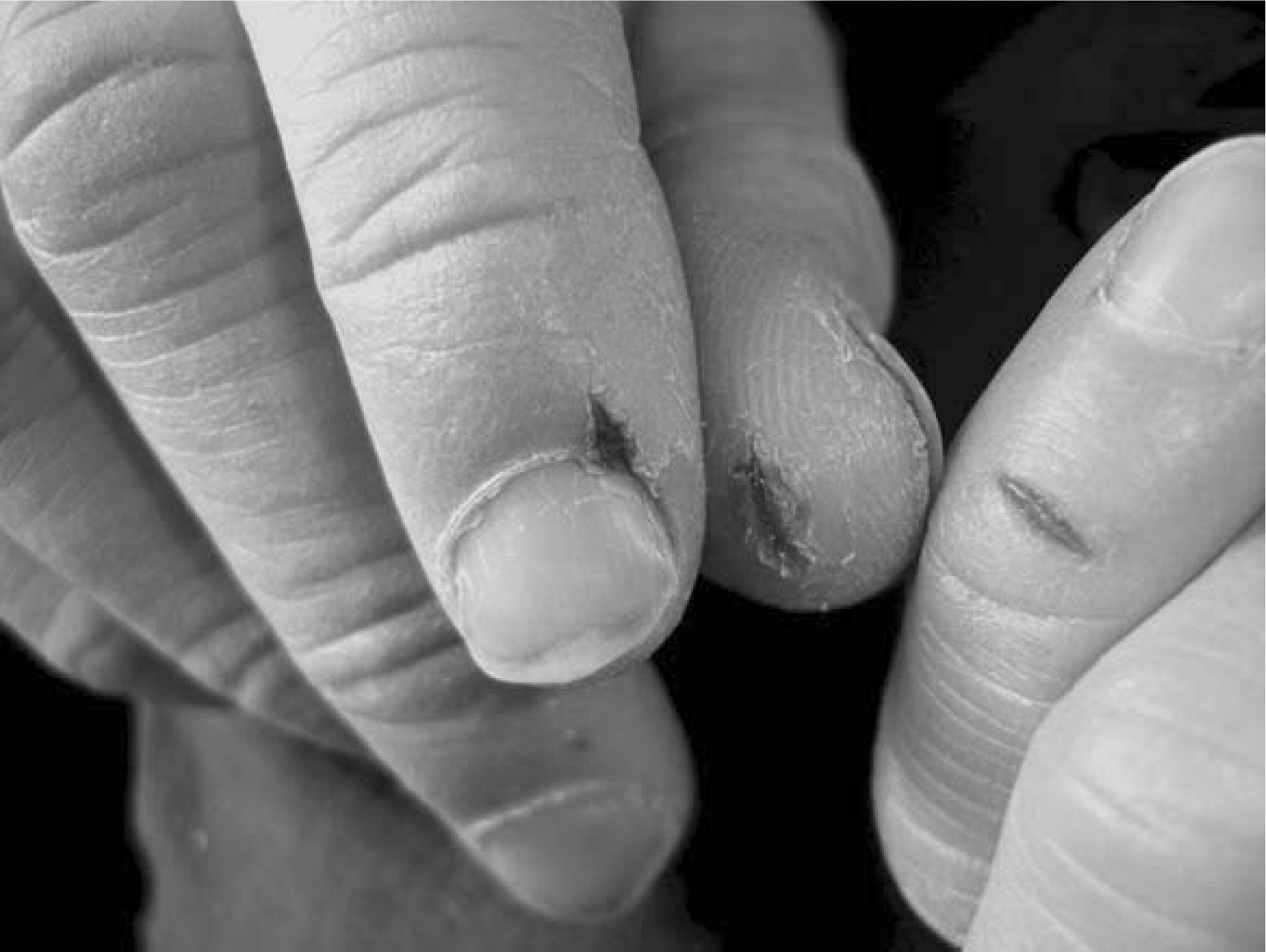
Polar hands
During the 2005 Anglo-Irish Cho Oyu Xtreme Everest Expedition ascent of Cho Oyu (8201 m), 7 climbers spent a minimum of 21 days above 4900 m and ascended to an altitude of at least 7100 m. Despite ideal conditions for these lesions to develop, extensive fissures were seen only in an otherwise healthy climber with well-controlled Type II diabetes mellitus. Throughout the expedition, the climber had been able to administer his normal medication (rosiglitazone 4 mg bid, glimepiride 4mg qd) and recorded blood sugar results that were consistent with those previously taken at home (4–9 mmol·L−1).
The pathophysiology that underlies the formation of these fissures is not clearly understood. However, at high altitude the human skin is exposed to a battery of environmental threats and physiological changes that may explain their formation. The presence of low levels of absolute humidity, enormous temperature fluctuations, and exposure to high concentrations of ultraviolet light can all inflict damage upon skin and cutaneous tissues. In addition, the presence of peripheral edema, which is commonly seen at altitude, can cause digits to swell and leave the overlying skin dry and distended. On ascent to altitude, marked physiological changes also occur that have significant effects upon tissue perfusion and nutrition. Under hypoxic conditions, arterioles vasoconstrict and venous compliance increases, causing a fall in blood flow to the skin. 2 This coincides with a significant shift in substrate utilization, with glucose being preferred to free fatty acids during exercise in acclimatized subjects at altitude. 3 This may be of particular significance to those with diabetes who are prescribed thiazolidinediones such as rosiglitazone, which inhibit free fatty acid mobilization and increase the disposal of glucose in muscles and other tissues. 4 Because their efficacy, like that of most oral hypoglycaemics, is unknown at altitude, the effective delivery of glucose to tissues may be compromised.
Clearly, this combination of insults and physiological changes has a number of implications for the growing population of persons with diabetes who venture into the mountains for work or recreation. Although our subject had no evidence of peripheral vascular disease or end-organ damage, the extensive dermal changes seen here might suggest that the interplay between the harsh environment and the subtle limitations in peripheral circulation and glucose utilization in diabetes mellitus may be contributing factors to this painful condition.