




Abstract
Dr. Edward B. Diethrich, a pioneer in endovascular surgery, discusses the evolution, maturation, and future of endovascular surgery from a personal perspective.
Keywords
THIS IS THE fourth and last of a series of interviews with pioneers in vascular surgery. The first, with Dr. Michael DeBakey, concerned Dr. Rudolph Matas. 1 These two pioneers provided a fascinating view into how vascular surgery was born. The second, with Dr. John Ochsner, discussed his childhood memories of giants in vascular surgery. 2 The third, with Dr. Frank J. Veith, looked at the need for the independence of vascular surgery as a distinct specialty. 3 To bring these topics full circle, Dr. Edward B. Diethrich discusses how vascular surgery has evolved into the modern era.
Vascular surgery has undergone a major paradigm shift. This change has been dramatic-a shift from all major procedures being done by “open” surgical techniques to most current procedures being done using “minimally invasive” techniques, so-called endovascular surgery (EVS).
The evolution of this change was subtle at first:
1920 Angiogram-Dos Santos 1953 Seldinger technique for vessel access 1963 Fogarty catheter-opened the door for endoluminal therapy 1969 Dotter's coaxial dilatation for arterial stenosis-ingenious but poorly received by most surgeons and limited primarily to interventional radiologists
These early developments led to more dramatic changes:
1970 Gruentzig: percutaneous transluminal angioplasty (PTA)-a more practical method for catheter-guided vessel dilation
A 15-year hiatus ensued, although a few surgeons embraced the technique. The reasons for the hiatus are not clear.
1985 Palmaz introduced stenting to complement PTA. This truly “lit the fuse” for the endovascular explosion.
1991 Parodi introduced the aortic endograft (stent graft). Interestingly, the proximal attachment system was a large Palmaz stent.
Now technology accelerated to accommodate these concepts.
By the late 1990s, all of the elements for advancement were in place. The “endovascular explosion” was now both audible and visible!
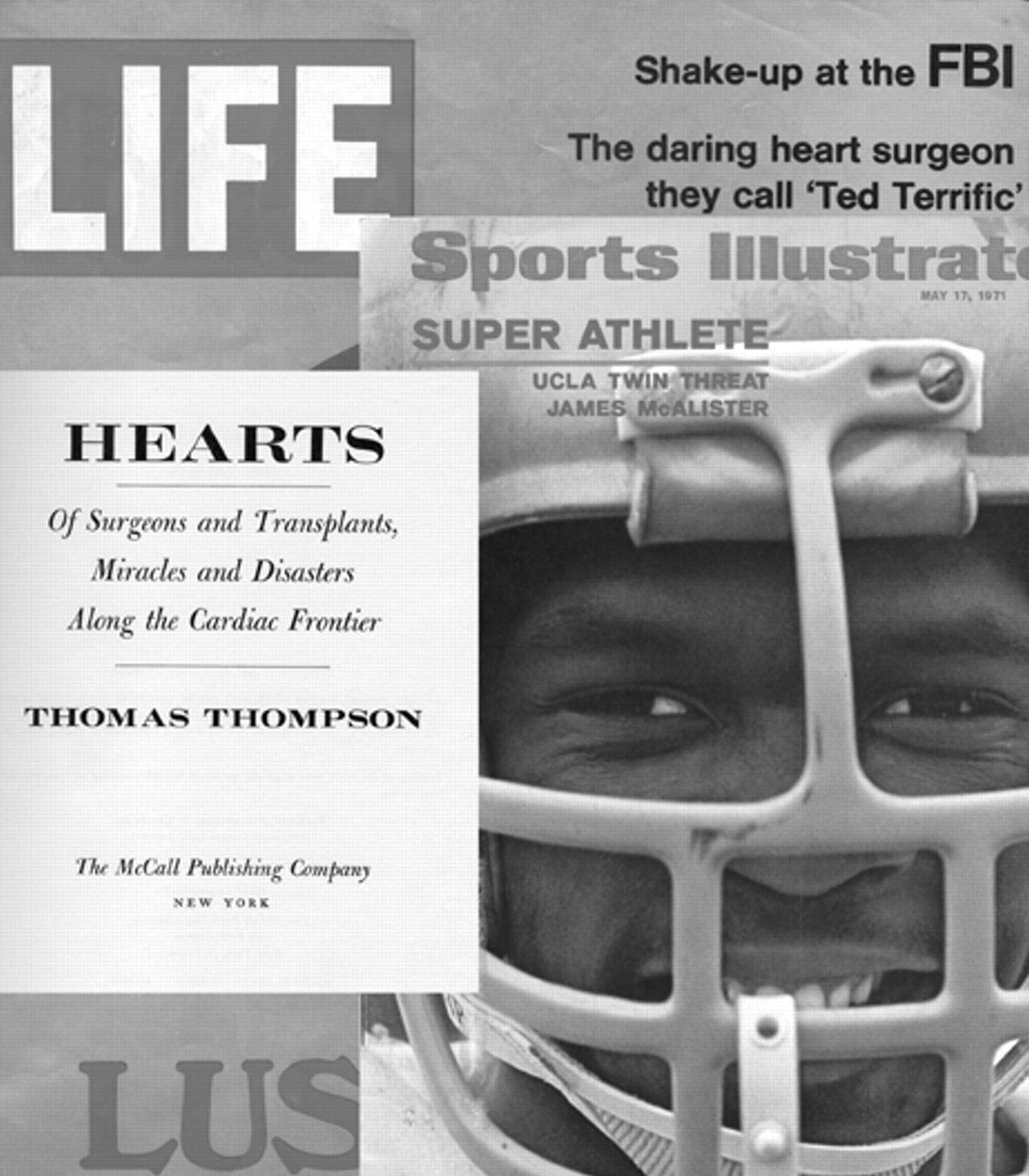
Of the surgeons who pioneered EVS, Dr. Ted Diethrich stands out. He underwent traditional general surgical and cardiovascular training at Michigan (St Joseph Mercy Hospital) and Houston (Baylor Department of Surgery), respectively. By the end of his time in Houston, he was recognized as an exceptional surgeon. Already a celebrated world-class athlete, 4 he was featured in a LIFE magazine article as “Ted Terrific” 5 and was the central character in the novel Hearts (Figure 1). 6
In 1971, Dr. Diethrich left the Baylor Department of Surgery program and founded the Arizona Heart Institute (AHI). By this time, he definitely marched to a “different drummer” and was no longer in the mainstream or traditional. He was more independent. The AHI was one of the first full-service cardiovascular facilities offering instruction in diet, exercise, and preventive risk assessment, in addition to cutting-edge therapy. The first outpatient cardiac catheterization laboratory was opened at the AHI, which everyone thought was dangerous and ridiculous; however, several decades later, this is the standard of care. He left the academic environment of a university setting yet continued a strong commitment to teaching: instruction of surgery residents and fellows, an annual noninvasive conference, founding of a surgical journal, and a unique endovascular conference. Dr. Diethrich was probably the first surgeon to recognize the use of marketing as a tool for patient education rather than a drawback for physicians. Throughout his career, he has been renowned for the generosity of his time and talents.
Interview
RTG: The “senior” vascular surgeons of the world want me to start our discussion with these questions: Has it really happened? Has EVS “taken over”? In the words of the late John Porter, what is the evidence? Is EVS the “real thing”?
EBD: The Endovascular Congress of 2006 in Phoenix definitely answered these questions. In the audience, we had world authorities from multiple disciplines (although heavily weighted toward surgeons), and we had the surgeons who had been most doubtful and critical over the years regarding EVS, particularly those from the United Kingdom. In my opening address, the metamorphosis of vascular surgery was discussed, which is what we are really talking about today. Think of the changes that have taken place over the past few years. Now everyone would accept doing an iliac PTA as routine and expected for an isolated iliac lesion. Over time, a real metamorphosis has occurred, and that is what I talked about in this recent address. So, to answer your question more directly, there is no question in my mind that EVS is the real thing. I could cite examples, the literature, and our own extensive experience and follow-up.
RTG: Are you as convinced about this as you were about a different way to open the sternum, ie, using an electric saw (which you designed) rather than a hammer and chisel?
EBD: Oh, absolutely!
RTG: Are you saying that everything you learned in Houston about traditional vascular surgery was wrong?
EBD: I wouldn't say everything that I learned in Houston was wrong. What I would say is that everything I learned in Houston gave me the foundation to do the things that followed. My 6-year experience at Baylor gave me the academic background, the clinical exposure, technical expertise, and the psychological equipment to move forward. Without that background, I could never have achieved what I have. Being at Baylor under Dr. DeBakey was a tremendous training opportunity.
RTG: Ted, why didn't you keep doing things the same traditional way? You were an exceptionally talented open surgeon.
EBD: When I left Houston and went to Phoenix, I didn't have the concept of EVS at that time. I did have the concept of intraoperative angiography, and that was a lucky thing. I also had the concept of more comprehensive evaluation and follow-up of patients. Dr. DeBakey wanted me to be a professor of surgery somewhere. Yet every place that I interviewed [sic], I knew that my desire to develop would be restricted. The main reason that I left was that I was frustrated by the surgical “machine shop” atmosphere. We were really good at it and obtained excellent results, but we were primarily technicians. There was no focus on follow-up, no focus on what was causing arterial disease, and no real concern about prevention. We would have patients who were heavy smokers and had cholesterols of more than 300, yet we shipped them back home as soon as their wounds were healed. I decided from the beginning to communicate more directly with patients. This, of course, was not a concept that was well received in Phoenix.
RTG: So how did you communicate more directly or market your concepts to patients?
EBD: In fact, there was some precedent in Houston. Dr. DeBakey and Dr. Cooley went to the press on a regular basis. I never had the idea that this was improper. I started a regular weekly television appearance to answer patients' questions that truly opened the door in Phoenix. That was probably the first of many efforts to improve patient education.
RTG: Why has EVS taken over when open procedures, such as carotid endarterectomy, abdominal aortic aneurysm resection, and aortofemoral bypass, are proven to be low mortality and durable?
EBD: The same way that EVS has had an impact on coronary bypass. There is a new trial starting called the Freedom Trial, which will look at a randomized series of coronary bypass operations versus coronary PTA and stenting in diabetic patients. They are having difficulty enrolling patients because if the choice is to have a percutaneous procedure (PTA/stent) versus having your chest opened for a coronary artery bypass, and the results would be equivalent, what would you pick? Similarly, when you discuss the management of carotid disease with a patient and offer an incision on the neck with an open repair versus correcting the problem with a small catheter through the groin, what would the patient invariably choose? The whole environment has changed from when we were in Houston where the physician made the decision for the patient. The majority of the time, the patients didn't really understand what we were doing. Today, patients walk in with the latest issue of a medical journal, USA TODAY with a medical article, something they've seen on a television show or CNN about the problem that they have, and they've been on the computer gathering information. Recently, I had a patient walk in who had a recurrent coarctation of the thoracic aorta carrying a brochure by W. L. Gore & Associates and said, “Dr. Diethrich, this is the device I want you to use!” This wasn't even in the United States; it was in a clinic in Italy! Incredible! So you see, this is worldwide. No longer are doctors telling patients what will be done. Patients are wiser, better informed, and have much more information about the available choices for treatment.
RTG: Are you saying that no more comparative trials are needed?
EBD: We do need trials for some things. But, for instance, the aortic aneurysm trials turned out not to be randomized trials. There were many huge mistakes in these trials. Everybody refers to EVAR I, EVAR II, and DREAM, suggesting that they are definitive. I reviewed the origins of these studies and clearly they are flawed, and yet even now government agencies are looking at these studies and using them as scientific bases for reimbursement in Europe. The same thing will happen in the United States. So not all trials are constructive.
RTG: Let's talk about the advantages and disadvantages of EVS. Several years ago you wrote: “…a minimal incision, limited potential for complications, short hospitalization, and rapid recovery are obvious advantages.” Do you still feel the same way, and what do you see as disadvantages?
EBD: Yes, I still feel the same way about the advantages. The disadvantages are that there are some arterial systems, particularly below the groin, where endovascular procedures do not have the same longevity of success as standard open bypass. With the aorta, iliac segments, renals, subclavian, and virtually everywhere else, EVS is comparable and, in some situations, actually better.
RTG: I am still mystified as to the hemodynamics of EVS. Would you give us your ideas as to how such a disruptive maneuver can be therapeutic? How can mashing, tearing, and crushing the intima be a good thing? It is irrational. How can putting a metal trellis inside a blood vessel be good?
EBD: You are correct; it cannot work if you simply leave the vessel “torn up.” That's why the development of the stent by Julio Palmaz was such a major breakthrough. If you critically look at how EVS became successful, the emergence of the stent was it. A good example is what happened a few days ago at our Congress meeting in Phoenix. Generally during the Congress, we close the heart rooms so everyone can attend the meeting. Well, a patient with a history of irradiation needed a percutaneous transluminal coronary angioplasty (PTCA), but they didn't proceed because an operating room for backup was not available. I was joking with the physicians involved and said that we have not delayed a PTCA for lack of a backup operating room since the Palmaz stent was invented! PTCA with a stent is quite successful today, yet before the stent era, there was rarely a day when a simple PTCA did not fail and require a coronary artery bypass. Now leapfrog to modern times. I think we are entering into the era of bioconvergence. Now we are putting in drug-eluting stents, and even biodegradable stents are being developed. These things are going to do nothing but further advance endovascular technology.
RTG: Early attempts at endovascular therapy failed miserably, such as laser atherectomy. Why weren't you discouraged by this?
EBD: In fact, I was very discouraged. The first time I saw a hot-tipped laser was with Rod White at UCLA, where he was teaching a course. I was quite excited by this and took it back to Phoenix, where we could do it very easily because we already had the ceiling-mounted C-arm from Germany. In fact, the first Congress was essentially focused on laser technology. But 6 months out, it was obvious that laser atherectomy was not working for any length of time. Recurrent disease was overwhelming. But what this experience did was to point out that there were opportunities to work from inside the blood vessel rather than only from the outside in. It was just that laser was not the answer therapeutically. Fortunately, other things came along quickly, or perhaps I would have been more discouraged. As it happened, from this early experience, we moved easily into thrombolysis, atherectomy, and, finally, into stent technology, particularly using the covered stent. I saw a patient yesterday who is 1 year out from placement of a covered stent in the femoral-popliteal segment who was studied by duplex scan, and it looks perfect. It looks like the day I put it in. So now we have combined fabrics or grafts with the stent. Amazing! This is real progress.
RTG: Who influenced you in EVS?
EBD: No one.
RTG: Really?
EBD: No one. Early on, I never really had a conversation with anyone about this. I made my own decisions. Now I did see the laser technology and then combined that with our own operating room fluoroscopic potential, which, at that time, seemed like such a natural.
RTG: You saw the future very clearly 30 years ago when you left Houston to go to Phoenix to develop the AHI. Leapfrog to the present: how do you see the future of EVS?
EBD: I think EVS will change. It will continue to evolve. The metamorphosis is not complete. Biotechnology is going to influence us in every aspect of how we take care of patients.
RTG: When you look back at your time in Houston, do you think open procedures had reached a plateau about the time that you left?
EBD: Not really, because Crawford subsequently developed the approach to thoracoabdominal aneurysms after I left. A number of things happened and progressed in classical vascular surgery, so that's not truly an accurate assessment. But, overall, open vascular surgery stayed in “drive” and EVS went into “overdrive” and is still on the rise. Today, things like drug-eluting stents, biodegradable stents, and many other devices and developments are moving EVS at a very rapid pace.
In the next 10 years, EVS will be influenced in the same way that classical open vascular surgery was influenced in the past. By what? EVS will plateau when biotechnology reaches the point where changes will be enormous. At the GPC (Gene Protein Cell) meeting that immediately preceded the Congress, Doris Taylor gave a paper on genes to affect atherosclerosis. That is going to happen. A gene to retard it, a gene to dissolve it, a gene to accelerate it. This is not witchcraft. These advances in biotechnology will happen in the next decade, although clinical application may not be complete by then. The area of bioscience regarding genes and cells is going to affect everything we do. An example would be the patient who comes in with an asymptomatic 70% carotid plaque; today, someone will say to treat that plaque. Suppose there is another patient with a 40% plaque. You decide to follow both patients without intervention, and the patient with the 40% lesion has a stroke and the 70% lesion remains asymptomatic. I believe that our whole reasoning about carotid disease is flawed. We have been focused on the stenosis, not on the morphology and histology of the offending plaque. With coronary disease, all we hear about today is inflammation. Currently, we have a Food and Drug Administration–approved study to look at plaques with the Volcano IVUS in real time. With this device, we can look at the histology of the plaque in these arteries. Already we can see different types of plaque, such as the fibrous plaque, heavily calcific, and the necrotic plaque, which is the most dangerous. There are two arms to this study: one is endarterectomy and the other is stenting. With the endarterectomy patients, the plaque is sent for thorough histological study. The next step is to look at the genetic makeup. Look at the markers. The patient with the active 40% lesion that causes a stroke is going to have a different genetic makeup and a different histology. We are going to reach the point soon that with a couple of cc's of drawn blood to study, we can sit down with the patient with a 40% carotid lesion and advise them proactively that they have the genetic makeup such that their particular plaque is dangerous and could embolize. Now consider idiopathic subaortic stenosis. There is a known genetic pattern here. Would you believe that I have a large number of patients (seven), all in the same family, who have thoracic outlet syndrome? We had them studied, and it's all genetic. Everything in the future is going to be based on genetic patterns and profiles. This information will guide both diagnosis and treatment. The point is that everyone with a carotid lesion does not need a stent or an endarterectomy. Thus, we will become much more selective in our treatment, tailoring management to the individual patient's needs and being able to predict prognosis more accurately. This is exciting!
RTG: Who do you see dominating the field of EVS in the future? Will it be vascular surgery, cardiology, or radiology?
EBD: Actually, it should be none of these, if I had my way. I would like to see a vascular specialist arise who has wide-ranging skills in four component areas; you must have surgical skills, you must be an expert in catheter-based technology, you must have expertise in imaging (which is moving at lightning speed), and you must have extensive knowledge in bioscience (genomics, proteomics, and cellular biology). But where can you go to get this type of training? There is no place to go at the moment; but somehow, in my view, we must train the vascular specialist of the future now!
RTG: What advice do you have for young vascular surgeons just finishing their training and entering practice?
EBD: The most important lesson is to keep an open mind. Never be like your predecessors, who felt that they knew everything and that there was only one way to do things and who always followed the text book. That's how we grew up, isn't it, with a very rigid approach.
RTG: Although you are certainly not an elder statesman, you are not a novice anymore. And yet you have remained open minded. How have you done this, despite the many disappointments that we all encounter?
EBD: Well, it's hard to discourage me. Even in desperate situations, I usually find a way out. Honestly, I think that it is just my personality, perhaps my genetic makeup! Seriously, I've always looked to new frontiers; how can you do it better? You must be committed. For example, new studies show that statins can reduce the incidence of restenosis after carotid endarterectomy. Yet how many vascular surgeons today do that? They were trained 35 years ago to “cut it out, sew it up, and send them home.” They are limited by being only a surgeon. A true vascular specialist of the future would always offer more comprehensive care.
RTG: Dr. Diethrich, this has been a fascinating and candid discussion. Thank you.
Footnotes
Acknowledgments
Pursuit of this project was encouraged by W. L. Gore & Associates, which provided the hotel room where this interview was conducted. The editorial assistance from Elizabeth Gregory is gratefully acknowledged.