




Abstract
Endovascular interventions of symptomatic deep venous thrombosis (DVT) using various therapeutic modalities, such as thrombolysis, mechanical thrombectomy, and inferior vena cava (IVC) filter placement, have received increased focus owing in part to advances in catheter-based interventional technologies. Although systemic anticoagulation remains the primary treatment modality in DVT, catheter-based interventions can provide rapid removal of large thrombus burden and possibly preserve venous valvular function in patients with symptomatic DVT. This article reviews current endovascular treatment strategies for acute DVT. Specifically, the utility of mechanical thrombectomy along with various temporary IVC filters in the setting of DVT is examined. Lastly, an illustrative case of acute DVT that was treated with endovascular intervention with IVC filter placement is presented.
Keywords
The incidence of deep venous thrombosis (DVT) is estimated to affect 48 per 100,000 persons annually in large epidemiologic studies, with an in-hospital case-fatality rate from complications of thromboembolism at 12%. 1 Thus, 300,000 hospitalizations per year in the United States can be directly attributed to venous thrombotic disease, with studies reporting as many as 90% of patients traditionally admitted to the hospital. 2,3 It is also estimated that DVT affects 20 to 30% of all major surgical patients and, as a result of pulmonary embolism (PE), is responsible for more than 60,000 deaths annually in this country. 1,3 Venous thromboembolic disease, both DVT and PE, is an underdiagnosed medical problem that frequently results in high rates of severe morbidity and mortality. Most studies cite inadequate venous thromboprophylaxis in surgical and medical patients as a causative factor in DVT and PE. Regardless, the occurrence of PE and DVT alone can negatively impact patient outcomes and increase health care costs. Patients with multiple venous segment involvement, particularly in the iliofemoral veins, or with extension of a calf vein DVT are among those most frequently hospitalized for treatment.
Endovascular interventions of acute DVT using various therapeutic modalities, such as thrombolysis, mechanical thrombectomy, and inferior vena cava (IVC) filter placement, have received increased focus among health care providers in the past decade, a phenomenon that is possibly fueled by several factors. A significant advance has taken place in the current medical management of DVT as the pharmaceutical industry has developed many effective and convenient outpatient medications using low-molecular-weight heparin in the treatment of acute DVT. This has generally resulted in improved patient compliance and reduced hospitalization compared with conventional intravenous heparin anticoagulation. The improvement in the medical therapy has also heightened the awareness of primary care physicians and the general public regarding the clinical sequelae of DVT. As a result, patients with symptomatic venous thromboembolism are more likely to be referred to physicians for therapeutic interventions. In addition, the rapid evolution of catheter-based interventions has increased the available armamentarium for interventionalists to remove thrombus and maintain venous patency in acute DVT. Many researchers have demonstrated the effectiveness of thrombolytic therapy or mechanical thrombectomy in acute iliofemoral DVT, with excellent long-term outcomes. 4,5 Lastly, recent advances in IVC filter technology, particularly with temporary IVC filters, have provided greater treatment options in DVT management and PE prevention.
The indications of venous thrombolysis in acute DVT and the ideal thrombolytic agent of choice have been a subject of debate. Although anticoagulation is effective in preventing PE, many patients go on to suffer the consequences of post-thrombotic syndrome, which is a chronic sequela of DVT, with resultant valvular insufficiency of the lower extremity. It is well documented that lytic therapy leads to a more rapid and complete dissolution of the clot compared with heparin treatment alone. 5–8 Complete clot dissolution was observed in 35% of those undergoing lysis versus 4% of those treated with heparin alone. The concept of early venous thrombolysis has been promoted by the Iliofemoral Venous Thrombosis Registry. 9 This is a multicenter registry designed to determine the role of catheter-directed thrombolysis in the treatment of DVT compared with systemic heparin anticoagulation. The study found no differences in mortality or in the incidence of PE between the two groups, although bleeding complications were seen in 17% of the lytic group and 4% of the heparin-treated group. Patients with successful catheter-directed thrombolysis (complete and partial lytic success) versus those treated with anticoagulation alone derived significant benefit in terms of improvement in quality of life.
Despite these studies demonstrating the improved treatment efficacy of thrombolysis compared with systemic anticoagulation, the ideal treatment strategy for symptomatic DVT remains to be defined. Although the occlusive effects of DVT can quickly and effectively be treated with thrombolytic therapy, bleeding complications are significantly increased. Whether lytic therapy lessens the destructive effects of DVT on valve function and leads to a significantly improved clinical outcome is the crucial question that remains to be answered.
Endovascular management using percutaneous mechanical thrombectomy (PMT) alone or in combination with pharmacologic thrombolytic agents has recently received much attention in the literature as a safe and effective means for the treatment of acute DVT. 4,10 Along with possible preservation of venous valve function, this treatment strategy also permits simultaneous correction of inciting anatomic lesions, such as iliac vein stenosis. IVC filter placement is beneficial during the mechanical thrombectomy procedure owing in part to the device-related fragmentation of iliofemoral thrombus, which could potentially result in PE. In this article, endovascular treatment strategies for acute DVT are discussed. Specifically, the utility of mechanical thrombectomy along with various temporary IVC filters in the setting of DVT is examined. Lastly, an illustrative case of acute DVT that was treated with endovascular intervention with IVC filter placement is presented.
Endovascular Treatment Modalities of Acute DVT
Endovascular treatment of acute DVT should be considered in patients who present with symptomatic acute iliofemoral DVT or persistent swelling despite appropriate medical therapy, including systemic anticoagulation and bed rest with leg elevation. Thorough venous duplex ultrasonography is imperative to document the severity or progression of the iliofemoral DVT. Although the efficacy of thrombolytic therapy in acute iliofemoral DVT has been described, this article focuses on an endovascular treatment modality using mechanical thrombectomy and a temporary IVC filter protection.
Percutaneous Mechanical Thrombectomy
Although a variety of PMT devices can be used to remove thrombus burden in acute DVT, the discussion of this article focuses on the AngioJet (Possis Medical Inc, Minneapolis, MN) PMT system. The treatment of symptomatic acute iliofemoral DVT in our clinical practice largely relies on the AngioJet thrombectomy system. 10 Concomitantly, we routinely place a temporary IVC filter to reduce procedure-related PE during AngioJet mechanical thrombectomy. 11 Following the completion of the therapy or resolution of the DVT symptoms, the IVC filter is electively removed.
Relief of clot burden by directly extracting thrombus either mechanically or pharmacologically at least theoretically decreases the risk of PE and that of post-thrombotic syndrome, resulting in manifestations of chronic venous insufficiency. Primarily because of the bleeding risks of catheter-directed thrombolysis, PMT has emerged as an advantageous option for the treatment of acute DVT. The principle of the AngioJet rheolytic thrombectomy system is based on the Venturi effect, which creates rapidly flowing saline jets that are directed backward from the tip of the device to outflow channels in a coaxial fashion. This generates a vacuum force, which draws the thrombus into the catheter. One major advantage of this percutaneous treatment modality is that the thrombectomy catheter can be delivered through a small-bore introducer sheath, which reduces access-site trauma and avoids the operative venous exposure required with the conventional Fogarty thromboembolectomy.
The AngioJet thrombectomy system consists of three components: a single-use catheter, a single-use pump set, and a pump drive unit. The 6F DVX catheter has a working length of 90 cm, is introduced via a percutaneous approach (6F sheath), and operates over a 0.035-inch guidewire. The drive unit or pump generates a high-pressure (≅10,000 psi) pulsatile saline flow that exits the catheter tip through multiple retrograde-directed jets. These high-velocity jets create a localized low-pressure zone, in accordance with the Bernoulli effect, for thrombus aspiration and maceration. The jets also provide the driving force for evacuation of thrombus particulate debris through the catheter. The AngioJet system works in an isovolumetric manner: the saline infusion flow rate (60 cc/min) is in balance with the evacuation rate of thrombus particulate debris.
A clinical study that evaluated the efficacy of the AngioJet system has demonstrated that such a mechanical thrombectomy system is effective in thrombus removal, venous patency restoration and maintenance, and symptom relief. 4 The AngioJet rheolytic thrombectomy system is designed to produce an area of extremely low pressure at the catheter tip by controlled high-velocity saline jets. Via this mechanism, thrombus surrounding the catheter tip is macerated and rapidly evacuated via an effluent lumen into a collection chamber. In this study, only 4 (23.5%) patients achieved > 90% thrombus clearance with PMT alone. Adjunctive thrombolytic agents were used in 9 of 17 patients, those who had a lesser amount of clot extracted with the use of the PMT catheter. Often the thrombolytic catheter was left in place and the average duration of lytic therapy was 20.2 hours. Clinical symptomatic improvement was seen in 82% over a follow-up time frame of 11 months.
Retrievable IVC Filter Placement in Acute DVT Management
Owing in part to the concerns regarding the long-term safety of permanent IVC filters in patients of young age and clinical interest in patients who have a short-term need of PE prophylaxis, there has been a surge in the clinical interest of using retrievable IVC filters to provide temporary protection against PE. There are two varieties of nonpermanent filters: temporary and retrievable. A temporary IVC filter generally describes devices that remain attached to an accessible wire or transcutaneous catheter, so removal of the filter is feasible and required. The potential disadvantages of these temporary filters are the necessity of device removal after a certain time period and the risk of infection. In contrast, retrievable IVC filters are designed similarly to conventional permanent filters but with modifications to the caval attachment sites, which allow retrieval using a snare or specially designed filter grasper. The potential advantage is that the filter can be retrieved at a later stage or left in place permanently. In other words, they are also called optional filters as they have the option to be retrieved or to remain in place permanently. Undoubtedly, the ability to safely remove these devices depends on accurate evaluation of the thromboembolic risks for the patient before filter retrieval is performed.
Several types of retrievable IVC filters recently received approval from the US Food and Drug Administration for clinical application. As a result, prophylaxis for PE prevention with a retrievable IVC filter during endovascular venous intervention has become the widely expanded indication for the use of temporary IVC filters. 12–14 Table 1 lists the categorical indications for IVC filter placement as published by the Vena Caval Filter Consensus Conference in 2003. 15 The commonly accepted indications for the use of IVC filters are those with documented venous thromboembolism, in particular, proximal occlusion that also has active bleeding, and those with contraindications to anticoagulation therapy. Additional indications include patients with recurrent PE despite anticoagulant therapy or patients with a long-term predisposition to PE (as an alternative to lifelong therapy). It is noteworthy that filter insertion as an adjunctive measure for PE prevention during a thrombectomy or thrombolytic therapy was regarded as a clinical indication.
Indications for Inferior Vena Cava Filter Placement*
DVT = deep venous thrombosis; PE = pulmonary embolus.
*Reported by the participants in the Vena Caval Filter Consensus Conference in 2003. 15
The efficacy of IVC filter placement during acute DVT management by means of either catheter-directed thrombolysis or thrombectomy has been reported in several clinical reports. 14,16 Thery and colleagues reported their experience with implantation of temporary vena cava filters in 132 patients with lower extremity DVT who were receiving thrombolytic therapy. 16 The authors reported the presence of thrombus in the IVC filter following thrombolytic therapy in 41 (31%) of the 132 patients. Specifically, such an observation was made in 21 of 63 cases with partially occlusive iliofemoral DVT and in 20 of 69 cases with occlusive DVT. No PE occurred among the 132 patients. This study showed that the IVC filter was efficacious in preventing PE during thrombolytic treatment in at least 41 of these patients, if not all 132 patients. In our clinical experience of patients who underwent retrievable IVC filter placement during a mechanical thrombectomy procedure, radiographic visible thrombus within the IVC filter was observed in 40% patients immediately following the thrombectomy procedure. 11 IVC filters were retrieved only when no visible thrombus was noted within the filter at the completion of the thrombectomy procedure or a subsequent venogram at a later date.
Retrievable IVC filters may be left in place indefinitely and can serve as a permanent caval filter. Alternatively, they may be retrieved, depending on the indication. If temporary filter retrieval is indicated, it should be performed within several weeks following implantation via the internal jugular or femoral approach. The ideal timing of filter removal remains elusive, which depends on the filter designs and clinical indication of filter placement. The process of caval filter retrieval is accomplished by using a snare or grasper to anchor the end of the retrieval filter, which is then collapsed by advancing the sheath and withdrawn. The main concern with delayed caval filter removal is the development of endothelialization in the vena cava, which can incorporate the filter into the caval wall endothelium, thus making retrieval impossible without injuring the native vessel or possibly even causing dissection or perforation. Burbridge and colleagues recently demonstrated that endothelialization can develop in as soon as 2 weeks following IVC filter placement. 17 Whereas some reports state that some of these filters have been retrieved successfully more than 150 days after their implantation, 18,19 other reports emphasize the fact that the longer the filter is left in, the more difficult and less successful the retrieval process is. They also state that the maximum time allowable before retrieval needs more studies to be well defined. 20 After all that being said, it is well known from different studies that only less than 50% of retrievable filters are actually retrieved and the rest are being treated as permanent filters depending on the indication of their placement. 21,22
Currently Available Retrievable IVC Filters
Currently, several IVC filters can be used either permanently or temporarily with subsequent retrieval for PE prevention. If these filters are left in place, they function as a permanent IVC filter. Alternatively, these filters may be retrieved once the duration of PE prophylaxis has been achieved. In other words, they are also called optional filters as they have the option of being left permanently or retrieved when indicated. Three retrievable filters have been approved for use by the FDA: Günther Tulip filters (Cook Inc., Bloomington, IN), OPTEASE filters (Cordis Endovascular, Warren, NJ), and the G2, which replaced its predecessor, the Recovery Nitinol filters (Bard Peripheral Vascular, Tempe, AZ).
Günther Tulip Filter
The Günther Tulip Filter is a retrievable filter that is constructed of nonmagnetic metal. This filter can be inserted from either femoral or jugular venous access. The filter has the shape of a half-basket with four centering wirings extending outside the basket and a curvature designed to follow the IVC wall. The filter can be deployed through a jugular or a femoral approach with a delivery system that is 7F for the jugular and 8.5F for the femoral approach. A retrieval hook is located at the apex of the filter, which allows percutaneous retrieval. To retrieve this filter, a retrieval snare in an 11F sheath is used from the right jugular site. The manufacturer recommends that the filter be removed within 10 days of implantation. In a multicenter registry, Millward and colleagues reported on 90 patients who underwent implantation with 91 Günther Tulip filters. 23 Retrieval of 53 filters had been attempted between 2 and 25 days, and 52 filters were successfully retrieved from 51 patients. The incidence of filter occlusion was 5%, and no other complications occurred. 23
G2 Filter
The G2 Filter is a retrievable filter made of nitinol. It replaced the previous Recovery Nitinol Filter (Bard), which had problems with IVC fixation and reports of migration proximally. It is identical to the previous Recovery Nitinol Filter except some dimensional differences, which help IVC fixation of the filter. The G2 Filter is composed of 12 nitinol wires that extend from a nitinol sleeve. It contains six arms and six legs. This gives the filter a self-centering design with dual-level filtration. The filter is intended for use for an IVC that is less than 28 mm in diameter and can be deployed from the jugular or femoral approach through a 7F delivery system. The filter measures 41 mm in height. At the apex of each filter is a docking device that allows for retrieval. Retrieval is achieved using a specially designed urethane-covered retrieval cone via the jugular approach. Animal studies demonstrated that the Recovery filter can be safely retrieved up to 12 weeks following insertion, which should also be the same for the G2 Filter. 24
OPTEASE Filter
The OPTEASE Filter is a retrievable filter based on the design of an earlier permanent version of the TRAPEASE Filter (Cordis Endovascular), which has a unique self-centering design that provides dual-level filtration. Similar to the TRAPEASE permanent IVC filter, the OPTEASE retrievable filter is made from a single nitinol metal tube and has a double-basket design with six straight struts connecting the proximal and distal baskets. In contrast to the symmetric TRAPEASE Filter, the OPTEASE Filter has a set of six fixation barbs to prevent cranial migration at the cranial end of the filter instead of at the caudal end (Figure 1). Furthermore, a hook is located at the caudal end of the OPTEASE Filter to allow retrieval with an endovascular snare. The OPTEASE can be deployed from the femoral, brachial, or jugular venous approach through a 6F delivery system. It is the only retrievable filter that can be recovered from a femoral approach. In contrast to the Recovery Nitinol Filter or Günther Tulip Filter, the retrieval of the OPTEASE filter only requires a 10F guiding catheter. One benefit of using the femoral approach over the jugular approach during retrieval is the avoidance of passage of the retrieval sheath through the heart, which would lessen the potential for myocardial injury or arrhythmia. Another advantage of the femoral retrieval approach is that the filter can be removed through the same femoral or popliteal venous access site following the completion of iliofemoral thrombectomy or thrombolysis for DVT intervention. Rosenthal and colleagues published their experience with 40 OPTEASE filters in 40 patients and reported that all 40 were successfully retrieved up to 48 days after implantation and that there was no symptomatic PE, IVC injury or bleeding, filter fracture, or migration in any of their cases. 25
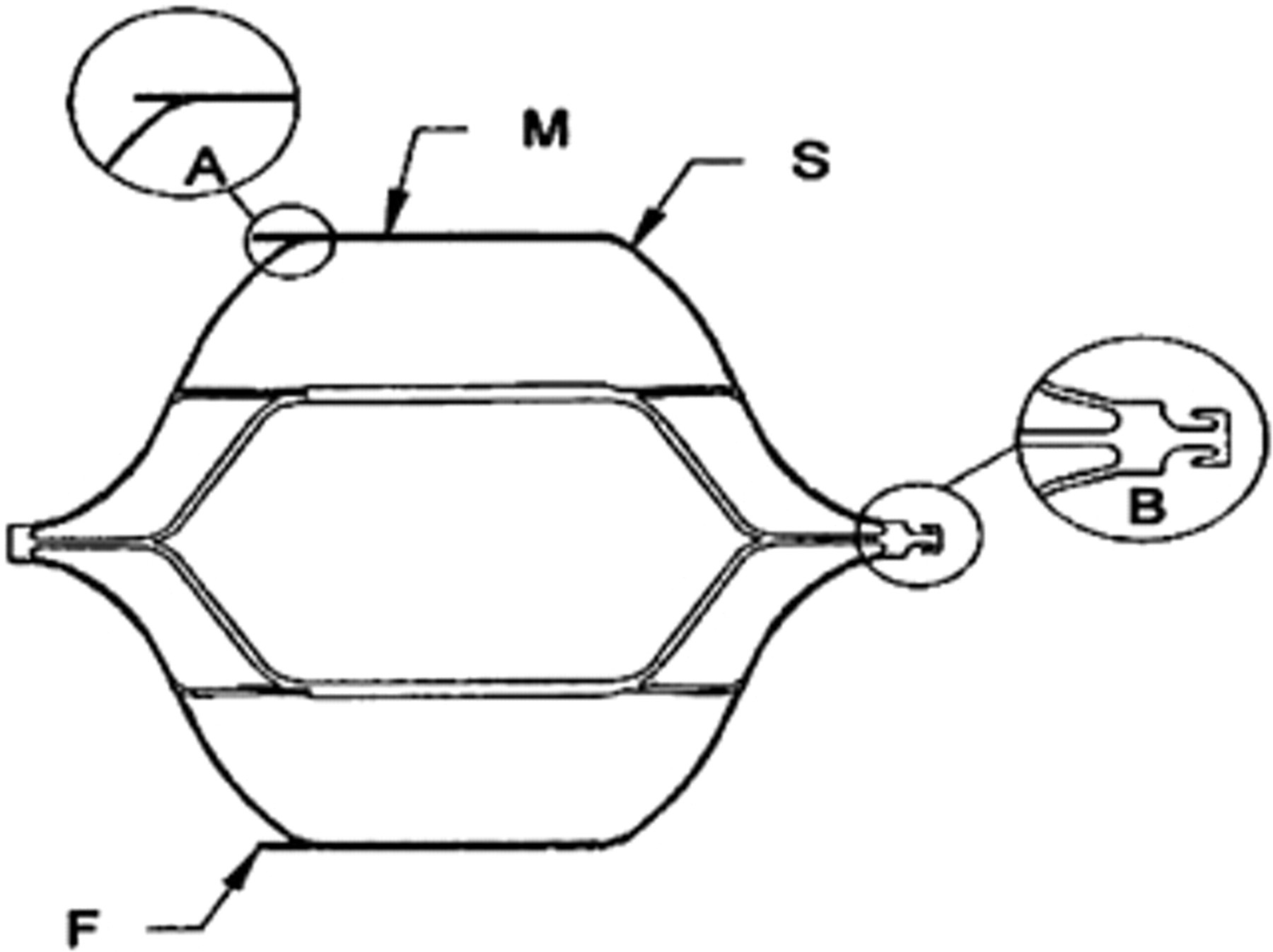
Schematic depiction of the OPTEASE Filter. The T-shaped retrieval hook is located on the caudal apex of the filter. The fixation barbs are extensions of the cephalic end of the filter side struts. (Inset: Enlargement of the fixation barb (A); T-shaped retrieval hook (B). F = fixation barb; M = the midstrut section of the filter side strut; S = filter shoulder.
Illustrative Case Study
The following case study illustrates the endovascular management of an acute iliofemoral DVT using mechanical thrombectomy and a retrievable IVC filter. A 53-year-old male presented to the emergency room with a 2-day history of left lower leg swelling. He underwent an 8-hour transatlantic flight 4 days earlier. He complained of significant swelling of the left calf and thigh, which was warm to touch. He also described severe lower leg pain, which was worsened with ambulation. He had no significant medical history and was not on any medication. He also denied any trauma to his lower extremity. Physical examination revealed marked swelling of the left lower extremity involving the calf and the thigh, which were tender to touch (Figure 2). Although the calf was soft to touch, it became painful with both passive and active dorsiflexion of the foot. The right lower leg was unremarkable in its appearance and examination.
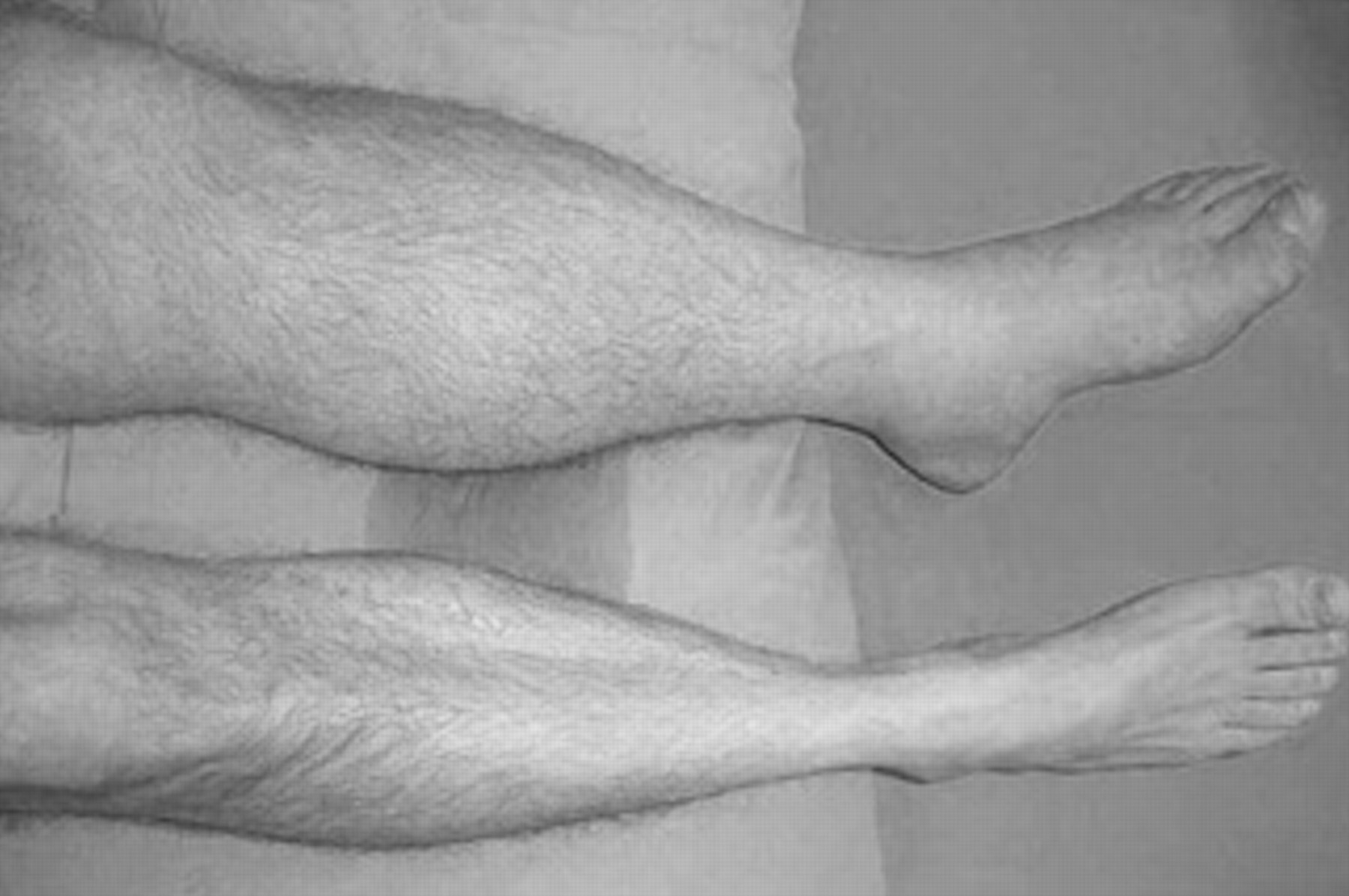
Significant left lower swelling caused by an acute iliofemoral deep venous thrombosis.
Diagnostic Evaluation
Venous duplex ultrasonography was undertaken of the lower extremities. There was a large echolucent density in the left common femoral vein that was noncompressible and was consistent with acute DVT. There was a complete venous occlusion with venous thrombus extending proximally to the external and common iliac veins and distally to the superficial femoral and popliteal veins. Doppler signals showed absence of normal phasic flow, which was consistent with venous occlusion. Based on the venous duplex sonogram, the diagnosis of acute left iliofemoral DVT was made.
Treatment Approach
Because of the marked leg swelling and constant pain in our patient, treatment to remove the DVT and restore iliofemoral venous flow was indicated. The treatment approach included initial placement of an OPTEASE IVC filter from the right femoral vein approach, which was performed in a supine position. This was accomplished by accessing the right femoral vein percutaneously in which the OPTEASE filter was inserted through the 6F delivery system in the infrarenal IVC. The OPTEASE filter was chosen because it would provide protection against PE during mechanical iliofemoral thrombectomy. In addition, the OPTEASE filter would allow retrieval from either a femoral or popliteal venous approach, if necessary, at the completion of a mechanical thrombectomy procedure. Following the OPTEASE filter insertion, the patient was placed in a prone position in which the left popliteal fossa was next prepared and draped sterilely. Under ultrasound guidance, the left popliteal vein was percutaneously cannulated using a Micropuncture needle (Boston Scientific, Natick, MA). A 6F introducer sheath (Boston Scientific) was placed over a guidewire into the popliteal vein. An initial venogram showed complete thrombosis of the superficial femoral vein and extensive DVT in the iliofemoral venous system (Figure 3). Following the placement of a guidewire through the iliofemoral DVT, an AngioJet thrombectomy catheter was delivered over the guidewire into the venous thrombus. Serial thrombectomy was performed by activating the AngioJet system, which percutaneously removed the thrombus from the superficial femoral vein and the iliofemoral venous system. Repeat venography demonstrated an underlying venous stenosis in the left common iliac vein, which was successfully treated with a Smart stent (Cordis Endovascular) via the popliteal vein approach. Completion venography demonstrated a patent iliofemoral venous system without evidence of thrombus or stenosis (Figure 4).

An initial venogram, which was performed via the left popliteal vein in the prone position, revealed an extensive deep venous thrombosis in the left iliofemoral venous system.

Completion venogram following percutanous mechanical thrombectomy using the AngioJet thrombectomy system and iliac vein stenting revealed a satisfactory result in the left iliac veins.
The patient was given systemic heparin (100 U/kg) and oral warfarin anticoagulation 3 days later. Repeat venous duplex ultrasonography was performed on the following day, which demonstrated complete resolution of the femoral and iliac veins without evidence of DVT. At the time of discharge 4 days later, his left leg swelling had completely subsided, without any pain (Figure 5). The OPTEASE filter was removed electively 2 weeks after the insertion via the right femoral vein approach (Figure 6). He remained free of symptoms and had no recurrence of DVT at the 1-year follow-up.
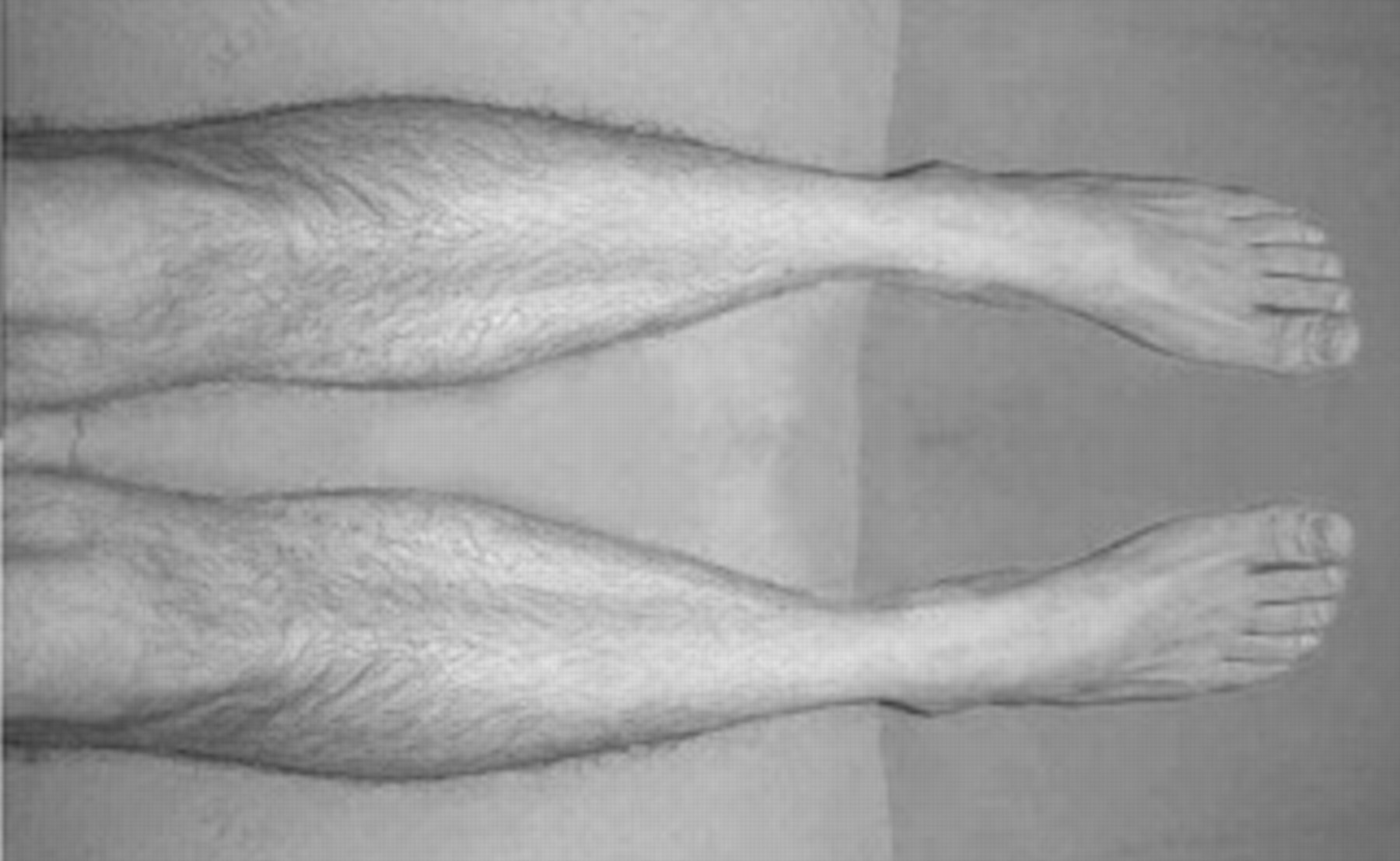
At the time of discharge, the patient's left leg has returned to normal, without pain or swelling.
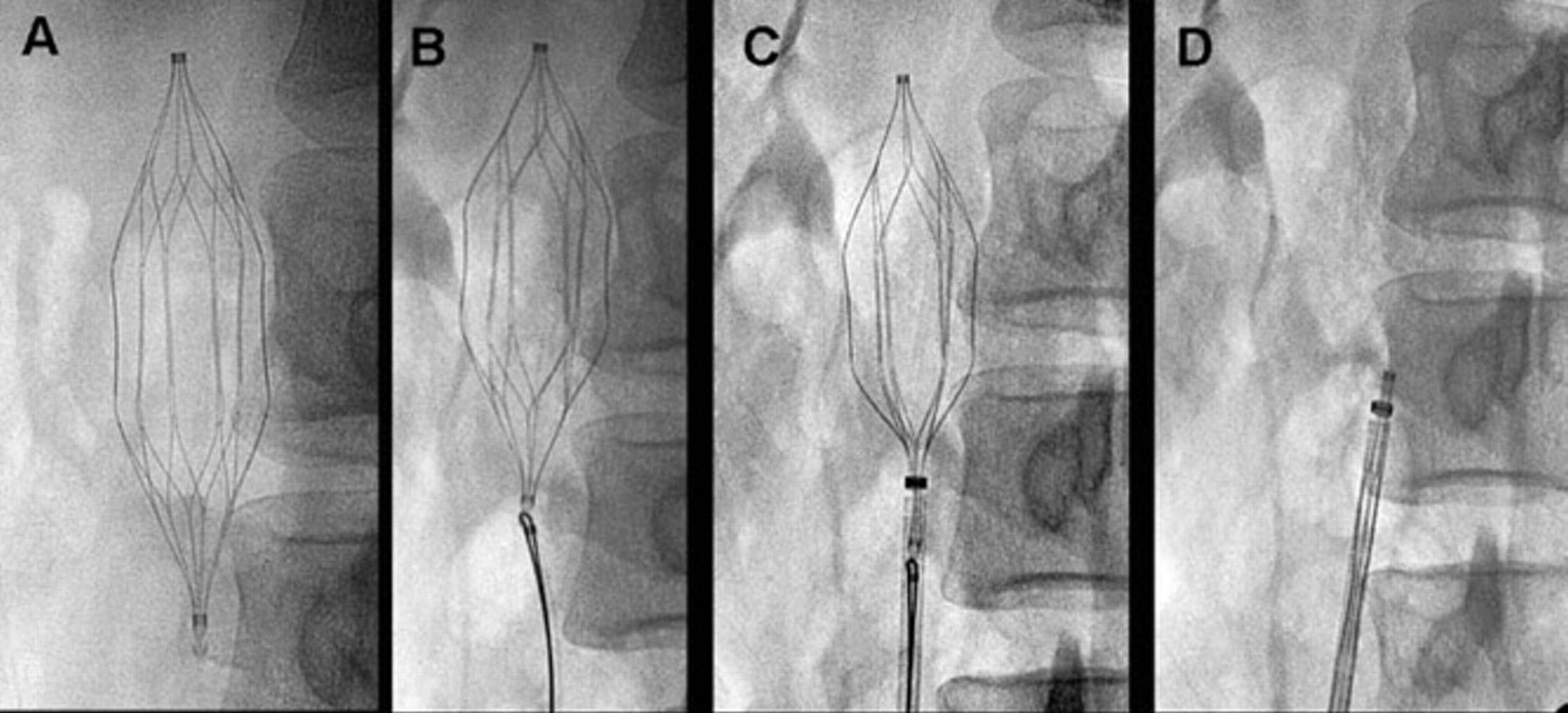
Retrieval process of the OPTEASE filter. A, OPTEASE filter in the inferior vena cava. B, A snare is used to anchor the caudal hook of the OPTEASE filter. C, With gentle vertical traction, a guiding sheath is advanced forward over the snare, which captures the OPTEASE filter. D, The OPTEASE filter is fully captured by the guiding sheath and successfully retrieved.
Conclusions
Current management of acute symptomatic iliofemoral DVT requires timely diagnosis and prompt intervention. Efforts to remove thrombus burden by means of mechanical thrombectomy or thrombolytic therapy are effective in alleviating clinical symptoms, restoring venous patency, and reducing the future risk of post-thrombotic syndrome. IVC filter placement provides protection against PE caused in part by thrombus fragmentation during the thrombectomy or thrombolytic procedure. The availability of various retrievable IVC filters allows subsequent filter retrieval when the symptoms of iliofemoral venous thrombosis are fully resolved and the risk of venous thromboembolism is significantly reduced. Advances in retrievable IVC filters have resulted in expanded and exciting indications of PE prophylaxis in the endovascular treatment of venous thromboembolism.