




Abstract
The termination phase in coaching is a pivotal stage marking the conclusion of a transformative relationship. Without effective management, this phase risks fostering dependency and hindering sustainable growth. This conceptual paper, leveraging a Creative Synthesis approach, integrates insights from coaching, psychology, and developmental theories to redefine termination as a transformative process and formulate strategies for sustaining client autonomy beyond coaching. It introduces the Sandwich model, Tapering Strategy, Split-Screen Exercise, and Intentional Meta-Being to empower clients on a transformational journey toward a higher level of being by integrating intentionality, purpose, and community engagement.
Keywords
Introduction
Coaching fosters self-directed growth, empowering clients to navigate challenges independently. The termination phase is critical as clients transition from guided support to applying insights autonomously, which requires a structured approach to consolidate progress, reinforce client agency, and prepare for future challenges (Norcross Norcross, Zimmerman, Greenberg & Swift, 2017).
While coaching can be highly beneficial, it can also lead to unintended harmful outcomes for clients. These negative effects, which are not indicative of coaching failure but rather a natural consequence of close professional relationships, include dependency on the coach (Schermuly & Graßmann, 2019). Initially, some dependency is normal as trust develops, but prolonged reliance can hinder sustainable growth and contradict coaching’s primary goal: fostering self-reliance (ICF, n.d.). Dependency on the coach can prevent clients from applying coaching insights independently, ultimately obstructing their development of self-sufficiency.
Another negative effect is the deterioration of relationships with key individuals in the client’s personal or professional life. Coaching often encourages behavioural changes, such as increased assertiveness or boundary-setting, which can sometimes lead to hyper-autonomy (Schermuly & Graßmann, 2019). While autonomy is crucial for growth, excessive independence can strain interpersonal relationships, making it difficult for clients to maintain collaborative and supportive connections with others (Hannush, 2021). This misalignment can cause misunderstandings and conflicts, undermining the client’s social integration.
Moreover, coaching integrates tools from psychology, management, and social sciences (Fazel, 2013a), though it often lacks solid theoretical frameworks for processes like termination (Bachkirova & Cox, 2005). Various coaching approaches, rooted in well-established psychological theories have been adopted to address individuals’ diverse needs and challenges (Fazel et al., in press), although there remains a gap in structured termination frameworks that ensure sustainable client autonomy and community engagement. Integrating psychological perspectives (Grant, 2001) and developmental research (Theeboom et al., 2014) can enhance coaching by bridging this gap. Without these frameworks, coaching risks becoming overly practical and less effective in fostering long-term growth.
This conceptual paper integrates Hannush’s psychosocial maturity (2021), Husserl’s Phenomenology of Intentionality (2012), and Boyatzis’s Intentional Change Theory, also known as ICT (2006), redefining termination as a transformative process. The paper also presents strategies for integrating client’s identity while fostering sustained independence. The framework bridges theory with practical methods like active imagery and a generic model of self-regulation. This leads to strategies that integrate client past, present, and future, aligning with their values to foster authenticity. It emphasises consolidating learning, celebrating achievements, and preparing clients for sustained independence, while also encouraging the development of a supportive community that reinforces their growth.
Methodology
Ravitch and Riggan (2016, pp. 30-34) define a conceptual framework as the overarching argument that explains why a study matters and how it should be conducted. It integrates personal motivations, identity and positionality, critical literature review, topical research, and theoretical frameworks to align personal, theoretical, and empirical strategies, ensuring methodological rigor and validity (Fig.1).
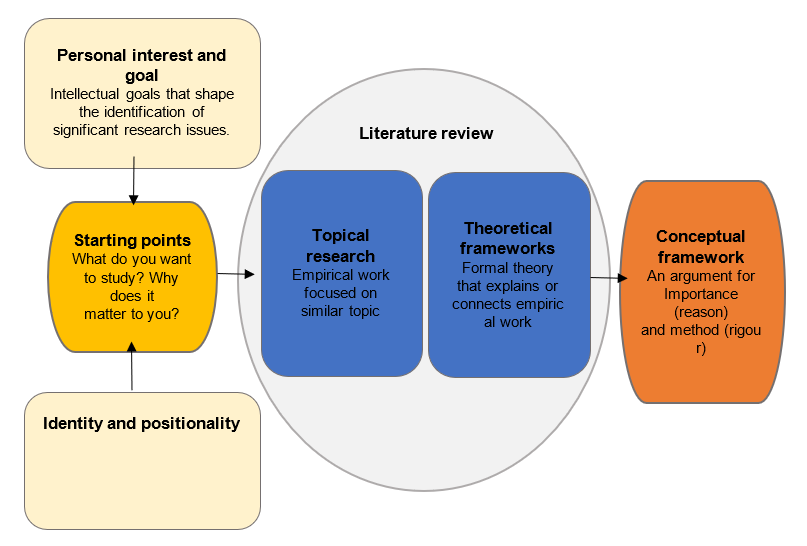
Conceptual Framework’s Elements (Ravitch & Riggan, 2016. P.31)
Creative Synthesis
The methodology incorporates Creative Synthesis, combining literature review with innovative integration of ideas from diverse fields, which is ideal for emerging areas with limited established frameworks (Heinonen & Gruen, 2024).
Key steps include.
My Personal and Professional Experiences Leading to the Model
The Never-Ending Sessions: My Psychoanalytic Experience
My journey toward this model began as a client, where progress felt tied to external validation. Despite appreciating the safe space to reflect, I struggled with the conflict of wanting to end the sessions while feeling pressured to "increase my awareness." When I finally decided to stop, my therapist disagreed, but stepping away proved transformative. Taking ownership of my journey accelerated my growth, as I realised I could move forward independently, without waiting for external validation.
This realisation shaped my approach to growth and led me to pursue coaching psychology rather than counselling. I wanted to empower individuals to trust their own capacity to learn and navigate life independently, avoiding the dependency I once felt. I view the coach as a supportive figure walking alongside the client, empowering them to navigate their unique life path with confidence and independence. It led to coining Persian terms like Rahyari (Path Allyship) for coaching, Rahyar (Path Ally) for the coach, and Rahpoo (Path Walker) for the client reflecting the core values of the coaching profession.
Turning Point by Tapering
This concept emerged in the final coaching session with one of my first clients, Sara. As we reviewed the progress of our coaching process in preparation for termination, she asked for more sessions, even though we had accomplished what we had agreed upon, and she had the tools to move forward. Her request highlighted the dilemma between the comfort of continued sessions and the need for independence. Trusting my intuition, I agreed to two more sessions every other week. It compelled me to bridge my practice with evidence-based and interdisciplinary research, shaping a new direction in my approach.
The gap in coaching literature led me to explore techniques from other fields, where I discovered tapering, a concept used to reduce dependency in substance abuse treatment (Groot & van Os, 2020) and psychotherapy (Vasquez et al., 2008). Tapering helps clients sustain progress beyond the intervention, a concept that resonated with me. I began incorporating it into my coaching to encourage independence and sustainable growth.
Appreciating the Polarities: The Initial Split Screen Exercise
During Ali's last session, he harshly criticised his past self while admiring his post-coaching version. As coaches, we assume clients are creative, resourceful, and whole (Jarosz, 2016), but Ali's coaching experience seemed to create two polarities—one version he despised and another he celebrated.
To help him reflect on his journey, I used an imagery exercise comparing his pre-coaching and current selves in a split-screen format. This exercise allowed Ali to recognise the contributions of his past self to his transformation and explore how to integrate his past with his present, fostering a sense of unity. I asked him, 'How can you appreciate your past self that guided your transformation?' This helped him build a cohesive narrative, viewing growth as a continuum rather than as fragmented versions of himself.
Owning Transformation
As my practice evolved, I recognised the importance of the Ideal Self, drawing inspiration from Boyatzis (2006). This understanding deepened during final session with Tina, where she made significant progress but remarked, “You did this transformation, not me.” Initially, I felt validated, but I soon realised that Tina was externalising her growth, attributing it to me instead of recognising her role in the transformation.
To address this, I offered Tina two additional sessions to help her internalise her progress and connect with her Ideal Self. For the rest of the sessions, I focused on shifting her reliance from me to her Ideal Self and inspirational community around her. I also introduced another layer of the Split Screen Exercise, integrating her Ideal Self and inspirational community into the process. This exercise helped Tina take full ownership of her growth, reduce dependency on the coach, and deepen her connection to her inner resources, promoting long-term independence.
Incorporating Ideal community
My understanding of the Ideal Self deepened during a session with Alex, who stated, “Now that I am whole, I don’t need anyone.” While this initially seemed like a breakthrough, further exploration revealed Alex equated independence with isolation, believing that self-sufficiency required avoiding connection.
I recalled Fairbairn's concept of mature dependence (Seinfeld, 1991, 42), which emphasises that “the individual arrives at independence with a built-in social sense.” Alex’s belief contradicted this, highlighting the need for relational autonomy, balancing autonomy with meaningful relationships.
To help Alex shift his perspective, I included ideal community to the process and introduced another layer of the Split Screen Exercise, encouraging him to envision how his Ideal Self could engage with a supportive community. This exercise helped him reflect on how he could both give and receive support. Over time, Alex redefined connection as vital to thriving, realising that relationships enhanced his integration and integrity rather than undermining his independence.
This shift in my practice highlighted the importance of guiding clients not only to aspire to their Ideal Self but also encourage them to cultivate relationships and social engagement through ideal community. Together, these elements form a strong foundation for sustainable growth, reinforcing the client's identity and promoting long-term resilience and independence.
Literature review
Coaching
Coaching is widely recognised as a collaborative, goal-oriented process designed to help individuals reach their objectives and unlock their full potential in both personal and professional contexts (Grant, 2014). By combining various perspectives into a practical framework, coaching is well-suited to meet the demands of the modern era (Fazel, 2013a). It is a client-centred approach, that by addressing the whole context of clients’ issues fosters change, transformation, growth, and development (Molaei, 2022). It serves as a valuable partnership, especially for those undergoing significant life changes.
The International Coaching Federation (ICF) defines coaching as a partnership that encourages clients to optimise their personal and professional potential through a creative and thought-provoking process (ICF, n.d.). This approach fosters self-directed learning, personal development, and goal achievement, which are key aspects of coaching across various domains.
Grant (2001) describes coaching as a solution-focused, result-oriented process used with non-clinical populations to enhance clients' life experiences and performance. It fosters personal growth and encourages self-directed learning to achieve goals effectively. Coaching facilitates the transformation of knowledge into skills, leading to transformative learning experiences (Fazel, 2013a). Its transformative and empowering essence impact on clients’ personal and professional lives (Molaei, 2024). It enhances self-awareness, confidence, and well-being while improving goal achievement, communication, and problem-solving skills. Additionally, coaching promotes life balance, reduces stress, and provides clients with broader perspectives and deeper insights (Griffiths, 2005; Fazel, 2013b).
The principles of coaching emphasise fostering self-discovery, promoting growth, and enhancing performance through structured support. Coaching focuses on raising self-awareness by encouraging individuals to analyse tasks, evaluate their competencies, and identify opportunities for development (Moen & Kvalsund, 2008). This process leads to better goal-setting and strategy development, enabling individuals to achieve outcomes aligned with their capabilities (Locke & Latham, 2002). Effective coaching employs techniques such as active listening and powerful questioning while aligning with the coachee’s objectives to ensure personalised development (Whitmore, 2009, p. 40). By improving cognitive processes and enhancing self-efficacy coaching helps individuals set realistic goals, develop effective strategies, and achieve sustained growth and improved performance (Moen & Skaalvik, 2009).
Coaching process
The coaching process is a structured, iterative cycle designed to help individuals achieve their goals. It begins with creating a vision for the future, identifying desired outcomes, and setting specific objectives. This process enhances motivation by recognising strengths, building self-efficacy, identifying resources, and developing actionable plans. As shown in Fig. 2, it operates continuously, with actions implemented between sessions and regular monitoring and evaluation conducted at the start of each session. These evaluations help refine strategies, assess progress, and set new goals, ensuring the process remains dynamic and aligned with the Client’s evolving needs (Grant, 2008).
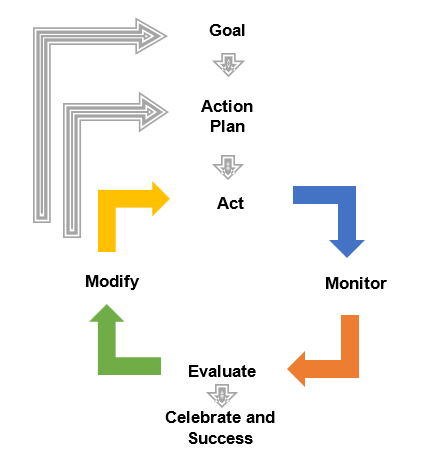
Generic model of self-regulation (Grant, 2008)
Termination in Coaching
The termination phase in life coaching ensures sustainability and effectiveness. Unlike therapeutic endings, coaching terminations emphasise celebrating achievements, reinforcing autonomy, and preparing clients for independent growth. Clients may experience anxiety or insecurity, especially if dependency remains unresolved, with unclear boundaries or unmet expectations further hindering ownership of development (Cox, 2010).
A well-managed termination helps clients internalise progress, sustain growth, and foster self-reliance, while poorly handled terminations can lead to passive disengagement, dependency, or dissatisfaction (Grant & Cavanagh, 2018). Embedding termination strategies early reinforces progress and ensures a smooth transition toward independence (Cox, 2010). Rather than a single event, termination is a gradual process that begins from the outset, incorporating early contracting, regular reviews, achievement celebrations, and ethical support (Fig. 3).
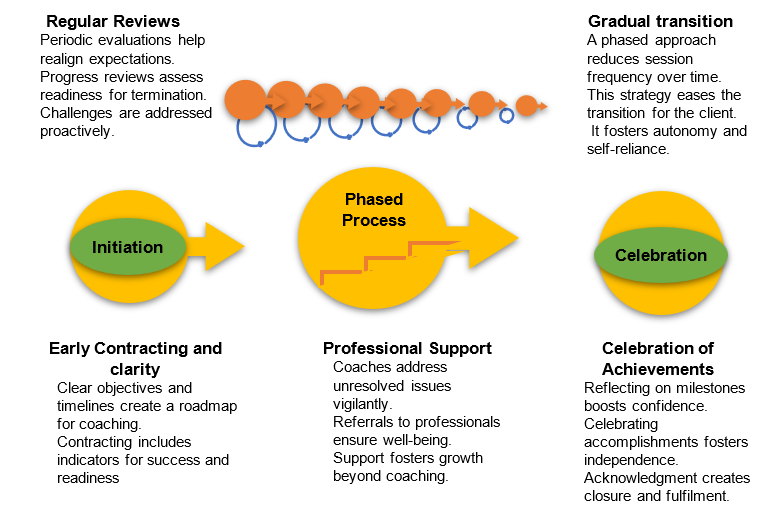
Strategies for termination in coaching (Cox, 2010)
Theoretical Framework
Psychosocial Maturity: A Framework for Integrative Development
Psychosocial maturity is a dynamic, lifelong process of self-awareness, relational harmony, and intentional engagement with life’s existential challenges. It reflects an individual's ability to navigate life's complexities with adaptability, introspection, and a balanced approach to internal and external conflicts (Hannush, 2021, pp. 1–4).
Integrality
As described by Erikson (Hoare, 2001), Psychosocial maturity is rooted in integrality (Fig. 4), which involves integrating past experiences with present realities to form a cohesive self. Integrality includes two key aspects:
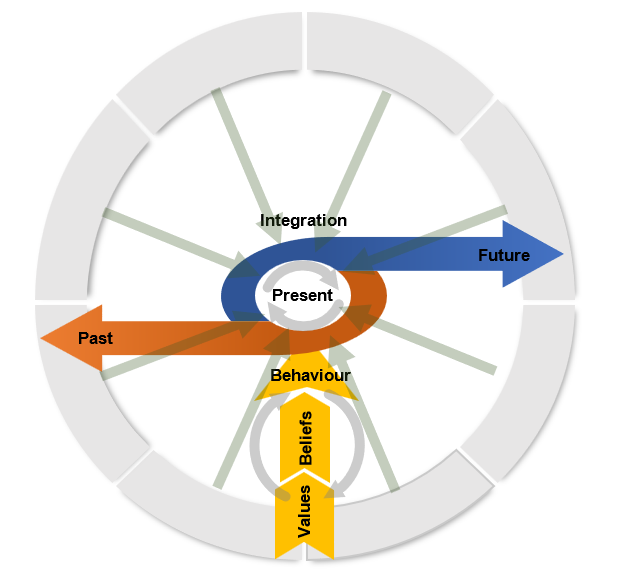
Integrality
Response-ability
Response-ability, central to psychosocial maturity, balances extremes of "Hyper-Dependent" (excessive reliance on others) and "Hyper-Autonomous"—overemphasis on independence (Fig. 5). It reflects an individual's ability to integrate autonomy with interdependence, enabling adaptability, intentionality, and accountability in navigating challenges. This balance extends beyond individualism, fostering relational and environmental responsibility (Hofman, 2023).
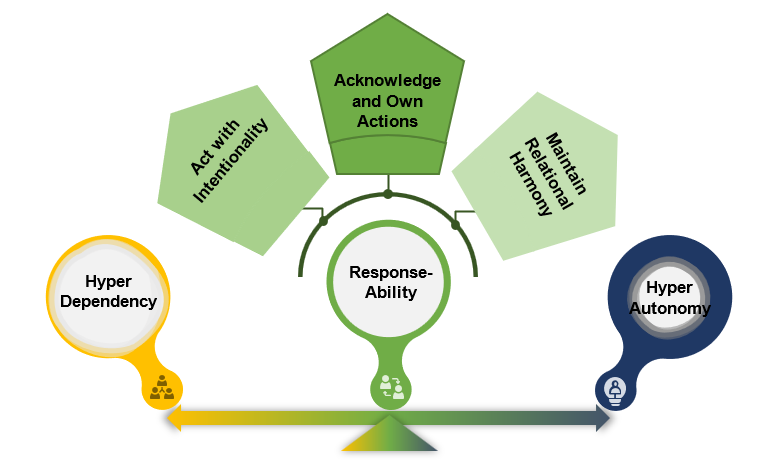
Response Ability concept Hannush (2021)
The principles of coaching align closely with psychosocial maturity by emphasising self-discovery, growth, and enhanced performance. Coaching encourages self-awareness by helping individuals evaluate their tasks, competencies, and development opportunities (Moen & Kvalsund, 2008).
The principle of ‘integrality’ ensures clients transition into independence with an authentic, cohesive self. By integrating past experiences, present identities, and future aspirations, clients build a sustainable foundation for personal and relational growth. Embedding the capacities of response-ability in coaching interventions enables clients to approach future challenges with confidence, stay true to their values, actively contribute to their communities, and create positive societal impacts.
Intentional Actions Through Husserl’s Phenomenology
Husserl’s phenomenology centres on intentionality, the fundamental characteristic of consciousness that directs it toward objects. All conscious acts are inherently “about” something, shaping experience and decision-making through the Transcendental Ego, which constitutes meaning (Husserl & Moran, 2012).
Husserl (2013) distinguishes between passive and active intentionality. Passive intentionality structures experience pre-reflectively, allowing meanings to emerge spontaneously. In contrast, active intentionality involves deliberate engagement, where the Transcendental Ego consciously evaluates possibilities based on values, desires, and long-term goals. Free will is exercised through reflective consciousness, ensuring choices are guided by personal significance rather than external pressures.
Unlike the empirical ego shaped by experience, the Transcendental Ego actively unifies and structures reality, fostering a deeper sense of purpose. Decisions thus become expressions of autonomy and rational agency, rather than mere reactions (Husserl & Moran, 2012).
Intentionality also shapes social interactions. The "intentionality of contacting" emphasises purposeful, aware engagement, ensuring relationships align with deeper values (Bloom, 2020). By integrating intentional action with free will, individuals transform interactions into meaningful, purpose-driven engagements, fostering relational depth and mutual understanding.
Considering intentionality in coaching fosters self-awareness, autonomy, and purpose, helping clients shape experiences and social engagement consciously, ensuring decisions and interactions align with their authentic values.
Self-efficacy Prerequisite of Intentional Actions
Self-efficacy, as defined by Bandura (1997), is an individual's belief in their ability to organise and execute actions to achieve desired outcomes. It reflects a conviction in one’s capabilities, rather than just expectations about behaviour. Unlike behaviour–outcome expectancy (Maddux, 1999), which links actions to results, self-efficacy focuses on confidence in one’s ability to perform necessary actions.
This distinction highlights perceived ability over predicted behaviour (Mehrotra, 2016), influencing motivation, persistence, and resilience. Individuals with high self-efficacy proactively improve their environment and persist despite challenges (Bandura, 1997). It enhances effort, adaptability, and emotional regulation (Bandura, 2001), fostering a growth mindset and agency (Chowdhury, 2020).
Community engagement fosters personal growth and psychological empowerment by providing opportunities for meaningful participation (Zimmerman, 2000). Actively contributing to a community cultivates a sense of purpose, shared responsibility, and social support, all of which enhance self-efficacy and agency (Monica, 2024). Additionally, self-efficacy, a sense of belonging, and strong social connections are key predictors of resilience (Nowicki, 2008).
Coaching strengthens self-efficacy by building confidence and sustaining motivation (Moen & Allgood, 2009). Supporting individuals in balancing personal ownership of their actions with community harmony fosters mutual support, accountability, and shared growth. This, in turn, promotes resilience and autonomy while nurturing relational well-being and a collective sense of purpose.
Ideal self: The Driver of transformation
The Ideal Self in Intentional Change Theory serves as a motivational compass, guiding transformation through one's aspirations, hopes, and potential. It comprises three key components: a desired future image, hope and optimism, and a core identity integrating past strengths and values (Boyatzis, 2006), by which clients build a compelling vision, sustain transformational efforts in coaching, and address emotional and existential growth (Boyatzis, Smith, & Van Oosten , 2019).
The process of transformation in ICT begins with a comparison of the Ideal Self to the Real Self—an honest assessment of one's current state. This gap analysis helps identify strengths to build upon and areas for growth, forming the basis for a personalised learning agenda (Taylor, 2006). The process is iterative and deeply reflective, requiring a supportive and trusting coaching relationship to navigate successfully (Fig. 6).
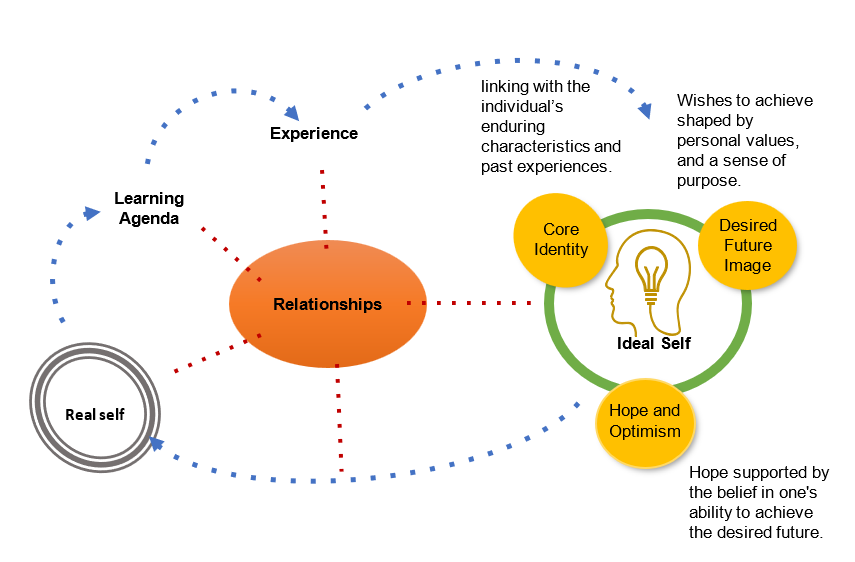
Intentional Change Theory (Boyatzis, 2006)
Given the importance of a higher positive-to-negative affect ratio for flourishing (Fredrickson & Losada, 2005), ICT emphasises balancing Positive Emotional Attractors (PEA) and Negative Emotional Attractors (NEA) for sustainable transformation. PEA fosters growth through personal vision, hope, joy, gratitude, and high-quality relationships, while NEA supports critical thinking and behavioural adjustments (Howard, 2006). ICT acknowledges nonlinear change and values relationships, yet it does not fully integrate interdependent systems. If reciprocal change, collective accountability, and mutual responsibility were incorporated, ICT could enhance sustainable change by fostering deeper relational awareness, shared responsibility, and ethical engagement.
Tapering in Psychotherapy
Freud (1913) likened termination to a chess game, where strategic planning ensures a successful conclusion. Rooted in various psychotherapeutic approaches, tapering involves a gradual reduction in session frequency to help clients transition from intensive therapy to independent application of learned skills that prepare client for life beyond therapy (Norcross et al., 2017). Unlike premature termination, which occurs unilaterally before achieving treatment goals (Swift & Greenberg, 2012), tapering is a planned process where the therapist and client collaboratively conclude treatment, reviewing progress, consolidating gains, and preparing for future challenges (Vasquez et al., 2008). Tapering supports client autonomy and enhances long-term therapy outcomes by consolidating gains, reinforcing therapeutic achievements (Norcross et al., 2017), enhancing independence, facilitating the transition from guided sessions to self-reliance, and minimising relapse by equipping clients with effective coping strategies (Goldfried, 2002).
Conceptual Framework
Termination in coaching is a process, not a single event, requiring careful planning to ensure sustainable growth and autonomy. Integrating insights from psychosocial maturity (Hannush, 2021), self-efficacy (Bandura, 1997), and intentionality (Husserl, 2013), I will discuss The Sandwich Model, tapering in coaching, and split-screen as strategies to help clients consolidate progress, integrate learning, and transition to self-sufficiency and Intentional Meta-Being as a phased process. These strategies support long-term development beyond coaching, preparing clients to operate at a higher level of being with greater self-awareness and agency.
Sandwich Framework
Human beings are creatures of decision, continuously making choices that shape their lives. Every moment presents an opportunity for growth or stagnation, influenced by internal and external factors. Given that a higher PEA-to-NEA ratio is essential for flourishing (Fredrickson & Losada, 2005), this balance must extend beyond coaching sessions to the client’s entire life. Coaching should not only focus on creating a flourishing environment within sessions but also equip clients to embrace uncertainties, engage with real-life challenges, and cultivate meaningful decisions.
According to Boyatzis et al. (2019), activating PEA occurs through resonant relationships, where deep, supportive connections inspire growth, self-efficacy, and renewal. However, Intentional Change Theory (ICT) primarily focuses on the coach-client dynamic, positioning the coach as the central source of resonance. Yet, clients face challenges beyond coaching, necessitating sustainable sources of PEA in their broader social environments.
The Sandwich Model addresses this gap by integrating the Generic Model of Self-Regulation (Grant, 2008) with PEA and NEA engagement, embedding self-regulation within a supportive yet autonomous framework. By shifting from coach-centred inspiration to community-driven support, this approach fosters lasting change, ensuring that relationships act as crucial buffers in both coaching and real-life contexts, reinforcing self-efficacy, resilience, and transformation (Fig. 7).
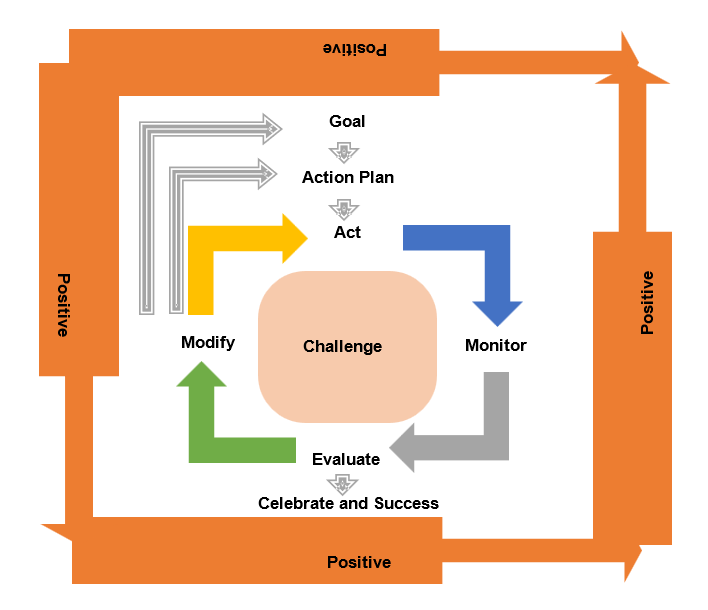
Sandwich Model
Tapering Process
The tapering process gradually reduces session frequency, guiding clients from structured support to
self-reliance. This phased approach builds confidence, sustains momentum, and ensures the integration of coaching insights into daily life. As sessions decrease, motivation shifts from external support to intrinsic motivation and extrinsic relational transpersonal motivators.
The Tapering process includes:
The primary goals of the Tapering process are to guide clients from structured support to self-regulation, strengthen agency by engaging intrinsic motivation and values in decision-making, and encourage intentional social engagement to sustain transformation and preserve momentum.
The Split-Screen: An Exercise for Integration
The Split-Screen is an active imagery exercise designed for the final coaching session, helping clients reflect on their journey and envision their future. Active imagery, a powerful performance-enhancement tool (Fazel, 2015, p. 34), plays a key role in this process. Effective imagery involves vividness, controllability, and multi-sensory engagement, enhancing its impact on personal development (Fazel, 2015, p. 7).
The Split-Screen Exercise incorporates active imagery, with the coach facilitating sensory engagement by asking clarifying questions to make the experience more vivid, clear, and immersive. This supports client transformation, independence, and integration. By progressively integrating the Pre-Coaching Self, Current Self, Ideal Self, and community visions, it reinforces both personal and social transformation (Fig. 7).
Preparation
The coach begins by explaining the exercise and its purpose. To personalise the exercise, clients assign meaningful names to their Pre-Coaching Self, Current Self and ideal self. This step deepens emotional engagement and helps contextualise the transformation. To prepare for active imagery, the coach guides the client through a brief centring exercise, using deep breathing or grounding techniques to help focus.
Active Imagery Process
Clients begin by visualising a split screen, observing their Pre-Coaching Self on one side and theirCurrent Self on the other, while the coach facilitates reflection by prompting comparisons between the two. The coach then guides the imagery, gradually merging the two screens to symbolise integration and gratitude, encouraging clients to acknowledge the strengths that guided their journey and appreciate their past self. The Ideal Self then enters as a supportive figure, engaging clients in dialogue about how to embody its qualities and apply its wisdom. Building upon this scene, clients then envision an Inspirational Community, where supportive individuals emerge around them, offering encouragement and reinforcing their sense of belonging. Finally, the imagery expands into a Personal Utopia, a vivid mental representation of their ideal life, aspirations, and fulfilment. This cumulative process layers each element onto the previous one, creating a seamless journey of self-reflection, relational support, and future visioning (Fig. 8).
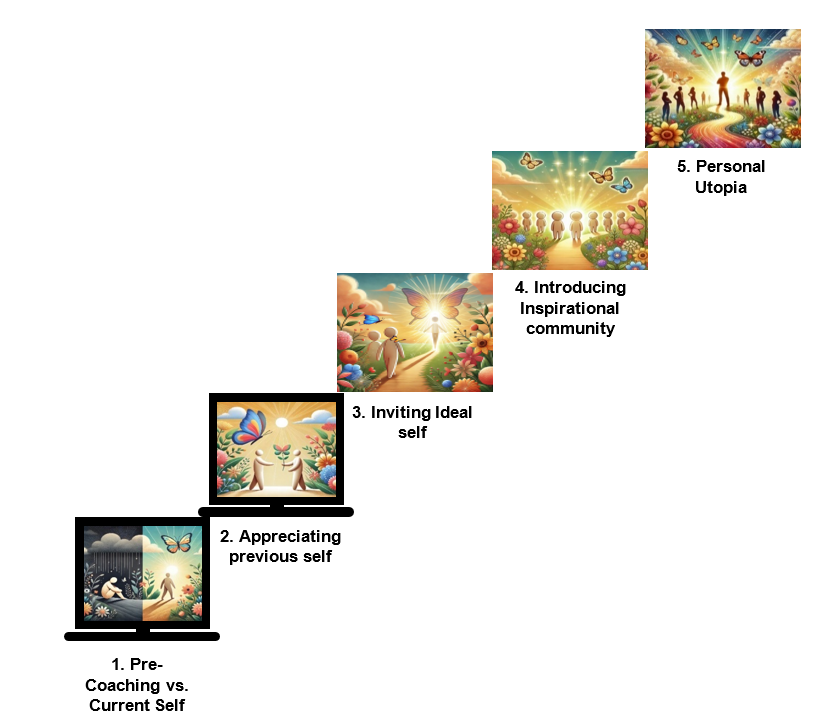
Split Screen (Images generated by ChatGPT)
Reflection and Ownership
The exercise concludes with a guided reflection, where the client steps back from the imagery and consolidates insights. This helps clients embrace their insights and decide for the rest of their journey. Clients are encouraged to draw on their Ideal Self and community connections in daily life, consulting these internal guides during moments of uncertainty or growth. By integrating their Pre-Coaching Self, Current Self, and Ideal Self, clients deepen their sense of ownership over their growth journey. Moreover, internalising a sense of belonging helps them cultivate resilience, maintain motivation, and strengthen their commitment to personal and collective well-being.
Celebration
The final step involves celebrating progress. The coach prompts the client to reflect on their accomplishments and milestones, reinforcing a sense of achievement and inspiring future growth. This phase affirms the transformative journey and concludes with gratitude toward themselves and their community. Finally, the coach expresses appreciation to the client for allowing them to be part of their transformational journey.
Intentional Meta-Being
Drawing on all these concepts, we need to integrate them all together to have an integrative process. As Integrative Change Theory (ICT) PEA considers Positive Emotional Attractors (PEA) over Negative Emotional Attractors (NEA) through values and relationships, whilst acknowledging nonlinear change. Therefore, we can consider it as the initial stage of the coaching process and aim to reduce the sessions whilst replacing the reliance on single supportive relationships within the development of broader supportive communities. Moreover, clients need to contribute to society in order to fully live their values, and for this they require allies who can support and amplify their efforts. This process enables clients not only to work toward building their personal ‘utopia’ but also to step toward living a higher level of being, which we name the meta-being. Therefore, the stages of coaching should not only bridge the gap between the client's ideal self and current self, but also between their current community and ideal community, and between the current world and their personal utopia. By helping clients gradually identify and bridge these gaps, coaching can facilitate their deeper engagement with society while simultaneously reducing their dependence on the coach. Fig. 9 shows the 5 Stages of Intentional Meta-being Approach for coaching process.
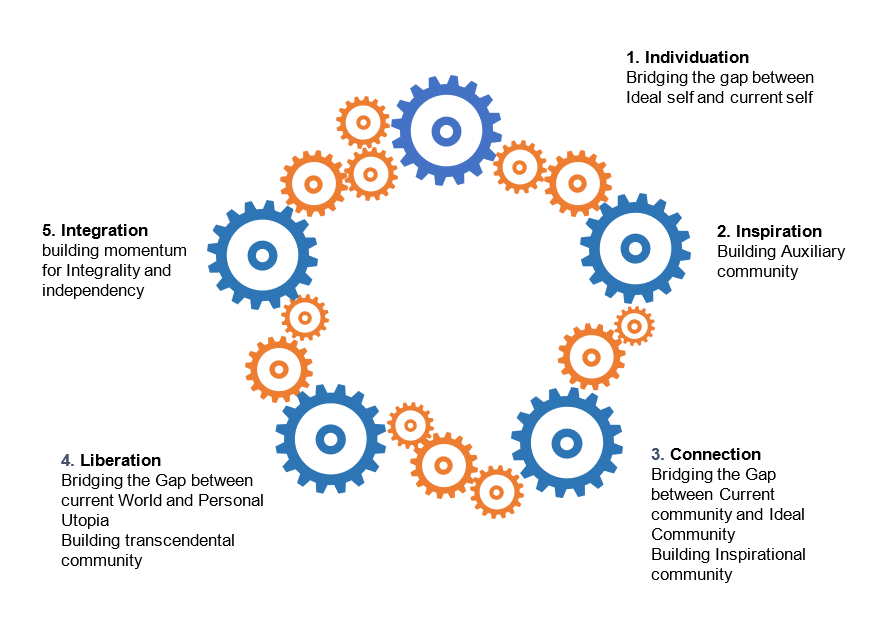
Intentional Meta-Being
Limitations and Future Research Directions
While these strategies promote client independence and integration, they have limitations. The framework’s generalisability may vary across coaching domains (e.g., executive, health, educational, or life coaching). Although grounded in established theories, it remains conceptual and requires further research for validation. To enhance applicability, several considerations should be addressed:
Addressing these factors will strengthen its evidence base, expand its practical use, and ensure broader applicability across coaching contexts and diverse populations.
Conclusion
This paper redefines coaching termination as a transformative and integrative process, ensuring clients transition from guided support to relational autonomy. By integrating theories like psychosocial maturity, and Intentional change theory with concepts like Response-Ability, intentionality, and self-efficacy, it provides a roadmap to guide clients toward sustained growth and self-reliance. By introducing Sandwich model, Tapering Strategy, Split-Screen Exercise, it introduces Intentional Meta-Being coaching approach and provides a structured phased approach that fosters intentional transformation and community engagement. Rather than viewing termination as an endpoint, this model emphasises continuous development, empowering clients to align with their Ideal Self, engage meaningfully with their communities, and navigate future challenges independently. Future research can further explore its application across different coaching contexts to refine and expand its impact.