



Abstract

Nuclear weapons are stored at Aviano Air Base in Italy. F-16s like this one are ready to deliver them.
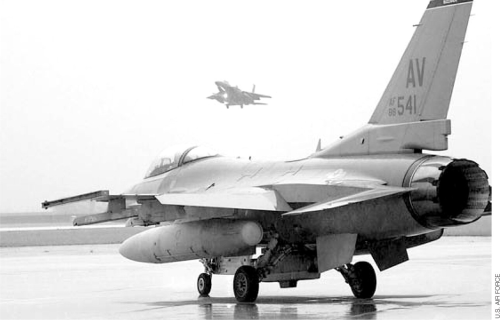
The nuclear paragraphs of NATO's latest strategic concept are astonishing. Nearly 10 years after the fall of the Berlin Wall, why are tactical nuclear weapons still needed in Europe?
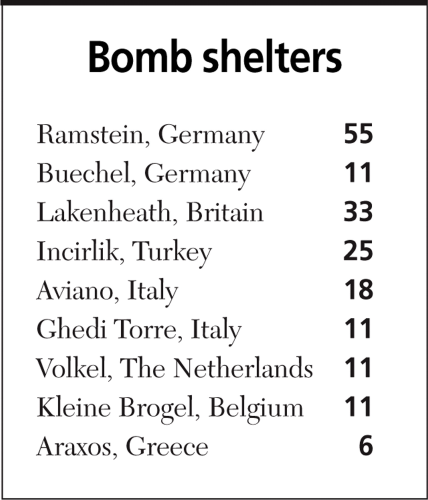
About 180 American-made and controlled variable-yield B61 bombs are located in seven different NATO countries. In fact, construction of new Weapons Storage and Security Systems–181 vaults that “shelter the tactical weapons within a hardened aircraft shelter which enhances weapons survivability, safety and security”–have recently been completed at nine air bases. (See “Bomb Shelters,” opposite page.)
After NATO's summit in April, it looks as if nuclear life goes on in Europe much as it did before, despite dramatic changes in the political climate in the last 10 years. To be sure, two NATO governments–Germany and Canada–raised penetrating issues in the months leading up to the summit. Last September, the new coalition government in Germany, an often uneasy alliance of Social Democrats and Greens, said that NATO should take a general look at its nuclear policies and–specifically–adopt a “no first use” policy.
A Canadian parliamentary committee jumped into the debate in December, with 15 recommendations designed to put Canada on record as working to “reduce the political legitimacy and value of nuclear weapons in order to contribute to the goal of their progressive reduction and limitation.”
If adopted, those parliamentary recommendations could have had enormous implications for NATO. But they were not adopted by the Canadian government. The United States rolled over and flattened the modest German and Canadian initiatives, calling a debate over nuclear doctrine at the summit “nonproductive and damaging,” and insisting that the revised Strategic Concept should leave NATO's nuclear doctrine basically unchanged.
So there you have it. Although the NATO summit was charged with developing a new Strategic Concept, American pressure guaranteed that the new concept would look much like the last one, adopted in Rome in 1991, insofar as nuclear weapons were concerned. In sum, the United States still believes it necessary to have tactical nuclear weapons in Europe–an opinion widely shared in NATO circles.
Linkage
For more than 40 years the European security debate had focused on protecting against possible attack from the Soviet Union and the Warsaw Pact nations. The credibility of the American “nuclear umbrella” was always at the center of the NATO debate; “linking” the United States to the defense of Europe was central.
The leaders of the European NATO governments were uneasy that if push ever came to shove, a U.S. president might choose to preserve American cities rather than risk defending Europe and provoking Soviet strategic retaliation. (Conversely, the European governments were also worried that the Americans might use nuclear weapons based in Europe without their permission or even without consulting with them.)
During the Cold War, threatening the first use of nuclear weapons was thought by the NATO governments to be necessary to deter the Soviets from invading Western Europe. The European NATO governments also believed that once nuclear weapons were used, even on the battlefield, Washington would be committed; it would be “linked.” Even now, the presence of nuclear weapons is thought to symbolize the risk and “burden-sharing” of the cross-Atlantic allies.
Eventually a rough nuclear equilibrium inside NATO was achieved by a combination of provisions designed to reassure NATO countries regarding nuclear “protection” while, at the same time, developing doctrine and procedures compatible with the diverse requirements imposed by:
▪ The Nuclear Non-Proliferation Treaty (NPT), which forbids the peacetime transfer of nuclear weapons or control over nuclear weapons to any recipient whatsoever.
▪ The desire of all NATO countries to have a say in a decision to launch a nuclear attack whose consequences would inevitably fall upon them.
▪ The need of the United States to have full and undisputed control of its nuclear weapons, particularly in the event of a crisis.
Among these provisions are consultation procedures within NATO, including the creation of the Nuclear Planning Group. The deployment of American nuclear weapons in seven NATO countries, rather than in just one or two, was part of the reassurance strategy of linkage.
In turn these nuclear weapons were divided into two categories called “dual-key” and “single-key.” (Dual-key weapons are American weapons that are, in principle, assigned to delivery systems owned and manned by the armed forces of an allied nation. Single-key weapons are American weapons assigned to U.S.-owned delivery systems.)
Nevertheless, as became evident over the years, the provisions did not completely resolve either doubts about the credibility of the U.S. nuclear umbrella–or the fear that at some point the United States might make a unilateral decision to initiate a nuclear war in Europe, despite procedures that called for substantive input from other NATO countries.
The first U.S. nuclear delivery systems were deployed in Europe in 1953 in the form of nuclear artillery. After that, American tactical nuclear weapons were introduced in large numbers. By the mid-1960s, the number peaked at about 7,000 weapons. In 1983, just before the deployment of cruise and Pershing II intermediate-range missiles, the total was 5,845, of which only 1,950 were dual-key. The remainder could be used–hypothetically, at least–by the United States acting alone.
In the second half of the 1980s, as a consequence of changes in the political climate, the number of American nuclear weapons located in Europe rapidly decreased. The 1987 Intermediate-range Nuclear Forces Treaty wiped out a whole class of nuclear-tipped missiles, including the newly deployed cruise and Pershing II missiles. And as a consequence of the unilateral initiatives of Presidents George Bush and Mikhail Gorbachev in the fall of 1991, most of the American tactical nuclear weapons were withdrawn from Europe.
Bomb shelters
“Characteristics of Nuclear Forces”
Excerpts from “The Alliance's Strategic Concept,” adopted by the North Atlantic Council, April 1999.
The fundamental purpose of the nuclear forces of the Allies is political: to preserve peace and prevent coercion and any kind of war. They will continue to fulfill an essential role by ensuring uncertainty in the mind of any aggressor about the nature of the Allies' response to military aggression. They demonstrate that aggression of any kind is not a rational option. The supreme guarantee of the security of the Allies is provided by the strategic nuclear forces of the Alliance, particularly those of the United States; the independent nuclear forces of the United Kingdom and France, which have a deterrent role of their own, contribute to the overall deterrence and security of the Allies
A credible Alliance nuclear posture and the demonstration of Alliance solidarity and common commitment to war prevention continue to require widespread participation by European Allies involved in collective defense planning in nuclear roles, in peacetime basing of nuclear forces on their territory, and in command, control, and consultation arrangements. Nuclear forces based in Europe and committed to nato provide an essential political and military link between the European and the North American members of the Alliance. The Alliance will therefore maintain adequate nuclear forces in Europe. These forces need to have the necessary characteristics and appropriate flexibility and survivability, to be perceived as a credible and effective element of the Allies' strategy in preventing war. They will be maintained at the minimum level sufficient to preserve peace and stability.
The Allies concerned consider that, with the radical changes in the security situation, including reduced conventional force levels in Europe and increased reaction times, NATO's ability to defuse a crisis through diplomatic and other means or, should it be necessary, to mount a successful conventional defense has significantly improved. The circumstances in which any use of nuclear weapons might have to be contemplated by them are therefore extremely remote. Since 1991, therefore, the Allies have taken a series of steps which reflect the post-Cold War security environment. These include a dramatic reduction of the types and numbers of nato's sub-strategic forces, including the elimination of all nuclear artillery and ground-launched short-range nuclear missiles; a significant relaxation of the readiness criteria for nuclear-roled forces; and the termination of standing peacetime nuclear contingency plans. Nat o ‘s nuclear forces no longer target any country. Nonetheless, nato will maintain, at the minimum level consistent with the prevailing security environment, adequate sub-strategic forces based in Europe which will provide an essential link with strategic nuclear forces, reinforcing the transatlantic link. These will consist of dual-capable aircraft and a small number of United Kingdom Trident warheads. Sub-strategic nuclear weapons will, however, not be deployed in normal circumstances on surface vessels and attack submarines.
Inertia
Today, with the disappearance of the Warsaw Pact, NATO no longer faces superior conventional forces belonging to a possible adversary. (Whether such fears were ever rooted in anything but fantasy is another matter.)
Moreover NATO still has three members–the United States, Britain, and France–that are nuclear powers independently of the alliance. Presumably their strategic forces are available for the defense of Europe. Nonetheless, the political symbolism associated with the peacetime basing of U.S. nuclear weapons in Europe is still seductively relevant for the alliance.
▪ Forty years of debate about the American nuclear umbrella has left many European politicians and military people convinced that the physical presence of even a few nuclear weapons in their territories offers protection against an attack with nuclear weapons or other weapons of mass destruction.
▪ For the non-nuclear members of NATO that host U.S. nuclear weapons, the basing is the only opportunity they have to be in direct contact with some significant aspects of nuclear operations. The air forces of the host countries are proud of sharing with the Americans some concrete aspects of training in nuclear warfare, even if this sharing concerns only a relative handful of people.
▪ The structure that regulates the presence of American nuclear weapons in NATO countries is complex and inflexible. First, there is the “Agreement for co-operation on uses of atomic energy for mutual defense purposes” signed by the United States and each individual country. These are unclassified bilateral treaties (circa 1955-62) that set the framework for classified bilateral agreements.
The latter include a “program of cooperation” that defines the rules for the deployment of nuclear weapons in the host countries and for the training of the armed forces of the host countries in the field of nuclear operations, and a “stockpile agreement” that deals with the location, responsibilities, and cost-sharing for the nuclear deposits.
▪ In recent times public opinion in Europe has shown very little concern for the risks or the political consequences related to having American nuclear weapons on European soil. Therefore, the governments of NATO countries face little opposition to the residual nuclear force, and most news operations and opinion-makers simply ignore the fact that nuclear bases still exist in Europe.
Even when this fact is brought to public attention, as in the debate over the expansion of NATO, it is quickly forgotten. For many, the end of the Cold War simply meant that the risk of nuclear war was over.
On the eve of the twenty-first century, the NATO countries are still afflicted with a high degree of political-bureaucratic inertia, which helps explain why, in the face of a forty-fold reduction of American nuclear weapons deployed in Europe since the mid-1960s, there has been no reduction in the number of countries that host the weapons.
The Russian factor
Perhaps the nuclear inertia would be relatively harmless if no political consequence or risk were associated with the existence of a residual American nuclear arsenal in NATO countries.
But as last year's nuclear tests in India and Pakistan reminded us, the nuclear non-proliferation regime most likely will not remain unchanged for the indefinite future. A regime based largely on the Nuclear Non-Proliferation Tr eaty, in which only a few countries have the right to possess nuclear weapons while most nations are denied the same right, is always in jeopardy.
If the European NATO nations–economically and politically important countries that are under no military threat by another state–consider nuclear weapons essential for their security, what can be said about countries that are in truly difficult strategic situations and under serious threat from neighboring states?
And then there is the worsening relationship with Russia. The expansion of NATO has put it in a strategic bind. As the borders of NATO have been shifted closer to Moscow, countries previously allied with the Soviet Union now belong to a military alliance that excludes Russia. The specific problem of deploying nuclear weapons on the territory of the new NATO states–Poland, Hungary, and the Czech Republic–has been particularly thorny. The alliance says it has “no intention, no plan, and no reason to deploy nuclear weapons on the territory of new members.”
Nevertheless the NATO countries have refused to make a commitment that would definitively exclude new nuclear weapons deployments and relieve Russian worries. On the contrary, the new NATO members have either declared or implied that they could “only accept full membership” and would not make any commitment in advance that “some specific weapons on their soil” should be excluded. They do not want to be second-class citizens of NATO.
To better understand the growing political hostility between NATO and Russia, it is enough to look at the dramatic sequence of events over the past year: Stepped-up Anglo-American air strikes against Iraq, outside any agreed international framework; the inclusion of three former Warsaw Pact members into NATO; and most recently, NATO's air campaign against Yugoslavia. Some Russian analysts see the spectre of possible future NATO intervention in local conflicts in regions of the former Soviet Union.
Underestimating the level of tension between Russia and NATO may be a mistake with far-reaching consequences. Meanwhile, any action useful in keeping down the temperature of NATO-Russian hostility should be carefully considered.
Eliminating U.S. nuclear bombs from NATO territories would be a positive start–a gesture that almost certainly would ease relations with Russia and cost NATO very little. Elimination could be achieved either unilaterally or within the framework of a general discussion about tactical nuclear weapons.
Further, some recent developments in Russian attitudes toward tactical nuclear weapons themselves are a source of concern. (See “Moscow Reacts,” page 32.) Russia now faces a situation of inferiority in conventional forces vis-à-vis NATO and, at the same time, its military structure is in disarray because of the country's economic free fall. And yet, Russia still has many thousands of nuclear weapons, including about 4,000 tactical weapons.
Russia now says that tactical nuclear weapons could be effective in deterring an attack by an enemy with superior conventional forces. Meanwhile, tactical nuclear weapons are much less expensive and demanding than a large and well-equipped army comparable in size to that of a potential adversary. (Ironically, this analysis precisely mimics Cold War-era arguments made by NATO.)
Russia has also abandoned its no-first-use declaratory policy. While its old policy may have been a work of fiction, as many in the West believe, Russia is alerting the world that it now feels free to use nuclear weapons in response to a conventional attack by any country that belongs to an alliance that includes a nuclear-weapon state.
It is clear that a “new” role is emerging for Russia's tactical nuclear weapons, and this may prove to be a serious obstacle to further steps in nuclear disarmament. It is time for NATO to get on with the task of talking to Russia with the aim of eliminating all tactical nuclear weapons.