



Abstract
In 1955-57, I worked in the Paris office of the Coordination Committee for International Voluntary Work Camps, a non-governmental organization associated with UNESCO. Periodically, a mysterious man in a light brown overcoat came by to confer with my Swiss boss. This visitor, my boss told me, represented the Asia Foundation, which helped to fund Coordination Committee activities, including a planned 1958 Calcutta conference for Asian work-camp leaders. En route to the United States after my Paris years, I participated in this conference. Thanks to Frances Stonor Saunders, I now know that the Asia Foundation was a CIA front, and that 42 years ago I unwittingly benefited from the CIA's largesse.
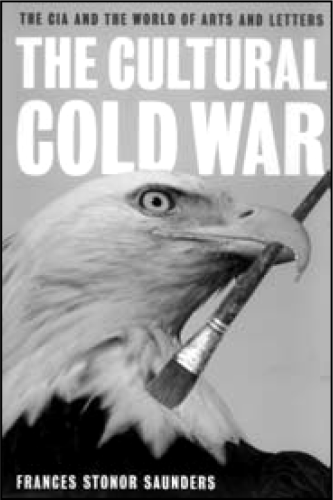
The Cultural Cold War offers a history of the Congress for Cultural Freedom (CCF), founded in 1950 with CIA funding to counter Soviet propaganda, particularly among the noncom-munist left. Using CIA dollars channeled through dummy (and sometimes legitimate) foundations, the CCF published journals, most notably Encounter; sponsored arts festivals and cultural conferences; and launched some 35 national committees, including the contentious American Committee for Cultural Freedom (ACCF), where liberals like Arthur Schlesinger, Jr., and conservatives like James Burn-ham battled for supremacy and feuded over McCarthyism and other issues.
The broad outline of Saunders's story is well-known. The CIA's funding of the CCF (as well as of other organizations not discussed in this book, such as the National Student Association) was exposed in the 1960s by the New York Times, The Nation, Ramparts, the New York Review of Books, and other periodicals, and in Christopher Lasch's The Agony of the American Left (1969). Indeed, these exposés, coming as the Vietnam War escalated, fatally undermined the CCF, which finally collapsed in 1979. More recently, Stephen Whitfield, in The Culture of the Cold War (1991), and other historians have retold the story.
But Saunders, having interviewed key survivors and immersed herself in archival sources, offers a minutely detailed account of the CCF, beginning with its origins in the wartime Office of Strategic Services (OSS) and in ad hoc cultural efforts in early postwar Berlin. She also documents at great length the role of such figures as the CIA's Allen Dulles, Frank Wisner, Tom Braden, and Cord Meyer; CCF's executive director, the Estonian-born Michael Josselson, and its general secretary, the émigré Russian composer Nicholas Nabokov; Encounter's unlikely editorial duo Stephen Spender and Melvin Lasky; and a large supporting cast including Schlesinger, Isaiah Berlin, Malcom Muggeridge, Dwight Macdonald, Arthur Koestler, Sidney Hook, Irving Kristol, Diana Trilling, and the Cincinnati yeast-and-gin tycoon Julius (“Junkie”) Fleischmann.
The exhaustive research and attention to detail has its merits, particularly as Saunders traces the tortuous money trail of CIA funds. Her accounts of CIA cultural ventures, like Robert Lowell's 1962 South American goodwill tour (during which he stopped taking his medication and in Buenos Aires delivered a pro-Hitler harangue and then stripped naked and mounted an equestrian statue in a city square), are diverting.
But her preoccupation with minutia has its drawbacks. Saunders sometimes pursues long-ago disputes and personality clashes to the neglect of more substantive interpretive issues. She quotes at length the opinions of participants and observers (often identified only in the endnotes) without fully developing her own assessment. The epilogue, where one hopes for a thoughtful summing-up, simply provides a synopsis of the after-history of her major figures, like the crawl at the end of a movie telling us what happened to the characters. (The black comedy of Nicholas Nabokov's 1978 funeral, where his four ex-wives competed in their displays of grief, merits a paragraph.) Saunders's background as an independent film producer is evident throughout, as in the following passage: “Michael [Josselson] sat in silence, his slender, well-manicured fingers drumming the desk.” Of a Foreign Service officer, she writes: “[He was] by all accounts a sinister figure. Physically ugly, he taunted other men with his homosexuality by tweaking their nipples at staff meetings.”
The preoccupation with personalities also leads to extended speculations about who knew what when. “Could [Isaiah Berlin] have managed not to know?” she asks rhetorically; others “must have known,” she surmises. As for Stephen Spender, she quotes an informant: “I know people who knew he knew.” One is left wishing for less guesswork and gossip, and more reflection and analysis.
A more substantive problem is that we learn practically nothing about the actual impact of the many CIA-funded cultural activities described in this book. Thus it becomes difficult to assess Arthur Schlesinger's claim that, overall, the entire effort was “worthwhile and successful.”
But for all its flaws, the book is valuable for the way it illuminates this fascinating byway of Cold War history, demonstrating how profoundly that global conflict affected the intellectual and cultural life of the West in general, and the United States in particular. Saunders shows how closely this cultural offensive mir-rored—and consciously emu-lated—the activities of the Communist Information Bureau (Cominform) and other Moscow-inspired initiatives. In a key chapter, Saunders digresses from the CCF story to examine the CIA's role in influencing 1950s movies. While delaying the filming of Edna Ferber's Giant for its unflattering portrayal of Texans, the CIA's man in Hollywood also strenuously encouraged the studios to give better, more positive roles to African Americans to counter Soviet exploitation of American racism. This chapter—which can be usefully bracketed with Clayton Koppes's and Gregory D. Black's Hollywood Goes to War (1987), on Washington's role in influencing World War II movies—sheds valuable light on the CIA's extensive (and wholly illegal) domestic activities.
Saunders offers illuminating insights on the background and worldview of the CIA figures who launched this cultural offensive and the individuals they recruited. Many were mandarin products of the American establishment. Well-educated and well-connected, they moved easily between Washington and Georgetown, elite universities, the Ford and Rockefeller foundations, and such cultural institutions as the Boston Symphony Orchestra (which made CIA-subsidized European tours in 1952 and 1956) and the Museum of Modern Art. (Saunders further fleshes out the well-known connection between the CIA's cultural program and the Museum of Modern Art's promotion of abstract expressionism.)
Despite a muckraking tendency toward comic-book caricature (“Serving at the top of the pile was every self-respecting WASP's ambition”), Saun-ders's account here is generally on target. The OSS, training ground for many CIA leaders, went the joke, stood for “Oh so social.” Convinced of their mission to lead the nation in its new global role, these privileged defenders of democracy and freedom were themselves deeply suspicious of democratic politics. Time and again, in justifying their activities, they insisted that the government's role in secretly funding cultural activities was entirely laudable, promoting the arts and literature and the life of the mind, and that only yahoos in Congress, who would have quickly killed any openly funded government cultural program, made the subterfuge necessary. Reflecting on his role in 1967, George Kennan wrote: “I never felt the slightest pangs of conscience about it. This country has no Ministry of Culture, and CIA was obliged to do what it could to try to fill the gap. It should be praised for having done so, and not criticized.” Interestingly, the National Endowment for the Arts and the National Endowment for the Humanities were both established in 1965, just as the CIA's secret involvement in the cultural realm col-lapsed—and these federal programs did, indeed, experience precisely the kind of political attack that led to the initial clandestine CIA approach.
The cultivated masters of the CIA set out to fight communism by showcasing U.S. creativity and intellectual freedom in painting, theater, music, and literature—an approach aptly summed up by Time magazine editor and fervent CCF supporter Charles D. Jackson after the Boston Symphony Orchestra's 1956 European tour: “A nation like ours can be fantastically successful economically. But … the glue that holds things together is the nation's coefficient of idealism…. The tangible, visible, and audible expression of national idealism is culture. Of all the expressions of present-day musical culture, the Boston Symphony Orchestra is the best.”
In promoting American writers and poets, the Boston Symphony, the Metropolitan Opera, and abstract expressionism, these cultural cold warriors challenged many foreign intellectuals' view of the United States as a barren wasteland characterized by anti-intellectualism, acquisitive materialism, and a debased mass culture. Ironically, these were precisely the criticisms leveled against American culture by many domestic critics as well, including the intellectuals of the CIA and the ACCF. The Cultural Cold War thus sheds light not only on the Cold War, but also on America's own cultural wars in the 1950s and early 1960s.
Ironies abound. In retrospect, it was not America's intellectual freedom and high culture, but its mass culture and consumer goods, that demonstrated the greatest global appeal and perhaps played the larger role in determining the outcome of the cultural Cold War. From this perspective, the openly sponsored 1959 Moscow exhibit of U.S. productivity and consumer abundance—site of the famous “kitchen debate” between Vice President Richard Nixon and Soviet Premier Nikita Khrushchev—proved the shrewder strategy, worth a hundred issues of Encounter or any number of abstract expressionist exhibits. As early as 1951, sociologist David Riesman published a whimsical but prescient story, “The Nylon War,” in which the U.S. Air Force bombards Russia with consumer goods and causes such unrest among the masses that communism collapses. It was Riesman, not the cultural elitists of the cia and the ccf, who had the keener sense of what would ultimately prevail in the cultural Cold War.
At the time, however, the cia and its ccf minions were less concerned with swaying mass opinion than with winning the hearts and minds of left-leaning European intellectuals, and with countering the pro-Soviet pronouncements of the likes of Jean-Paul Sartre, the Left Bank existentialist. Ccf leaders exulted when Sartre finally repudiated Moscow after the 1956 Hungarian uprising. If, as is often alleged, the postmodernists and decon-structionists of contemporary U.S. academic life are excessively preoccupied with the ideas of a handful of Parisian intellectuals, their predilections in this regard were anticipated by the cultural cold warriors of the 1950s, whose story Frances Stonor Saunders tells in such exhaustive and beguiling detail.