



Abstract
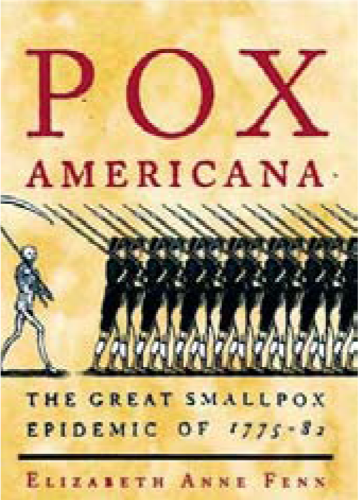
Pox Americana: The Great Smallpox Epidemic of 1775-82 By Elizabeth Anne Fenn, Hill and Wang, 2001, 370 pages: $25.00
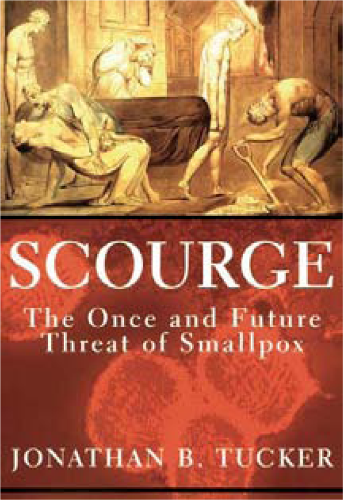
Scourge: The Once and Future Threat of Smallpox By Jonathan B. Tucker, Atlantic Monthly Press, 2001, 291 pages: $26.00
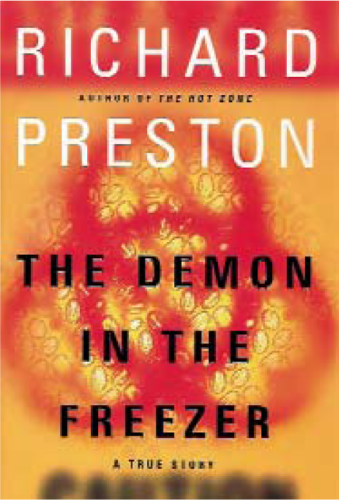
The Demon in the Freezer: A True Story By Richard Preston, Random House, 2002, 240 pages: $24.95
Three thousand years ago, give or take a few centuries, somewhere on the Indian subcontinent the DNA of a tiny particle underwent a minuscule alteration. The particle was a virus from a group now known as pox-viruses, most of which are harmless to humans. The change in itself was unremarkable. It was a mutation–the kind of genetic accident that occurs in organisms, large and small, everywhere. Most mutations are of little consequence, but this one would ultimately pack a genetic wallop. Eons later, through successive generations, the virus came to be understood as the variola virus, the cause of smallpox.
Variola cannot survive long outside a human host, so the transformation probably occurred in some unlucky man, woman, or child. Once in the person's system, the newly mutated virus began to replicate itself and in due course became the seed of the new disease. A week or two after infection, the host began to feel feverish, weak, achy. His skin was marked with red blotches, which then became oozing pustules. The first victim may have died some weeks later, his organs having been overcome by the infective havoc. Or if he survived, he was forever scarred with the pits and fissures that had been etched by the original skin eruptions.
Either way, during those early weeks of illness, members of his family or others near him would themselves have become infected. Whether communicated through cough or touch, the variola would prompt in them the same agonizing ordeal that had been visited upon the initial victim.
In this likely manner, a contagion was born that in subsequent millennia devastated civilizations around the world. Estimates of the number of people who died of smallpox over the years exceed a billion. As recently as the 1960s, when many countries had eradicated the disease through vaccination, variola was still infecting 10 or 15 million people each year, and killing two million.
Although each of these three admirable books deals with smallpox, their approaches and styles are highly distinctive. Elizabeth Anne Fenn's is the most remarkable. She literally changes our understanding of a seminal event in the founding of the American nation. Her carefully researched account moves smallpox to a position of centrality in the outcome of the Revolutionary War, as well as in the fate of the Indian population of North America. Had Gen. George Washington not eventually decided to order the inoculation of his soldiers against smallpox, Fenn suggests, the British might have prevailed. Much of her narrative is about the seven-year period 1775-1782, when variola, she says, “ravaged North America.”
A Duke University historian, Fenn moves her story beyond the travails wrought by battle, imprisonment, and hunger. Infection and disease have long been wholesale killers in war. But in stunning prose she identifies the particular role of smallpox in the American Revolution. In this regard, the advantage first lay with the British. Smallpox, long a scourge in Europe, had become endemic there through the generations. While the disease resulted in death and disfigurement, survivors carried antibodies that protected them from reinfection. Thus, most British soldiers, who had been exposed in their childhood, were immune. But smallpox had been almost nonexistent in the colonies, and Americans were vulnerable.
Fenn's book was published just before September 11 and the subsequent anthrax attacks in 2001. After those incidents, fear of bioterrorism prompted a national debate about policy, including whether to vaccinate the entire population against smallpox. President George W. Bush initially seemed hesitant to make a decision. But in December 2002, he proposed vaccinating more than 10 million Americans–military, medical, police, fire, and other potential responders–against an outbreak.
Bush's declaration had roots in a discovery by Edward Jenner in 1796. The English physician found that an injection of the relatively innocuous cowpox virus could confer immunity against smallpox. (Subsequently, the similarly structured vaccinia virus came to be the preferred vaccine.)
Bush's eventual decision harked back two-and-a-quarter centuries to that of the commander of the Continental Army. Long before Jenner's discovery, it was understood that “variolation” (placing a small amount of pustular material under the skin) would cause a milder form of the disease. Although people would be sick from this inoculation for weeks, almost all would recover. Still, some would erupt with full-blown smallpox, and a few of every hundred might die.
Washington himself had recovered from smallpox (which he contracted during a visit to Barbados) in 1751, and he understood the deadly potential of the virus. In 1775, in the midst of a smallpox outbreak in Boston, he considered ordering his army to undergo variolation. But he worried about its debilitating effects and the risk of an epidemic if any soldiers were prematurely released from isolation. At that point he decided against mass inoculation.
As Fenn escorts the reader through later battles in Massachusetts, Virginia, and Quebec, smallpox becomes an increasing problem. Her account is replete with evidence from reports and diaries from the period. In February 1776, Benedict Arnold, then in charge of the northern army, reported to Washington that “the smallpox has crept in among our troops,” which Arnold feared could lead to “the entire ruin of the Army.”
As the war progressed, variola continued to weaken the Continental forces through infirmity and death, and by frightening off potential enlistees. Further: “Nothing instilled fear in American soldiers and civilians so much as the prospect that the British might use smallpox as a weapon of war,” Fenn says. Despite the absence of hard evidence that the British fought the Americans with germs, she believes that the concern was merited. She reminds readers of an often-cited letter to show that the redcoats would not have been above such a ploy.
A decade before the Revolutionary War, Sir Jeffrey Amherst, then British commander-in-chief, had indicated support for giving Indians blankets from the smallpox hospital with the aim of spreading the disease among them. Amherst's enthusiasm for the idea is noted as well by Jonathan B. Tucker and Richard Preston, both of whom quote from his advisory to one of his officers: “Could it not be Contrived to send the Small Pox among those Disaffected Tribes of Indians?” Whether or not subsequent outbreaks of the disease among the Indians arose from such action remains speculative.
But what is clear is that many American revolutionaries believed that the British were purposely infecting their army and their cities. An army report to Washington, for example, indicated that “Our Enemies … had laid several schemes for communicating the infection of the smallpox, to the Continental army.” Whatever the source of the disease outbreaks, Fenn amasses abundant evidence about the widespread “terrors of the smallpox,” in the words of Patrick Henry. “We should have more to dread from it, than from the Sword of the enemy,” George Washington wrote.
Finally, after nearly two years of vacillation, in 1777 Washington ordered his troops inoculated. By the following year, his army was largely immune to the virus. At the same time, the British were relying increasingly on newly recruited blacks whom they had freed from bondage and on Indians who resented American encroachment on their lands. But smallpox had been foreign to both of these populations, and many of them succumbed to the disease. Exhausted after six years of war, weakened by the depletion of the blacks and Indians in their ranks, the British capitulated in 1781. Fenn concludes: “Washington's unheralded and little-recognized resolution to inoculate the Continental forces must surely rank among his most important decisions of the war.”
Fenn then takes the reader through the contemporaneous devastation wrought by variola among the Indian tribes of North America. She develops her information from burial registers kept by the Catholic churches in the Southwest and from accounts of survivors, explorers, and traders in the rest of the continent. She traces the course of the disease from Mexico to Canada, citing one blood-curdling report after another. Domingo Cabello, Spain's governor of Texas, noted in 1780 that the Indians “are being decimated [by smallpox] to a degree inexpressible.” The following year, a fur trader named William Walker wrote that in the Hudson Bay area, “the Small Pox is raging all round Us with great Violence, sparing very few that takes it.”
In these few years, enhanced by commercial trading, tribal warfare, and other contacts among the Indians, variola made its way throughout the continent, destroying much of the native population. Fenn estimates that between 1775 and 1782, about 25,000 troops died in the service of the Continental army, including those who died from disease. But during that same period, nearly 130,000 North American Indians died of smallpox.
In contrast to Fenn's concentration on one brief, though momentous, period of American history, Jonathan Tucker's account is broader and more contemporary. A bioweapons expert with the U.S. Institute of Peace, Tucker reviews one of the most thrilling accomplishments in public health: the eradication of smallpox from the earth. Led by Donald A. Henderson, an American physician, the global eradication campaign began in 1966 under the auspices of the World Health Organization (WHO). Unlike many other diseases that afflict humans, smallpox seemed possible to eliminate because of two characteristics of the variola virus: Under natural conditions it can only survive in a human host, and vaccination protects a person from infection. In fact, by the time of the WHO campaign, vaccination programs had already wiped out the disease in many countries–the last case in the United States was in 1949. Since the vaccine causes serious side effects in a small number of people, routine vaccinations were ended in the United States in 1972.
In the 30-odd countries where the disease was still endemic–largely in Africa and Asia–the WHO campaign moved forward. Administrators, vaccinators, guards, and spotters to identify outbreaks were recruited in country after country. To achieve their goals, the workers had to face floods, famine, and sometimes the hostility of local populations. Yet, the campaign reached around the world from Indonesia to India to Nigeria. Tucker explains the approach: “Isolating smallpox patients and vaccinating everyone with whom they might come in contact served to create a ring of immunized persons around each outbreak, preventing the virus from infecting new hosts. In this way, it was possible to snuff out the flame of contagion before it could spread, much as building a firebreak could stop a forest fire in its tracks.”
In 1977, the last naturally occurring case of smallpox was identified in Somalia, and three years later the World Health Assembly declared the disease completely eradicated. In 1984, WHO authorized the retention of variola samples at only two laboratories, one at the Centers for Disease Control and Prevention in Atlanta, the other in the Soviet Union (now at a facility in Siberia called Vector). Tucker reviews the tug-of-war during the 1990s between advocates who wanted to destroy the remaining stocks of virus and those who believed they should be retained. The debate was largely made moot by events that he describes in a chapter aptly titled, “The Soviet Betrayal.”
A few years after the collapse of the Soviet Union in 1991, defectors began to reveal the shocking extent of the Soviet biological warfare program, which included the development of smallpox as a weapon. In 1972, the Soviets had joined the United States, Britain, and scores of other countries in establishing the Biological Weapons Convention. The agreement prohibited the development, production, or stockpiling of bioweapons. But two decades later, Western intelligence analysts learned that 60,000 Soviet scientists and technicians had been developing germ weapons all along, in violation of the treaty. Analysts also feared that the virus had come into the hands of other states, including North Korea and Iraq, and possibly terror organizations.
In his sober assessment, Tucker celebrates the smallpox eradication campaign as a great achievement. Yet he notes the irony that “smallpox eradication and the resulting decision to halt the vaccination of civilians worldwide had the unintended effect of enabling the Soviet Union–and, perhaps, other countries–to transform variola virus into an instrument of biological warfare.”
Richard Preston's The Demon in the Freezer covers much the same ground as Tucker's Scourge–from smallpox eradication to the emergence of the virus as a potential bioweapon. But Preston's vignettes and colorful prose make for exciting reading nonetheless. The author of two previous best-sellers, The Hot Zone and The Cobra Event, a novel, he is practiced in producing biological thrillers. Unlike Fenn's and Tucker's books, The Demon in the Freezer is a series of tableaux, often only loosely connected. In fact, the first section of the book has little to do with smallpox at all, but focuses on the anthrax attacks in the fall of 2001. Much of the portion on smallpox in Preston's book (variola is the “demon” of the title) first appeared in the New Yorker. The anthrax add-on connects both bugs to his underlying worry about bioterrorism.
Preston vividly describes a jarring moment in September 2000 when Peter Jahrling, an army scientist from Fort Detrick, Maryland, and Richard Moyer, a poxvirus expert at the University of Florida, were at a scientific conference. Moyer was reading a poster on display at one of the sessions. It described an experiment in which the insertion of a certain mouse gene into a mousepox virus made the virus resistant to vaccine. The experiment had been conducted by a team of Australian scientists led by Ronald Jackson. Moyer turned to Jahrling and said: “My God, Peter, can you believe what these jackasses have done?” Jahrling understood his point immediately. A similar gene alteration in the smallpox virus might render the current vaccine useless. Jahrling remained distressed. According to Preston:
“The poster looked to him like a blueprint for the biological equivalent of a nuclear bomb. People were attending the conference from countries that were suspected of secretly developing smallpox as a weapon, and there was no doubt that genetic engineering was something they were perfectly capable of doing…. He was especially worried about the Vector scientists [from Russia].”
The following year, the Jackson experiment appeared in the Journal of Virology, thus becoming available to Internet readers around the world–and raising questions about whether some research should be prohibited, and which research should not be reported in the open literature. (None of the books under review address these difficult questions.)
Preston has a talent for making people nervous by way of compelling, calibrated prose. He tells about his meeting with William Patrick, a veteran bioweaponeer who helped develop the U.S. germ arsenal before it was eliminated in 1969. Patrick was holding a jar of harmless powder, a sterile “surrogate” of a brain virus: “He shook the jar under my face, and smoky, hazy tendrils wafted toward my nose. I fought an urge to jerk my head back–the mind may know the fog is harmless, but the instincts are hard to convince.”
It is through such detailed and personal narrative that Preston keeps the reader engaged–and shivering. Which, of course, is his intention. But is his picture complete? While he reports about viruses being made more potent, he barely notes the many projects under way to enhance protection against bioagents, such as the development of new antimicrobial agents and antitoxins. Nor does he discuss other means to reduce biothreats, such as strengthening the Biological Weapons Convention.
Preston's book, like Fenn's and Tucker's, bears powerful witness to the devastation wrought by smallpox. All three books are reminders of a disgraceful turn in the human condition at the dawn of the twenty-first century: the heightened chance that a disease thought to have been eradicated forever might deliberately be reintroduced into society. One can only hope that these books will help forestall such a terrible possibility.