



Abstract
How agencies thwart the Freedom of Information Act
On July 4, 1966, President Lyndon Baines Johnson signed into law legislation that would have a significant impact over the ensuing decades. But in contrast to the 1964 Civil Rights Act and a number of other pieces of domestic legislation, it was a law that Johnson signed with great reluctance and neglected to mention in his memoirs. Yet his signature made the Freedom of Information Act (FOIA) law, and as a result, historians, journalists, and others became legally entitled to request and receive copies of government records, except for documents that were specifically exempted.
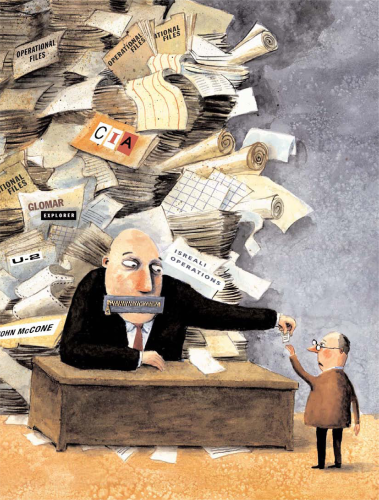
In the 37 years since its passage, FOIA has proven to be a vital tool to those researching past and current national security topics, as well as those concerned with domestic issues. According to a recent accounting, federal, state, and local freedom of information laws were instrumental in more than 6,000 news stories in 2002 and the first half of 2003. National security stories included the exposure of sailors to germ and chemical warfare tests in the 1960s, the safety of the Harrier attack jet, and the theft of weapons from U.S. stockpiles. In addition, recent books on subjects such as the Israeli attack on the U.S.S. Liberty, nuclear weapons pioneers, and Itek's role in the space reconnaissance program all relied, in part, on the product of FOIA requests. 1
Although the Freedom of Information Act has been a blessing to academics, journalists, and activists, it is seen as a curse by some in government who would prefer to operate without the scrutiny of prying outsiders, or would like to avoid the effort involved in complying with the law. In their attempts to escape and evade FOIA requirements, they have resorted to a variety of strategies, including unilaterally “rewriting” the law, improperly denying requests in their entirety, and inappropriately declaring that certain documents are automatically exempt.
A rogue FOIA office
The Energy Department is responsible not only for its headquarters operation in Washington, but also for an array of national laboratories across the United States–from Oak Ridge in Tennessee to Pacific Northwest in Washington State. The responsibility for handling FOIA requests sent to these labs has generally been the responsibility of regional operations offices–in the case of the Los Alamos and Sandia labs, the Albuquerque Operations Office (as it was known until recently).
While the physical distance between the Albuquerque office and department headquarters in Washington can be measured in miles, their interpretations of the FOIA have been light-years apart.
In March 2002, in responses to my requests for Los Alamos-produced studies of the French and Indian nuclear weapons programs, the Albuquerque office ignored the history of court decisions and claimed that freelance writers can never qualify for news media status (which exempts them from the substantial search costs that might otherwise be assessed) because they must rely on contacts with the news media to make “announcements to the public.” The office also claimed that news media requesters must provide “a detailed and clear publication plan,” including sources to be consulted and the way in which the information will be organized. In fact, the law requires only that the requester has a record, such as prior publications, that establishes his or her ability to disseminate information.
The Albuquerque office also claimed that the requester must establish that there is “heightened public interest in the requested information,” but in truth, the law simply requires that the subject be of public interest. The response to one of my requests went on to say that “it appears in your statement that you hope to create interest in the subject because very little presently exists.” 2
The Energy Department's Albuquerque office did not let a definitive ruling from Washington stand in its way of interpreting the law in its own fashion.
In its response to an appeal of the Albuquerque office's unique interpretation of the law, Energy Department headquarters ruled that a freelance journalist could be considered a member of the news media, and that U.S. intelligence assessments of foreign nuclear weapons programs were indeed of current interest to the public. 3
Albuquerque, however, did not let a definitive ruling from Washington stand in its way of interpreting the law in its own fashion. Soon after the department ruled against it, the office responded to a request for Los Alamos studies of China's nuclear weapons program by declaring that I was a “commercial” requester–and must pay search and review costs. 4
Later last year, the public interest group Citizen Action filed an appeal of an Albuquerque Operations Office decision that it did not qualify for a full waiver of fees with respect to its request for documents concerning oxide nuclear reactor fuels shipped to Sandia National Laboratories. Once again Washington told Albuquerque that it had come to the wrong conclusion. More telling, though, was the Energy Department's judgment that of the 11 factors that Albuquerque took into consideration in making its decision, fully eight were not relevant. Among the irrelevant factors were the absence of other FOIA requests, “no independent indication of public interest,” the total cost of processing the request, and the previous provision of information. 5 In effect, the Albuquerque office was continuing to make up its own law. 6
Denial at the CIA
Of the millions of documents the U.S. intelligence community has generated, a significant portion can be legitimately denied in their entirety on the grounds that they consist wholly of currently and properly classified information and/or reveal sources and methods (they fall under “b(1)” and “b(3)” exemptions). Examples of exempt documents would include, hypothetically, a summary of human intelligence from North Korea, communications intelligence reports on the Iranian nuclear program, or an account of a newly developed technique for collecting or evaluating intelligence on biological warfare research.
At the same time, there are also documents about which it is implausible in the extreme to claim they contain no releasable information–or that they do not contain a great deal of releasable information. But that has not stopped the CIA from refusing to release even portions of such documents.
For instance, the CIA has released histories of the tenures of many of its directors, including that of Allen Dulles. But it asserts that the entire history of John McCone's tenure as director (1962-1965) must be withheld to protect classified information, as well as sources and methods. 7 This claim is highly implausible, given the massive amount of material that it has released about key events during Mc-Cone's tenure–including the Cuban Missile Crisis, the analysis of intelligence concerning China's first atomic detonation, and the battle over space reconnaissance–that are likely to be covered in the history. 8
Suspicion that the CIA may not always conscientiously review documents for release is heightened by other examples. In the fall of 2001, the agency claimed that its eight-page March 1963 study, “Consequences of Israeli Acquisition of a Nuclear Capacity,” had to remain classified in its entirety–on the familiar b(1) and b(3) grounds. Unfortunately for the agency's credibility, the study had been declassified in its entirety in 1978 and is available at the John F. Kennedy Library. Further, examination of the study makes it difficult to see how anyone could honestly apply the b(1) and b(3) exemptions to it. It contains a purely political analysis of the consequences of Israeli acquisition, but no technical data on the Israeli program or revelation of intelligence techniques. Typical of its content is the observation that “even though Israel already enjoys a clear military superiority over its Arab adversaries, singly or combined, acquisition of a nuclear capability would greatly enhance Israel's sense of security.”
This is not the only case in which the claim of the need for complete secrecy runs up against the fact that a document has already been released in whole or in part, or where a leak makes it possible to independently evaluate the CIA's claims. Other “denied” documents that had already been released in part include a 1963 set of recommendations by the President's Foreign Intelligence Advisory Board (PFIAB) concerning the creation of a science and technology directorate in the CIA, a 1962 national intelligence estimate (NIE) on Chinese advanced weapons programs, and a 1991 evaluation of Iraqi weapons of mass destruction programs. A page of the PFIAB's recommendations appeared in a declassified Studies in Intelligence article; the NIE was included in supplemental material to a Foreign Relations of the United States volume. And the CIA had released the 1991 study in a court case. 9
Last year, in his book Bush at War, Bob Woodward provided another opportunity to check the CIA's credibility with respect to another “denied in its entirety” response. This time the document in question, again denied on b(1) and b(3) exemptions, was George Tenet's now-famous “We Are at War” memo, sent to CIA employees shortly after the terrorist attacks of September 11, 2001. According to Woodward, the memo's contents included the statements “There can be no bureaucratic impediments to success. All the rules have changed”; “We must all be passionate and driven–but not breathless. We must stay cool”; “Together we will win this war and make our president and the American people proud.” Such statements do not seem to merit classification on any grounds.
Denials may result from agency decisions not to release certain material irrespective of its content, or from incompetence on the part of the reviewers, or from an analyst's desire to avoid the tedious and time-consuming task of reviewing a long document. In such cases, though, information that might illuminate U.S. history stays behind locked doors.
“Operational files”
A rare moment of agreement on a legal matter occurred between the CIA and the American Civil Liberties Union in 1984. The agency and the civil liberties group had battled in court and in the halls of Congress over issues such as the First Amendment rights of CIA employees, and the authority of the CIA and other intelligence agencies to collect data on American citizens. 10
The CIA and the ACLU came together over a piece of legislation–the CIA Information Act of 1984. The rationale behind the act was simple. The CIA's directorates of Operations and Science and Technology possessed a large number of documents dealing with contemporary intelligence and counterintelligence collection that would legitimately be denied in their entirety if requested under FOIA. It would serve no one's interest–neither the CIA's nor FOIA requesters'–to have CIA personnel spend time searching for and reviewing (as required by the law as it stood) documents that were destined to be denied in their entirety.
Allowing the CIA to forgo the search and review process for these files, designated “operational files,” promised to reduce unproductive use of agency resources, as well as improve its ability to deliver declassified material to requesters.
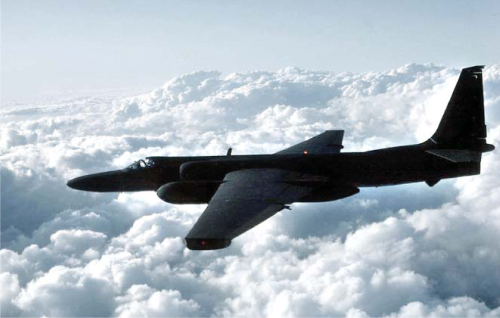
A great deal of information about the U-2 spy plane has been declassified, yet the CIA recently refused to review the history of the office that operated the plane.
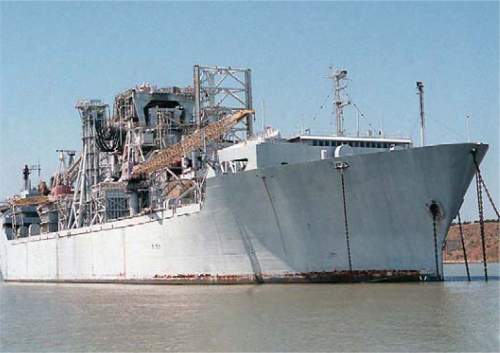
An open secret: It was reported in the press, and books were written about it, yet the CIA refuses to acknowledge the Glomar Explorer's mission.
At the time the legislation was being considered, CIA officials assured Congress that it would not result in any denial of documents that were currently available. A letter from Clair George, who became the agency's deputy director for operations in 1984, to the chairman of the House Intelligence Committee noted that the CIA's partially released study of the Berlin Tunnel operation would not be considered part of the agency's operational files, and assured the committee that because “special studies will not be in designated files, this type of material will continue to be accessible.” John McMahon, CIA deputy director, assured the Senate Intelligence Committee that “by removing these sensitive operational files from the FOIA process, the public is deprived of no meaningful information whatsoever.”
Some legislators, such as Vermont Democratic Sen. Patrick Leahy, emphasized the importance of Mc-Mahon's reassurances, saying that “I would not support a bill whose purpose would result in denying to the public that which would otherwise be made available.” The House report noted that its intelligence committee “considered it to be of primary importance in providing CIA relief … to preserve undiminished the amount of meaningful information releasable.” 11
For almost two decades the CIA stuck to its bargain. Recently, however, it has decided that any histories of the Directorate of Science and Technology, its components, or its activities are part of the directorate's operational files and thus exempt from search and review–even when those histories cover activities that have been the subject of substantial declassification. In 2002, it used the exemption of operational files to refuse to review the history of the Office of Special Activities, which operated the U-2 and A-12 spy planes, covering the 1962-1969 period–despite its earlier declassification of an official history of the U-2 (which contained a chapter on the A-12) and the release, to the National Archives, of thousands of pages of documents concerning those programs. 12
Also part of the directorate's operational files, according to the agency's new interpretation, are a history of the Office of ELINT (electronic intelligence) from 1962-1966, and any histories of the Office of Research and Development. Much about these offices (which no longer exist) has already been declassified–the National Archives contain a number of articles from the CIA's Studies in Intelligence that recount ELINT op-erations. 13 But that has not stopped the CIA from asserting that the histories are relevant to current intelligence collection activities.
And despite the fact that covert action activities are neither intelligence nor counterintelligence activities under the 1984 information act, the CIA has also recently declared its histories of covert activities exempt from search and review. Included in the exempt category is Covert Action Operations: Soviet Russia Division, 1950-1968, which is one of many histories the CIA allowed journalist Evan Thomas to examine while he was writing The Very Best Men: Four Who Dared, his 1995 book on Richard Bissell and other key CIA officials. 14
For many years the CIA was the only agency to have an “operational files” exemption. But the 2003 intelligence authorization act awarded the same exemption to the National Reconnaissance Office (NRO), responsible for the development and operation of America's reconnaissance satellites. Despite its covert history, the NRO, whose existence was not declassified until 1992, had become one of the most responsive and reasonable members of the national security bureaucracy when it came to implementing the FOIA. But the operational files exemption apparently proved too much of a temptation to the NRO leadership.
Despite having released a number of internal directives in response to a 2002 FOIA request, the NRO recently declared that all such directives are part of its operational files–including directives on “Executive Order 12333-Intelligence Activities Affecting United States Persons” and the “National Reconnaissance Pioneer Recognition Program.” It has also determined that 1967 and 1971 reports on the national reconnaissance program are part of the agency's operational files–although portions of these reports have already been declassified, and much of the remainder of the reports focus on declassified space reconnaissance systems such as Corona and KH-7. The final reports of NRO directors who served in the 1960s and early 1970s are also now considered part of NRO's operational files. 15
“Glomarized”
In 1968 a Soviet submarine, rising to the surface to recharge its batteries, imploded and sank somewhere in the Pacific. A U.S. operation to recover key parts of the submarine, which used a specially built vessel, the Glo-mar Explorer, was partially successful. While the operation was reported in the press and is the subject of a couple of books, the U.S. government refused to acknowledge that the operation occurred, much less provide any details about it. Faced with litigation to obtain documents under the FOIA on the operation, the CIA claimed that the very existence of such an operation, if it existed, would be properly classified information. Therefore, the CIA argued, it was justified in denying a FOIA request for documents related to the operation without acknowledging whether or not it existed. After the courts agreed, subsequent requesters to the CIA and other intelligence agencies (including the National Security Agency) find, on occasion, that they, too, have been “glomarized.”
It is not hard to think of cases where such a response would be justified. In some cases diplomatic or international legal considerations might prevent acknowledging particular intelligence operations–aerial overflights or submarine reconnaissance missions into a nation's territorial waters, for instance. Also, acknowledging that some particular nation or activity is a target of U.S. intelligence collection could present diplomatic or operational problems.
But the CIA has employed the Glo-mar exemption beyond such understandable cases–claiming that it cannot acknowledge production of counterintelligence studies concerning foreign, even hostile, intelligence services–to studies such as its 1984 study, KGB and GRU. As a result, unclassified portions of the study, which recounts the early history of the Soviet intelligence and security services, may not be reviewed for release.
FOIA requesters now occasionally find they have been “glomarized”–an agency won't even admit something exists, much less release documents about it.
In 2001, I requested two CIA counterintelligence studies–the November 1990 The KGB's First Chief Directorate: Structure, Functions, and Methods, and the March 1988 The Soviet Counterintelligence Offensive: KGB Recruitment Operations Against the CIA. Predictably, the agency responded that it could “neither confirm nor deny the existence or nonexistence of [responsive] records.” 16 But the CIA was either unaware, or did not consider it relevant, that both documents were among those that FBI agent Robert Hanssen sold to the KGB, and that they had been listed in an unclassified FBI affidavit. The CIA's reaction to an appeal of the denial will determine if it considers the mention of a document in an FBI affidavit as an official acknowledgment.
Battles ahead
The record of FOIA compliance is not all one-sided. There are many FOIA offices and officers throughout the government who are conscientious, responsive, and reasonable–who do not seek to circumvent the law, but to implement it; who try to facilitate the processing of requests rather than find excuses to deny them. The result has been the release of millions of pages of material. Even agencies that are obstructionist with regard to the FOIA or declassification in some respects can be forthcoming in others. Thus, the CIA has deposited several hard drives' worth of declassified documents onto computers at the National Archives–including documents that deal with the same topics as “exempt” histories.
Agencies may also respond to appeals, although having to go through the appeal process may cause a significant additional delay. In response to a 1992 request for all 1969-1974 national intelligence estimates and special national intelligence estimates on China, in 1998 the CIA claimed that all the estimates were classified in their entirety. An appeal, noting the implausibility of that response given the passage of time, resulted in 2002 in a number of estimates being released, most in their entirety.
It remains to be seen how the NRO will respond to appeals of its use of the operational files exemption. Unfortunately, the CIA has already denied appeals of its employment of that exemption with regard to the histories discussed above. It remains to be seen how it will respond to possible legal action.
In some cases, preventive action can forestall an agency's misuse of an exemption, by denying it to them in the first place. A proposal to give an operational files exemption to the Defense Intelligence Agency (DIA) failed to win congressional approval after the National Security Archive and the Center for National Security Studies demonstrated that many of the documents that had been released by the DIA could be withheld as exempt under the proposed legislation. In the absence of the exemption, the DIA continues to operate one of the better intelligence community FOIA offices.
This year, as a result of a closed briefing by FOIA advocates, a proposed operational files exemption for the National Security Agency (NSA) was limited to the Signals Intelligence (SIGINT) and Research and Development directorates. And Congress required that any files that have been placed in the NSA archives must be searched for and reviewed. 17
Footnotes
1.
Meredith Fuchs, Barbara Elias, and Thomas Blanton (eds.), “The Freedom of Information Act on Its 37th Birthday,” July 4, 2003 ( ); A. Jay Cristol, The Liberty Incident: The 1967 Israeli Attack on the U.S. Navy Spy Ship (Washington, D.C: Brassey's, 2002); Gregg Herken, The Brotherhood of the Bomb: The Tangled Lives and Loyalties of Robert Oppenheimer, Ernest Lawrence, and Edward Teller (New York: Henry Holt, 2002); Jonathan Lewis, Spy Capitalism: Itek and the CIA (New Haven: Yale University Press, 2002).
2.
The response letters, all dated March 27, 2002, were from Terry Martin Apodaca (for Carolyn A. Becknell) to the author.
3.
Energy Department, “Decision and Order of the Department of Energy, Case Number VFA-0736,” July 30, 2002. Relevant case law can be found in National Security Archive v. U.S. Department of Defense, 880 F. 2nd 1381 (D.C. Cir. 1989).
4.
Carolyn A. Becknell to the author, August 9, 2002.
5.
Energy Department, “Decision and Order of the Department of Energy, Case Number TFA-0016,” April 1, 2003.
6.
The Albuquerque Operations Office is not the only organization to make up its own law concerning the waiver of fees. In 1999, U.S. Strategic Command informed Hans Kris-tensen of the Nautilus Institute that he did not qualify for a waiver of fees because he was not “a viable member of the media, but a private researcher who occasionally writes an article for a limited audience and as a freelance author rather than a paid, full-time reporter.” Email from Hans Kristensen, June 6, 2003.
7.
Kathryn I. Dyer to the author, September 13, 2000.
8.
See Mary S. McAuliffe (ed.), CIA Documents on the Cuban Missile Crisis, 1962 (Washington, D.C.: Central Intelligence Agency, 1992); Gregory W. Pedlow and Donald E. Welzenbach, The CIA and the U-2 Program, 1954-1974 (Washington, D.C.: Central Intelligence Agency, 1998); Kevin C. Ruffner, CORONA: America's First Satellite Program (Washington, D.C.: Central Intelligence Agency, 1995).
9.
See Donald E. Welzenbach, “Science and Technology: Origins of a Directorate,” Studies in Intelligence, vol. 30, no. 2 (Summer 1986). The NIE is NIE 13-2-62, “Chinese Communist Advanced Weapons Capabilities,” April 25, 1962; Office of Scientific and Weapons Research, CIA, “Prewar Status of Iraqi Weapons of Mass Destruction,” January 1991.
10.
Mark Riebling, Wedge: The Secret War Between the FBI and CIA (New York: Knopf, 1994), p. 347.
11.
House Permanent Select Committee on Intelligence, Legislation to Modify the Application of the Freedom of Information Act to the Central Intelligence Agency (Washington, D.C.: U.S. Government Printing Office, 1984), p. 121; Senate Select Committee on Intelligence, S.1324, An Amendment to the National Security Act of 1947 (Washington, D.C.: U.S. Government Printing Office, 1983), pp. 8, 17; U.S. Congress, House of Representatives, Central Intelligence Agency Information Act, Report 98-726, Part I (Washington, D.C.: U.S. Government Printing Office, 1984), p. 17.
12.
See Pedlow and Welzenbach, The CIA and the U-2 Program, 1954-1974. The A-12 chapter was deleted from the volume, but released in response to an early 1990s FOIA request.
13.
For example, see Frank Eliot, “Moon Bounce ELINT,” Studies in Intelligence, vol. 11, no. 2 (Spring 1967); William Nance, “Quality ELINT,” Studies in Intelligence, vol. 12, no. 2 (Spring 1968). Also declassified is Gene Poteat, “Stealth, Countermeasures, and ELINT,” Studies in Intelligence, vol. 42, no. 1 (Spring 1998).
14.
Letter, Kathryn I. Dyer to the author, June 5, 2003.
15.
E-mail from Michael Ravnitzky, “Abuse of Operational Records Exemption at the National Reconnaissance Office,” June 11, 2003; Letters, Barbara Freimann, NRO Information Access and Release Center, to the author, May 21, 2003.
16.
Letter, Kathryn I. Dyer to the author, March 16, 2001.
17.
“Secrecy News” (an e-mail newsletter), Federation of American Scientists, vol. 2003, no. 44 (May 22, 2003).