



Abstract

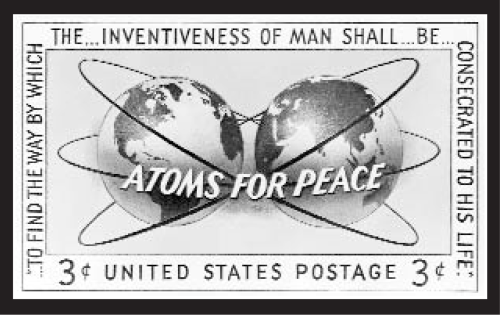
President Dwight D. Eisenhower's Atoms for Peace program was supposed to distract other countries from pursuing nuclear weapons by sharing peaceful nuclear technology with them.
It's funny how things have worked out.
On December 8, 1953, Eisenhower stood before the General Assembly of the United Nations and pitched Atoms for Peace. To control the spread of nuclear weapons, the initiative proposed, nuclear secrets should be shared for the betterment of humankind. “It is not enough to take this weapon out of the hands of the soldiers,” Eisenhower said. “It must be put into the hands of those who will know how to strip its military casing and adapt it to the arts of peace.”
The idea seemed counterintuitive to some. As Leonard Beaton wrote in 1966, “Only a social psychologist could hope to explain why the possessors of the most terrible weapons in history should have sought to spread the necessary industry to produce them in the belief that this could make the world safer.”
Model of a nuclear rocket engine.
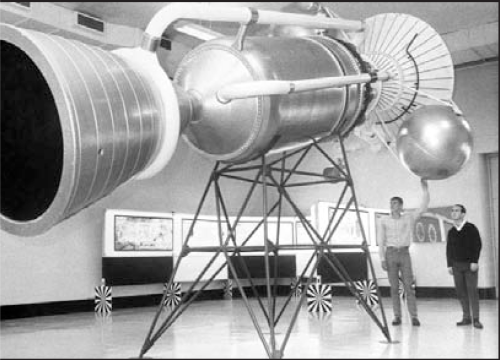
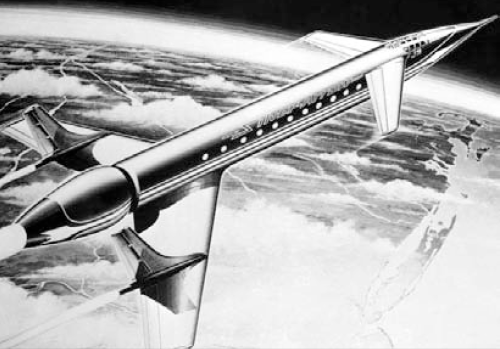
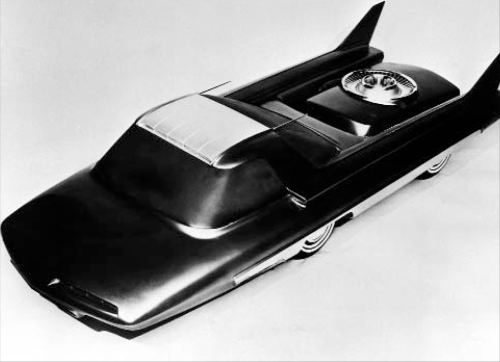
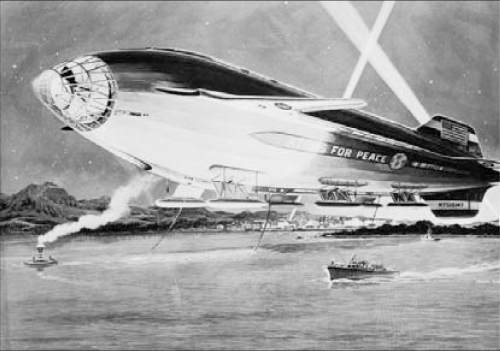
Domestic enthusiasm for the peaceful atom was tremendous, lasting into the 1970s. After Eisenhower's speech, a public relations campaign swept the country, driven in part by traveling Atoms for Peace exhibits. Other PR ideas, such as a nuclear-powered dirigible that would fly from city to city, remained pure fantasy, as did a number of scientific projects–although not before much brainpower and cash were invested in them. Atomic transportation is perhaps one of the best-remembered dead ends–nuclear-powered cars, planes, and space shuttles–but there were many others, including nuclear explosions to excavate canals and harbors; huge “nu-plexes” to desalinate salt water; underground nuclear detonations to make cavernous “natural” reservoirs for oil and natural gas; and artificial hearts that ticked thanks to plutonium.
The time after Eisenhower's speech was a heady one for science, filled with wild expectations for the future of atomic power. The giddiness spilled over into pop culture. In 1956, the Walt Disney Company published a colorful children's book, Our Friend the Atom, along with a companion television cartoon. And in 1959, Disneyland's Tomorrowland opened a ride featuring eight mock nuclear submarines–at the time, the largest nuclear fleet in the world. Then-Vice President Richard Nixon was aboard for the inaugural ride.
Artist's rendering of an atomic airliner.
Besides amusement park attractions, the Atoms for Peace initiative brought about other positive developments. First and foremost, it led to the creation in 1957 of the International Atomic Energy Agency (IAEA), which has piloted programs that use nuclear science for cleaning up soil and water and fighting cancer, among other helpful things. (Technology from IAEA radioisotope work is also used to measure the level of beer in cans.)
As nuclear power's biggest cheerleader, the IAEA has always been an atomic optimist. Part of its mandate is to promote the peaceful uses of the atom–in other words, to be a nuclear pusher. In a 1974 analysis, it predicted that Uganda might need three nuclear power plants, and Liberia, two.
Today, there are about 35 countries operating or building nuclear power plants worldwide. Eight have nuclear arsenals. At least two additional nations (North Korea and Iran) are believed to be pursuing nuclear weapons. Only one country, South Africa, has ever achieved a full-fledged nuclear weapons program and then voluntarily renounced its weapons.
India was perhaps the first nation to realize exactly what kind of a door the Atoms for Peace initiative was opening. It promised to keep its atomic activities peaceful, and on the basis of its assurances, in 1955 Canada built it a research reactor, and the United States supplied heavy water. Thanks to these Atoms for Peace contributions, India was able to derive approximately 600 pounds of plutonium, some of which it used in a 1974 nuclear test. Without the initiative, India's drive for the bomb would have been slowed significantly.
The IAEA doesn't have sharp teeth for enforcing treaty rules, but one member–the United States–likes to flex its muscles. North Korea was, until a year ago, part of the nonproliferation regime, but then pulled out, in part a reaction to what it felt was U.S. bullying. In the past, the United States has made it abundantly clear to its smaller friends (namely, South Korea and Taiwan) that nuclear weapons programs of their own are verboten.
A half-century after Eisenhower's speech, history may be repeating itself. Iran, which has, among other things, a U.S.-supplied research reactor, as well as a power plant being built with foreign assistance, says it has only peaceful purposes in mind for its growing nuclear energy complex. Intelligence organizations believe otherwise. It's 50 years down the road, but the world hasn't come very far.
The Nucleon car, developed by Ford.
Artist's rendering of an atomic-powered dirigible.
Sources: Atoms for Peace, Milestone Document, National Archives and Records Administration; Joseph Cirincione, Deadly Arsenals: Tracking Weapons of Mass Destruction (Washington, D.C.: Carnegie Endowment for International Peace, 2002); David Fischer, History of the International Atomic Energy Agency: The First Forty Years (Vienna: IAEA, 1997); Oak Ridge National Laboratory (www.ornl.gov); IAEA (www.iaea.org/worldatom).