



Abstract
From Fermilab's beloved “First Lady” to a solar energy pioneer, the science and policy communities lost a number of influential members this year.
Chamberlain's celebrated discovery of the antiproton originated with a flippant $500 bet made at a party with fellow physicist Maurice Goldhaber. “If someone of Maurice's stature thought antiprotons didn't exist, then this was a real spur to showing they did,” Chamberlain, a Bulletin sponsor, once remarked. “At that moment I decided, ‘By Jove, this is what I want to do.’” The research inspired by the wager resulted in a 1959 Nobel Prize in Physics for Chamberlain and offered a rare clue to those studying antimatter, a concept that continues to fascinate scientists throughout the world.
Owen Chamberlain
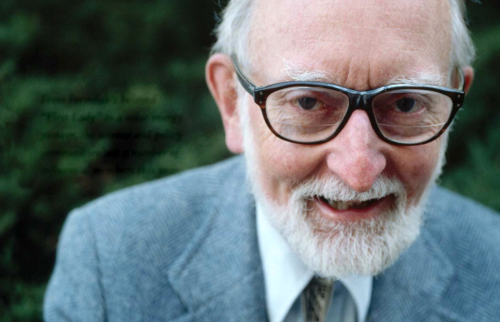
The Nobel committee called Davis's hunt for solar neutrinos, the minuscule, fast-moving particles resulting from nuclear reactions occurring in the sun, “considerably more difficult than finding a particular grain of sand in the whole of the Sahara desert.” Despite the challenge's enormity, Davis persevered, first toiling 2,300 feet below the surface in an Ohio limestone mine and later even deeper in a South Dakota gold mine in pursuit of a location free of cosmic rays and with enough matter to trap the particles. His success earned him the 2002 Nobel Prize in Physics.
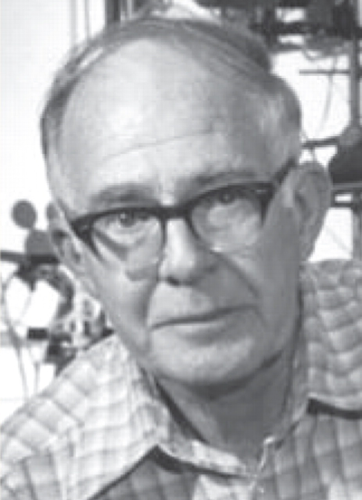
Detractors could question Gould's motives, but never his passion. Controversial and defiant from almost the moment he began studying the health effects of low-level radiation from nuclear power plants in the 1980s, Gould angered the nuclear industry and many experts who considered him an anti-nuclear activist posing as a scientist. But he ran his Radiation and Public Health Project and its signature Tooth Fairy Project, both of which argued a correlation between cancer rates and nuclear power, unapologetically. “We don't solicit government funding,” Gould told the Village Voice in 1999. “They're the ones that are behind this problem.”
Like many other Manhattan Project scientists, Magee, considered the “father of radiation chemistry,” joined the great rush to build the Bomb in the New Mexico desert to ensure that the Allies secured it before the Nazis. But his feelings about the Project changed after Germany surrendered. “Those of us on the Manhattan Project did not want the bomb dropped on Japan,” he wrote ruefully in an unpublished autobiography. “Some of the workers led the way in getting a petition sent to [President Harry S.] Truman not to use the new bomb. But as we know, it was used.”
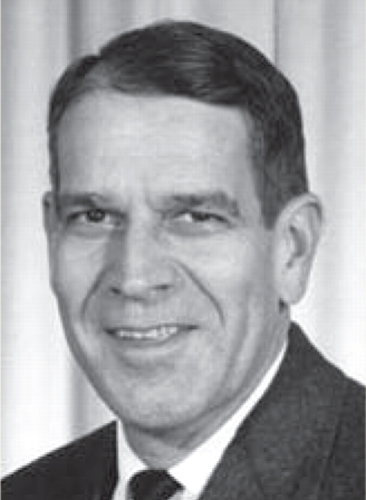
Meyerhof;s father, a Nobel laureate in medicine, presented him at a young age with his first microscope. He never relinquished it. The microscope remained at his side during his perilous escape from Nazi Germany and throughout his 43-year tenure as a physics professor at Stanford University, which included a stint as department chair. “He was always the department ombudsman and always a strong supporter of affirmative action and encouraging women to study physics,” Stanford physics professor Bias Cabrera remarked to the Stanford News Service.
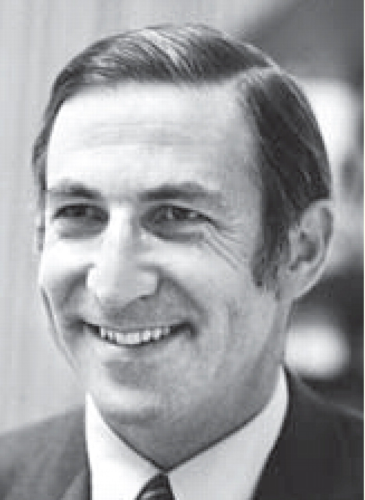
Miller's work as chief of pediatrics for the Atomic Bomb Casualty Commission in the 1950s identified previously unknown victims of the Hiroshima bombing–unborn babies. The research conducted by his team in Hiroshima found a high rate of childhood cancers and birth defects in babies born in the months following August 1945. Investigating the causes of cancer, especially those prevalent in children, would dominate the next five decades of his career. “When you're curing childhood cancer,” he once observed, “you're giving a person many more years of life than if you cured an elderly person.”
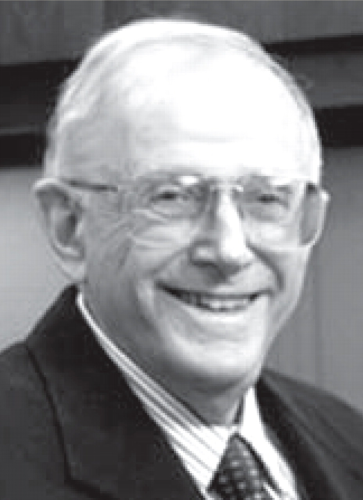
When originally approached to create weaponry to aid Israel's fight for independence, Ne'eman declined. “I told them I joined the Hagana [a forerunner to the Israel Defense Forces] in order to fight,” he recalled in 2005. “I'd be an engineer in the family's plant.” It was a stance that abruptly changed, as he spent most of his adulthood in technical and scientific service to his country. Most notably, he played an integral role in Israel's nuclear program, serving as the Israel Atomic Energy Commission's acting chair and, more furtively, helping it procure nuclear weapons.
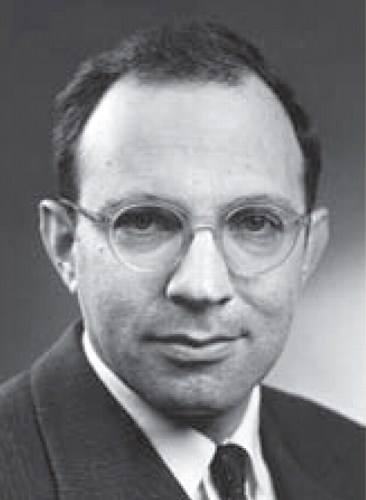
Believed to be the only known nuclear physicist to witness the Hiroshima bombing, Ogawa understood the scientific forces powering the unrivaled destruction almost as it occurred. To validate that the Bomb had been an atomic device, he quickly assembled various Japanese scientists to study the devastation. “Our first clue was that the X-ray film in the hospitals had been exposed,” he told the New York Times in 1982. “That could only have happened by radiation.” Ogawa later played a prominent role in Pugwash, attending the inaugural conference in 1957; he also cofounded the Kyoto Conference of Scientists, a collection of Japanese scientists opposed to the Bomb.
To better understand the future of Earth's climate, Shackleton, a giant in earth science, closely studied its past. His work on how Earth's temperature cycles provided the knowledge that underpins much of today's discussion about climate change and global warming. “When Nick Shackleton began his research, the investigation of past climatic changes was an area of ‘academic’ interest only,” marine geologist William Ruddiman wrote in Science earlier this year. “Four decades later, his lifetime achievements define the emergence of our understanding of the operation of Earth's natural climate system.”
When he retired in the early 1970s, Shurcliff had already developed the formula for camouflage paint, coedited the official history of the Manhattan Project, and almost single-handedly squelched the push for widely available supersonic commercial air travel. The 1973 oil embargo, however, inspired a new interest–solar power, then a nascent, disorganized field. “Half the information was missing, and systems were vaguely described as ‘ingenious’ without explaining how they were ingenious,” he told the New York Times in 1980. “Sense had to be made of it.” He took it upon himself to provide this sense, prolifically writing about solar technology and designing much of his own.
Few international agreements lack Sohn's imprint. A steadfast proponent of world government–he coauthored a 1958 book entitled World Peace Through World Law–Sohn served as an architect of the U.N. Charter in 1945 and numerous human rights and disarmament pacts thereafter. Said U.N. Secretary-General Kofi Annan, “Throughout his life, he won wide respect as a voice of reason and source of wisdom, and was a firm believer in the importance of the United Nations and of the rule of law in settling international disputes.”
James Van Allen
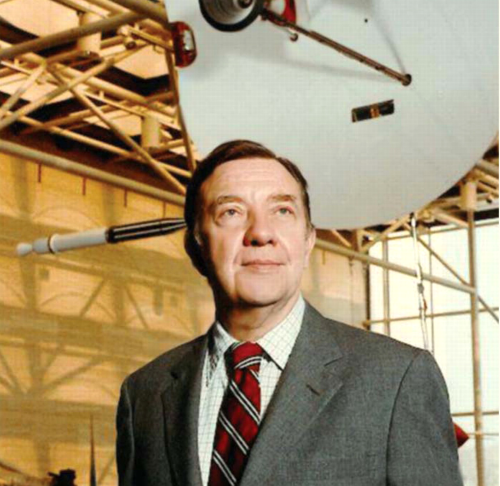
The Geiger counter that Van Allen designed and placed aboard Explorer I, the first U.S. satellite, did more than uncover the radiation belts that bear his name. Occurring shortly after the Soviet launch of Sputnik, Van Allen's discovery gave the United States its swagger back. “In the race into space, the Russians can claim bigger satellites and more powerful rockets,” a 1959 Time cover story proclaimed. “If the U.S. can retort that it has a big lead in scientific achievement, the man most responsible is James Van Allen, whose instruments, designed and largely constructed in his basement laboratory, brought back from space discoveries the Russians never made.”
When seven Russian scientists arrived at Fermilab on a scientific exchange in 1972, Wilson, a longtime Bulletin contributor and the wife of the lab's then-director, wrote in the magazine, “In a time of uncertain international relations, can seven patriotic Russian nationals and their wives live successfully in ultraconservative DuPage County, Illinois, the county that gave Goldwater his second largest plurality in the 1964 presidential election?” Wilson, known for her warmth, grace, and cultural zeal as Fermilab's beloved “First Lady,” made sure they did. She contributed much to the Manhattan Project's historical record as well, coediting the books Alamogordo Plus Twenty-Five Years and Standing By and Making Do: Women of Wartime Los Alamos.

The director of the Ukraine/American Chernobyl Ocular Study (UACOS), Worgul attempted to establish a more definitive link between radiation exposure and cataracts. His research subjects: 12,000 members of the Chernobyl cleanup crews, whom UACOS has examined biennially since the early 1990s. “[Worgul's] contributions to radiation cataract research are hard to overrate,” UACOS codirector Yuriy Kundiyev wrote on a tribute website. “His scientific impact in our joint investigations is well known in Ukraine, and he was elected as a foreign member of the National Academy of Sciences of Ukraine.”
IN MEMORIAM
DANIEL MCGOVERN, 96–Combat photographer who shot many of the iconic images of post-World War II Hiroshima.
EBERHARDT RECHTIN, 80–Former Defense Advanced Research Projects Agency director.
MELVIN SCHWARTZ, 73–1988 Nobel laureate in physics.