



Abstract
This study examines between-country differences in the degree to which teachers’ working conditions, salaries, and societal evaluations about desirable job characteristics are associated with students’ teaching career expectations. Three-level hierarchical generalized linear models are employed to analyze cross-national data from the Programme for International Student Assessment (PISA). Results reveal that teacher salaries and societal evaluations about the importance of job responsibility and respect are positively associated with teaching career expectations, while working hours are negatively associated with teaching career expectations. Analyses further reveal that the association between salaries and career expectations and societal evaluations and career expectations differ among students with different mathematics skills. We conclude by discussing policy initiatives that can encourage students with strong quantitative abilities to consider a career in teaching.
Keywords
Teacher quality is often considered to be a crucial factor predicting student academic outcomes (Nye, Konstantopoulos, & Hedges, 2004; Rivikin, Hanushek, & Kain, 2005). For instance, empirical studies have shown that teacher quality is associated with gains in student achievement even after accounting for prior student learning and family background characteristics (Darling-Hammond, 2000; Hanushek, Kain, & Rivikin, 1998; Muñoz, Prather, & Stronge, 2011; Wright, Horn, & Sanders, 1997). In particular, new evidence is emerging on the importance that teachers’ cognitive skills have as determinants of students’ academic achievement (Greenwald, Hedlin, & Laine, 1996; Hanushek, Piopiunik, & Wiederhold, 2014; Meroni, Vera-Toscano, & Costa, 2015). Hanushek et al. (2014) and Meroni et al. (2015) matched data on teachers’ cognitive skills in countries participating in the Organisation for Economic Co-operation and Development (OECD) Survey of Adult Skills with data from the Programme for International Student Assessment (PISA) to show that “smarter teachers produce smarter students.” However, in recent years, many countries have experienced a shortage of teachers, particularly teachers with a strong background and capacity in subject areas such as mathematics and science (OECD, 2005, 2013b; Schleicher, 2012). In the United States, for example, college graduates with strong academic skills are less likely to choose teaching careers than graduates with weaker academic skills (Hanushek & Pace, 1995; Vegas, Murnane, & Willett, 2001). These findings are mounting concerns in education policy circles about the need to attract high-achieving and motivated candidates into teacher training and how best this aim can be achieved (OECD, 2011).
For countries faced with the challenge of attempting to recruit more candidates into teaching, and high-quality candidates in particular, two policy levers for making teaching an attractive career are usually considered: to offer salaries that are competitive with other tertiary-educated professionals or enhance working conditions, for example, by reducing class size (Odden & Carolyn, 2001; Tucker, 2011). Poor working conditions and relatively low salaries are often cited as reasons why the teaching profession has lost much of its capacity to attract potential candidates overall and high-achieving candidates in particular (e.g., Dolton, 1990; Elfers, Plecki, John, & Wedel, 2008; European Commission, 2013a, 2013b; Page & Page, 1984). Factors determining the status of a profession are numerous, complex, and extremely difficult to quantify (and outside the scope of this paper), but aspects such as poor working conditions and low salaries have been linked to teaching being perceived as, among other things, less prestigious and therefore less attractive than other professions such as medicine, law, or engineering (Elfers et al., 2008; Eraut, 1994; Hoyle, 2001; Ingersoll & Merrill, 2011).
Recent OECD data show that on average across OECD countries, primary school teachers earn 81% of the salary of a tertiary-educated 25- to 64-year-old full-time, full-year worker; lower secondary teachers are paid 85% of that benchmark, and upper-secondary teachers are paid 89% of that benchmark salary (OECD, 2016). But in the case of teachers, monetary incentives such as salaries may not be the only or even the primary motivator driving career choices, and while monetary incentives may be associated with the social status of different professions, social status and monetary incentives reflect different aspects of the value of engaging in a profession. Reviews of motivational factors shaping individuals’ choice for pursuing a career in teaching indicate the key role played by altruistic, service-oriented goals and other intrinsic motivations (Brookhart & Freeman, 1992; Watt & Richardson, 2012). Motivation crowding theory suggests that under certain conditions, extrinsic motivators such as monetary incentives or improved working conditions may undermine intrinsic motivation (Frey & Jegen, 2001).
To recruit candidates into teacher training programs, and highly qualified candidates in particular, we need to better understand the factors that might channel students into a career in teaching. In this paper, we investigate high school students’ career expectations. We disentangle the unique contribution played by monetary incentives, workplace conditions, and societal evaluations about desirable job characteristics and explore if these motivational drivers equally apply among high- and low-achieving students. We focus on mathematics ability because of policy concerns about the need to attract highly qualified individuals in mathematics into teacher training programs.
Background
Review of Previous Research
Policy initiatives aiming to raise teacher salaries or improve working conditions draw on the human capital theory of occupational choice. This approach considers career choices as ordinary investment projects, in which investment decisions between alternative occupations are based on the identification of alternative cash flows or, in more sophisticated forms, monetary equivalents of costs and benefits that would be accumulated over the entire working life of an individual. The assumption that individuals act rationally to maximize the net present value of their investment is at the basis of predictions about which investment decisions individuals will make (Bostkin, 1974). A key feature of applications of human capital theories to explain occupational decisions is that most studies consider only factors that are easy to quantify in monetary terms—such as salaries and bonuses to quantify benefits and tuition costs and forgone income to quantify costs. However, results on the estimated returns to different occupational investments are likely to be biased and incorrectly account for variations in decisions to enter different occupations if the returns to different occupations are strongly associated with how they are valued by society, how much social status they enjoy, or altruistic motives.
Many studies have investigated the effect of expected earnings on the attractiveness of a career in the teaching profession; however, results are inconsistent. Some studies report that more college graduates choose to become teachers when salaries are more competitive compared to nonteaching occupations. For example, in the case of the United States, Elfers et al. (2008) showed that offering a competitive salary can improve the attractiveness of a career in teaching when compared to a choice of a career in engineering or the technology sector. In Australia, Stokes (2007) reported that a salary increase of 10%, relative to other occupations, could lead to a 7.6% increase in candidates who would not have become teachers to become high school teachers. A similar positive association has been reported by researchers investigating the attractiveness of a career in teaching versus nonteaching occupations in the UK (Dolton, 1990; Dolton & Makepeace, 1993) and Switzerland (Wolter & Denzler, 2004). However, Hanushek and Pace (1995) investigated the relationship between relative teacher earnings compared to the annual earnings of four-year college graduates and participation in teacher training programs and did not find significant effects.
Recent research has examined the extent to which between-country differences in teacher salaries are associated with between-country differences in the likelihood that high-achieving 15-year-old students in 23 OECD countries will expect to have a career as teachers (Park & Byun, 2015). Park and Byun (2015) suggest that students in the top tertile of academic achievement (conceived as the average math and science scores in the PISA standardized assessment) who live in countries where salaries are higher are more likely to expect to work as teachers than similar students who live in countries where salaries are lower. However, factors other than salaries that have also been shown to influence career choices relate to a profession’s working conditions. In the case of teaching, these on-the-job characteristics include the number of students teachers are expected to teach (i.e., class size), workload (i.e., the number of annual working hours), likelihood of working in disruptive classrooms, and availability of support staff (Ingersoll, 2001, 2003; Kyriacou & Kunc, 2007). Research on teacher turnover suggests that working conditions in schools are one of the primary factors teachers cite when asked about their decision to remain in or leave the profession. For example, a heavy workload is one of the major reasons teachers cited when asked about their decision to leave the profession in studies that have investigated teacher attrition in the UK (Smithers & Robinson, 2003) and the United States (Guarino, Santibanez, & Daley, 2006; Ingersoll, 2003; Luekens, Lyter, & Fox, 2004).
We maintain that the reason for the inconsistency in the findings in the literature on the association between monetary incentives and teaching career choices is that the choice to become a teacher is shaped by multiple motivational components, many of which are difficult to quantify in monetary terms and consequently included in calculations on the net present value of alternative occupational investment opportunities (Brookhart & Freeman, 1992). This means that to paint an accurate picture of the value individuals give to choosing a career in teaching, it is important to develop a more comprehensive model and consider a wider set of motivational factors as well as monetary incentives and working conditions. The Factors That Influence Teaching Choice model (FIT-Choice) developed by Watt and Richardson adapts expectancy-value theory (Eccles, 1983; Eccles & Wigfield, 2002) to describe the factors that shape individuals’ choices to enter the teaching profession ( Watt et al., 2012; Watt & Richardson, 2012). The FIT-Choice model predicts that the choice of becoming a teacher results from socialization influences (e.g., positive prior teaching and learning experiences and family influences), self-perceptions of teaching ability, intrinsic value (interest and enjoyment of teaching), personal utility value (job security and time for family), social utility value (e.g., enhancing social equity or making a social contribution), task demand (level of expertise required and working conditions), task returns (salary and social status), and value of alternative careers. Contrary to expectancy-value theory, the FIT-Choice model clearly articulates the importance of alternative opportunities in motivating career choices, and it identifies and conceptually separates the following motivational drivers—task demands, task returns, personal utility values, and social utility values—that contribute to individuals’ evaluation of the overall value of a career in the teaching profession.
In this paper, we are interested in exploring how task returns (indicated by teacher salaries), task demands (indicated by working conditions), and societal evaluations that shape the importance of the personal utility value and the social utility value of occupations are related to students’ expectations to work as teachers. Most of the discourse in the literature focuses on task demands and task returns but ignores how societies foster a culture in which individuals are expected to seek personal utility and/or make a social contribution. Evidence suggests that individual career decision making is importantly influenced by the larger social environment and the collective level of shared values, attitudes, and societal norms related to different occupations (Parboteeah, Cullen, & Paik, 2013; Schwartz, 1999). The social environment students are exposed to, encompassing work-related norms and societal evaluations, shape what students as individuals value in occupational choices and the attitudes they have toward different careers (Richardson & Watt, 2010; Roe & Ester, 1999). Societal evaluations contribute to determining the attractiveness of different occupations by shaping the social pressure students are exposed to and the value system in which they make occupational choices. Societies differ in the degree to which they endorse personal utility value as a primary goal for individuals to seek when deciding which career to pursue and the degree to which they promote social utility value. The teaching profession is generally considered as a career that is high on social utility value and requires individuals to be altruistic and community oriented because at its core, teachers contribute to the community by promoting the academic and social-emotional development of future generations (Brookhart & Freeman, 1992; Watt et al., 2012; Watt & Richardson, 2012). As a consequence, we expect that a higher share of young students will expect to work in teaching if societal evaluations prize the social value of occupations rather than other characteristics.
Within the aforementioned theoretical frameworks, we examine the role played by societal-level factors to investigate 15-year-old students’ expectations to work as teachers in adulthood as well as cross-national differences in the likelihood that students will expect to become teachers. Adolescence is a time of career exploration, and adolescents are making preliminary decisions about their career choice (Super, 1980). More importantly, by adolescence, students have developed a stable pattern of career interests (Lent, Brown, & Hackett, 1994) and an understanding about job prestige derived from societal evaluations of various occupations (Gottfredson, 1981). Moreover, the age of 15 is the age at which, in many countries, students are called to make decisions about continuing their studies and course choices and/or are channelled into different programs based on their academic results (OECD, 2013b). Teacher shortages can be viewed through the metaphor of the leaking pipeline: The initial pool of potential teachers becomes progressively smaller as individuals decide not to train to work as teachers, do not complete their training, do not enter the profession once they complete their training, or leave the profession because of difficulties experienced in their job. By examining teenage students’ career expectations to work in the teaching profession using a rich data source containing information on students’ background characteristics—including reading and mathematics skills—we are able to identify factors that are associated with a critical initial point in the pipeline that affect who does and does not become a teacher and suggest factors that could improve the flow of candidates (and qualified candidates in particular) toward a teaching career.
The Present Study
The aim of the present study is to disentangle the role played by extrinsic factors such as monetary incentives and working conditions from other factors that shape the value high school students see in the teaching profession and, as a consequence, the expectations they form about working as teachers as adults. Because we are interested in providing policy-relevant insights into factors that can help steer more students into teaching—and high-achieving students in mathematics in particular—we examine how job-level characteristics and the relative value that societies assign to different job characteristics are associated with the expectations held by individual students. We consider two sets of extrinsic factors at societal level: (a) monetary incentives—through an indicator of relative teacher salaries—and (b) working conditions—through indicators of class size and the number of teaching hours per year. Teaching hours and class size are two frequently used indicators for measuring teachers’ working conditions in international comparative surveys, such as the Teaching and Learning International Survey (TALIS) (OECD, 2014b) and are established policy levers that can be used by countries for reducing attrition or making the teaching profession more attractive (European Commission, 2013a; OECD, 2013c; UNESCO, 2015b).
To investigate the role played by societal evaluations on the value of different job characteristics, we consider three aspects reported to be important job characteristics—interest, respect, and responsibility—to capture and differentiate among the values societies place toward occupations that are high on personal utility value and occupations that are high on social utility value. Job interest is a key factor in most theories of career choice and development (Leung, 2008), and respect and responsibility are frequently used as indicators of societal evaluations of different professions (Elfers et al., 2008; Ingersoll & Merrill, 2011; Kyriacou & Coulthard, 2000; Marsh, 1971). After controlling for salaries, we consider that in countries where there is a higher share of the population reporting that interest is an important job characteristic, social norms promote the search for personal fulfilment and prize personal utility value in occupations. We consider that in countries where there is a higher share of the population reporting that respect or responsibility are important job characteristics, social norms promote the search for social utility value in occupations. We explicitly consider the possibility that teacher salaries and working conditions and societal evaluations on the importance of personal and social utility value when considering different jobs will be differentially associated with the likelihood that low-achieving and high-achieving students will expect to work as teachers.
Contrary to previous analyses of the teaching expectations of 15-year-old students that focused on high-achieving students’ expectations (see Park & Byun, 2015), we examine students’ teaching career expectations overall as well as provide specific analyses on factors that are associated with the teaching career expectations of high-, middle-, and low-achieving students. This distinction enables us to identify factors that are associated with both the quantity of the potential supply of teachers in the future (overall teaching expectations) as well as factors that are associated with differences in the quality of such supply (factors that are associated with a different composition in such supply—as identified by high-, middle-, and low-achieving students). Assessing the heterogeneity of treatment effects across students of different ability is an empirical question with far-reaching policy consequences that has not been previously examined. Policymakers and researchers in many countries in fact express not only a generic interest in understanding how they can promote the overall supply of teachers but a particular concern about how best they can attract academically talented students into teacher training programs and promote high quality in the teaching profession (Barber & Mourshed, 2007). Even more importantly, policymakers and researchers in several countries worry about the specific difficulties they face when attempting to recruit academically talented science, technology, engineering, and mathematics (STEM) students to the teaching profession due to a shortage of quality teachers in high-demand subject areas such as mathematics and science. Therefore, this study also tests whether the associations between teacher salaries, working conditions, social evaluations about work and occupations, and students’ career expectations for the teaching profession differ across different levels of mathematics ability.
Data and Methods
This study uses data from the OECD PISA survey, a triennial large-scale international survey that measures the knowledge and skills of representative samples of 15-year-old students in more than 60 education systems worldwide (see www.oecd.org/pisa to access the PISA databases, questionnaire materials, sample assessment tasks, and technical and data analysis manuals). PISA assesses performance in reading, mathematics, and science. In each PISA survey wave, three subject domains are tested, and one of the three is assessed as the major domain. PISA 2000 and 2009 focused on reading, PISA 2003 and 2012 focused on mathematics, and PISA 2006 focused on science. Several large-scale international assessment programs collect information about student performance and background characteristics, but PISA is unique because in some editions it contained information on students’ expected occupations as well as expected educational attainment. The research reported in this study uses the PISA 2006 data set, the most recent edition of PISA at the time of data analysis that contains information on students’ career expectations since neither the 2009 nor the 2012 editions probed students about their expected occupation. In the following, we describe the dependent variable, country-level independent variables, and country-level control variables. Control variables and corresponding questionnaire items can be found in Supplementary Appendix A Table S1 in the online version of the journal. Descriptive statistics for all variables used in the study are displayed in Supplementary Appendix A Tables S2 through S4, and the percentage of missing data is displayed in Supplementary Appendix A Table S5 in the online version of the journal.
Dependent Variable
The outcome measure for this study is a binary variable that indicates whether or not a student expects to have a teaching occupation at the age of 30. The PISA 2006 questionnaire included a single open-ended question asking: “What kind of job do you expect to have when you are about 30 years old?” Student responses to this open-ended question were manually coded and classified using the four-digit classification numbers of the International Standard Classification of Occupations 88 (ISCO-88). Teaching careers are classified as professions that require at least a bachelor’s degree or above at job entry (Elias, 1997) and include professionals in physical, mathematics, and engineering sciences; life and health sciences; and other occupations such as business, legal, social science, and related occupations. For our analyses, we include those students who reported expecting to work as teachers in general (2300) or specifically primary (2331), secondary (2320), or special education teachers (2340). 1 The coding frame for selecting the teaching categories for analysis was developed independently by each author. Few discrepancies were identified when comparing the coding frames, and the reconciliation process was conducted by discussing the independently identified coding frames with teacher research experts working at the OECD.
Prior research on 15-year-olds’ teaching career expectations (Park & Byun, 2015) included the following occupations as teaching careers: pre-primary professional teachers that require a bachelor’s degree at job entry and teaching associates at pre-primary and primary levels that require a tertiary education (beginning at ages 17–18 and lasting three to four years, but not the equivalent of a bachelor’s degree). However, we exclude pre-primary teachers and associate professionals to be able to have an exact match between our dependent variable and the set of independent variables that characterize teachers’ working conditions and salaries. International measures of teacher salaries and working conditions in fact do not consider the salaries and working conditions enjoyed by pre-primary teachers and associate teaching professionals. Pre-primary teachers and associate professionals enjoy salaries, working conditions, and social recognition that differ from those enjoyed by primary and secondary school teachers.
Moreover, the content of pre-primary programs varies widely across countries: In some countries, pre-primary programs are educational in nature, and professionals working in these fields have qualifications similar to those of teachers in schools (which may make the expectation to work in pre-primary settings comparable to the expectation to work as a primary, lower-secondary, or upper-secondary school teacher). In other countries, the programs have a care and child-minding vocation, and professionals are not expected to perform tasks comparable to those of teachers, their working and salary conditions differ significantly from those of teachers, and in fact, their title clearly distinguishes them from professionals working in primary, lower-secondary, or upper-secondary schools (OECD, 2006b). Students reporting that they expected to work as college, university, or higher education teachers were excluded from analysis because of the different qualifications required to access these professions. While it would have been interesting to develop and compare measures of students’ expectations to work as primary school teachers versus lower-secondary school teachers versus upper-secondary school teachers, sample sizes at country level did not allow us to pursue this possibility (see Supplementary Appendix A Table S2 in the online version of the journal).
Country-Level Independent Variables
The main independent variables of interest in this paper are country-level indicators for teacher salary, working conditions in primary and lower-secondary education institutions, and societal evaluations of important job characteristics. While we cannot separate students who reported expecting to work as teachers in primary versus lower-secondary versus or upper-secondary schools because few students overall expected to work as teachers, and therefore the percentage of students who reported expecting to work as teachers by each level of education is too small to yield precise estimates, we nonetheless present country-level indicators on teacher salaries and working conditions at a disaggregated level (primary and lower-secondary schooling separately) as they are available. The conditions experienced by primary and lower-secondary teachers are strongly associated at the country level; however, relative conditions can differ across countries, and students may be particularly affected by the conditions enjoyed by different teachers. Therefore, we run all models considering the relationship between students’ teaching career expectations and the salaries and working conditions enjoyed by teachers in primary and lower-secondary schools separately. To simplify readability, we present only the results for lower-secondary school teacher conditions in the main body of the paper. Results that replicate analyses presented in the main body of the paper conducted using indicators for primary school teacher conditions are reported in Supplementary Appendix B in the online version of the journal.
Teacher Salary
Teacher salary is calculated as the ratio of the salary of a teacher in either primary or lower-secondary school with 15 years of experience relative to gross domestic product (GDP) per capita. Previous analyses of the association between teacher salary and students’ teaching career expectations (Park & Byun, 2015) used the ratio of teachers’ salaries to the salaries of other nonteaching professionals. While we recognize that the ratio of teachers’ salaries to the salaries of other nonteaching professionals that require a bachelor’s degree or above is a better measure, data for nonteaching professions requiring a tertiary degree are not available for 2006, the reference year under study. 2 Teachers’ salaries increased substantially in some OECD countries between 2006 and 2010–2011 (the year when the ratio of teachers’ salaries to the salaries of other nonteaching professionals can be calculated for a large number of countries) (OECD, 2016). However, the same was not true in other countries. Because differences in the rate of growth in teachers’ salaries across countries could lead to biased estimates of the relationship between teachers’ salaries and teaching career expectations, we used the ratio of the salary of a teacher in either primary or lower-secondary school with 15 years of experience relative to GDP. Data on teacher salaries in primary and lower-secondary schools come from Education at a Glance, OECD Indicators (OECD, 2008).
Teachers’ Working Conditions
Teachers’ working conditions are measured through two sets of indices designed to vary across primary and lower-secondary schools: (a) the number of yearly teaching hours and (b) average class size. The source of data for both indicators is Education at a Glance, OECD Indicators (OECD, 2008).
Societal Evaluations of Occupational Characteristics
We use the World Values Survey (WVS) Wave 4 (1999–2004) carried out by the Institute for Social Research at the University of Michigan (ICPSR, 2004). The WVS is a nationally representative survey that collects information about the changing social and political values, beliefs, and attitudes of the adult population in about 100 countries. For our research, we use the data collected on values and attitudes about work and occupations. Respondents were asked: “Here are some more aspects of a job that people say are important. Please look at them and tell me which ones you personally think are important in a job.” The three measures used in our study are the percentage of individuals in each country who agree or strongly agree that “a responsible job,” “a job respected by people in general,” and “a job that is interesting” are important aspects.
PISA Sample Selectivity
PISA contains representative samples of students between the age of 15 years and 3 months and 16 years and 2 months who are enrolled in institutions at International Standard Classification of Education (ISCED) Level 2 or above. To the extent that different numbers of youngsters in this reference group have dropped out of school or are still in primary education and the fact that such groups may be comprised of particularly low achievers and hold poor occupational prospects, results could reflect PISA’s sample selectivity. A common approach adopted in previous empirical analyses (of country-level effects on student-level outcomes in PISA) to deal with differential selectivity of the PISA target population across countries was to restrict the sample to OECD countries (see e.g., Chmielewski, Dumont, & Trautwein, 2013; Park & Byun, 2015). The assumption at the basis of this analytical choice is that the OECD group is more homogeneous in terms of sample selectivity than the broader group of PISA-participating countries. However, this approach excludes countries that have near universal coverage but are not members of the OECD, while it includes some countries that are members of the OECD but where selectivity is not marginal. Moreover, it has an important bearing on results because reducing country coverage inevitably reduces the generalizability of findings. We take a different approach, and rather than use OECD membership as a proxy, we model the PISA sample selectivity directly, introducing in our models a control for the share of the weighted number of PISA-participating students in the total population of 15-year-olds. On average across OECD countries, about 89% of 15-year-old students were sampled in the PISA 2006 wave (OECD, 2009). This innovation enables us to considerably increase country coverage and enhance the generalizability of our findings.
Country-Level Control Variables
National Economic Development Indicators
We used two indicators to capture national economic development levels: (a) a measure of the GDP per capita (in current U.S. dollars) and (b) an indicator of the level of educational investment, as measured by public education expenditures per student in secondary education as a percentage of the GDP per capita. These two indicators were collected by the UNESCO Institute for Statistics (http://data.uis.unesco.org/?queryid=181) and the World Bank (http://data.worldbank.org/indicator/NY.GDP.PCAP.CD).
School- and Student-Level Control Variables
Background characteristics at school and student levels were used as control variables. At student level, we control for gender, family socioeconomic status (SES), whether the student’s parents are employed in the teaching profession, immigration background of students and their parents, language spoken at home, modal grade level, school program orientation (academic vs. [pre]vocational), as well as students’ performance in math through PISA mathematics scores. For descriptive statistics of between-country differences in high school students’ expectations to work as teachers, we used students’ performance in reading and mathematics. SES is reported in PISA through a composite indicator that reflects the educational attainment and occupational status of students’ parents as well as the availability of educational, cultural, and economic resources in the students’ households. Language spoken at home is based on questions asking students to report if at home they primarily speak a language that is different from the language of instruction. PISA is an age-based study. This means that in countries with grade repetition policies or where high-achieving students are allowed to skip grades, some 15-year-old students may attend classes in a grade that is not the expected grade for 15-year-olds. We include an indicator for the number of grades above or below the model grade for the grade in which the student is enrolled at the time of the assessment. The PISA reading assessment measures students’ ability to understand, use, and reflect on written text to achieve their purposes, and the PISA mathematics assessment measures students’ ability to analyze, reason, and communicate ideas effectively as they pose, formulate, solve, and interpret solutions to mathematical problems in a variety of situations (OECD, 2006a).
At school level, we control for the school’s socioeconomic composition through an indicator of mean SES and school community location. In addition, we control for students’ learning time (in hours) in regular school lessons at school level. The four-digit classification numbers of the ISCO-88 were used to classify students’ parents’ occupations, and the same coding scheme we employed for the dependent variable was used to code for parents who were employed in the teaching profession.
Analytical Strategy
Our analytical strategy differs from the strategy developed by Park and Byun (2015) for a number of reasons: We use multiple imputation to deal with missing information, take into account the design of PISA considering school-level clustering and student final weights, take into account PISA plausible values when considering academic performance, examine the heterogeneity of associations across students with different levels of performance, and control for country-level characteristics to ensure that omitted country-level factors do not drive observed associations. These analytical choices reflect best practices in the analysis of PISA data. Because the effect of some of these choices is to obtain standard errors that are larger and point estimates that are smaller than those obtained if we had not considered the factors detailed previously, our estimates should be more conservative than previous studies.
PISA is well known for its stringent technical standards, and school or student nonresponse is limited and clearly monitored to ensure the representativeness of the sample. However, some students fail to fully complete the background questionnaire and consequently item nonresponse might bias estimates (see Supplementary Appendix A Table S5 in the online version of the journal for the percentages of item nonresponse to the variables used in our analyses). All analyses take into account missing values through imputations by chained equation (ICE) procedures (Royston, 2004). The imputation model includes all the variables used in the analysis as well as sociodemographic variables and mathematics scores. Imputations were performed for all student- and school-level characteristics, and fixed effects at country level were included in the imputation models to account for potential country specificities. Balanced replication weights (BRR) were used to take into account the clustered nature of PISA data to obtain unbiased estimates for standard errors.
Performance scores in PISA are based on item response theory (IRT) models in which students’ response patterns to specific questions in the assessment they were randomly assigned are used to impute plausible value scores of their underlying ability. For each student and each assessment domain, a set of five plausible values are estimated. These are used to assign to each student a probability estimate of their latent ability (OECD, 2014b). We use Rubin’s rule to correctly combine estimates derived from the use of each plausible value and multiple imputation (Little & Rubin, 1987; OECD, 2014a).
We used three-level hierarchical generalized linear models (HGLMs) in which students (Level 1) are nested within schools (Level 2) and within countries (Level 3) to investigate cross-national variation in students’ teaching career expectations and the association between this variation and macro-level features of economic and educational contexts. Because the dependent variable (whether or not a student expects to have a teaching-related occupation around the age of 30) is binary, this study employs HGLMs in which the Level 1 sampling model is a Bernoulli distribution (Raudenbush & Bryk, 2002). PISA data need to be weighted to yield estimates that are representative of the underlying populations to account for nonresponse and stratification (OECD, 2009). Since we focus on the pooled sample, we use rescaled probability weights (Rutkowski, Gonzalez, Joncas, & von Davier, 2010) and equally weight the contribution of each country to the pooled model irrespective of the country’s population size. We used HLM version 7. The model specification is given in the following.
Model specification for three-level HGLM
Level 1 (Student)

where
Level 2 (School)
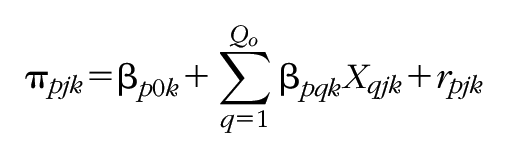
Level 3 (Country)

All continuous covariates at student and school levels were centred around their grand means. Country-level continuous covariates, teacher salaries, class size, and societal evaluations about desirable job characteristics were used in their original score: teacher salaries as the ratio of GDP per capita, class size as the number of students per class, and societal evaluations as the percentage of adults in a country who agree or strongly agree on the importance of particular job characteristics. A teacher salary index that equals 1 corresponds to the situation in which a teacher receives a salary that is equivalent to the average per capita GDP in the country in which he or she works. The index equals 2 when a teacher receives a salary that is twice the average GDP per capita in the country in which he or she teachers. Finally, the teaching hours indicator is standardized so that one unit corresponds to 100 hours per year.
To examine possible interactions between student performance in mathematics and macro-features of working conditions in the teaching profession, three-level HGLMs were run separately by using tertiles of country-specific math performance. We split the sample rather than run a full sample model including indicators for performance tertiles and adding interaction terms between tertiles of performance and key independent variables to aid the interpretation of results (because our models already include cross-level interactions between students’ gender and key system-level variables). We defined high-achieving students as those in the highest tertile of the country-specific distribution of performance in mathematics. We defined low-achieving students as those in the lowest tertile of the country-specific distribution of performance in mathematics and middle-achieving students as those in the second tertile of the country-specific distribution of performance in mathematics. An alternative strategy would have been to identify high- versus low-achieving students using PISA proficiency levels (OECD, 2013c). PISA proficiency levels represent absolute benchmarks of achievement and express the level of difficulty of test items that students can be expected to answer correctly given their responses in the PISA test. We chose to use a relative performance rather than an absolute performance approach because of strong evidence that it is relative rather than absolute levels of performance that matter when students form subject-specific self-beliefs and educational and career expectations (Nagengast & Marsh, 2012). Because of the strong association between gender and the probability of being in the top tertile of the country-specific math performance distribution and between gender and teaching career expectations, we introduce in these sets of results interactions between students’ gender and the national-level indicator of interest.
Results
Descriptive Results
Figure 1 displays a descriptive portrait of between-country differences in high school students’ career expectations. The figure shows the total percentage of students who reported that they expected to work in a professional occupation (i.e., physical, mathematics, and engineering sciences; life and health sciences; business; legal; social science; and related occupations, as well as teaching occupations) and the percentage of students who reported that they expected to work in the teaching profession only. On average across OECD countries, about 44% of students expect to work in professional occupations overall, and 5% expect to work in the teaching profession. The data indicate that students’ career expectations for the teaching profession vary across countries. In countries such as Turkey, Ireland, Korea, Luxembourg, and Indonesia, over 10% of students expected to pursue a career in teaching. In Korea, for example, about 50% of students expect to work as professionals, and about a third (15% of students overall) expects to become a teacher. On the contrary, the teaching profession is not an expected profession among 15-year-olds in 12 countries where less than 2% of students expected a career in the teaching profession, including Estonia, Italy, Hungary, Chile, Portugal, Germany, the Russian Federation, the Slovak Republic, Denmark, the Czech Republic, Switzerland, and Austria.
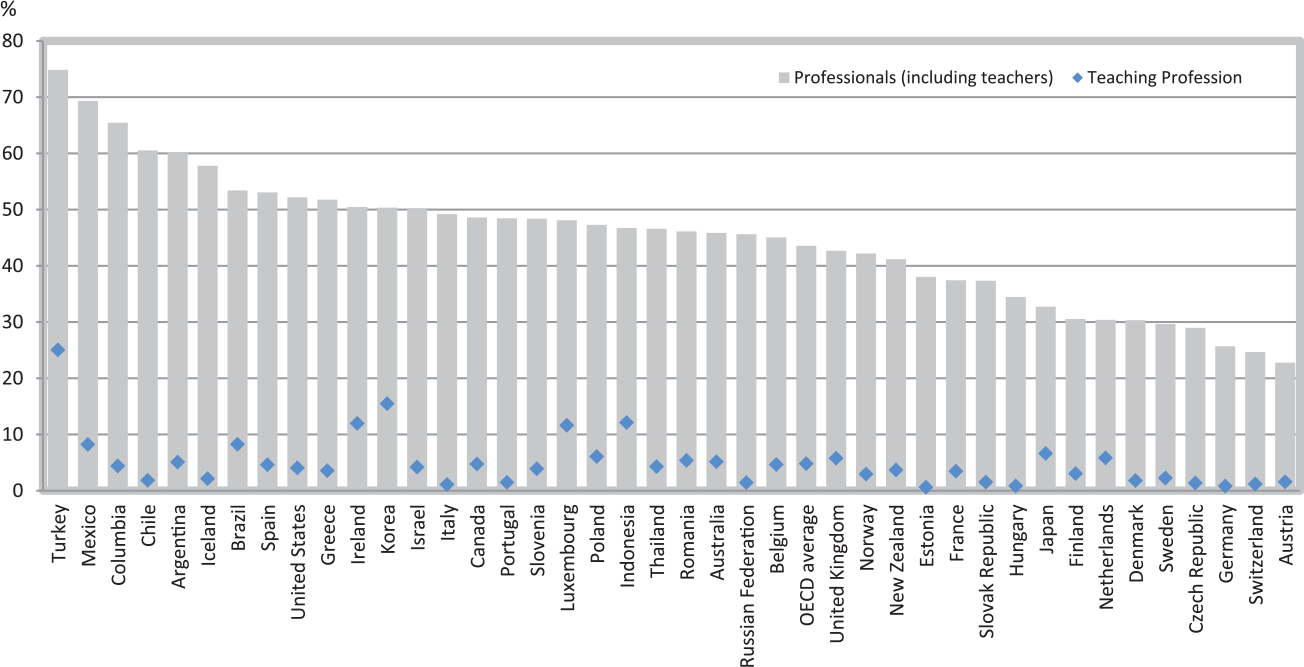
Percentage of 15-year-old students who report that they expect to work in a professional occupation at about age 30.
Next we test for whether there is a specific association between the likelihood that students will expect to work as teachers and their performance in mathematics and reading by comparing the math and reading scores of students expecting to work in professional occupations (excluding teaching) and those of students who expect to work as teachers to test for differences across the two groups of students. Table 1 classifies four different groups of countries in terms of the academic profile of students who want to enter the teaching profession. In a first group (which includes Finland and Luxembourg), students who expect to be teachers have higher reading scores than students who expect to work in a professional occupation but not teaching, but the difference in math scores between these two groups is not statistically significant and is quantitatively close to zero. In a second group (which includes Belgium, Canada, the Czech Republic, Korea, and the United Kingdom), there is no statistically significant difference in reading scores between students who expect to work as teachers and those who do not, but those who expect to enter the teaching profession tend to have lower math scores than those who expect to enter other professional occupations. In a third group (which includes Chile, Denmark, Estonia, Germany, Hungary, Iceland, Japan, Norway, Sweden, and Switzerland), no statistically significant differences in reading and math scores between students who expect to work as teachers and those who expect to work as nonteaching professionals can be identified. In the fourth and last group (which includes Argentina, Australia, Israel, Mexico, the Netherlands, New Zealand, Poland, Portugal, and Turkey), students who aspire to be teachers have significantly lower reading and math scores than students who expect to pursue nonteaching professional occupations (p < .05). Overall, in the large majority of countries, levels of mathematics performance are lower among students who expect to work as teachers than among students who expect to work in nonteaching professional occupations. Moreover, in the large majority of countries, the difference in math scores between students who expect to work as teachers and those who expect to work in nonteaching professions is wider than the difference in reading scores between the two groups of students. Additional descriptive statistics for student-, school-, and country-level variables are given in Supplementary Appendix A Tables S2, S3, and S4, respectively, in the online version of the journal.
Difference in Reading and Math Scores Between Students Expecting to Work in Nonteaching Professional Occupations and Students Expecting to Work in the Teaching Profession
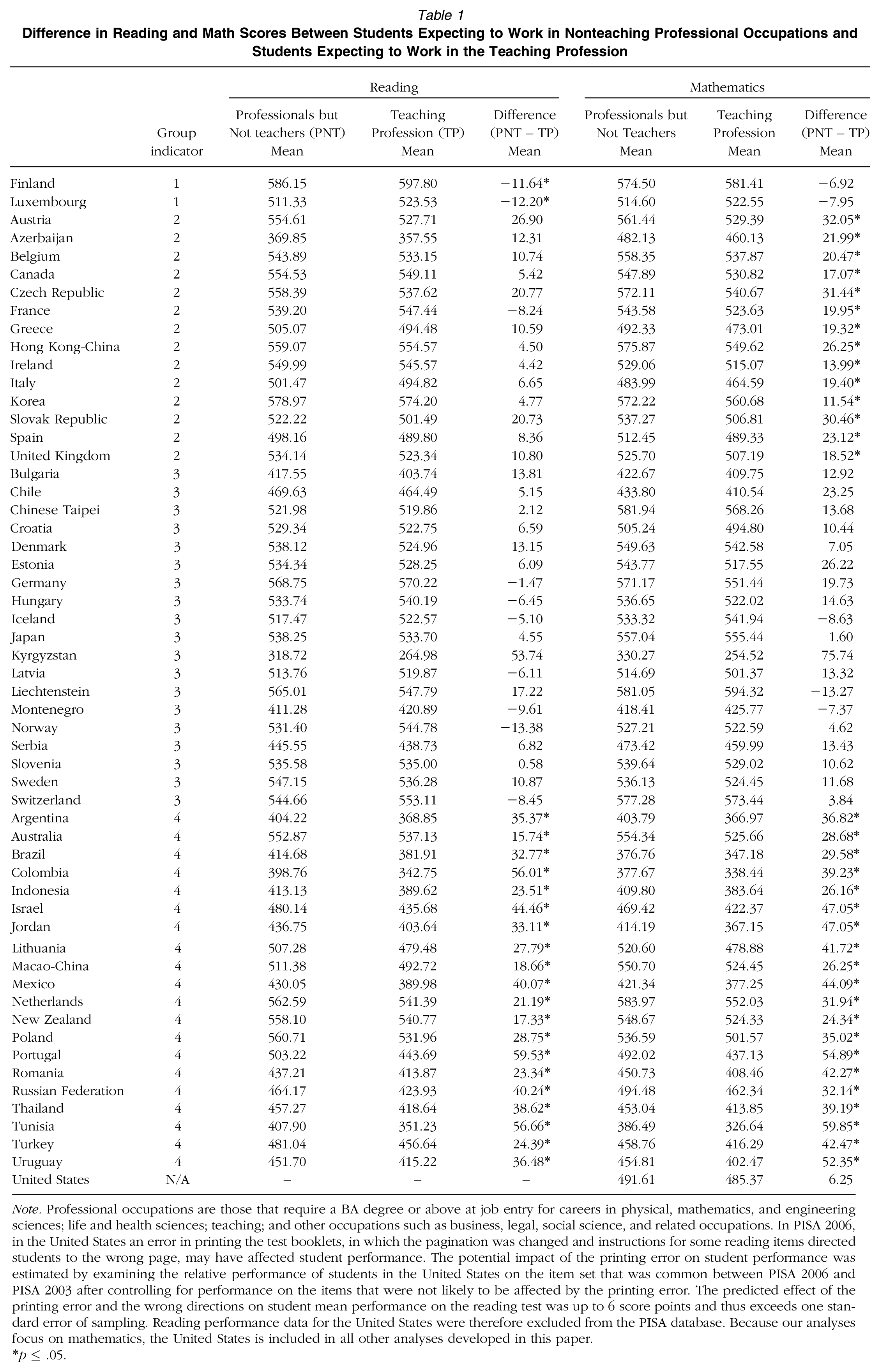
Note. Professional occupations are those that require a BA degree or above at job entry for careers in physical, mathematics, and engineering sciences; life and health sciences; teaching; and other occupations such as business, legal, social science, and related occupations. In PISA 2006, in the United States an error in printing the test booklets, in which the pagination was changed and instructions for some reading items directed students to the wrong page, may have affected student performance. The potential impact of the printing error on student performance was estimated by examining the relative performance of students in the United States on the item set that was common between PISA 2006 and PISA 2003 after controlling for performance on the items that were not likely to be affected by the printing error. The predicted effect of the printing error and the wrong directions on student mean performance on the reading test was up to 6 score points and thus exceeds one standard error of sampling. Reading performance data for the United States were therefore excluded from the PISA database. Because our analyses focus on mathematics, the United States is included in all other analyses developed in this paper.
p ≤ .05.
The Role of Salaries, Working Conditions, and Societal Evaluations About Occupations
The next step in the analysis was to analyze the degree to which country-level differences in teacher salaries and working conditions are associated with students’ intentions of pursuing a career in teaching. Among countries that are part of the study, teacher salary measures are lower for primary teachers and higher for lower-secondary teachers (see Supplementary Appendix A Table S4 in the online version of the journal). However, in some countries (e.g., Belgium, Chile, the Czech Republic, Denmark, Israel, Japan, Norway, and New Zealand), there is no difference in salary between primary and lower-secondary teachers. The lower-secondary teacher salary indicator ranged from 0.44 in Romania to 2.66 in Jordan, and among OECD member countries, teacher salaries are highest in Korea (ratio of 2.28), Mexico (1.91), Germany (1.61), and Switzerland (1.58). On average across OECD countries, lower-secondary school teachers after 15 years of experience command a salary that corresponds to 1.19 of per capita GDP. Primary school teachers’ salary indicators range from 0.52 in Estonia to 2.29 in Korea among OECD countries. The correlation between primary and lower-secondary teacher salaries is 0.842.
Table 2 gives the results from a series of three-level HGLMs that contain a set of student-level and school-level variables to control for potential compositional differences at country level in student- and school-level characteristics. Model 1 in Table 2 is the base model in which we include only the teacher salary indicator as key Level 3 indicator. Next, in Models 2a, 2b, 3a, 3b, and 3c, we add indicators for working conditions and societal evaluations about important job characteristics to the basic specification provided in Model 1. Because of the low number of units at country level, we fitted a series of models examining the relevance of different indicators of working conditions and societal evaluations. In Model 2a, we add the indicator of class size to the teacher salary indicator, while in Model 2b, we include the number of teaching hours per year to the teacher salary indicator. In Model 3a, we add a control for societal evaluations about the importance of job responsibility; in Model 3b, we add a control for societal evaluations about the importance of a job that is respected; and in Model 3c, we add a control for societal evaluations about the importance that a job is interesting. Finally, Model 4 contains a set of “full” models in which we simultaneously control for salary, number of teaching hours, and societal evaluations on important job characteristics. More specifically, Model 4a controls for societal evaluations on the importance that a job has responsibility, Model 4b controls for societal evaluations on the importance that a job has respect, and Model 4c controls for societal evaluations on the importance that a job is interesting.
Full Sample: Results of Hierarchical Bernoulli Logit Models to Explain Variation in Expectations for the Teaching Profession

Note. Teacher salary index for Canada uses 2010 data, 2004 for Poland, 2003 for the Slovak Republic, 1999 for Turkey, 2003 for Argentina, 2003 for Brazil, 2000 for Columbia, 2011 for Croatia, 2011 for Hong Kong-China, 2003 for Indonesia,2000 for Jordan, 2011 for Romania, 2000 for the Russian Federation, and 2003 for Thailand. Results based on the restricted set of 30 countries with available information on all indicators are displayed in Supplementary Appendix B, Table S2 available in the online version of the journal. Results for primary education salary and working conditions indicators on the full country sample and the restricted country sample are reported in Supplementary Appendix B Tables S3 and S4 in the online version of the journal. Population average models with robust standard errors. OR = odds ratio; SES = socioeconomic status.
p ≤ .10. *p ≤ .05. **p ≤ .01. ***p ≤ .001.
The estimates for the models were fitted using indicators for teacher salaries and working conditions of lower-secondary school teachers for all the countries that have available indicators (as a result the number of Level 3 units differs across different models). Therefore, to investigate the robustness of our estimates, we fit all models on the indicators of teacher salaries and working conditions of primary school teachers and on the restricted set of countries that have no missing information on any of the indicators that we use. Results are presented in Supplementary Appendix B Tables S2, S3, and S4 in the online version of the journal. While in the text we discuss estimates resulting from our main specification (largest number of Level 3 units and lower-secondary school teacher salaries and working conditions), results indicate that the estimates are very consistent and robust to the specification chosen.
Results presented in Model 1 in Table 2 are consistent with the hypothesis that teacher salary is associated with students’ expectations to work as teachers: In countries where teacher salaries are higher, 15-year-old students are more likely to expect to work as teachers. More specifically, a one unit increase (e.g., from one to two) in the index of relative teacher salaries is associated with a 92% increase in the odds that students will report expecting to work as teachers. This is equivalent to saying that, other things being equal, the odds that 15-year-old students will hold teaching career expectations are 74% higher in a country where teacher salaries are one and a half times GDP per capita compared to a country where teacher salaries match per capita GDP, or that if the United States had teacher salaries in line with the OECD average, the odds that students held teaching career expectations would be 38% higher. Model 2, Model 3, and Model 4 show that the positive association between the index of teacher salary and teaching career expectations remains even after taking into account other conditions that characterize the work of teachers, such as the number of students each teacher is expected to work with (class size), the number of teaching hours per year, as well as societal evaluations about important job characteristics. Models 3a, 3b, 4a, and 4b suggest that in addition to teacher salary, national-level values about job responsibility (odds ratio [OR] = 1.018, p < .001 and OR = 1.027, p < .001) and respect (OR = 1.014, p < .001 and OR = 1.016, p < .01) are positively, albeit weakly, associated with students’ expectations to work as teachers, whereas Models 3c and 4c show that in countries where a higher percentage of the population believes that an important job characteristic is that the job is interesting, 15-year-old students are no more likely to expect to work as teachers than 15-year-old students who live in countries where an interesting job is not equally perceived to be an important characteristic. Model 2a shows that class size is not associated with students’ career expectations, while Model 2b indicates that when lower-secondary school teachers work for a greater number of teaching hours per year, students are less likely to expect to work as teachers (OR = 0.818, p < .05).
The Role of Student Performance and Societal Evaluations About Occupations
The next step was to analyze whether different groups of students will respond differently to salary incentives, working conditions, and societal evaluations of job characteristics because of heterogeneous treatment effects. To test for possible interactions between student performance and macro-features characterizing economic and noneconomic factors determining teacher working conditions, we fit the same set of three-level HGLMs over three groups of students split by performance tertile. The results are given in Table 3. The first column in Table 3 displays the coefficients describing the relationship between national-level indices characterizing the working conditions of teachers, societal evaluations about what are important job characteristics, and students’ expectations to enter the teaching profession among high-achieving students (defined as students in the highest tertile of the country-specific distribution of performance in mathematics); the second and the third columns show results, respectively, for students in the middle and bottom tertiles. We organize Table 3 around a series of seven panels, each representing coefficients of interest from a different HGLM model run on different country-level features. Because each model is fitted on one-third of the overall sample, we had to be conservative in the number of country-level features that could be controlled for in each model. Panels a and b present results for monetary incentives and working conditions (salaries and class size for Panel a and salaries and teaching hours for Panel b). Panels c, d, and e present results for monetary incentives and societal evaluations (responsibility in Panel c, respect in Panel d, and interest in Panel e). Finally, in Panels f and g, we focus on working hours as an indicator for working conditions (because it appears to be significantly associated with students’ expectations in Panel b) and respect and responsibility (because they are the two indicators of societal evaluations that appear to be statistically significantly associated with students’ expectations to work as teachers in Panels c and d) and develop two sets of complete models. We control for salaries, teaching hours, and responsibility in Panel f and for salaries, teaching hours, and respect in Panel g.
Country-Level Factors and Their Relationship With Students’ Expectations to Hold a Teaching Career, by Country-Specific Math Performance Tertiles

Note. Each column in each panel reports results from one regression. All regressions control for all the student-level, school-level, and national-level variables as well as the interaction between gender and the national-level variables to control for possible gender-specific associations that may bias estimates given the strong association between gender and teaching career expectations and gender and probability in being in a different tertile of the country-specific mathematics distribution. Results based on the restricted set of 30 countries with available information on all indicators are available in Supplementary Appendix B Table S5 in the online version of the journal. Results for primary education salary and working conditions indicators on the full country sample and the restricted country sample are reported in Supplementary Appendix B Tables S6 and S7 in the online version of the journal. Population average models with robust standard errors. OR = odds ratio; SE = standard error.
p ≤ .10. *p ≤ .05. **p ≤ .01. ***p ≤ .001.
Results in Panel a of Table 3 reveal that the positive association between teacher salary and the expectation students have of working as teachers differs across performance levels: The positive association described in Table 2 is strong and statistically significant only among low- (p < .01) and middle-performing (p < .001) students in mathematics, while it is quantitatively small and not statistically significant among top-performing students. Point estimates differ depending on the specification and the additional country-level controls that are introduced, but among low-performing students (students in the bottom tertile of the country-specific math performance distribution), the teacher salary coefficient is always positive and ranges between 0.735 and 1.97 (OR = 2.09 and OR = 7.17). This suggests that a one unit increase in teacher salaries relative to the GDP per capita is associated with an increase of between 2 to 7 times in the odds of students expecting to work as teachers. This finding is very similar among middle-achieving students.
Panel b in Table 3 highlights that the number of hours teachers are required to teach in a year is negatively associated with the likelihood that students will expect to work as teachers. Although the association is statistically significant (OR = .803, p < .05 and OR = .737, p < .05) only among students in the top and middle tertiles of the mathematics performance distribution, the point estimates that we obtain for the top, middle, and bottom tertiles are not statistically different from each other. On the other hand, Panel a in Table 3 reveals that there is no relationship between class size and the likelihood that students will expect to work as teachers irrespective of their level of performance in mathematics.
Looking at the full model results presented in Panel f, we find that societal evaluations about the importance for a job to have responsibility are associated with the likelihood that students of all levels of performance will expect to work as teachers. Results indicate that a difference of 1% in the percentage of the population who agrees or strongly agrees that responsibility is an important aspect of a job is associated with an increased odds ratio of students reporting that they expect to work as teachers that is equal to 1.03 among students in the top, middle, and bottom tertiles of mathematics performance. However, results presented in Panel g reveal that societal evaluations about the importance for a job to have respect are associated only with the likelihood that high-achieving students will expect to work as teachers. The estimates for job respect are statistically significant only in the case of students in the top tertile of the performance distribution (OR = 1.018, p < .01). Moreover, the point estimate is not different from no effect, though imprecisely estimated (OR = 1), among students in the bottom tertile of mathematics performance. Finally, societal evaluations about the importance of intrinsic job characteristics, namely, that a job is interesting, does not appear to be associated with the likelihood that students will expect to work as teachers.
Discussion
In the United States, both policymakers and educational researchers have expressed concerns about the quality of the teaching workforce compared to top-performing education systems such as Finland, Hong Kong, Korea, and Singapore. For example, Barber and Mourshed (2007) claim that “the quality of an educational system cannot exceed the quality of its teachers” and that
the top-performing systems we studied recruit their teachers from the top third of each cohort graduate from their school system: the top 5% in South Korea, the top 10% in Finland, and the top 30% in Singapore and Hong Kong. (p. 16)
Despite a widespread interest in understanding if the motivations of top-performing students differ from those of other students, not enough is known about how such a goal can be achieved. Important exceptions include a study based on 15-year-old high-achieving students’ expectations in 23 OECD countries (Park & Byun, 2015), studies of students who have already enrolled in teacher education programs (e.g., Watt & Richardson, 2012), and studies investigating the effect of salary incentives among college graduates (e.g., Bacolod, 2007).
The aim of the present study was to advance our understanding of which levers education policymakers can use to attract high school graduates into teaching, with a particular focus on whether salary incentives, better working conditions, or societal evaluations of job characteristics are differently associated with the motivations of high-, middle-, and low-achieving students, in particular in mathematics, to consider becoming primary or secondary school teachers.
Our findings revealed that on average across OECD countries, almost half of the 15-year-olds in the PISA 2006 sample reported that they expected to work in a professional occupation when they are about 30 years old. However, among this group of students, only 10% aspired to a career in the teaching profession. This is consistent with previous research foreseeing a shortage in the overall supply of teachers (EURYDICE, 2012), the consequences of which will have implications for how countries will plan for the provision of public education and the ability of countries to ensure inclusive and equitable quality education and promote lifelong learning opportunities for all (UNESCO, 2016). Indeed, new international data suggest an increasing global teacher shortage even among North American and European countries (UNESCO, 2015a). Also consistent with previous research, our findings revealed that in a large majority of countries, levels of mathematics performance are lower among students who expect to work as teachers than students who expect to work in nonteaching professional occupations. Together, a shortage in the future supply of teachers and a teaching workforce comprised of a majority of poor achievers will have an impact on the quality of teaching and consequently on the future labor force where STEM majors are anticipated to be in demand (Hanushek et al., 2014). From an economic development perspective, countries will need to recruit a larger supply of high-quality teachers to remain competitive in the future. High-quality and motivated teachers will be key to ensuring that students will reach their full potential and, in particular, that education ensures that all students, irrespective of their socioeconomic background, are able to make the most of the labor market and social benefits of education (OECD, 2005; Peske & Haycock, 2006) and do not miss out on future economic opportunities because of poor STEM career prospects. Thus, an adequate supply of high-quality STEM teachers can help balance inequity in educational outcomes.
Countries and educational researchers alike are thus in the position of figuring out how to first, increase the supply of teachers by making the teaching profession a more attractive career choice and second, make the profession attractive enough so that high-achieving students would aspire to a career in teaching. As would be expected by the human capital theory of career choices, our results indicate that high school students are more likely to consider becoming primary or secondary school teachers when salaries are higher. However, other aspects that characterize teachers’ working conditions, such as the number of students they will have to work with (class size) and the number of yearly teaching hours that will be expected of them, are not associated with their expectations for the teaching profession. This appears to be consistent with prior research suggesting that having short working hours is a relatively unimportant job characteristic (Tolbert & Moen, 1998).
Crucially, our study revealed that the association between teacher salaries and teaching career expectations differs across performance levels. The positive association between teacher salaries and career expectations is strong and statistically significant among low- and middle-achieving students in math, while it is small in size and not significant among high achievers. This finding differs from Park and Byun (2015), who identify a positive association between teachers’ salaries and high-achieving students’ teaching career expectations. Park and Byun did not examine the association between teachers’ salaries and middle- and low-achieving students’ teaching career expectations. The difference in findings for the high-achieving group could be due to the different analytical choices that Park and Byun make, primarily their focus on a narrower set of countries, the fact that they do not control in their model for other country-level characteristics, that they do not consider the PISA sampling design, or that they use a different definition of teaching careers that includes pre-primary teachers and associate teaching professionals.
Our finding on the positive association between teacher salaries and the expectations of middle- and low-achieving students could be due to the fact that low-achieving students face worse employment prospects than high performers and do not expect to work in occupations commanding a strong academic background. Indeed, Watt and Richardson’s (2012) model of the factors influencing career choice in teaching includes “fall-back” as an important factor to account for those entering the profession because they failed to be accepted into their career of choice or are unable to pursue the first-choice career. Research on career choice development indicates that adolescence is the stage at which preliminary decisions about career choice are being made (e.g., Super, 1980). The strong positive association that exists between perceived self-efficacy and performance (OECD, 2013a) suggests that by 15 years of age, the students in our sample had a relatively good understanding of their academic abilities and thus career prospects.
Consistent with previous research, our study has shown that task returns (salaries) have a role to play when it comes to making teaching a more attractive career choice, but other factors are also important. Prior research suggests that altruistic motives and social utility are important factors shaping the choice of having a teaching career in several countries (e.g., Watt & Richardson, 2012). We thus sought to disentangle the role played by monetary incentives and working conditions from other social factors that might shape the value high school students see in the teaching profession. Specifically, we hypothesized that in countries where there is a higher share of the population reporting that interest, respect, or responsibility are important job characteristics, societal evaluations about important job characteristics would promote the search for either personal utility value (i.e., jobs that are interesting) or social utility value (i.e., jobs that are respected or jobs that are responsible) in occupational choices. We then examined the association between social norms and students’ expectations to work as teachers.
We find that in countries where a higher proportion of the population values a job because it commands respect and because it has responsibility, students are more likely to expect to work as teachers. On the other hand, we do not observe an association between the proportion of the population who values a job because it is interesting and the likelihood that students will expect to work as teachers. Interestingly, we find that social norms that promote social utility in a job, as identified by a job having responsibility, are highly associated with teaching career expectations and that the association is equally strong among high-, middle-, and low-performing students. This is consistent with previous research investigating the prestige associated with various occupations. According to Marsh (1971), responsibility is operationalized by the number of “subordinates” over whom one has authority in a role. In the case of teaching, teachers have authority over a group of children, and those occupations that require control over others tend to be more highly valued by members of society.
On the other hand, it is only high-performing students who appear to be more likely to expect to work as teachers, other things being equal, in countries where jobs are valued because of their social utility as manifested through respect. We speculate that high-performing students might perceive job respect as an indicator of career success. This would be consistent with previous research investigating professional values in high-status occupations such as medicine. For example, Neittaanmäki, Gross, Virjo, Hyppölä, and Kumpusalo (1999) report that job respect is a highly valued indicator of career success among medical doctors, an occupation for which high academic achievement is a requirement for entry into the profession. Academically talented students might be more likely to choose more challenging careers, and teaching is generally perceived to be a challenging profession with a heavy workload, high emotional demand, and highly specialized knowledge base (Watt & Richardson, 2008). Consequently for academically talented students, a profession that is challenging, demands respect, and also strives to make a societal contribution may be particularly attractive.
Our results therefore suggest that societal evaluations about important job characteristics are important in promoting a willingness to enter a teaching career, which is consistent with most theories of teaching career motivations. The general public’s perception of teaching relative to other professions and a respect for teachers at societal level are considered important factors that make a career in teaching an attractive choice for students (Ingersoll et al., 2007). For example, in some societies, teaching is a well-respected profession and demand for entry into the profession is high (e.g., Ingersoll & Merrill, 2011). Recent OECD data show that the perceived social standing of teachers varies across countries (OECD, 2014b): Teachers participating in the 2013 cycle of the TALIS survey were asked to report the extent to which “the teaching profession is valued in society.” In Singapore, about 68% of lower-secondary teachers agreed or strongly agreed that the teaching profession is valued in society, while 34% of teachers in the United States reported so (OECD, 2014b). If the teaching profession is highly valued in society, students might be more likely to expect to have a teaching career compared to students in countries where the teaching profession is not valued. One policy lever to promote teaching as a career choice among students with strong quantitative skills would be to promote the formation of strong social norms in favor of occupations that have a high social utility value and ensure that teaching continues to be characterized as an occupation with large positive social benefits.
Future research could build on the evidence presented in this study to establish causality and, especially, the mechanisms that shape students’ career expectations and aspirations. A limitation of our findings is that our identification strategy relies on cross-national variations in working conditions and societal evaluations of different job characteristics while controlling for several individual-, school-, and system-level characteristics. However, results presented are based on a single wave of cross-sectional cross-national data and therefore are correlational in nature and do not imply causal relationships. More could also be done to explore attitudinal and social factors that shape how attractive (or not) teaching is among academically high-performing students and identify if different factors shape the propensity that individuals will expect to work as primary versus lower-secondary versus upper-secondary teachers. Because of a lack of matching cross-nationally comparable data on the social value of teaching and students’ career expectations, we could not test the role that public attitudes toward teaching have in promoting students’ preferences for a career in teaching. Similarly, further research could establish new measures aimed at capturing dimensions associated with economic incentives. Because of data constraints, the current study used an indicator measuring teacher salaries relative to GDP per capita. However, future studies should focus on professions requiring high levels of education as a comparison group. The lower salaries of the teaching profession relative to other high-status, high-education professions (e.g., law or business) might have an effect on whether students in general and high-performing students in particular choose a career in teaching. Future research could also explore the interaction between different motivational drivers across different student populations to better understand if monetary incentives crowd out altruistic motivators or, rather, if they complement each other, and if so, whether the interplay differs across students of different ability, socioeconomic status, and gender. Finally, because our study relies on students’ reports on the careers they expect to be engaged in at the age of 30, it cannot be generalized to expectations for engagement in teaching over the life course. In particular, it is possible that some students may expect to work as teachers for a few years upon graduating and then leave the profession (through programs such as Teach for America). Others may expect to work as teachers later in their working lives as a way to combine work with family responsibilities or because of an interest in experiencing a variety of working environments. As labor markets evolve and work careers become more differentiated, young adulthood may not come to represent individuals’ likelihood of being engaged, for at least a number of years, in a specific profession.
In sum, our study has contributed to the growing knowledge base on how to attract students to the teaching profession. While most of the discourse in the literature and policy circles focuses on extrinsic economic incentives alone, our study has shown that altruistic motives and social utility are also important factors, especially among academically talented students in mathematics.
Footnotes
Notes
S
F
S
References
Supplementary Material
Please find the following supplemental material available below.
For Open Access articles published under a Creative Commons License, all supplemental material carries the same license as the article it is associated with.
For non-Open Access articles published, all supplemental material carries a non-exclusive license, and permission requests for re-use of supplemental material or any part of supplemental material shall be sent directly to the copyright owner as specified in the copyright notice associated with the article.
