



Abstract
The present study examines if higher socioeconomic status (SES) parents are more involved in their children’s education, and if greater involvement is associated with better student science achievement in Hong Kong (N = 5,353). Results showed that (a) there were three latent classes characterized by different patterns of parental involvement; (b) there was no simple relationship between SES and parental involvement patterns among the three latent classes; and (c) patterns of parental involvement were not significantly associated with levels of student science achievement. These findings support the contention that higher SES parents are not necessarily more involved than lower SES parents in all aspects, and that higher levels of parental involvement may not eventuate in higher levels of student achievement.
Policymakers, educators, and researchers in many education systems endeavor to promote parents’ involvement in their children’s education. Indeed, it is often argued that parental involvement confers many benefits, including improving student academic achievement, enhancing school-family communication, alleviating student disciplinary problems, and facilitating parental education (Carpenter, Young, Bowers, & Sanders, 2016). However, the reality often departs from rhetoric for many reasons. First, schools may desire parents to be formally involved in schools, but some parents may choose to be involved informally at home (Carpenter et al., 2016). Second, there is an assumption that parents with higher socioeconomic status (SES) are categorically more involved than lower SES parents (Hartas, 2015; Kellaghan, 2001; Park & Holloway, 2013; Reay, 1998b). Third, results on the effects of parental involvement on children’s academic achievement are mixed (Hill & Tyson, 2009; Jeynes, 2007; Wilder, 2014).
In addressing these issues, the present study aims to clarify the relationship among involvement (home and school), SES, and secondary student science achievement using Hong Kong student and parent data from the Programme for International Student Assessment (PISA) 2015. The specific objectives are to (a) elucidate a typology of home and school involvement comprising different configurations of specific practices, (b) examine how this typology is related to parental SES, and (c) examine the association between different involvement configurations and student science achievement. In achieving these objectives, the present study adopts an expansive view to include home and school involvement. It questions the assumption by some researchers (Hartas, 2015; Kellaghan, 2001; Park & Holloway, 2013; Reay, 1998b) that higher SES parents are categorically more involved than lower SES parents, by adopting a differentiated perspective of involvement. More specifically, it seeks to identify the variation in specific involvement practices and to clarify if this variation is associated with parental SES and student science achievement.
Home and School Involvement
Home and school involvement relates to what parents do to promote their children’s school learning and future success (Hill et al., 2004). Schooling in many high-performing education systems exacts high academic expectations for students. Student learning has therefore evolved from school learning to a joint endeavor between schools and families to improve student achievement. The higher demands on families (i.e., familiarization) have two implications on the nature of parental involvement (Ule, Živoder, & Du Bois-Reymond, 2015). First, parents are compelled to maximally mobilize their resources to support their children’s learning (Grolnick & Slowiaczek, 1994). These resources involve other caregivers (e.g., grandparents, older siblings, domestic helpers), where available, within the family (Larocque, Kleiman, & Darling, 2011). Second, parents are expected to progress beyond passive home support to active involvement at home and in school (i.e., institutionalization; Ule et al., 2015).
Researchers have conceptualized parental involvement in different ways. For example, Epstein (1995) delineated six categories of parental involvement, namely, parenting to create a conducive home environment for children, maintaining regular two-way communication with schools, volunteering to support school activities, helping children learn at home, participating in school decision making, and collaborating with the community-at-large. Lareau (2003) reported that parents may differ in the way they communicate with their children, intervene in schools to negotiate for more provisions to accommodate their children’s learning needs, and organize their children’s life to maximize the latter’s learning. In turn, the myriad aspects of parental involvement in Epstein’s (1995) and Lareau’s (2003) frameworks can be classified in terms of home involvement, comprising parental practices that engage with children’s learning at home, and school involvement comprising parental practices in schools that support children’s learning (Pomerantz, Moorman, & Litwack, 2007). More specifically, home involvement comprises parent-child discussions and parental monitoring of children’s learning (McNeal, 1999). In terms of parent-child discussions, parents may spend time interacting with their children or discussing the latter’s school learning (Castro et al., 2015). In the context of science learning, parents may imbue in their children an appreciation of the importance of science and discuss science educational or career trajectories with their children, thereby exemplifying subtle strategies aimed at academically engaging their children—what Hill and Tyson (2009) termed academic socialization. In terms of monitoring, parents may procure resources to support their children’s science learning or even assist their children to complete their science homework (Castro et al., 2015; Rodriguez, Collins-Parks, & Garza, 2013).
As for school involvement, parents may be directly involved in their children’s learning in schools or be involved more generally in the school organization (McNeal, 1999). The most direct school involvement entails parents discussing with teachers their children’s learning progress and behavior (Castro et al., 2015; Rodriguez et al., 2013). These interactions may be parent- or teacher-initiated. Less proximal school involvement is exemplified by parental volunteering of time and energy to support school activities, participation in school meetings, and parental participation in school decision making (Castro et al., 2015; Rodriguez et al., 2013). Building on the extant literature, the present study will conceptualize home involvement as comprising parent-child discussions and parental monitoring of children’s learning, and school involvement as comprising parent-teacher discussions and school organization.
Involvement of Parents of Different SES
Previous research has often assumed that parents with similar SES are homogenous in their involvement and has then proceeded to compare involvement levels among parents of different SES (Benner, Boyle, & Sadler, 2016; Kuru Cetin & Taskin, 2016). Some researchers assert that higher SES parents may be more involved in their children’s education (Hartas, 2015; Kellaghan, 2001; Park & Holloway, 2013; Reay, 1998b). For example, more educated parents may be more likely to provide cognitively stimulating learning experiences for their children (e.g., visiting museums and attending concerts), engage in cultural conversations with their children (e.g., about books or sociopolitical topics), and articulate higher educational aspirations and plans for their children (Hartas, 2015; Park & Holloway, 2013). Higher SES parents may be more involved than lower SES parents because they have more cultural capital that facilitates their children’s academic progress (Hartas, 2015; Kellaghan, 2001; Park & Holloway, 2013). For example, Kellaghan (2001) maintained that higher SES parents employ their cultural capital to engage their children in discussions. This cultural capital includes the ability to stimulate children’s exploration and generation of ideas, guide children to make decisions independently, and model linguistic competence. Parents also need to communicate high academic aspirations to enable successful academic socialization for their children. In supporting and monitoring their children’s learning, parents with more institutionalized cultural capital (i.e., intimate knowledge of the education system) will be better able to provide guidance to children on school matters, help with children’s homework, ensure that children engage in developmentally appropriate activities, and select and purchase suitable learning resources (Kellaghan, 2001; Reay, 1998b).
Parents with more cultural capital may also be more involved in schools (Reay, 1998b). For example, higher SES parents, guided by a sense of entitlement, may exude more confidence in communicating with teachers and are more proactive in fighting for school provisions to support their children’s learning (Reay, 1998b). However, it is naive to assume that all higher SES parents are more involved in their children’s education than lower SES parents. For example, Perrier’s (2012) study of mothers in the United Kingdom showed that some middle-class parents may be ambivalent about using concerted cultivation on their children. These parents expressed reservations about the adverse implications from an excessive emphasis on academic learning for their children.
In contrast to higher SES parents, lower SES parents may be less involved in their children’s education because of barriers they have to surmount (Hornby & Lafaele, 2011; Malone, 2017; Wang, Deng, & Yang, 2016). For example, Wang et al.’s (2016) study of seventh and eighth graders from 53 schools in China found that lower SES parents perceived time and resource constraints, inadequate knowledge of their children’s homework, and communication problems with their children as impediments to their home and school involvement. In terms of time and resource availability, lower SES working parents may not have the means to get childminding support or the flexibility to ask for time off from work to attend school meetings. They may also be too tired to help their children with homework at the end of a long day at work (Hornby & Lafaele, 2011; Malone, 2017). These impediments decrease parents’ motivation and self-efficacy for parental involvement. Parents respond to these perceived impediments by deferring to teachers as experts in education (Crozier, 1999). The perceived inadequacy to help children with their homework is especially salient when children progress to secondary schools (Hornby & Lafaele, 2011). Reay (1998a) pithily characterized home-school relationships for lower SES parents as “separateness” as contrasted with “interconnectedness” for higher SES parents.
The multitude of challenges render it challenging for lower SES parents to support their children’s learning, but this does not mean that these parents do not value their children’s learning per se. Some researchers found that parents varying in their SES do not differ in their willingness to support their children’s education (Hartas, 2015; Herrold & O’Donnell, 2008; Malone, 2017; Ryan, Casas, Kelly-Vance, Ryallas, & Nero, 2010; Sy, Rowley, & Schulenberg, 2007). For example, Hartas’s (2015) analysis of PISA 2009 data found that parents in Organisation for Economic Co-operation and Development (OECD) countries were frequently and commonly involved in their children’s education. Indeed, these parents may still expect their children to complete high school and even pursue higher education (Herrold & O’Donnell, 2008). Lower SES parents may also focus on home involvement that is less visible to teachers but more private and manageable when compared to school involvement. Nonetheless, they may welcome specific guidance from teachers on how to maximize their home involvement (Herrold & O’Donnell, 2008; Malone, 2017; Ryan et al., 2010; Sy et al., 2007).
Research investigating whether lower or higher SES parents are more involved risks inaccurately portraying higher SES parents as being categorically more involved than lower SES parents in their children’s education. To resolve this quandary, the present study adopts a different analytical strategy by first ascertaining a typology that elucidates the naturally occurring patterns of specific involvement practices, and then comparing the SES profiles of parents corresponding to the different patterns of involvement. This typology accommodates variation in specific involvement practices among different families.
Involvement Effects on Children’s Achievement
Studies comparing the contribution of different involvement practices to student achievement indicate two general patterns of findings. First, home involvement has been found to be generally more beneficial for children’s academic achievement than school involvement (DePlanty, Coulter-Kern, & Duchane, 2007; Jeynes, 2007). For example, DePlanty et al. (2007) found that junior high school students and their teachers both perceived parental home involvement, especially that related to emphasizing the importance of education, to be more important than school involvement in fostering student academic achievement. Jeynes’s (2007) meta-analysis showed that aspects of home involvement such as parental expectations, parent-child discussions on school activities, and supportive parenting were more strongly related to student learning outcomes than aspects of school involvement such as attendance and participation in school activities.
Studies examining parents’ school involvement per se report inconclusive results on student achievement. For example, Johnson and Hull’s (2014) analysis of data on student science achievement at Grades 3, 5, and 8 from the Early Childhood Longitudinal Study–Kindergarten Class of 1998–1999 found that parental school involvement did not predict children’s initial or growth in science achievement. Sebastian, Moon, and Cunningham (2017) found partial support for the contribution of parental school involvement to student academic achievement. More specifically, parental attendance in school meetings, visit of classrooms, and discussions with teachers when students were in eighth grade did not benefit the latter’s 10th-grade science achievement. However, the same set of parental involvement practices implemented when the students were in the 10th grade positively predicted science achievement in the same year. In terms of specific aspects of school involvement, there is some evidence that parental school volunteering is not associated with children’s academic achievement, although there may be nonacademic benefits such as building community spirit (Okpala, Okpala, & Smith, 2001; Sui-Chu & Willms, 1996). Domina (2005) also concluded that parental formal involvement such as membership in parent-teacher organizations or attendance in parent-teacher conferences was not positively associated with student academic achievement.
The second pattern of findings is that parent-child discussions are more important than parental monitoring of children’s homework completion (Castro et al., 2015; Deslandes & Bertrand, 2005; Domina, 2005; Fernández-Alonso, Suárez-Álvarez, & Muñiz, 2016; Hill & Tyson, 2009; Jeynes, 2007; Sebastian et al., 2017; Trautwein & Lüdtke, 2009). For example, Fernández-Alonso, Álvarez-Díaz, Woitschach, Suárez-Álvarez, and Cuesta’s (2017) study of adolescents in Spain found that students whose parents were involved more subtly at home had higher levels of academic achievement than those whose parents employed more controlling home involvement practices. Subtle and controlling home involvement practices correspond to parent-child discussions and parental monitoring of children’s learning, respectively, in McNeal’s (1999) framework. Hill and Tyson’s (2009) meta-analysis showed that academic socialization, which could occur through parent-child discussions, contributed strongly to student achievement while homework monitoring was negatively associated with academic achievement. Wilder’s (2014) analysis of results from nine meta-analyses indicated that parental expectations, underpinning academic socialization, were strongly associated with student achievement while homework assistance was least associated with student achievement.
The topics of parent-child discussions can comprise school activities, encouragement of home learning, and educational plans (Deslandes & Bertrand, 2005; Fernández-Alonso et al., 2016; Hill & Tyson, 2009; Sebastian et al., 2017; Trautwein & Lüdtke, 2009). For example, Sebastian et al.’s (2017) path analysis found that parent-child discussions on school programs, school activities, school learning, and high school educational planning for eighth graders contributed to higher levels of science achievement in the 10th grade. The higher levels of 10th-grade achievement in turn positively predicted parent-child discussions when the students were in the 12th grade. These latter discussions also contributed to higher levels of 12th-grade science achievement. Parent-child discussions, exemplifying subtle and indirect forms of parental involvement, are especially relevant for adolescents, who can be less influenced by parents as they grow up (Drummond & Stipek, 2004). For example, Choi, Chang, Kim, & Reio (2015) reported that parental provision of advice contributed to 10th graders’ mathematics achievement by enhancing the latter’s self-efficacy beliefs. Hill, Witherspoon, and Bartz’s (2018) grounded theory analysis of parents, youth, and teachers, supplemented by quantitative indicators of involvement and interactions with schools, also highlighted the importance of parents scaffolding their children’s development of independence, letting their children appreciate the contribution of education to their future success, and communicating with their children in home involvement.
In contrast to parent-child discussions, evidence on the impact of parental monitoring of children’s learning per se is less clear. On one hand, some researchers argue that parents’ direct monitoring, as exemplified by helping children with their homework, promotes positive attributes toward learning such as responsibility for and persistence in learning, and these attributes in turn benefit academic achievement (Hoover-Dempsey et al., 2001). Fan and Chen’s (2001) meta-analysis also reported a positive relationship between homework supervision and achievement. On the other hand, some studies fail to find a significant relationship between parental homework supervision and student academic achievement (Castro et al., 2015; Jeynes, 2007; Domina, 2005) or even a negative relationship between the two variables (Hill & Tyson, 2009). This negative association is sometimes attributed to the reactive hypothesis describing parents exhibiting more controlling, direct intervention for unmotivated or underperforming children (McNeal, 2012). For example, Sebastian et al. (2017) demonstrated that parents had higher levels of monitoring in terms of checking on homework completion, limiting television viewing, and limiting children’s time spent with friends for their 10th-grader children when the former had lower levels of science achievement at Grade 8. However, this reactive hypothesis has not been supported unequivocally (McNeal, 2012).
The pattern of findings on varying associations highlights potential differences in processes and impact of parental involvement practices on student achievement. As discussed in the section on the relationships between parental SES and involvement, it is plausible that there may be different configurations of involvement practices adopted. Involvement practices vary in their impact on student achievement, so it is important for research to investigate the net impact of different configurations of involvement practices associated with different groups of parents.
Present Study
The present study identifies the typology of involvement practices and examines how the typology relates to parental SES and secondary student science achievement in Hong Kong. Secondary students are the focus in the study because there is some evidence that parents may be less involved for older as compared to younger children (Carpenter et al., 2016; Lloyd-Smith & Baron, 2010), and some studies have concluded that indirect parental involvement such as academic socialization via parent-child discussions is more effective than direct interventions such as school involvement (Castro et al., 2015; DePlanty et al., 2007; Deslandes & Bertrand, 2005; Domina, 2005; Fernández-Alonso et al., 2016; Hill & Tyson, 2009; Jeynes, 2007; Sebastian et al., 2017; Trautwein & Lüdtke, 2009). However, previous studies have not clarified whether parents of secondary students rely on myriad involvement practices or only adopt specific involvement practices.
Examining student science achievement is important given the primacy of mathematical and scientific literacies in science, technology, engineering, and mathematics jobs. Furthermore, some studies postulate that schools have a greater influence on student mathematics and science achievement than do homes (Tan, 2017). However, parental school involvement may be argued to bridge home and school (Garas-York, 2010; Ule et al., 2015), so it is important to examine the joint influence of different aspects of home and school involvement on student science achievement.
The present study analyzed parent and secondary school student data from Hong Kong. The focus on Hong Kong is compelling because Hong Kong schools have been encouraged to involve parents in their children’s education but there is burgeoning evidence that the state of parental involvement has not progressed beyond rhetoric (Ng, 2013; Pang, 2008). More specifically, parents and schools have long emphasized the importance of education to enhance individuals’ well-being and social mobility and cohesiveness in Hong Kong (Goodstadt, 2013). This societal focus on education has culminated in high levels of student achievement as evident in international assessments (OECD, 2016b). School-based management where parents, principals, and teachers are expected to assume responsibility for school improvement is implemented in Hong Kong schools (Ng & Yuen, 2015). The Hong Kong Legislative Council even passed an Education Ordinance that includes parents, teachers, and alumni as school governors in 2004. However, Ng and Yuen’s (2015) study involving interviews with parents, teachers, and principals, and participant observations in primary schools found that schools adopt ethnocentric attitudes toward parental involvement, they involve parents as resources to be exploited for pragmatic purposes, and they do not really empower parents in decision making for school management. The socioeconomic stratification in Hong Kong society may also affect patterns of parental involvement. For example, Kwan and Wong’s (2016) study of parents of primary school leavers in Hong Kong reported that higher SES parents had higher levels of involvement in their children’s education. Therefore, it is imperative to examine if parents with lower SES are involved in their older children’s education in secondary school, and if this involvement can contribute to students’ academic achievement.
Method
Participants
The sample comprised 5,353 students (50% boys; 50% girls) and their parents/guardians in Hong Kong who completed the PISA 2015 Parent Questionnaire. The majority of these students were in Grade 10 (67.4%) with the rest in Grade 7 (1.1%), Grade 8 (5.3%), Grade 9 (25.8%), and Grade 11 (0.3%). These students had parents with the following highest educational levels: 1.4% none, 5.7% primary, 17.6% lower secondary, 20.7% vocational or prevocational upper secondary, 29.2% general upper secondary or nontertiary postsecondary, 6.5% vocational tertiary, and 19.0% theoretically oriented tertiary and postgraduate. Participating students were selected to represent the complete population of 15-year-old students who were attending public or private schools in Grade 7 or higher in the participating countries. PISA 2015 measured 15-year-old students’ proficiency in applying their knowledge and skills learned in science (the focal domain) in addition to reading and mathematics. In addition, PISA 2015 collected background data from students, parents, and principals on student/home/family, classroom, and school variables.
Measures
Data on the following variables (missing values 0% to 2.71%) from the PISA 2015 data set were used in the analysis.
Home and School Involvement
Home involvement was conceptualized as parents’ involvement in the social (e.g., “Spend time just talking to my child”) and educational development (e.g., “Help my child with his/her science homework”) of their child in PISA 2015 (Ho, 2010; OECD, 2016a). It was measured using parent responses to eight items on the frequency in which they or someone else in the family were involved in different activities involving their child at home using a 5-point scale (1 = never or hardly ever, 2 = once or twice a year, 3 = once or twice a month, 4 = once or twice a week, 5 = every day or almost every day). The attention from parents and other family members on student learning at home, as measured by the eight items, is indicative of the pattern of parents mobilizing the resources from different family members to support their child’s education (Ule et al., 2015).
School involvement was conceptualized as parents’ communication with (e.g., “Discussed my child’s behavior with a teacher on my own initiative”) and participation in (e.g., “Volunteered in physical or extra-curricular activities”) their child’s school in PISA 2015 (Ho, 2010; OECD, 2016a). It was measured using parent responses to 10 items on whether parents had participated (yes or no) in different school-related activities. Consistent with other studies (Hartas, 2015; Sebastian et al., 2017), these measures were used as indicators of school involvement in the present study.
Results of confirmatory factor analysis (weighted least squares) for the four-factor model comprising parent-child discussions and parental monitoring of children’s learning for home involvement, and parent-teacher discussions and school organizational activities for school involvement showed that the model fit was unsatisfactory (χ2 = 3,508.68, degrees of freedom [df] = 129, p < .001; root mean square error of approximation [RMSEA] = 0.070; comparative fit index [CFI] = 0.918; Tucker-Lewis index [TLI ]= 0.902; standardized root mean square residual [SRMR] = 0.070). The modification indices indicated that Item H2 loaded poorly on Interactions and that the error terms corresponding to S2 (teacher-initiated discussion on child’s behavior with parents) and S4 (teacher-initiated discussion on child’s progress with parents) were correlated. Therefore, H2 was deleted and the two errors terms were allowed to covary freely in the revised model. The fit of the revised model (Figure 1) was satisfactory (χ2 = 1,933.46, df = 112, p < .001; RMSEA = 0.055; CFI = 0.954; TLI = 0.944; SRMR = 0.057).
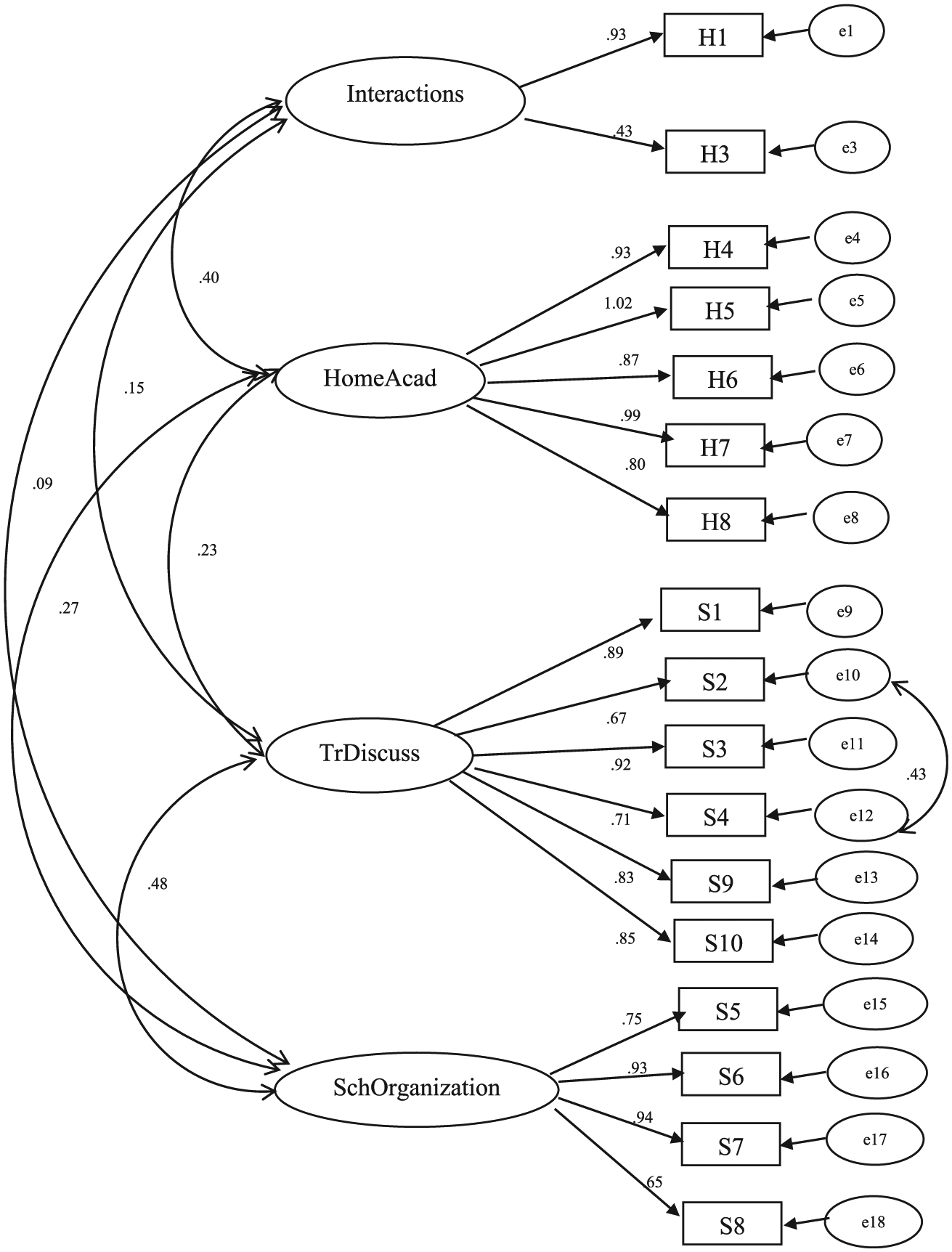
Confirmatory factor analysis for home and school involvement.
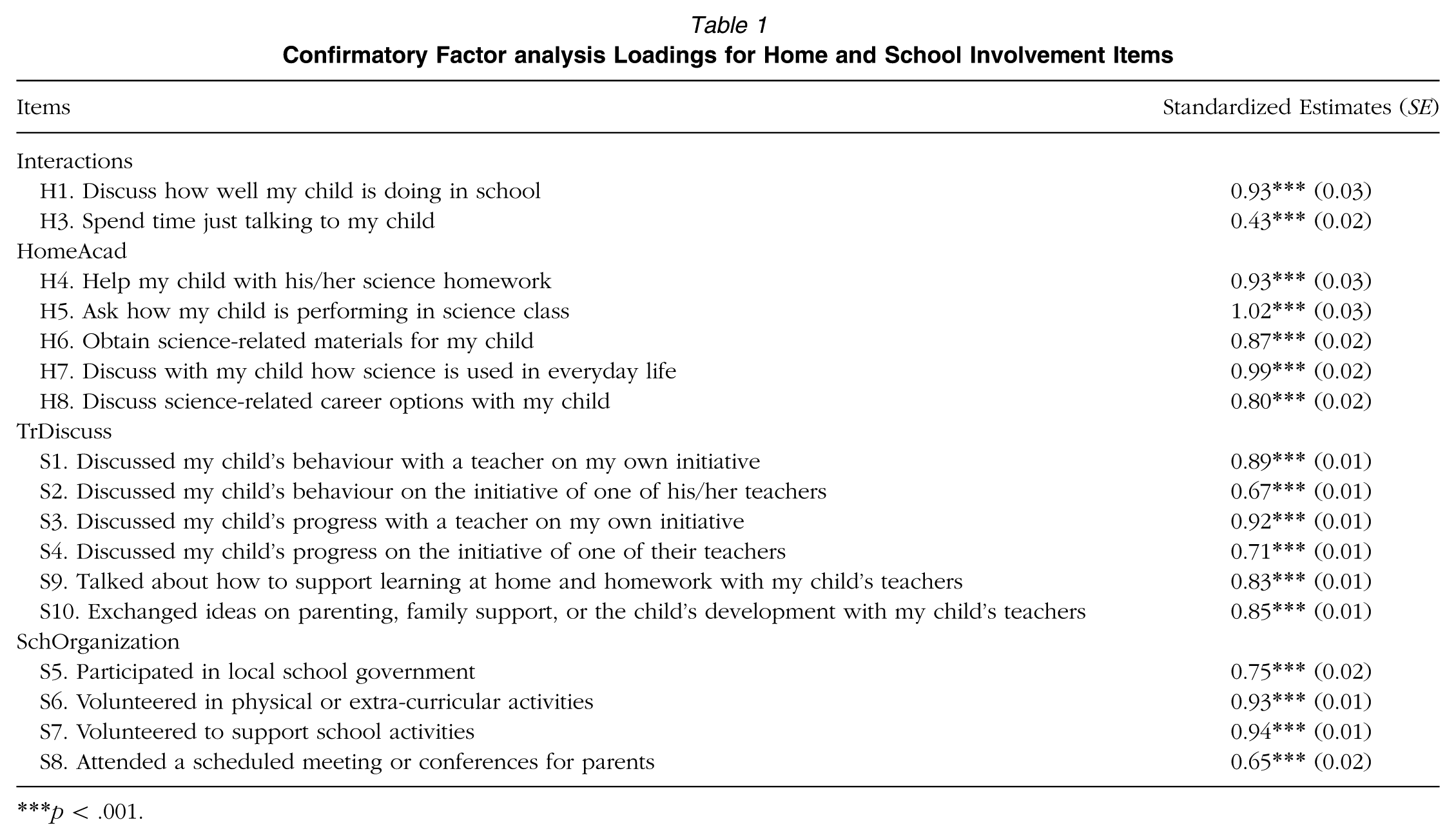
The home involvement items (H1 and H3) that loaded on the first factor measured parent-child discussions. This factor was therefore named Interactions (α = .68). The other five home involvement items (H4-H8) loaded on a second factor. This factor was named HomeAcad to underline parental support of their child’s learning at home (α = .88). Turning to school involvement, six items involving parent-teacher discussions (S1-S4, S9-S10) loaded on one factor. This factor was named TrDiscuss (α = .83). The remaining four school involvement items (S5-S8) loaded on the last factor. This factor was named SchOrganization to reflect parental participation in different aspects of the school (α = .62). Table 1 summarizes the confirmatory factor analysis model results.
Confirmatory Factor analysis Loadings for Home and School Involvement Items
p < .001.
Student SES
Student SES was measured by the index of economic, social, and cultural status computed by PISA 2015 (OECD, 2016b). The index represented the first principal component derived from student data on parents’ highest education level, parents’ highest occupational status, and student home possessions. Data on parents’ highest education level were derived from student responses to two questions asking them about the highest level of schooling completed by their mother and two questions asking about the highest level of schooling completed by their father. The response categories corresponded to “no education,” “primary education,” “lower secondary,” “vocational/prevocational upper secondary,” “general upper secondary and/or nontertiary postsecondary,” “vocational tertiary,” and “theoretically oriented tertiary and postgraduate.” Data on parents’ highest occupational status were derived from students’ responses to two open-ended questions asking about the nature of their mother’s main job and two open-ended questions asking about the same about their father’s main job. PISA 2015 coded these data and mapped the codes onto the international socioeconomic index of occupational status (Ganzeboom & Treiman, 2003). Data on student home possessions were derived from student responses to three questions asking about the availability of different home resources such as study desk, own room, quiet place to study, computer for study, educational software, Internet connectivity, classic literature, poetry books, artworks, books to support study, reference books, dictionary, books on art/music/design, televisions, cars, rooms with bath/shower, cell phones with Internet access, tablet computers, e-book readers, and musical instruments.
Science Achievement
Student science literacy was the focal achievement variable measured in PISA 2015. Students were not administered the complete set of test items by design, and therefore each item had missing responses. This made it impossible to estimate achievement scores for each student. To overcome this limitation, PISA 2015 aggregated the results of individual students to produce scores for groups of students. It also used a set of 10 “plausible values” for each student to represent the estimated distribution of science scores of students similar to him or her in terms of responses to the assessment and background items. The 10 plausible values were highly correlated with each other (.90 ≤ r ≤ .91). Principal component analysis was used to extract a summary measure of students’ science achievement. Results showed that the variance in the data could be summarized by one factor, SciAchievement (eigenvalue = 9.10, 91.01% of variance explained).
Procedure
PISA 2015 used a two-stage stratified sampling design, with schools first selected from a national sampling frame of schools with probabilities proportional to size and students next selected from within each of the schools (Liou & Hung, 2015). PISA 2015 was sponsored internationally by the OECD and coordinated and administered internationally by the PISA international consortium, led by the Australian Council for Educational Research. All participating countries followed standardized procedures outlined in the technical standards and manuals provided.
Latent Class Analysis
Latent class analysis (LCA), capable of analysing a combination of continuous and categorical indicators (Mplus 8; Muthen, 2001; Oberski, 2016), was employed to uncover underlying heterogeneity within a population and to identify groups of people (i.e., latent classes) who had similar responses to the 7 home (continuous) and 10 school (categorical) involvement items. There is no clear-cut way of determining the “correct” number of latent classes underlying the population, but most analysts make their decision by examining different indicators such as information criteria indicators (Akaike information criterion or AIC, Bayesian information criterion or BIC, sample-adjusted BIC), Vuong-Lo-Mendell-Rubin (VLMR) likelihood ratio test, bootstrap likelihood ratio test, and model parsimony (Nylund, Asparouhov, & Muthén, 2007).
The present study employed the three-step approach (Asparouhov & Muthén, 2013; Vermunt, 2010) to unravel the relationships among SES (covariate), parental involvement, and SciAchievement (distal outcome). In the first step, the LCA fitted a measurement model using the home and school involvement variables as indicators, taking into account SES and SciAchievement as auxiliary variables. In the second step, SES was used as a predictor of the latent class variables. In the third and last step, the latent class variables were used as predictors of SciAchievement. Figure 2 depicts the conceptual model explicating the relationships among SES, parental involvement, and SciAchievement.
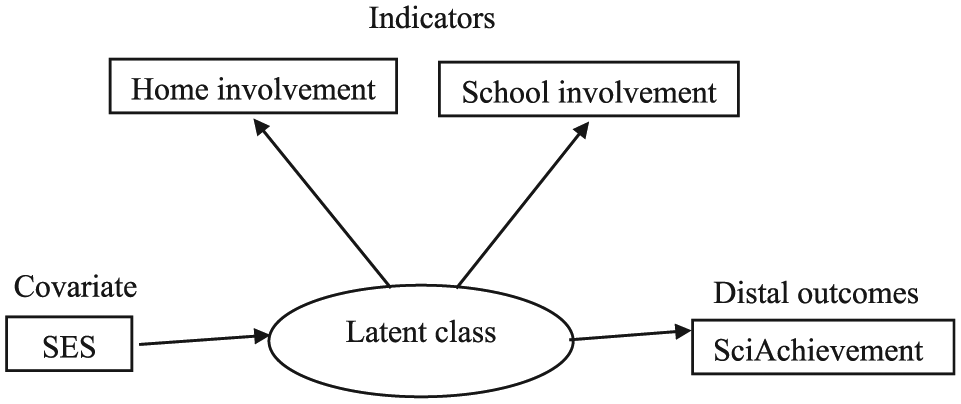
Latent class analysis with socioeconomic status as covariate and students’ science achievement as outcome variable.
Results
Typology of Involvement
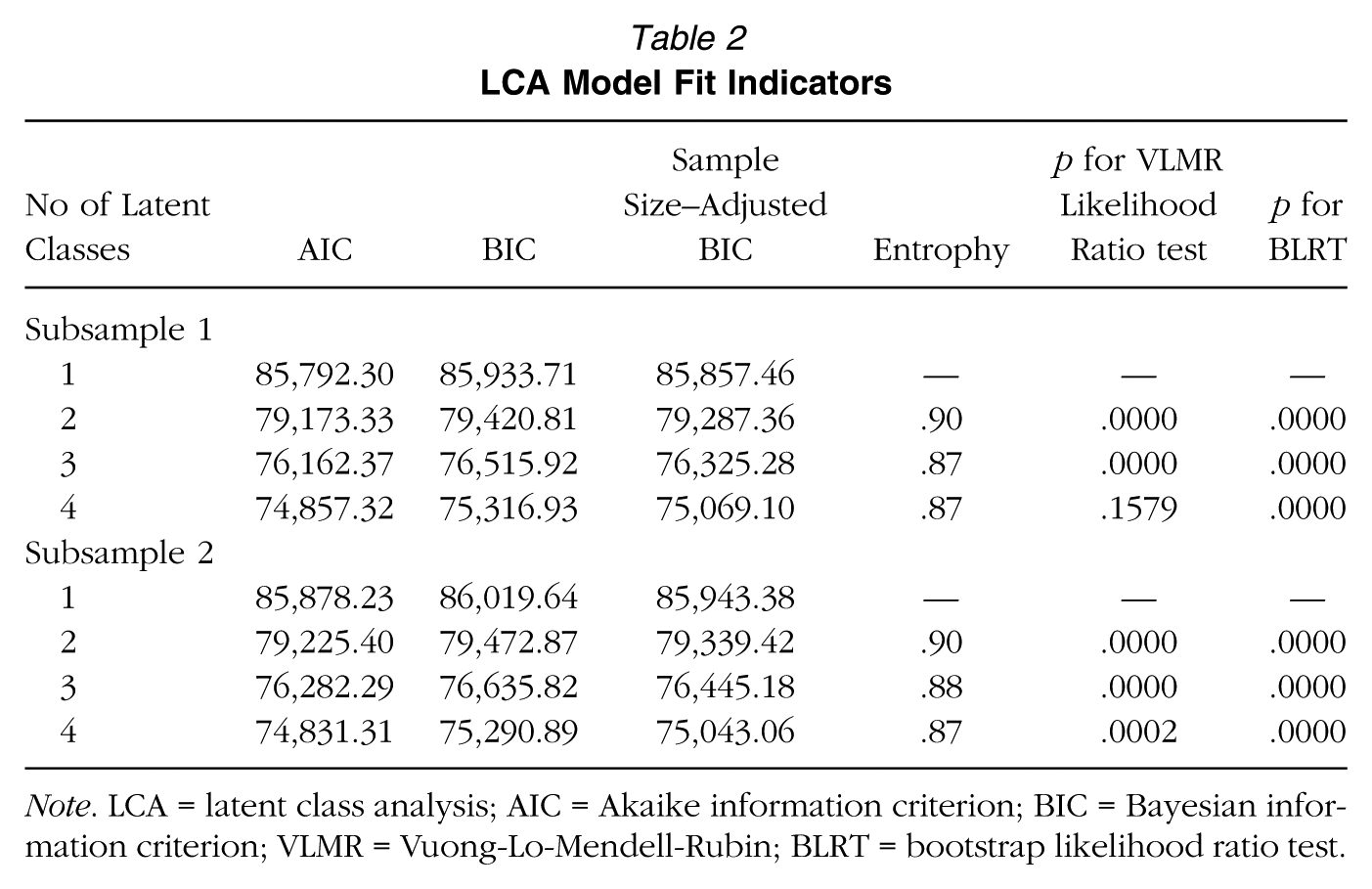
Parents in the sample (N = 5,353) were first randomly split up into two subsamples. Results of LCA (Table 2) for the first subsample (n = 2,677) showed that the VLMR likelihood ratio test comparing the fit of the four- versus three-class model was insignificant (p = .1579). Compared to the three-class model, the four-class model improved AIC by only 1.71%, BIC by 1.57%, and sample-adjusted BIC by 1.65%. The corresponding improvement for the model fit indicators for the three- versus two-class models were larger at 3.80%, 3.66%, and 3.74% respectively. These results indicated that the first subsample could be classified into three latent classes based on the participants’ responses to the home and school involvement items.
LCA Model Fit Indicators
Note. LCA = latent class analysis; AIC = Akaike information criterion; BIC = Bayesian information criterion; VLMR = Vuong-Lo-Mendell-Rubin; BLRT = bootstrap likelihood ratio test.
Results of LCA for the second subsample (n = 2,676) showed that the VLMR likelihood ratio test comparing the fit of the four- versus three-class model was p = .0002. Compared to the three-class model, the four-class model improved AIC by only 1.90%, BIC by 1.75%, and sample-adjusted BIC by 1.83%. The corresponding improvement for the model fit indicators for the three- versus two-class models were larger at 3.71%, 3.57%, and 3.65% respectively. These results suggested that the second subsample could be classified into three latent classes based on the participants’ responses to the home and school involvement items.
Based on the LCA results on the two subsamples, the three-class model was adopted. LCA was then performed for the entire sample with the three-class model in mind. Results of the final class counts and proportions for the latent classes based on their most likely latent class membership showed that 1,871 parents belonged to Class 1 (34.95%), 1,557 parents belonged to Class 2 (29.09%), and 1,925 parents belonged to Class 3 (35.96%). The mean “dominant” probability (i.e., highest probability of belonging to a class) was .94, and 93.2% of the sample had a high dominant probability of at least .7 (Figure 3). The mean levels for the home involvement items and probability of endorsing the school involvement items were all significantly different from zero at the .001 level (Table 3).
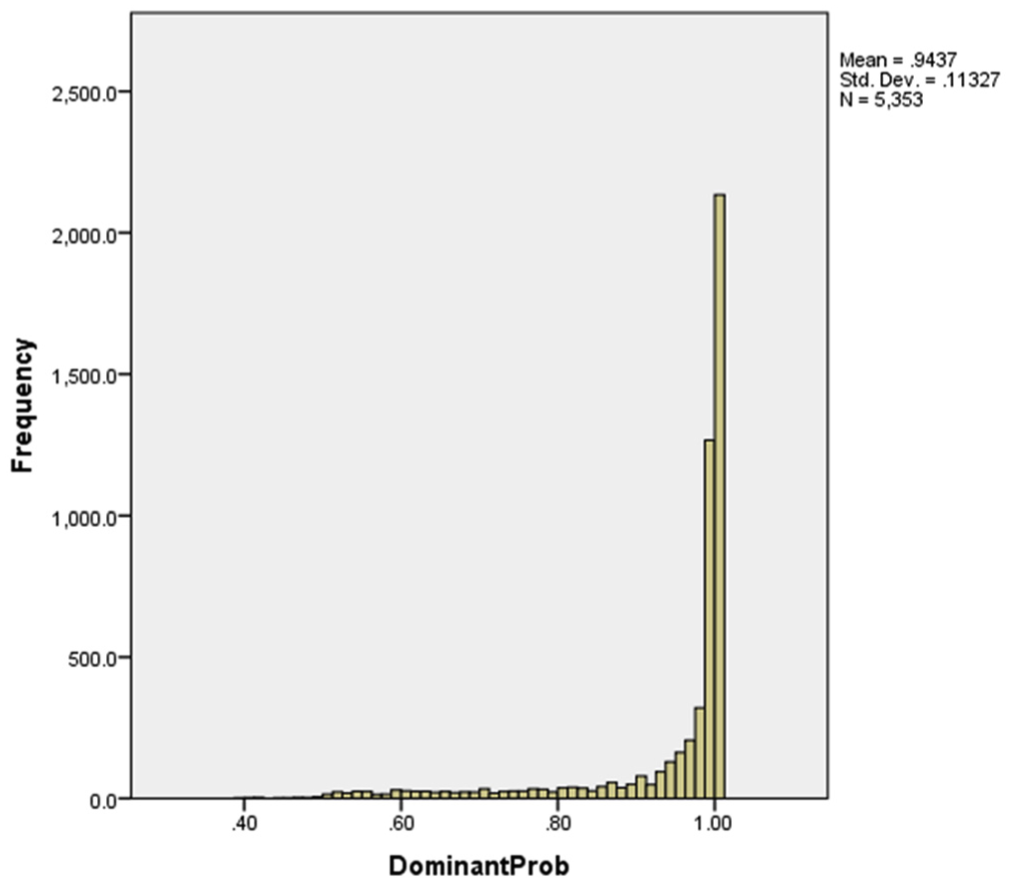
Histogram of frequency of dominant probability in latent class analysis.
Latent Class Analysis Results for Home and School Involvement
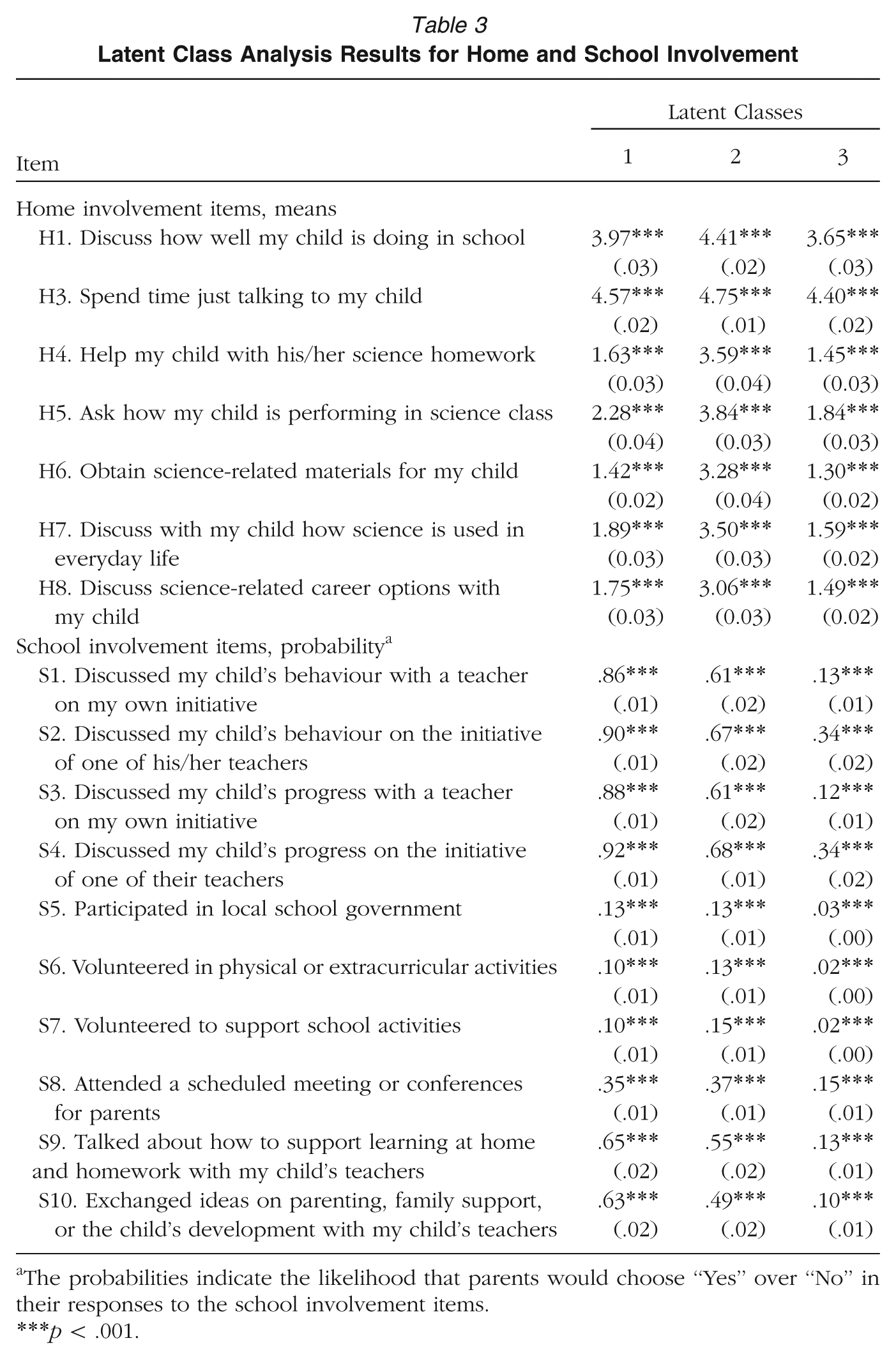
The probabilities indicate the likelihood that parents would choose “Yes” over “No” in their responses to the school involvement items.
p < .001.
Comparisons of SES Levels
In comparing the mean SES levels (as a covariate) among the three latent classes, with Latent Class 3 as a reference group, results showed that parents with higher SES levels were 1.72 times more likely to belong to Latent Class 2, and 1.16 times more likely to belong to Latent Class 3 (Table 4). These results indicated that, on average, parents in Latent Classes 3, 1, and 2 were characterized by the lowest, average, and highest SES levels respectively.
Comparison of Mean Levels of Socioeconomic Status (Covariate) Among Latent Classes
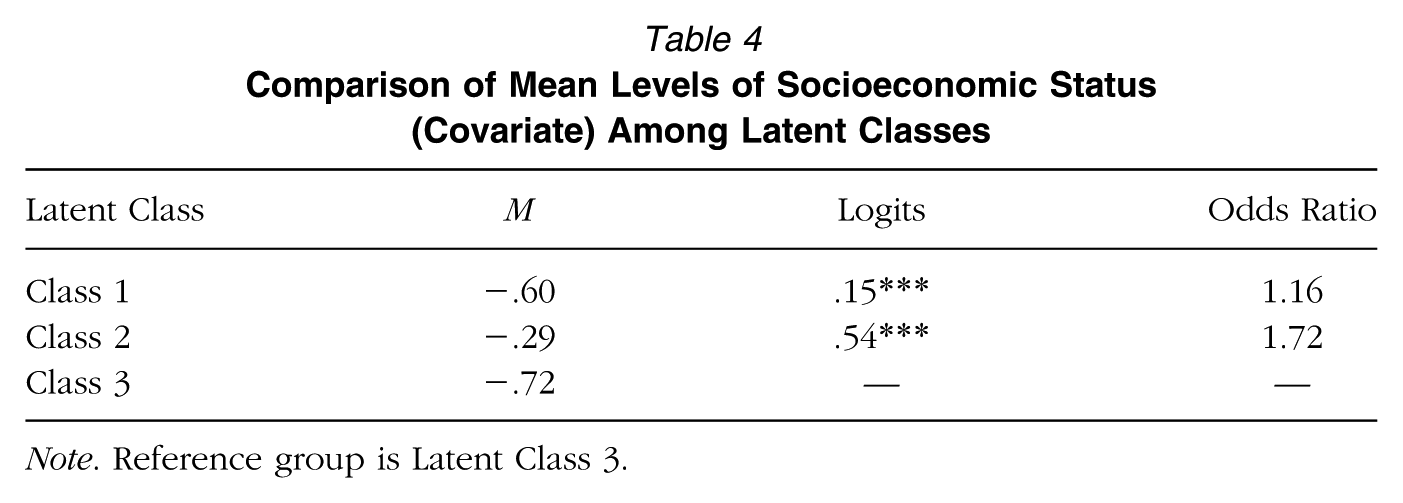
Note. Reference group is Latent Class 3.
Comparisons of Involvement Levels
Results (Table 3) showed that parents in Latent Class 3 (i.e., parents with the lowest mean SES levels) were least involved in all aspects at home (H1, H3-H8) and in school (S1-S10). Parents in Latent Class 1 (i.e., parents with average mean SES levels) had average levels of home involvement (H1, H3-H8) and in school organization (S5-S8), but the highest mean levels of engagement with teachers in discussions (S1-S4, S9-S10). Parents in latent class 2 (i.e., parents with the highest mean SES levels) were most involved at home (H1, H3-H8) and in school organization (S5-S8), but they had only average levels of teacher-parent discussions (S1-S4, S9-S10). These results implied that there was not a simple relationship between levels of SES and parental involvement.
Relationships Between Involvement and Science Achievement
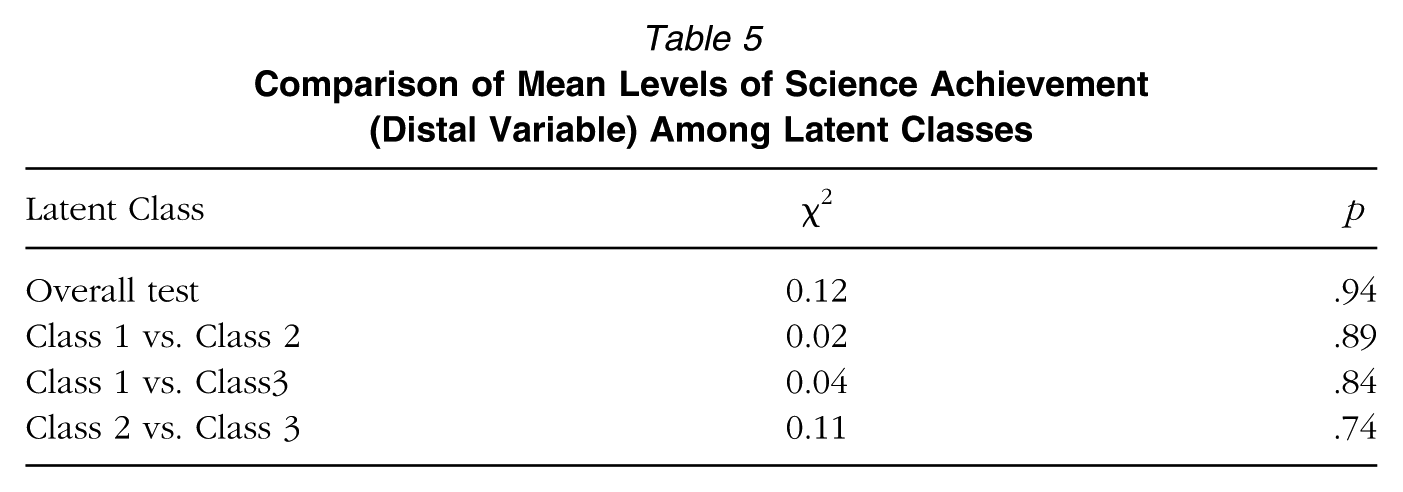
Table 5 summarizes the results for the analysis comparing the levels of SciAchievement as a distal outcome among the three latent classes. The overall Pearson Chi-square test was not significant (χ2 = 0.12, p = .94). Additionally, there were no significant differences in levels of SciAchievement between latent classes 1 and 2 (χ2 = 0.02, p = .89), latent classes 1 and 3 (χ2 = 0.04, p = .84), and latent classes 2 and 3 (χ2 = 0.11 p = .74). These results implied that levels of parental involvement were not significantly associated with levels of student science achievement.
Comparison of Mean Levels of Science Achievement (Distal Variable) Among Latent Classes
Discussion
Variations in Involvement Patterns
Results from the present study provide support for the argument that home and school involvement is multifaceted and that families vary in the configurations of specific involvement practices adopted. Indeed, a review of the literature suggests that the present study is probably the first to systematically identify naturally occurring involvement patterns in home interactions, home academic support and monitoring, parent-teacher discussions, and school organization via a typology comprising three latent classes. The four involvement dimensions are congruent with Ho’s (2010) conceptualization of parental involvement as comprising parents’ home involvement in the social and educational domains of their child development and school involvement as parents’ communication with teachers and participation in their child’s school organization. Each of the latent classes comprises a substantial proportion of the sample: Class 3 comprising lowest SES families (35.96%), Class 1 comprising average-SES families (34.95%), and Class 2 comprising highest SES families (29.09%). These results, therefore, provide a more nuanced perspective on the dimensions and specific practices of involvement.
Nuanced Relationships Between SES and Involvement
Results from the present study also questioned the assumption that higher SES parents are categorically more involved in their children’s education. For example, highest SES parents (Class 2) were highly involved at home, but they were more involved only in some aspects in school (participated in school government, volunteered their services in school, and attended school meetings for parents) and not in others. Notably, they did not have the highest levels of teacher-parent discussions, an important aspect of school involvement. The absence of a definitive relationship between SES and parental involvement adds to a burgeoning body of studies such as that by Henderson (2013), which found that social class failed to predict whether parents adopted concerted cultivation strategies for their children in England.
It is not clear what has contributed to these involvement patterns. Higher SES parents, despite their resources, may encounter barriers to involvement (Inoa, 2017). It is also possible that some of these parents, by virtue of their familiarity with the education system, are more selective in investing their energies on what they perceive will make the greatest impact on their children’s achievement. More specifically, parents may be more involved when they perceive their participation as being quintessential to their role, when they are more efficacious in their involvement, and when they perceive that their involvement is welcomed by schools (Hoover-Dempsey & Sandler, 1997).
The less-than-expected level of school involvement in terms of teacher-parent discussions for Class 2 highlights the problem arising from school expectations that parents should be more formally involved in their children’s education as opposed to more informal home involvement (Carpenter et al., 2016). For example, teachers may equate parental involvement with attendance in parent-teacher meetings or volunteering as hall monitors, library support personnel, clerical assistants, and classroom assistants (Carpenter et al., 2016). Some scholars have criticized this narrow definition of involvement as being biased in favor of higher SES parents (Hartas, 2015; Kellaghan, 2001; Park & Holloway, 2013; Reay, 1998b), but the present study indicates that higher SES parents (Class 2) were not necessarily involved in schools in other ways (e.g., parent-teacher discussions).
At the other end of the SES spectrum, results from the present study indicate that it is inaccurate to portray lower or average-SES families as being entirely uninvolved in their children’s education. For example, Class 1 parents (average SES) were very likely to have engaged teachers in discussions on their child’s behavior, progress, learning, and homework, and more generally, parenting and family support issues.
Configurations of Involvement Practices and Achievement
Previous studies have erstwhile assumed that parents are involved in specific ways and compared the relative effectiveness of different practices (e.g., home vs. school involvement; Higgins & Katsipataki, 2015). However, results from the present study suggest that there may be no direct association between different patterns of involvement behavior characterizing the three latent classes and student science achievement. For example, Class 3 parents were least involved at home and in school. In contrast, Class 1 parents were most involved engaging teachers in discussions while Class 2 parents were most involved at home and in school organization. However, there were no significant differences in the mean levels of science achievement for students associated with the three latent classes. These results may arise for different reasons. For example, previous studies have examined the effects of specific parental involvement activities (e.g., DePlanty et al., 2007; Johnson & Hull, 2014; Sebastian et al., 2017), but none has examined the net effect of involvement activities associated with different groups of parents as this study has done. It also remains to be seen if parental involvement contributes to nonacademic learning outcomes that may in turn benefit student achievement (Okpala et al., 2001; Sui-Chu & Willms, 1996).
Conclusion
The present study clarifies the relationships among home and school involvement, SES, and secondary student science achievement using data from 5,353 Hong Kong student and parents who participated in PISA 2015. It makes three important contributions to the extant literature. First, it demonstrates that there are variations in involvement patterns as summarized by a typology of three latent classes. Second, the different latent classes entail variation in involvement practices for lowest SES versus average or higher SES families, thereby demonstrating that SES does not deterministically predict patterns of involvement. Therefore, the typology provides a more nuanced understanding of the pattern of involvement practices beyond the simple dichotomy of whether low- or high-SES families are more involved. Third, different latent classes are not associated with different levels of student achievement. These results challenge the assumptions that higher SES families have higher involvement levels in children’s education than lower SES families (Hartas, 2015; Kellaghan, 2001; Park & Holloway, 2013; Reay, 1998b) and that higher involvement will inexorably culminate in higher student academic achievement (See & Gorard, 2015).
There are two implications from the present study. First, there needs to be greater affirmation of the many, sometimes less visible, things that parents are already doing for their children’s learning (e.g., parents interacting with children). Therefore, educators can share with parents on how the latter can enhance the quality of these involvement practices beyond facilitating parental formal participation in school (Kuru Cetin & Taskin, 2016). Second, principals and teachers can examine the involvement patterns for parents with different SES, and devise strategies to encourage greater involvement for all parents instead of just focusing on lower SES parents. To this end, Christenson’s (2003) framework is instructive in improving parental involvement via schools devising more effective ways to approach families, perceiving family-school relationships as genuine collaborations, creating a welcoming school environment for all parents, and introducing systems-level changes to support parent-school partnerships.
As with all studies, results from the present research must be juxtaposed with some limitations arising from the analysis. First, the involvement data were reported by parents or the children’s guardians, so there can be a bias in the self-report data. Future research can provide triangulation using teacher- or student-reported data (Sebastian et al., 2017). Second, the correlational nature of the analysis cannot conclusively establish that involvement contributes to student achievement. Future studies can use an experimental, or at least longitudinal, research design to increase the confidence in conclusions made on the causal relationship between involvement and student achievement. Third, the present study only examines student science achievement as an outcome variable of involvement. Future studies can investigate how involvement may influence noncognitive outcomes (Chen & Gregory, 2010). Another avenue of future research is to replicate the study for other societal contexts varying in their sociocultural norms on parental involvement and emphasis on student achievement.
Supplemental Material
DS_10.3102_0002831218807146 – Supplemental material for Involvement Practices, Socioeconomic Status, and Student Science Achievement: Insights From a Typology of Home and School Involvement Patterns
Supplemental material, DS_10.3102_0002831218807146 for Involvement Practices, Socioeconomic Status, and Student Science Achievement: Insights From a Typology of Home and School Involvement Patterns by Cheng Yong Tan in American Educational Research Journal
Footnotes
Notes

C
References
Supplementary Material
Please find the following supplemental material available below.
For Open Access articles published under a Creative Commons License, all supplemental material carries the same license as the article it is associated with.
For non-Open Access articles published, all supplemental material carries a non-exclusive license, and permission requests for re-use of supplemental material or any part of supplemental material shall be sent directly to the copyright owner as specified in the copyright notice associated with the article.
