




Abstract
This article investigates the civic writing practices of more than 11,000 students writing letters to the next president in the lead up to the 2016 U.S. election. We analyze how letter topics are associated with socioeconomic factors and reveal that 43 topics—including ones prevalent among students such as immigration, guns, and school costs—were significantly associated with socioeconomic and racial majority indicators. Furthermore, we conducted a qualitative analysis of the kinds of arguments and evidence developed in letters from five schools serving predominantly lower income students and/or students of color in different regions of the country. Student arguments and types of evidence used were site dependent, suggesting the importance of teacher instruction. This analysis expands previous conceptions of youth civic learning.
Two weeks before Donald J. Trump was elected the 45th president of the United States, Luis, a high school student in Ohio, published a letter to whomever would be elected in the national civic event. “Dear Future President,” he begins, before diving into an issue that is of particular importance to him: We need to stop police brutality. We have cops killing our people and people killing our cops. This country we say is so called a free country has a war going on within it. We have fathers, mothers and children being killed everyday. Why must we lose our loved ones because someone else killed them. Everyone should die a natural way, not by being shot to death. All the racism has to stop. All the killings have to stop. All the funerals have to stop. We can’t do this anymore. We have cops killing unarmed civilians. We have cops killing our children our brother/sisters. I don’t want to have to deal with one of my loved ones dead, some of us have been through enough.
Luis’s letter continues for two more paragraphs in which he describes personal experiences with violence (“I know what it’s like to live on a battleground”) and he connects the issues of violence with race and racism in America. Focusing his writing on this singular topic and the need for policy changes, Luis concludes his letter with a two-word, capitalized request: “Please Help.” Sharing tacit knowledge as well as ethical and emotional appeals, Luis’s letter to the then future president is a personal plea for executive action and leadership. His is an impassioned epistle on a crisis that continues to shape the political landscape of activism and protest in the United States today, more than 2 years after it was written. Most tellingly, as a high school student aware of a public audience reading his open letter, Luis voices the concerns of a generation of young people that are on the cusp of inheriting a political landscape embroiled in disagreement, distrust, and enmity.
Luis is one of more than 11,000 students from 321 sites across the United States that participated in the 2016 Letters to the Next President (LTNP) project. His letter was published alongside his classmates’ and remains publicly available for anyone to read. His is also one of 1,065 letters that teen authors labeled as related to gun issues, emphasizing that Luis is not alone in his wish to see legislative leaders proactively address the issues of gun violence, police brutality, and protection of the lives of young people within schools and local communities. Written as a classroom activity, Luis’s letter echoes the powerful forms of out-of-school activism that youth throughout the country lead. As potent and visible as they may be, these forms of activism also call into question how civic learning opportunities within schools have kept up with students mobilizing via hashtags, organizing distributed protests, and conducting other forms of savvy civic activities across the country. In contrast to existing literature on civic education’s emphasis on gaps between the civic learning opportunities of students based on socioeconomic differences, voices like Luis’s offer a glimpse at how forms of civic identity can be fostered and developed within classrooms for all students. In this study, we set out to understand what topics students chose to write about within the LTNP project and how those topics varied by school demographics. In addition, we explored how students developed civic arguments as well as the kinds of evidence they relied on in constructing their arguments. Together, these two interlinked lines of inquiry provide an understanding of how more than 11,000 students, most of them in middle and high school classrooms, express civic thought during the 2016 U.S. election.
Recognizing the many different demands, hopes, and fears voiced by youth within these letters, our analysis explores what issues were most important to the diverse students that took part in this widespread participatory civics project implemented in classrooms across the United States. Analyzing the topics of all the letters within the project and exploring how these topics differed based on socioeconomic indicators, we looked for what topics students intentionally engaged with and how these topics speak back to existing scholarship and assumptions about youth civic education. As perhaps the largest teacher-curated collection of youth writing tied to U.S. politics in recent years, the LTNP authors offer a substantial opportunity to understand youth civic perspectives and to explore how these projects ready students for participation in the political and civic landscape outside of schools (e.g., Allen, 2016).
The data also offer a unique look at civic issues through the eyes of middle and high school students; surveys such as Harvard University’s Institute of Politics survey of “young Americans” (2016) collect responses from 18- to 29-year-old adults, but more research is needed to understand the viewpoints of teens across diverse contexts. While these letters do not constitute a nationally representative sample, they illustrate youth-understood boundaries of civic action. By looking at what topics students count as civically important and how students rhetorically frame these issues, we attempt to highlight the responsibilities of educators within a new landscape of participatory readiness (Allen, 2016, p. 27). Our findings call for civic education that listens to and centers the voices of Luis and his peers as emerging civic actors.
Letters to the Next President Background
Cosponsored by the National Writing Project (NWP) and by public radio station KQED, LTNP served as a national opportunity for young people to share the topics that were most important to them in the midst of a media-saturated focus on politics and partisan debate. Alongside a visual database that allows visitors to search, find, and read every letter from the project, the LTNP website (https://letters2president.org) explains, “While candidates and media concentrated on issues that mattered to voters in the 2016 election season, teachers and students in our nation’s schools concentrated on issues that mattered to the next generation of voters.”
At the same time that Luis and his peers author impassioned, researched, and powerful civic arguments in their letters, they are oftentimes cast by media and academic literature as aloof and disengaged from the processes that govern them. A recent New York Times article looking at efforts to increase youth voter participation was strikingly titled “Wasted Ballots” (Gonchar, 2018); frequent representations of youth in contemporary media depict them as bemused slacktivists at best and politically toothless and inept in some instances. However, looking across the entire corpus of letters collected as part of LTNP, the voices of young people paint an important picture of what issues are most pressing to them and articulate actions they expect to be taken by their elected leaders. Representing classrooms from 47 states and Washington, D.C., the topics and content of these letters illustrate what students in late 2016 felt was part of the civic domain on which the next president should act. In this sense, these letters are markers of the contours of civic identity, civic engagement, and civic learning in schools today. In addition, a closer look at how students wrote about these issues connects the intersections of academic writing and youth civic agency within schools. These letters constitute one event, arguably an important one, in a long history of youth civic engagement both in schools and beyond.
What Is Civic Engagement and Who Is It For?
Though widely seen as a topic covered in a high school civics course focused on the branches of the U.S. government, civic education is also, if not largely, attained in out-of-school contexts, through the social networks that youth interact with and through their interpretation of popular media and dominant news coverage. Educational research is increasingly exploring how civic learning must transcend the assumed disciplinary and grade-level boundaries of where and who teaches in-school civics (e.g., Mirra, 2018; Payne & Journell, 2019). In addition, civics are also learned explicitly and implicitly across students’ experiences in classrooms, the role of content standards, and the “grammar” of schooling (e.g., Garcia & Mirra, 2019; McDonnell, 2000, Tyack & Cuban, 1995). These school-based lessons are not the only ways that youth learn about civic responsibility and engagement. Exemplified by Luis’s letter, which ties school-based writing to broader activist movements, students can be powerfully engaged in civic learning that transcends what typically transpires within classroom. The definitions of civic engagement and the ways civics are taught in schools must be reviewed and reimagined. Occluding this reimagining today is that the public too frequently perceives schools as politically neutral sites that do not incorporate the forms of youth activism and political participation that are present in participatory and networked contexts today (e.g., Cohen, Kahne, Bowyer, Middaugh, & Rogowski, 2012; Literat, Kligler-Vilenchik, Brough, & Blum-Ross, 2018).
The Civic Mission of Schools (Carnegie Corporation of New York & Center for Information and Research on Civic Learning and Engagement [CIRCLE], 2003) defines civic education broadly, connecting the term in U.S. contexts to preparation of informed citizens: “Civic education should help young people acquire and learn to use the skills, knowledge, and attitudes that will prepare them to be competent and responsible citizens throughout their lives” (p. 4). The report further explains that this definition includes guiding youth toward informed decision making, meaningful participation in community activities, development of foundational knowledge and skills in political participation, and empathetic development for the rights of others. The enactment of instruction around these principles can differ substantially, leading to various perspectives of what citizenship looks like and means today (Westheimer & Kahne, 2004).
Civic engagement scholarship grounded in the above civic “mission” of schools often emphasizes how civic instruction is frequently tied to forms of service learning, debate of political issues, and instruction on formal structures of governance (Gould, 2011; Hess & McAvoy, 2015). Collectively, these different approaches guide students toward particular “characteristics of citizenship” (Flanagan & Levine, 2010, p. 161) that include activities such as reading newspapers, volunteering, voting, and engaging in local groups such as clubs, political parties, or religious services (Mirra & Garcia, 2017). Importantly, these traditional markers of civic participation often highlight substantial differences in youth participation along socioeconomic and racial lines (Wray-Lake & Hart, 2012). One perspective of these differences describes a “civic empowerment gap” (M. Levinson, 2010, 2012) that aligns with similar research suggesting that youth of color are surrounded by fewer civic resources and therefore lesser potential to “acquire” civic identities (Atkins & Hart, 2003, p. 159). This framing of a civic learning “gap” is in concert with research that civic engagement increases with levels of education (Nie, Junn, & Stehlik-Barry, 1996). These differences emphasize not simply the “opportunities” for civic learning in the United States (Kahne & Middaugh, 2008) but also how civic education is enacted and for whom.
While there are numerous explorations of the positive characteristics that could be encouraged in youth identity such as honesty, fairness, and mentorship (e.g., Damon, 2001; Schwartz, Chan, Rhodes, & Scales, 2013), other perspectives question why historically marginalized youth would “buy into a system where they feel excluded” (Watts & Flanagan, 2007, p. 781). Exploring this tension, Kirshner (2015) notes “structural” contradictions vis-à-vis youth civic participation and activism in which low-income youth of color are exhorted to work hard and fulfill their responsibilities to go to college, but for many this is a remote possibility, either because of failing schools, economic barriers to higher education, or citizenship laws that block children of immigrants from legal employment or financial aid. (p. 6)
Civic expectations of marginalized youth to participate in systems that historically replicate inequality remain a key dilemma for framing meaningful civic participation; these approaches too frequently obscure “the differences in perspective that comes with social diversity” (Watts & Flanagan, 2007, p. 781). Such contradictions are compounded by the fact that these youth are not provided opportunities for participation despite the fact that “structural issues and inequities are rarely mentioned” in measuring youth political engagement (p. 799).
Despite civic literature showing declining civic participation from low-income youth of color leading to widening gaps in civic learning and empowerment, Watts and Flanagan (2007) critique how such findings treat youth attitudes and dispositions as fundamental to the “problem” (pp. 799–780). These disparities between portrayal of low-income youth of color in civic literature in comparison to new directions of engagement and participation suggest that previous, fixed definitions of civics must be challenged. Taking into account the myriad forms of youth civic activism occurring outside of schools, we make use of the construct of youth civic readiness to better contextualize the writing and actions of students like Luis in the LTNP project.
Participatory Readiness
Considering the disparities in how civic engagement is taken up and whom it empowers, educators, researchers, and policymakers alike must engage in a critical “civic interrogation” (Mirra & Garcia, 2017, p. 139) of how youth participate in the ever-roiling political world they are inheriting today. Civic education must not only contend with the historic mechanisms that guide participation in existing U.S. structures but also consider who might be excluded from these structures and why. As one example, the notion of “citizenship” frequently undergirds the assumptions of what is learned (and who should learn it) in civic education (e.g., Carnegie Corporation of New York & CIRCLE, 2003; Westheimer & Kahne, 2004). Such framing is particularly fraught considering that many students in schools today are not recognized as U.S. citizens and that the 2016 election placed immigration as a divisive topic (both nationally and within the letters in the LTNP corpus).
At the same time that the 2016 election sparked a renewed interest in civic education (Tripodo & Pondiscio, 2017), it is also increasingly apparent that traditional boundaries of civics are unable to account for a system in which youth fear for their safety in schools, children are being kept in cages, and individuals are being legislated “out of existence” (Green, Benner, & Pear, 2018). Considering these dehumanizing markers of civic life in the United States today in tandem with the powerful forms of political engagement that youth are a part of—from Black Lives Matter to DREAMers to the Parkland-inspired March for Our Lives—we explore the data in this study with the recognition of new civic “innovation” occurring today (Mirra & Garcia, 2017).
We frame civic learning in this study as a form of participation and explore the contexts, audiences, and approaches to civic participation found throughout the LTNP data. We base this framework on Danielle Allen’s (2016) call for an education of “participatory readiness” that finds students prepared not only to engage in a “political community but also that of intimate and communitarian relationships” (p. 27). Pedagogical implications of participatory readiness require expanding learning beyond the mechanics of government (“tactical knowledge”). Allen (2016) suggests that civic education must also include “verbal empowerment and democratic knowledge” (p. 40). Verbal empowerment, according to Allen, includes skills fundamental for interpreting and communicating; we detail the historic role of writing as a civic practice in the section below. Additionally, recognizing that democratic knowledge covers a large span of historical and theoretical ground, Allen emphasizes the critical role of relational components of participating in a democracy (p. 41). While Allen’s work is largely framed as a way to direct the meaningful support of educators to encourage the civic participation of young people, we instead take student letters as evidence of, rather than an intervention on behalf of, youth’s verbal empowerment, democratic knowledge, and participatory readiness. With this in mind, we explore youth civic writing within the context of the 2016 election, one that heightened hate-related violence (Southern Poverty Law Center, 2016), distrust in “fake” news reporting (Knight Foundation, 2018), and a general “increase in uncivil political discourse” (Costello, 2016, p. 4).
Civic Engagement Enacted Through Civic Writing
Writing practices are socioculturally bounded; the meaning of words is tied to the contexts in which they are authored, the perspectives from which they are interpreted, and the ways they convey aspects of an author’s identity (e.g., Bakhtin, 1986; Ivanič, 1998). From this perspective, writing is an important component of civic action and participatory readiness.
Text-based literacy has acted as a guiding force for shaping national identities (McLuhan, 1962), and writing has functioned as a domain through which civic beliefs are developed, contested, and reified over time. Likewise, activist efforts to resist oppressive policies and structures are often rooted in traditional forms of writing and argumentation. From the freedom schools during the U.S. Civil Rights movement (Hale, 2016) to online participatory writing using hashtags like #BlackLivesMatter (Jenkins, Shresthova, Gamber-Thompson, Kligler-Vilenchik, & Zimmerman, 2016), civic writing remains a key means for recruitment, communication, and organization. Letter writing, as a genre at the heart of this study, is also a substantial vein of civic action and acculturation (e.g., King, 1994; Laskas, 2017). At the same time, literacy has also functioned as a barrier for accessing equal civic opportunities; insidious efforts to suppress Black voters through literacy tests, for example, demonstrate literacy’s historic role stifling civic participation within the United States (Perman, 2001).
There have been recent shifts to measure, assess, and support civic literacy practices in schools (e.g., National Assessment Governing Board, 2014; NWP, 2017). Research on civic literacy practices particularly in English Language Arts contexts demonstrate the possibilities for debate, dialogue, and empathy in classrooms (e.g., Garcia, 2017; Mirra, 2018). Generally, youth civic writing practices often conform to familiar, Western modes of argumentation and rhetoric (e.g., Burke, 1966). Likewise, Hess and McAvoy (2015) detail how some teachers “work to activate natural political disagreement amongst students” to foster political literacy (p. 92). These instructional practices hint at how English Language Arts classrooms and writing instruction can buttress pedagogies of participatory readiness. In the context of the Digital Youth Network, a program designed to support learning and creating with technology among students in an inner city middle school, Barron, Gomez, Pinkard, and Martin (2014) describe efforts to cultivate the “critical disposition” in students, positioning them to critically understand the media around them as well as the “social disposition,” encouraging students to advocate for change in their local communities and beyond.
Considering the varied approaches to civic writing instruction, we examine LTNP to consider how a diverse group of students across hundreds of schools engaged in youth civic writing practices. While students may practice forms of civic writing in schools, civic literacy practices are particularly attuned to preparing youth for consuming and interpreting the messages they receive (e.g., Hobbs, 2011; Wineburg, 2018). As Monaghan and Saul (1987) note, society is “much more interested in children as receptors than as producers of the written word” (p. 91). To be clear, our understanding of civics and its enactment in U.S. schools frames it as a “productive and generative” activity that builds relationships and connections across individuals of differing backgrounds (Boyte, 2003). As “generative” activity that engaged thousands of youth, we explore the kinds of topics that students took up and the rhetorical approaches they leveraged to convey their arguments; this work illustrates a redefinition of the meaning of civics in schools at a moment when our country was engaged in a highly contentious presidential election.
Methodology
About the Letters to the Next President
As noted above, the LTNP project was a collaboration between the NWP and KQED, and educators working with young people across the country were invited to participate. Though we do not know the specific directions that teachers provided to students, guidelines for participating in this project are posted on the LTNP website: Writers are asked to address their letter to the future US President, whomever that person may be. We ask that writers do not address their letter to a specific candidate or party or advocate simply for a specific candidate or party. We welcome multimedia letters as well as text-based letters.
Visiting the website (letters2president.org) today, it is clear that these letters were meant to be easily navigated and read. On loading the page, a random letter is displayed (Figure 1) with a map promoting the thousands of authors that participated in the project. Furthermore, every letter is searchable by name, topic, region, and school; each letter, too, has a unique URL.
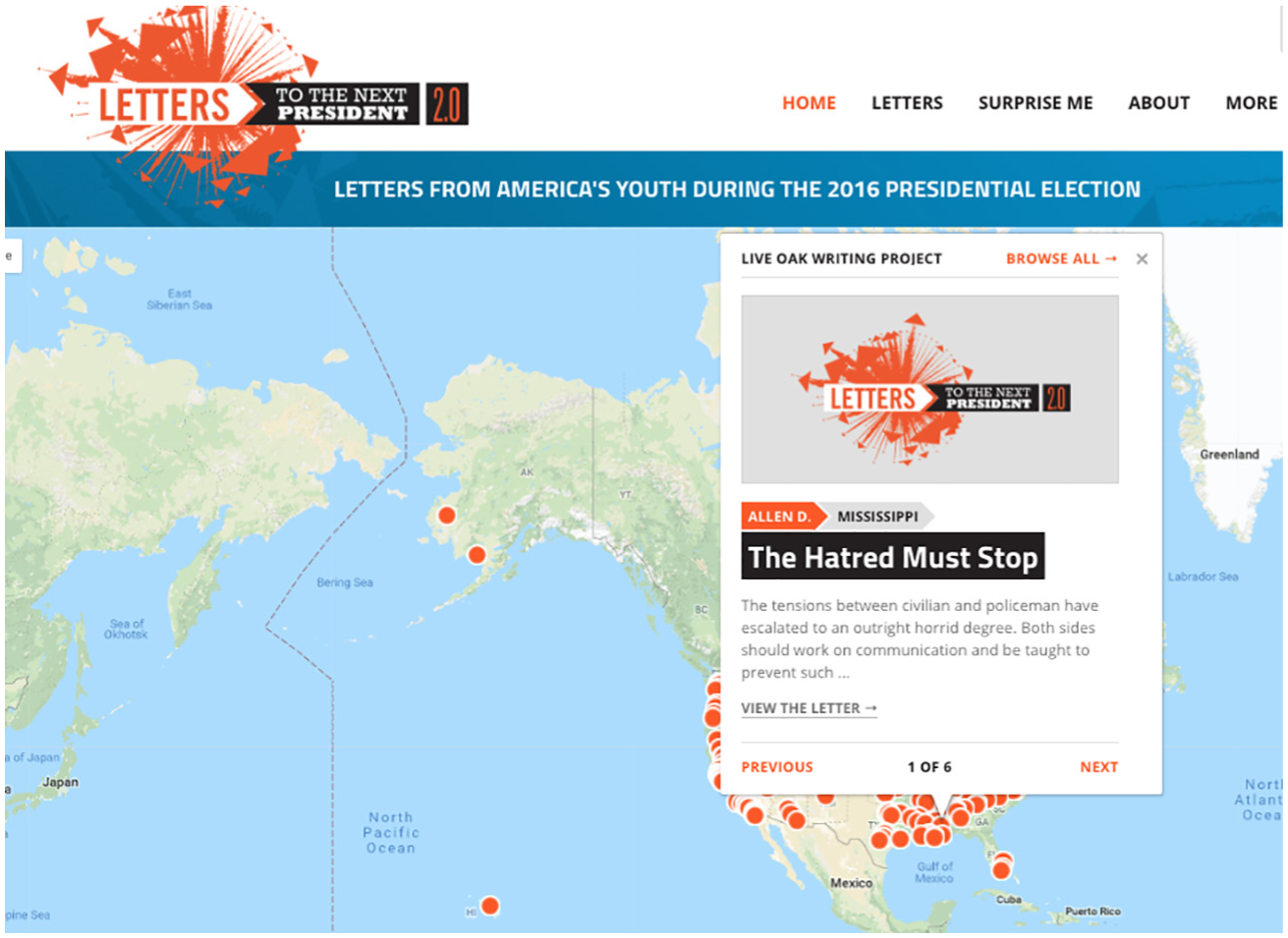
A screenshot of letters2president.org.
Unlike other online platforms, LTNP is intentionally designed as a “safe and supportive” environment. Student letters were only made visible after being approved by teachers and there is no commenting ability within the site; teachers essentially acted as moderators for a community that did not foster comment-driven dialogue. Furthermore, the website features instructional suggestions, sample lesson plans, and professional development resources for teachers.
Submissions of individual letters included several pieces of information that students chose and are publicly available—the name and location of the school site, a student name, the entirety of the letter, a title, a summary (usually a sentence long), and up to five topics (“tags”) associated with the letter. With assistance from NWP and KQED, we aggregated and analyzed these data for every letter published to the LTNP website on or before the U.S. presidential election on November 8, 2016, comprising 11,035 letters. Our analysis and research design were independent of NWP and KQED, and we accessed the data only after the conclusion of the 2016 election. We did not participate in conceptualizing or implementing the project. Particularly in light of ongoing questions about how youth learn civically within schools during one of America’s most partisan elections in recent history, our research focused on two specific questions:
What topics did students choose to write to the next U.S. president about and how do these topics vary according to school demographics?
Through close textual analysis of a smaller set of letters, how did students write civically? In particular, how did students use evidence, emotional appeals, ethical appeals, logic, and personal experiences in arguing for legislative change?
As part of a reflection on the recent election, this study intentionally centered on the voices that are often positioned as the most disengaged in civic education literature; our textual analysis of student writing focused particularly on class sets of writing in schools that serve a majority of students of color and/or a majority eligible for free or reduced-price lunch (FRL). Furthermore, we also purposefully focused on schools located in states considered “swing states” 1 during the election, so that we might later study how potentially contrasting media messages were reflected in student writing; this analysis, however, is not a focus of this article.
Data Analysis
We analyzed the data in two phases. First, we engaged in a quantitative analysis of the national data set. Specifically, we wanted to know, for the 11,035 student writers, what issues were most salient and how did these vary across regional, socioeconomic, and other factors across school sites. Again recognizing the need to understand the kinds of civic issues that interest youth of color as well as students of lower economic status, our analysis focused on differences between these communities others. Second, we engaged in qualitative analysis of five diverse schools in different regions of the country. As we detail below, we present a broad picture of youth civic writing through this approach: exploring both what interests students civically and how youth may have engaged in civic writing practices.
Phase 1: Quantitative Analysis of Letter Topics
In preparation for the first phase analyses, we expanded and reorganized the data set to understand the demographics of the sites that the letters came from, merging the previously noted data on the letters with school-specific data from the National Center for Education Statistics (NCES). By linking each letter to school information via the NCES ID number of each school, we were able to perform descriptive analyses to break down broad socioeconomic patterns within the corpus based on characteristics of the school population (no demographic data were collected at the individual student level). A key summary of the letters in this data set are shared in Table 1 and represented in Figure 2.
Breakdown of Letters

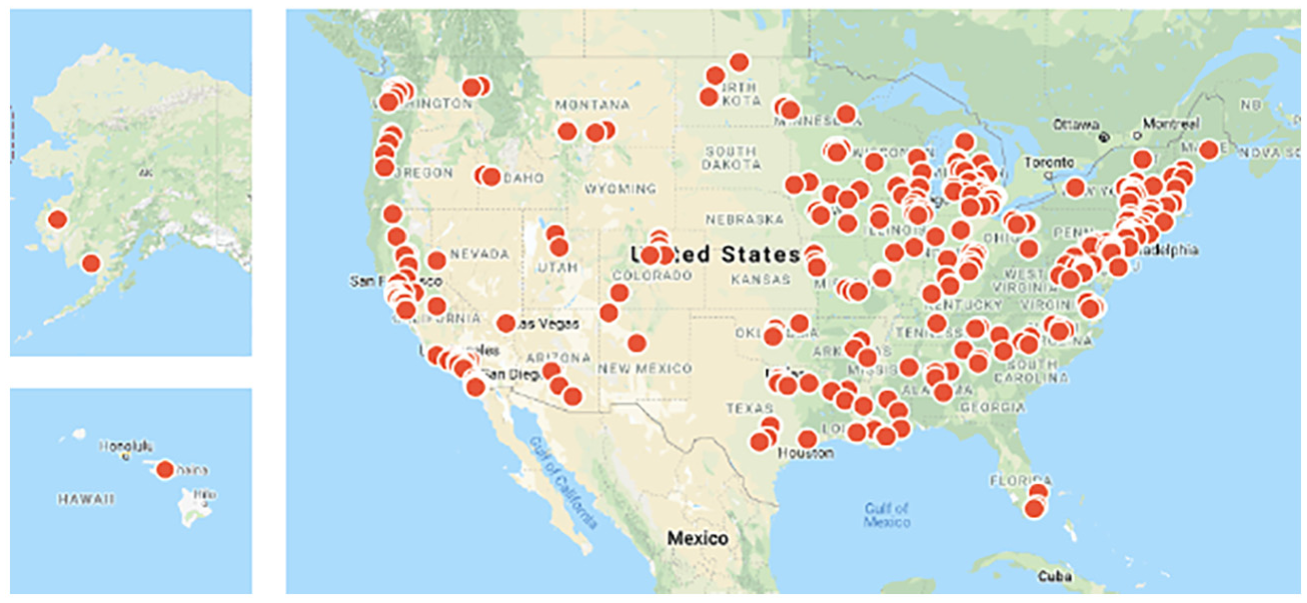
Map of participating sites.
To be able to make sense of the many topics students wrote about, we consolidated the thematic “tags” that students had applied to their letters. The submission system required students to manually enter all “tags” (relevant topic keywords) for their letters, entering up to five tags per letter; the system did not provide a menu list of common issues for students to choose from. Due to this open-entry system, students generated a total of 1,636 different issue tags, including a large proportion of redundant and related tags (e.g., tags included “animal lives matter,”“animal life matters,”“animal life,”“animal rights,”“animal lives,”“animal cruelty,”“animal treatment,” and many others that suggested similar themes). We developed a scheme to code the tags and consolidate them into 69 distinct, nonoverlapping topic categories, clustering tags that were thematically related and/or redundant in order to allow us to feasibly conduct analyses based on broader topics (see Table 2).
Topic Issues
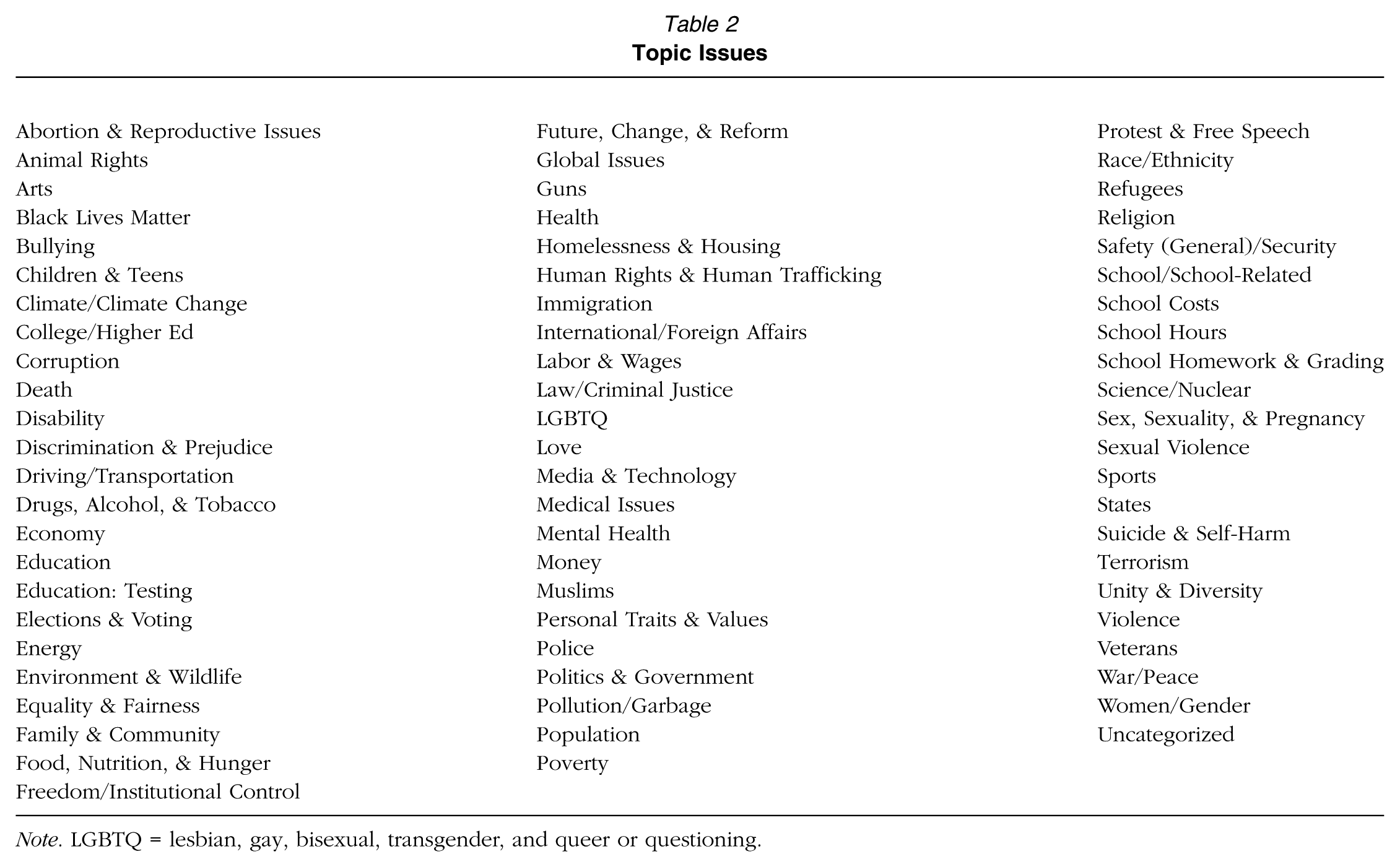
Note. LGBTQ = lesbian, gay, bisexual, transgender, and queer or questioning.
Luis’s letter at the beginning of this article, for example, included five different original issue tags: “racism,”“inequality,”“all lives matter,”“police brutality,” and “gun issues.” In our consolidated categories, these tags were part of the “Race/Ethnicity,”“Equality & Fairness,”“Police,” and “Guns” categories. While consolidating removes some of the nuance from the student-generated tags, we could not have conducted our analyses with the 1,636 original tags. Additionally, some tags remained uncategorized and often shed little light on the content of the letter (e.g., tags such as “problem,”“issue,”“U.S. issues”). However, more than 98.5% of letters had tags that were categorized in at least one of our 69 topic areas. Some of the remaining 1.5% had no tags included by the writer.
We used SPSS statistical analysis software to analyze the letter topics and school site data using chi-square tests to determine whether associations exist between letter topics that emerged and three binary school characteristics: (1) whether or not the school was eligible for Title I schoolwide, (2) whether or not more than 50% of students were eligible for FRL, and (3) whether the school had more than 50% students of color. Title I eligibility and FRL data are only available for public schools; however, 92% of letters were submitted from public schools, so we were able to analyze relationships based on these variables for the vast majority of letters.
Phase 2: Qualitative Analysis Within Case Study Schools
In the second phase, we selected a subset of five schools within the data set for a deeper analysis of letter content. The sites selected were identified as swing states during the 2016 presidential election and were located in different regions of the country. We selected schools that serve more than 50% students of color to shine light on the issues and concerns raised in these students’ letters specifically, students whose civic engagement has often been doubted in the literature. The schools and courses that fit the selection criteria represent students of various grade levels (Grades 8–12), as well as varied contexts in which students were asked or given the opportunity to write. Selective courses such as Honors or AP (Advanced Placement) were excluded as were three sets of letters where all students in one class wrote on the same topic. All but one selected school are either Title I eligible schoolwide or serve a majority of students eligible for FRL (at the remaining school, 30% of students are eligible for FRL). The five schools represented in this study are detailed in Table 3. 2
Case Study Schools
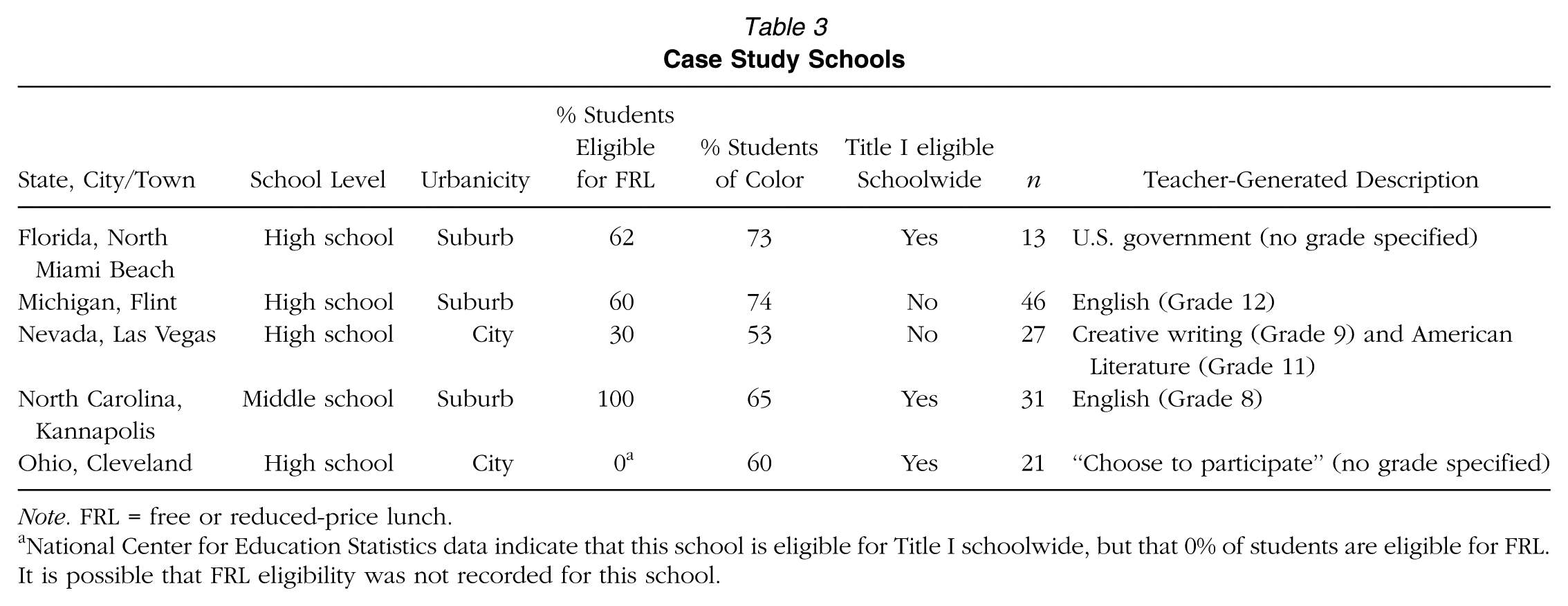
Note. FRL = free or reduced-price lunch.
National Center for Education Statistics data indicate that this school is eligible for Title I schoolwide, but that 0% of students are eligible for FRL. It is possible that FRL eligibility was not recorded for this school.
In this second, qualitative phase of the project, we performed content analysis (Schreier, 2012), to code how students constructed arguments within their letters. Specifically, we developed codes based on the modes of argumentation and persuasion frequently taught in schools; codes for letters focused on if they included logical, ethical, and empathetic and emotional appeals. We coded every letter in the case study selection to reveal how student writing manifested civic arguments. This set of letters also allowed us to code using a constant comparative analysis to develop general thematic categories (Strauss & Corbin, 1994) in order to look at youth conceptualizations of civics, their understanding of a president’s responsibility and power, and the ways in which students approach civic ideas in their writing (Schreier, 2012). Emergent themes were documented in analytic memos (Hammersley & Atkinson, 1995), with a subset of letters coded by three coders to allow for interrater reliability analyses (Saldaña, 2009).
Argumentation
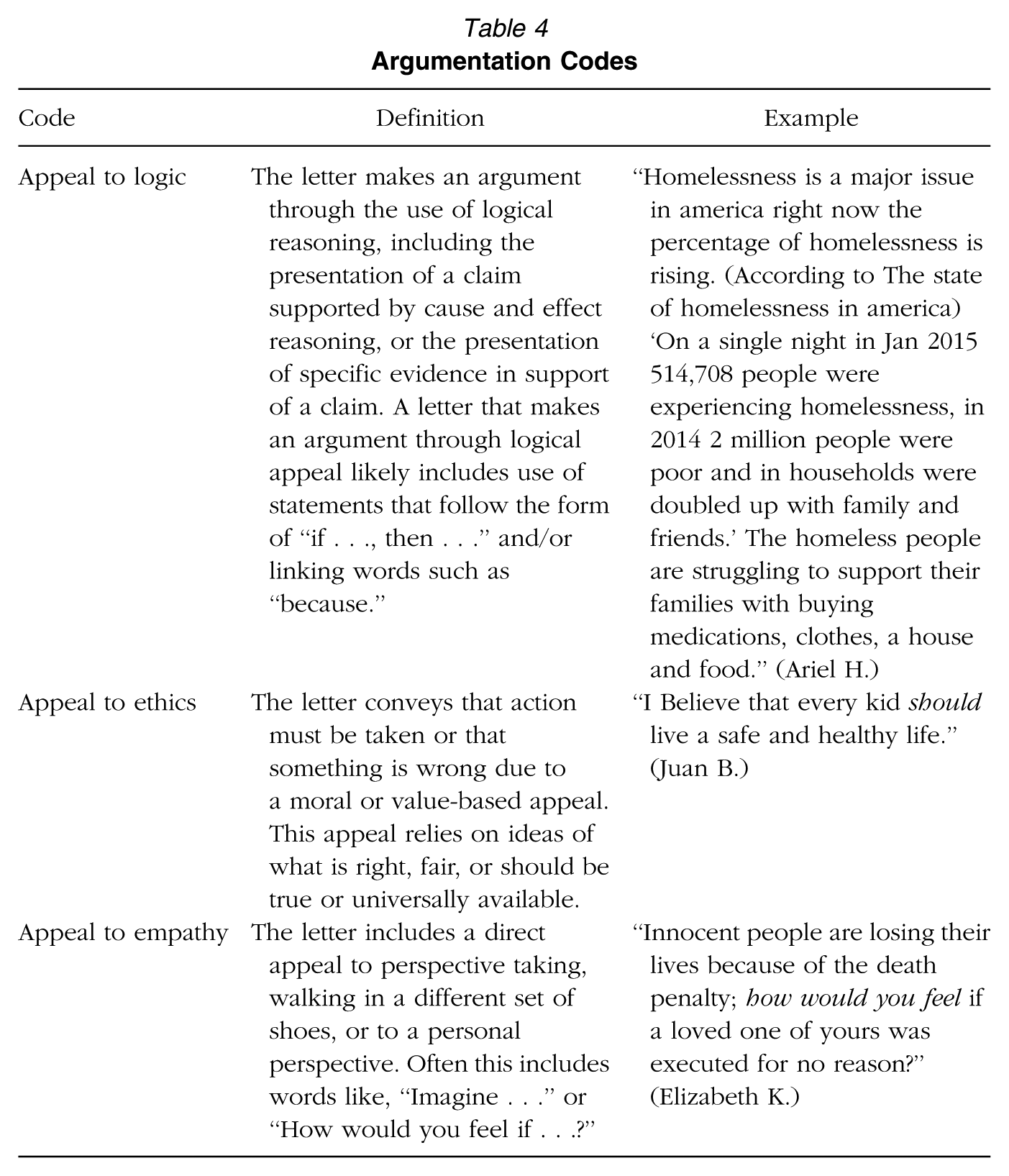
Given the political landscape of the 2016 election, in which facts, morality, and human empathy were all under active contestation, we wanted to see how students engaged in forms of argumentation. With this in mind, letters were initially coded for argumentation based on an a priori set of codes derived from the three Aristotelian modes of persuasion: logos, ethos, and pathos (loosely aligning with facts, morality, and empathy) a framework for argument that is often taught in middle or high school English courses (Burke, 1966). After an initial phase of coding, the codebook was refined and argumentation was operationalized around the codes: appeal to logic (originally logos), appeal to ethics (originally ethos), and appeal to empathy (originally pathos). Full definitions and an example for each are provided in Table 4.
Argumentation Codes
What counts as evidence
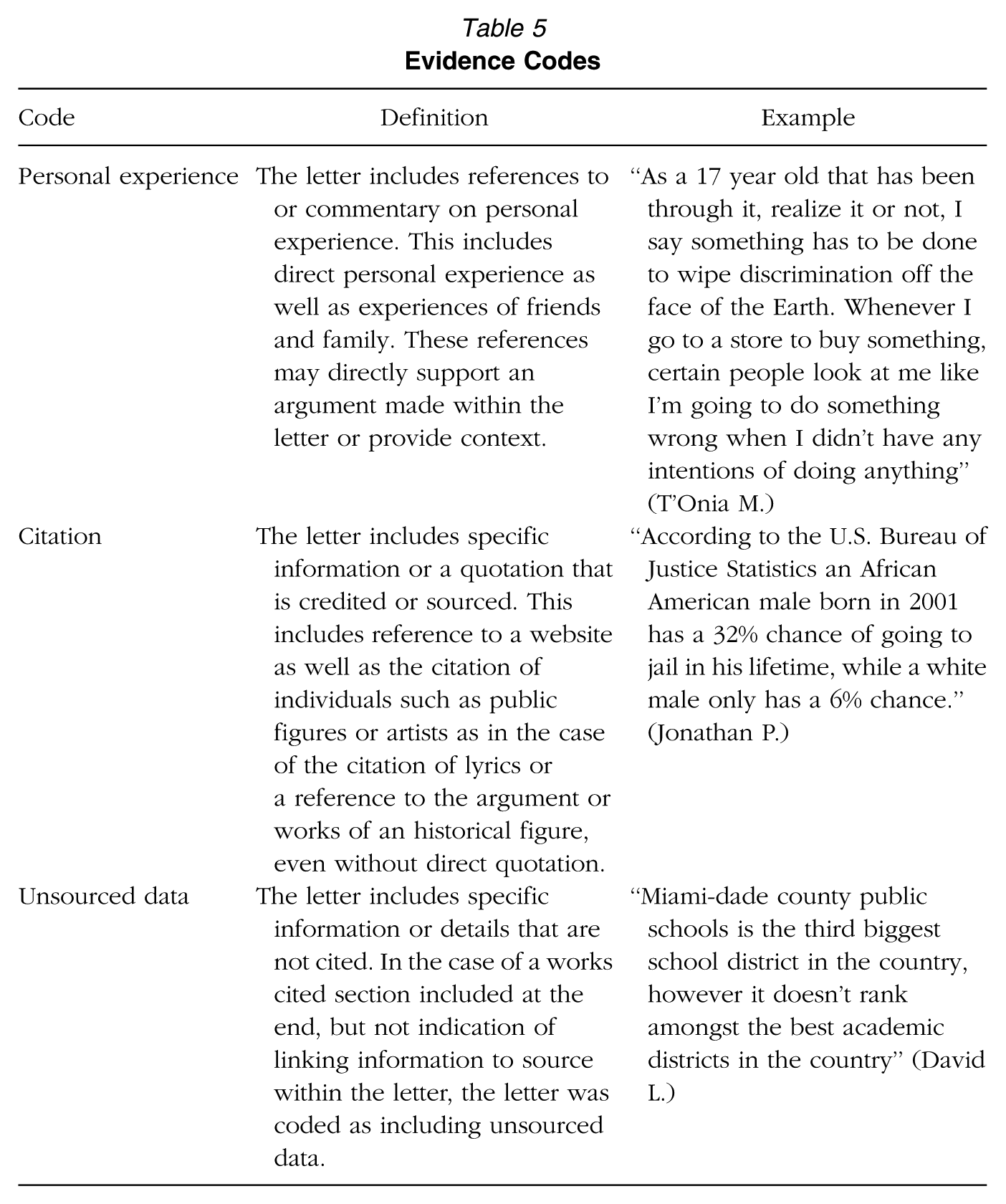
Considering evidence as a core component of argumentation, and with similar concerns about the political landscape as articulated above, three different forms of evidence were coded: personal experience, citation, and unsourced data. Personal experience included any story or anecdotal connection to the author’s life, including the experience of a close friend or family member. Letters were coded as containing citation if a direct quote or idea was attributed to a speaker, which at times included song lyrics or a component of a politician’s speech, or if facts were directly sourced, referencing the website, newspaper, or other (usually online) source of that information. 3 When discrete facts were shared but not cited or sourced, the letter was coded as including “unsourced data.” 4 Definitions and examples provided in Table 5.
Evidence Codes
Study Limitations
By nature, the LTNP project sample, while diverse in terms of geography, school profiles, and topics addressed, is not necessarily representative of students or of schools in the United States. While we are able to share analyses from a large sample of 11,035 letters, this is not a random or nationally representative sampling of youth civic identity or beliefs. However, within this corpus of data we have attempted to focus intentionally on students who are historically underserved and underrepresented—and most overlooked within civic education literature—by sampling schools fitting that profile in the second phase of the study.
Another limitation is that the findings from the first phase of this study are based on the tags that students selected and that we categorized in Table 1. The original tags for some letters may not have been representative of the content of the letters that students wrote and our process of consolidating may not fully convey the dimensionality of all letters. Additionally, our analysis is based on demographic information about the school sites as a whole, but we do not have demographic data on individual student writers, nor the specific pedagogies and examples teachers used when assigning the project.
Finally, this article provides an overview of how students across all schools in this study participated in this predominantly school-based, civic writing activity. We recognize that there are myriad dimensions of this work that we cannot cover in a single article. Further work builds on the findings here focused on the impact of this work on teacher identities (Garcia & Gargroetzi, 2019), and breakdown of student writing on topics such as immigration (A. Levinson & Garcia, 2019) In this article, by looking broadly across all the letters and closely at a purposeful sample of letters, we seek to begin to draw on the knowledge, demands, and uncertainties voiced by thousands of youth on the precipice of Trump’s presidential victory.
Findings
Below, we explore two aspects of this significant corpus of student writing: (1) the topics students wrote about, including how letter topics related to socioeconomic characteristics of school sites among the 92% of letters from public schools and (2) the ways in which students wrote civically about these topics in a set of 138 letters from five case study schools.
What Topics Did Students Write About?
Looking broadly at the corpus of 11,035 letters reveals that students tagged their letters with a wide range of issues. There was no single topic that overshadowed all others, and some letters covered several diverse topics. The median number of topics per letter is 1, but the mean number of topics was 1.82 with a standard deviation of 1.088; thus while over half of letters’ original tags (5,802 letters) fell into only one topic, 22% of letters fell into two topics, and 26% of letters fell under three or more topics (see Figure 3 below). Some letters were categorized with related topics (e.g., “environment” and “climate change”), while others addressed more disparate ones. This diversity demonstrates, as one might expect, that the issues at the forefront of students’ minds ranged widely—later in this section, we address some of the ways that topics varied across different settings.

Distribution of topics per letter.
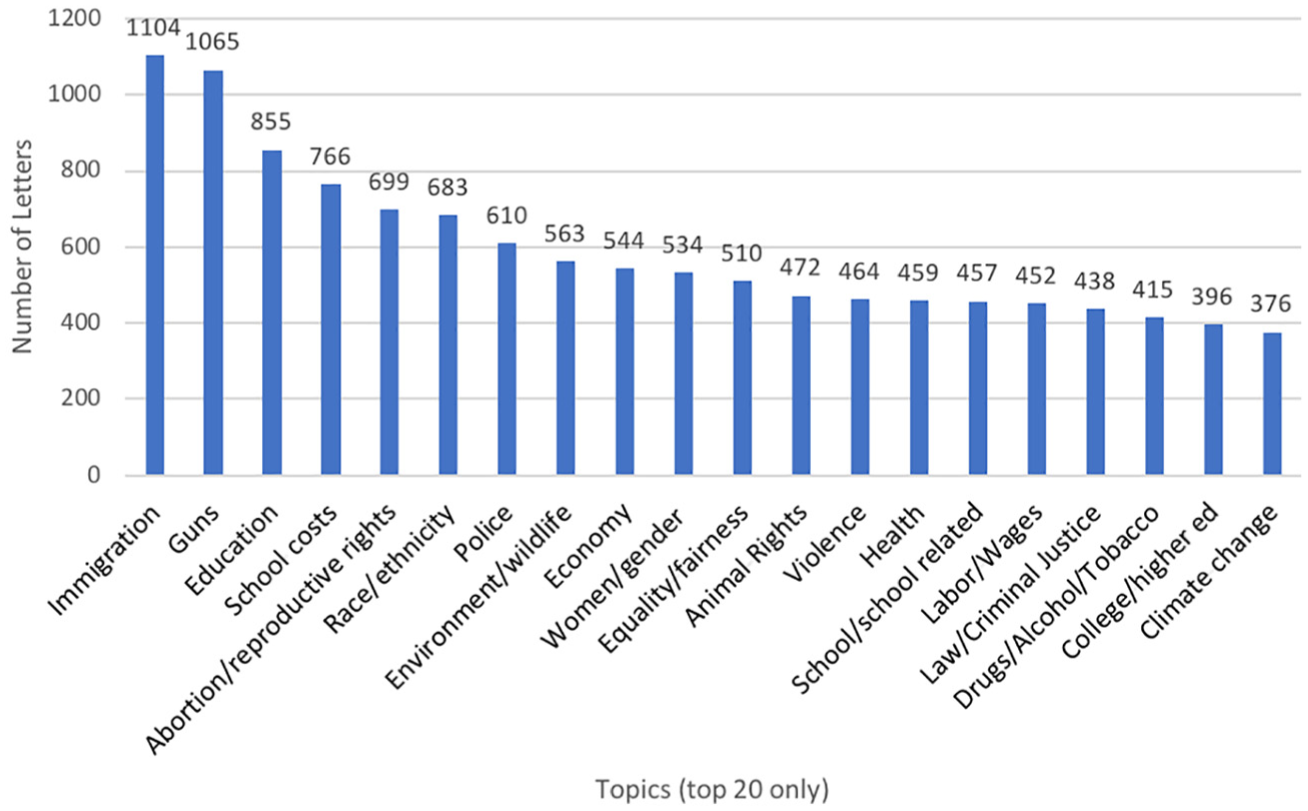
Of the 69 condensed topics we generated based on student tags, some were more prevalent than others, and these “top topics” were similarly diverse—including guns, race and ethnicity, the environment, health, school-related issues, LGBTQ (lesbian, gay, bisexual, transgender, and queer or questioning) issues, the economy, and more. Figure 4 shows the 20 most prevalent topics (of the total 69).
Top 20 topic categories.
Immigration was a prevalent topic on the minds of letter writers—nearly 10% applied tags in the immigration topic category, which included “immigration,”“border patrol,”“illegal immigration,”“deportation,” and others. As part of the analysis, we sought to identify classes in which teachers may have assigned a topic for student letters and found three class groups in which all letters focused on immigration (166 letters). 5 Immigration was the only topic that appeared to be assigned to some classes. Even when we put aside these 166 letters, 941 remaining letters addressed the topic of immigration, more than any other topic except for guns.
Guns (constructed of issue tags such as “assault weapons,”“gun control,”“gun issues,”“gun laws,”“second amendment,”“school shootings,” and “shootings”) was also a top topic, representing 9.65% of all letters. While high school students have gained greater visibility in the struggle for firearms regulation since activist efforts emerged from the school shooting in Parkland, Florida, in February 2018, it is notable that more than 1 year prior, guns were at the forefront of students’ concerns. Close to 10% of all letters in this corpus were tagged with a gun-related issue.
Education and school-related issues are also—not surprisingly—a key concern for teens. The topic “School Costs” alone ranked highly (applied in 766 letters), suggesting students’ anxiety over the expense of college tuition. In addition to the “School Costs” topic category and the “School/School-Related” category (457 letters) that aggregated more general tags such as “school,”“school climate,”“school education,”“classrooms,”“school funding,” and “teachers,” there were additional categories including “School Hours” (68 letters) and “School Homework & Grading” (98 letters) that cluster more specific concerns. The “College/Higher Ed” topic included 396 letters. Finally, the less specific “Education” topic category was present in 855 letters. Together these different education-related topic categories, a total of 1,963 letters (17.7% of all letters) addressed at least one topic related to education or schooling.
Race and ethnicity, women/gender, LGBTQ, discrimination and prejudice, and equality and fairness were all prevalent topics, indicating that youth wrote about issues pertaining to specific communities including identity and social justice, as well as broad patterns of inequity. “Economy” and “Labor & Wages” counted among the most prevalent topics as well. “Environment & Wildlife,” and “Climate Change” were present in 563 and 376 of the letters, respectively, while “Animal Rights” occurred in 472 letters. Additional topics in the top 20 include “Health,”“Drugs, Alcohol, & Tobacco,” and “Violence.”
Though we cannot discern the specific nature of letter arguments from the issues and topics alone—a tag of “Police” does not reveal the nature of the writer’s message regarding policing—relationships between topics (e.g., which topics were often co-occurring in the same letters) suggest some trends. For example, the topics “Black Lives Matter,”“Race/Ethnicity,” and “Police” co-occur frequently in the same letters—more than 25% of “Police” letters were also in the “Black Lives Matter” and/or “Race/Ethnicity” topics—suggesting that a cluster of letters likely address racism in policing and recent tragedies of race-related police violence. With regard to education-related issues, “College/Higher Ed” and “School Costs” were also among the most co-occurring topics—67.5% of letters tagged in the “College/Higher Ed” topic were also tagged in the School costs topic—suggesting that letters addressing higher education often focused on its financial costs. Links between “Labor/Wages” and “Women/Gender,”“Discrimination/prejudice” and “Race/Ethnicity” suggest that concern about inequities facing women and people of nondominant backgrounds, specifically with regard to jobs and earnings, also formed a cluster. Future qualitative research will explore issue-specific letters qualitatively to understand patterns in students’ arguments, beliefs, and calls to action (A. Levinson & Garcia, 2019; Zummo, Gargroetzi, & Garcia, 2019).
Although topics students chose to address in their letters overlap to some extent with top issues among young Americans in other research, there are also marked differences. For example, respondents to the Harvard Public Opinion Project (Harvard University Institute of Politics, 2016), ages 18 to 29 years, listed the economy and terrorism as top concerns in fall 2016. While the economy was the ninth most prevalent issue in the LTNP, terrorism was not in the top 20 topics and occurred in only 342 letters, just over 3%. In the Harvard poll, “reducing inequality,”“uniting the country,” and “dealing with immigration” were the third, fourth, and fifth most important items that 18 to 29 year olds prioritized, respectively, and these resonate more closely with the issues that stand out among the student letters. Issues such as health, climate change, education, and gun control—prominent topics for our student writers—were only listed as priorities by 1% to 2% of the youth poll respondents. With differences in ages, prompts, and possibly demographics, we cannot project what might account for the differentiation in the issues that teens addressed in their letters and those that young adults prioritized in the poll. Existing survey reports also have not published analyses that compare socioeconomic status (SES), racial groups, or regional groups. A clear message from our reviews of existing data is that further research investigating teens’ civic lives is needed. 6
How Did Letter Topics Vary According to School Demographics?
Building on the frameworks of civic “gaps,” our analysis explored how letter topics varied across different contexts around the country. Among the 92% of letters submitted from public schools (10,152 letters), we identified significant associations between the topics addressed in student letters and demographic characteristics of the school population, among which we focused on three:
whether schools were eligible for Title I schoolwide;
whether schools had a majority (more than 50%) of students eligible for FRL; and
whether schools had a majority (more than 50%) students of color.
These analyses were performed with the letters from public schools; for the remaining 8% of letters from private schools or other institutions, we do not have access to the same site data.
Chi-square tests revealed that among the 10,152 letters from public school students, 43 of the 69 letter topics were associated significantly with at least one demographic characteristic of the school site student populations (Tables 6 and 7). Of these, 31 topics were associated with one or both socioeconomic factors (schoolwide Title I eligibility or a majority of students eligible for FRL), while 32 topics had associations with schools that serve more than 50% students of color or that serve more than 50% White students. 7 The relationships in Tables 6 and 7 are all significant at the 95% level. Although some topics were associated with racial majority and not with socioeconomic indicators, and vice versa, there were no topics associated with both lower SES and White majority, nor with both higher SES and majority students of color. We stress that socioeconomics and race are not to be conflated. There was, however, covariance in this sample that may contribute to some topics converging on both racial and socioeconomic groups (e.g., immigration was more likely written about in schools serving a majority students of color, as well as among schools serving a majority lower income students), and this is difficult to parse out as many of the schools with one of these characteristics also possessed the other. Finally, 26 letter topics had no relationship to either school SES or racial indicators. These included “Education,”“Equality & Fairness,”“Economy,”“Freedom/Institutional Control,”“International/Foreign Affairs,” and “Mental Health,” among others. The following sections focus in on key issues where student letter topic focus varied according to the aforementioned demographics.
Topics Significantly Associated With School Socioeconomic Indicators
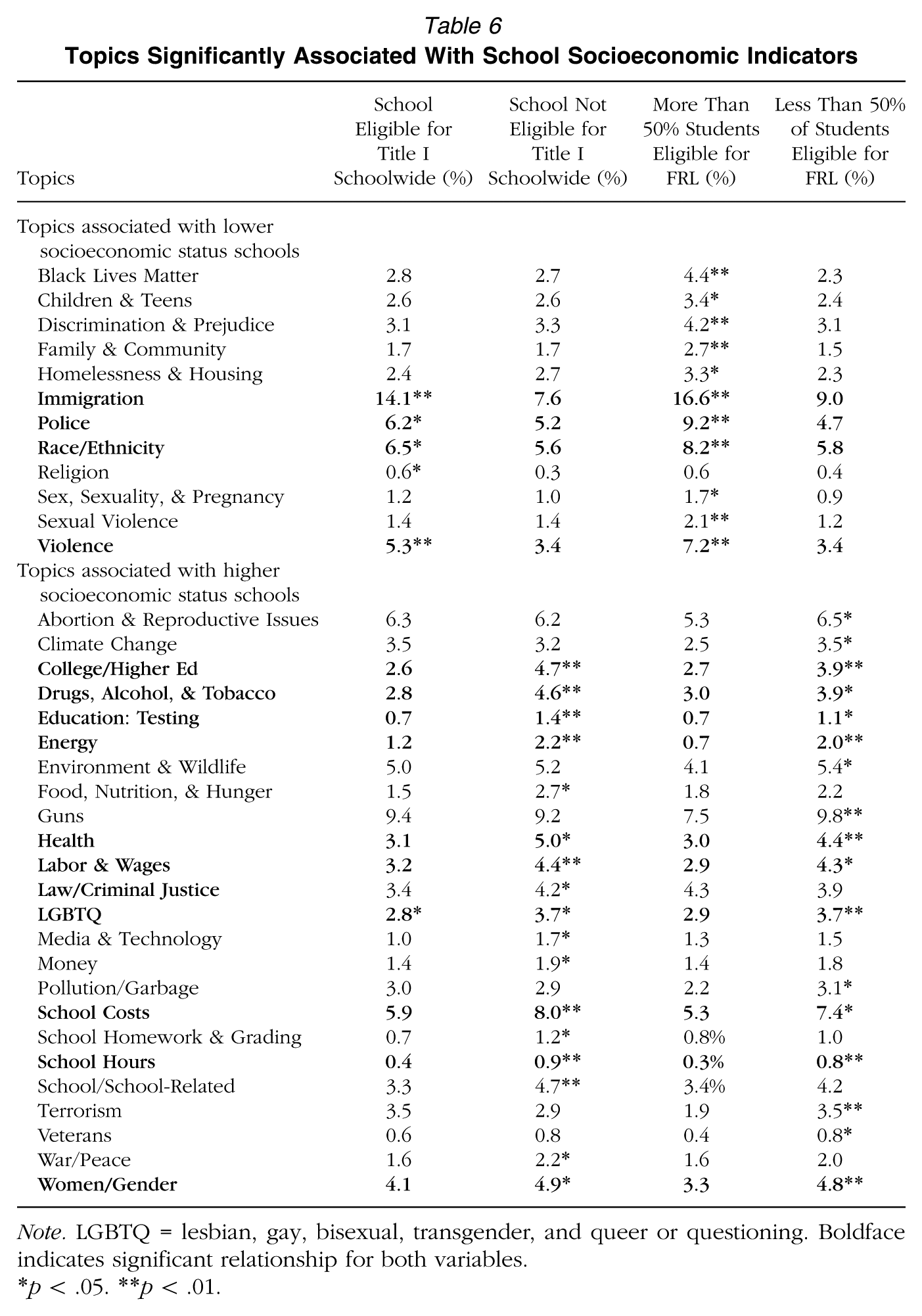
Note. LGBTQ = lesbian, gay, bisexual, transgender, and queer or questioning. Boldface indicates significant relationship for both variables.
p < .05. **p < .01.
Topics Significantly Associated With School Racial Majority
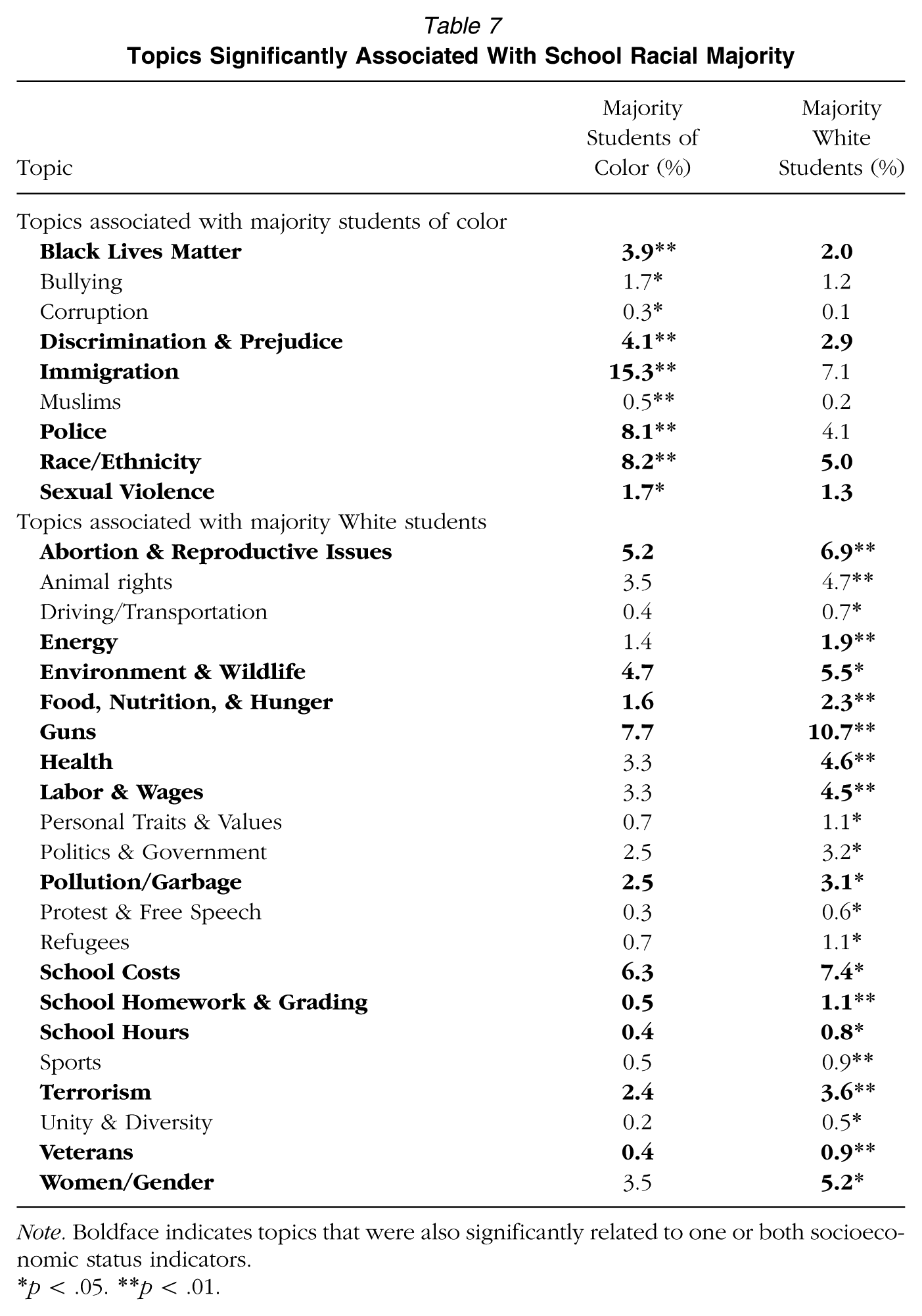
Note. Boldface indicates topics that were also significantly related to one or both socioeconomic status indicators.
p < .05. **p < .01.
Race and Discrimination
What do these results tell us? First, topics of race and discrimination, including “Race/Ethnicity,” and “Discrimination & Prejudice,” were prevalent among letter writers overall, but were significantly more likely to be written about in letters from schools serving a majority of students of color and also significantly more likely (although slightly less so) to come from schools serving a majority lower income students (>50% receiving FRL). The topic “Black Lives Matter” also occurred more frequently among both of these groups of schools. Madisyn, a student from a school serving a majority of lower-income students and also a majority of students of color (largely Latinx and African American) in Oklahoma, who tagged her letter only with “Race” (categorized under “Race/Ethnicity”) writes, Our communities are plagued by death. Mothers and fathers are scared to send their children out because of the fear that they might be killed by doing something as simple as walking home or to a friend’s house. 2016 has caused a lot of pain in the hearts of friends and families of the black community. Lives have been lost and in most cases no full justice is actually served. All lives will not matter until black lives matter, too. When you are scared or need help in an emergency, who do you call? The local police department is what most people would say, but what do you do if the police could care less about your life and judge you by your skin color, then who would call? That is a question most people have no answer to. We are fighting for equality and justice. We want to be able to walk down the streets and go about our day stress free. Lives have been taken for the simplest things: books, CDs, cigars, car trouble, and for things you would think you would be safe. These are real life examples of reasons people lives have been taken within the past two years. People mistake this movement as a violent movement. It is meant to cause awareness but people sometimes portray it as a way to start problems, creating fear for everyone involved. We want justice. We want these murderers in jail. In most of these cases the people are not punished at all. Cops have been given so many chances this year. The system has not given us any justice; they get leave with pay and get to enjoy their lives while we grieve in pain. Recently a Tulsa police officer shot and killed a man, and she was let off on bond. Mostly every case is ignored, and even when it is “handled” things like that happen. My point is, black lives do matter, meaning all lives matter, but until black lives are equally treated we will continue to stand up for our people. Justice is all we want.
Madisyn’s letter speaks to issues broader and deeper than the letter tag denotes. Although Madisyn applied only one tag of “Race” and did not tag her letter with “Police,”“Violence,” or anything else, her letter speaks to students’ deep and related concerns around discrimination, violence, and specifically the role of police. The “Police” topic, which Madisyn’s letter was not categorized in but clearly addresses, was also associated with higher poverty schools and was nearly twice as likely to be present in letters from schools with a majority students of color. Although our analyses here cannot discern the nature of students’ arguments about police, the co-occurrence with race- and discrimination-related topics indicates that at least a cluster of police-focused letters address racial profiling among police and police brutality targeted at people of color. Given that about half of letter writers chose tags in only one topic area, it is likely that other letters like Madisyn’s touched on more topics than may be obvious from the tags students applied.
The more frequent occurrence of the “Race/Ethnicity” topic and “Discrimination & Prejudice” topic among letters from schools serving a majority students of color corroborates similar disparities reported in polling data of Americans ages 18 to 29 years (Harvard University Institute of Politics, 2016), which suggests the majority of young people of color felt they were “under attack.” The poll study also found that 62% of young Americans thought race relations would worsen if Trump were elected president, as compared with only 22% if Clinton were the winner. The prevalence of race and ethnicity as well as discrimination and prejudice across all student letters but particularly among letters from schools serving a majority students of color suggests that young people in communities of color in particular feel that the threats of racial and ethnic discrimination are affecting them in pronounced ways and that the president can take action for change.
Violence and Guns
Violence and sexual violence are also more prevalent topics for students from schools serving lower income communities and communities of color. One conjecture as to why this pattern occurs is that youth living in lower income communities may feel more viscerally the threat of violence, particularly if living in areas that are underserved with regard to safety and social services, which is often the case with both lower income communities and communities populated largely by people of color. “Violence” was among the top 20 topics in the sample overall; “Sexual Violence” was present in a smaller group of 157 letters.
The “Guns” topic category, which might have been expected to follow a similar trend as “Violence,” was more prevalent among lower poverty schools and schools with majority White students. To parse out the specific issues and stances students take in their letters and better understand why “Violence” may be more commonly addressed by students from schools with more lower income students and students of color, while, for example, “Guns” is more commonly addressed by students from other schools, further qualitative work is needed. However, among the tags included in “Guns” were “gun issues,”“second amendment,”“gun control,” and so on, indicating topics related to firearms rights, legislation, and restrictions, whereas the “Violence” topic included tags such as “violence,”“abuse,”“murder,” and “killing,” suggesting a focus on actual violent acts rather than on the weapons used. Thus, while students from higher income communities and students from largely White schools may be more concerned about firearm issues, students in schools serving largely students of color as well as serving largely lower income students were more likely to express concern about violent acts and abuse.
Education Costs
Surprising findings emerged around the topics of “College/Higher Ed” and “School Costs.” National education policy in recent years has heavily emphasized the importance of college and college readiness for all students. While we might have expected that students from schools serving the less affluent would be more concerned about challenges of accessing college and paying tuition, results showed an opposite trend. One potential explanation is that these data reflect the deep inequality in students’ college opportunities and expectations. Higher SES students are more assured of attending college and thus are more likely to choose related issues to write about. Another reason students from less privileged backgrounds were more likely to write about topics other than college could be that there are other issues that they are more worried about, that they may experience on a day-to-day level in their communities, and that they are more motivated to call to the attention of the future president—however important college may be to them. As higher education is often seen as a means of climbing a social and economic ladder in the United States, findings around the themes of these letters highlight that perhaps the students that might most benefit from advocating for government action around school costs are also those that do not have the luxury to focus their attention on issues of higher education. The “School Costs” topic was also more prevalent in schools with a majority White students, but the relationship with regard to school racial makeup is less strong than with the SES indicators.
Immigration
The topic of immigration had some of the strongest associations, both with socioeconomic characteristics of the student body as well as with racial makeup of the school. “Immigration” was a topic in more than 15% of letters from schools with a majority students of color, the topic being more than twice as likely to appear in letters from those schools than from schools with a majority of White students. Taking a deeper look at school demographic data for racial majority groups, while 7.1% of White majority schools’ letters were categorized under immigration, 22.6% of letters from Latinx majority schools were categorized under immigration (immigration themed letters constituted 8.9% of letters from Asian majority schools, 12.8% of letters from Black majority schools, and 13.5% of letters from schools with “other” as the majority). All these patterns raise many questions, including what concerns youth most deeply regarding immigration? What are students’ stances on the issue? Is immigration more commonly addressed among schools with a majority of students of color, and among students at majority Latinx schools, due to students’ personal proximity to the issue, and if not what accounts for the relationships? These topics are addressed in a related analysis focused specifically on this topic (A. Levinson & Garcia, 2019). What is evident here is that immigration is an important issue among teens from a diverse array of schools but particularly for students from lower SES communities and communities of color. Investigating these patterns further could help understand what specific aspects of immigration concern students and what divisions might exist between students in different communities across the country.
With regard to all the topics associated with SES and/or racial indicators, differences also likely reflect the types of events, discussions, and debates that are prevalent among schools and/or communities that share characteristics, and that contribute to shaping young people’s civic thought.
Qualitative Analysis From Five Focal Sites
In the second phase of this research, we engaged in close textual analysis of 138 letters from five focal schools (see Table 3) to understand how students write civically and in particular how students use evidence, emotional appeals, logic, and personal experiences in arguing for legislative change. As described in the Methods section, we chose five school sites that were socioeconomically diverse, served high percentages of students of color, and were located in different regions of the country.
Students from the five school sites wrote on a wide range of topics, touching on 49 of the 69 total topics identified in the full set of 11,035 letters. Throughout the qualitative findings, we see that schools and classrooms are places where local concerns and norms of writing can be shared, but can also vary greatly. The two most prevalent topics from the nationwide letter set, immigration and guns, are written about at two and four of the schools, respectively, but come after other topics in frequency. Looking at the five sets of letters cumulatively, the most frequent topics are “Race/Ethnicity” (17), “Police” (16), “Equality & Fairness” (14), “Discrimination & Prejudice” (12), and “Education” (11). Given the demographic selection criteria for the schools included in this qualitative analysis, concerns about issues of racial and ethnic equality or discrimination and police relations are aligned with patterns described above. However, when each set of letters is viewed individually, different clusters of student concern emerge. For example, at one school, the most frequent topic was “Sexual Violence” (10 letters), a topic that was not tagged in letters from any of the other case schools. At another one of the five schools, LGBTQ was one of the most frequent topics (5 letters), but it was only mentioned in one letter from the other four case schools combined. Table 8 provides a summary of topics and frequency by school.
Summary of Topics and Frequency by School
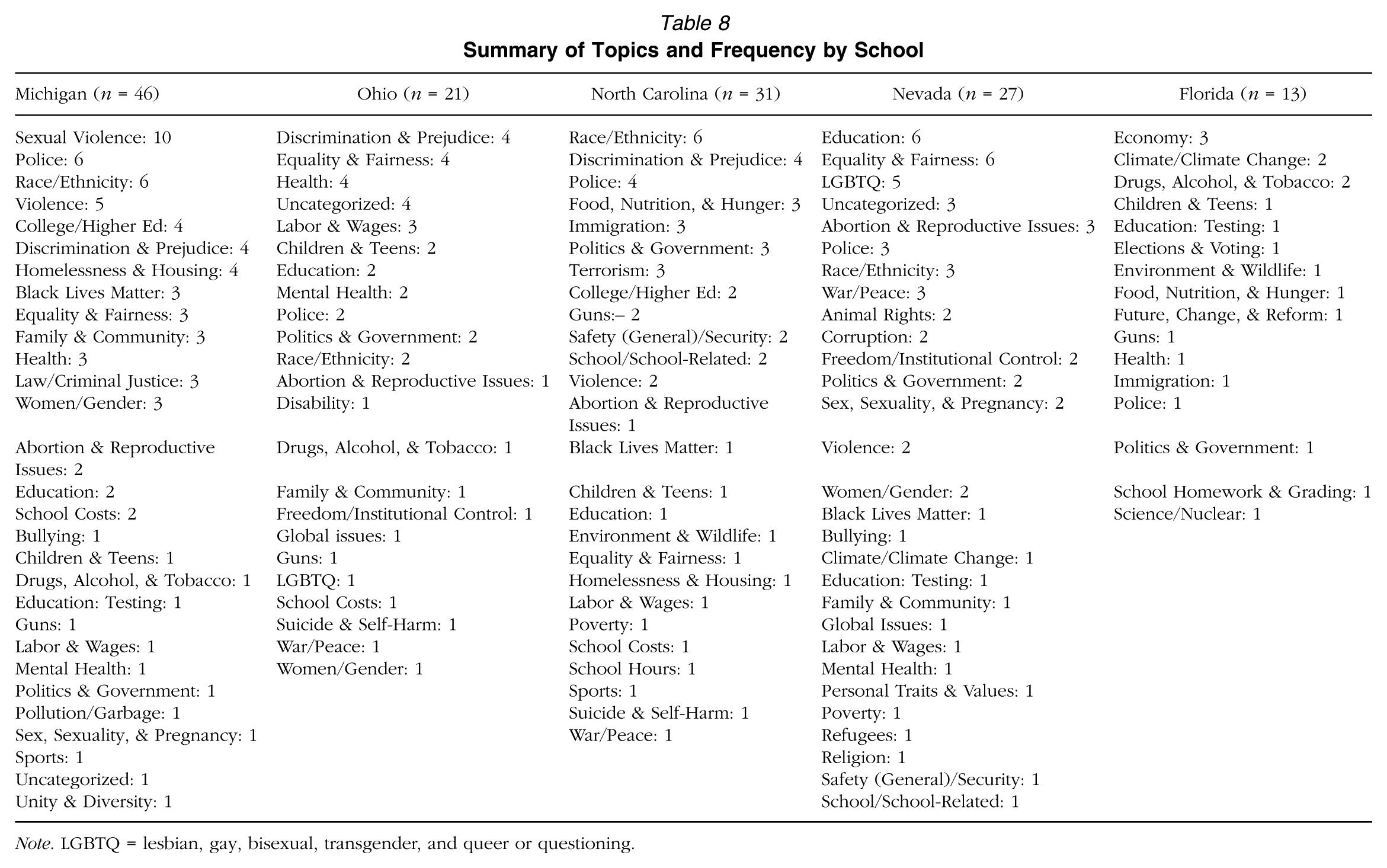
Note. LGBTQ = lesbian, gay, bisexual, transgender, and queer or questioning.
How Did Students Write?
Forms of Argumentation and Use of Evidence
In their letters, students developed compelling arguments employing varied argumentation forms that included appeals to logic, to empathy, and to ethical standards. They provided stories of their own experiences, cited data from internet news sources, cited songs or public figures, and provided facts or statistics that were sometimes left unsourced. Consider the letter below from North Carolina eighth grader, Adeline S., which we use to illustrate our qualitative findings in the remainder of this article.
Dear Mr. President, I am sure that you are in knowledge of the problems that are going on in our society. In fact, you’re probably trying to do something about it at this moment. I just wanted to bring this one specific issue to your attention. Everyday people get upset because of the discrimination that people face on a day to day basis. Racism is a huge problem that the United States has been facing ever since probably when the first settlers arrived at the Americas. But over the years it has evolutionized to race and not just religion anymore. Apparently to other people, if you are from a different color, race or country, you are just bound to be discriminated and that’s when the whole issue of racism starts. Racism is causing a lot of problems and it needs to stop before anything else happens. I personally have experienced racism a lot of times. For example, My sister and I were walking inside Wal-Mart and an elderly white lady kept looking at us funny. While we were walking, we were talking in Spanish and the lady comes up to us and says, “You’re not in Mexico anymore so stop.” My sister and I were in shock because we did not know how to respond. It makes me mad to just know the fact that people actually think that they are more superior than others just because they were born in the United States. From my knowledge, you’re an immigrant unless you descend from the Native Americans, the Aztecs or the Mayans and the Vikings. According to alternet.com and Huffington Post, the system defends itself and not the public. And that is true. Racism has started so many things like police brutality all over the U.S, violent protest, athletes to kneel down during the National Anthem and so many more things. Several African Americans have been killed because of police being racist and shooting for no reason. How do you think that makes them feel? Mexicans get called out every day for being “rapist”, “drug dealers”, and “criminals.” How do you think that makes them feel? The government isn’t doing anything to put a stop to this, they’re only helping themselves but not us. Racism is a huge issue that needs to be put a stop too. I am sure that you’re busy with other things too but, try to do something about it. We build this Nation for everyone, not just one race. Every race, religion, country is full of people who have helped build the United States into what it is today. We should all be treated equally, just like this country was built to do. Adeline S.
Work Cited:
By Steven Rosenfeld/AlterNet. “8 Horrible Truths About Police Brutality and Racism in America Laid Bare by Ferguson.” Alternet. N.p., 26 Nov. 2014. Web. 26 Oct. 2016. Almendrala, Anna. “Be Wary of Studies That Deny Racial Bias in Police Shootings.”HuffingtonPost.com. N.p., 27 Sept. 2016. Web. 26 Oct. 2016.
Adeline tagged her letter with the terms “racial injustice,”“race,”“discrimination,” and “police brutality.” Within our large-scale analysis, her letter was categorized under the topics “Race/Ethnicity,”“Discrimination & Prejudice,” and “Police,” three of the most common issues within both the full set and the case study set of letters. In her letter, Adeline appeals to both ethical standards and to the empathy of the reader. Ethically, she refers to the foundational principles of the United States as she understands them: We build this Nation for everyone, not just one race. Every race, religion, country is full of people who have helped build the United States into what it is today. We should all be treated equally, just like this country was built to do.
She appeals to empathy in her demand that the reader consider, “How do you think that makes them feel?” when discussing police violence and racism toward Mexicans. She illustrates her argument both with evidence from personal experience as well as by backing up her own opinions and experiences with references to claims made in digital online news sources, and she even includes full reference information in a “Works Cited” section at the end (this was not the case with other letters in Adeline’s class).
Adeline, like other students, combines multiple forms of argumentation and evidence to present a letter expressing civic concern to an incoming president. The three forms of argumentation identified and coded across the set of letters from five schools were appeals to logic, appeals to ethics, and appeals to empathy. Within the case study letters, the most common form of argumentation used was an appeal to logic. Almost three quarters of the letters (71.74%) used logic to form an argument, building on explanations that followed from claims and evidence, employing cause and effect, or relying on if-then-because statements. Nearly two thirds of letters (61.59%) employed ethical appeals, referencing moral standards or what is “right.” One quarter of the letters (25.36%) made appeals to empathy, asking the reader how they would feel in the shoes of another. Furthermore, these statistics reveal that students approached their civic writing tasks from multiple rhetorical angles (see Table 9). Like Adeline’s, more than half of the letters (53.62%) made use of multiple forms of argumentation, and 13 letters used all three (9.42%). Six letters (4.35%) were coded that made use of none of the three forms of argumentation. These letters included letters that were largely informational or personal without broader claims, and one that was a semiabstract poem.
Frequency (%) of Use of Different Forms of Argumentation Across Sets of Letters
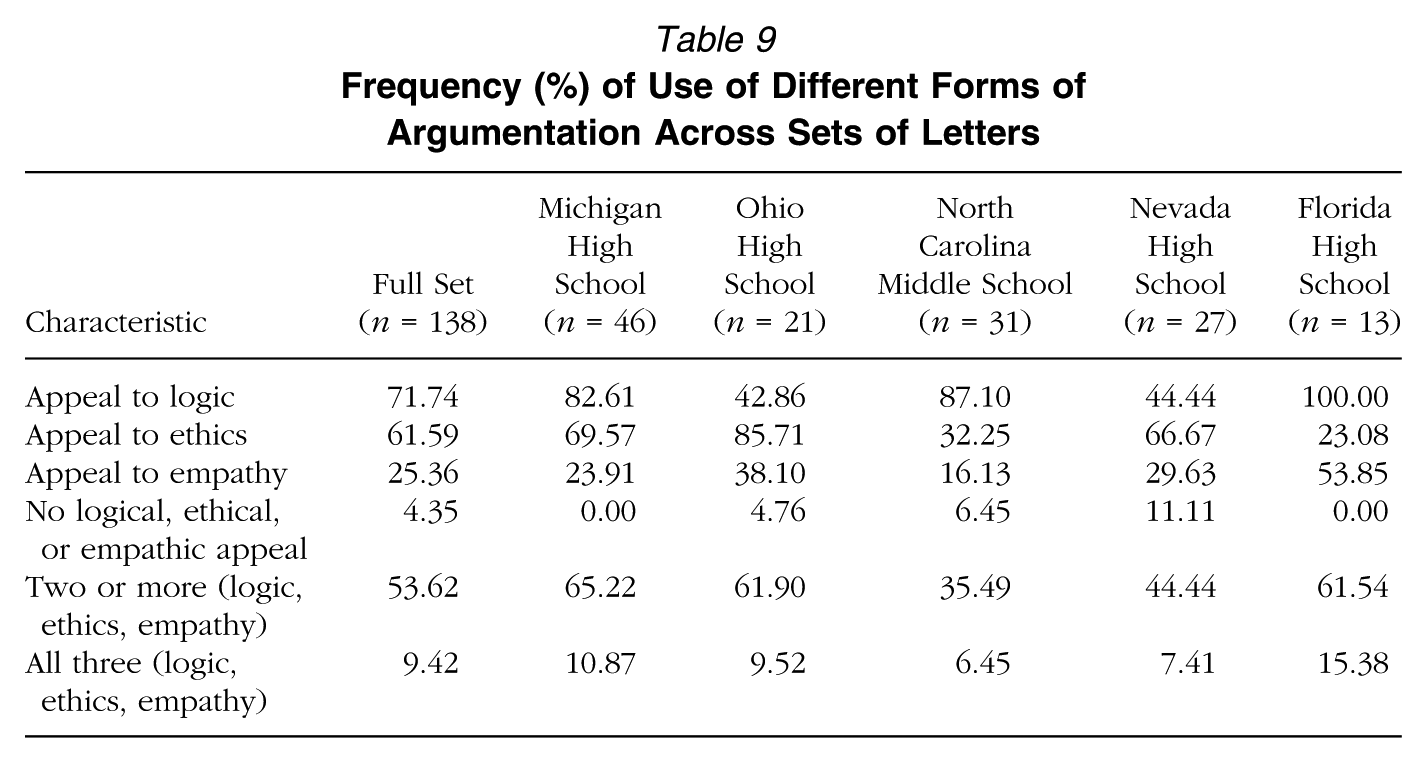
Differences between schools are marked, with students in Ohio and Nevada using logical arguments in fewer than 50% of their letters and students at the other three schools (Michigan, North Carolina, and Florida), using logical appeals in more than 80% of their published letters. Interestingly, the school-based differences in the use of logic in argumentation are not consistent across ethical or empathic appeals. The focal school in Michigan joins those in Ohio and Nevada in using ethical appeals in more than 65% of their letters, while the North Carolina and Florida sites used ethical appeals in fewer than 35% of their letters. Appeals to empathy were used in more than 50% of the letters only in Florida, and less than 40% at the other four schools. These patterns suggest both the power of classroom and teacher-specific norms for letter writing at the same time as revealing the diversity of approaches even within one local classroom setting.
Citing Evidence
At the same time that students were writing these letters, online bots were part of a substantial disinformation campaign to sow uncertainty and mistrust during the election season (Hindman & Barash, 2018). As students developed particular rhetorical arguments, we questioned to what extent evidence was utilized—and perhaps taught—across the sites in this study.
Like Adeline’s letter, most letters in the case study set included some form of evidence. More than 80% included evidence as operationalized in the form of (1) personal experience, (2) a direct quotation or cited information (citation), or (3) a reference to specific facts that went unsourced (unsourced data). A summary of frequencies can be found in Table 10. Direct citation was the most frequent form of evidence followed by unsourced data and then personal experience, with the range relatively narrow at just over 10 percentage points. Use of personal experience ranged from 25% to 45% of letters across the five sets of letters. Almost 30% of letters used more than one form of evidence. Yet, less than 5% of letters have all three forms. Importantly, the differences in kinds of evidence used did not appear random.
Frequency (%) of Use of Different Forms of Evidence Across Sets of Letters
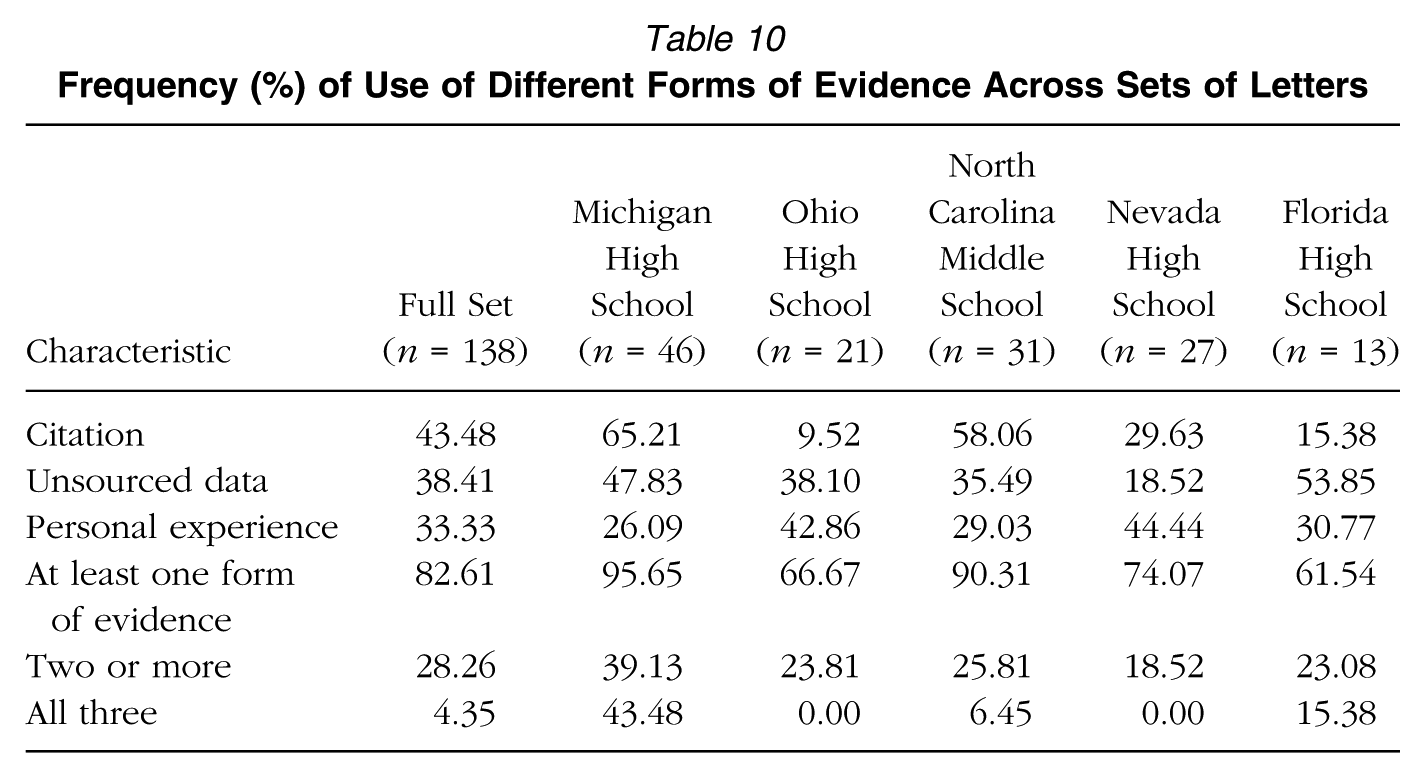
Similar to the school-based differences in argumentation, students engaged with evidence differently across the five schools. For example, the Ohio and Florida sites both have much lower frequencies of citation as compared with Michigan and North Carolina. At the same time, students at the Florida school in particular referenced specific facts or data in their letters, oftentimes doing so without including a source (unsourced data) at a greater frequency than students at any other school. Students at the Nevada school in contrast used citation at a frequency below the average, and they used unsourced data with the lowest frequency across the five schools but used personal experience with the highest frequency as compared with the other schools. Students at the Michigan site used personal experience with the lowest frequency across the five schools, but citation at the highest and unsourced data at the second highest frequency.
These contrasts between schools in both forms of argumentation and types of evidence used suggests different emphases in instruction with regard to what makes a convincing argument as well as what counts as evidence. These findings indicate that teacher instruction in areas such as defending and supporting an argument could play a substantial role in how student civic writing practices are developed likely reflecting teachers’ varied instructional support of student participatory readiness (Allen, 2016) and instructional expectations across grade levels, courses, and states. Likewise, the kinds of evidence emphasized in particular schools may point to what educators “count” as evidence. For example, the use of citation and unsourced data signals the notion of external validity and credibility. The use of personal experience to support an argument or illuminate an issue gestures to a different epistemological orientation to what counts, focusing on lived, embodied, or experiential knowledge as well as the writer’s relational power for communication and convincing a reader—a core component of the participatory readiness described by Allen (2016).
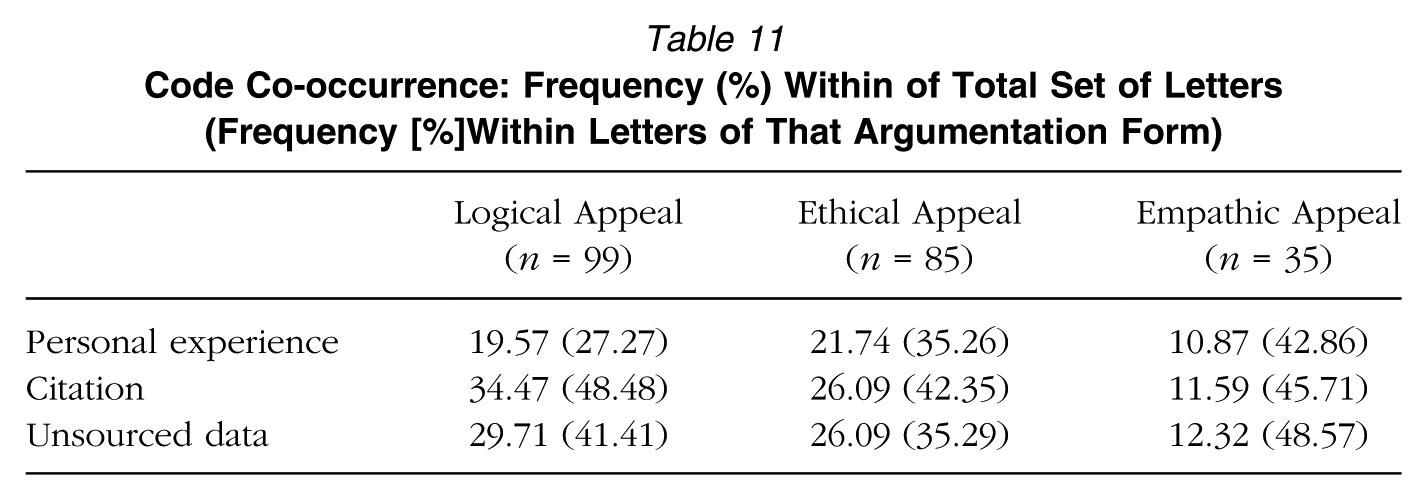
In recognizing the different ideological stances implicit in the kinds of evidence letter writers utilize, looking across uses of evidence and kinds of arguments, too, reveals useful patterns. The co-occurrence of forms of argumentation with forms of evidence (Table 11) suggests subtle relationships between the use of appeals to ethics and appeals to empathy with personal experience. Personal experience was most likely to be used within letters that made empathic appeals, and then ethical appeals, and least likely to be used in letters making logical appeals. This association suggests one version of a more relational approach to verbal empowerment and participation (Allen, 2016). While one might expect that citation and the use of data, even unsourced data, would be most closely associated with argumentation based on appeals to logic, citation was similarly likely to be used across all three forms of argumentation. Unsourced data was most likely in letters making empathic appeals followed closely by logical and then ethical appeals. While Adeline’s letter fits these gentle trends in that it combines ethical and empathic argumentation with personal experience and citation, the variation between students in their uses of different forms of argumentation and evidence is more pronounced than any single pattern.
Code Co-occurrence: Frequency (%) Within of Total Set of Letters (Frequency [%]Within Letters of That Argumentation Form)
Particularly considering the role of false information—later defined as “fake news”—during the 2016 election, how students engage with evidence and for what topics has been a vastly underexplored aspect in youth civic education. Research about and after the election illustrates the vast difficulties youth have faced in evaluating credible sources online (boyd, 2018; Stanford History Education Group, 2016). Yet Adeline’s letter suggests the possibility of flexible weaving together of varied forms of evidence and argumentation to communicate with power and conviction about a topic of concern.
Discussion
Interrogating Definitions of Civic Engagement
Looking at the thousands of letters submitted, students articulated complex civic arguments that demanded action on a broad range of topics they found personally resonant. These youth authors demand to be recognized as engaged civic actors—even within the contexts of school-based writing activities, challenging the notion of “gaps” in civic empowerment (M. Levinson, 2012) and in opportunity (Kahne & Middaugh, 2008) for youth in the United States today. Importantly, the distribution of topics that students wrote about differed substantially based on schoolwide socioeconomic factors.
We are struck that specific topics were more likely to be written about in higher and lower SES schools; what do the civic ideals and concerns of young people mean when topics such as college, health, and drugs/alcohol are significantly associated with higher SES schools and topics such as immigration and Black Lives Matter are associated with students of color and higher poverty schools? Whereas some youth could take for granted their safety and legal status in the country and author letters about higher education and climate change, many letters from lower SES schools suggest that core issues of immediate safety must be at the heart of civic dialogue and instruction today. These voices are ever present, demanding action, and—rightfully—mistrustful of government forces that have caused harm within communities.
These differences in what topics students write about point to important considerations around differentiation, cultivating “verbal empowerment” (Allen, 2016, p. 40), and the kinds of educational disparities students encounter across the country. The analysis of these letters demonstrates that voices of students like Luis, Madisyn, and Adeline echo the national issues that are mobilizing youth activism outside of schools, and in so doing challenges existing definitions of civics and the assumed gaps that separate civic learning in U.S. schools today. Furthermore, as every letter demonstrates a form of participatory readiness (e.g., Allen, 2016), the variation in topics illustrates stark differences in what counts within the civic domain of U.S. youth. For example, existing articulations of a civic empowerment gap acknowledge that youth of color may be “mistrustful and cynical” of political processes (M. Levinson, 2012, p. 37). However, these themes of cynicism and distrust are grounded in the very topics that were more likely to be tagged in letters from urban areas and schools serving lower SES students such as discrimination, Black Lives Matter, immigration, police, and violence. In recognizing the civic value of mistrust and it leading to movements like Black Lives Matter, these letters suggest that what has historically counted as topics of civic engagement and learning may exclude the valid feelings of cynicism of those most vulnerable within civic society.
The kind of cynicism and mistrust that M. Levinson (2012) ascribes to historically marginalized youth properly captures the specific locus of activated participatory readiness in these letters and during the lead up to the 2016 election. For instance, the amplification of resistance to police violence in communities of color can be read as the sociocultural construction of civic voices that have been stifled in traditional definitions of civic education, participation, and engagement. Likewise, considering that during the months that these letters were published, then candidate Trump sought to “build a wall” between the United States and Mexico and that Black Lives Matter continued to organize for racial justice, many of these letters operated in parallel with local and national organizing. These are not students writing in a bubble as their schooling experiences are interlinked with the political events happening in the “real” world; these students wrote alongside and in solidarity with ongoing civil rights movements.
Placing youth writing within this national context, these letters speak to new demands on political structures in the United States and challenge a status quo that historically disempowers youth of color and working-class individuals. For example, Black Lives Matter, as an organizing movement, describes its efforts as “working for a world where Black lives are no longer systematically targeted for demise” (Black Lives Matter, 2018). Likewise, a large portion of the letters tagged as violence and as police point to a distrust in government actors acting to uphold the safety and well-being of students, their families, and their communities. These are letters that ascribe mistrust and, perhaps, cynicism toward the institutional mechanisms in which they purportedly believe. While the letters in this study challenge contemporary definitions of civic learning, we are unsurprised that students of diverse backgrounds voiced diverse civic concerns within a project like this. Reflecting the wide array of thought and opinion that is the bedrock of a historically American embrace of difference, these letters course with eagerness to improve and to seek justice across the many faucets through which flow opportunity today.
Teaching for Participatory Readiness
Based on the findings in this study, classrooms varied substantially with regard to the kinds of topics students took up as well as the particular approaches to writing about these topics. Considering the substantive differences that emerge around argumentation in the qualitative portion of this study, these differences are likely due to variations in instructional practice. Teachers, we can infer, played a central role in how students decided on and articulated particular arguments in this participatory civic project. And while we emphasize implications for educators here, we want to restate that our analysis does not evaluate the effectiveness or the quality of the writing students produced. Furthermore, we write this acknowledging that the Common Core State Standards have made substantive shifts to national writing practices in the years leading up to this study; particularly relevant here is shifts to argumentative forms of writing that rely on students’ using evidence in their writing. These themes emphasize both standards-based approaches to teaching for participatory readiness and ways that educational policy frame what kinds of data are valued in school-based civic writing. How students are taught what forms of expression are valued in classrooms is a necessary area for future exploration.
Though there are emerging resources and data for evaluating student civic writing (e.g., NWP, 2017), the variation in writing approaches we analyzed in this study suggests that civic literacy instruction must focus on authentic writing for clearly articulated communities. As Adeline shares personal insights to articulate a nuanced argument about racial discrimination, her words are rooted in a particular time, place, and lived cultural experience. And because we can see substantial variation in classrooms supporting particular forms of argumentation for the public audience that can peruse these letters online, this study highlights a need to conceptualize how teachers teach for engagement with authentic audiences. Considering the possibilities for voicing powerful civic thought, these approaches need to guide students to see themselves as actors “in a living history and potential agents of transformation” (Ayers & Ayers, 2011, p. 6).
At the same time that these implications encourage local, authentic forms of writing, we are also aware that these suggestions arise during a time in which the spaces for dialogue and empowerment that embody contemporary participatory readiness require teacher courage. We know that some teachers are fearful of engaging in political discourse, particularly around controversial topics (Ayers & Ayers, 2011; Hess & McAvoy, 2015; Swalwell & Schweber, 2016). This study’s findings imply a growing necessity for teachers to take on the mantle for supporting youth participatory readiness that is deftly enacted outside of schools daily. Considering that the letters in this study were written prior to an ascribed “Trump effect” (Costello, 2016), teachers must recognize and accommodate existing student civic agency to further foster participatory readiness through school-based spaces. These were not civically dormant students suddenly activated after the election; these letters highlight the capacity for empowered civic learning that mirrors what is more frequently seen outside of classrooms (e.g., Sawchuk, 2019).
Listening to and Centering Youth Voice as Pedagogy
Recognizing that there are wide differences between the kinds of civic learning opportunities provided to students in schools in the United States today, this study builds from the understanding that every student engages in civic thought. Though our qualitative analysis emphasizes how differently students’ civic writing may be from one school to another, the simple fact is that every student engaged in civic thought as demonstrated by all these letters having a self-identified set of tags and a call to action. Ultimately, these letters highlight the role of teachers in shaping how youth approach and engage in civic dialogue.
Central to the lessons of these letters is the need to listen to youth. When it comes to civic beliefs, concerns, and hopes, young people have a lot to say. Not only do young people have a lot to say, but they also voice their civic beliefs in myriad ways. When provided a space and platform for voicing civic thought, students articulated complex statements about their needs, hopes, and fears during a particularly caustic political moment. As much as this study’s analysis focused on what students wrote and how they constructed their arguments, we are wary of losing sight of these letters as intentional statements made by students demanding to be heard. Not merely an act of recognizing youth voice, the civic participation evidenced in these letters speaks to Kirshner’s (2015) reminder that “youth and societal institutions are strengthened when young people, particularly those most disadvantaged by education inequity, turn their critical gaze to education systems and participate in efforts to improve them” (p. 4).
As youth wrote about topics that were personally meaningful to them, we see the findings from this study emphasizing instruction as a conduit through which youth voice shapes and—ultimately—guides the “societal institutions” that Kirshner speaks to (p. 4). A pedagogy that centers listening requires youth-driven topics of inquiry and places student expertise alongside researched evidence, as explored in the qualitative analysis of letters in this study. Such instruction, too, can engage a “youth lens” (Petrone, Sarigianides, & Lewis, 2015) that leverages student writing to consider media “representations of adolescence” within policies and decision-making structures (p. 508). Additionally, as we’ve inferred that these letters are substantially shaped by teachers’ instructional practices, we must question how educators gain practice at recentering classrooms on student voice. Fretting about youth civic engagement and students’ lack of preparation for a media landscape bombarded by fake news largely ignores the fact that student civic identities are substantially shaped by schools and teachers. Our exploration of writing in just five sites within this study reveals that youth in areas that civic literature frequently sees as disengaged are highly vocal around civic issues that surround them; more important, the patterns of what kinds of evidence they utilize and what kinds of arguments they make suggest that teachers have guided how student civic voice is articulated, with what resources, and in acknowledgment of what other communities and movements.
Finally, many of the letters written by the students in this project were written as part of a required class activity. Even within this context, these letters often elucidated moments of student expertise and personal experience. Tacit knowledge played a consistent role in how and why students made their arguments. Considering the role of personal experience in many letters, the limitations of traditional civic boundaries, and the sociocultural signposts that shaped the corpus of letters, youth voice is guided and shaped along historically predictable lines; the expansiveness of where civic thought might tread is often hewn in by the boundaries of socioeconomic markers.
Conclusion
Nearly 80 years before the 2016 election, alluding to a very different political and economic crisis roiling the United States, John Dewey (1939/1988) argued that solutions would only be found through “inventive effort and creative activity” (p. 225). Specifically, Dewey was noting that “for a long period we acted as if our democracy were something that perpetuated itself automatically” (p. 225). Just as Dewey argued—eight decades ago— that democracy must stretch to the new dimensions of a changing America, so too must we recognize that the definitions of civics that buttress youth learning must transmute in the modern day.
Based on reading these letters as indicators of participatory readiness, we find it difficult to reconcile the thousands of youth voices actively engaged in the LTNP project with the popular media narrative of youth civic complacency. Across every letter we analyzed, students identified topics of civic concern, presented calls for action, and often cited evidence to bolster their civic claims. At least for the participants whose teachers chose to submit to the LTNP project, every student voiced a civic concern. Even in this singular, school-based context, student civic imagination is vast.
Considering the thousands of students that identified and articulated civic issues, this study shines a light on the various ways that youth write civically within school contexts. Recognizing that civic topics range widely for different socioeconomic communities, the boundaries of civic participation extend beyond presupposed gaps; nearly every student in this study expressed a topic for civic action—both visceral issues of violence and aspirational needs like college tuition.
At the same time, we conclude this study recognizing that we end with more questions than answers. While we present a broader understanding of the topics that are salient to youth, teachers and teacher educators must sustain pedagogies that incorporate youth voice and participatory readiness. Likewise, the top issues that emerged point to powerful directions for understanding youth perspectives on broad national issues. Collectively, these powerful letters announce the civic demands of young people on the cusp of adulthood. Building from these voices, we must design new approaches to supporting the civic needs of students across the diverse contexts from which they are heard.
Footnotes

Notes
A
A
E