



Abstract
This systematic review used “science mapping” as a means of understanding the evolution of research in educational administration (EA). The review sought to document the size, growth trajectory, and geographic distribution of EA research, identify high impact scholars and documents, and illuminate the “intellectual structure” of the field. Although science mapping has been applied widely in science, medicine, and social sciences, it is still new in the field of education. The authors identified 22,361 peer-reviewed articles published in 22 Scopus-indexed EA journals between 1960 and 2018. The authors used VOSviewer, Excel, and Tableau software to analyze the data set. The review found that the EA knowledge base has grown dramatically since 1960 with an accelerating rate growth and increasing gender and geographic diversity during the past two decades. Using co-citation analysis, the review identified canonical documents, defined as highly influential documents whose impact has been sustained for a period of several decades. The review also identified four key Schools of Thought that have emerged over time focusing on Leadership for Learning, Leadership and Cultural Change, School Effectiveness and School Improvement, and Leading Teachers. More broadly, our findings highlighted a paradigm shift from “school administration” to “school leadership” over the course of the six decades. Another significant finding identified “leadership for student learning and development” as the “cognitive anchor” of the intellectual structure of the EA knowledge base. The authors conclude that science mapping offers a new and useful means of unpacking the historical development of fields of study.
Keywords
Scholars have located the “birth” of the modern era in educational administration (EA) in the late 1950s with the emergence of the “theory movement in educational administration” (Campbell, 1979; Griffiths, 1957; Oplatka, 2009, 2010). During succeeding decades, the field has gone through periods characterized by cautious optimism (Campbell & Faber, 1961; Griffiths, 1957), self-criticism (e.g., Bridges, 1982; Campbell, 1979; Erickson, 1967; Lipham, 1964), and suggestions of progress (Bossert, Dwyer, Rowan, & Lee, 1982; Erickson, 1979; Hallinger & Heck 1996; Leithwood, 2005). In each decade since the 1960s, reviews of research have provided evolving perspectives on the field’s maturation (e.g., Erickson, 1967, 1979; Bridges, 1982; Hallinger, 2019; Hallinger & Heck, 1996; Oplatka, 2009; Witziers, Bosker, & Kruger, 2003).
We characterize the current era as a period of “consolidation” following a rapid increase in the volume and diversity of EA scholarship produced since the turn of the millennium (see also Hallinger, 2019). These trends have been documented by recent research reviews, which, in contrast to prior eras, have been largely authored by scholars located outside of traditional Anglo-American-European centers of EA scholarship (e.g., Flessa, Bramwell, Fernandez, & Weinstein, 2018; Hallinger, 2018b, 2019; Hallinger & Bryant, 2013; Oplatka & Arar, 2017; Walker, Hu, & Qian, 2012). During this era of consolidation, EA scholars find themselves reflecting on past progress, unpacking persisting obstacles, and placing “local issues” in a global perspective (e.g., Gumus, Bellibas, Esen, & Gumus, 2018; Hallinger, 2018b, 2019; Hallinger & Bryant, 2013; Mertkan, Arsan, Inal Cavlan, & Onurkan Aliusta, 2017; Oplatka & Arar, 2017).
The purpose of this review is to gain an empirically based perspective on the evolution of the EA knowledge base over a period of six decades. This complements several other recent efforts to place the development of EA in an “historical” perspective (Gumus et al., 2018; Hallinger, 2018a, 2019; Murphy, Vriesenga, & Storey, 2007; Oplatka, 2009, 2010; Wang, Bowers, & Fikis, 2017). More specifically, our review employed science mapping (White & McCain, 1998) to examine the evolution of the intellectual structure of the EA knowledge base from 1960 to 2018. The review addressed four specific research questions.
The authors identified a database of 22,361 articles contained in 22 Scopus-indexed EA journals published between 1960 and 2018. Bibliographic data associated with these articles were analyzed using Scopus, Excel, VOSviewer, and Tableau software tools. Data analyses included descriptive statistics, citation analysis, co-citation analysis, and visualization of similarities, a variant of social network analysis (White & McCain, 1998; Zupic & Čater, 2015). The review is aimed at revealing broad trends in the EA knowledge base through the quantitative analysis of a large corpus of published EA scholarship.
Three features distinguish this review from other efforts aimed at mapping the knowledge base in EA published over the past 20 years (e.g., Donmoyer, Imber, & Scheurich, 1997; Gumus et al., 2018; Ogawa, Goldring & Conley, 2000; Oplatka, 2009, 2010; Wang et al., 2017). First, our review maps the EA literature from the birth of the modern era in EA (i.e., 1960) to the present. Second, the review uses “science mapping” (Van Eck & Waltman, 2009; Zupic & Čater, 2015) to provide a systematic quantitative analysis of the knowledge base. Finally, the review draws on a larger database of journals and articles than were used in past reviews of the EA literature (Hallinger, 2014).
Conceptual Background and Framework
The Evolution of Educational Administration
Proponents of the “theory movement in educational administration” such as Campbell, Griffiths, and Willower sought to identify important researchable problems, apply theoretical frameworks from the social sciences, and experiment with a broader range of “scientific” research methods (Bridges, 1982; Campbell, 1979; Griffiths, 1957; Murphy et al., 2007; Oplatka, 2009, 2010). Reviews of research conducted during this era evidenced both criticism of early attempts to meet the lofty goals of the theory movement, and cautious optimism that progress was just around the corner (Campbell, 1979; Campbell & Faber, 1961; Erickson, 1967; Lipham, 1964).
The 1970s were an era in which the young field of EA was still “trying to find its feet” (Bridges, 1982; Erickson, 1979; Oplatka, 2010). For example, Oplatka (2009) noted an increase in empirical research as well as increasing interest in “practice” during this decade. At the same time, however, scholars reviewing research from the 1970s decried the lack of programmatic research, persistence of a shotgun approach to topical selection, and decoupling of most EA research from the central purpose of schooling, that is, the learning of students (Bossert et al., 1982; Bridges 1982; Erickson, 1979; Leithwood & Montgomery, 1982; Murphy, Hallinger, & Mitman, 1983).
The first meaningful transition in EA scholarship emerged with the publication of Ron Edmonds’s seminal article, “Effective Schools for the Urban Poor” in 1979. This article’s identification of “strong instructional leadership” from principals as a hallmark of instructionally effective schools signaled a paradigm shift in EA research and practice with ramifications that can be felt up to the present. The paradigm shift initiated by effective schools researchers such as Edmonds, Brookover, and Lezotte soon relocated the core of EA scholarship around the role of school principals, their engagement with teachers, and their impact on student learning (e.g., Bossert et al., 1982; Bridges, 1982; Erickson, 1979; Leithwood & Montgomery, 1982; Lipham, 1981; Murphy, Weil, Hallinger, & Mitman, 1985). During the 1980s, this emerging “mainstream” in EA scholarship spawned tributaries in lines of inquiry focusing on “gender and school leadership,” “effective schools,” “school improvement,” and “principal instructional leadership” (Gumus et al., 2018; Hallinger & Heck, 1996, 1998; Leithwood, Begley, & Bradley Cousins, 1990; Murphy, 1990; Oplatka, 2010; Wang et al., 2017).
During the 1990s, new interests in “school restructuring,” “leadership development,” “professionalization of school leadership,” and “transformational school leadership” emerged in response to changes in the research and policy environments of education (Murphy et al., 2007; Oplatka, 2009, 2010; Wang et al., 2017). This was also the first decade in which the benefits of programmatic research on school leadership effects initiated during the 1980s became visible (Leithwood, 2005). Thus, for example, Eagly, Karau and Johnson (1992) conducted the first meta-analytic study in EA on gender and school leadership. Hallinger and Heck (1996, 1998) conducted quantitative syntheses of empirical evidence concerned with the effects of principal leadership on student learning. Their reviews not only reshaped discourse concerning the substantive role(s) of school leaders but also provided conceptual and methodological recommendations for subsequent research (Gumus et al., 2018; Leithwood, 2005; Hallinger, 2011, 2014; Oplatka, 2009, 2010).
The first decade of the 21st century witnessed the integration of past streams of research on principal leadership and school improvement (e.g., Hallinger, 2003, 2005; Leithwood, Harris, & Hopkins, 2008; Leithwood & Sun, 2005; Robinson, Lloyd, & Rowe, 2008; Witziers et al., 2003). However, during this decade new lines of scholarship emerged focused on shared leadership (e.g., Gronn, 2000; Marks & Printy, 2003; Spillane, 2006; Spillane, Halverson, & Diamond, 2001; York-Barr & Duke, 2004) and social justice (e.g., Oplatka, 2006; Shields, 2004; Theoharis, 2007). Although linked with longer-standing themes of “leadership,” “equity,” and “gender,” these foci morphed into new contained lines of inquiry (Gumus et al., 2018; Oplatka, 2009, 2010; Wang et al., 2017).
This bring us to the current decade, which has witnessed dual trends of consolidation and internationalization. Up until 2010, EA scholarship was largely composed of studies conducted within a limited set of Anglo-American-European societies (Clarke & O’Donoghue, 2017; Hallinger, 2019; Mertkan et al., 2017; Oplatka, 2004). However, during this decade the internationalization of EA scholarship has been documented in the first “national” and “regional” reviews of EA research (e.g., Castillo & Hallinger, 2018; Flessa et al., 2018; Hallinger, 2018b, 2019; Hallinger & Bryant, 2013; Oplatka & Arar, 2017; Walker et al., 2012; Walker & Hallinger, 2015).
Conceptual Framework
This overview of the evolution of EA during the “modern era” sets the stage for the current effort at mapping the knowledge base in EA. However, before proceeding to the methodology of our review, we wish to reflect briefly on what is meant by “the knowledge base.” Early inquiries into features of the knowledge base in EA were undertaken during the 1960s with a focus on types of knowledge and topics (e.g., Eidel & Kitchel, 1968). During the 1990s, scholars began to consider the characteristics that would describe a sound body of knowledge and compare those with the knowledge base that was evolving in EA (e.g., Donmoyer et al., 1997; Ogawa et al., 2000). More recent efforts have focused on analyzing topical and epistemological dimensions of the knowledge base in EA (e.g., Gunter & Ribbins, 2003; Hallinger & Bryant, 2013; Murphy et al., 2007; Oplatka, 2009, 2010; Wang et al., 2017).
For the purposes of organizing this review, we developed a four-dimensional conceptual model of the “knowledge base.” The first dimension of the knowledge base concerns “size” as measured by the volume of published studies. While measurement of size offers no specific insights into quality, knowledge accumulation does require a critical mass of empirical and conceptual research before findings can cohere into usable knowledge (Bridges, 1982; Donmoyer et al., 1997; Eidel & Kitchel, 1968; Leithwood, 2005; Ogawa et al., 2000).
In this review, “time” refers to publication trajectories tracked over specific periods of time. For example, publication trajectories can be used to track changes in the size of the knowledge base across decades. Time can be used to analyze geographical sources as well as trends in authorship and topical evolution (e.g., see Castillo & Hallinger, 2018; Gumus et al., 2018; Hallinger, 2018b, 2019; Hallinger & Bryant, 2013; Oplatka & Arar, 2017; Wang et al., 2017).
We use “space” to refer to the geographic distribution of documents in the literature. Analysis of the geographic distribution of scholarship offers insight into the distribution of scholarly capacity internationally. It also documents the breadth of knowledge about EA processes across the globe (Castillo & Hallinger, 2018; Flessa et al., 2018; Hallinger, 2018b, 2019; Hallinger & Bryant, 2013; Oplatka & Arar, 2017).
Broadly conceived, “composition” refers to the “intellectual structure” of the knowledge base. Zupic and Čater (2015) defined intellectual structure as “the examined scientific domain’s research traditions, their disciplinary composition, influential research topics, and the pattern of their interrelationships” (p. 435). In this review, we analyzed composition in terms of the distribution and impact of authors, journals, documents, and topics.
Method
EA scholars have adopted three methods to the review of EA research: critical synthesis, meta-analysis, and bibliometric analysis (Hallinger, 2013, 2014). Critical synthesis encompasses “qualitative methods” (e.g., content, narrative or thematic analysis) used to make sense of substantive findings within a line of inquiry (e.g., Bossert et al., 1982; Campbell & Faber, 1961; Hopkins et al., 2014) or of epistemological trends within the literature (e.g., Gunter & Ribbins, 2003; Oplatka, 2010; Oplatka & Arar, 2017). For example, Oplatka (2009) used content analysis of articles drawn from several EA journals (e.g., Educational Administration Quarterly [EAQ], Education Management Administration & Leadership [EMAL], Journal of Educational Administration [JEA]) to examine longitudinal trends in the evolution of EA research. Critical synthesis was the most popular method of review in EA up until the turn of the 21st century (Hallinger, 2014).
Meta-analysis employs quantitative tools capable of integrating findings across a body of studies. Although meta-analysis had been employed in other fields of education research for several decades, it was not until the 2000s that the knowledge base in EA achieved a sufficient level of “coherence” to allow for the use of this method. Subsequently, meta-analysis has been used with increasing frequency in reviews of EA research (e.g., Chin, 2007; Hallinger, Li, & Wang, 2016; Hallinger, Wang, & Chen, 2013; Jeynes, 2003, 2005, 2007; Leithwood & Sun, 2012; Robinson et al., 2008; ten Bruggencate, Luyten, Scheerens, & Sleegers, 2012; Witziers et al., 2003).
In recent years, bibliometric analysis has joined these approaches to review in EA (Gumus et al., 2018; Hallinger, 2018a, 2018b, 2019; Wang, 2018; Wang et al., 2017). Basic bibliometric analysis uses descriptive statistics to document “topographical” trends within a body of knowledge. For example, Campbell (1979) and Murphy and colleagues (2007) used bibliometric content analysis to document trends in topics and research approaches used by scholars publishing in the EAQ. Similarly, scholars have used descriptive statistics and citation analysis to document and analyze patterns in the “topography” of knowledge production by scholars in Latin America (Castillo & Hallinger, 2018), Arab societies (Oplatka & Arar, 2017), Asia (Hallinger & Bryant, 2013), and Africa (Hallinger, 2018b).
Advances in text mining and citation analysis tools have also enabled bibliometric analysis to provide deeper and more comprehensive analyses than was possible in the past (Van Eck & Waltman, 2017). This is most evident in the growing use of data syntheses grounded in social network analysis that are capable of illuminating structural and relational features of the knowledge base in different disciplines (see Galvagno, 2011; Nerur, Rasheed, & Natarajan, 2008; Zupic & Čater, 2015). These advanced methods of bibliometric analysis are just beginning to appear in published reviews of EA research (e.g., Hallinger, 2018b, 2019; Wang, 2018; Wang et al., 2017). Each of these approaches to bibliometric analysis informed the analytical strategy adopted in this review.
Search Criteria
The time frame for this review encompassed the period from 1960 through August 2018. Our start date coincides with the launch of EA as a research-driven field of applied study (Campbell & Faber, 1961; Erickson, 1967; Griffiths, 1957; Lipham, 1964). The topical scope for the review was delimited to journal articles that focused on “educational leadership and management in K–12 and higher education settings.” We included higher education studies, in part, to determine the extent to which they have featured in EA-oriented journals.
The review was delimited to articles published in “Scopus-indexed journals.” The Scopus index is widely used to generate databases for systematic reviews of research (Mongeon & Paul-Hus, 2016; Zupic & Čater, 2015). While the Web of Science (WoS) has a longer history of use in reviews of research, scholars have recently demonstrated that Scopus’s superior coverage of relevant journals makes it a better choice for research reviews in management fields (Mongeon & Paul-Hus, 2016). Our own comparative empirical analysis of journal coverage of the two indexes supported this conclusion for the field of EA (see also Hallinger, 2019).
At the outset, the authors identified 22 “EA specialization journals” included in the Scopus index (see Table 1). Each of these journals professed an espoused mission devoted to the publication of EA research, employed blind review procedures, and published in English. Our search criteria excluded books, book chapters, and conference papers in the belief that reliance on a large database of peer-reviewed journal articles would provide a more consistent result. Our search criteria explicitly excluded journals that focused primarily on education policy (e.g., Journal of Educational Policy) or higher education (e.g., Journal of Higher Education).
Document statistics for 22 educational administration journals included in the review database

Note. CPD = citation per document.
The journals included in this review included mainstream EA journals (JEA, EAQ, School Leadership and Management [SLAM], EMAL, International Journal of Leadership in Education [IJLE], International Journal of Educational Management [IJEM]), journals with a school improvement orientation (e.g., School Effectiveness and School Improvement [SESI], Journal of Educational Change [JEC], Improving Schools [IS]), practitioner journals (e.g., NASSP Bulletin [NASSP], Educational Leadership [EdLead]), and one journal with an education economics orientation (Economics of Education Review [EER]). The relevance of these journals is supported by past analyses of the EA journal literature (Cherkowski, Currie, & Hilton, 2012) and by sources used in past reviews of EA research (e.g., Bridges, 1982; Castillo & Hallinger, 2018; Hallinger & Bryant, 2013; Gumus et al., 2018; Oplatka, 2009, 2010; Oplatka & Arar, 2017).
By drawing articles exclusively from journals that focus on “educational administration,” it meant that we did not rely on a keyword search. In large review data sets, the ambiguity associated with keyword searches can introduce potentially significant errors of inclusion and exclusion. Therefore, consistent with other reviews of EA scholarship (e.g., Bridges, 1982; Castillo & Hallinger, 2018; Hallinger & Bryant, 2013; Oplatka, 2009, 2010; Oplatka & Arar, 2017; Wang et al., 2017), we made the working assumption that articles published in a defined set of EA journals would be relevant to the purpose of this review of the knowledge base in educational administration.
Identification of Sources
The authors followed PRISMA (Preferred Reporting Items for Systematic Reviews and Meta-Analyses) guidelines for conducting systematic reviews of research (Moher, Liberati, Tetzlaff, Altman, & PRISMA Group, 2009). PRISMA specifies the steps to be reported for the identification of documents in systematic reviews of research (see Figure 1). Our search aimed to identify the full set of articles included in the 22 Scopus-indexed EA journals. The search was conducted using the Scopus search engine with parameters set as follows:
Inclusion: Dates: 1960 to the present (August 2018)
Inclusion: Source Title: 22 journals listed in Table 1
Inclusion: Document Type: articles and reviews
Exclusion: Document Type: commentaries, books, chapters, conference papers, and editorials
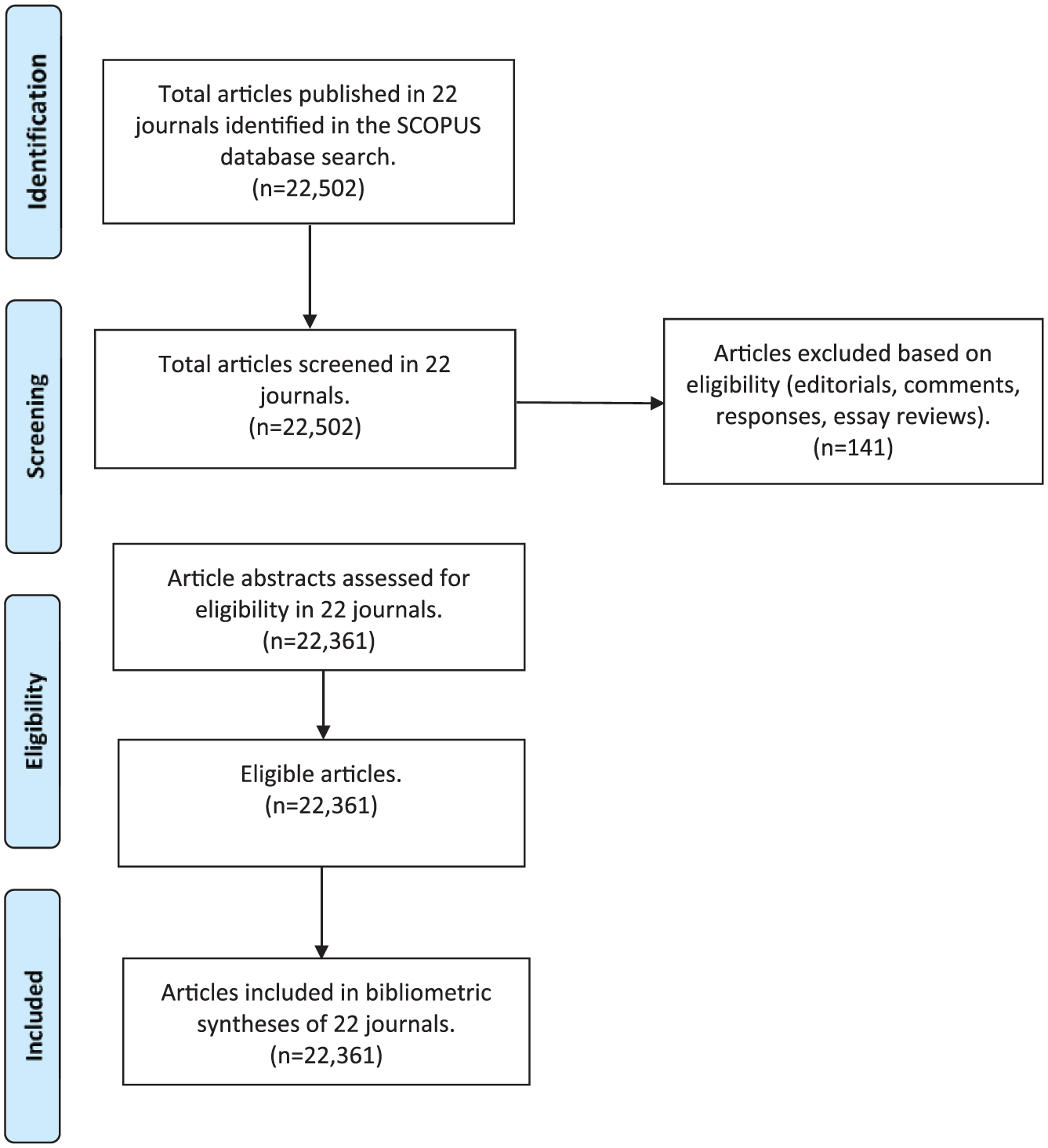
PRISMA flow diagram detailing steps in the identification and screening of sources.
This Scopus search yielded a total of 22,502 articles published in the 22 selected journals between 1960 and August 2018. Next, we scanned the journal names, documents titles, and abstracts (where necessary) in order to confirm their relevance. We used Scopus filters to exclude 141 irrelevant documents, consisting of editorials, comments, and book reviews. This left a final database of 22,361 articles (see Figure 1).
Data Extraction and Analysis
We downloaded bibliographic data on the 22,361 articles from the Scopus website for storage in a .csv (comma-separated values) file. The stored data included author name, author affiliation, article title, keywords, abstracts, and various citation data. A copy of the .csv file containing the same information was also saved in Excel for use in descriptive data analyses.
Data analysis relied on quantitative bibliometric analysis using a variety of software programs. Bibliometric analysis uses descriptive statistics as well as citation and “co-citation” analysis to illuminate features of the knowledge base (Zupic & Čater, 2015). Descriptive statistical analyses of trends (e.g., number of articles by country and author) were performed using Scopus’ analytical tools as well as MS Excel. Tableau software was used to create a heat map showing the geographical distribution of documents.
Citation analysis has long been employed by scholars to identify prominent authors, documents, and journals within a domain of knowledge (Gilbert, 1977; Merton, 1973; Small, 1973). Merton (1973) asserted that citations are designed to “prove the historical lineage of knowledge and to guide readers of new work to sources they may want to check or draw upon themselves” (p. VI). Over time, scholars have come to accept that a document (or author) that is heavily cited has made significant contributions to the advancement of knowledge (Hood & Wilson, 2001). This proposition rests on the assumption that authors cite other scholars or documents that they consider to be important for their own work (Gilbert, 1977; Hood & Wilson, 2001; Small, 1973; Zupic & Čater, 2015). In this review, citation analysis was used to determine the extent to which authors, documents, and journals included in our database had been cited by other documents located in the Scopus index. Thus, we refer to these as “Scopus citations.”
Co-citation analysis is a variant of traditional citation analysis (Zupic & Čater, 2015). Small (1973), a pioneer in the field of bibliometrics, defined co-citation as the frequency with which two units (e.g., authors, documents, journals) are cited together. We present Figure 2 in order to clarify the concept of co-citation. Here the “citing documents” (i.e., Hallinger & Heck, 1996; Leithwood et al., 1990; Oplatka, 2009) were among the 22,361 articles in our Scopus-sourced database. The Bridges and Lipham documents are considered “co-cited” based on their inclusion in the “reference lists” of these citing documents. In this example, the Bridges and Lipham documents each accrue three citations.
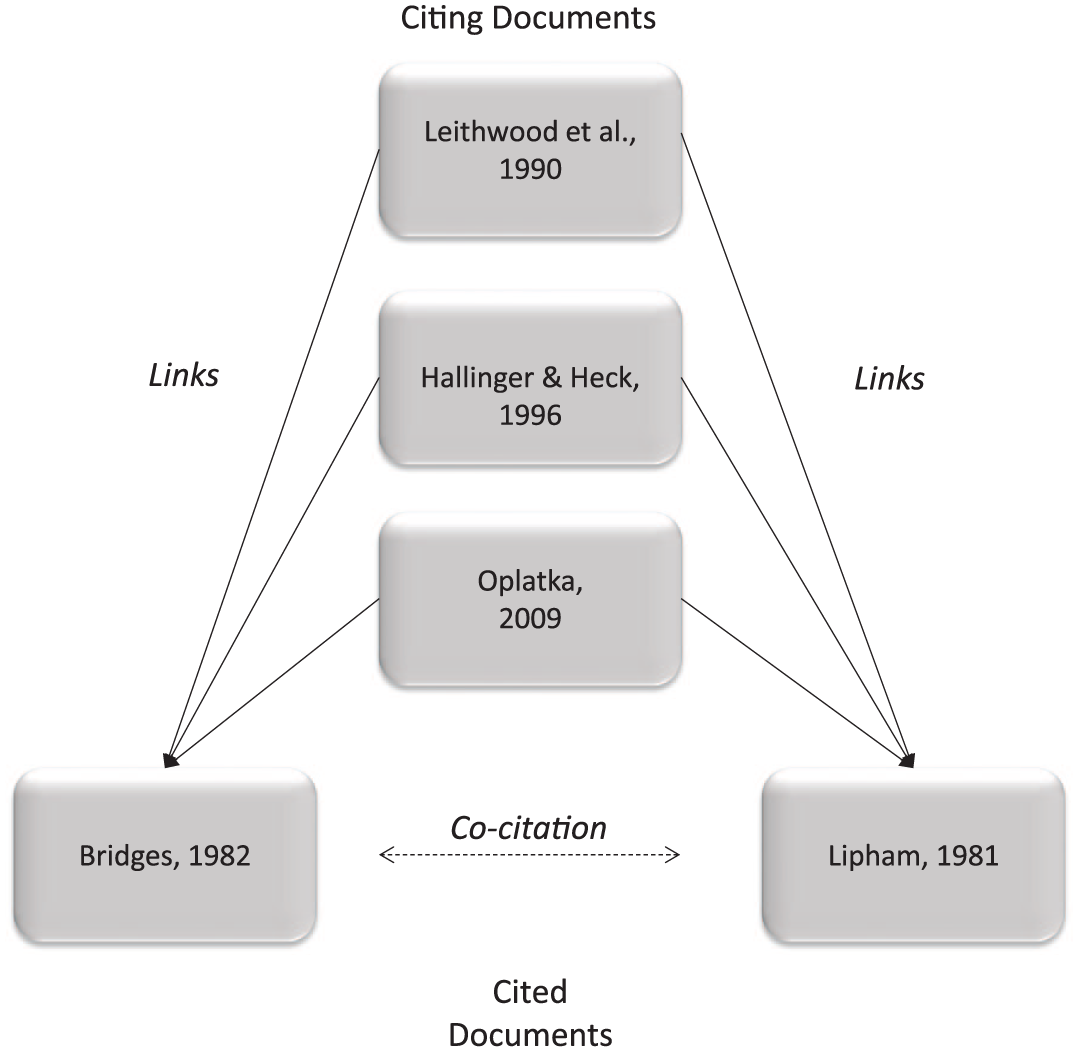
Example from the educational administration literature of document co-citation in science mapping.
From the perspective of co-citation analysis, the Bridges and Lipham documents are considered to be “intellectually related” by virtue of their frequent “co-citation” in the reference lists of other scholars (Galvagno, 2011; McCain, 1986; Small, 1999; Strotmann & Zhao, 2012; White & McCain, 1998). It should be noted that the Lipham (1981) book was neither included in our database nor even in Scopus. However, co-citation analysis “captured” it through examination of the reference lists of documents that were in our database. This feature of co-citation enables it to provide a broader measure of “scholarly influence” than traditional citation analysis.
Co-citation analysis comes in several variants: journal co-citation analysis, author co-citation analysis (ACA), and document co-citation analysis (DCA). Each uses matrices of co-citation frequencies as the input for analysis. These co-citation matrices serve as the basis for analytical techniques such as multidimensional scaling (MDS; McCain, 1986) and visualization of similarities (VOS) through bibliometric mapping (Van Eck & Waltman, 2009).
MDS was previously considered “the first choice” technique for generating bibliometric maps. In this review, VOSviewer software was used to create visual representations or “network maps” of the relationships among multiple features of the EA knowledge base. However, VOSviewer uses an alternative technique “that aims to locate items in a low-dimensional space, in such a way that the distance between any two items reflects the similarity or relatedness of the items as accurately as possible” (Van Eck, Waltman, Dekker, & van den Berg, 2010, p. 2407). The software supports undirected co-citation networks that have symmetrical adjacency matrices. This means that VOSviewer averages the values of corresponding elements on both sides of the main diagonal of the matrix.
Maps constructed using VOS are easier to interpret than maps developed in Pajek or SPSS software packages. Empirical comparison with alternative techniques used for constructing distance-based maps such as MDS, VxOrd, and Kopcsa-Schiebel has identified advantages for VOS (Cobo, López-Herrera, Herrera-Viedma, & Herrera, 2011; Van Eck & Waltman, 2009). Consequently, the VOSviewer software package has been used extensively in published reviews of research spanning social sciences, business administration, and medicine (e.g., Chen & Chen, 2003; Cobo et al., 2011; Galvagno, 2011; Nerur et al., 2008; Pilkington & Meredith, 2009).
Results
This section of the article presents results with respect to patterns of EA knowledge production. Presentation of the results is organized around the four research questions.
Volume, Growth Trajectory, and Geographic Distribution of the EA Literature
As noted above, we found that a total of 22,361 EA journal articles had accumulated over the past six decades. This began with the publication of 1,544 articles during the 1960s, rose to 2,563 articles during the 1970s, and grew steadily over the ensuing decades to reach 4,386 articles published between 2010 and August 2018. Note further that our database—as large as it is—was limited to articles published in a set of Scopus-indexed journals. Thus, it does not even represent all published knowledge on EA. Therefore, one can conclude that the field of EA has accumulated a quite substantial body of knowledge.
The heat map in Figure 3 shows the geographical distribution of our EA articles published since 2018. The map shows the dominance of four Anglo American societies in this field: the United States, the United Kingdom, Canada, and Australia. These four societies accounted for 83% of the documents in our database of Scopus-indexed journal articles. Other notable contributors to the EA knowledge base included scholars from South Africa, Israel, the Netherlands, Hong Kong, Germany, and New Zealand.
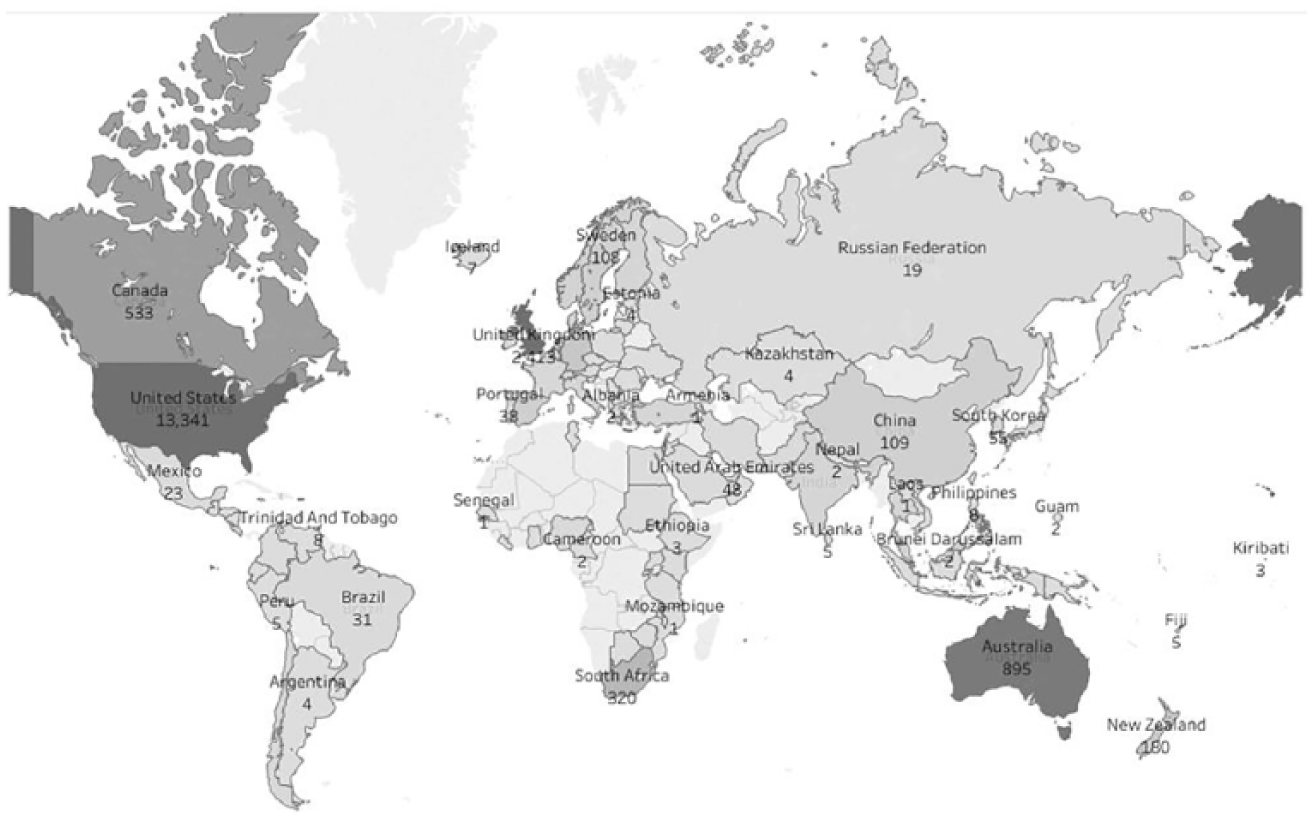
Global distribution of the EA literature, 1960 to 2018.
Analyses presented in a companion review drawn from this same database found that contributions to the EA knowledge base from societies outside Anglo-American-European centers of EA scholarship increased dramatically over the past decade (Hallinger, 2019). Nonetheless, the EA knowledge base still suffers from a severe imbalance. Reference to the heat map shows numerous countries “missing” entirely from the knowledge base. More often than not the “blank spots” on the map represent developing societies. This suggests a persisting limitation in the EA knowledge base (Clarke & O’Donoghue, 2017; Hallinger, 2018c, 2019; Mertkan et al., 2017).
Influential Journals, Authors, and Documents
Publication trends in EA journals have been a topic of interest among EA scholars for several decades (Campbell, 1979; Cherkowski et al., 2012; Hallinger, 2019; Murphy et al., 2007). Our database covered six decades during which all but two of the 22 journals were launched. This enabled us to gain perspective on the distribution of the EA literature across these journals as well as their relative impact (see Table 1).
As indicated in Table 1, the journals vary widely in terms of the number of articles published. This is due to different launch dates as well as differences in the number of articles published annually. NASSP and EdLead, both practitioner-oriented journals published in the United States, have generated the most articles. When sorted by total citations, EER, EAQ, EDLead, JEA, and SESI evidenced the highest impact. However, when the journals were re-sorted by citations per document, the order changed to EER, SESI, EAQ, JEC, and JEA. The Scopus citation analyses affirm these latter five journals as the highest impact journals in the field of EA.
Another strength of bibliometric analysis is the ability to identify key scholars and documents within a field of research (Börner, Chen, & Boyack, 2003; Galvagno, 2011; McCain, 1986; Nerur et al., 2008; White & McCain, 1998). Strotmann and Zhao (2012) observed that “author-based studies” have long formed one of the most important contributions of bibliometrics: Authors as the unit of bibliometric studies present a good compromise between the granularity of the individual paper and that of an entire journal. Scientists tend to focus their research fairly tightly, even when they run sizable research labs. Scientific journals, on the other hand, tend to represent a wide range of research interests (entire research fields or even wide swaths of the entire science landscape), while individual papers tend to be very detailed, especially in research areas like the biomedical sciences. Over the typical time frame covered in a single bibliometric analysis, a scientist’s oeuvre tends to cover enough ground for a theme or two to emerge, and at the same time for this theme to be discussed in a sufficiently wide range of contexts to identify important links to surrounding areas. (p. 1821)
In practical terms, this analytical approach includes ranking authors by the number of publications to identify productive scholars as well as by citations to evaluate scholarly impact and patterns of growth in different topical domains of research. While the use of citation analysis in EA reviews can be traced back to Haller (1979) and Bridges (1982), ours is one of the first EA reviews that has used both citation and co-citation analyses to identify influential authors and documents. In this review, author citation analyses were conducted in order to highlight productive EA scholars, identify Schools of Thought, and gain insights into how scholarly capacity and contributions have been distributed geographically around the world (see also Hallinger, 2019; Strotmann & Zhao, 2012).
Table 2 lists the most productive EA scholars by the number of articles and Scopus citations. The authors in this table are noted for their scholarship on school leadership (e.g., Leithwood, Hallinger, Harris, Murphy), school improvement (e.g., Louis, Stoll, Sleegers), and school effectiveness (e.g., Reynolds, Kyriakides, Creemers, Muijs). The only “surprises” in Table 2 concern several authors who were not on this list of most productive authors. For example, we had expected to find scholars such as Fullan, Servgiovanni, Deal, Campbell, Willower, Cuban, Bridges, or Ribbins on the list.
Rank order of the 20 most highly cited authors in 22 SCOPUS-indexed educational administration journals, 1960 to 2018 a
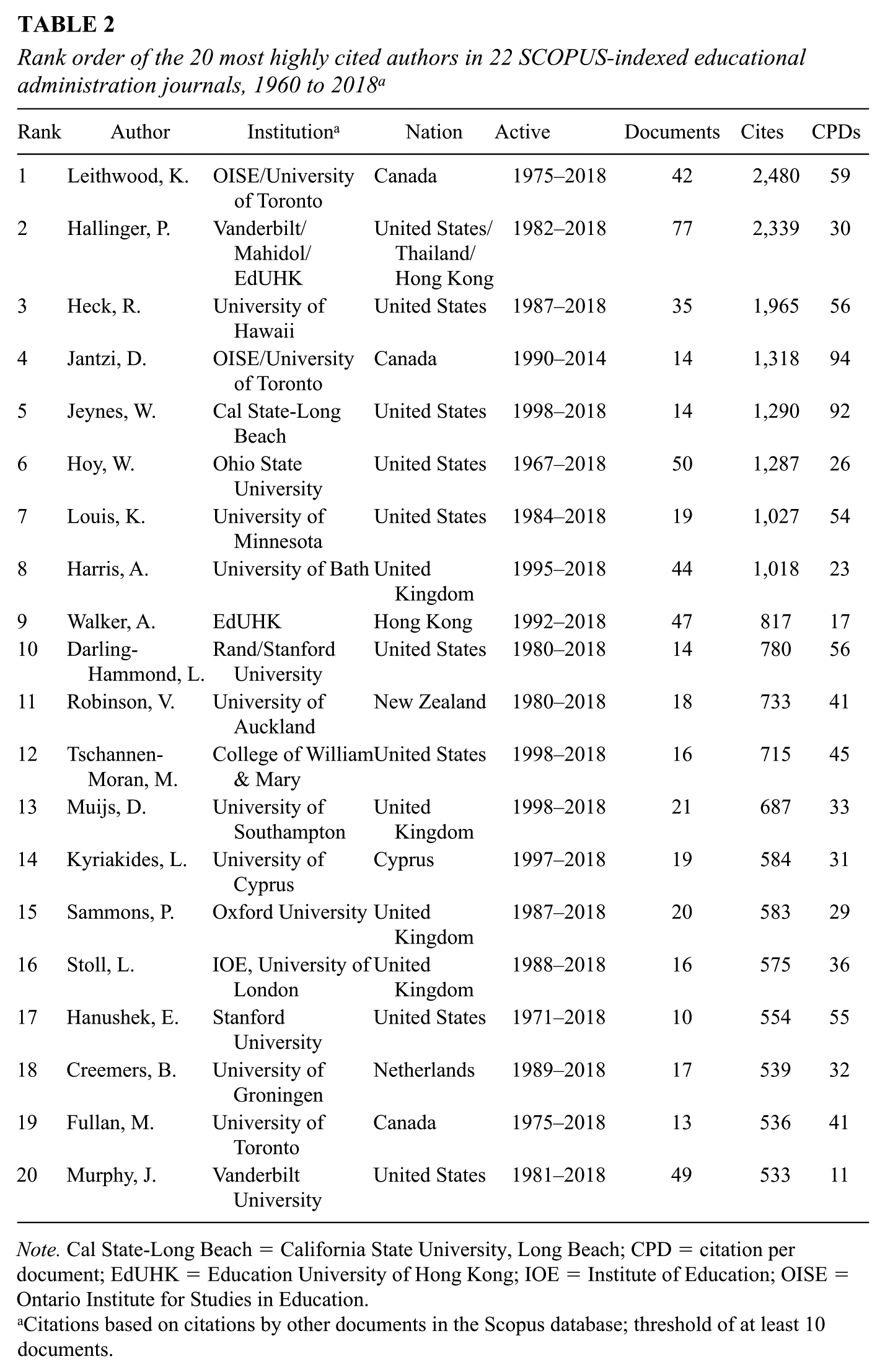
Note. Cal State-Long Beach = California State University, Long Beach; CPD = citation per document; EdUHK = Education University of Hong Kong; IOE = Institute of Education; OISE = Ontario Institute for Studies in Education.
Citations based on citations by other documents in the Scopus database; threshold of at least 10 documents.
However, with the exception of Bridges (ranked 39), none of these scholars was listed among the top 50 scholars in terms of “Scopus citations” (not tabled). We believe that the explanation lies in two factors. First, scholars who were primarily active prior to 1980 were disadvantaged by the relatively small number of scholars and journals during their era. The fact that Edwin Bridges and Wayne Hoy appear among the top 50 scholars by Scopus citations is due, in part, to the fact that their careers extended to the mid-1990s and to the present, respectively (not tabled).
The second factor traces to our database which was limited to “Scopus-indexed journal articles.” This delimitation excluded books that were the preferred mode of scholarly production by Michael Fullan, Tom Sergiovanni, Larry Cuban, and Terry Deal. Scopus tends to have a limited coverage of books, and none were included in our primary database. Fortunately, as we shall elaborate, co-citation analyses partially addressed this limitation of traditional citation analysis.
We were also interested in examining gender and geographical diversity among highly cited EA scholars. We found that 5 of the top 10 and 7 of the 20 most highly cited EA scholars over the past six decades were female. Further analysis found that this was indicative of a positive trend of increasing contributions and impact of female scholars in EA. For example, when we analyzed scholarly production during the 1960s and 1970s, Pat Schmuck was the only woman represented among the top 100 scholars by citation impact. In contrast, between 2010 and 2018, 21 of the 100 most highly cited EA scholars were female.
In terms of geographical diversity, we noted that the most productive scholars were located in eight different societies spanning North America, Europe, Asia, and Australia/New Zealand. Given the overall dominance of American scholarship in the EA database, this level of geographic diversity among the most productive scholars seems both surprising and desirable. At the same time, however, this list did not include any scholars from developing societies, or from Latin America or Africa (not tabled; see also Hallinger, 2019).
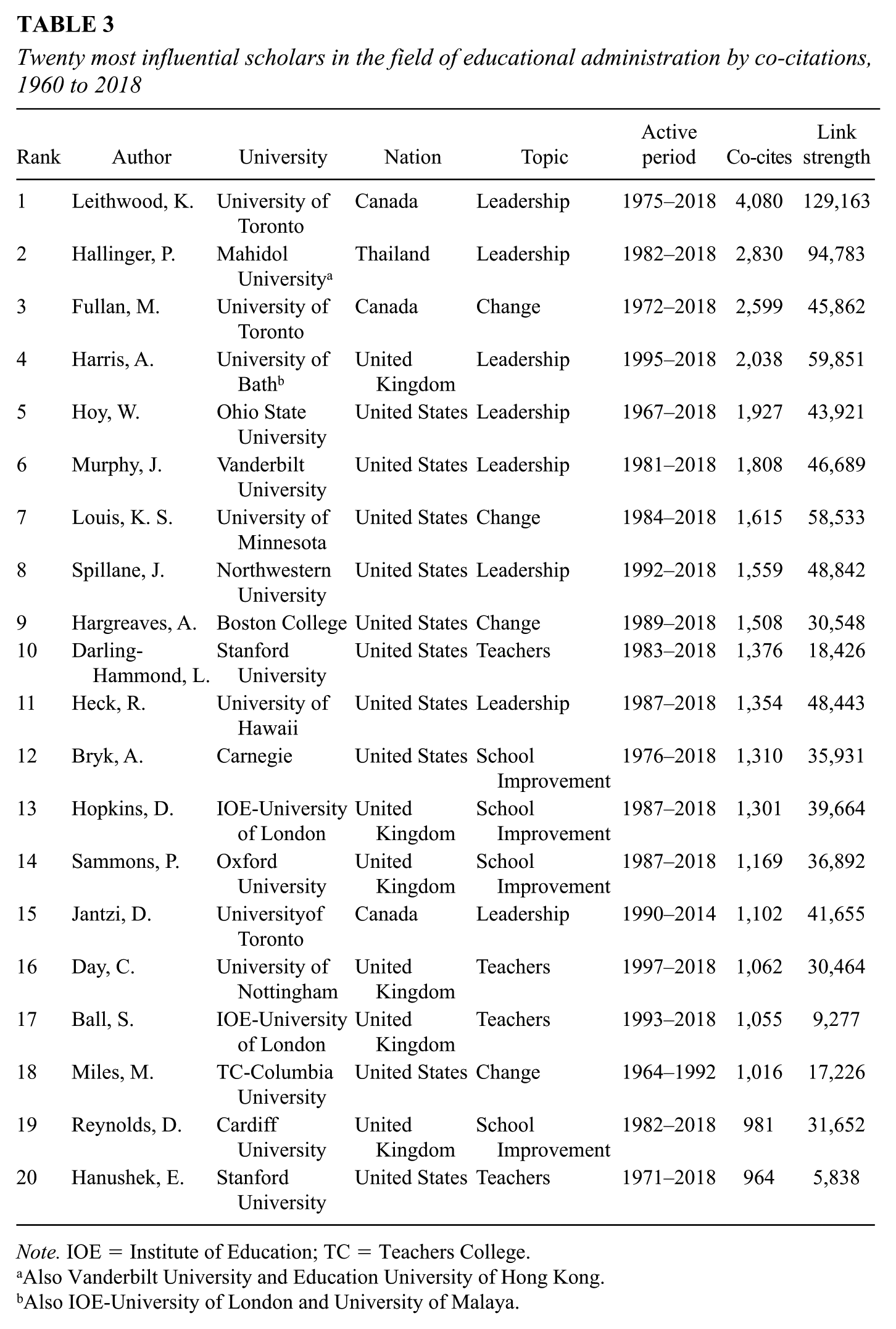
We followed these citation analyses with ACA. Using VOSviewer, we identified an “author co-citation network” based on authors located in the references of our review database. After setting a threshold of at least 200 author co-citations, we identified a list of the top 20 “co-cited EA scholars” for the period between 1960 and 2018 (see Table 3).
Twenty most influential scholars in the field of educational administration by co-citations, 1960 to 2018
Note. IOE = Institute of Education; TC = Teachers College.
Also Vanderbilt University and Education University of Hong Kong.
Also IOE-University of London and University of Malaya.
ACA identified several influential scholars who had not appeared among the highly cited authors listed in Table 2 (e.g., Fullan, Miles, Hanushek, Bryk, Hopkins, Darling-Hammond, Ball). Articles authored by these scholars were frequently co-cited with articles located in our database. Without exception, the highly co-cited authors were—again—dominated by scholars specializing in leadership, change, school improvement, and teachers/teaching. Indeed, even a portion of the economist Eric Hanushek’s scholarship has focused on teacher quality and effectiveness (e.g., Hanuskek, 2011).
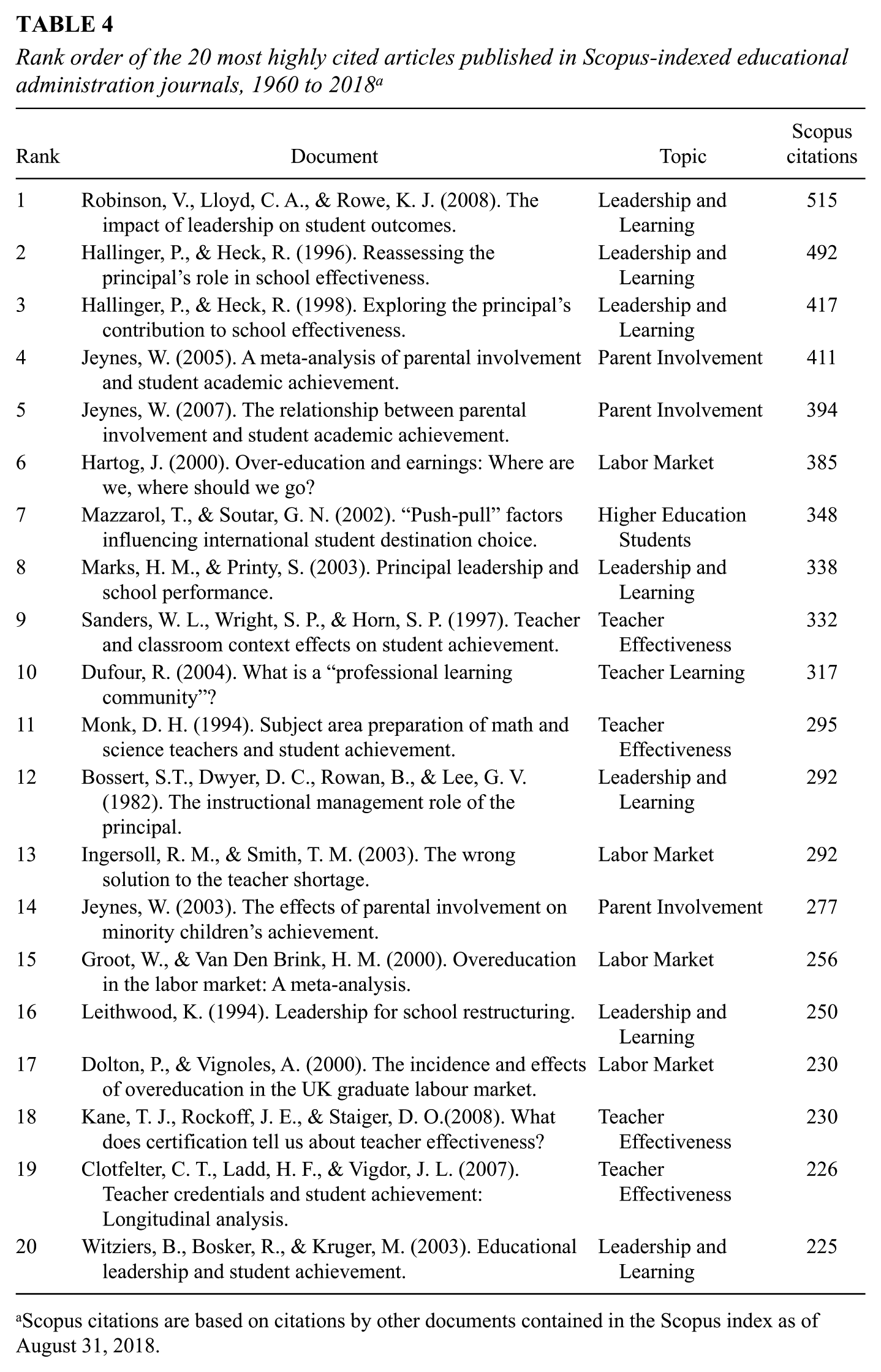
The next analyses focused on identifying the most highly cited and co-cited documents. Our analytical strategy employed a similar two-stage approach starting with citation analysis of documents followed by co-citation analysis. Analysis of the most highly cited articles published in these EA journals yielded a number of interesting trends (see Table 4).
Rank order of the 20 most highly cited articles published in Scopus-indexed educational administration journals, 1960 to 2018 a
Scopus citations are based on citations by other documents contained in the Scopus index as of August 31, 2018.
First, these highly cited documents span the period from 1982 to 2008 during which EA research matured. The fact that the most recent article was published in 2008 reflects the fact that the total citation metric disadvantages recent publications (Zupic & Čater, 2015). Second, we observed only limited overlap between the most highly cited authors in Table 2 and the highly cited documents in Table 4. Specifically, only 8 of the 20 articles listed in Table 4 were authored by scholars listed in Table 2. This suggests a fairly wide range of capacity for high impact scholarship.
Third, the foci of these articles reinforced the earlier analyses. More specifically, these highly cited documents were concerned with “leadership for learning” (e.g., Hallinger & Heck, 1996; Leithwood, 1994; Robinson et al., 2008), “teacher learning and effectiveness,” and “parent involvement” (Jeynes, 2003, 2005, 2007). In addition, several articles focused on the “teacher labor market” (i.e., Dolton & Vignoles, 2000; Groot & Van Den Brink, 2000; Ingersoll & Smith, 2003).
The dominance of systematic quantitative reviews of research (e.g., Hallinger & Heck, 1996, 1998; Hartog, 2000; Jeynes, 2003, 2005, 2007; Robinson et al., 2008; Witziers et al., 2003) also stands out in Table 4. This reflects the maturation of the EA field as more good quality empirical research was published over time. This also highlights an increasing recognition among EA scholars of the role that reviews of research play in fostering knowledge accumulation (Bridges, 1982; Hallinger, 2013, 2014; Leithwood, 2005; Oplatka, 2009, 2010).
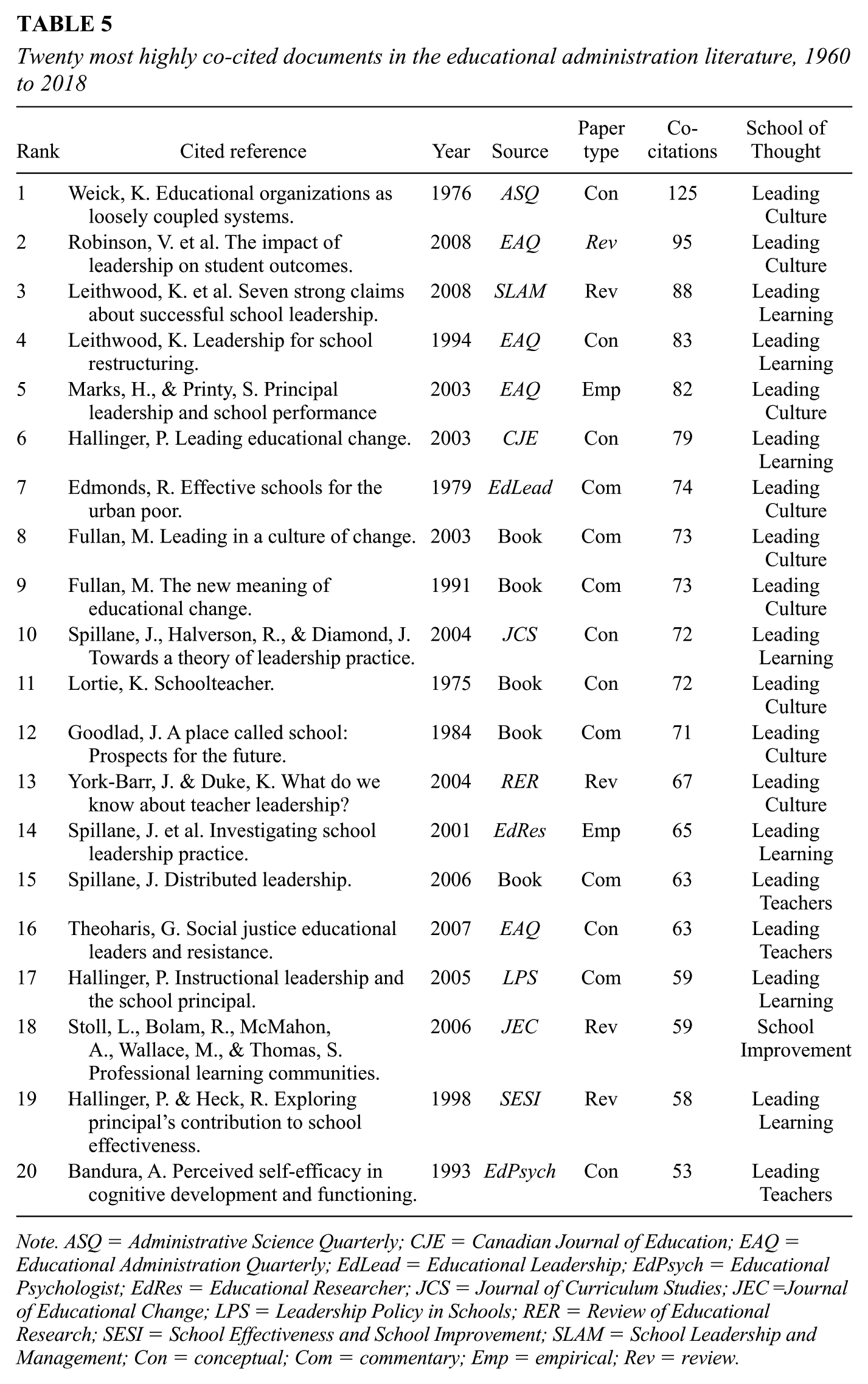
Next, we set VOSviewer to a threshold of at least 20 citations in order to identify the top co-cited documents in the field (see Table 5). Due to its ability to reach into the literature outside of our database, DCA provides a useful, complementary perspective to traditional citation analysis.
Twenty most highly co-cited documents in the educational administration literature, 1960 to 2018
Note. ASQ = Administrative Science Quarterly; CJE = Canadian Journal of Education; EAQ = Educational Administration Quarterly; EdLead = Educational Leadership; EdPsych = Educational Psychologist; EdRes = Educational Researcher; JCS = Journal of Curriculum Studies; JEC =Journal of Educational Change; LPS = Leadership Policy in Schools; RER = Review of Educational Research; SESI = School Effectiveness and School Improvement; SLAM = School Leadership and Management; Con = conceptual; Com = commentary; Emp = empirical; Rev = review.
The top co-cited documents listed in Table 5 spanned a period of five decades. The earliest if these documents were authored by Lortie (1975), Weick (1976), Edmonds (1979), and Goodlad (1984). The most recent documents were authored by Theoharis (2007) and Robinson and colleagues (2008).
Although there was some overlap with the highly cited documents displayed in Table 4 (e.g., Hallinger & Heck, 1998; Leithwood, 1994; Robinson et al., 2008), DCA identified a broader set of influential documents. The top co-cited documents included not only mainstream EA topics (e.g., Edmonds, 1979; Hallinger, 2003, 2005; Leithwood, 1994; Leithwood et al., 2008; Spillane et al., 2004), but also texts associated with social psychology (e.g., Bandura, 1993), general management (e.g., Weick, 1976), and general education (e.g., Goodlad, 1984; Lortie, 1975). Quite surprisingly, Weick’s (1976) ASQ paper on educational organizations as loosely coupled systems published over 40 years ago emerged as the most influential article in the field of EA.
White and McCain (1998) asserted that texts that sustain high citation impact over a period of several decades qualify as “canonical texts” within a field of study. Canonical documents have stood the test of time and often help establish the intellectual foundations in a field of study. In order to identify canonical documents in EA research, we synthesized the results in Tables 4 and 5 and then applied a minimum time threshold of 25 years. Given these criteria, several texts stood out as “canonical documents” within the field of EA: Lortie (1975), Weick (1976), Bandura (1977, 1993), Edmonds (1979), Bossert et al. (1982), Goodlad (1984), Heck, Larsen, and Marcoulides (1990), Fullan (1991), Leithwood (1994). Of course, as time passes and the field continues to evolve, new “canonical documents” will join this list.
Intellectual Structure of the EA Knowledge Base
Next, we employed ACA to illuminate the “intellectual structure” underlying published theory and research in EA. McCain’s (1986) pioneering validation study of ACA concluded that “cluster-enhanced cocited author maps have proved useful in communicating, in parsimonious fashion, the complex structure of scholarly fields” (p. 121). ACA has since been used extensively by scholars conducting science mapping reviews in a wide range of science and social science disciplines (e.g., Galvagno, 2011; Nerur et al., 2008; Pilkington & Meredith, 2009; White & McCain, 1998; Zupic & Čater, 2015).
We employed VOSviewer to generate a co-citation map that “visualizes similarities” in the scholarship of authors by setting a threshold of at least 20 citations with a display of 100 authors (see Figure 4). The map groups authors into “clusters” that serve as proxies for “Schools of Thought” that comprise the EA knowledge base (McCain, 1986; Small, 1999; Van Eck & Waltman, 2017). Schools of Thought reflect common theoretical perspectives and lines of inquiry shared by groups of scholars (Börner et al., 2001; Pilkington & Meredith, 2009; White & McCain, 1998). The co-citation map displays nodes, each representing a different scholar. Size of the node reflects the number of author co-citations. The density of “links” connecting scholars reflects the number of times a scholar has been co-cited with another scholar (see also Figure 2).
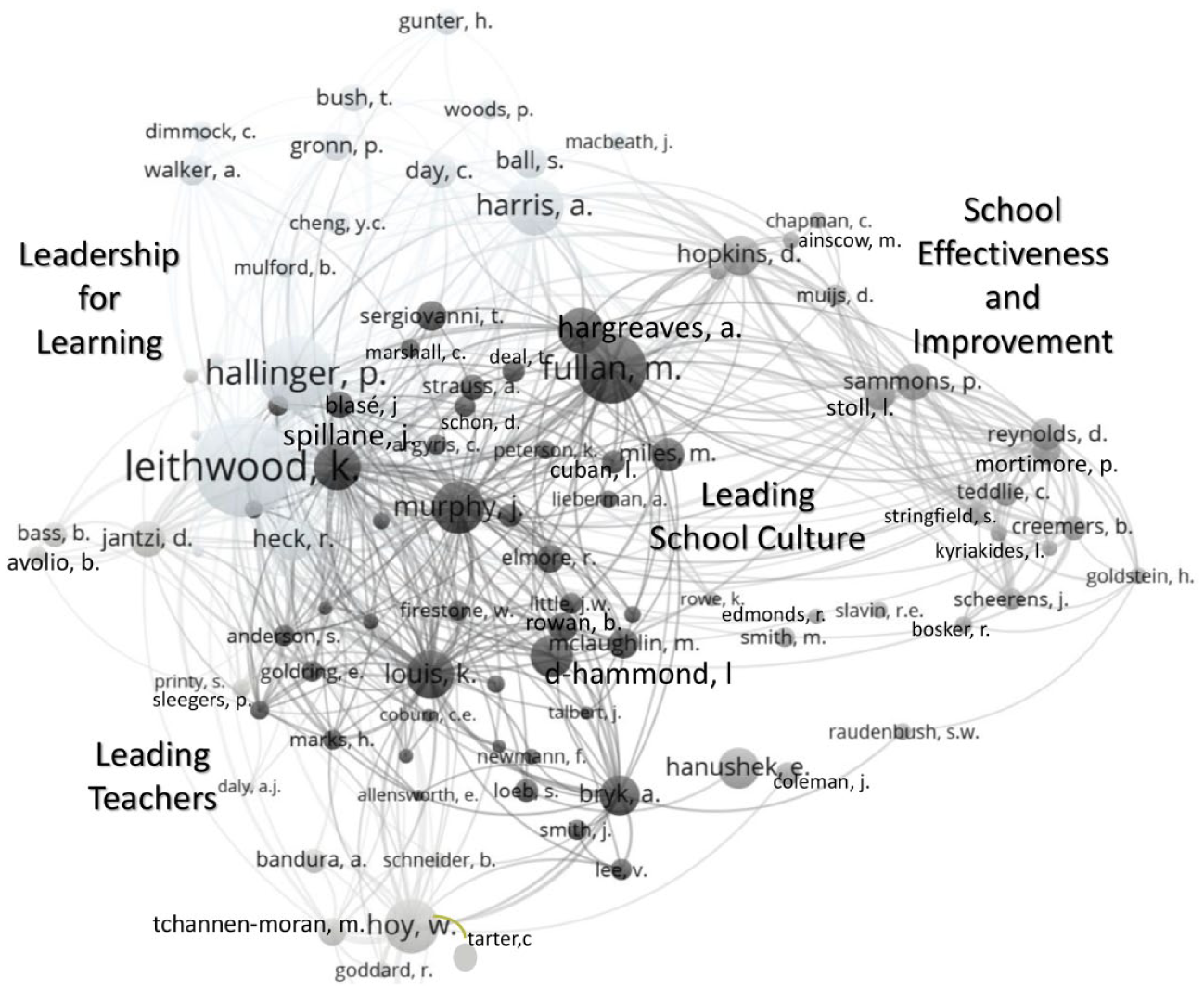
Author co-citation network in educational administration, 1960 to 2018 (threshold 20 citations, 100 authors).
Initial inspection of the author co-citation map in Figure 4 reveals four coherent, distinctive Schools of Thought. At the same time, the density of links connecting the clusters suggests the interconnectedness of this knowledge base. Consistent with the results presented earlier in Table 3, Leithwood, Hallinger, Fullan, Harris, Hoy, Murphy, Louis, and Spillane feature the largest nodes on the map. Murphy’s location in the center of the map highlights his “boundary-spanning” role integrating concepts across the four Schools.
The cluster in the upper-left region represents a School of Thought consisting of scholars associated with Leadership for Learning (e.g., Leithwood, Hallinger, Heck, Harris, Walker, Bush, Day, Mulford, Gronn, Walker, Dimmock). This School includes scholars associated with a variety of different leadership models (e.g., transformational leadership, instructional leadership, distributed, democratic). Nonetheless, each of the scholars in this School has evidenced a persisting interest in how leadership affects learning in schools.
The central cluster is the largest and includes several related foci captured under the title, “Leading School Culture.” Both the size and location of this School on the map suggest its conceptual centrality in the EA knowledge base. While some of the scholars in this school are also associated with Leadership for Learning, scholarship within this School is more explicitly grounded in research on cultural change, teachers, and teaching (e.g., Fullan, Murphy, A. Hargreaves, Marks, Printy, Louis, Darling-Hammond, Blasé, Little, McLaughlin, Goldring, Wahlstrom, Cuban, Rowan, Robinson). The dispersion of authors within this School reflects finer distinctions in the intellectual affiliations of subgroups the authors.
The cluster on the right side of the map is composed of scholars who have studied “School Effectiveness and School Improvement.” This School is located at some distance from the other clusters, thereby suggesting a more “discrete” thematic focus. The clustering of scholars within the School Effectiveness and School Improvement School of Thought suggests three composite lines of inquiry. Scholars who have focused on School Improvement tend to be located in the upper region of the cluster (e.g., Hopkins, Sammons, Stoll, Ainscow, Muijs, MacBeath). Scholars associated with School Effectiveness research populate the lower region (e.g., Reynolds, Teddlie, Stringfield, Mortimore, Boskers, Creemers, Kyriakides, Scheerens). James Coleman and Eric Hanushek, who sit in a third subgroup at the bottom left region of the cluster, are associated with sociological and economic analyses of “school and teacher effects.”
The fourth cluster, located in the lower left region of the map, is composed of a School of scholarship associated with “Leading Teachers” (e.g., Hoy, Tschannen-Moran, Bryk, Schneider, Bandura, Goddard, Sleegers, Wahlstrom, Daly, Tarter). These scholars have focused explicitly on how leadership shapes teacher attitudes (e.g., trust, collective-efficacy, commitment, academic optimism) and the effects on schools. For example, this scholarship has modeled how teacher attitudes mediate the effects of leadership on various measures of school quality, health, and student achievement.
Topical Foci of the EA Knowledge Base
We conducted keyword word co-occurrence analysis, or co-word analysis, to identify trends in the topical foci studied by EA scholars. Zupic and Čater (2015) asserted that “when words frequently co-occur in documents, it means that the concepts behind those words are closely related. The output of co-word analysis is a network of themes and their relations that represent the conceptual space of a field” (p. 435). Co-word analysis complements ACA and DCA by adding topical specificity to the subfields that comprise EA scholarship (Börner et al., 2003; Ding, Chowdhury, & Foo, 2001; White & McCain, 1998). Co-word analysis is based on keywords contained in the documents and, therefore, offers a more fine-grained picture of the composition of the knowledge base than co-citation analysis.
The co-word search was set to “All Keywords” (i.e., in the title, author-defined keywords, and index) with a threshold of at least 25 co-occurring cases of a keyword. A thesaurus file was used to reduce unwanted redundancy among keywords such as “teacher” and “teachers.” The 75 most frequently co-occurring keywords were selected for display.
The most commonly co-occurring keywords were “Leadership” (829), “Higher Education” (586), and “Students” (450). Whereas “Leadership” gained the highest total, the keyword “Students” evidenced the highest total link strength. These findings suggest the conceptual centrality of these concepts in the EA literature. While these keywords may seem quite unremarkable, when we re-ran the same analysis for the 1960s and 1970s, neither “Leadership” nor “Students” appeared on co-word maps of early EA scholarship (not tabled). The emergence of “higher education” was quite unexpected given our exclusion of “higher education journals” from our database.
The co-word map shown in Figure 5 reveals three distinct clusters. The “central core” of the map is occupied by a small but densely linked cluster of keywords associated with “Student Learning and Development.” The location of this cluster in the center of the map highlights its status as an anchoring construct in the cognitive structure of the EA field. Although higher education is located in a different cluster from primary and secondary schools, their central position and proximity on the map suggest that the focus on Students and Student Learning applies across all three school settings.
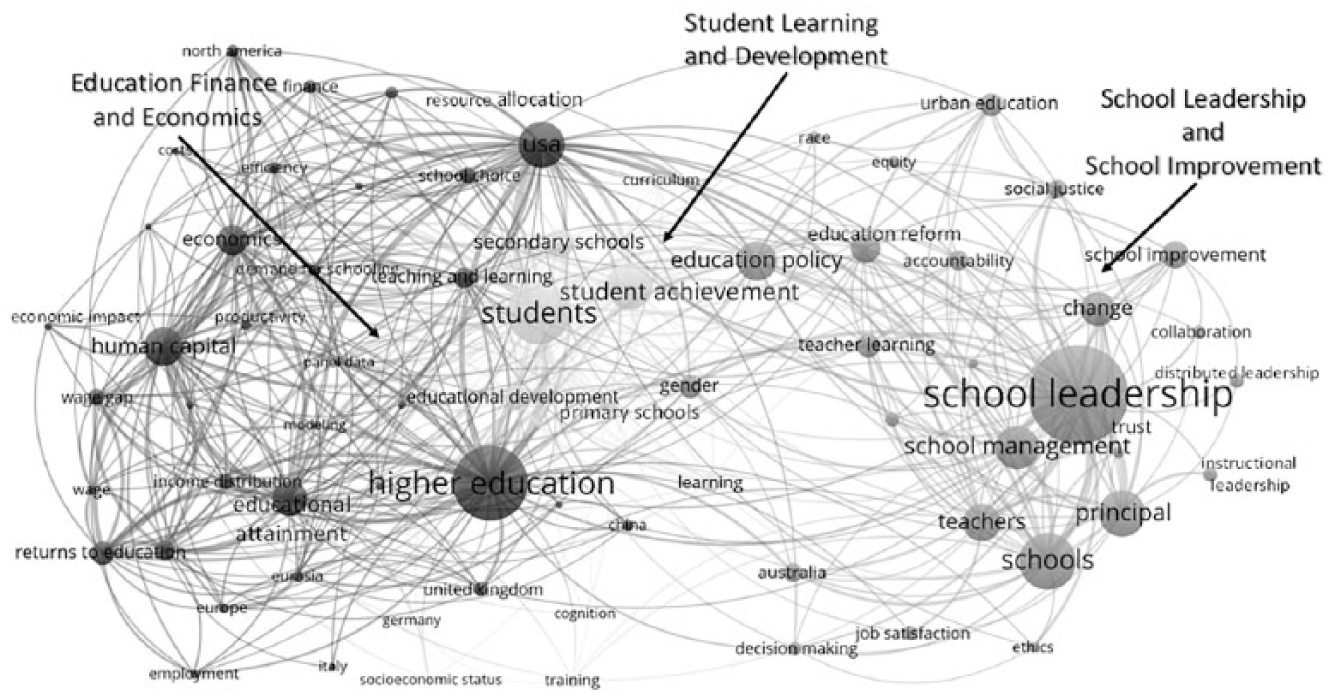
Keyword co-occurrence map based on 22,361 EA Scopus-indexed articles published from 1960 to 2018 (threshold 25 co-occurrences, display 75 keywords).
The right-hand cluster is associated with the subfield of “School Leadership and Management.” This cluster is composed of a related set of items that includes different types of “leadership” (e.g., instructional, distributed, principal), “educational processes” (e.g., teachers, trust, teacher learning, collaboration), and “school outcomes” (e.g., change, school improvement, education reform). These frequently co-occurring keywords signify the prominence of research on leadership effects in the EA knowledge base. Also located within this cluster is a less dominant set of keywords associated with ethics, race, gender, and social justice. Finally, we note the complementary strength of “school management” in this cluster with significant links to decision making, school governance, accountability, educational policy, and education reform.
The cluster on the left-hand side of the map surfaces themes related to the Education Finance and Economics. One set of themes relates to educational production functions that have included studies of human capital, teaching and learning, educational attainment, returns to education, school choice, economic impact, and employment. A second theme concerns financial features associated with the provision of education such as teacher salaries, efficiency, costs, and resource allocation. While higher education evidences the highest co-occurrence, as noted above, its location in the center of the map and dense cross-cluster links indicate a strong relationship to all three clusters.
Topical analysis has also been used in science mapping to identify the “research front” of a knowledge base. Klavans and Boyack (2017) referred to the research front as the most recent documents emerging in the literature “self-organized by authors.” Identification of the research front alerts scholars to the most recent topical trends in a literature. VOSviewer offers the capability to overlay a “temporal visualization” on the basic co-word map (i.e., Figure 5), which highlights the relative emphases of topics over the past 15 years (see Figure 6). When interpreting the temporal co-word map in Figure 6, the lighter shade indicates topics of more recent emphasis in the literature.
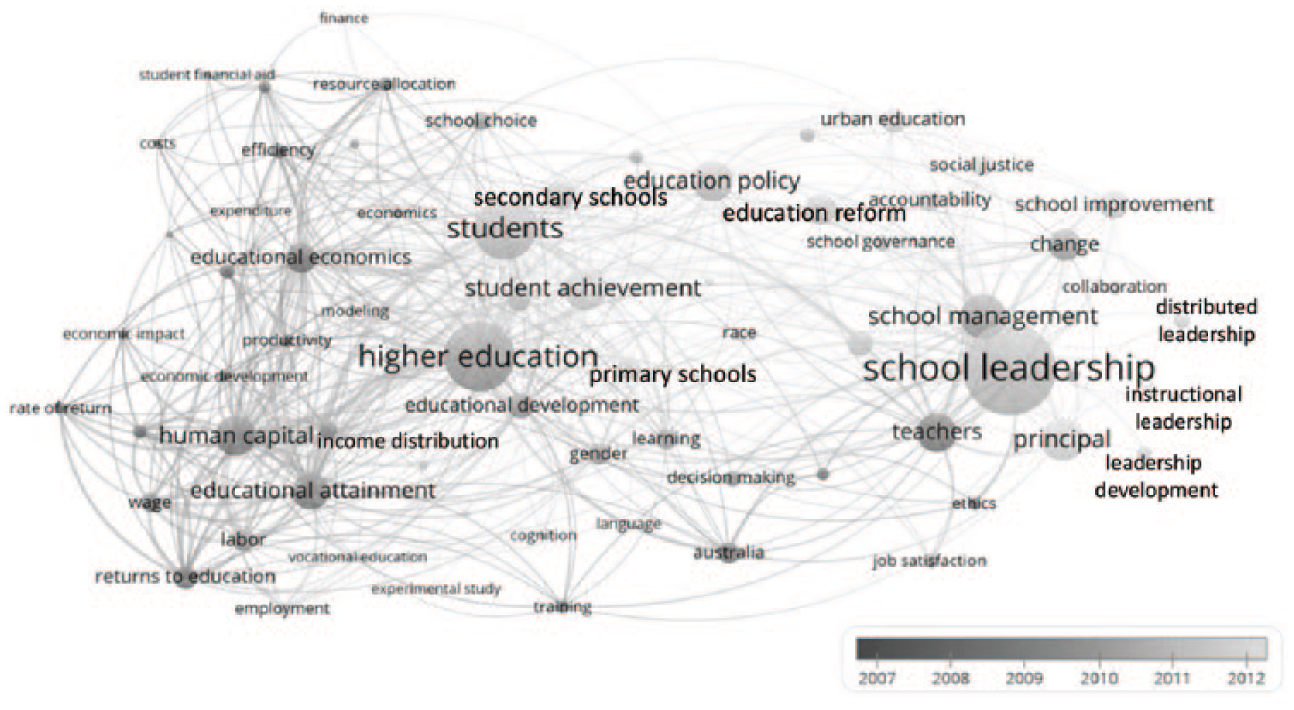
Temporal overlay for the keyword co-occurrence map based on 22,361 Scopus-indexed EA articles published from 2006 to 2013 (threshold 25 co-occurrences, display 75 keywords).
This temporal analysis finds that the research front in EA research is concentrated on “Principals,” “School Leadership,” and “Student Achievement” in “Primary Schools” and “Secondary Schools.” Featured within this research is a concurrent focus on “Distributed Leadership,” “Instructional Leadership,” “Teacher Learning,” “Accountability,” “School Improvement,” “Education Reform,” and “Leadership Development.” A third set of terms evidencing recent interest revolves around “Race,” “Social Justice,” and “Urban Education.” These findings with respect to topic frequency are largely consistent with findings from other recent reviews (e.g., Castillo & Hallinger, 2018; Gumus et al., 2018; Hallinger, 2018b, 2019; Oplatka, 2009, 2010; Wang et al., 2017). The difference is that this review was based on a larger database of journals and articles, encompassed all regions of the world, and used a different methodology.
Discussion
This research review employed science mapping as a means of documenting and analyzing the EA knowledge base that has accumulated over the past six decades. Using bibliometric analysis, the authors analyzed 22,361 articles published in 22 Scopus-indexed EA journals between 1960 and 2018. This concluding section highlights limitations of the review, and offers interpretation and implications of the findings.
Limitations
While science mapping offers a useful complement to research synthesis and meta-analysis, it does not replace these review methods that offer low inference assessments of quality and integrate findings within a body of literature. In addition, although the studies included in our database were produced over the course of six decades, our analyses only selectively examined temporal dimensions of the corpus. For the most part, our analyses tended to “average out” temporal variations in this body of scholarship. Thus, our analytical strategy leaves important questions unanswered with respect to the evolution of the field. Analyses that examine findings on a decade-by-decade basis will offer a more fine-grained picture of the field’s evolution (see Hallinger, 2018a; Oplatka, 2009, 2010; Wang et al., 2017).
Another limitation arises from the review’s delimitation to Scopus-indexed EA specialization journals. Although we justified our sampling strategy, it led to the omission of books, book chapters, conference papers, theses, and EA-related articles published in other journals. Thus, the review has not examined the entire literature in EA.
Two factors, however, mitigated this limitation. First, the database examined in this review was the largest compiled in any review of research conducted to date in the field of EA. Second, the capability of co-citation analysis to capture documents outside of the review database resulted in the identification of numerous documents in the broader EA literature. Nonetheless, we cannot estimate the extent to which our findings generalize to the full knowledge base.
Another limitation arises from our analysis of “modal trends” in this knowledge base that may have “hidden” potentially significant nondominant trends. For example, our topographical and author citation analyses found that authorship of EA articles was, until recently, concentrated in a small set of Anglo-American-European societies. The perspectives of these authors toward the study of EA reflect the social values and policy concerns of their societies. Similarly, scholars have observed that leadership and management practices are shaped by the cultural and institutional contexts in which they are enacted (see Bajunid, 1996; Clarke & O’Donoghue, 2017; Hallinger, 2018c; Oplatka & Arar, 2017). Consequently, unseen cultural biases arising from the geographic sources of this literature may limit the broader applicability of findings, for example, to non-Western and developing societies (see Bajunid, 1996; Clarke & O’Donoghue, 2017; Hallinger, 2019; Mertkan et al., 2017). By extension, this conclusion suggests that the field has yet to develop a knowledge base that reflects the global diversity of EA practices. Thus, in the view of the authors, the single greatest challenge facing our field in the coming decades lies in producing a cross-culturally valid knowledge base with global relevance.
Another potential nondominance bias associated with our method of analysis applies to the gender of authors. Most of the EA literature published during the 1960s and 1970s was authored by male scholars (Hallinger, 2018; Oplatka, 2006, 2010; Young & Skrla, 2012). Although our author citation analyses suggested increasing representation among female scholars over the past several decades, our data set was not coded for author gender. Therefore, we were only able to offer a limited perspective on change in the proportion of male and female authors of EA scholarship over time. However, future reviews could use similar methodological tools to analyze trends concerning both the production and the impact of female scholarship in EA over time.
Finally, scholars have suggested that the act of citing a document can become a “habitual response” rather than a meaningful affirmation of shared perspective (see White, 2004). For example, when researchers frequently cite Bandura (1973), Weick (1976) or Bossert et al. (1982), to what extent is this a true indication of the citing author’s belief in the applicability of the reference as suggested by Gilbert (1977) and Merton (1973)? Or is it a “habitual response” common to authors writing within a particular line of inquiry? Although this kind of citing behavior may occur to some extent, we found no evidence in the literature to suggest that it has a meaningful impact on the overall validity of citation results.
Interpretation of the Findings
From a relatively small corpus of disparate studies published during the 1960s, the EA journal literature examined in this review has grown into a reasonably large and coherent literature. We believe that pioneering EA scholars of the 1960s (e.g., Campbell, Erickson, Bridges, Hoy, Lipham, Griffiths, Willower) would be largely gratified by the field’s growth six decades hence. In fact, we decided to test this assumption by sharing this finding with Edwin Bridges, Emeritus Professor at Stanford University and former Director of the UCEA’s Midwest Administration Center in the 1960s. His first response was, “That’s an impressive corpus”—immediately followed by “but how about the quality of the papers?” This response reprised our above-cited methodological limitation of bibliometric reviews, and should be remembered when interpreting our findings.
Our topographical analysis of the literature found a skewed geographical distribution with a majority of EA scholarship coming from the United States, Canada, the United Kingdom, and Australia. On the positive side, we were able to report that this imbalance has been reduced over the past decade. Specifically, a rapidly increasing proportion of EA papers are now being produced by scholars in the emerging regions of Asia, Africa, and Latin America (see also Hallinger, 2019). Nonetheless, the world map of the EA knowledge base continues to show far too many “blank spots” representing societies for whom there is little or no internationally accessible, formal knowledge about EA practices (see Figure 3). Moreover, these blank spots far too often represent developing societies where improving the quality of educational leadership and management is arguably of the greatest urgency (Clarke & O’Donoghue, 2017; Hallinger, 2018b, 2018c, 2019; Mertkan et al., 2017; Oplatka, 2004).
The document citation analyses presented in Tables 4 and 5 highlighted the prominent role that reviews of research have played in the evolution of the EA knowledge base (see also Hallinger, 2014). Indeed, our findings suggest that it is possible to trace the evolution of EA through the lineage of the field’s most highly cited research reviews cited in this paper. We also wish to note the intellectual debt owed to other frequently cited reviews of EA research authored by Erickson (1967, 1979), Bridges (1982), Leithwood & Montgomery (1982), Leithwood and colleagues (1990), Eagly, Karau, & Johnson (1992), Leithwood and Jantzi (2005), Murphy and colleagues (2007), Hallinger (2011), ten Bruggencate and colleagues (2012), and Leithwood and Sun (2012). Reading a selection of these reviews will both sensitize current and future generations of EA scholars to the circuitous process of knowledge accumulation and bring fresh insights into persisting challenges faced in studying the practice of EA. In sum, we conclude that well-designed, systematic reviews of research have and will continue to play an important role in the evolution of EA.
Our review also identified what White and McCain (1998) referred to as “canonical texts” that have sustained high levels of citation impact over the course of several decades. Canonical documents highlighted in this review included Lortie (1975), Weick (1976), Bandura (1977, 1993), Edmonds (1979), Bossert and colleagues (1982), Goodlad (1984), Fullan (1991), Heck and colleagues (1990), and Leithwood (1994). Notably, these canonical documents not only include documents centered on EA (e.g., Bossert et al., 1982; Heck et al., 1990; Leithwood, 1994) but also articles from related fields that have provided conceptual underpinnings for the intellectual structure of the EA knowledge base (e.g., Bandura, 1977, 1993; Lortie, 1975; Weick, 1976). We assert that the empirical identification of these “canonical texts” through citation analysis is an affirmation both of science mapping methodology and the persistence of high-quality scholarship.
Another contribution of this bibliometric review lies in the empirical identification of Schools of Thought that describe the intellectual structure of the EA knowledge base. These included Leadership for Learning, Leading Teachers, Leading School Culture, School Effectiveness, and School Improvement. Relying on a completely different methodology, co-word analysis reinforced these themes with the complementary finding that Leadership of Student Learning and Development has come to represent an anchoring construct in the cognitive structure of EA. Although this may seem like an “obvious result” to scholars of recent generations, we suggest otherwise.
Prior to the 1980s, EA focused almost exclusively on “management” and “administration”; neither “students” nor “leadership” was central to EA research, policy, or practice (Bridges, 1982; Erickson, 1979; Murphy, 1990, 2007; Murphy et al., 2007; Oplatka, 2010). Indeed, the very idea that “students” should be located at the “center of EA” only emerged in response to normative pressure applied by policymakers (e.g., Bell, 1983) and scholars (e.g., Bossert et al., 1982; Edmonds, 1979; Erickson, 1979; Goodlad, 1984; Hallinger & Heck, 1996, 1998; Murphy, 1990, 2007). Thus, we assert that this ‘seemingly obvious finding’ holds paramount significance for the evolution of the field of EA.
Implications of the Findings
Several implications follow from the findings from this effort to map the literature in EA. Two implications arose from our experience in constructing the database for this review. First, we found that lack of coverage of key EA journals renders the Web of Science a poor choice for reviews of research in EA. Thus, despite its popularity in the sciences, we advise scholars who conduct bibliometric reviews in education to pay particular attention to its limited coverage of relevant journals. The construction of a sound database is fundamental to the validity of review findings, and we concluded that Scopus offers a more satisfactory solution to sourcing documents for systematic reviews of research in EA.
A related issue arose when we reflected on why several of our findings differed from those reported in prior reviews of the EA knowledge base. For example, other recent reviews (e.g., Oplatka, 2009; Wang et al., 2017) highlighted the emergence of social justice as a key topic in the post-2000 EA literature. While our co-word analysis did surface the emergence of social justice during the 2000s, the trend was less pronounced than suggested in the abovementioned reviews. The varying findings could have resulted from differences in the databases analyzed in the respective reviews. For example, Wang and colleagues’ (2017) longitudinal analysis of topical trends in EA research was limited to a single journal, EAQ. Oplatka’s (2009) content analysis of EA scholarship examined sources drawn from EAQ, JEA, and EMAL. It seems possible that the distribution of topical trends identified from the analysis of sources drawn from 1, 3, or 22 journals could yield different results. If true, this highlights the impact of choices made in sourcing articles for a review and reprises the importance of clearly delimiting the generalizability of review findings to the broader literature. This suggests another strength of science mapping: the capability to analyze historical trends within disciplines based on large data sets (Chen & Chen, 2003; Pilkington & Meredith, 2009; White & McCain, 1998; Zupic & Čater, 2015).
Another implication arises from the identification of “canonical texts.” Documents (and authors) that have sustained the highest levels of citation over a period of several decades deserve acknowledgement as pillars of the knowledge base. As such, these and other highly cited documents identified in this review should be more intentionally integrated into the training of new scholars.
Our author citation analyses also have implications for the further diversification of the EA professoriate. Although author citation analyses suggested improvements in gender diversity during recent decades (see also Hallinger, 2018a), barriers to advancement continue to exist for female scholars (Young & Skrla, 2012). A continuing commitment to overcome these barriers is needed, with special attention to increasing support for female scholars in developing societies.
Similarly, we assert a need for greater geographical diversity in the sources of EA scholarship. This challenge should concern all scholars in the field since it is a prerequisite for the development of a truly global knowledge base in EA (see Bajunid, 1996; Clarke & O’Donoghue, 2017; Flessa et al., 2018; Hallinger, 2018b, 2018c, 2019; Oplatka, 2010; Oplatka & Arar, 2017). Meeting this challenge will require proactive, international collaborative efforts aimed at building capacity in research publication. Additionally, we need a stronger commitment from EA journal editors and editorial boards to embrace “internationalization” of the field as a shared goal. In the absence of an explicit editorial commitment, manuscripts from “emerging regions” may be perceived as “less relevant” in the eyes of reviewers who are located predominantly in Anglo American and European societies (see Hallinger, 2019; Mertkan et al., 2017).
Finally, as scholars who have conducted reviews of research using traditional tools of research synthesis and meta-analysis, we wish to affirm the complementary value added by science mapping. While this methodology leverages the precision of quantitative methods, it also encourages the reviewer to apply tacit knowledge toward the synthesis and interpretation of information. Indeed, we frequently found ourselves surprised at the extent to which “the numbers told a rich story.” This is due, at least in part, to the method’s emphasis on “visualizing relationships” among different features of the literature. Therefore, at the conclusion of this review, we encourage other education scholars to experiment with this approach to reviewing research.
