



Abstract
Passiflora edulis has been used in traditional medicine as a sedative and to treat or prevent central disorders such as anxiety and insomnia. In this study, the central effects of the aqueous extract (AE), the butanolic fraction (BF), and the aqueous residual fraction (ARF) obtained from the pericarp of P. edulis flavicarpa were investigated in mice and the possible compounds involved in these putative neuropharmacologic effects were determined. AE, BF, and ARF increased the total time spent in the light compartment of the light:dark box, an anxiolytic-like effect, and AE also potentiated the hypnotic effects of ethyl ether, a sedative effect. The thin layer chromatography and high-performance liquid chromatography analysis indicated the predominance of C-glycosylflavonoids in these extracts and fractions, which were identified as isoorientin, vicenin-2, spinosin, and 6,8-di-C-glycosylchrysin.
Introduction
Passiflora spp have been used in traditional medicine of several countries as a sedative and to treat or prevent several central disorders such as anxiety, convulsions, and insomnia (1, 2). The genus is considered to be the largest of the Passifloraceae family in a number of described species and comprises about 400–500 plant species, mostly distributed in tropical and subtropical regions of the world (1). Among these, about 150 species are native in Brazil and 60 of them produce fruits that can be consumed as food or employed in juice production (3).
Although the Brazilian Pharmacopoeia (4) considers Passiflora alata Curtis as the official species of the Passiflora genus, P. edulis flavicarpa Degener (P. edulis) is the one most frequently employed in juice production by the Brazilian food industry as well as used as a remedy in folk medicine (1, 3, 5). Brazil is considered the top world producer of P. edulis fruits and this production is increasing annually (6). In 2003, the production of these fruits was estimated as 450 thousand tons, and some authors claim that 65% of this amount is represented by the pericarp and the seeds, which are discharged as residue or industrial trash (3, 7).
A large number of studies are described in the literature on the neuropharmacologic activities of P. edulis (8–11). However, those studies are related to extracts obtained from the leaves or aerial parts, and just a few of them investigated the effects of other parts of this plant. Thus, as far as we are aware, there are no reports on the neuropharmacologic properties of the pericarp of the fruits of P. edulis. Actually, there is just one preclinical study that investigated the pharmacologic effects of the yellow part of the pericarp, named rind, although this study did not investigate any neuropharmacologic effect (12).
In spite of the great number of compounds found, the active substances responsible for the anxiolytic activities of P. edulis have not been clearly identified. The main compounds reported for this species are flavonoids, mainly derivatives of luteolin and apigenin (13), triterpenes (14), saponins (15), and cyanogenic glycosides (5). It has been suggested that flavonoids may play an important role in the neuropharmacologic effects of Passiflora spp, as P. incarnata (16), P. coerulea (17), and P. edulis (10).
Thus, the aim of the present study was to investigate the neuropharmacologic activity of the aqueous extract and its related fractions (n-butanolic and aqueous residual) obtained from the pericarp of P. edulis flavicarpa in mice and to determine the active constituents possibly involved in its putative neuropharmacologic effect. Animals were evaluated in the light:dark transition (LDT) test for determining the anxiolytic-like activity (18) in the ethyl ether–induced hypnosis to investigate the hypnotic effect (19), and in the pentylenetetrazol (PTZ)-induced convulsions to evaluate the putative anticonvulsant activity (20).
Materials and Methods
Plant Material.
Mature fruits of P. edulis were collected in Antonio Carlos, State of Santa Catarina, Brazil, in January 2006. This material was identified by Dr. Daniel de Barcellos Falkenberg (Department of Botany, UFSC) and the voucher specimen was deposited under the number FLOR 33886.
Extraction and Fractionation.
Fruits of P. edulis were harvested at the stage of maturation. The pulp (edible part) was removed and the fresh pericarp was extracted by infusion (90°C; plant:solvent, 1:2, w/v) for 10 mins. Thereafter, the aqueous extract was filtered and separated into two parts. One part was freeze-dried, to obtain the aqueous lyophilized extract (AE). The second part was partitioned with n-BuOH (3 × 300 ml), yielding the butanolic fraction (BF) and aqueous residual fraction (ARF). These fractions were evaporated to dryness under reduced pressure or freeze-dried.
Analytical Procedures.
The chemical composition of extracts and their derived fractions of pericarp from P. edulis were analyzed by thin layer chromatography (TLC) and high-performance liquid chromatography/diode array detection (HPLC/DAD). For TLC analysis, the following conditions were used: aluminum sheets coated with silica gel F254 (Merck, Darmstadt, Germany), as adsorbent: EtOAc:CH2O2:H2O (80:10:10, v/v/v) and EtOAc:acetone:-acetic acid:H2O (60:20:10:10, v/v/v/v) as the mobile phase, and the methanol solution of diphenylboryloxyethylamine (1%) (NP Reagent A) (Sigma, Brazil) was used as the color reagent. The spots were observed under short- and long-wave UV light. The HPLC analysis was performed on a PerkinElmer (Series 200 HPLC system with EP/DAD; Waltham, MA, USA). For HPLC analysis, the extract and its related fractions were analyzed on a Vertical RP C18 (250 mm × 4.6 mm) (5 μm) column. The mobile phase consisted of solvent A [THF:isopropanol:ACN (10:2:3, v/v/v)] and solvent B (0.5% phosphoric acid). The separation was achieved using isocratic elution (60 mins, 12% A in B) with a flow rate of 1.0 ml/min and UV detection (340 nm). The compounds were identified by comparing the retention time (rt) with reference standards, their UV spectra, and by co-injection of standards by adding them to the extracts. For the TLC and HPLC analyses, the following authentic samples were used: isoorientin (Extrasynthèse, France), orientin (Extrasynthèse), isovitexin (Fluka, Switzerland), vitexin (Fluka), vicenin-2, 6,8-di-C-glycosylchrysin, and spinosin. The compound vicenin-2 was isolated from P. edulis flavicarpa leaves and spinosin was obtained from Wilbrandia ebracteata roots and these were identified by spectral data (NMR and UV); 6,8-di-C-glycosilchrysin was isolated from Lichnophora ericoides leaves and was provided by Dr. Norberto Peporine Lopes (Department of Pharmacy, University of São Paulo, Ribeirão Preto). The solvents used for HPLC analysis were purchased from Tedia (HPLC grade; Fairfield, OH, USA). All other reagents used were of analytical grade and were purchased from Nuclear (Diadema, Brazil).
Animals.
Adult male Swiss mice (age 3 months; weight 35–50 g) were used. Animals were housed in groups of 20 per cage, under standard conditions (12-hr light:dark cycle; lights on 0700 hrs; constant room temperature of 22 ± 2°C) for at least 1 week prior to the behavioral experiments, with food and water ad libitum, except during the experiments. Each animal was used just once. All experiments were conducted in accordance with the international standards of animal welfare recommended by the Brazilian Society of Neuroscience and Behavior (Act 1992) and the experimental protocols were approved by the institutional Committee for Animal Care in Research (#23080.080072244/2006-70/CEUA/UFSC). The minimum number of animals and the duration of observation required to obtain consistent data were used.
Drugs.
In the behavioral experiments, ethyl ether (F. Maia Ind. & Com. Ltda., Cotia, SP, Brazil) and pentylenetetrazol (Sigma Chemical Co., St. Louis, MO) were used. For anxiolytic-like, hypno-sedative, and anticonvulsant activities, diazepam (DZP; Hoffman-La Roche, Basel, Switzerland) was used as reference drug (positive control). Drugs and preparations, including the aqueous extract (AE), the butanolic fraction (BF), and the aqueous residual fraction (ARF) were dissolved in saline (0.9% NaCl) immediately before the treatment by the oral (po) route (volume of 0.1 ml/10 g). The plant extracts and fractions were freshly dissolved before each pharmacologic test.
Treatments.
Animals were treated by the po route through an intragastric cannula, with AE, BF, or ARF, in a constant volume of 0.1 ml/10 g. AE was tested at doses of 100 or 300 mg/kg in the LDT, the ethyl ether–induced hypnosis, and the PTZ-induced convulsions tests, whereas BF and ARF were tested at doses of 25, 50, and 100 mg/kg only in the LDT test in order to bioguide their possible effects on experimental anxiety. Control animals were treated by the same route with equal volumes of vehicle. DZP, used as a positive control drug, was administered po at doses of 2.5 mg/kg in the LDT test, 1 mg/kg in the ethyl ether–induced hypnosis test, and 3 mg/kg in the PTZ-induced convulsions test, according to previous experiments of standardization. Mice were individually tested 1 hr after the treatment with AE, BF, or ARF, or 30 mins after the treatment with DZP.
Pharmacologic Tests.
LDT and Open Field Tests.
The LDT has been widely validated to measure anxiety in rodents (18). The apparatus consisted of a box made of Plexiglas with overall dimensions of 45 cm × 27 cm × 27 cm (length, width, height). The box was divided into two compartments by a barrier with a doorway (7 cm × 7 cm) through which mice could cross from one chamber (15 cm × 27 cm × 27 cm), black and not illuminated, to the other chamber, white and brightly illuminated with a 400-lux light source. Mice were individually placed in the middle of the white compartment facing the doorway. After the first transition to the dark compartment, the behavior of the animals was registered during a 5-min period for measuring two parameters: total time spent in the lighted compartment and total number of transitions between the two compartments. Drugs with anxiolytic activity usually increase the time spent in the light compartment of the box and/or the number of transitions between the compartments.
Immediately after being tested in the LDT, the animals were individually placed into the center of the open field for the evaluation of their motor activity in order to avoid false-positive results. The total number of squares crossed by the animal and the number of rearing behaviors were measured during a 5-min test.
Ethyl Ether–Induced Hypnosis.
The ethyl ether–induced sleep was employed in order to evaluate the potentiation of hypnosis and the putative hypno-sedative activity of the extract (19). Animals were placed in an ethyl ether–saturated glass cage (5 ml, 5 mins of saturation, glass cage 30 cm × 20 cm) 1 hr after the treatments. Latency and duration of hypnosis were recorded (in seconds) using a stopwatch. Hypnosis time was measured by the loss of the righting reflex, with the recovery of this reflex considered as the hypnosis endpoint.
PTZ-Induced Convulsions.
Mice were intraperitoneally (ip) treated with PTZ (80 mg/kg), 1 hr after the treatments with the extract or vehicle, to induce generalized clonic-tonic convulsions (20). Immediately after the PTZ treatment, animals were placed into individual plastic cages to register the following parameters for 30 mins: the latency (in seconds) of the first convulsive episode as well as its duration, and the severity of convulsions, using a predetermined scale (grade 0 = no response; grade 1 = myoclonic body jerks; grade 2 = generalized clonic convulsion; grade 3 = generalized clonic jerks with loss of righting reflex; grade 4 = generalized convulsion with tonic hind-limb extension without death; grade 5 = generalized convulsion with tonic extension followed by death).
Statistical Analysis.
Results are expressed as mean ± SEM and were analyzed by one-way analysis of variance (ANOVA) followed by Dunnett’s test, except for the severity of convulsions parameter, which is presented as median ± interquartile range and analyzed by the Kruskal-Wallis test. Data obtained for the positive control groups were analyzed by Student’s t test or by Mann-Whitney U test (severity of convulsions). All statistical analysis was carried out using Statistica version 6.0 (Statsoft, Tulsa, OK, USA). Differences between treated and control groups were considered statistically significant when P ≤ 0.05.
Results
Chromatographic Analysis and Chemical Characterization.
The chromatographic analysis by TLC and HPLC of AE from P. edulis pericarp pointed to a complex mixture of compounds with a characteristic profile of flavonoid glycosides, considering the retention factor (RF) values and fluorescence under UV light (360 nm) before and after spraying the Natural Reagent A (NPA-reagent). The HPLC analysis using DAD confirmed the predominance of compounds within the flavone skeleton, based on the characteristic UV absorption spectra of all detected substances, and allowed the identification of four major compounds (Fig. 1A). The HPLC analysis showed peak 4 as the major compound, with retention time of 32.29 mins and typical UV absorption of luteolin derivatives. After comparison of their rt, UV spectra, and co-injection with authentic samples, peak 4 was identified as isoorientin. Peaks 1 and 3 showed the typical UV absorption of apigenin derivatives and were identified as di-C-glycosyl flavone, vicenin-2 (rt = 14.47), and spinosin (rt = 18.45), respectively. On the other hand, peak 2 displayed the UV absorption maxima similar to the chrysin derivatives, allowing the identification as 6,8-di-C-glycosylchrysin (rt = 15.52) by co-injection with an authentic sample. According to these results, the AE (Fig. 1A) and BF (Fig. 1C) showed similar chromatographic profiles and the same main compounds. On the other hand, in the chromatographic profile of ARF, only one main component (peak 4
Pharmacologic Tests.
LDT and Open Field Tests.
Figure 2 shows that the treatment with AE and BF, obtained from the pericarp of P. edulis, significantly increased the total time spent in the light compartment of the light:dark box, in all tested doses [AE: F(2,19) = 9.18; BF: F(3,27) = 8.24, P ≤ 0.01], when compared to the control group, similar to the effects observed with DZP treatment (2.5 mg/kg, po). On the other hand, ARF significantly increased the total time spent in the light compartment only at the dose of 25 mg/kg [F(3,26) = 2.59, P ≤ 0.05], as shown in Figure 2F. Only BF increased the number of transitions between the two compartments in all tested doses [F(3,27) = 7.54, P ≤ 0.01], showing behavioral changes similar to those promoted by DZP.
The po treatment with different doses of AE (100 and 300 mg/kg), BF, and ARF (25, 50, and 100 mg/kg) did not promote any significant effects on the parameters evaluated at the open field, such as crossings and rearings (Table 1).
Ethyl Ether–Induced Hypnosis.
As shown in Figure 3, the po treatment with AE significantly potentiated the hypnotic effects of ethyl ether at both tested doses (100 and 300 mg/kg), as reflected by the reduction of sleep latency [F(2,17) = 9.54, P ≤ 0.01; t(11) = 2.21, P ≤ 0.05] and by the increase of hypnosis duration [F(2,17) = 4.65; P < 0.05; t(11) = −3.05; P < 0.05], a sedative effect similar to that produced by DZP.
PTZ-Induced Convulsions.
As shown in Table 2, the po treatment with AE (100 and 300 mg/kg) did not alter the latency, duration, or severity of the convulsive episodes induced by PTZ [latency: F(2,20) = 1.12; duration: F(2,20) = 1.2; severity: H 23(2) = 4.1, P > 0.05]. DZP, as expected, significantly increased the latency and reduced the severity of PTZ-induced convulsions.
Discussion
Plant species from the genus Passiflora have been traditionally used in popular medicine of several countries as anxiolytics and sedatives and in the treatment or prevention of irritability, insomnia, and nervousness (1, 2). While most of the studies with Passiflora spp are related to P. incarnata (21), there have been few and insufficient pharmacologic studies performed with P. edulis, in spite of the widespread use of this plant in popular medicine. Among these studies, almost all investigated the neuropharmacologic effects of the leaves and/or aerial parts of this species, and its anxiolytic-like, sedative, and hypnotic activities in experimental animals have been widely reported (8, 10, 11). Otherwise, there are few studies investigating the pharmacologic activities or phytochemical profiles of other parts of the plant (fruits, roots, pulp, pericarp) (22). Only two studies on the pharmacologic effects of the pericarp of P. edulis are available in the literature. The first one reports antihypertensive activity after treatment with the extract of the P. edulis pericarp in spontaneously hypertensive rats (12). The second one investigated the effects of the flour obtained from the pericarp of P. edulis in hypercholesterolemic patients (23). In this latter study, the authors observed that, after repeated treatment, there was a significant reduction in cholesterol levels in these patients when compared to the control group. However, some adverse effects were reported, including the occurrence of somnolence. In light of this unexpected effect, the authors suggested that further studies should be performed in order to verify the presence of compounds with sedative activity in the pericarp of P. edulis, since compounds with this profile have been identified in other species of this genus (16, 17) and in other parts of this plant, such as leaves (10).
In the present study, we reported the neuropharmacologic effects of the pericarp of P. edulis (AE, BF, and ARF) in mice, employing different validated animal models. These actions were compared to the effects produced by DZP, a standard benzodiazepine commonly used as an anxiolytic in clinics.
The anxiolytic-like activity of AE, BF, and ARF was investigated using the LDT test, an experimental paradigm based on the innate aversion of rodents to highly illuminated places and on the spontaneous exploratory behavior of the animals (18). AE, BF, and ARF increased the total time spent in the light compartment of the box, but only BF changed the number of transitions between the compartments in a way similar to that of DZP. Although some authors suggest that the increase in the number of transitions between the compartments can be related to a stimulatory activity (24), the extract and the fractions did not alter the parameters observed in the open field test (crossing and rearing), suggesting that the effects promoted by BF might be more related to an anxiolytic-like effect than to a stimulant activity. In fact, some authors have reported that anxiolytic drugs may increase the number of transitions between the areas in different models, such as the elevated plus-maze (25) or the LDT (18). Thus, the effects promoted by treatment with AE, BF, and ARF indicate a relatively selective profile of action (anxiolytic-like effect), since increases of activity in the light compartment of the LDT box have been suggested as an index of anxiolytic action (18).
Our data also show that the po treatment with AE potentiated the hypnotic effects of ethyl ether, reflected by a reduction of sleep latency and an increase of hypnosis duration, a sedative effect similar to that produced by DZP. Usually, the test most widely employed to evaluate the putative hypno-sedative properties of compounds with unknown central effects is the barbiturate-induced sleep, using agents such as sodium pentobarbital. However, these compounds can promote pharmacokinetic changes due to interaction with the cytochrome P450 complex, an activity that can promote an enhancement of the central depressant effect of the barbiturates and, consequently, produce false-positive results to compounds devoid of this profile (19). Thus, ethyl ether–induced sleep was used in order to detect the hypno-sedative activity of AE and to bio-guide the additional behavioral tests, since ethyl ether is not metabolized in the liver. The sedative and hypnotic effects observed in this study are consistent with those demonstrated in previous studies, indicating a hypno-sedative activity of the extracts obtained from the leaves of P. edulis (8, 9).
The PTZ-induced convulsions test is considered the main experimental acute test for preliminary assessment of drugs with potential anticonvulsant properties (20). Compounds that increase the latency, decrease the duration and lethality, or prevent the occurrence of PTZ-induced seizures are positively correlated to drugs therapeutically used in the treatment of absence crisis in humans. Some authors proposed that this test is also effective for assessing the anxiolytic-like activity of benzodiazepine compounds, since PTZ is believed to exert its action by antagonizing the aminobutyric acid (GABA)A-receptor complex (26). In the present study, treatment with AE was not effective in preventing the occurrence of PTZ-induced seizures, since it did not alter the parameters registered. This result suggests that the neuropharmacologic activity of the pericarp of P. edulis might not be specifically related to the interaction with benzodiazepine binding site, since this test is considered efficient in the assessment of compounds with this profile of action (26). A lack of anticonvulsant activity was also observed with the extracts obtained from leaves of P. edulis (8, 9).
So far, no data are available in the literature about the phytochemical composition of the pericarp of P. edulis. Mareck and coworkers (13) reported the presence of C-glycosylflavonoids in fresh juice obtained from the fruits of this species, as well as in industrialized juice. These authors also reported the prevalence of isoorientin as the major compound in both juices analyzed in their study.
In the present study, the phytochemical investigation of the AE, BF, and ARF of P. edulis pericarp, by TLC and HPLC analysis, showed the predominance of C-glycosyl-flavonoids in the extracts and fractions. The four major compounds observed in AE—(1) vicenin-2; (2) 6,8-di-C-glycosylchrysin; (3) spinosin; and (4) isoorientin—were also observed in higher quantities in BF. It is noteworthy that in ARF only one major C-glycosylflavonoid (isoorientin) was observed. Although there is no consensus on the compounds that are putatively involved in the neuropharmacologic activity of P. edulis, some authors suggest that C-glycosylflavonoids may be involved in this profile of action. De-Paris and coworkers (27) showed a positive correlation between the level of flavonoids (determined as vitexin, isovitexin, orientin, and isoorientin) and the psychopharmacologic activity of the leaves of P. edulis. Furthermore, some authors suggest that orientin and isoorientin might be responsible for the anxiolytic-like effect of the BF of Cecropia glazioui (28).
Wang and coworkers (29) showed that spinosin, the major constituent of semen Ziziphi spinozae, significantly and dose-dependently increased the duration of hypnosis and reduced the sleep latency in mice. The authors proposed that these effects were mediated via the serotonergic system, since pretreatment with p-chlorophenylalanine, an inhibitor of tryptophan hydroxylase, significantly decreased the pentobarbital-induced sleep time and spinosin significantly reversed this effect.
Our pharmacologic results suggest that the neuropharmacologic activity of the pericarp of P. edulis might not be specifically, or entirely, related to the interaction with the benzodiazepine binding site, since treatment with AE was not effective in preventing the occurrence of PTZ-induced seizures. In addition, the phytochemical investigation showed the presence of C-glycosylflavonoids in the extracts and fractions obtained from the pericarp of P. edulis, including spinosin. Thus, the putative involvement of the serotonergic system in the neuropharmacologic effects observed in the present study can be considered and our research group is developing additional studies in order to investigate this hypothesis, as well as the GABAergic modulation of such effects.
The presence of C-glycosylflavonoids was previously reported in leaves as well as in aerial parts of Passiflora spp, but this is the first report, to the best of our knowledge, on the occurrence of these compounds in the pericarp of P. edulis flavicarpa. Ichimura and coworkers (12) described the presence of luteolin, isoorientin, and GABA in the pericarp of P. edulis; however, they did not specify which variety of P. edulis was employed in the analysis. The fact that these authors obtained a purple powder from the extract suggests that the species under investigation was P. edulis Sims, named purple passion fruit, and not P. edulis flavicarpa. Some authors also reported the presence of C-glycosylflavonoids in the juice obtained from the fruits of P. edulis (13). These authors identified isoorientin as the major compound, followed by orientin, isovitexin, luteolin-6-C-chinovoside, luteolin-6-C-fucoside, and a mixture of schaftoside and isoschaftoside.
To the best of our knowledge, this is also the first scientific report on the neuropharmacologic activity of the pericarp of P. edulis. Taken together, our results indicate that this neurobiologic activity is mainly an anxiolytic-like and a hypno-sedative effect. Since BF showed a more pronounced anxiolytic-like activity in lower doses than the activity of AE, it is feasible to assert that the fractioning process was efficient in concentrating the putative compounds involved in the neurobiological activity of P. edulis flavicarpa. In the same direction, the chromatographic analysis of both preparations showed that BF has higher isoorientin, vicenin-2, spinosin, and 6,8-di-C-glycosylchry-sin contents than AE and ARF.
In conclusion, the results of the present study provide strong evidence that the extracts from pericarp fruits of P. edulis possess anxiolytic-like and sedative properties, but not anticonvulsant activity, in mice—effects that are not accompanied by motor impairment. Considering the need for additional studies to confirm these results, the neuropharmacologic effects of the C-glycosyl flavonoids identified and isolated from the pericarp of P. edulis are under investigation, as well as the putative mechanisms of action involved in these neurobiologic activities.
Effects of the Oral Treatment with AE, BF, or ARF Obtained from the Pericarp of P. edulis flavicarpa on Behavioral Parameters Evaluated in the Open Field Test
Effects of the Oral Treatment with the AE Obtained from the Pericarp of P. edulis flavicarpa on Convulsions Induced by PTZ (80 mg/kg ip)
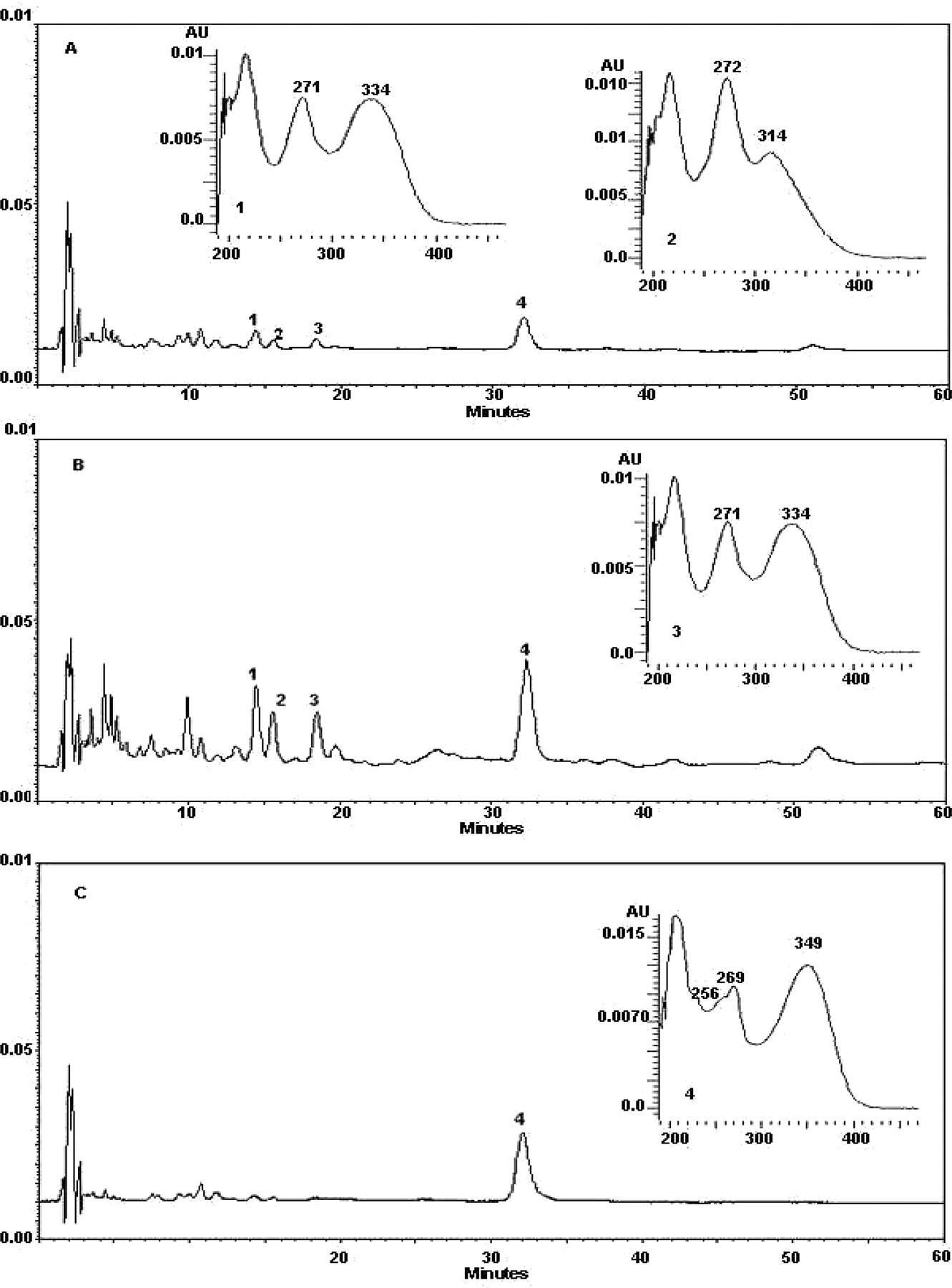
Chromatographic profile of A, B, and C from P. edulis pericarp. 1 = vicenin-2; 2 = 6,8-di-C-glycosylchrysin; 3 = spinosin; 4 = isoorientin. For chromatographic conditions, see Material and Methods.
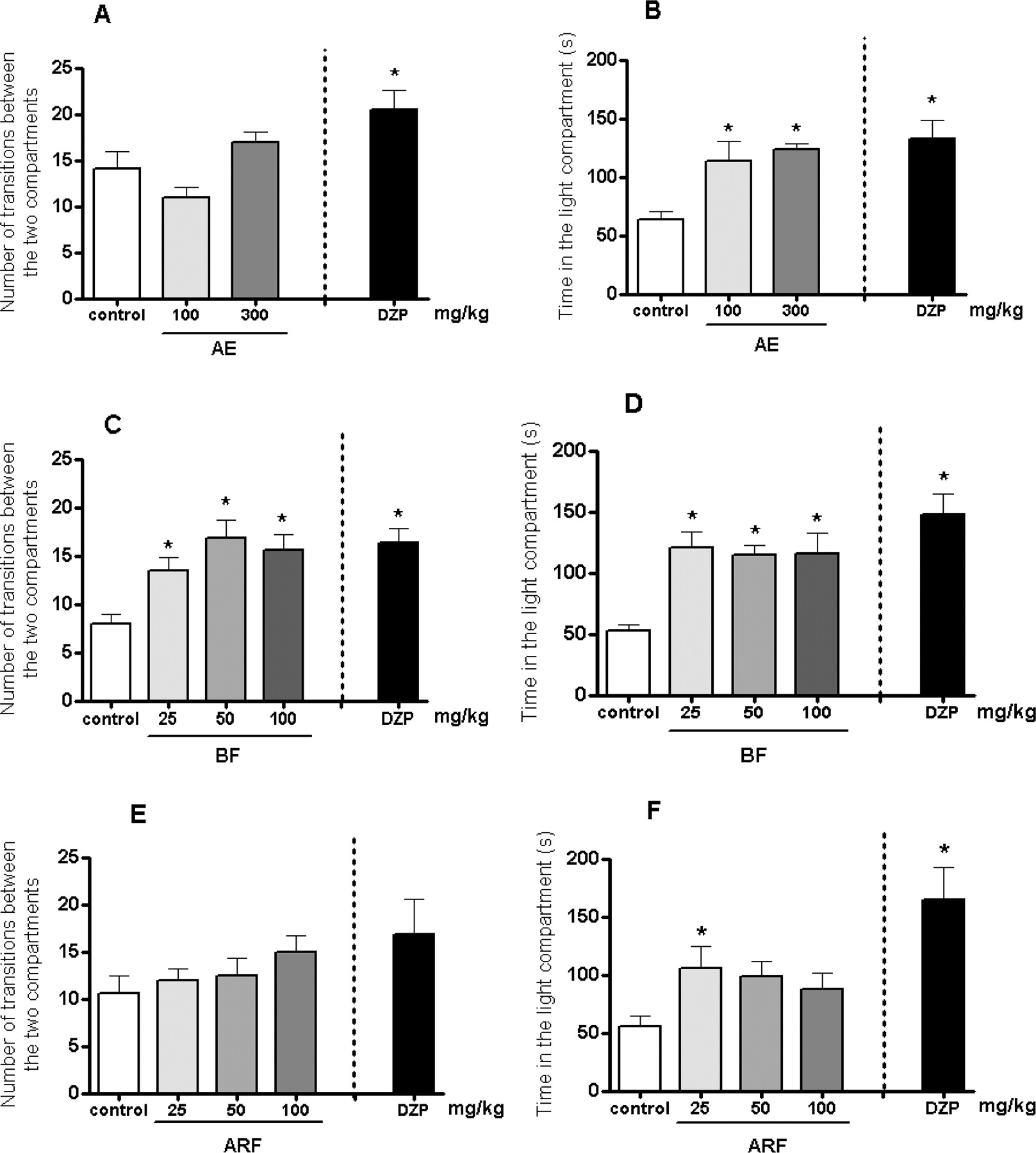
Effects of the AE, BF, or ARF obtained from the pericarp of P. edulis flavicarpa on the behavior of mice evaluated in the LDT test, recorded for 5 mins, 1 hr after oral treatment. DZP, 2.5 mg/kg po, was used as the standard anxiolytic drug. The number of transitions between the two compartments of the light:dark box (panels: A, C, and E) and total time spent in the light compartment (panels: B, D, and F) are presented. Results expressed as mean ± SEM of 7–10 mice. Comparisons were made by one-way ANOVA followed by post hoc Dunnett’s test or Students’s t test (DZP group × control). * P ≤ 0.05 compared to control group.
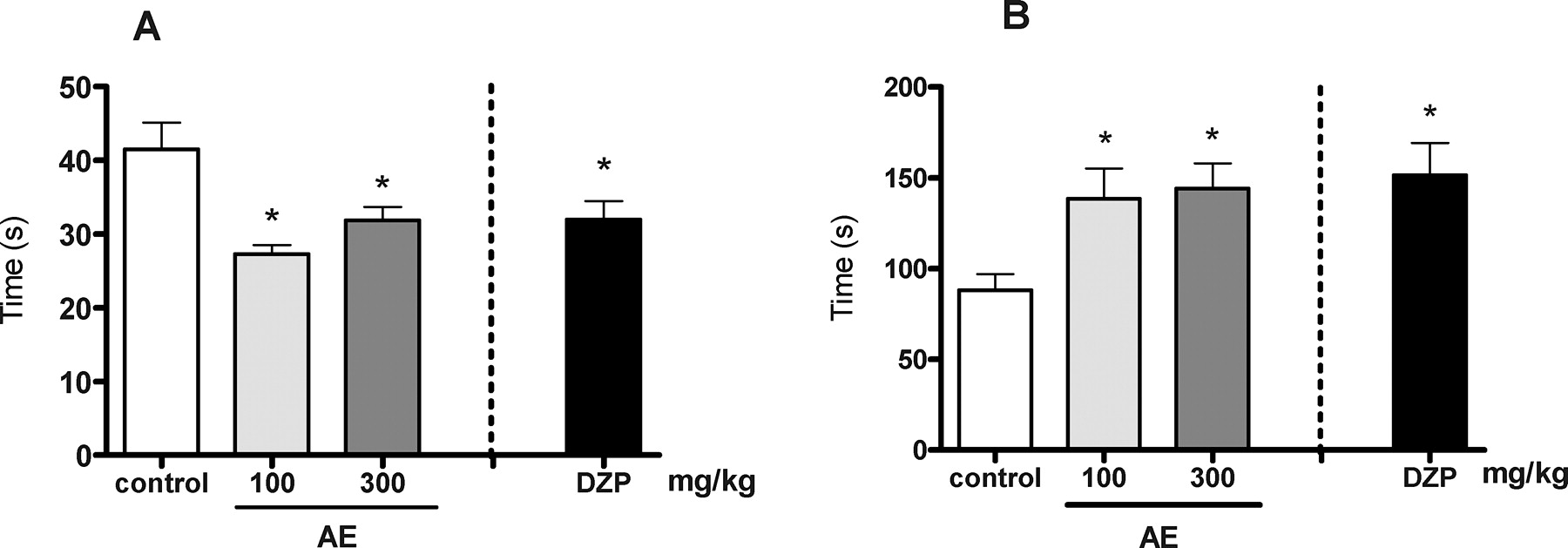
Effects of the AE obtained from the pericarp of P. edulis flavicarpa on sleeping time induced by ethyl ether 1 hr after the po treatment. DZP, 1 mg/kg po, was used as the standard drug. Latency (A) and duration (B) of hypnosis are presented. Results expressed as mean ± SEM of 6–7 mice. Comparisons were made by using a one-way ANOVA followed by post hoc Dunnett’s test or by Students’s t test (DZP group × control). * P ≤ 0.05 compared with control group.
Footnotes
L.M.S. is recipient of a Ph.D. scholarship from Conselho Nacional de Desenvolvimento Científico e Tecnológico (CNPq), which also provided research grants to E.P.S. and T.C.M.D.L. S.M.Z. is recipient of a Ph.D. scholarship from Coordenação de Aperfeiçoamento de Pessoal de Nível Superior (CAPES).
Acknowledgements
We are grateful to Dr. Filipe Silveira Duarte for the helpful comments during the development of this work and to the agronomist Rosilda Helena Feltrin (EPAGRI) for technical support.