




Abstract
Parents of children with the Prader-Willi syndrome have shown to experience difficulties in interpreting their child’s signals and experience a lack of interest from their child, which causes a risk for a disrupted bonding process between the child and his or her parents. Evidence suggests that this is mainly due to the fact that these children are excessively sleepy, hardly cry and express movement to a lesser extent. In this paper an intelligent biofeedback system is proposed to support parents in their interaction with their child. The proposed system – called Sense – uses a galvanic skin response sensor to monitor the child’s arousal response and visually communicates this to the parents. A prototype of the system is created and evaluated with users. Furthermore, thirteen tests are carried out with Prader-Willi patients to validate whether the galvanic skin response sensor provides a meaningful output signal for the system. The results from the tests show that galvanic skin response is a valuable biofeedback source to provide more information about the child’s emotions and reaction to the environment. As a result of evaluating the intelligent system, parents expect Sense will improve the interaction and bonding between parents and their child with the Prader-Willi syndrome.
Introduction
Prader-Willi syndrome
The Prader-Willi syndrome (PWS) is a genetically determined neurodevelopmental disorder, first discovered in 1956 by Prader, Labhart and Willi [29,34,38]. The estimated prevalence is 1/10.000–1/25.000 births [2,39,40] and occurs in both sexes and in all races [28]. PWS is characterized by hypotonia [10,25,40], hyperphagia [10,40], obesity [29,34], hypogonadism [10,39] and typical behavior including skin-picking [10,25], temper tantrums [25,40] and repetitive behavior [10,40].
The syndrome is caused by the loss of expression of the paternal genes on the long arm of chromosome 15 within the q11–13 region [9,30]. This loss of expression results in 70% of individuals with PWS from a deletion on the paternal chromosome [9,19]. Two types of deletion exist: Type I (breakpoint BP1 to BP3) and Type II (breakpoint BP2 to BP3) [2,19]. Studies indicate that there are small differences between Type I and Type II. Children with Type I have poorer adaptive behavior, intellectual abilities and academic achievement than children with Type II [2,9]. Occasionally, the deletion is caused by a chromosomal translocation [9,19]. For 25–30% of the cases the loss of expression is caused by maternal uniparental disomy, the inheritance of both chromosomes from the mother [9,19]. Only in 2–5% of individuals with PWS the loss is due to imprinting defects [9,19].
In the first six months after birth, infants with PWS are likely to have severe hypotonia [25,28]. Due to being hypotonic, the infants hardly cry or do not cry at all [10,27] and express movement to a lesser extent [9]. After six months, movement expression and muscle tone tend to increase [27], however people with PWS will suffer from mild to moderate hypotonia throughout their life [9]. Furthermore, children with PWS are excessively sleepy [15,20], show decreased spontaneous arousal [9], and often have a mild intellectual disability with an average IQ of 60–70 [9,10,19].
Children with intellectual disabilities are usually less reactive and clear in their signals, which makes it difficult for parents to interpret their child’s behavior and adapt accordingly [23]. Not being able to understand their child’s needs and the experienced lack of interest in interaction from the child have been shown to be a factor of increased stress experienced by parents [22]. In turn the child becomes distressed when his needs are unrecognized or misunderstood [22]. Due to stress, children tend to be less responsive to external stimuli [23], and moreover, stressed parents become less sensitive to their child, which jeopardizes the bonding process between parent and child [22].
According to the attachment theory of Bowlby, people feel the need to form close bonds to others, which is especially present between mother and infant [37]. Young children seek comfort and safety from a caregiver in times of stress [22], which is, according to Bowlby, a biological mechanism in infants for survival [37]. Sensitive caregivers teach the child to cope with stress and to understand people’s mind on emotional, behavioral and intentional level [22]. Furthermore, emotionally available caregivers who are responsive make sure the infant bonds securely, while a caregiver who is unpredictable and neglectful runs the risk of developing an insecure attachment [37]. Children with such an insecure bond with their caregiver are at risk of developing behavioral problems, such as angry, demanding, dissatisfied, needy and provocative behaviour [22]. The observation of this situation made the authors decide to take on the challenge of (partially) restoring and supporting the bonding process between parents and their child(ren) with PWS, using biofeedback.
Related research
Besides the authors, other researchers have also shown their interest in the benefits of a biofeedback system to support the interaction between parents and their behaviorally disabled child. Kobayashi, Nunokawa, and Ooe [24], for instance, developed a system that uses heart rate responses to support parents in noticing their child’s behavioral reaction. According to their research, this system functions well for children with severe motor and intellectual disabilities [24]. Others have developed prototypical intelligent systems that are expected to improve the bonding process between parents and their child in the Neonatal Intensive Care Unit [6,11–13]. Their results include neonatal behavioral state detection based on facial expression analysis [21] and design proposals for parent-child bonding [7,8,16,17]. To the best of our knowledge, however, we believe this paper to be the first to describe a study about a system that supports parents to interpret social interaction signals in children with PWS.
Intelligent system for PWS
The Industrial Design department of the Eindhoven University of Technology and the Clinical Child and Family Studies department of the VU University Amsterdam have established a research collaboration on supporting the bonding process between parents and their child with PWS by means of intelligent systems. The authors believe that by incorporating biofeedback, such a system could support parents in better interpreting their child’s social interaction signals and in experiencing more attention from their child. An overview of the system is provided in Fig. 1.

System overview.
The vision of Ambient Intelligence (AmI) and Smart Environments involves, in the environment embedded sensitive, responsive and adaptive systems that operate collectively and use their context in interactive applications to adapt applications and systems to the current situation [1,14,32,33]. In this paper, a concept biofeedback system, called Sense, is proposed to stimulate the interaction and bonding process between parents and their child with PWS. Sense measures the child’s reaction to his or her environment and informs the parents about their child’s reaction. In this way the system allows parents to adapt to their context, namely the interaction with their child. The system consists of a galvanic skin response (GSR) sensor that measures the activation of the sympathetic nervous system through the change of conductance over skin of the child’s foot or hand. The signal of this sensor is then transmitted to a movement and color changing “butterfly”, in order for parents to be able to interpret the child’s social interaction signals.
As a proof of principal the GSR sensor is tested on three patients with PWS. An experience prototype with a butterfly shape and lighting feedback is created to suggest a possible communication tool to the parents and is evaluated with the three mothers of the three children with PWS. The outcome of these tests and evaluations indicate that the intelligent system will most likely improve the interaction and bonding between parent and child. The tests revealed that the GSR sensor is a suitable sensor to retrieve information about the reaction of the child’s sympathetic nervous system on its environment.
Section 2 of this paper will elaborate on the design of the intelligent system. This section includes a description of the design process, design concept and the creation of the experience prototype. Section 3 elaborates on the tests and the results. Section 4 provides a discussion on the tests and the results, and provides opportunities for further research. The conclusion can be found in Section 5.
PWS in children makes it hard for parents to interpret their child’s social interaction signals. This is likely to complicate the interaction between parent and child. Sense is a system that aims to stimulate the interaction between parents and their child by monitoring and communicating the child’s biological signals. Having a product reflecting the signals of the child’s sympathetic nervous system might support parents in interpreting their child’s interactional signals better and more effectively.

Process overview.
The process used to develop the design discussed in this paper, started with the retrieval of information from literature and through user confrontations. Information from both sources was translated into a set of requirements for the design. An iterative process of sketching and creating low-fidelity prototypes led to one final concept proposal. The process used for creating the design is shown in Fig. 2.
Design concept
Contact with the parents of children with PWS revealed a need for a system that (1) triggers a response from parents when their child is not able to attract their attention and (2) supports parents during the interaction with their child. From these requirements a system was proposed, called Sense. Sense is a monitoring system that informs parents during the interaction with their child without interrupting the interaction process itself. Sense consists of a sensor that retrieves information about the child’s emotions and an actuator that represents the sensor’s signal in a pleasant way.
The sensor used for this design is a GSR sensor. GSR is an electrodermal response causing changes in the electrical properties of human skin as a result of experienced emotions [5,18]. It reflects the activity of the eccrine sweat glands, which are directed by the sympathetic nervous system [18]. The signal of the GSR monitor shows fluctuations in skin conductance [5] due to the changes in voltage measured over the skin’s surface [18]. The amount of active sweat glands determines the voltage amplitude [5].

Three states of the butterfly.
The amplitude change and amount of peaks reflects the experienced arousal. In order to communicate the measured signal to the parents an actuator design was created. In this butterfly-shaped actuator, the height of the GSR’s signal amplitude is visualized by means of movement and color alteration of its wings. When the actuator’s wings are closed, little to no arousal is measured in the child. The opening of the wings subsequently represents the amount of arousal or signal amplitude, measured by the GSR sensor. To provide richer information, the wings’ color changes to show more information about the amount of arousal. Figure 3 shows the different states of the butterfly actuator.
In order to test the concept design two separate setups were developed: the GSR sensor module and the butterfly actuator. For the GSR sensor system a Med-Storm pain monitor [36] was acquired for this experiment, from the Máxima Medical Center Veldhoven. The sensor system requires the attachment of three sticky electrodes to the child’s foot and a wired connection to a laptop computer running dedicated software. The Med-Storm’s sensor measurements range from 1 µS to 200 µS. For resistive measurements on 100 µS, the noise level (
During the experiment the researchers were unable to connect the GSR module to the butterfly actuator setup. However, by means of manual overwrite of turning knobs, the researchers were able to mimic the butterfly’s behavior, simulating the same experience as if it received a GSR signal. This experience consists of the combination of the movement of the wings between the open and closed position and changing their coloring. The wings are connected to servos inside the butterfly’s “body” by means of aluminum strips. Each wing is moved by a separate servo motor and colored by two RGB LEDs controlled by an Arduino®; Pro Mini microcontroller [3].
Test and results
Participants were subjected to two tests. The first test was to validate the GSR sensor on reflecting the child’s emotions and physiological reactions. During the second test the butterfly actuator was evaluated with the accompanying parent. The participants were a girl of 8 months, a boy of 30 months and a girl of 30 months with their mothers. Two mothers and their children were approached for the test through contacts of one of the researchers. The third mother reacted on an advertisement to participate in the research. All mothers provided written consent for their own participation and the participation of their children prior to the test. Participation did not result in a reward neither for the parents nor for their children.

Technology in actuator design.
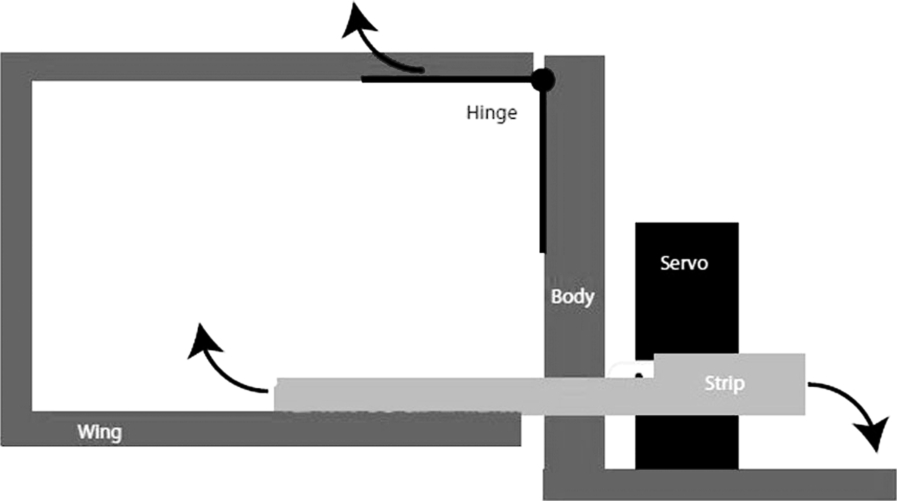
Technology in actuator design.
In order to validate the sensor, the parents were requested to select separate moments whereof they were certain happy (positive emotion) and unhappy (negative emotion) emotions were elicited in the child. The parent was requested to attach the sticky electrodes to the child’s foot 15 minutes before the start of the test as is instructed in the manual of the Med-Storm (Fig. 7). The 15 minute time frame was intended for the child to get used to the sensor and to start the test from a calm status of the child. After the 15 minute period, the parent was requested to execute the activities that elicit negative emotions first. Between each activity, was a five minute break, so the child could calm down again. This process was repeated for the activities that elicit the positive emotions.

Simulation of test setup.

Sensor used in the tests.
During the tests, one researcher observed the sensor’s signal on the laptop PC, the child’s signals and expressions and the activities parent and child performed and made notes based on direct observations. Another researcher guided the test and ensured the test was executed well. For all three tests the role division between the researchers was maintained the same. Notes were made when the child expressed his emotions or when a clear peak in the sensor signal was observed. The notes existed of the time indicated by the laptop PC, the activity performed by parent and child, events occurring in the environment and the child’s expressions and signals. After the test, the researcher who guided the test compared the notes of the observations with her own observations. For all three tests the notes of the observations matched with the observations made by the researcher who guided the test. Below, the results are analyzed per child.
Test 1
The first participant was an eight month old girl. The parent brought tissues for cleaning hands and face after eating and a nose spray. Both were used to elicit the “unhappy” situations. The child’s favorite toys were brought to create “happy” moments. Several measurements of one minute were executed for both the negative and positive situations. Cleaning the child’s face created the first and second negative situations. In the third negative situation the mother used the nose spray. Playing with stuffed animals created the first and third positive situations. The second positive situation occurred due to the mother singing a Dutch children’s song “Berend Botje” to the child. In the fourth positive situation the child was lifted in the air.

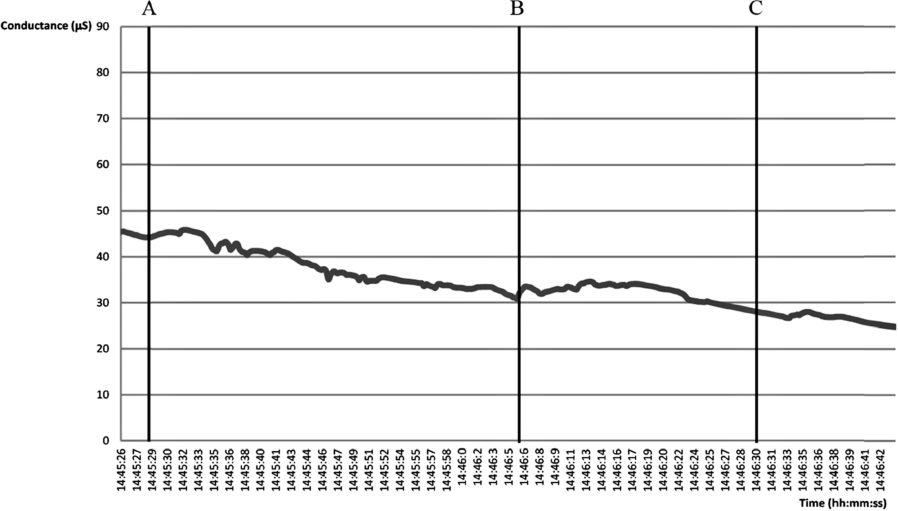
Test 1 Negative Situation 1: Cleaning child’s face. A: The mother starts cleaning the child’s face. B: The mother has finished cleaning the child’s face.
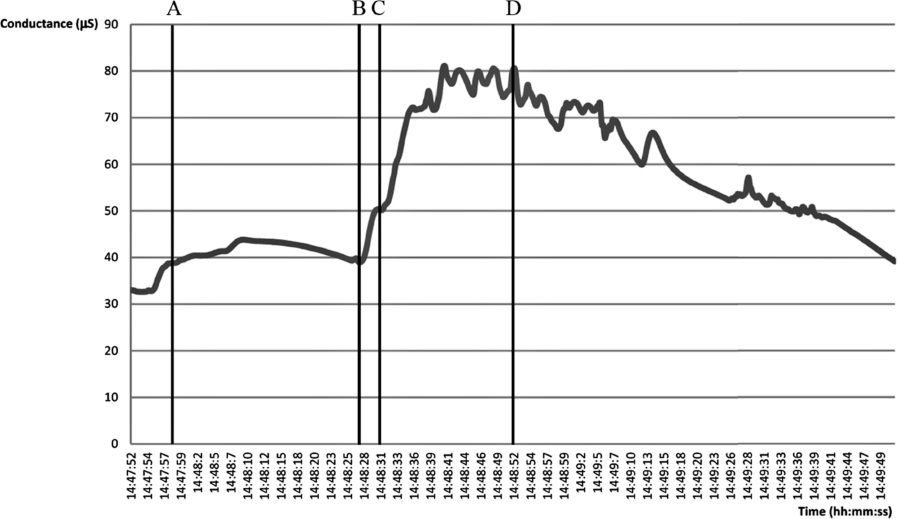
Test 1 Negative Situation 2: Cleaning child’s face. A: The mother starts cleaning the child’s face. B: The child starts crying. C: The mother has finished cleaning the child’s face.
The combination of the first two “unhappy” situations (Figs 8 and 9) provided interesting results. During both sessions the same stimulus was provided to the child by the mother, cleaning the hands and face. If we look at Fig. 8 (situation 1) we see a steady increase in GSR amplitude response. However, if we look at the second situation (Fig. 9) we see a steady decrease in measured GSR amplitude. The assumption is made that the child got more aroused during the first situation, but remembered the activity during the second situation. Therefore reacting not so strong to the second confrontation. Research from Aslin, Saffran and Newport (1998) [4] and Rovee-Collier (1999) [31] indicate this quick learning is possible at the age of 8 months. This is further backed up by the decrease of the child’s protesting sounds and the slowly decreasing general measured amplitude of the GSR.
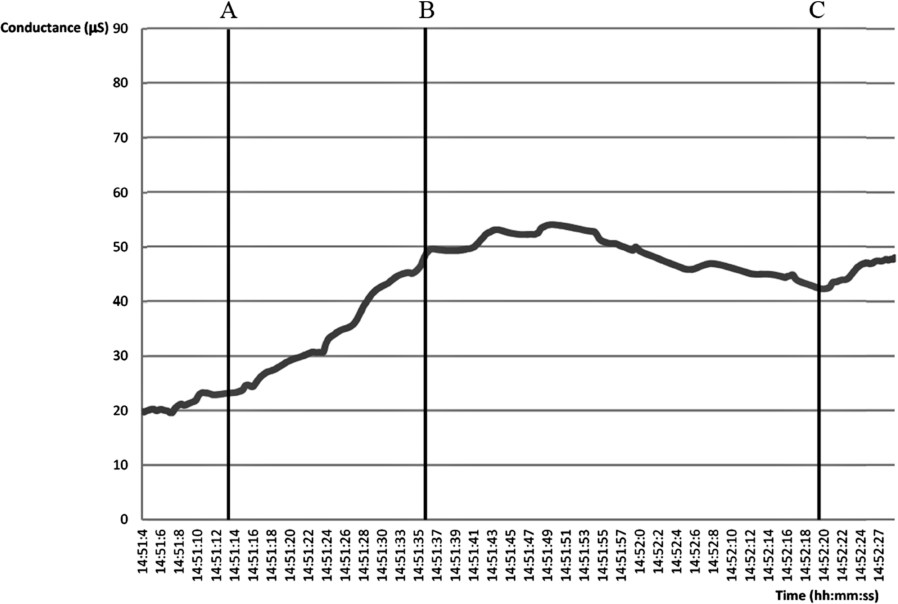
Test 1 Negative Situation 3: Using nose spray. A: The mother places the child on her lap. B: The mother applies the nose spray to one nostril. C: The child starts crying. D: The mother applies the nose spray to the other nostril.
Test 1 Positive Situation 1: Play with cuddling toy. A: The mother selects a toy. B: The mother lets the toys climb up the child’s arm. C: The mother finishes playing.
For the positive situations four tests were conducted. The readings of the second (Fig. 12) and fourth (Fig. 14) positive measurements are similar to the ones of the third negative measurement (Fig. 10). The graph-plots all show a strong increase in amplitude at the moment of stimulus. This suggests that the GSR sensor cannot differentiate between positive and negative emotional arousal. However, the results show that the sensor is able to inform parents about the amount of arousal that is experienced by the child. This observation is supported by the measurements of the third positive situation (Fig. 13). In this situation the child stared at the parent and did not coo, while in other situations she cooed or laughed. This situation resulted in a relative flat graph in comparison to the other positive situation graphs.
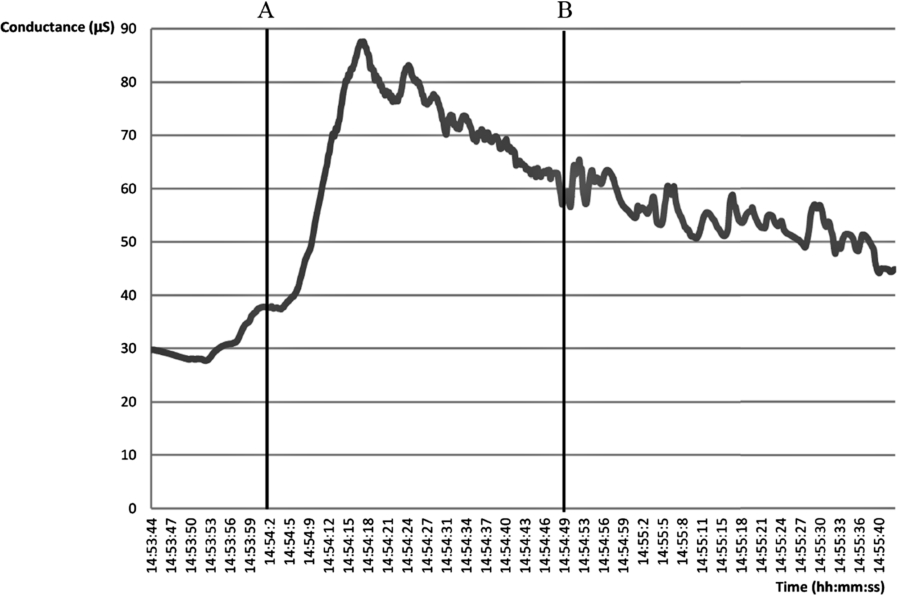
Test 1 Positive Situation 2: Singing a song. A: The mother starts singing. B: The mother repeats the song.
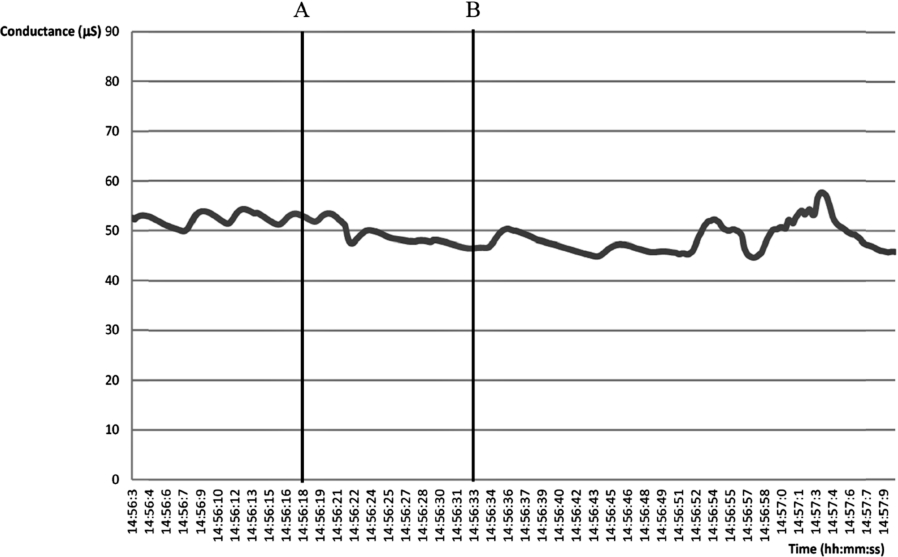
Test 1 Positive Situation 3: The mother makes the toy hop towards the child. A: The toy is in front of the child and the mother makes a ‘boo’ sound. B: The toy is in front of the child and the mother makes a ‘boo’ sound.
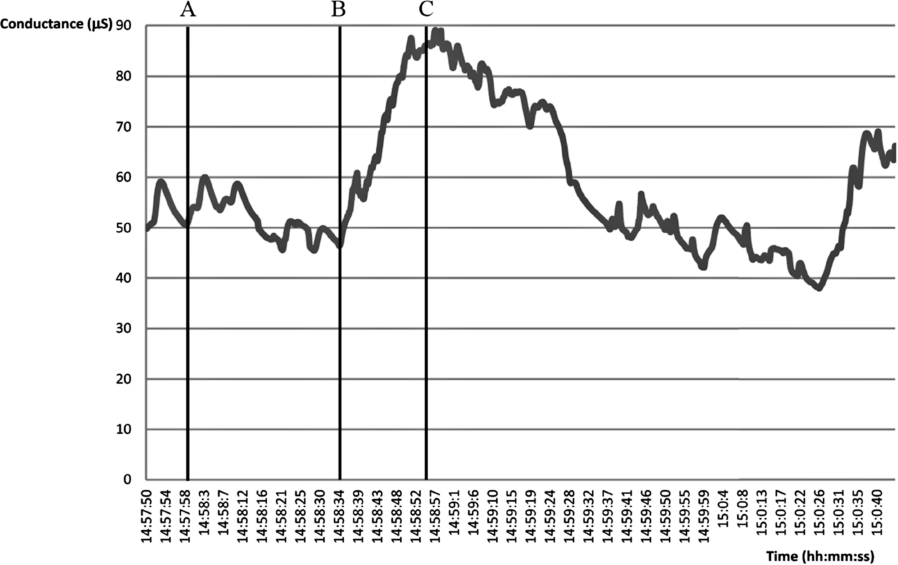
Test 1 Positive Situation 4: Lift the child in the air. A: The mother lifts the child above her head. B: The mother ‘throws’ the child a little distance in the air. C: The mother ‘throws’ the child a little distance in the air.
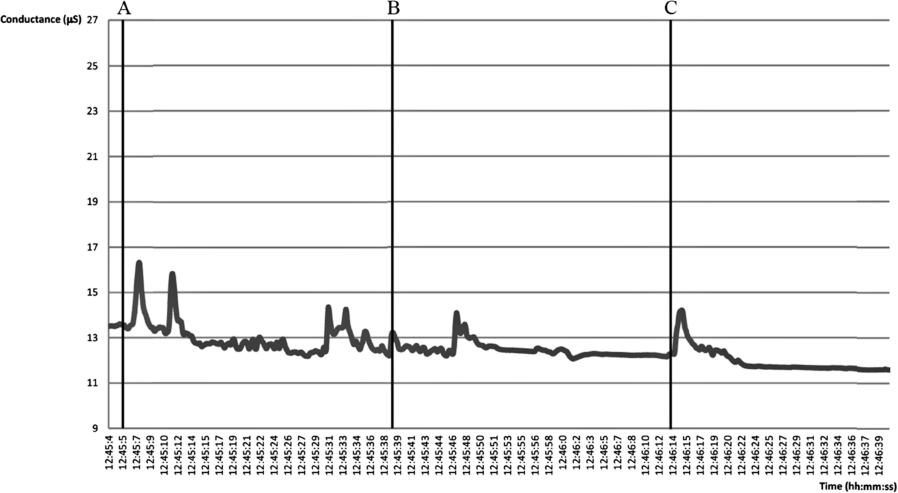
Test 2 Negative Situation 1: The child falls and is comforted by his mother. A: The child falls. B: The mother starts distracting the child with story reading. C: The child is involved in the story.
Test 2
The second test differed from the first test based on the fact that the participant was a 30 months old boy and was therefore able to walk around. Three measurements of at least 5 minutes were executed wherein both positive and negative emotions were elicited by his mother. The results are therefore also analyzed in a different manner: two positive situations and two negative situations of about 1 minute are selected from all the gathered data. The situations are selected based on the researcher’s notes describing the time, the child’s behavioral signals and the events of the experiment. The graph of the GSR signal corresponding to the time of an event was separated from the graph of the GSR signal from one session of about 5 minutes. One negative situation occurred due to the child falling unintentionally, this was not a part of the original protocol. The second negative situation was elicited by means of the mother consciously ignoring the child’s behavioral signals. The positive situations were elicited by mother and child playing together.
For the negative moments, many small peaks were observed in the GSR with a width of 1 to 3 seconds (Figs 15 and 16). When the child is comforted, the width of the peaks increases to 4–15 seconds. However, many small peaks can also be discovered for one of the positive situations (Fig. 17). This supports the suggestion from test 1 that the GSR sensor cannot differentiate between positive and negative emotional states. The peaks that were caused by “unhappiness”, were in general not higher than peaks for the “happy” situations. However, for the second positive situation (Fig. 18) the peaks are higher than for the first positive situation. This increased amplitude was believed to be caused by the child’s sister joining the play. This supports the suggestion from test 1 that the GSR sensor can provide information about the amount of arousal that is experienced by the child. Figure 17 also shows small amplitude peaks believed to be caused by reading the next page in the book or by pointing out figures appearing on the page. This creates the suggestion that the GSR sensor can provide information about the child’s reaction to the parent’s action.
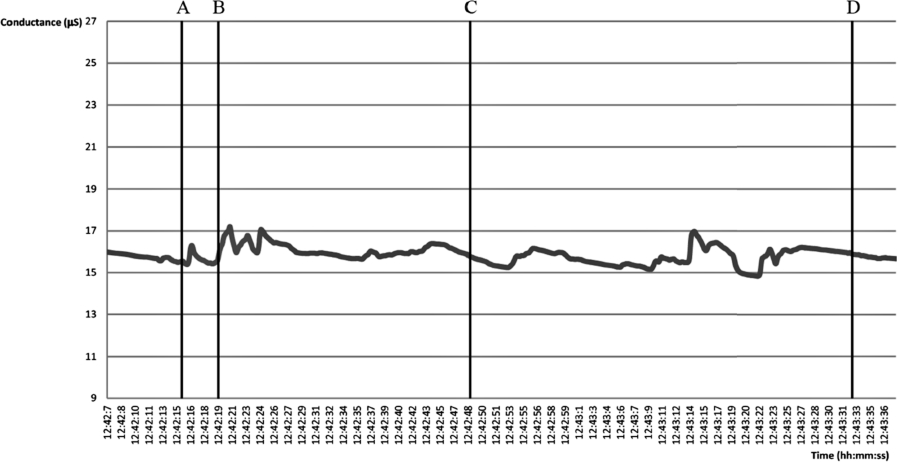
Test 2 Negative Situation 2: The mother consciously ignores the child’s signals. A: Mother consciously ignore a sign from her child. B: Child starts crying. C: Mother comforts child. D: Child is involved in the play.
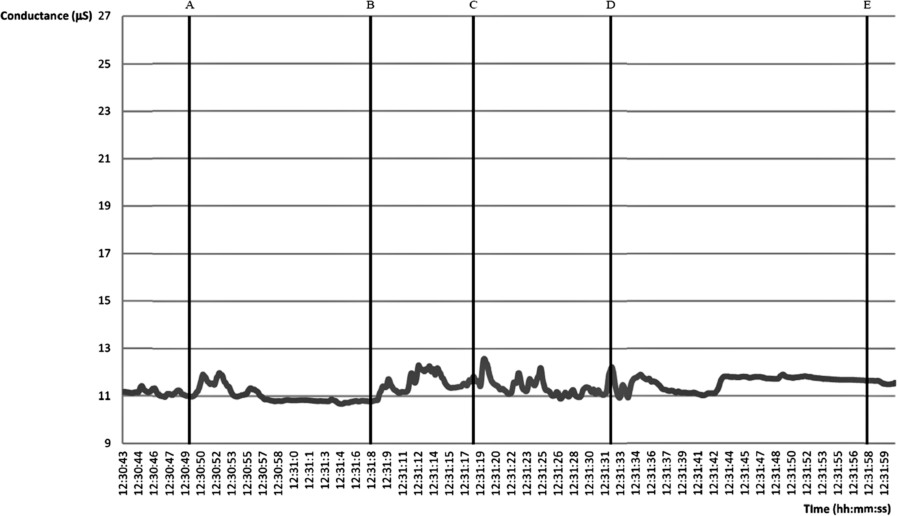
Test 2 Positive Situation 1: The mother reads a story about a cat to the child. A: Mother: ‘Look, a cat!’. B: Mother: ‘The cat is running away’. C: Mother: ‘Ah, the cat is sad’. D: The child points out a fire engine. E: The story ends.
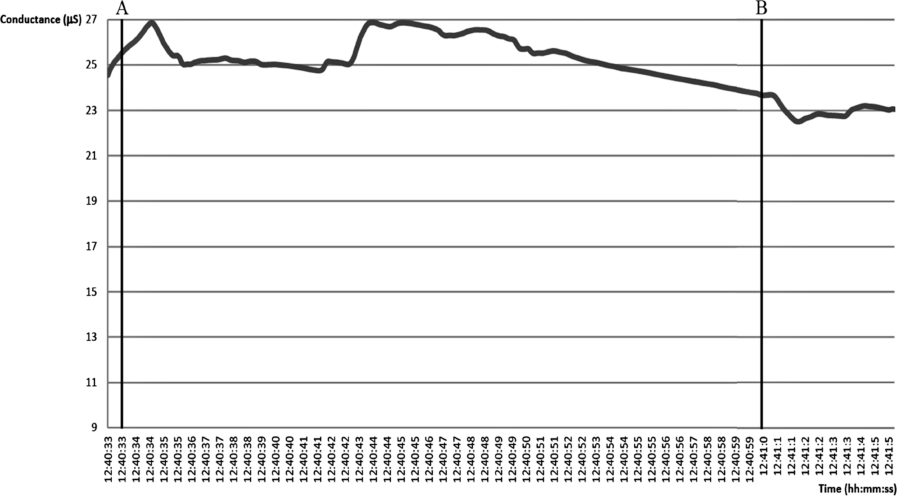
Test 2 Positive Situation 2: Mother, sister and child are all playing together. A: The child, his sister and his mother are playing together. B: The child asks his sister to brush the doll’s hair.
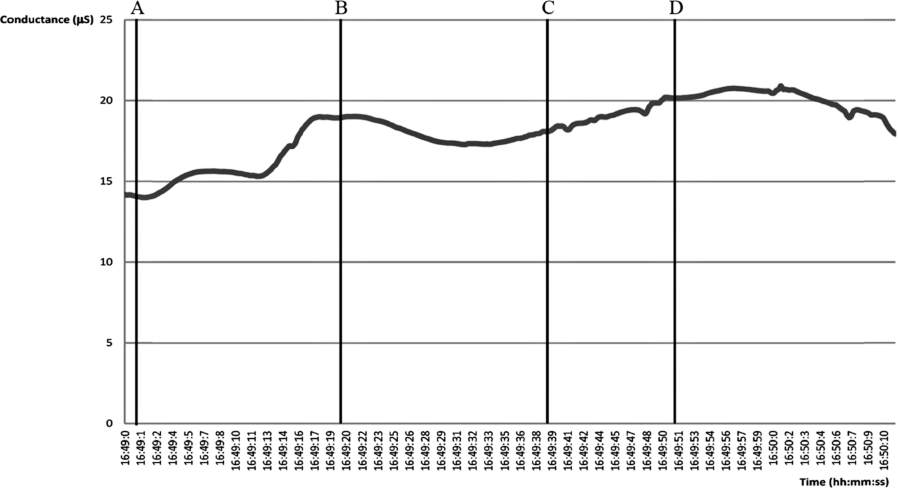
Test 3 Negative Situation 1:Child receives warning from mother. A: Mother gives child a warning. B: Silence. C: The child points out the sensor is annoying. D: The child starts crying.
Test 3
The third test was similar to the second test, due to the child being of the same age and being as active as the second child, but being of different gender. The same method for analyzing the results was applied for this test. The negative situations were caused by the child’s annoyance of the attachment of the sensor and by receiving a warning for bad behavior by her mother. The positive situations occurred due to the mother and child playing together.
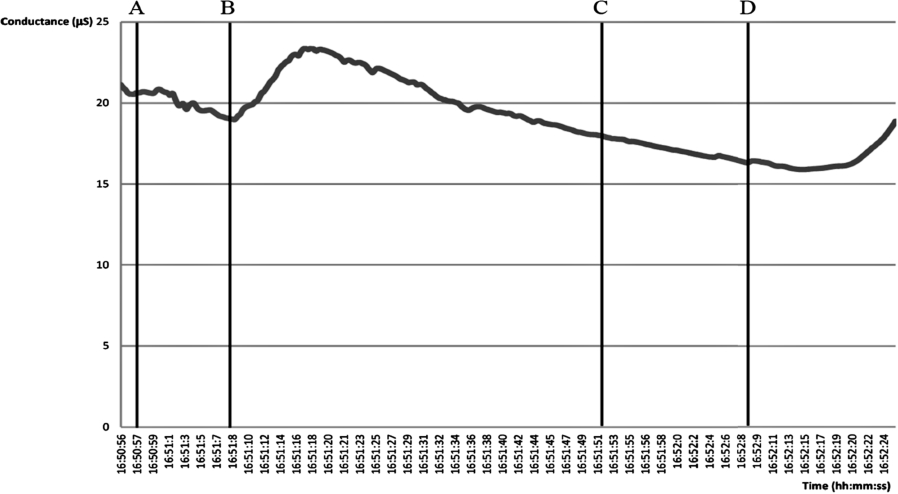
Test 3 Negative Situation 2: Child is annoyed by the sensor. A: The child points out the sensor is annoying. B: The child is distracted by mother. C: The child waves at her mother. D: The child receives a warning.
The amount of small amplitude peaks occurring in the graphs are quite similar for the positive and negative situations. This supports the founding of the previous two tests that the kind of emotion cannot be indicated by the sensor. Also the height of the peaks for both positive and negative situations are similar. However, for both the negative (Figs 19 and 20) and positive situations (Figs 21 and 22) the graphs show an increasing trend. Assumed is that this is caused by the increase and decrease of experienced happiness by the child. This assumption is supported by the change in the child’s behavior from silence to starting to cry or from small laughs to cheers and applauding. This would support the suggestion from the previous tests that the sensor can provide information about the amount of arousal experienced by the child. The results for the positive situations also show that the occurrence of peaks in the signal is related to the activities from parent and child. In playing a game a low amplitude peak occurred every time the child or the parent discovered whether the card was the right or the wrong one. This supports the assumption from the previous test that the galvanic skin response sensor can provide information about the child’s reaction to the parent’s action.

Test 3 Positive Situation 1: Mother and child play the game “Lotto”. A: The child has found a card. B: The child applauds. C: The child asks to play again.
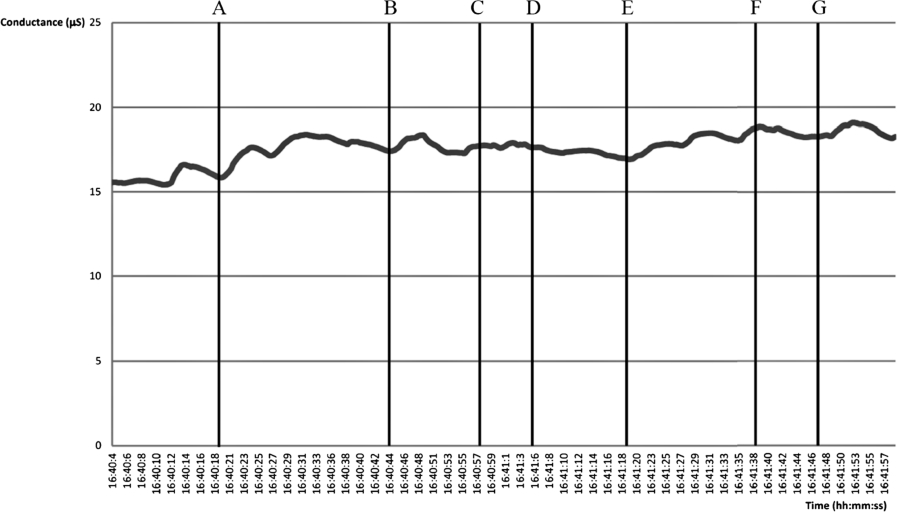
Test 3 Positive Situation 2: Mother and child play the game “Lotto”. A: The child talks about her favourite drink. B: The child asks to play again. C: The child has found the right card. D: The child has found the right card. E: The child is searching for a right card. F: The child has found the right card.
The tests show that the GSR sensor is suitable for the requirements the sensor should fulfill, namely measuring the child’s arousal level. However, these tests did not reveal whether the designed system was in accordance with the needs from parents. Therefore the tests were expanded with an evaluation. In the evaluation the same parents as during the GSR validation test participated in an individual evaluation interview requesting their opinion of the butterfly actuator system. The evaluation resulted in information about the most suitable moments to use the system: during feeding time, when the parents are sleeping and during playtime. Parents indicated they missed the function of being alerted when the child is out of sight and requires attention. Parents advised to add sound to the product to trigger their attention. However, parents were positive about supporting the social interaction. All parents indicated that they expect the system to stimulate the interaction between parent and child. One parent who experienced difficulties in recognizing the child’s reaction was impressed that the system indicated the amount of arousal the child experienced. Two parents who were aware of bonding due to their professions expected the system to stimulate the bonding between parent and child.
Discussion
The GSR sensor
The tests with the GSR sensor and the evaluation of the system show positive results for the context. However, both the GSR tests and the evaluations were conducted with only three children and their parents, which is a too small group to draw general conclusions. The authors believe, however, that due to the small amount of children being born with PWS every contribution is vital for further development of GSR sensor systems. Another factor that complicated the tests was that the connection to the sensor and to the laptop computer was through wires, which limited the freedom to move and play for the older children who participated in the tests. For future research it is important to use wireless sensors so the child can behave as he or she would normally do.
Analyzing the results
The results are analyzed by the researchers and are not analyzed by or discussed with an expert in GSR signals. Resulting in a focus on the amplitude of the peaks in the analysis. For future studies an expert should be involved in analyzing the data to be able to retrieve more information from the data.
Child’s age
Two children who participated in the test were above two years of age. Tests with these children provided valuable insights on the emotional changes and interaction with parents. However, research indicates the most severe communication problems occur when the child is younger than 6 months. No children under six months participated in the tests, simply because no participants of this age were available to the researchers during the project. This is due to the very low birthrate of children born with PWS. In future studies, more tests on children with PWS between the age of 0–2 should be carried out.
Parents
During the tests all parents that participated were mothers. Future tests should also incorporate experiences and opinions from fathers (and other caregivers) to create a system that fulfills a larger variety of needs.
Despite these points of discussion, the authors believe the tests revealed that an intelligent system using biofeedback could support the interaction between parents and their children with PWS. Moreover, the system could also be beneficial for parents and children with other disabilities that cause communication problems. Expanding the target group offers an opportunity for extensive research to the system and the influence it has on the interaction and bonding process between parent and child.
Conclusion
Sense aims at stimulating the interaction between parents and their child with Prader-Willi syndrome. The sensor for the system was required to provide information about the child’s arousal and the child’s reaction to the parent. Tests revealed that although the Galvanic Skin Response sensor used for Sense, could not distinguish happiness from being unhappy, the amount of arousal and the child’s reaction to the parent is measurable. An evaluation with parents indicated that Sense most likely will support the interaction and bonding process between parents and their child.
Footnotes
Acknowledgements
The authors would like to thank the parents and their children who participated in the study. M. Bremmer for her valuable feedback and her expertise regarding the Prader-Willi syndrome. The authors also would like to thank prof. L. Feijs for his information on biofeedback systems and sensors.