



Abstract
Indoor air quality (IAQ) is a critical challenge much less controlled in comparison with outdoor air quality. Bad IAQ is related to significant health complications such as respiratory problems, heart disease, and cancer. Many people spend most of their days inside buildings and don’t have air quality monitoring systems. Therefore, the occupants don’t know when the space has a higher quantity of pollutants than recommended, saturating the environment, and compromising people’s health. This is a problem that can be addressed by using Internet of Things (IoT) technologies to develop monitoring systems that allow a greater number of possibilities regarding the storage and processing of data and access to information by the end user, assisting the decision-making process regarding the indoor air pollution problem. Real-time data can be compared to default values, alerting the user of that situation, and suggesting an action to decrease the air pollutants concentration. There already are multiple solutions involving IoT-based technologies, many of them using low-cost sensors. Those are analyzed in this systematic review. Furthermore, the COVID-19 pandemic pointed out the importance of IAQ monitoring to evaluate the risk of contamination. The microcontrollers, IAQ parameters, sensors, data storage and visualization methods used in monitoring systems have been analyzed. The results show that most of the studies store data in Cloud systems and use Web platforms for data consulting. However, sensor calibration and efficient energy consumption are challenges that still exist.
Keywords
Introduction
Bad indoor air quality (IAQ) or indoor air pollution (IAP), is a growing concern all over the globe, particularly in densely populated cities [62]. As people spend a lot of their time indoors it is critical to keep the air as clean and pollution-free as possible [42]. IAP can lead to health-related issues, and it can bring discomfort and frustration to the people inside the building [58]. IAQ is highly correlated with critical health issues in the long-term such as respiratory problems, heart disease and cancer [1,30,33,46,57]. These problems are critical since they are related to a high and relevant decrease in life quality, but they also can be fatal. All people are affected by IAQ, however, there are populations such as children and older adults who are disproportionately impacted by this problem [22,52,67].
Several methods are available to improve IAQ [19]. These include the use of air purification methods, natural or mechanical ventilation, the use of biological systems and improving buildings’ isolation [5,32]. However, IAQ monitoring is always needed to enable the occupants to evaluate their own indoor space and perceive the size of the problem [48]. Moreover, to improve IAQ it is necessary to provide information to people about the current status, so they can act when needed [58]. Therefore, it is required to collect data, process it, and present the same to indoor occupants. For this procedure, it is necessary to create a device that can monitor IAQ values [49]. Internet of Things (IoT) and Wireless Sensor Networks (WSN) can help to provide connectivity among other benefits for air quality monitoring systems. IoT applications have been growing exponentially and IoT-based architectures are being promoted in the development of smart cities [59]. Therefore, it became relevant to focus this review on IAQ monitoring systems that use IoT technology and their potential for real-time data collecting [55]. It is relevant to mentation that monitoring devices do not improve IAQ, because this equipment only supports monitoring features, however, potential IAQ enhancements are supplied from corrective actions.
An IAQ monitoring system included two main parts: hardware and software [66]. The hardware can be expensive; however, the device must be affordable so it can be a solution to improve the IAQ of regular citizens. It is crucial that the device is affordable and has low energy consumption, so it can be sustainable too. Regarding software, several open-source projects for IoT operating systems are available [45]. Numerous reference instrument sensors that are developed using proprietary technologies are available for IAQ monitoring at a high cost. On the other hand, low-cost systems are instruments that can at least provide qualitative information about the environment at a fraction of the price. These sensors can be applied in different scenarios where reference instruments cannot be implemented due to their high cost.
The usual architecture for an IAQ monitoring system based on IoT is mainly divided into five parts: sensors, communication, data storage, data analysis, and data visualization. The data collected by the sensors is sent to a data storage system, it can be online or physical. As soon as the data is stored the analytics services can begin to analyze it and compare the concentration of harmful gases and particles inside the building with the environmental guidelines defined for safe and healthy indoor spaces to have a proper evaluation of their IAQ. The information is shown to the end-user through a visualization system. Nevertheless, not only gases and particles but also biological pollutants are among the leading indoor air pollutants [38]. Therefore, supervising biological pollutants using low-cost systems is particularly critical when considering specific spaces such as hospitals and elderly centres [4,16,17,54]. Since particulate matter and carbon dioxide can be used as effective predictors, IAQ monitoring can also be used as a qualitative indicator of biological pollutants [61].
IAQ monitoring systems are closely linked to the main principles involved in the conception of ambient intelligence and the design of smart environments [10,60]. On the one hand, ambient intelligence supports the development of an environment where automated technology and sensors increase life quality by creating improved interactions between occupants and their living space[20,26]. On the other hand, smart environments require optimal ambient conditions where IAQ is critical for people’s health and life quality, particularly important for children and the elderly[9,18]. This paper provides an analysis of the evolution of the published works and assesses the geographical location of the authors involved in the studies. The testing place, microcontrollers, monitored IAQ parameters and sensors used are also included in this work. The data storage and visualization methods are also evaluated. Furthermore, this review also analyses the communication technologies used in this kind of system. Since multiple technologies are available it is necessary to understand their advantages/disadvantages to develop more efficient and effective monitoring systems. Different research studies have reviewed IAQ monitoring systems [50,51]. However, systematic reviews need to be updated with time, since the critical impact of the COVID-19 pandemic between the start of 2020 and the end of 2021. Furthermore, the COVID-19 pandemic pointed out the importance of IAQ to evaluate the risk of contamination resulting from aerosol virus transmission [13]. Consequently, this systematic review paper offers insight into the current state of the art of low-cost IoT-based IAQ monitoring devices, developed between 2018 and 2021.
This paper is divided into five sections. This paragraph finishes the introduction, Section 2 presents the materials and methods used to conduct this review study, Section 3 presents results, Section 4 describes the discussion and Section 5 presents the main conclusions of this work.
Materials and methods
The PRISMA method has been followed for creating this systematic review [65]. This method includes the definition of research questions to be answered, the creation of a search query that needs to be applied in different databases and the inclusion and exclusion criteria used in the paper selection process.
Research questions
The research questions are presented in Table 1. By answering RQ1, we were able to analyze the different solutions proposed in the selected papers and assess the testing places used. RQ2 and RQ3 provide insight into the technologies used in the monitoring systems developed by the researchers, and which ones are more used. Finally, by answering RQ4, we were able to obtain information about the data storage and visualization methods of the systems that are already being used or tested.
Research questions
Research questions
Several research databases have been screened. The research query used is the following: “(indoor air quality) AND (internet of things OR IoT) AND (monitoring systems)”. These keywords have been selected since they cover the main topics of this review. Since the main objective is to review the use of monitoring systems for IAQ we have used these keywords in the query. Moreover, the authors want to focus on IoT technologies, therefore, these keywords are also used.
The results of the searches were mostly from IEEE with 96 papers, being 69% of the total results; from PUBMED were obtained 28 articles, 20% of the total; ScienceDirect provided 10 papers that fitted the queries, making 7% of the total; finally, searching in ACM database resulted in just 5 articles, making 4% of the total. Figure 1 shows the distribution of articles per database.
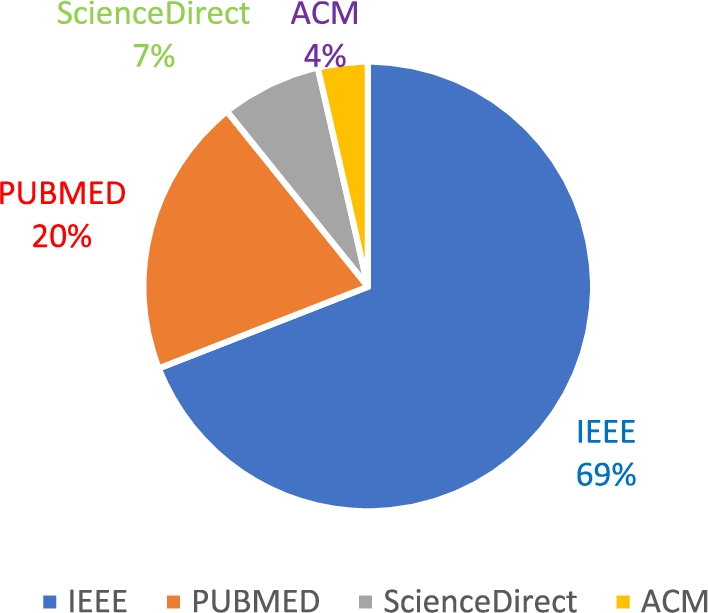
Distribution of articles per database.
With the queries applied to the databases mentioned above, it was obtained 139 articles, published between January 2018 and December 2021. Of these articles only one was duplicated and, for that reason, it was excluded. Five of the 139 were also excluded for being reviews and not research results. Of these 133 articles, 103 were removed since the title and abstract do focus on IoT and IAQ. Therefore, only 30 articles have proceeded for full reading. From these, the studies which weren’t explicit about the architecture of the proposed monitoring system were removed. In total, 4 articles were also excluded for being a very specific application and the results cannot be generalized to the main scope of this review. Consequently, 26 articles remained, however, 9 of them didn’t use low-cost devices or didn’t mention relevant information about the architecture used, and for that reason were removed. At the end of the process, 17 articles remained for analysis. Those will be the ones evaluated in this review. The exclusion criteria are presented in Table 2 and the PRISMA flow diagram is presented in Fig. 2.
Exclusion criteria
Exclusion criteria
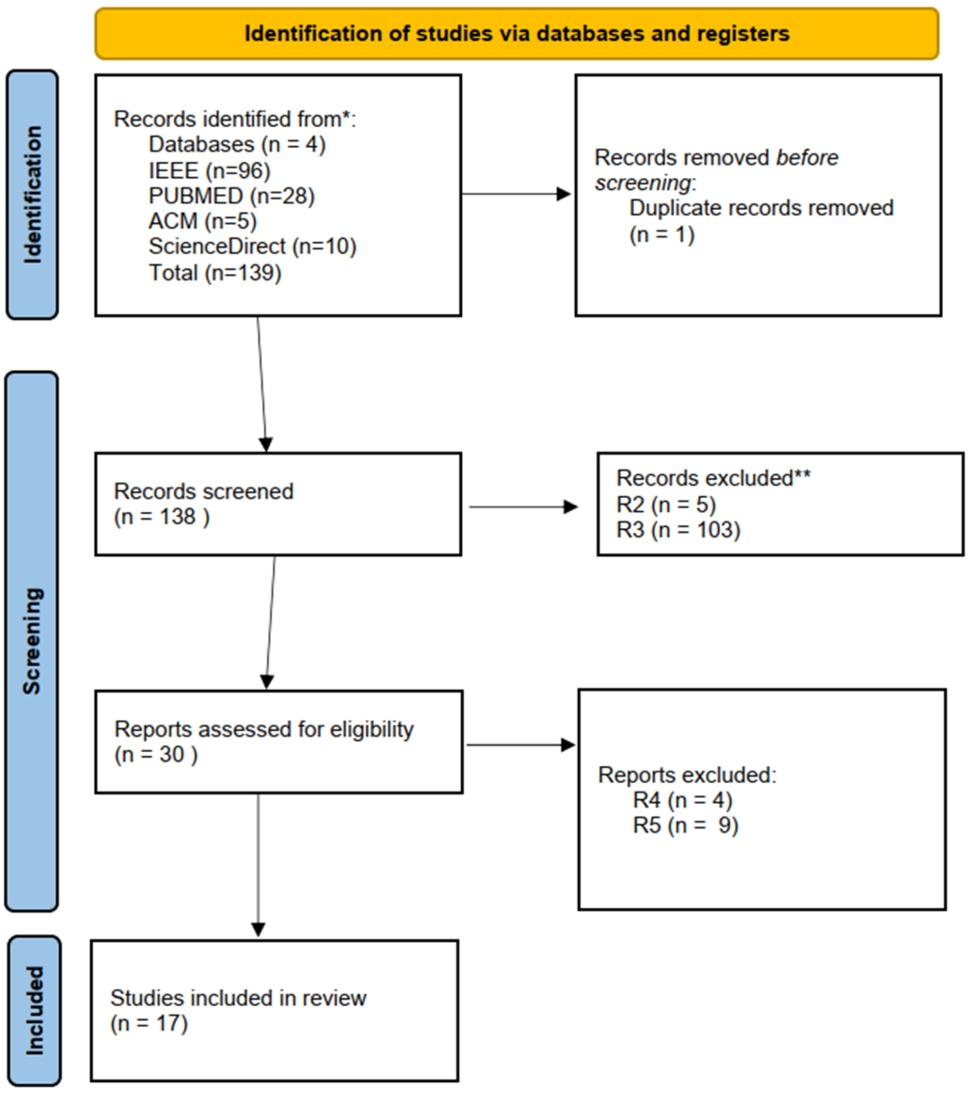
PRISMA flow diagram.
Considering the COVID-19 pandemic scenario, it was expected to increase attention to this kind of solution, aiming to evaluate the IAQ conditions and assess the risk of virus propagation [2,6,44]. However, the concern about IAP has been growing in the last few years, not only because of the COVID-19 pandemic but also because people are finding out that some indoor environments that were thought to not be harmful to human healthcare are of poor air quality. To supervise IAQ researchers have been creating devices that can monitor IAP and have been proposing solutions to enhance IAQ. Six (∼35% of the total) of the selected studies were conducted in 2021; 2020 and 2019 were reported five (∼30% of the total) studies each year; lastly, it was obtained one (∼6% of the total) study from 2018. Figure 3 shows the graphical distribution of the articles per year.
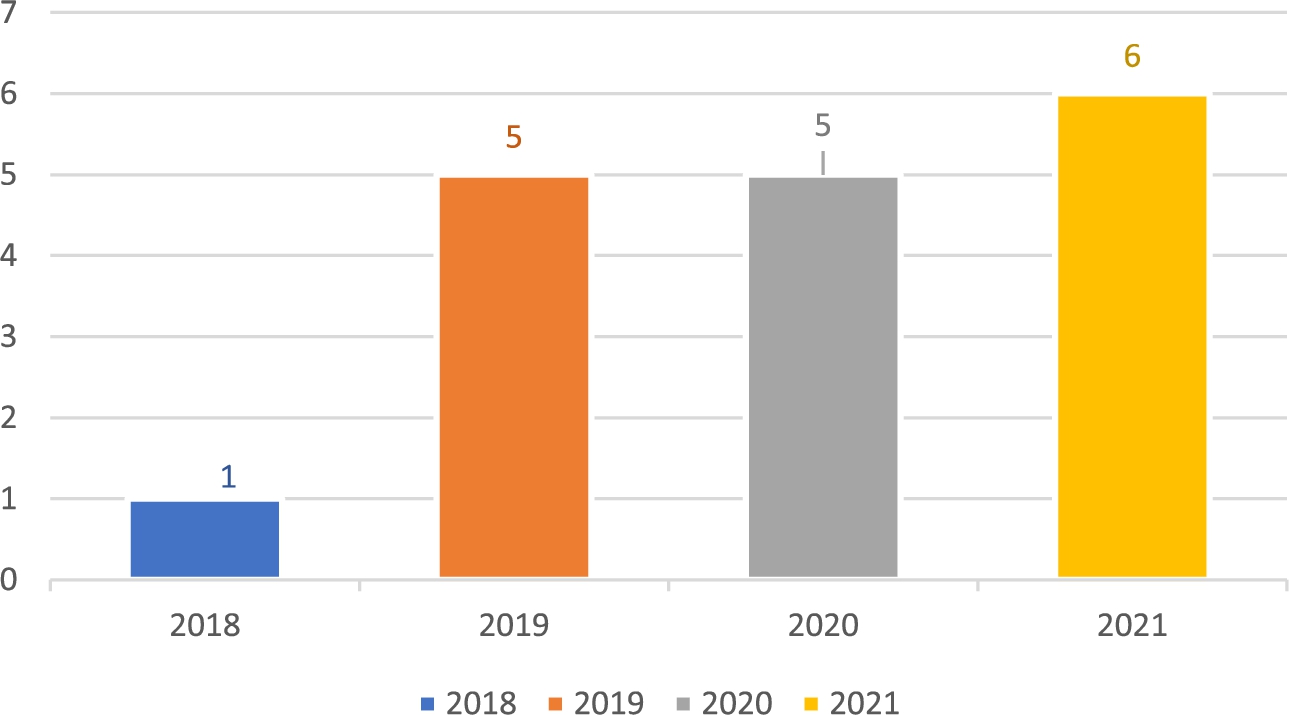
Year distribution.
This systematic review includes 17 papers from different parts of the globe. The majority were conducted by Asian researchers (51.8%), in total 29 authors. Eight of the authors of the systems described in the selected articles were developed by Indonesians (14.3%), being the nationality with more contributors; seven authors (12.5%) had Indian nationality; China and the United Kingdome had six researchers (10.7%) each; five authors (8.9%) were from Malta; Hungary had four researchers (7.1%) exploring this theme; Philippines, Taiwan, North Macedonia, Germany, and Portugal each had three authors (5.3%); Two researchers (3.6%) were from Algeria, and Brazil had one author (1.8%) exploring the theme. Figure 4 shows the distribution of authors from all around the globe.
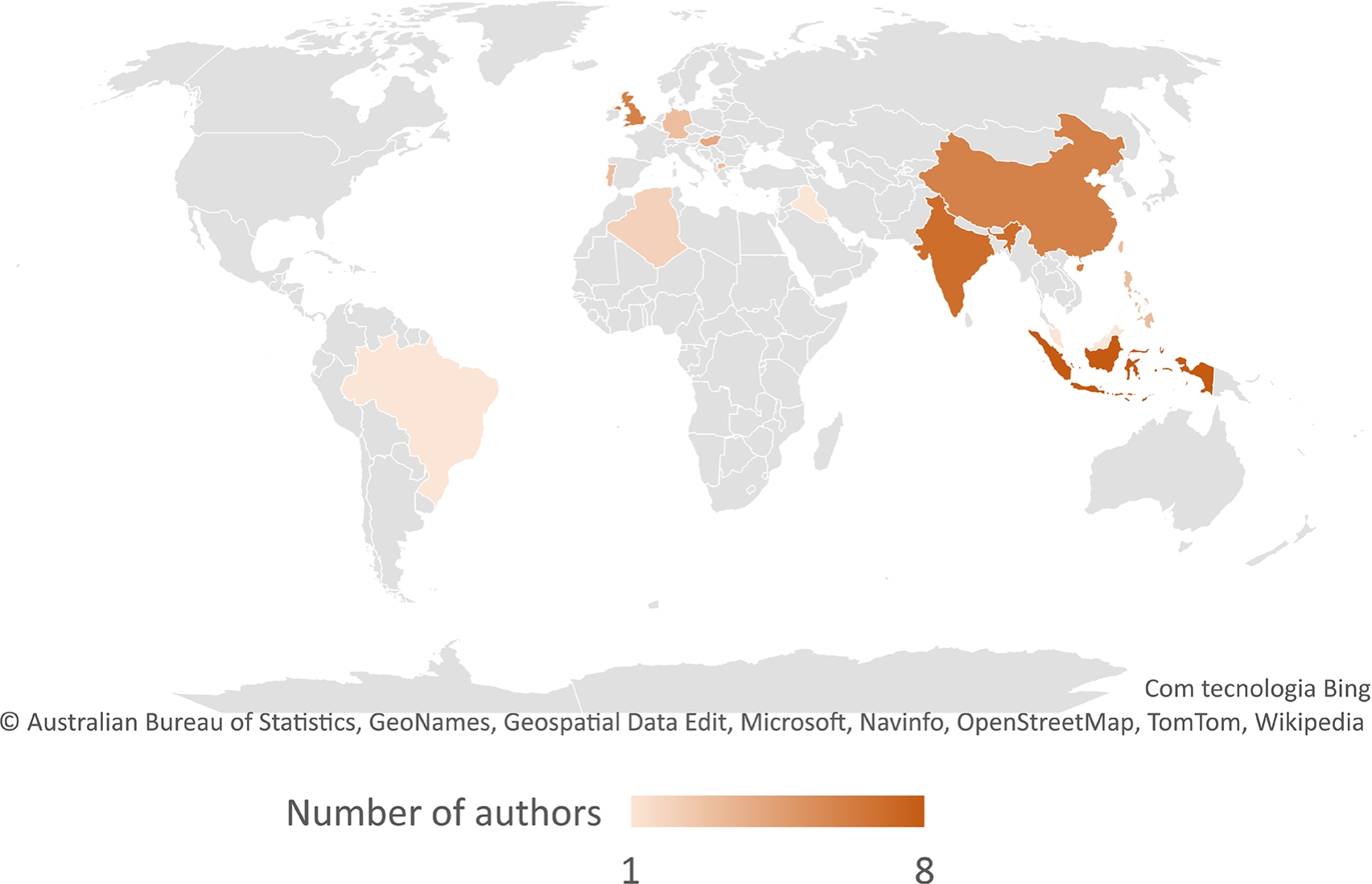
Geographical distribution of authors.
Most selected papers are from the IEEE Explore database, selected sixteen articles of the total seventeen, making 94.1% of this review. The other article is from the PUBMED database (5.9%). However, none of the papers from ACM and ScienceDirect databases was found relevant to this systematic review. Table 3 shows the year distributions of the selected studies from the different databases.
From the analysis of the selected studies, it was clear that not many presented an actual solution to supervise IAQ. Some articles pointed out some of the most common causes of IAP [28]. The most used solution is opening a window and enforcing airflow, renewing the air inside, and reducing IAP. In some places because of outside pollution, opening a window is even worse for IAQ [34,56], in these cases the best option is to have indoor ventilation with a filtration system [43]. Given NASA’s clean air study claiming that plants can filter indoor air thus improving the IAQ, some authors propose the use of plants to decrease IAP [3,28]. In an attempt to improve indoor plant air filters Mapili et al.[36] applied IoT technologies and the Kalman filter, the results were promising. Some authors propose several actions that can be used to control indoor pollution [3].
Year distribution of articles per database
The selected papers tested their IAQ monitoring devices in different locations. Most of the articles were tested inside universities [3,39,72], laboratories [14,25,37], or inside kitchens [14,34,69]. Two articles chose to test their devices in a controlled environment but with different variables [28,47]. Moreover, different indoor environments have been used to conduct the tests of the developed systems that range from bedrooms or dormitories to bathrooms that are associated with different kinds of activities. The validation of IAQ monitoring systems in a great variety of spaces where different activities are conducted turn possible to verify the impact on our daily life. However, most indoor environments do not monitor IAQ and only specific places such as laboratories that work with dangerous chemicals have air quality monitoring. Table 4 presents a summary of the testing places where the systems have been validated.
Places where the studies tested their devices
After reading the articles it was clear how much different technologies can be used to monitor IAQ. Different microcontrollers have been used to develop a device that can gather air quality data. The ESP826 provides built-in Wi-Fi technology and therefore it is used by 29.4% (N = 5) of the analyzed works. On the other hand, the Arduino UNO is used by 17.6% of the studies. Moreover, different platforms such as BeagleBone [24,25] and STM32F103C8T6 [34,72] have been used in two studies. Table 5 presents the microcontrollers used in the selected studies. It is relevant to mention that the study proposed by [39] doesn’t mention the microcontroller used.
Microcontrollers used in the analyzed papers
Table 6 provides information about the use of communication technologies in the selected papers. Most of the studies use Wi-Fi (76.5%) as a communication technology, followed by BLE (11.76%). Three articles [24,25,72] use more than one communication technology.
Different communication technologies
Not every study considered the same IAQ parameters, Table 7 is shown what were the preferred parameters of the different articles. Although carbon dioxide (CO2) was the most monitored substance (76.47%), it wasn’t selected by all researchers. The second most preferred parameter to monitor was particulate matter, being monitored in twelve of the total seventeen selected studies (70.59%). Most researchers (58.82%) assumed that if it would be monitored IAQ it could also be monitored temperature and humidity levels, to improve occupants’ comfort.
Preferred IAQ parameters
The sensors used by each group of researchers are different, as can be seen in Table 8. The most used sensor is MQ-135, a multi-gas sensor, present in five studies (29.41%). To measure particulate matter, the most common sensor was PMS5003, being used in four different devices (23.53%). The Sharp GP2Y1010AU0F dust sensor and the carbon monoxide (CO) sensor MQ-7 were both used in three articles (17.65%). Only two studies (11.76%) utilized an all-in-one sensor board [24,25]. DHT11 and DHT22 are temperature and humidity sensors, both were used twice in the list of selected studies. The study proposed by the authors of [39] does not mention the sensors used.
Use of sensors
When analyzing the data storage software used by each article, it was found that only one (5.88%) of the seventeen selected articles didn’t mention where or how their device would store data [43]. Five studies (29.41%) weren’t specific about their data storage, only mentioning data would be saved on the cloud. The most used data storage software was a remote MYSQL database, being part of three IAQ systems (17.65%). Table 9 presents the preferred data storage software for the selected papers.
Data storage used in the selected studies
To present the collected and analyzed data to the end-user the most common method was a smartphone app and web portals corresponding to 41.17% each. Out of those seven, three (17.65%) used the IoT platform Blynk. Bolt, another IoT platform was used in one study. The remaining three articles that used mobile applications to show data to the user, utilized different technologies to develop their app. Moreover, seven studies preferred to show their data via a web browser. Others selected the desktop software as the preferred method to present their data to the user (23.53%). Table 10 shows the utilized methods to inform the user of the monitored IAQ.
Data presentation methods
Analyzing the seventeen selected articles showed that researchers have worked with a vast number of sensors. It also showed that different places require different IAQ parameters [29]. Although the preferred parameters were CO2 concentration and particulate matter, some studies included other parameters, such as CO or O3. Temperature, humidity, particulate matter and CO2 are used to measure the comfort index; however, several researchers add other sensors for evaluate specific conditions such as CO and O3. Furthermore, the most used sensors were multi-gas sensors, temperature and humidity sensors, and particulate matter sensors. However, two studies utilized all-in-one sensor boards to monitor IAQ. These two studies [24,25] presented devices that also collected data about luminosity and noise levels, besides the IAP, temperature and humidity have also been used to make the best use of their all-in-one sensor board and collect as much as possible data that can be used to plan actions and improve the environment for the room occupants [40].
To select the sensors to employ in a device there are crucial factors to consider, such as compatibility with the board, cost, and calibration requirements [11]. Although some sensors come calibrated from the factory, several others need calibration procedures before employment [6]. Moreover, machine learning technologies can be used to improve sensor accuracy by using traditional instrumentations as a reference for data collection [7]. It is also critical to check if the range of the selected sensor is compatible with the predicted values for the experiment, to ensure reliable results from the sensor [53]. One factor to have in mind when selecting a low-cost sensor is that the accuracy might be minimized [35]. To increase the accuracy of the measured values, Mapili et al.[36] implemented the Kalman Filter algorithm, leading to increasing the accuracy of the sensor by 27%. Choosing the best sensor for the monitoring device is extremely significant and will depend on the main objective of the installation [71]. The correct sensor selection can provide reliable data and help to improve the quality of the collected IAQ data that can be used as a reference to plan interventions and consequently improve the health of the people in the room.
The communication technologies used by the devices described in the selected articles were mostly Wi-Fi (76.5%), followed by Bluetooth Low Energy (BLE) which was used, along with Wi-Fi, in two studies (11.76%). Moreover, one study used ZigBee as its main communication technology. However, most of the monitoring devices proposed in the selected articles don’t use the most common module, the ESP8266. This module is only used by eight (47.06%) of the total seventeen works. Two studies use Arduino connectivity options: one uses ArduinoMKR1000, which already has a Wi-Fi module as part of its components; the other one uses Arduino Ethernet Shield, which allows an Arduino board to connect to the internet.
Almost all the systems proposed in the studies were tested under real-life conditions. Although all of the devices were tested successfully, they’re still in development as some systems have yet a lot to improve, as in the case of Muladi et al.[41], needing to change the batteries of the IAQ monitor device every three hours. One of the leading challenges in developing real-time monitoring devices is energy consumption [70]. This challenge can make a system unusable if it requires too much attention from the user. In the future, it will be possible to integrate Wi-Fi modules with renewable energy, such as solar or kinetic energy, creating environment-friendly devices [8]. ZigBee can solve the energy consumption problem of the connectivity layer as it is an energy-efficient communication technology and is affordable. However, there is also an energy consumption problem related to the sensing unit since the system may be strongly affected by the type of gas sensor used and other components. Furthermore, ZigBee has one big disadvantage, the range of communication [15]. Although it can offer coverage of 100 m, it’s still less than other technologies such as LoRa [68].
Since people spend most of their time indoors, it is imperative the development of low-cost, energy-efficient, and simple IAQ monitoring devices that can guarantee the occupants’ health. With poor ventilation and without monitoring IAQ people can face Sick Building Syndrome conditions [23]. Many of the daily activities people do, such as cooking or house cleaning products, are contributors to indoor air pollution, even outside factors can be influential to IAP, such as vehicular pollution [28,63].
As mobile technologies are becoming an essential part of human life, monitoring systems must interact with the end-user through mobile apps [27,64]. With the growth of IoT technologies, it becomes easy to use them to gather data, process it, and present it to the end user. As IoT platforms usually have simple methods to interact with their user, they are one of the best and easiest ways to show data [12]. Three studies [14,28,31] present their data using Blynk, an IoT platform, employing the use of gauges to simplify the user perception of the monitored IAQ. It is essential to create systems that can warn people of potential health threats so that building occupants can act and preventive measures.
Several limitations are identified in this review. Numerous authors are using non-calibrated sensors and do not focus on enhanced mechanisms for easy installation and scalability. Furthermore, the results suggest that it is difficult to find a standardized manner to combine the IAQ monitoring data collection process and the budlings’ ventilation systems. Finally, it is significant to mention that systematic reviews are not immune to problems related to methodological errors that can occur in different stages of the process and are prone to biases. In this case, the methodology has resulted in the selection of 17 publications, however, only 4 are published in journals. Nevertheless, the authors have described the research questions, search strategy and selection criteria. Therefore, we hope this study can support future research activities in this field by providing a summary of the state of the art.
Conclusions
The results show that Wi-Fi was the preferred communication technology, making up 76.5% of the communication technologies used in the studies. Most of the systems monitored CO2 as one of the parameters for IAQ. Furthermore, CO2 alongside temperature, humidity, and particulate matter, were the preferred parameters to analyze in the analyzed studies. Although testing of the designed devices was successful, some limitations were found. The main limitations are associated with energy consumption and sensor calibration. IAQ monitoring systems should not spend too much energy since they can be unusable in a real-life situation where a permanent power supply is not available. Moreover, a sensor wrongly calibrated cannot deliver trustful measurements, as the accuracy of the monitoring system is vital to data viability and directly affects the efficiency of the implemented measures for improving IAQ and the health of the occupants. Machine learning technologies are now used to enhance the accuracy of low-cost sensors by using traditional instrumentations as a reference for data collection and modelling the response of the sensor.
It is relevant to mention that low-cost monitoring systems do not directly improve IAQ, however this kind of systems can provide reliable data to plan interventions to create enhanced living environments. Future work in this domain will need to include novel strategies to improve the sensor accuracy but it is also critical to study what is the best method to suggest actions to the end-user to quickly improve IAQ.
Funding
This research received no external funding.
Conflict of interest
The authors declare no conflict of interest.