



Abstract
Background:
Adhesive resin composite, which is used to bond orthodontic bracket to tooth surface is exposed to the influence of wear by tooth brushing and wear may influence loosening of the bracket.
Objective:
The aim of this study was to evaluate in vitro the effect of tooth brushing on the adhesion strength of orthodontic brackets bonded to surface treated porcelain.
Method:
A total of 90 glazed porcelain fused to metal facets (PFM) were randomly assigned into 3 groups according to the surface treatment to be received. Group 1 was conditioned with hydrofluoric acid (HF), group 2 conditioned with grit-blasting (GB) and group 3 conditioned with tribochemical silica coating (RC). The groups were evaluated for surface roughness (
Results:
Tooth brushing decreased the bond strength in all groups. The highest adhesion strength (baseline and after brushing) was observed in group 3 (26.8 ± 1.77 MPa and 23.57 ± 1.02 MPa) and the lowest was found in group 1 (9.6 ± 1.5 MPa and 5.87 ± 0.77 MPa). Group 3 specimens exhibited the highest
Conclusion:
It was found that tooth brushing of the exposed adhesive resin composite at the bracket-bonding substrate interface lowers the bonding strength regardless of the surface treatment of the substrate.
Introduction
With growing number of adult patients seeking orthodontic treatment, the orthodontist is often confronted with the challenge of effectively bonding orthodontic brackets to a variety of dental restorations. In recent years dental ceramics are frequently being used as restorative material to fabricate veneers, crowns and bridges because of their aesthetic appearance, outstanding mechanical properties and biocompatibility [1]. These surfaces are relatively inert and do not adhere effortlessly to other materials without specific surface conditioning [2]. To overcome problems in bonding, combinations of mechanical and chemical surface conditioning procedures have been recommended [3,4]. The mechanical methods include surface conditioning by abrasive disks, diamond burs, grit blasting, green stones, tribochemical silica coating and laser irradiation [5–7]. The use of burs, green stones and grit blasting in roughening the surface are found to provoke crack initiation and chipping [8]. The drawbacks of lasers include damage of the dental materials used due to change in local temperature and insufficient bond strength [9]. In chemical methods, the porcelain surface is conditioned by etching with acids such as hydrofluoric acid (HF), orthophosphoric acid (H3PO4) or by application of silane coupling agent [5,7,10]. The adverse effect of HF on soft tissues and teeth limits its use in vivo [8]. The in vitro assessment of H3PO4 for surface conditioning has produced in adequate adhesion required for clinical use [11]. The surface conditioning by tribochemical silica coating involves blasting of the ceramic surfaces with aluminium oxide particles modified with silicon dioxide. A coat of fine silica particles remains on the surface thereby enhancing the chemo-mechanical bonding via silane application, which provides covalent bonding between luting resins and silica-coated surface [12].
It has been concluded that irreversible damage can occur by the orthodontic bonding to a ceramic surface [13]. So, a proper combination of surface conditioning techniques needs to be followed, because these restorations have to remain in the mouth even after the conclusion of the orthodontic treatment. Surface treatment procedures roughen the ceramic for the formation of acceptable micro-mechanical bonds between the ceramic and the luting resin. The roughening procedures may decrease the strength of the ceramic restoration by forming crack initiation surface flaws [14].
On the other hand, increased surface roughness was associated with higher bond strength [15]. On contrary, the roughened surface may demonstrate an increased rate of plaque accumulation in close areas of the bonding site [16].
Orthodontic brackets influence the accumulation of dental plaque and may increase the chance of enamel decalcification, caries and periodontal disease [17]. The bacterial level in the oral cavity may be significantly increased during the orthodontic treatment, so acceptable oral hygiene by effective tooth brushing plays a major role in such patients [17–19]. The bond strength of the bracket is likely to be affected by wear of the exposed adhesive resin composite which was used to bond the bracket, and by the friction generated during brushing [19]. In an earlier study it was reported that the bond strength of bonded orthodontic brackets was significantly high in samples brushed with manual tooth brushes than in samples brushed with sonic toothbrushes. The average shear force of 120.38 kg/cm2 was required to debond the bracket brushed with manual tooth brushes as compared to 77.76 kg/cm2 in samples brushed with sonic toothbrushes [20]. Most of the previous studies have studied the effect of tooth brushing on the bond strength of orthodontic brackets bonded to natural teeth [17,19–22]. There is limited or no information regarding the effect of tooth brushing on the bond strength of orthodontic brackets bonded to ceramic restorative materials.
Therefore, the purpose of this study was to investigate the influence of tooth brushing on the adhesion strength of orthodontic brackets bonded to ceramic surface which has been conditioned differently.
Method
Sample preparation
A total of 90 glazed porcelain fused to metal facets (PFM) (Duceram love DeguDent, Hanau, Germany) were prepared by duplication of the buccal surface of maxillary premolar according to the manufacturers’ instructions. Each PFM facet was individually embedded in auto polymerizing acrylic resin. The mounted specimens were randomly assigned into three study groups of 30 specimens according to the surface treatment to be received. The sample size calculation was in agreement with DIN 13990-2 ISO standards [23].
In group 1 (abbreviated HF) the porcelain facets were etched with 9.6% hydrofluoric acid (Pulpdent, Water Town, MA, USA) for 2 min, rinsed with water and dried with oil free air for 30 s. A single coat of silane coupling agent (Sil, 3M ESPE™, Seefeld, Germany) was applied with a fine disposable brush onto the etched surface and allowed to dwell for 30 s, followed by application of adhesive primer (Transbond™ XT, 3M Unitek, Monrovia, CA, USA). Standard premolar metal brackets (Lancer Orthodontics, Milano, Italy) with a mesh area of 11.4 mm2 were used for bonding. The resin composite (Transbond™ XT) was applied to the bracket base using a syringe tip. The bracket was then positioned in the centre and pressed firmly on to the porcelain surface. Excess resin was removed with a scaler and light-cured on each proximal surface for 20 s using a hand held light curing unit (Elipar Free Light 2, 3M ESPE, Seefeld, Germany) (Fig. 1a).
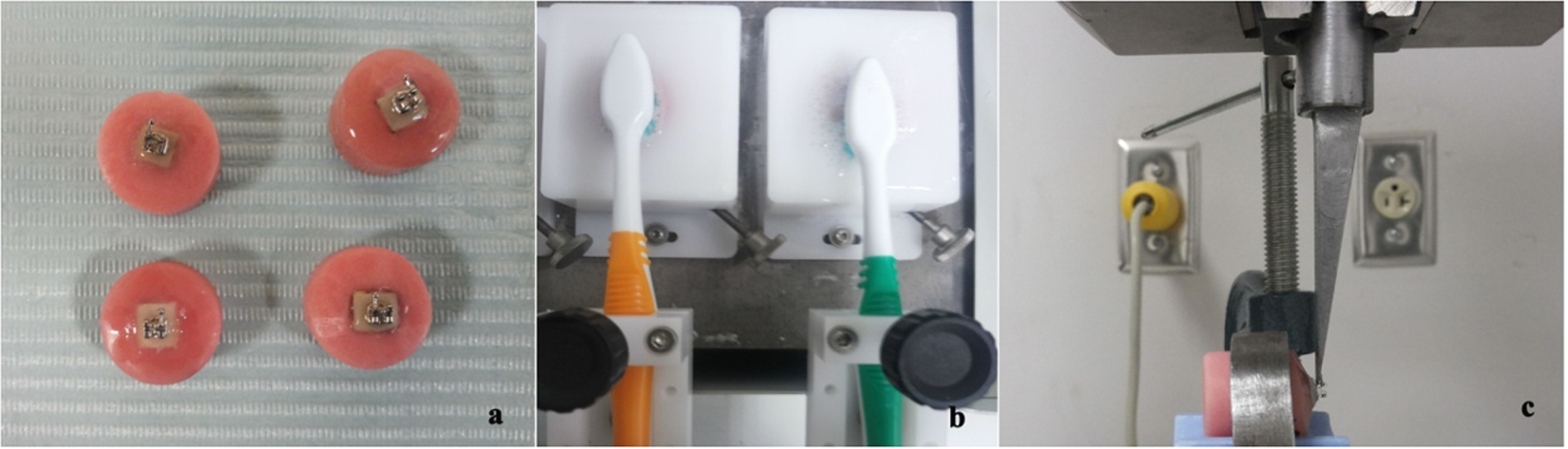
a) Bracket bonded to ceramic specimens; b) specimens placed in sample holder and tooth brushes fitted to the tooth brushing simulator; c) debonding at the ceramic-bracket interface.
The procedure of bonding in group 2 and group 3 was similar to that of group 1 except for the surface treatment applied.
In group 2 (abbreviated GB) the porcelain surfaces were blasted with aluminum oxide particles (average particle diameter 25 µm, 250 kPa pressure for 4 s) from a perpendicular distance of 5 mm using an air abrasion device (LEMAT NT4, Wassermann, Hamburg, Germany).
In group 3 (abbreviated RC) the porcelain surfaces were conditioned with silica modified aluminum oxide powder (Rocatec™ Soft, particle diameter 30 µm at 280 kPa pressure for 4 s) from a 10 mm perpendicular distance, using Rocatec™ Universal Bonding System (3M ESPE, Monrovia, CA, USA).
The
Scanning Electron Microscopy (SEM) analysis
The characteristic porcelain specimen from each study group after surface treatment were selected and visually examined for changes in the surface topography using SEM (Jeol JSM-5900 LV SEM, Tokyo, Japan) operated at 10 kV, in vacuum and with 1000× magnification.
Brushing and adhesion strength test
After bonding all the specimens were stored in distilled water at 37°C for 24 h. After the water storage, 15 randomly selected specimens (
For the adhesion strength test, the porcelain specimens were mounted in a custom made jig of a universal test machine (Instron Corporation, Canton, MA, USA) (Fig. 1c). The blunt shear force blade was directed at the adhesive interface with a crosshead speed of 1 mm/min to debond the bracket. The force required to debond the bracket was documented, and the shear bond strengths were calculated and presented in megapascals (MPa).
Scoring of Adhesive Remnant Index (ARI)
After debonding, the porcelain surfaces and the bracket bases were visually examined and assessed to determine the prevalent bond failure site using a light stereomicroscope (Nikon SM2-10, Tokyo, Japan) at ×20 magnification. The failure site classification was in accordance with Adhesive Remnant Index as described by Artun and Bergland [24].
Statistical analysis
The data collected were analyzed using Statistical Package for Social Sciences (SPSS) v 22.0 (SPSS Inc., Chicago, IL). The means of each group were analyzed by One-way analysis of variance (ANOVA) and multiple comparisons of means were tested with Tukey’s post hoc analysis at a significance level of
Result
Mean adhesion strength and standard deviation at baseline and after brushing are presented in Fig. 2 and Table 1. Tribochemical silica coated specimens presented with highest SBS at baseline and after thermocycling (26.8 ± 1.77 MPa and 23.57 ± 1.02 MPa) and the lowest values were observed with hydrofluoric acid conditioned specimens (9.6 ± 1.5 MPa and 5.87 ± 0.77 MPa). There was a significant difference among the groups tested (
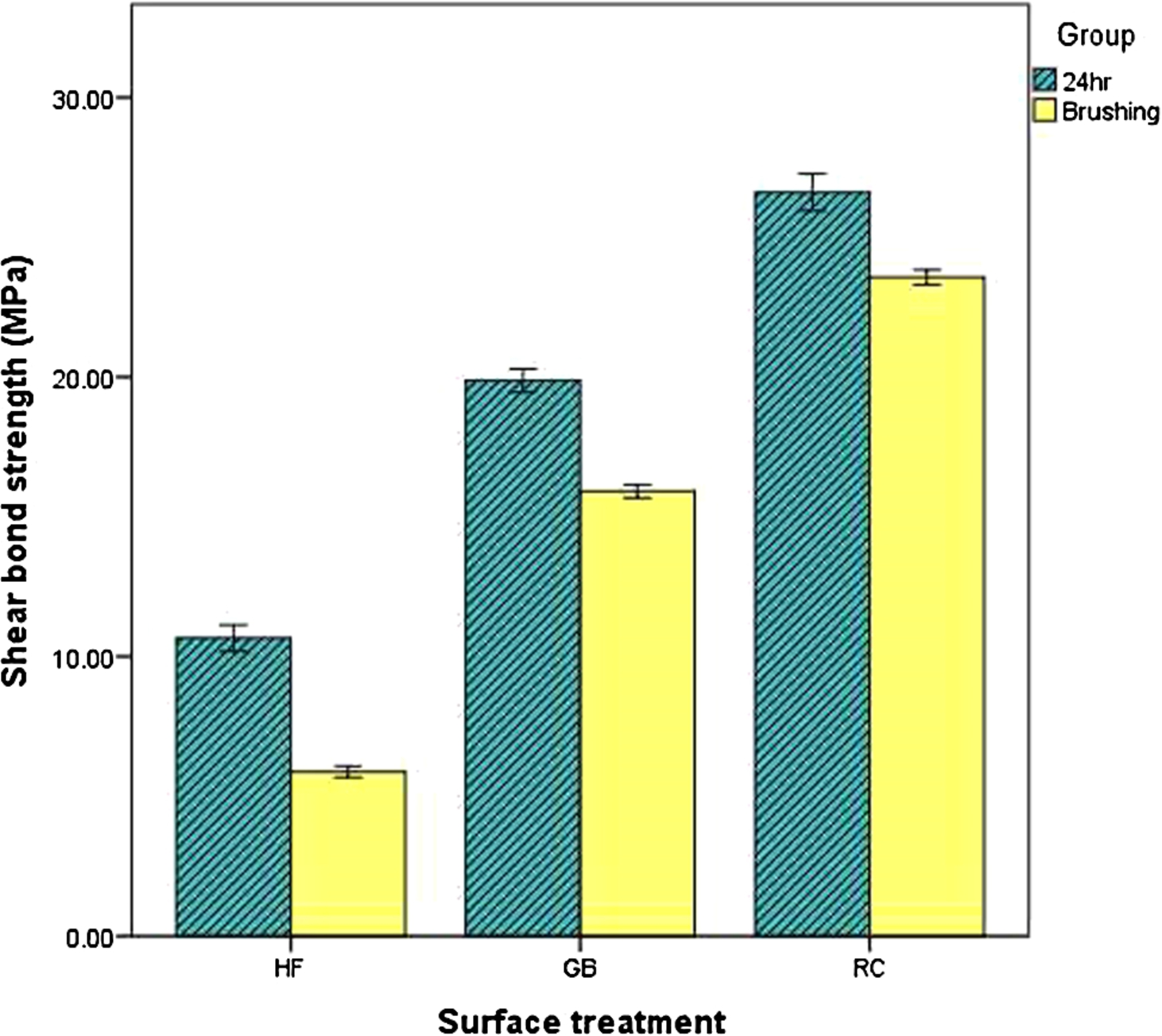
Mean bond strength (MPa) and standard deviation (SD) of bracket to the ceramic substrate.
Mean bond strength (MPa) and standard deviation (SD) of bracket to the ceramic substrate
Different capital letters in a row and small letters in a column implies statistical significant differences between the groups (
The HF specimens showed least
Mean surface roughness (
Different small letters in a column implies statistical significant differences between the groups (
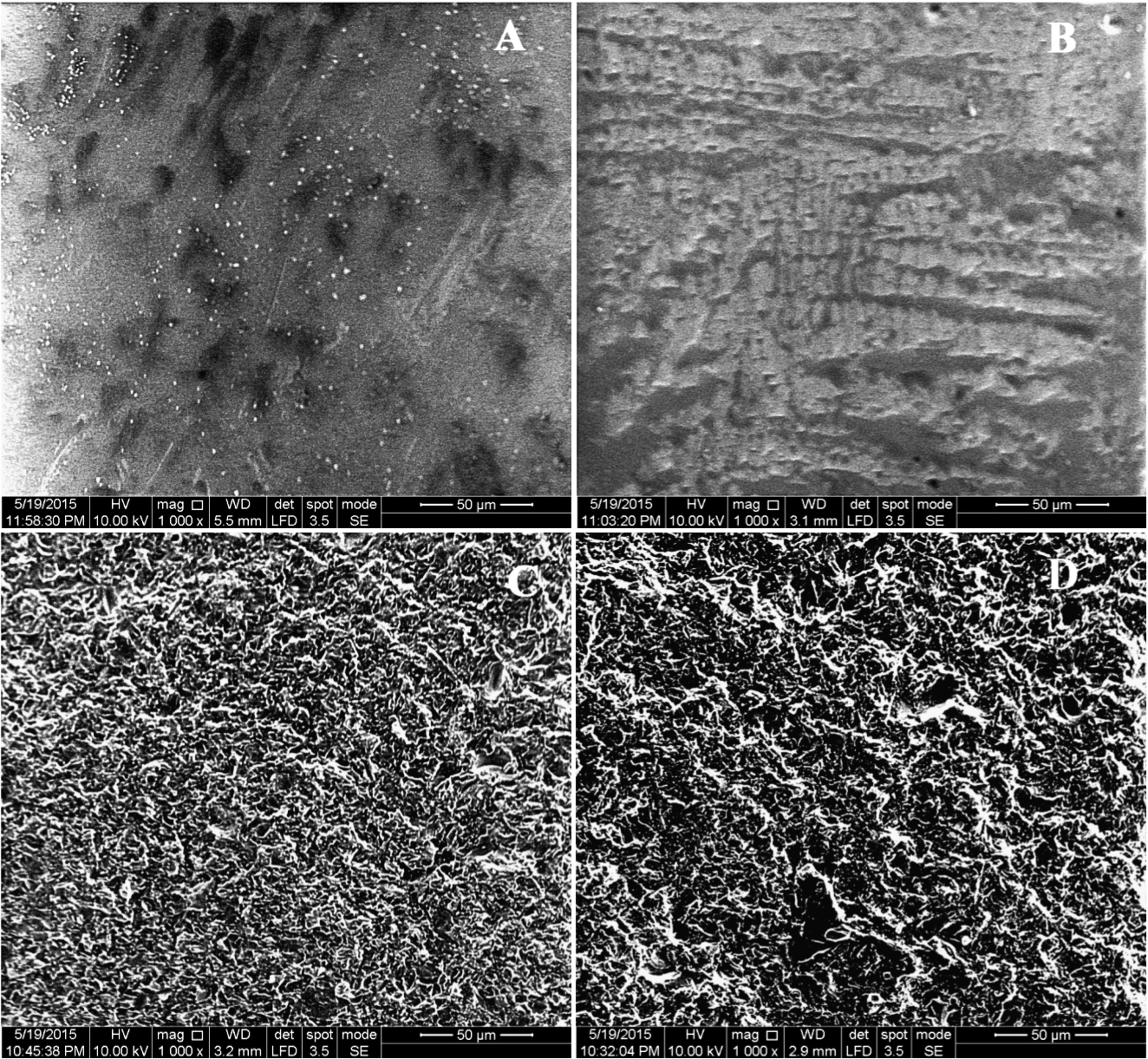
SEM micrographs of the surface conditioned ceramic surfaces: A) untreated; B) HF conditioned; C) GB conditioned; and D) RC conditioned.
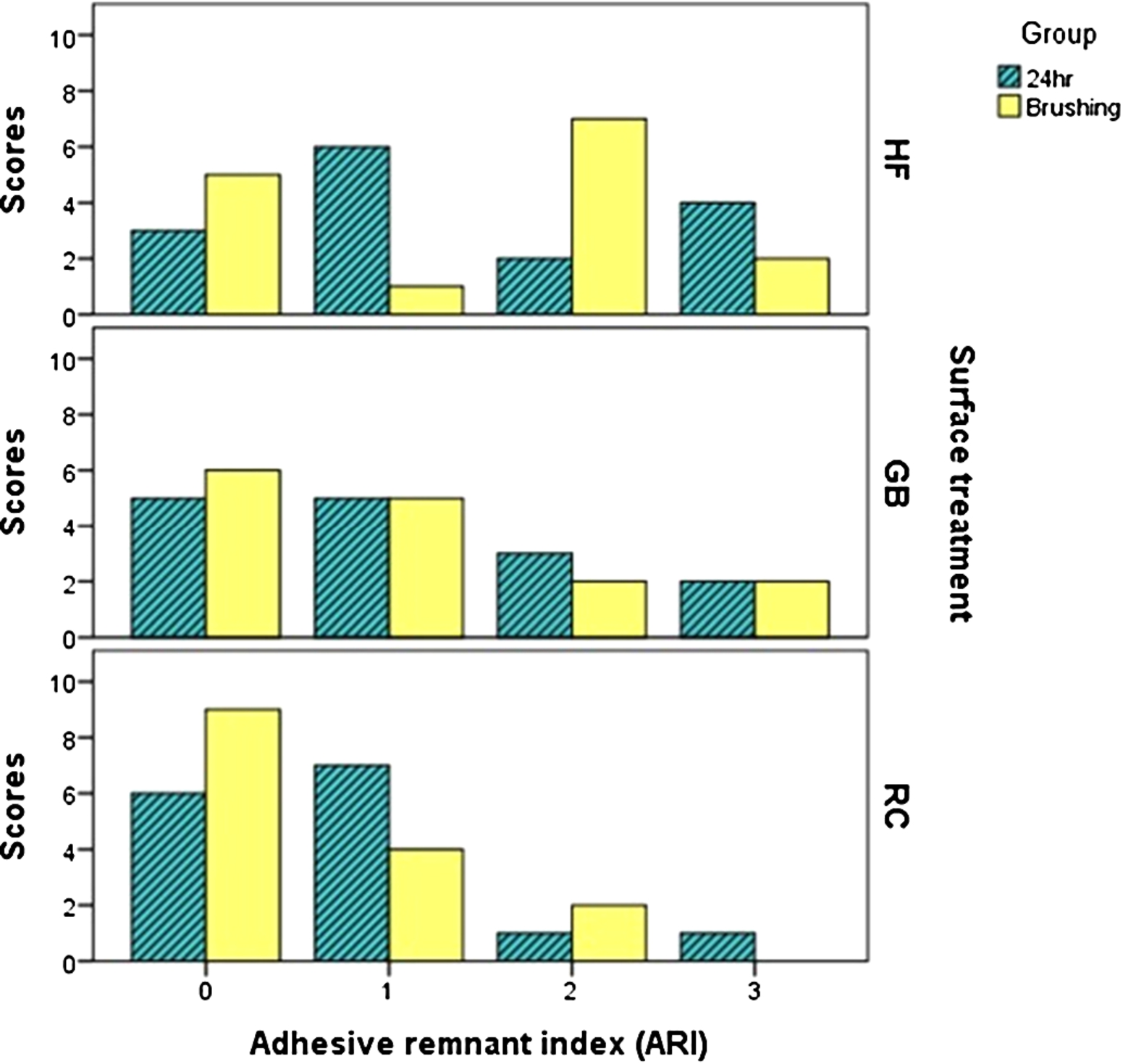
ARI index of the groups. Scoring: 0 – no adhesive remaining on conditioned surface; 1 – < than 50% of the adhesive remaining on conditioned surface; 2 – > than 50% of the adhesive remaining on conditioned surface; 3 – all adhesive remaining on the porcelain surface with a distinct impression of the bracket.
The ARI score were distributed between 0 to 3 in all the groups at baseline and after brushing (Fig. 4). In groups GB and RC, the scores were distributed largely to 0 and 1. Cohesive fractures of the porcelain were not noticed
The outcome of the present study substantiate that tooth brushing affect the bond strength of metal orthodontic brackets bonded to ceramic surfaces. There was a significant difference observed between the baseline and control specimens after 2 years of simulated tooth brushing. Ideally the bond strength of orthodontic bracket in a clinical situation should range from 6 to 10 MPa [15]. The bond strength values of the study groups at baseline in this study exceeded these limits and therefore could be considered adequate for clinical use. However, the SBS of the specimens in group HF exposed to tooth brushing was below the optimal limit. The higher bond strength in the groups conditioned with GB and RC can be attributed to increased surface roughness. The mechanism of roughening ceramic surface by HF is by dissolving the crystalline and glassy phase of ceramic, whereas, in groups GB and RC the ceramic roughening is by particle removal [7]. This could be the reason as to why mechanical roughening procedures are superior to chemical procedures.
Surface conditioning of feldspathic porcelain showed considerable differences in bond strength. To some extent, the results were in good agreement with the previously reported studies [3,25–27]. Tribochemical silica coating has been proved to be an effective way to condition the surface for bonding with resin materials [28,29]. The function of the tribochemical silica coating is based on increase of the surface roughness and chemical modification of the surface to contain more silica after the conditioning. Surface roughness and bond strength of resin composite is related to the air pressure of the grit-blasting device [30].
Increase of the silica on the surface after tribochemical silica coating is supposed to allow more effective chemical bonding of the resin composite by help of silane coupling agents [31,32]. In the case of tribochemical silica coating of feldspathic porcelain which is having high silica content as such, the additional silica may have had only a minor effect. Most likely the increase of the bond strength by grit-blasting, i.e. tribochemical silica coating is coming from the increased surface roughness and improved surface wetting by resin monomers due to silane coupling agent application. An unexpected finding was that hydrofluoric acid etching resulted in only modest improvement of the bond strength. In the case of feldspathic porcelain, the phases of amorphous silica are prone for leaching by the acid. This has been demonstrated to improve bonding of resin composite and the etching process is generally accepted for treatment of bonding sites of indirect glass ceramic restorations, for instance. The reason for modest bond strength by hydrofluoric acid etching could relate to the composition and structure of Duceram porcelain, which could be more resistant toward leaching by acids.
The failure mode analysis is an important criteria for interpreting the outcome of the adhesion strength tests results [33]. The bond strength higher than 13 MPa between the ceramic and the composite resin has been reported to cause cohesive failures in the ceramic [34]. Surprisingly, in the present study the groups which presented SBS values of more than 13 MPa did not show any cohesive failures. The bond strength values represent resistance against static load and this may lead to misinterpretation of the results clininically because debonding is typically existing due to fatigue of the bonding material and their interface. Therefore, dynamic loading test to demonstrate fatigue limits of the bonding interface could be useful method in the future investigations to verify the relevance of the results of the present study. With respect to the aims of this study and the possible fatigue based debonding, the surface topography of the adhesive resin layer at the locations of tensile stresses may be an influencing factor which causes loosening of the bracket.
The main objective of this study was to evaluate whether the tooth brushing affects the bond strength of bracket to tooth with the mechanism of wear of the adhesive resin. There is some information available of this topic and the conclusion has been that reduction in bond strength occurs [19–21]. The present study confirms a previous finding also in the case the substrate is porcelain instead of enamel. Explanation of the reduction in bond strength has been friction and movement caused by tooth brushing. One additional and probable explanation for the reduction of bond strength is also wear of the exposed adhesive resin composite. Wear pattern by tooth brushing predispose for formation of localized stress concentrations during the loading event because of the changed contour to the interfacial area of bracket and substrate. Adhesive resin composites for orthodontic use are loaded only with small amount of fillers and therefore the material is prone for wear.
From the clinical perspective the results of study clearly demonstrate that bonding of bracket to surface of porcelain is affected by tooth brushing. When tooth brushing effect is added to the spontaneous longer term degradation of the adhesive interface, the clinical outcome of reduction in bond strength could be even more. Therefore, attempts to use conditioning methods which provide initially the highest possible bond strength is recommended to be used. With the substrate of Duceram porcelain, the conditioning method of choice was grit-blasting (tribochemical silica coating).
Conclusion
It was found that tooth brushing of the exposed adhesive resin composite at the bracket-bonding substrate interface lowers the bonding strength regardless of the surface treatment of the substrate. Study also confirmed previous findings that bond strength is influenced by the surface roughness of the substrate which may relate to fatigue resistance of the interface.
Footnotes
Acknowledgements
The project was financially supported by Vice Deanship of Research Chairs, King Saud University, Riyadh, Kingdom of Saudi Arabia.
Conflict of interest
None to declare.