



Abstract
The hydrogel produced by the reaction between a hyaluronic acid derivative (HAALD) and
Introduction
Dry eye is a common and often chronic medical condition mainly because the lacrimal gland fails to excrete sufficient tears to lubricate and nourish the eyes, which leads to poor eyesightconsiderable visual disability [1] and bad hygiene of the eye area. Epidemiological surveys show that 30 to 40 years of age over 20% of people with dry eye, over the age of 70 the prevalence is as high as 36.1 percent [2–4]. It has been estimated that dry eye prevalence was maximum for people above 70 years and caused the higher ocular discomfort. In the treatment of the dry eye syndrome, performing punctal occlusion by using collared silicone punctal plugs has been demonstrated as efficient and widely applied in the medical world, despite side effects that lead to a few complications: stenoses of the punctum and proximal canaliculus are reported as the frequent observations after spontaneous loss of punctual plugs [4]. Under the circumstance and due to the excellent biocompatibility, minimal inflammatory response, thrombosis and tissue damage, hydrogels have been extensively studied for the purpose of biomedical application, such as the treatment of dry eye syndrome. Numerous studies focused on the synthesis of bioproducts based on hyaluronic acid and other natural polymersers [5–7]. The degradability is one of the crucial properties and a non-degradable gel was the focus of an ongoing macrophage based foreign body response [8]. It is hence of paramount importance to find a degradability gel for the treatment of the dry eye syndrome.
Hydrogels are a polymer chain network, producing colloidal gels containing over 99% water. Hydrogels offer advantages of high adsorbancy and permeability, and their medical and pharmaceutical uses are significant in wound dressing, skin grafting, manufacturing of oxygen-permeable contact lenses and biodegradable delivery of pharmaceutical products [9,10].
During the last decade, potential applications have been explored for injectable in situ cross-linkable hydrogels including thermosensitive injectable hydrogels, AHA-g-PNIPAAm hydrogels, poly(organophosphazene) hydrogels and chitosan–pluronic (CP) hydrogel, for adipose tissue engineering, local intratumoral delivery of DOX and cartilage regeneration, respectively [11,12]. The pH-triggered injectable hydrogels were mostly proposed for drug delivery [13,14]. The injectable hydrogels can be maintained in the liquid state before injection and harden in vivo. The solution–gel transformation property allows irregular surgical defects to be completely filled, lessens the risk of implant migration, and minimizes surgical defect to the size of a needle [15,16]. Additionally, the liquid solution can also be combined with therapeutic factors and cells through a microdiscectomy procedure to relieve low back pain [17]. A short gelation time is a crucial qualification for an in situ crosslinked injectable hydrogel: the gel precursor with slow gelation rate leads to fluids diffusion away from the injection site and causes undesired gel formation [18–20]. GA is an effective bifunctional crosslinking agent that is water soluble, highly efficient, and economical [21]. Xuemei W. prepared the glutaraldehyde-crosslinked collagen–chitosan hydrogels and proved that hydrogels were biocompatible and non-cytotoxic [22]. Patel used the GA crosslinking of a hydrogel, which is advantageous in terms of mechanical properties to simulate adipose tissue [23]. In a study performed by the US-NTP, Squamous metaplasia was present in the respiratory epithelium in all treated rat and mouse groups, but no neoplastic effects were seen at the nasal or other sites, and it was concluded that GA was not carcinogenic in rats or mice [24].
According to the reports, we can modify the carboxyl and hydroxyl in HA and get three-dimensional network structure of hydrogels by crosslinkers, Mechanical performance of this hydrogel has been improved, it cannot be dissolved in water but swelling [9]. Since the aldehyde and ketone groups can occur sensitive and rapid condensation reaction with hydrazone bond formation. The reaction of aldehyde and hydrazide groups has been widely used in the preparation of injectable situ crosslinked hydrogels.
In this work, we developed a method to prepare hydrogels modified by GA. Two different homopolymers were synthesized by a simple method and used for lacrimal duct studies.
Materials and methods
Materials
Hyaluronic acid (HA, 1170 kDa) was supplied by Bloomage Freda Biopharm Company (China). Analylical grade glutaraldehyde (GA) and benzaldehyde (BA) were purchased from Alpha (China). Hydroxylamine hydrochloride was supplied by Guangfu Fine Chemical Research Institute (China). Other chemicals, i.e. hydrochloric acid (HCl), sodium hydroxide (NaOH), N-N-dimethylformamide (DMF), sodium periodate (NaIO4), diamid hydrate (
Preparation of HAALD-PAHy hydrogel
HAALD was prepared according to the method developed by our group [9]. 0.3 g of HA was dissolved in 30 mL deionized water. Subsequently, 3.6 mL of 0.25 mol/L sodium periodate solution was added (Fig. 1). The mixtures were allowed to react in the dark in a 30°C water bath for 3 h. Stirring was continued for another 30 min after 30 mL ethylene glycol had been added to terminate the reaction. The mixtures were dialyzed against deionized water for 3 d. The purified HAALD was prepared after freeze-drying. The oxime reaction was used to measure the aldehyde group’ content in the HAALD [25,26].
PAHy was synthesized from PSI by diamid hydrate (Fig. 1): 1 g of PSI, dissolved in 10 mL DMF, was grafted on hydrazine by adding 0.5 g diamid hydrate into the solution. The deposit was dissolved in deionized water and the solution was ultrafiltered to remove the extra DMF as well as the unreacted diamid hydrate. The purified product was freeze-dried and kept at 4°C. The hydrazide group content in the PAHy is determined by using

(a) The corresponding reaction equation of the gels. (b) An overview of the gelation reaction scheme. PAHy:
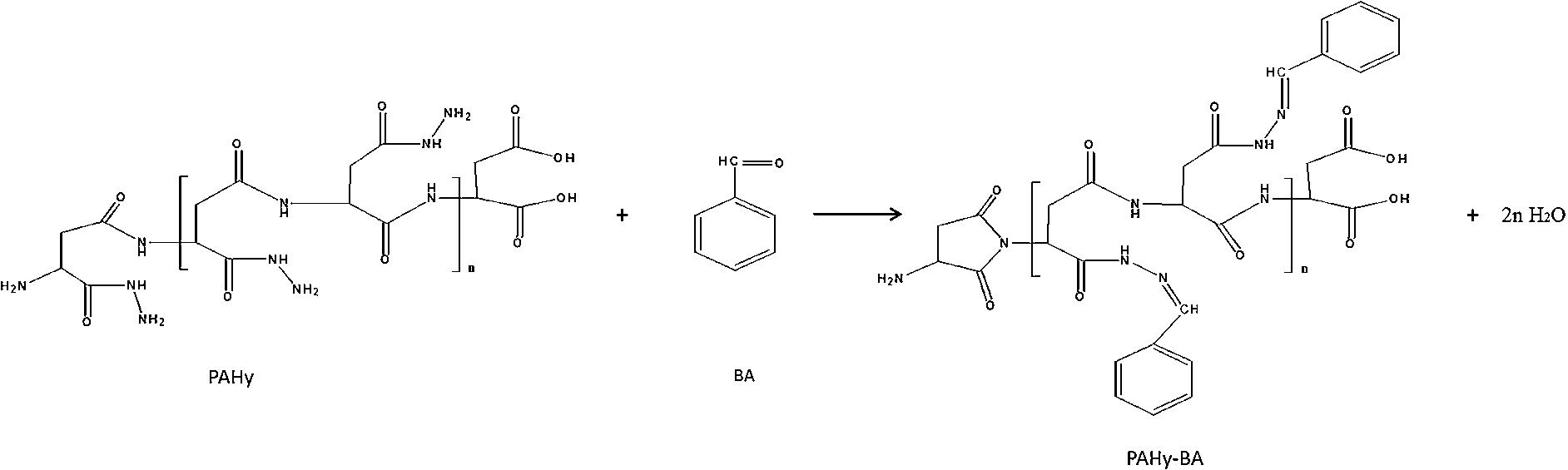
The reaction equation between PAHy and BA. PAHy:
Finally 0.025 g HAALD was dissolved in a PBSA solution, consisting of NaCl (7.99 g/L), KCl (0.22 g/L),
HAALD-PAHy-GA50 and HAALD-PAHy-GA100 hydrogels were synthesized by dissolving 0.025 g PAHy in GA solutions (Fig. 1). The mass ratios of GA and PAHy are 1:50 and 1:100, respectively. The mixtures were vortexed until PAHy completely dissolved and then reacted for 24 h at 37°C without stirring. After reaction, the solutions were transferred into 5 mL centrifuge tubes and mixed with the HAALD solution which was prepared as preparation for non-crosslinked HAALD-PAHy hydrogel.
Gel content analysis
The hydrogel was freeze-dried after a reaction period of 24 hours. The gel content is defined by:
Swelling test
To measure the equilibrium swelling value of the untreated hydrogel, a swelling test was performed in deionized water or PBSA solution at 37°C for 24 h. The gel was subsequently weighed after freeze-drying at −20°C for 10 h. The equilibrium swelling value of the gel was calculated as below:
Rheological properties
To study the visco-elastic behavior of the hydrogels, an oscillation frequency sweep test with a controlled strain of
Morphologies
Morphologies of a pristine hydrogel and degraded hydrogels were characterized by utilizing scanning electron microscopy (SEM). The samples were freeze-dried overnight and then applied onto an aluminium stub with double-sided conductive carbon tape. These samples were gold coated using a Hitachi e-1010 coater. The surface and cross-sectional morphologies were scanned by a Hitachi SU1510 Field Emission Scanning Electron microscope (Tokyo, Japan).
In vitro degradation test
Gel degradation was tested on 0.025 g dry gel that was transferred to 200 mL artificial tears and shaken in an incubator (100 rpm) at 37°C for 28 d. The incubation medium was changed every day. At fixed 7-day intervals, i.e. after 7 d, 14 d, 21 d and 28 d of incubation, the medium solution was removed and the gel was washed by incubating in 1 L deionized water under the same condition for 24 h. The final hydrogel was then lyophilized and weighed. The weight loss is quantified by:
Cytotoxicity assay
To evaluate the cytotoxicity of the HAALD-PAHy hydrogel, the MTT assay was applied according to manufacturer’s instructions. L-929 cells were grown in 90% DMEM and supplemented with 10% fetal bovine serum. Cell lines were seeded at a density of 3000 cells in 96-well cell culture plates in triplicate and grown overnight at 37°C with 5% CO2. 2.0 g sterile hydrogel was added to 10.0 mL growth medium, and kept in a 37°C incubator containing 5% CO2 in air for 24 h in preparation of extraction. The concentration of original extract was 200 mg/mL, and diluted with growth medium to 100 mg/mL, 50 mg/mL and 25 mg/mL after centrifugation and filtration.
Hydrogel samples were then added to cells and incubated for 24 h before the toxicity measurement. 50
Lacrimal duct embolization experiments
All animal procedures were conducted in compliance with all laws, regulations, and guidelines of the Scientific Ethic Committee of the Institute.
Male 7–8 weeks New Zealand albino rabbits, weighing between 2.8 and 3.5 kilograms have been used in this study. The animals were housed in standard cages in a light-controlled room at
The study of the lacrimal duct embolization was performed as follows, the HAALD-PAHy hydrogel and HAALD-PAHy-GA50 hydrogel were injected into lacrimal duct of experimental rabbits. Then the rabbits were gently kept lying for 30 minutes. After each injection (1 d, 3 d, 7 d, 14 d, 28 d), one or two drops of 1% sodium fluorescein solution was introduced into the lower conjunctival, sac of the rabbits’ eyes and then the eyelids were gently kept closed for 10 seconds. The time of taking the sodium fluorescein solution from the eyes to the nasal cavity was recorded.
Results and discussion
Hydrogels gel content and equilibrium swelling values
The gel content of each sample is determined by measuring its insoluble part after extraction in distilled water for 24 h at room temperature. The gel content is a basic parameter to characterize the three-dimensional network structure of the gel [9]. Table 1 illustrates that the gel contents of HAALD-PAHy are a function of the mole rate of PAHy units and GA. The highest gel content is 81.95%, for the HAALD-PAHy-GA50. The HAALD-PAHy and HAALD-PAHy-GA100 are evaluated 73.54% and 73.93% respectively. The gel content of HAALD-PAHy-GA50 exceeds that of HAALD-PAHy.
The aldehyde group content in HAALD is 59.27% [25] while the hydrazide groups content in PAHy is 74.6% (
Characterization of hydrogels (HAALD-PAHy, HAALD-PAHy-GA100, HAALD-PAHy-GA50 hydrogels)
Characterization of hydrogels (HAALD-PAHy, HAALD-PAHy-GA100, HAALD-PAHy-GA50 hydrogels)
Reaction solution: PBSA, reaction temperature: 37°C.

1H NMR spectrum of (a) PSI and (b) PAHy-BA PSI :polysuccinimide; PAHy:
The equilibrium swelling values of Table 1 confirm the relationship among cross-link densities. A high swelling value is one of the basic requirements for hydrogels used in biomedical and tissue engineering [28]. The swelling value is correlated with the gel cross-link density and can be used to evaluate the density [29,30]. The equilibrium swelling value usually increases along with the decreasing cross-link density [9]. As opposite to the gel content, the high equilibrium swelling value of HAALD-PAHy gel discloses a low cross-link density while the low equilibrium swelling value of HAALD-PAHy-GA50 gel indicates a high cross link density.
All measurements are taken under fixed strain (1%) the gap was 1000
The mechanical properties of the hydrogel are reflected by the value of
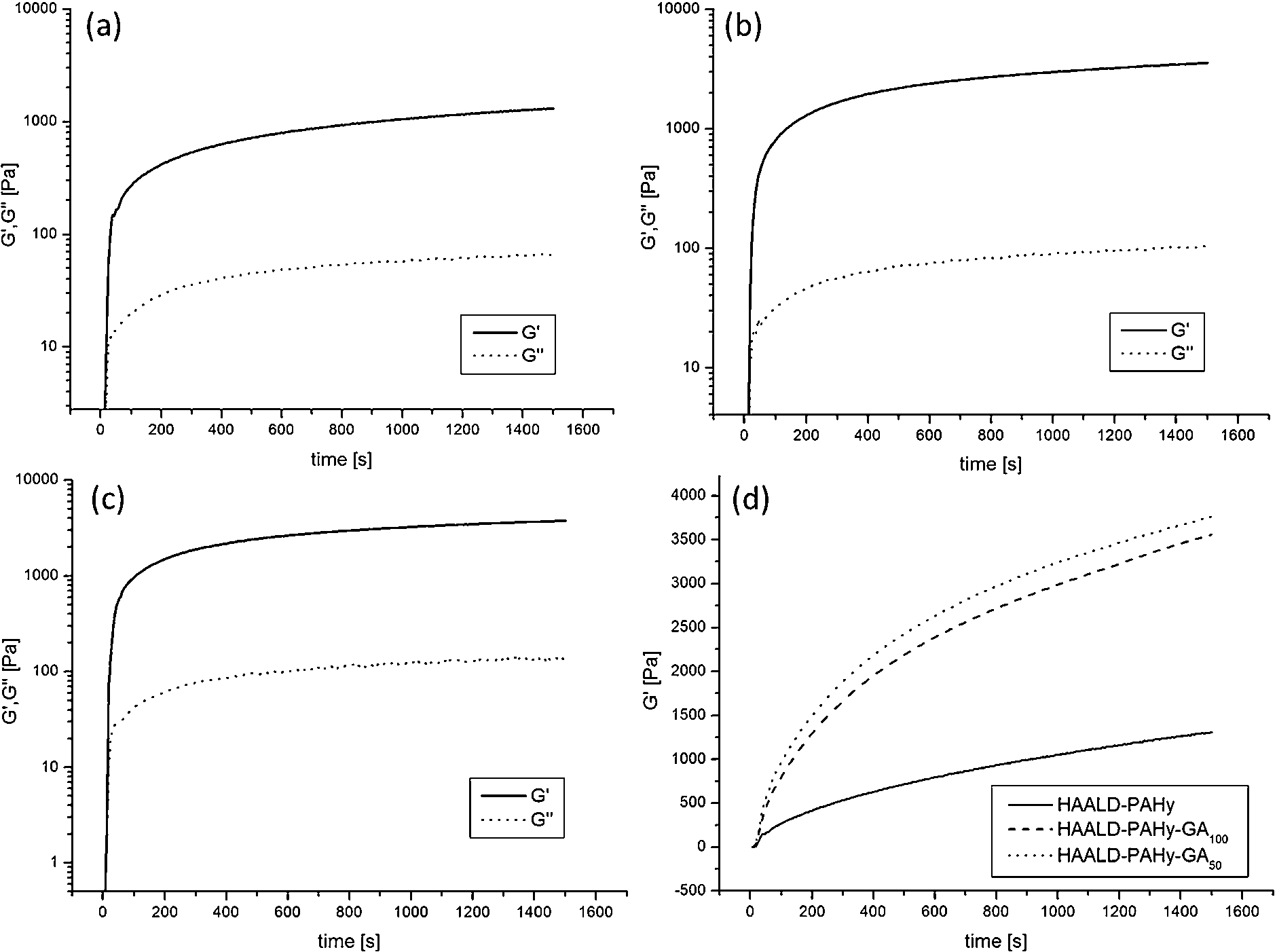
The rheological data of the hydrogels (a) HAALD-PAHy, (b) HAALD-PAHy-GA100, (c) HAALD-PAHy-GA50, (d) the
The interior morphology of the gels is observed by SEM. The size of the porosity can reflect the structure of the gel and the smaller size of the pores, the stronger is the gel structure. According to Fig. 5, HAALD-PAHy, HAALD-PAHy-GA100 and HAALD-PAHy-GA50 samples show the porous three-dimension structure with pore diameters in the range of 100–160
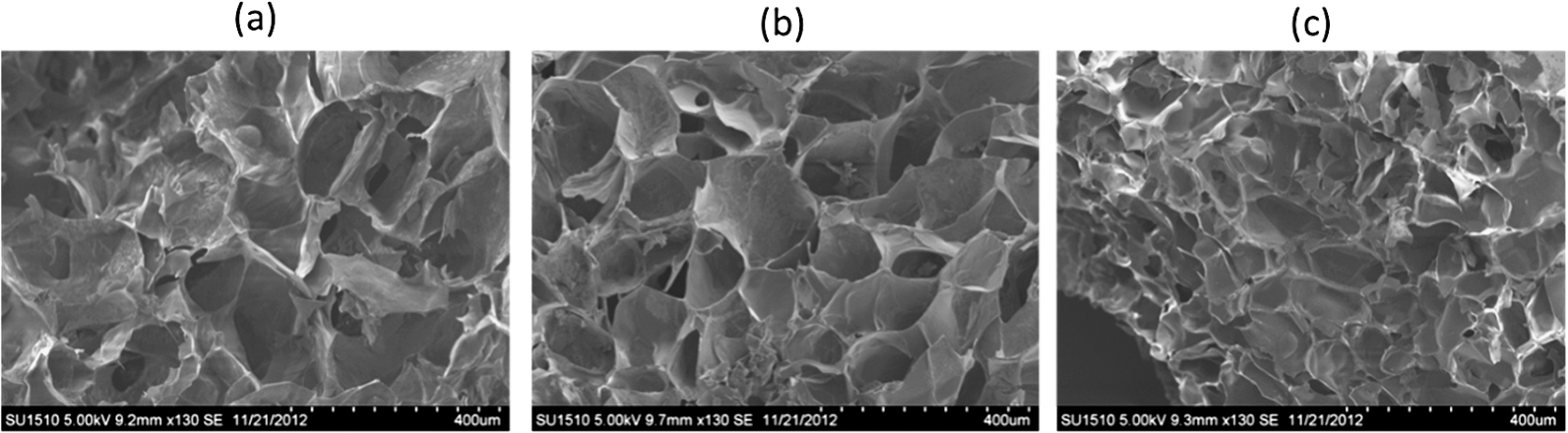
SEM photographs of freeze-dried hydrogel samples. (a) HAALD-PAHy, (b) HAALD-PAHy-GA100, (c) HAALD-PAHy-GA50.
Comparing the HAALD-PAHy-GA100 and HAALD-PAHy-GA50, the HAALD-PAHy-GA50 hydrogel has higher gel content, the higher value of
A high cross-link density and complete network structure help gels to maintain their weights during in vitro degradation.
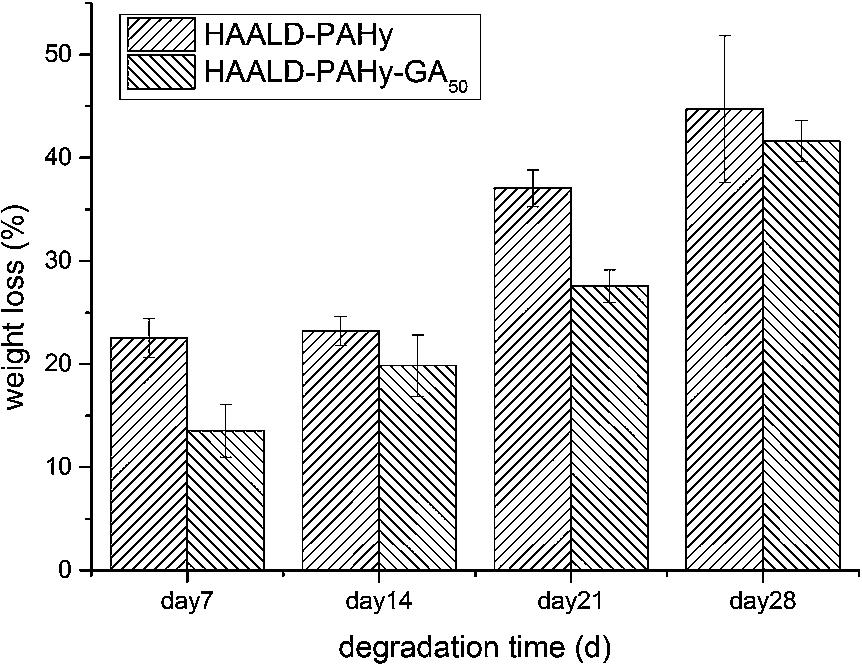
Relationship between weight loss and degradation time in a degradation medium.
The results of RGR from L-929 cells, cultivated in different concentrations of the two kinds of hydrogels extracts (HAALD-PAHy and HAALD-PAHy-GA50) for 24 h, are presented in Fig. 7 showing that all of RGR data exceeded 60%. For all concentrations studied, ranging from 25 mg/mL to 100 mg/mL, the RGR values are similar to each other after 24 h of incubation: there is no significant increase of RGR among extracts with different concentrations for the same hydrogel.
GA cross-linked hydrogel showed slightly RGR, however GA is considered as no neoplastic effects at this time in vivo.
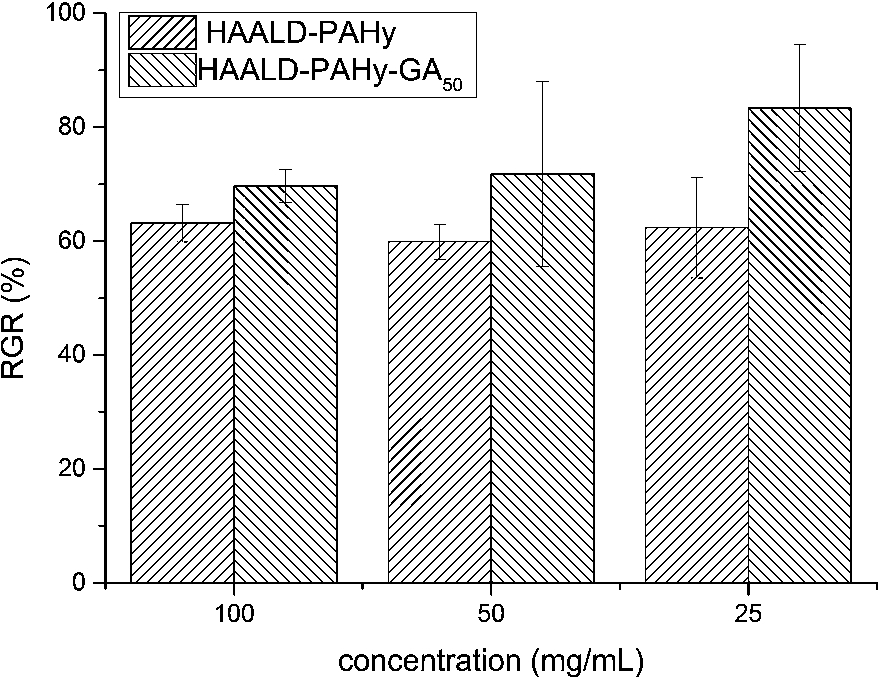
The relative growth rate of L-929 cells proliferated in different concentrations of the three kinds of hydrogels extracts for 24 h.
The gel is injected into the lacrimal duct of the prepared rabbits. Figure 8 shows that the HAALD-PAHy-GA50 gel has better plugging to the lacrimal duct. At 1 d after application, it takes the sodium fluorescein solution 34 minutes to travel from the eyes to the nasal cavity. At 28 d the time still remains 4 min. But for the HAALD-PAHy gel,the time of day 1 and day 21 is only 23 min and 1.5 min respectively. As expected the HAALD-PAHy-GA50 gel had a better effect than the HAALD-PAHy gel, since the crosslink density of the HAALD-PAHy-GA50 gel is higher and the mechanical properties are better. In the treatment of the dry eye syndrome, the gel is injected into lacrimal duct to prevent the loss of tears. So the stronger gel performed more effectively.
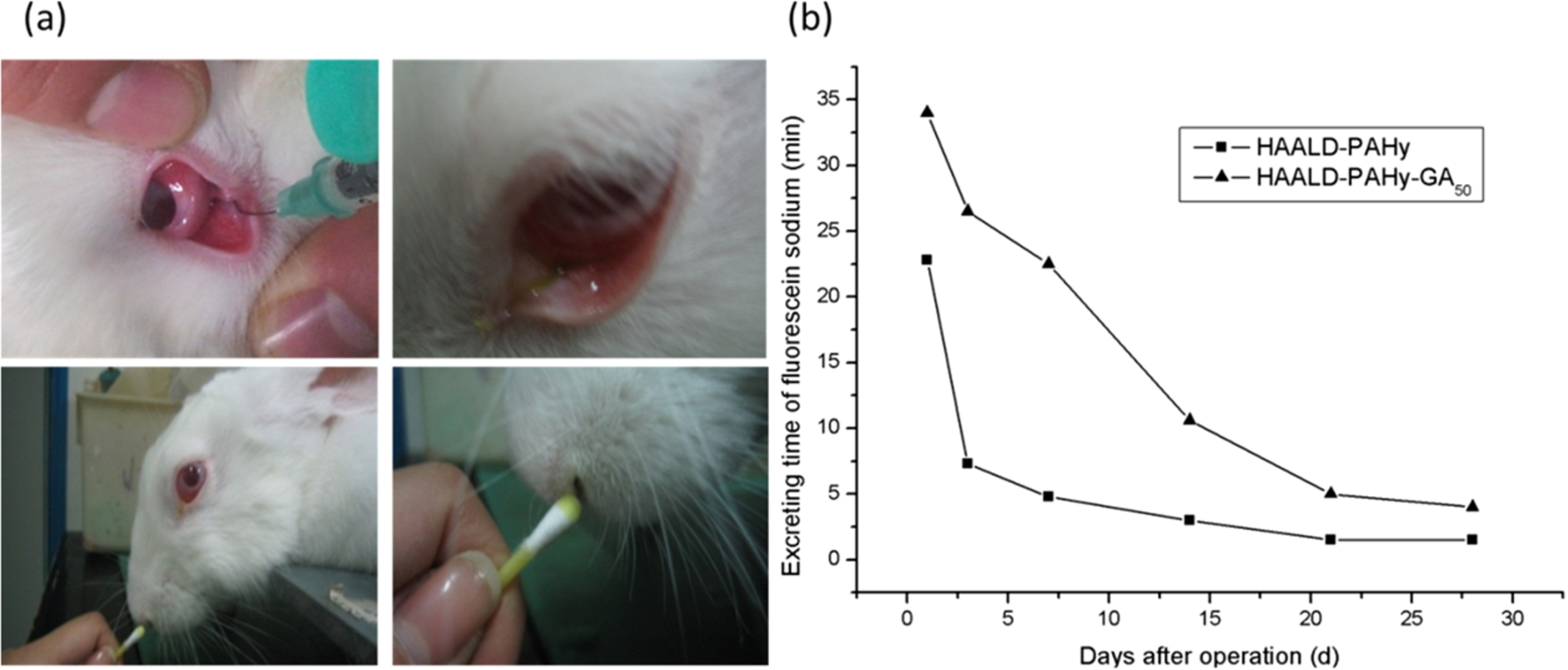
Relationship between excreting time of fluorescein sodium and degradation time in the lacrimal duct of rabbits.
A fast-gelling hydrogel is designed and synthesized for dry eye syndrome treatment. The mechanical strength was improved by calculating
Footnotes
Acknowledgements
The authors thank the State Key Laboratory of Organic-Inorganic Composites. This work was supported by the National Basic Research Program of China (973 program) (2013CB733600, 2012CB725200), the National Nature Science Foundation of China (21390202), the National Key Scientific Instruments and Equipment Development Special Fund (2012YQ0401400302).
Conflict of interest
The authors have no conflict of interest to report.