



Abstract
BACKGROUND:
Low back pain is one of the most common musculoskeletal diseases in the modern society, causing a huge economic burden, and has become an important public health problem. Years lived with disability caused by low back pain increased rapidly as a result of population growth and ageing worldwide, with the biggest increase seen in low-income and middle-income countries. In this context, the prevention and treatment of low back pain in the elderly warrant attention and research.
OBJECTIVE:
The aim is to determine the correlation between vital capacity (VC) and vertebral body translation during lumbar flexion and extension in adults aged 60 to 69 years.
METHODS:
A total of 192 adults aged 60 to 69 years were selected by cluster sampling in Lishui City, Zhejiang Province, China. The VC of the study population was tested and the ratio of VC to body mass (BM) was calculated. The lumbar hyperextension and hyperflexion of the study population were radiographed using a Hitachi 500 mAs X-ray machine made in Japan to verify vertebral body translations in each segment.
RESULTS:
The differences of test values of VC (
CONCLUSIONS:
The vertebral body translation of during lumbar flexion and extension correlates with the VC in the population aged 60 to 69 years. Recognition of this correlation may help to guide further lumbar stabilization exercises.
Introduction
Low back pain is one of the most common musculoskeletal diseases in the current society, causing a huge economic burden on society and becoming an important public health problem [1]. Epidemiology shows that the lifetime prevalence of low back pain is as high as 85%, among which chronic low back pain is 23% and the disability rate is 11%–12% [2]. Years lived with disability caused by low back pain increased rapidly as a result of population growth and ageing worldwide, with the biggest increase seen in low-income and middle-income countries [3].
Respiratory muscles play a special role in maintaining the stability and motion of the human vertebral column. Diaphragms and abdominal muscles, as core muscles, are the bases or engines of all limb exercises [4]. The lumbar curvature and physical activity were found to be significantly correlated with the function of respiratory muscles [5]. Some studies show that low aerobic capacity is related to spinal diseases and hypoaerobic status has also become one of causes and consequences of chronic low back pain [6, 7, 8]. This finding probably implied that training for improving respiratory function is meaningful for rehabilitation of patients with low back pain. The inspiratory muscles (IM), and specifically the diaphragm, have a key role in controlling the spine, which is crucial during postural control [9]. Individuals with LBP showed greater susceptibility to diaphragm fatigue compared to healthy controls [10]. Patients with LBP are susceptible to having a respiratory disorder. Further research must reveal the relation between pulmonary function and lumbar stability.
In this study, the population aged 60 to 69 years was taken as research objects to ascertain the correlation between VC and lumbar stability. The research may provide a basis for further investigating the application of respiratory training in the prevention and treatment of low back pain in the elderly.
Research methods
Study population
According to the Chinese national physique monitoring program, the target population in the present study was healthy people, mentally normal, conscious, sentient and exhibit no obvious physiological defects. Any one of the following circumstances resulted in the exclusion from the sample:
Those with physical deformity; Those with abnormal physical development (such as gigantism and dwarfism); Patients with acute diseases or those who have suffered from acute and chronic diseases, such as diarrhea and high fever in the last two weeks and have not recovered physically; Those who have suffered major trauma, such as fracture and dislocation in recent six months, or whose physical activity is obviously restricted; Those with serious diseases of major organs, such as the heart, kidney, liver, and lung (such as cardiopathy, hypertension, hepatitis, nephritis, tuberculosis, asthma, and pneumonia).
The study population was selected by cluster sampling in Lishui City, Zhejiang Province, China. 197 subjects aged between 60 to 69 years were selected for analysis after strict screening under the Chinese national physique monitoring program. Two patients with acute lumbar sprain, one patient with cough, and two patients with abnormal heart rate were excluded. In the end, 192 subjects actually participated in the analysis.
The VC was measured in strict accordance with the Working Manual of Chinese National Physique Monitoring formulated by the National Physique Surveillance Center (Fig. 1). First, the electronic spirometer is connected to the power supply to confirm that the instrument is in working condition. During the test, the mouth was placed at the inlet, and the subjects held the handle of the intake pipe. The head was slightly backward, and tried to breathe until it could not breathe in again. Then the mouth was aligned to the mouth to breathe deeply until it could not breathe out. At this time, the data displayed on the monitor is the vital capacity value. Test twice, take maximum, record in milliliter, no decimal. The measurement equipment used in this field test was produced by Beijing Xindong Huateng Apparatus Company. Before use, the equipment was debugged, installed, and checked by professional technicians according to the requirements. The equipment was calibrated by the technical supervision department and meets prevailing Chinese standards.
Vital capacity test, picture from Zhejiang Provincial Sports Bureau. Zhejiang National Physique Monitoring Report 2014 [M]. Hangzhou: Zhejiang University Press, 2017, 2.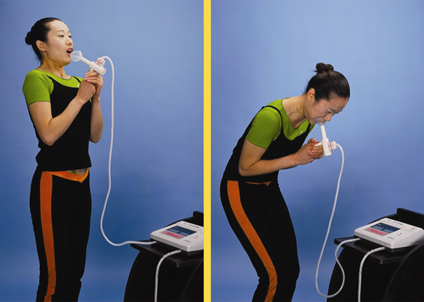
The ratio of VC to BM [11, 12] is a composite anthropometric index, which is calculated according to the formula of VC/BM. VC and BM were separately measured in milliliter (mL) and kilograms (kg). The VC/BM ratio was calculated by dividing the total amount of gas (mL) exhaled (VC) by the human body after deep inhalation, which was part of the dynamic process of breathing, by the measured BM (kg) on the day.
Vertebral body translation is usually evaluated by measuring the lumbar vertebral body translation by dynamic X-ray (Hitachi 500 mAs X-ray machine, Japan). In this study, The study population received preoperative routine standing lumbar X-rays (neutral, flexion, extension) (Figs 2–4).
Neutral lumbar X-ray.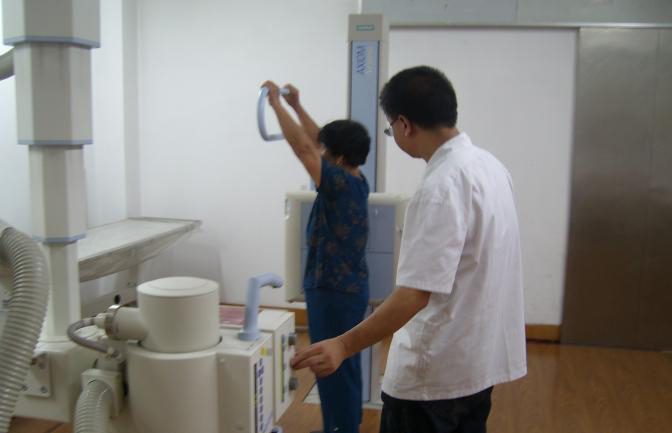
Flexion lumbar X-ray.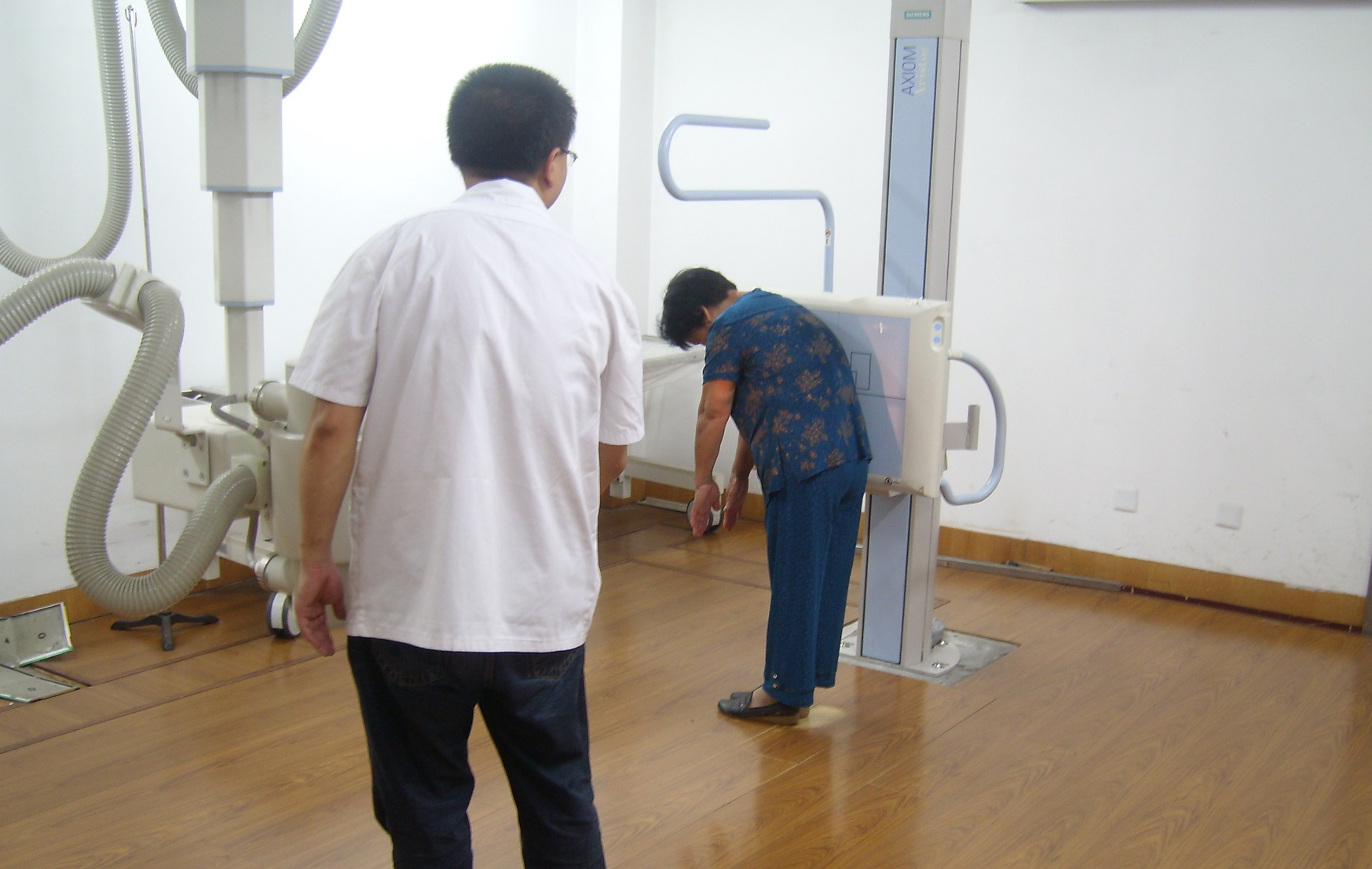
Extension lumbar X-ray.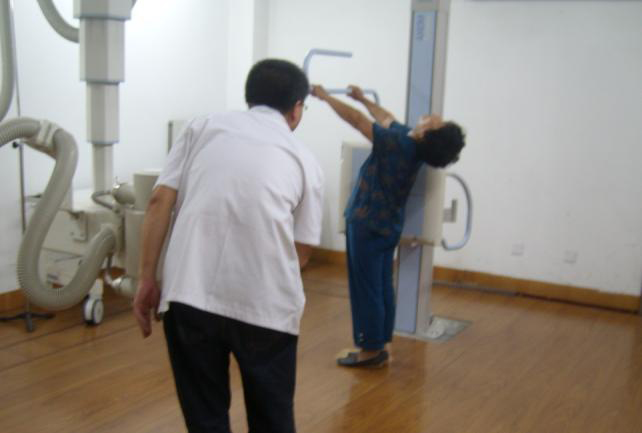
Schematic diagram of sagittal view.
Gender constitution of study population in different age groups
Difference in test values of VC of the populations aged 60 to 64 and 65 to 69 years
As shown in Fig. 5, the lower edge and the posterior edge of an upper vertebral body in a dynamic X-ray image of lumbar vertebra intersect at Point A
Schematic diagram of translation measurement in hyperflexion position.
Measurement for translation in hyperflexion position.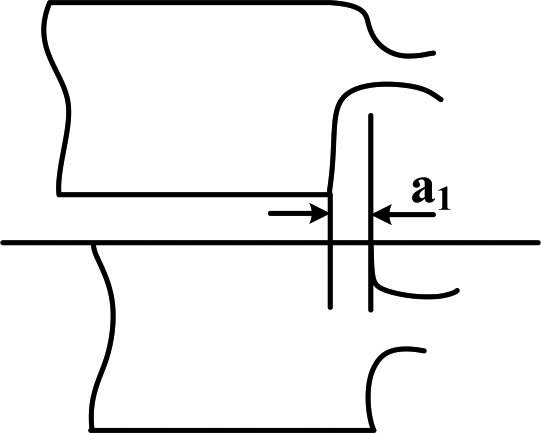
Measurement for translation in hyperextension position.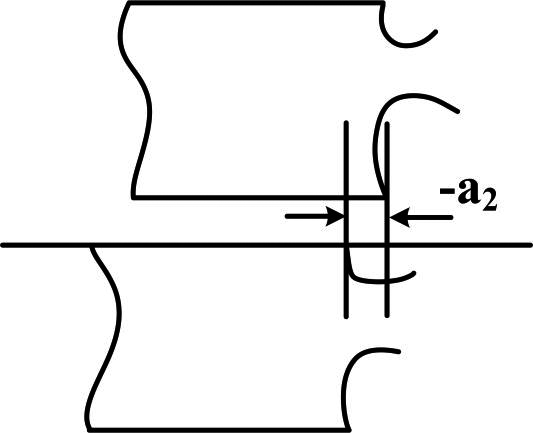
The established database was statistically analyzed using SPSS 18.0 statistical software. The statistical methods used in data analysis included Spearman rank correlation analysis and Mann-Whitney U-test. The two-sided test was adopted in statistical inference and the significance level of test was
Results
Gender constitution of the population aged 60 to 69 years
As shown in Table 1, through chi-squared analysis, no statistically significant difference was found in gender constitution between the two age groups (
Test values of VC of the population aged 60 to 69 years
As demonstrated in Table 2, differences in VC (
Difference in test values of lumbar vertebral body translation in the populations aged 60 to 64 and 65 to 69 years
Difference in test values of lumbar vertebral body translation in the populations aged 60 to 64 and 65 to 69 years
Correlation coefficients between test values of VC and vertebral body translation
Correlation coefficients between test values of ratio of VC to BM and vertebral body translation
As listed in Table 3, the vertebral body translations in the L
Correlation between the VC and vertebral body translation in the population aged 60 to 69 years
As shown in Tables 4 and 5, based on Spearman rank correlation analysis, it was found the vertebral body translation in the L
Discussion
Respiratory function is an important condition for ensuring gas exchange during metabolism in the body. The purpose of ventilation is for intake of oxygen and discharge of carbon dioxide. A certain amount of oxygen intake must be guaranteed by a certain amount of ventilation, and the main function of the lung is gas exchange. Therefore, VC can be used as an index for the health of respiratory function and is related to factors, such as gender, age, body surface area, size of thorax, degree of development of respiratory muscles and elasticity of lung and thorax wall [13, 14]. The present research shows that respiratory dysfunction occurs with the increase of age of the population aged 60 to 69 years. Due to ossification and a decrease in elasticity of costal cartilage in the elderly, the thorax becomes quasi-rigid, so the range of motion of thoracic vertebra decreases greatly, which will affect the function of respiratory muscles.
The results of this study show that the vertebral body translation in the L
Instability is identified by measuring the anterior-posterior translation on static end-range flexion and extension lateral radiographs and defined as a change of greater than 3 mm [15]. Further correlation analysis of this study indicates that there are significant negative correlations of the vertebral body translation in the L
Based on the above analysis, it is found that respiratory exercise can be used as a method to prevent and treat low back pain. Some studies have revealed the mechanism of the Liuzijue Qigong-based breathing training in the treatment of low back pain and proposed that the formula is worth popularizing in the clinical treatment of low back pain [23, 24, 25].
Funding
This study is funded by the Medical Science and Technology Project of Zhejiang Province under Grant No. 2019KY480 and the National Natural Science Foundation of China under Grant No. 81303016.
Ethical considerations
This work has been approved by the Medical Ethics Committee of the Third Affiliated Hospital of Zhejiang Chinese Medicine University (Approval No. ZSLL-KY-2019-005-01), and the subjects provided informed consent prior to enrolment.
Footnotes
Acknowledgments
The authors are grateful to all participants who took part in the study.
Conflict of interest
The authors declare that they have no conflict of interest.