



Abstract
BACKGROUND:
Pregnancy-related low back pain (LBP) and pelvic girdle pain (PGP) significantly affect the quality of life of pregnant women. Understanding their severity and risk factors may help prevent and alleviate such pain and their resulting dysfunction.
OBJECTIVE:
This study investigated the prevalence, severity, and biopsychosocial risk factors of pregnancy-related LBP and PGP in Zhengzhou, China.
METHODS:
The Numeric Pain Rating Scale (NPRS), Chinese version of the Roland-Morris Disability Questionnaire (RMDQ), and other questionnaires were self-administered by 1020 pregnant women undergoing treatment at a tertiary hospital between July and December 2019. Binary logistic regression was used to identify factors associated with pregnancy-related LBP and/or PGP.
RESULTS:
The prevalence of LBP and/or PGP during pregnancy was 63.0%, and most participants (80.4%) had both. The mean NPRS and RMDQ disability scores were 2.44
CONCLUSION:
The prevalence of LBP and/or PGP was high. The risk factors should be included in routine prenatal care to identify patients at risk of LBP and/or PGP.
Background
Pregnancy-related low back pain (LBP) and pelvic girdle pain (PGP) are common and significantly affect the quality of life of pregnant women [1, 2, 3]. LBP is typically defined as pain between the twelfth rib and the iliac crest. PGP is defined as pain between the posterior iliac crest and the gluteal fold, especially in the vicinity of the sacroiliac joints [4]. Previous studies have reported that approximately 50% (range: 20–90%) of women experience LBP or PGP during pregnancy, including 33% who experience severe LBP or PGP [1, 5, 6, 7].
Based on their prevalence rates, pregnancy-related LBP and PGP are often considered a normal phenomenon. However, LBP and/or PGP during pregnancy may be the beginning of chronic back pain and/or PGP, which are significant health problems [8]. Pregnancy-related LBP and PGP may affect the daily activities and sleep quality of pregnant women and are associated with a decreased health-related quality of life during pregnancy [9, 10].
Several risk factors of LBP and/or PGP during pregnancy have been identified, including previous LBP and/or PGP, increased body mass index (BMI), multiparity, and work load [11, 12, 13, 14, 15]. However, the associations of psychological factors with LBP and/or PGP during pregnancy are unclear. The relevance of biopsychosocial factors on back pain has recently been reported [16, 17]. Clinical guidelines for non-specific LBP recommend screening and management of the patient’s psychosocial risk factors [18, 19]. During pregnancy, women experience obvious physical, psychological, and social changes. Emotional distress is an important risk factor for LBP and/or PGP during pregnancy, and social support or self-coping methods may have positive effects on pregnancy-related complications [20, 21]. Social support has been reported as the most important predictor of a healthy lifestyle in pregnant women [22, 23]. Coping is an important part of biopsychosocial well-being and is considered the cognitive and behavioral method by which individuals can master, minimize, or tolerate stresses and conflicts [24]. Two coping strategy categories are used for pain management: active coping and passive coping [25]. In patients with chronic LBP, active coping strategies are associated with decreased depression and less disability, while passive coping strategies are associated with intense pain and helplessness [26]. Biopsychosocial risk factors for chronic LBP and/or PGP have been reported, although there are few studies regarding the biopsychosocial risk factors for pregnancy-related LBP and/or PGP.
Therefore, this study aimed to determine the prevalence and severity of LBP and/or PGP in pregnant women in China. The biopsychosocial risk factors of pregnancy-related LBP and/or PGP were also investigated.
Methods
Study design
This cross-sectional study was conducted between July and December 2019 at a tertiary hospital in Zhengzhou, China. Convenience sampling was used to select pregnant women who underwent routine prenatal examinations. All participants were at least 18 years of age, had a gestational age
Measures
Pain and disability assessment
The Numeric Pain Rating Scale (NPRS) is a reliable and valid method for measuring pain intensity [27]. The 11-item NPRS, which is a segmented numeric version of the visual analogue scale, was used to assess the intensity of pain in this study. Each respondent selected a whole number between 0 (no pain) and 10 (worst pain imaginable) that best reflected the intensity of their pain. The results were categorized as mild pain (
Body chart for marking pain site.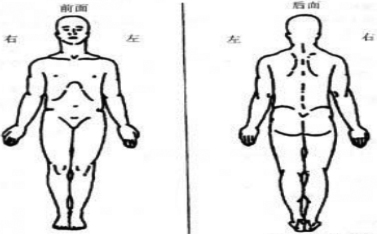
The Roland Morris Disability Questionnaire (RMDQ) was used to assess the level of disability of each pregnant woman. The RMDQ is a 24-item index of activities of daily living related to low back function that has been shown to be valid, reliable, and sensitive for measuring disability [29]. The RMDQ scores were calculated by adding the total number of affirmative answers. The total score ranges from 0 (no disability) to 24 (maximum disability); a higher score indicates a greater level of disability and poorer back-specific functioning. The results were categorized as mild disability (
Social support
The Social Support Rating Scale (SSRS) was used to assess the level of social support in each pregnant woman. The SSRS has been widely applied to the Chinese population [31, 32] and includes 10 items. Higher total scores indicate higher levels of social support. The SSRS has high reliability and validity in the Chinese population [33]. The test-retest reliability of the scale is 0.92, and the internal consistency coefficient is 0.89–0.94.
Coping style
The Simplified Coping Style Questionnaire (SCSQ) was used to assess the coping style of each pregnant woman. The SCSQ has been widely applied to the Chinese population [34]. The questionnaire includes 20 items that measure positive (12 items) and negative (8 items) coping. Each item is scored on a four-point scale (0–3 points), with higher scores indicating a greater likelihood that the respondent will use the specific coping mode. The Cronbach’s alpha coefficients of the positive and negative coping dimensions were 0.89 and 0.78, respectively.
Basic characteristics
The participants’ demographic characteristics, including age, gestational age, gestational BMI, smoking before pregnancy, parity, first pregnancy, history of abnormal pregnancy, history of pregnancy-related LBP and/or PGP, LBP and/or PGP during menstruation, area of residence, education level, average monthly household income, physical activity habits, work/life satisfaction, occupation, and perceived pressure, were recorded.
Data collection
Data were collected from July to December 2019. The purpose and significance of each questionnaire were specifically described within the questionnaire. The nursing staff asked all pregnant patients who presented to the hospital for obstetrical care if they were willing to complete a research questionnaire. Upon completion, participants returned the questionnaire to the nursing staff, who then placed it in a secure location for retrieval by the research team. A total of 1020 questionnaires were issued, and 1003 were completed (recovery rate: 98.3%).
Statistical analysis
All statistical analyses were performed using SPSS version 20.0 (SPSS Inc., Chicago, IL, USA). Continuous data were compared using the t-test, and non-continuous data were compared using the chi-squared test. Binary logistic regression was used to identify factors that were significantly associated with pregnancy-related LBP and/or PGP. Factors that were identified as significant in the univariate analysis were included as independent variables in the binary logistic regression, and pregnancy-related LBP/PGP was included as the dependent variable. Statistical significance was set at
Results
A total of 1003 pregnant women participated in the study (Table 1). The age range of the participants was 20–47 years, and gestational age ranged from 12 to 41 weeks. The mean gestational BMI was 26.28
Characteristics of pregnant women included in the study (
1003)
Characteristics of pregnant women included in the study (
SD Standard deviation, SSRS Social Support Rating Scale, SCSQ Simplified coping style questionnaire, LBP Low back pain, PGP Pelvic girdle pain, BMI body mass index.
Incidence of pregnancyrelated LBP/PGP (
SD Standard deviation, PGP pelvis girdle pain, LBP low back pain.
Pregnancy-related LBP/PGP risk factors in the single factor analysis (
SD Standard deviation, PGP pelvis girdle pain, LBP low back pain, BMI body mass index.
The prevalence of pregnancy-related LBP and/or PGP in this study was 63.0%. The mean pain intensity was 2.44
The gestational BMI was higher among participants with LBP and/or PGP than among patients without pain (
Binary logistic regressions analysis on Pregnancy-related LBP/PGP (
BMI body mass index, PGP pelvis girdle pain, LBP low back pain, OR odds ratio, CI confidence interval, SE standard error.
Gestational BMI (odds ratio (OR)
Pregnancy-related LBP and/or PGP are common in China. The incidence of pregnancy-related LBP and/or PGP in this study was 63.0%. A previous survey of 1,500 pregnant women in Turkey reported that 53.9% of pregnant women had pregnancy-related LBP [35]. A survey conducted in Nepal revealed that 34% of respondents had pregnancy-related LBP [36], and 56.8% of pregnant women in a Nigerian study reported LBP [5]. The reported incidence of pregnancy-related LBP and/or PGP varies in previous studies and may be affected by the regions included in the studies and the choice of assessment tools. In this study, a validated body chart with which the respondent pointed to the site of pain and pain intensity was used, although the pain was not clinically validated.
In this study, the mean disability score was 6.66
In this study, a high gestational BMI was identified as a risk factor for pregnancy-related LBP and/or PGP. A previous study [38] reported that being overweight during pregnancy can lead to back pain or pelvic pain and that the obesity index is an important predictor of persistent LBP after delivery. Another study found that increased weight gain during the third trimester is associated with a significant increase in the incidence of LBP [37]. These results may be because increased weight during pregnancy exceeds the compensation ability of the lumbar vertebrae, pelvis, and joints, resulting in chronic local ligament and muscle strain. When the strain reaches an irreversible state, persistent LBP and/or PGP occur. Therefore, weight management during pregnancy should be monitored so that LBP and PGP can be prevented.
The results of this study indicate that LBP during menstruation is a risk factor for pregnancy-related LBP. This may be because patients with LBP and/or PGP during menstruation have higher levels of mental stress, leading to endocrine disorders and hormone level changes, ultimately resulting in LBP and/or PGP. In addition, a history of pregnancy-related LBP and/or PGP was identified as an independent risk factor for reoccurrence in this study, which is consistent with the results of previous studies [39, 40, 41]. Patients with a history of pregnancy-related LBP and/or PGP may have experienced soft tissue injuries prior to conception that are exacerbated by the increased load on the lumbar vertebrae during pregnancy, as increased loads lead to related muscle and ligament damage, resulting in an increased risk of LBP and/or PGP [42].
The biopsychosocial factors associated with LBP and/or PGP in this study are perceived pressure and social support. Social support was identified as a protective factor for pregnancy-related LBP and/or PGP. Previous studies have reported that pregnant women with higher perceived pressure are more likely to experience LBP and/or PGP, which may be related to psychological stress generated in the working environment. A previous study [43] reported that high level of perceived pressure is a risk factor for the occurrence of PGP, and another study [44] reported that anxiety and depression are associated with LBP and/or PGP in pregnant women. The psychological status of a mother during early pregnancy is predictive of the degree of lumbopelvic pain at 36 weeks gestation [45]. Emotional stress can induce or aggravate pain symptoms, and changes in psychological stress may lead to chronic pain [46]. Therefore, pregnant women with LBP and/or PGP should monitor their physical strain and psychological status, including factors such as work stress and emotional changes. In addition, the higher the subjective support reported by the participants in this study, the lower the incidence of LBP and/or PGP during pregnancy, which is consistent with the results of a previous study [34]. The self-efficacy of patients with chronic LBP is also affected by social support [47]. Good social support has a positive effect on pain management [48]. Previous studies have reported that social support satisfaction is closely related to depression and pain intensity, as high levels of perceived social support led to a reduction in the use of passive pain coping strategies [49]. Therefore, pregnant women with LBP and/or PGP should actively use family and social resources to seek help to facilitate pain management. Healthcare workers should monitor the psychological state and level of social support of pregnant women with LBP and/or PGP and establish targeted social support intervention strategies to delay the occurrence and development of LBP and/or PGP.
This study is not without limitations, including its single-center cross-sectional design, which may limit the applicability of these findings to other populations. In addition, the data were mainly obtained using self-reported questionnaires; therefore, the data are not objective and are subject to recall bias. This study may also be limited by selection bias, as pregnant women without LBP and/or PGP may not have been sampled if those with pain were more interested in participating in the study. As this study obtained data via self-administered questionnaires, no physical examinations were conducted to categorize LBP and/or PGP. This may limit the generalizability of the study conclusions. Finally, the study did not track the pregnancy outcomes of the participants and did not assess whether pregnancy-related LBP and/or PGP impact the mode of delivery. Future research should focus on the impact of pain on the mode of delivery.
Conclusion
Pregnancy-related LBP and/or PGP is a common public health problem. The main influencing factors of LBP and/or PGP include a high BMI during pregnancy, a history of LBP and/or PGP during menstruation, a history of pregnancy-related LBP and/or PGP, constant pressure, and subjective support. With the implementation of the comprehensive third-child policy in China and the increases in cesarean section rate and pregnancy age, healthcare workers should carefully evaluate LBP and/or PGP during pregnancy and formulate professional, individualized, safe intervention programs to promote the management of LBP and/or PGP during pregnancy.
Ethical approval
The study was approved by the Ethics Board and Ethics Committee of the Henan Provincial People’s Hospital (2019-071-01).
Funding
This research was supported by the Chinese Nursing Association (ZHKY201911) and Henan Province Medical Science and Technology Research Plan Joint Construction Project (LHGJ20220037).
Informed consent
All participants provided informed consent before the study began.
Author contributions
ZYS: Conceptualization, Methodology, Investigation, Formal analysis, Writing-original draft, Data curation. FY: Methodology, Writing-original draft, Data curation. YL: Methodology, Writing-review and Editing. WHL: Writing review and Editing. ZZW: Investigation. HMZ: Review and Editing, Supervision.
Footnotes
Acknowledgments
The authors have no acknowledgments.
Conflict of interest
The authors declare that they have no conflict of interest.