




Abstract
Multi-box girder deck section (typically a twin-box) is considered an effective solution to increase the aeroelastic stability threshold. However, besides this positive feature, twin-box sections may have some aerodynamic problems that should be accurately addressed during the tailoring of the section: dependence of unsteady force coefficients of the mean angle of attack, amplitude of motion, Reynolds number; complex vortex shedding phenomenon and related vortex-induced vibrations. It is shown that small geometrical details can influence significantly the overall performance of the twin-box section, calling for further research studies on this topic.
Introduction
In the design process of super-long-span bridges, multi-box girder decks (typically twin-box) are becoming a common solution, because they improve the bridge structural and aerodynamic performances. From a structural point of view, multi-box sections allow to increase the lateral stiffness of structure, which is critical for very-long span bridges, and in addition they improve the crossing bridge functionality and structural redundancy. From an aerodynamic perspective, multi-box sections allow to increase the aeroelastic stability threshold.
Two outstanding examples are the projects of the two longest span bridges in the world: the designed solution of the Messina bridge (main span 3300 m) and the in-construction 1915 Çanakkale bridge (2023 m), which have respectively a 3-box and a twin-box girder deck section.
Other relevant examples are (see Ge and Xiang, 2009), the Xihoumen suspension bridge (main span: 1650 m, China), the Stonecutters cable-stayed bridge (main span: 1018 m, Hongkong), the Yi Sun-Shin Bridge, which is currently the longest suspension bridge in Korea bridge (main span: 1545 m). Nowadays, a new twin box girder suspension bridge named Lingdingyang Bridge with main span of 1660 m is planning to construct in south of China.
From an aerodynamic point of view, the major feature of multi-box deck sections is a reduced aeroelastic coupling between the torsional and vertical modes, due to smaller slopes of the lift and moment coefficients, which leads to higher instability speeds.
However, multi-box sections come also with some problems that require accurate studies, in order to characterize them and to eventually find a solution. The main problems are two: a complex vortex shedding mechanism and vortex-induced vibrations (VIV) with multiple lock-in speeds; a nonlinear dependence of the aeroelastic coefficients on the angle of attack. This is due to the fact the flow can either jump over the gap between the two girders or pass through it.
Several parameters can influence such behavior: the width of the gap between the box girders, the shape of the girder near the gap, the wind barrier position on the deck, and other deck appendices such as walkways, gantry rails, etc.
The problem is rather complex since minor modifications in the deck section can have a large influence on the overall aerodynamic performances of the section. At present, there is an ongoing joint research on this topic at Politecnico di Milano (POLIMI) and at Norwegian University of Science and Technology (NTNU) that is focused on the parametric dependence of such aerodynamic problems on some specific parameters (e.g. gap width, box corner cut).
This paper discusses some test cases were VIV and nonlinear aerodynamics are present and affect standard design procedures.
Twin deck geometry and key parameters
If we consider a typical twin box deck, as shown in Fig. 1, it is possible to identify a number of geometrical details of the deck the can be tailored during the design of the bridge: the gap width; the shape of the bottom corner of the girder facing the gap; the shape and position of the wind barriers for traffic safety; the shape of the nose/presence of inspection walkways.

Example of twin deck section with key parameters that can strongly influence the aerodynamic behavior.
Some of them directly influence the cost of the structure, so the tailoring of the section is always a compromise between aerodynamic and cost efficiency: as an example, the larger gap width, the higher critical wind speed and cost of the structure; another example, the corner cut allows to reduce the cost because of the steel saving, but may worsen the vortex-induced response of the structure. So, the tailoring is always a trade-off between a good aerodynamics and a cost-effective project.
Therefore, these key geometrical parameters can have a relevant effect on the overall aerodynamic performances of the deck, as it is discussed in the following.
The aerodynamic stability performances of streamlined multi-box decks have been extensively studied for many super long span bridges (e.g. Larose et al., 1997 and Yang et al., 2015). From an aerodynamic point of view, the multi-box decks have better performances in terms of stability, because of their smaller derivatives of the aerodynamic lift and moment coefficients.
As an example, if we compare a single-box girder, with a twin-box and a three-box girder, as the one shown in Fig. 2, it is possible to compare the values the derivatives of their static coefficients, which are reported in Table 1.
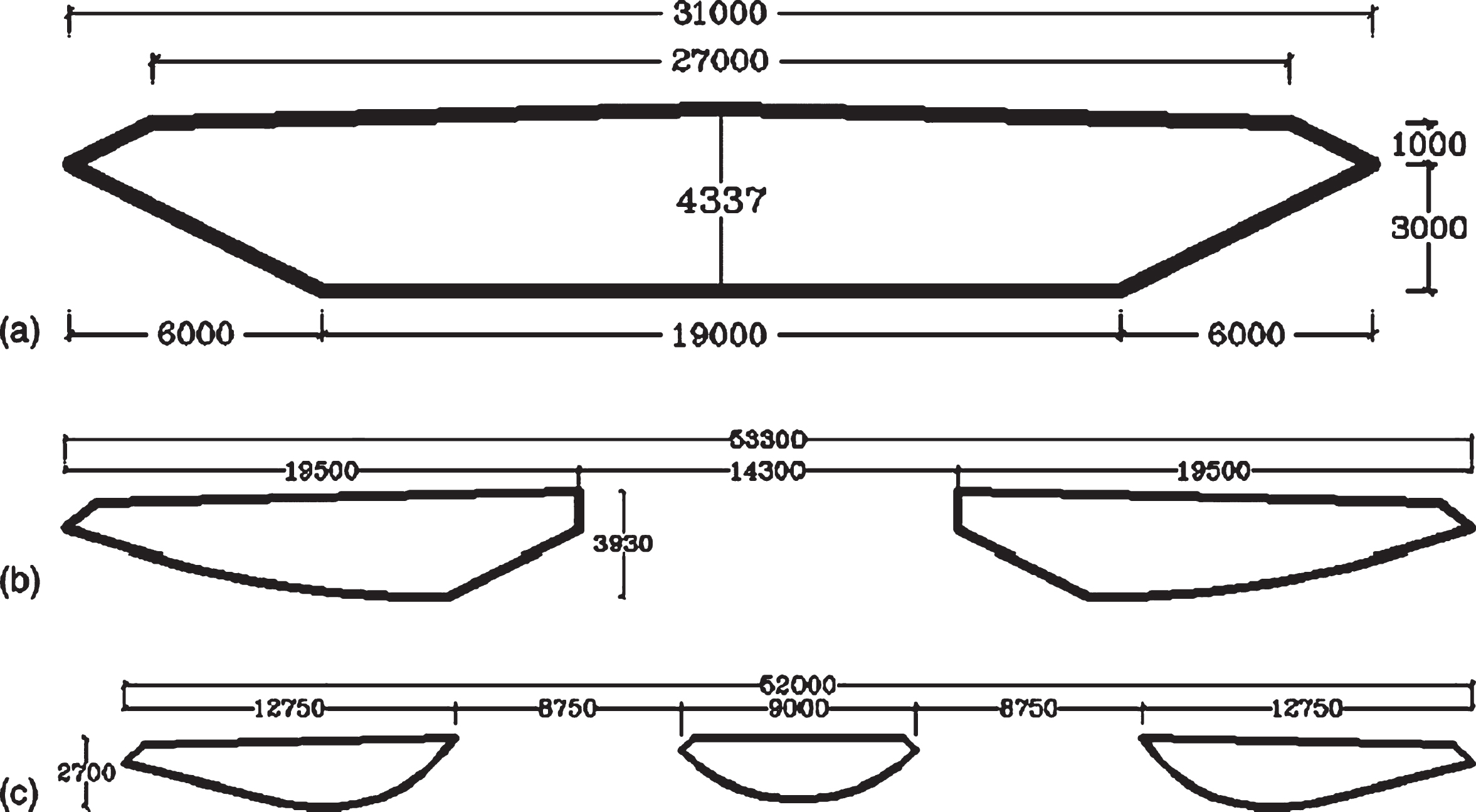
Cross-sections of decks: a) Storebaelt Bridge, b) Stonecutters bridge, c) Messina bridge (from Ebrahimnejad et al., 2014).
Aerodynamic derivatives KL and KM for different girders
The lift and moment derivatives can be halved when passing from single to twin-box girder configuration, and this effect is enhanced when and additional gap is introduced. If one compares the effects of these three different aerodynamic behaviors on the same structure (e.g. the Storebaelt) with a very simplified approach, keeping unchanged the structural parameters and changing only the values of KL and KM, the results for stability shown in Fig. 3 are obtained: it can be seen from the trend of the total damping vs. the mean wind speed that predicted flutter speed goes from 70 to 120 to 240 m/s.
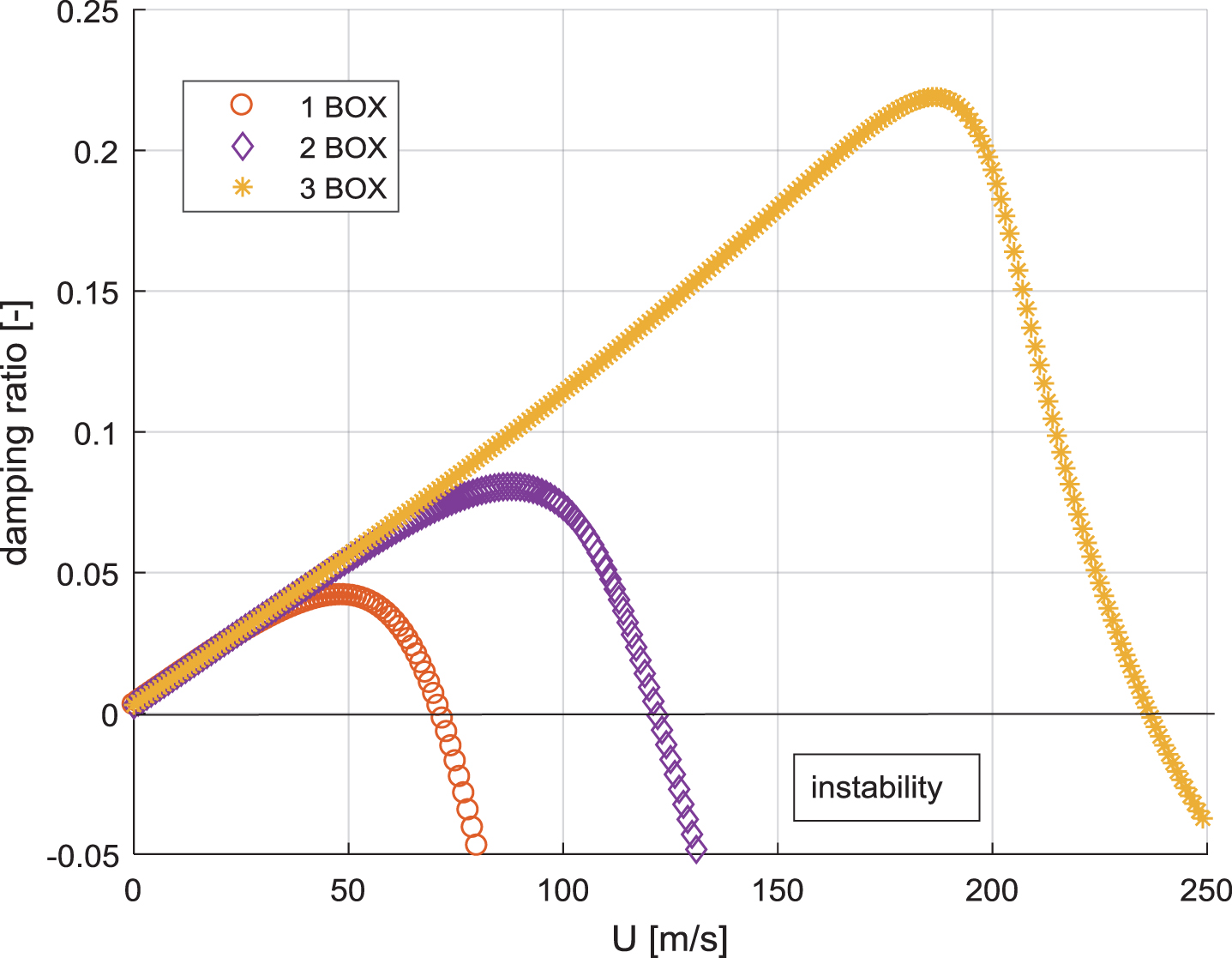
Stability performances of the three different cross-sections: trend of total damping ratio as a function of the mean wind speed.
Therefore, in principle, the twin box has better performances for aeroelastic stability than the single-box, however some problems may be present as it is described in Sections 4 and 5.
One issue, with twin-box girders, is the dependence of results on the mean angle of attack. Let us consider for example the 1915 Çanakkale bridge, as reported in Fig. 4 (from e-mosty, March 2019): three different tested configurations are presented, and we notice that the flutter speed at slightly negative angles of attack (–1.5°) can be significantly lower than at slightly positive angles on attack (for example from 53 to > 71 m/s for config A1!). Such a behavior is not present when a single-box is used.
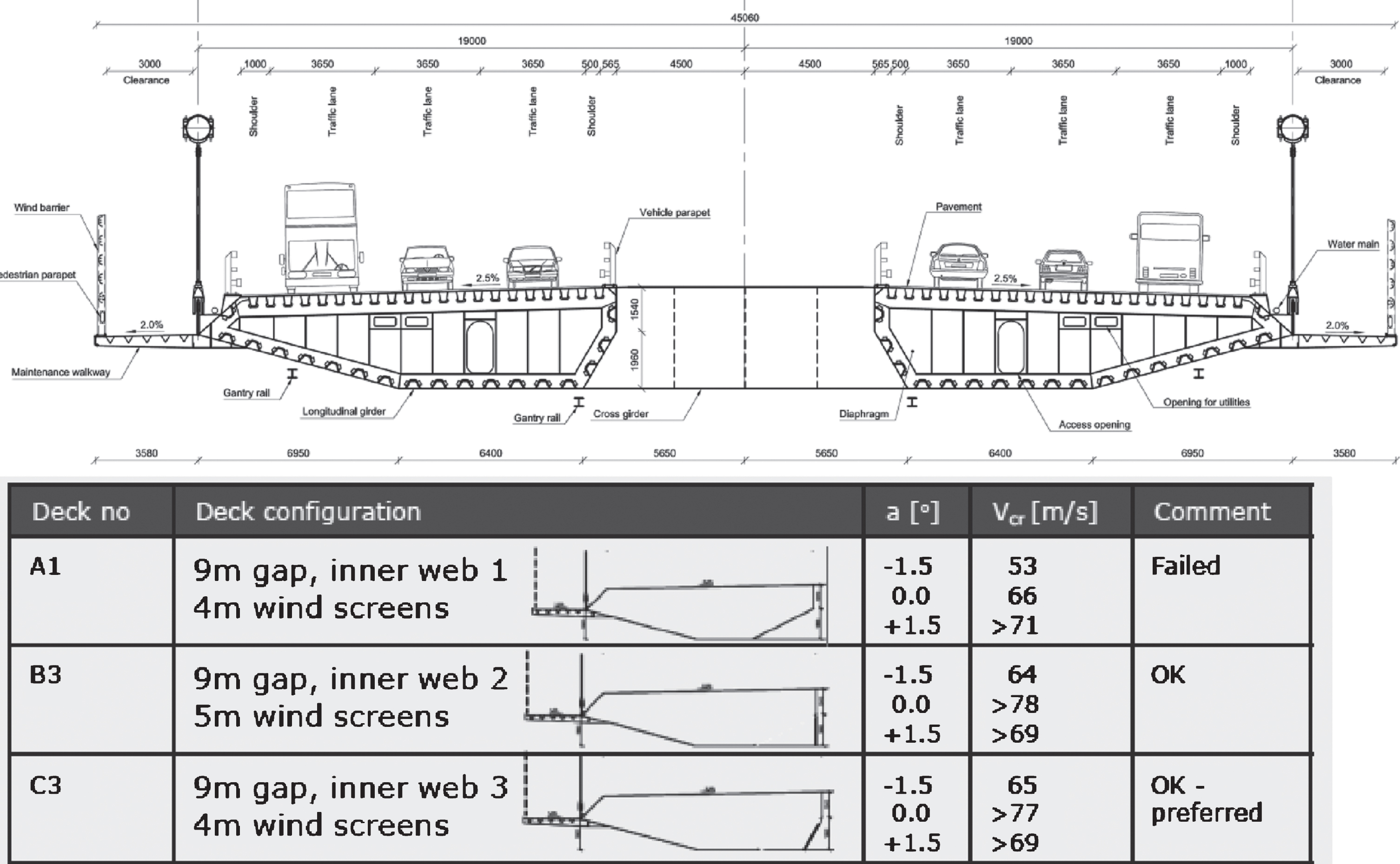
Stability performances of the Çanakkale bridge for three different tailored decks (from e-mosty March 2019).
Moreover, if the three different configurations are compared, it is clear that small details can influence a lot the overall performance: this is mainly related to the flow pattern entering or not into the gap (this is better discussed in the next section). The details can have a double effect: either they directly allow the flow to pass through the gap (e.g. corner cut), or they affect the 0° moment coefficient value, that instead of being nearly null it is positive or negative, consequently they make the deck rotate at large wind speed. This change modifies, consequently, the flow pattern in the gap.
The overall aerodynamics can be also influenced by the motion of the section and by the Reynolds number. An example was reported by Siedziako (2017 and 2018) and it is summarized in Fig. 5: for the studied twin box, whose shape is reported in the top of figure, the flutter derivatives seems to be very sensitive to the wind speed, and aerodynamic damping can even change sign as in this case, where the A2 coefficient is the torsional aerodynamic damping that can be either positive or negative.
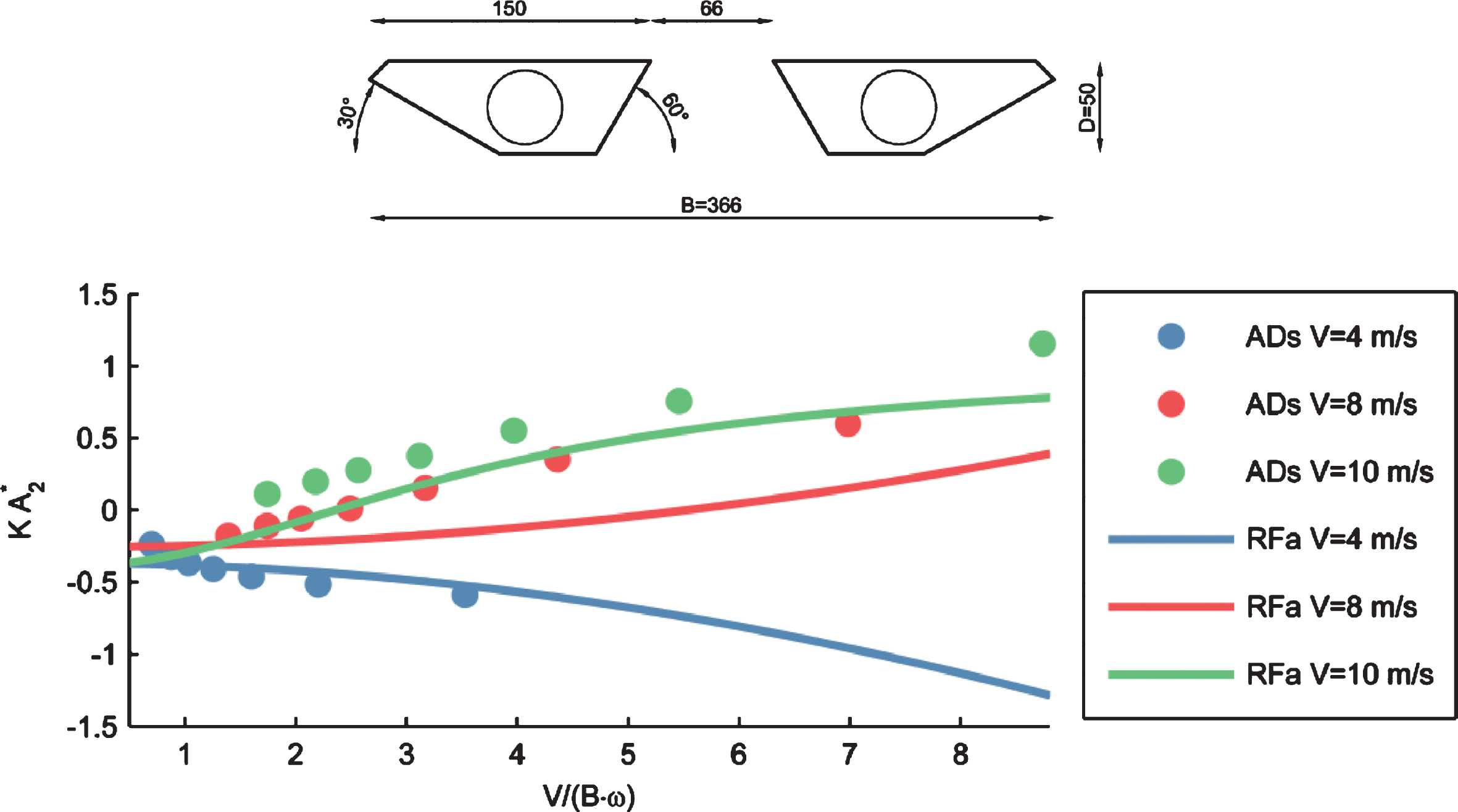
Tested twin-box section and comparison of the A*2 aerodynamic derivatives of the twin deck section model identified in the standard forced vibration tests (markers) and through random motion (lines) at different wind velocities.
Another nonlinearity that can be present is the nonlinear dependence of the unsteady force coefficients upon the amplitude of motion. As an example, for the Messina 3-box girder section (see Diana et al., 2008), we report in Fig. 6, the drag coefficient vs. the angle of attack for two different amplitudes of motion, at the same reduced frequency: it is possible to see that the force coefficient has an elliptical shape in case of small variations of the angles of attack (±0.5°, on the left), while for±5° it assumes a non-regular shape. This means that the classical linear models fail in case of large variations of the angle of attack, that are in general present because of the incoming large-scale turbulence.
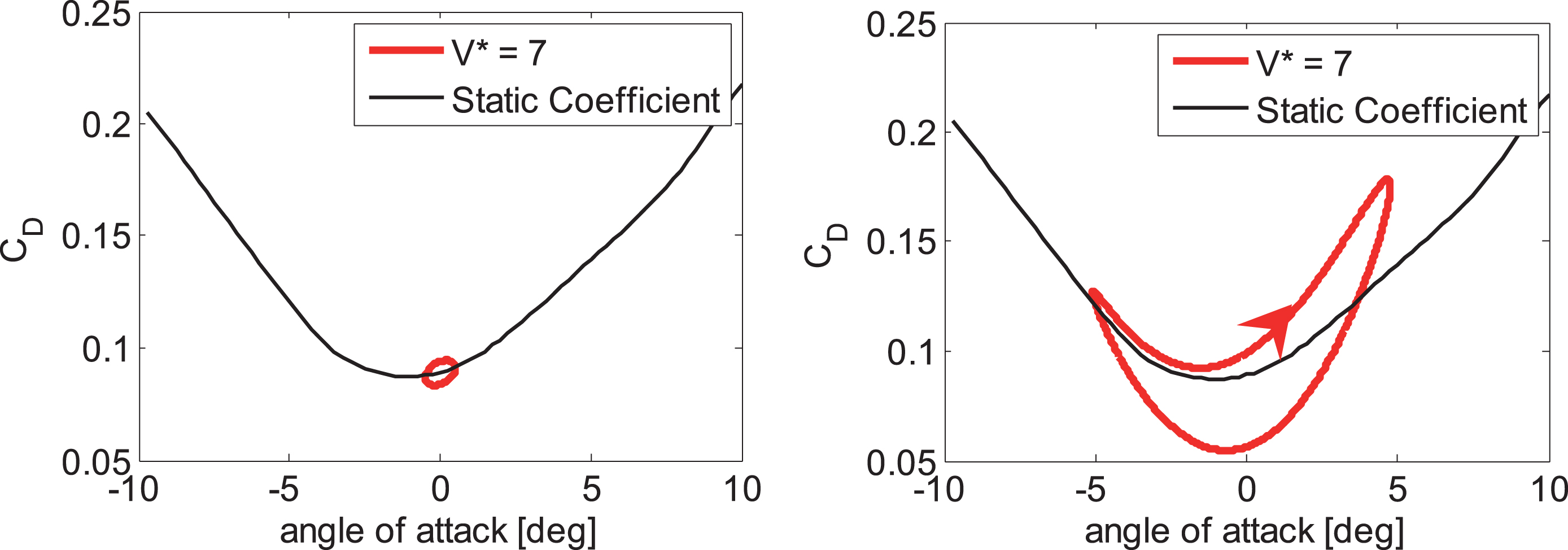
Drag coefficient of Messina deck section as a function of the amplitude of motion.
These complex aerodynamic behaviors require sophisticated modelling, and this will be the target of the on-going research POLIMI-NTNU.
The VIV may happen for multi-box girder due to the complicated flow around the box and effects of gap. This is due to the fact the flow can either jump over the gap between the two girders or pass through it. Several parameters can influence such behavior: the width of the gap between the box girders, the shape of the girder near the gap, the wind barrier position on the deck, and other deck appendices such as walkways, gantry rails, etc.
In the following, four examples are presented to show how minor modifications in the deck section can have a large influence on the overall aerodynamic performances of the section, changing both vortex shedding and vortex induced vibrations.
Recently, unexpected vortex-induced vibrations were observed in the Yi Sun-Shin Bridge, which is currently the longest suspension bridge in Korea, Fig. 7. The main cause of the VIVs in the Yi Sun-Shin Bridge was found to be related to a lack of input concerning the importance of aerodynamic shapes with respect to the bridge deck (see Kim et al., 2018). At the time the VIVs occurred, replacement work involving epoxy-coated pavement was being carried out on the deck of the bridge. Since it was necessary to maintain the ambient temperature for curing the pavement materials, the workers had installed temporary shields on the guard rails on both sides of the deck in order to minimize the cooling effects of the wind. The temporary shields on the guardrails changed the aerodynamic performance of the deck and eventually induced vibration. However, during the investigation of the Yi Sun-Shin Bridge, the modal damping ratios were also identified from the monitoring data. The damping ratios of the first and second symmetrical vertical modes ranged 1∼2% to the critical damping ratio, but a relatively low damping ratio of around 0.4% was identified for the third and fourth symmetrical vertical mode, which is equivalent to the design damping ratio. The Yi Sun-Shin Bridge was subjected to the VIV tuned to the fourth vertical symmetric mode. The observed VIVs were initiated by human factors instead of structural performance deficiency, but it was nonetheless tuned to this mode, and the observed lock-in phenomenon could have somehow been related to a relatively low modal damping ratio for the specific mode.
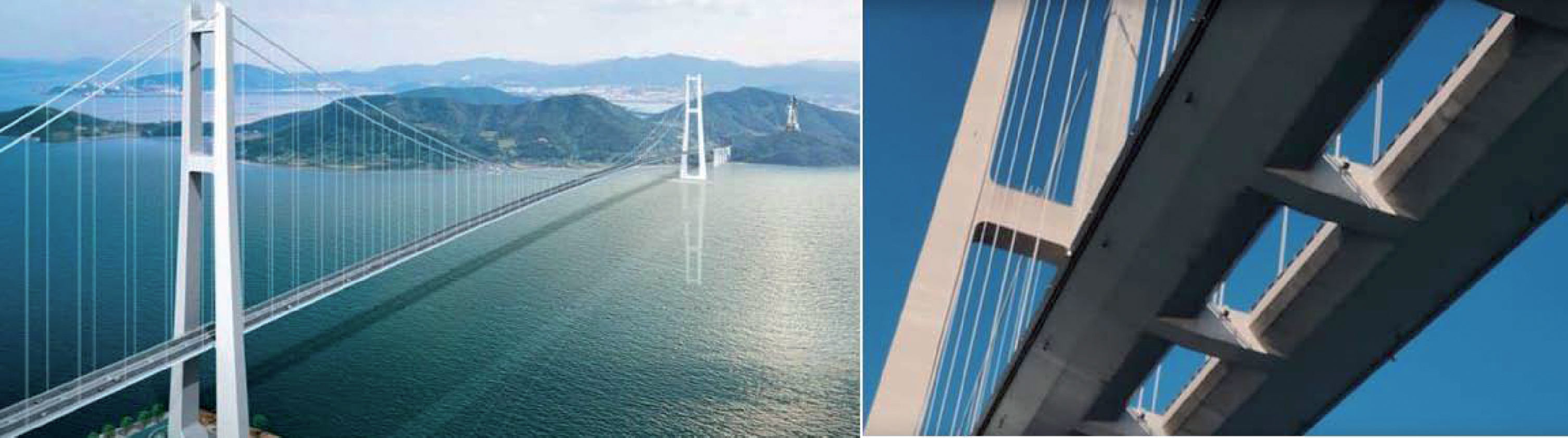
Yi Sun-Shin Bridge: a) View of the Suspension bridge, b) View of the twin-box section.
A series of wind tunnel test was performed at Seoul National University Wind Tunnel using a 1:70 Scale model to reproduce the observed VIV, see Kim et al. 2015. To reproduce the vibration, tests were divided into two parts. First one was executed with an original section and the second one was conducted with temporal screen. Figure 8 shows the V-A curve for the vertical displacement of two cases, where Sc is Scruton number. All responses are calculated in double-amplitude. It was found that the source of the unexpected vibration was the temporal screens and the new aerodynamic shape of the deck.
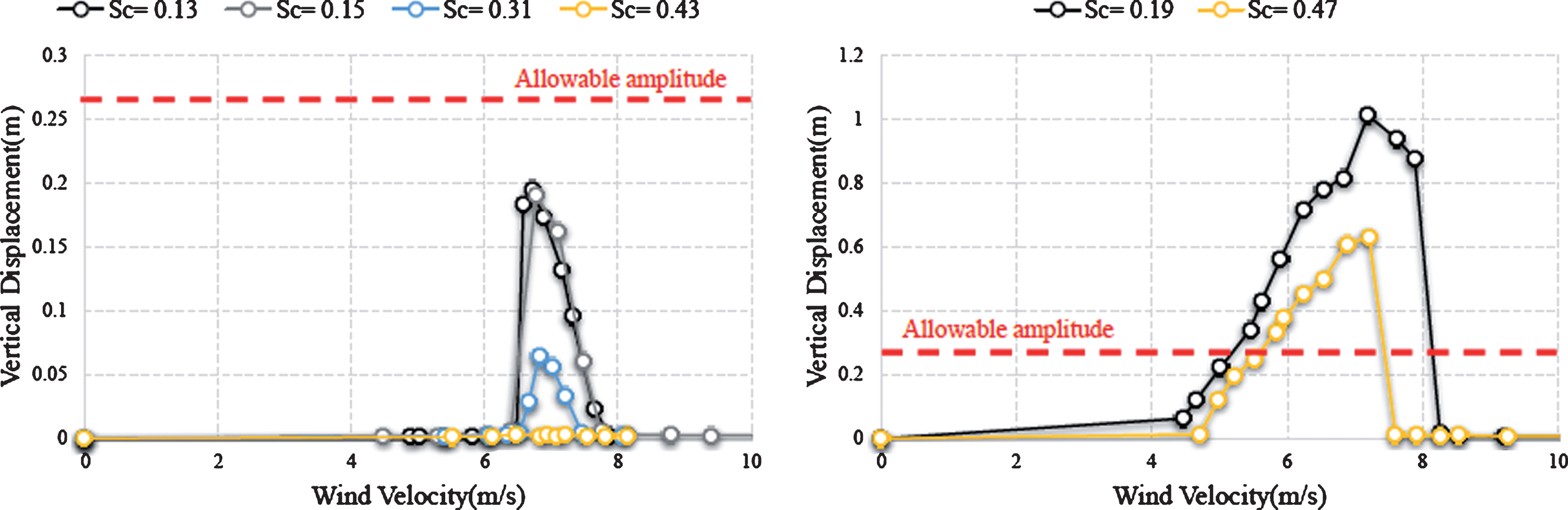
VIV diagram (V-A curve) a) original section, b) original section with screens.
Another example of variation of vortex shedding due to small modifications in the deck section is the Stonecutters bridge in Hong Kong, see Hussain et al. 2010. It is known that vortex-induced vibrations of box girder bridges can be mitigated by the installation of guide vanes that ensure that the wind flow is accelerated at the separation point and rhythmic vortex formation is pushed away from the girder into the wake flow. For the Stonecutters bridge, guide vanes schemes were designed for two sections and wind tunnel tests were performed. Results at different Reynolds number show that the guide vanes mitigate the vortex-induced deck oscillation at high Re. Wind tunnel tests demonstrate the success of the guide vanes concept for mitigating vortex shedding excitation through hot wire measurements of the flow into the guide vane, through the free response diagram of the bridge and finally through the RMS of the pressure signals obtained from an array of 106 pressure taps. Figure 9 shows the detail of the cross-section of the Stonecutters bridge with the original guide vanes and the new ones called “modified A”. On the same figure the VIV diagram is reported, where the non-dimensional response of the bridge is plotted with and without guide vanes.
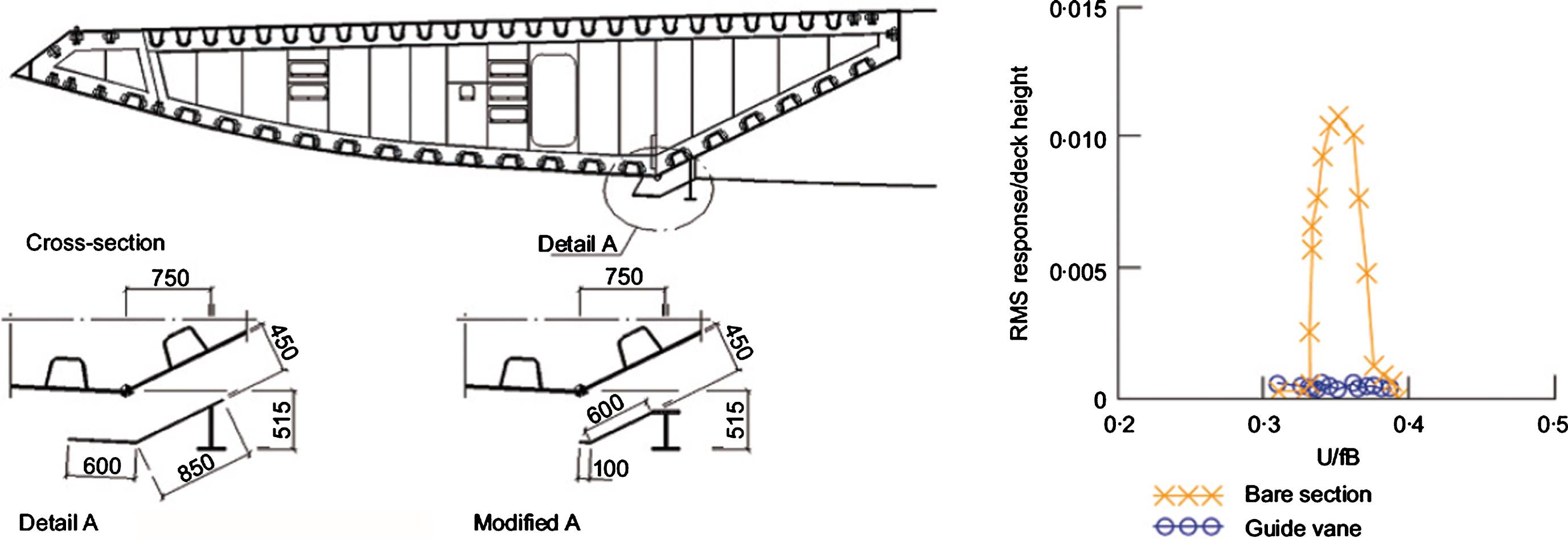
Detail of the optimized guide vanes (modified A) and non-dimensional response of the bridge (dimension in mm).
Figure 10 shows the RMS pressure distribution around the deck section. It is noted that the dynamic pressure is reduced 10 times by the guide vanes. In particular, the very high oscillatory pressures acting on the downwind box section facing the gap were mitigated. An indication of the flow patterns for the section without the guide vanes is also sketched and superimposed in order to illustrate the vortex pattern.
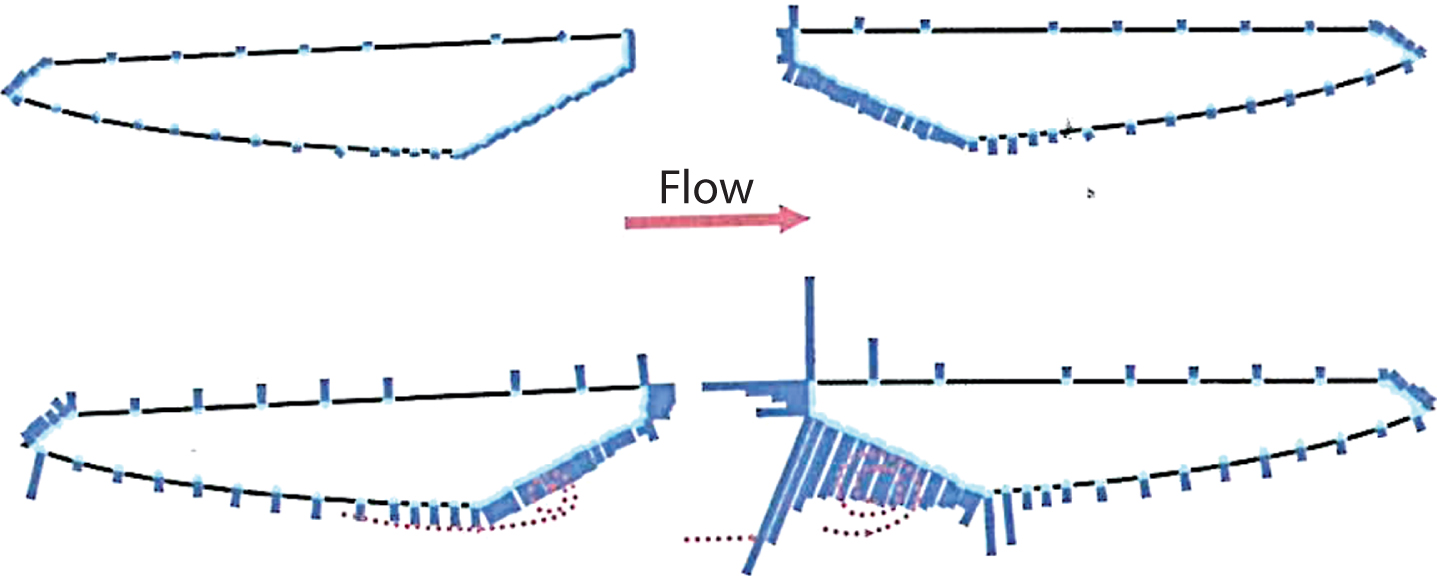
Root mean square pressure distribution about the deck section with and without guide vanes respectively.
The third example shows how the shape of the girder near the gap may influence the vortex shedding and the VIV phenomena. The twin-box sectional bridge was tested in the boundary layer test section of the Politecnico di Milano wind tunnel. The bridge model was tested in two different configurations, reported in Fig. 11. With the same cross-section, but with a different corner cut near the gap, the vortex shedding changes dramatically. Figure 11 shows the VIV diagram for the vertical displacement of two cases, where the non-dimensional response of the bridge model is plotted against the reduced velocity V*, where V* = V/f B, with V the mean wind speed, f the frequency and B the deck chord.
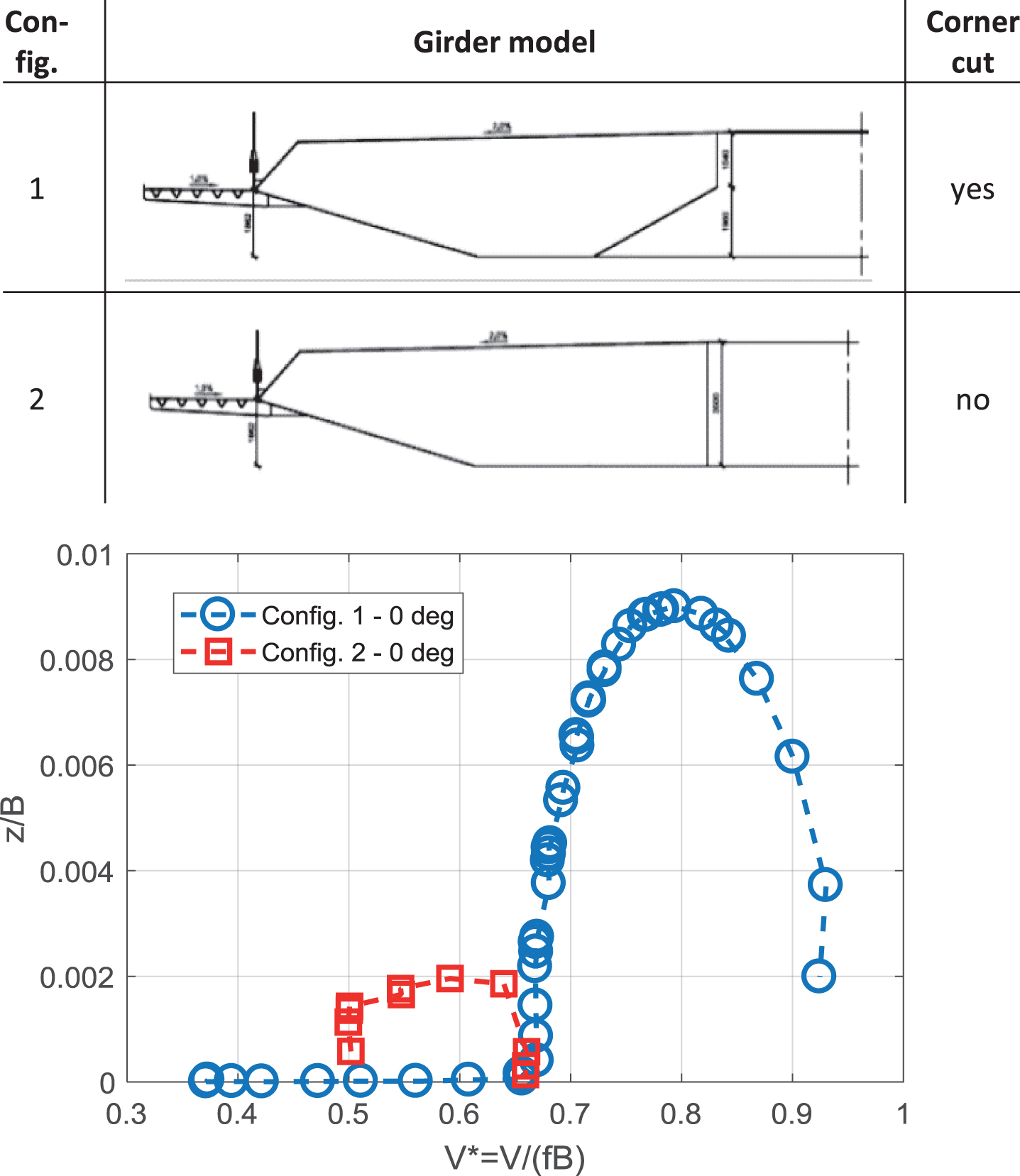
a) detail of two configurations of cross-section b) non-dimensional response of the bridge for the two configurations.
The different corner cut of the girder of configuration 2 modifies extremely the amplitude of the bridge response, changing also the peak of the lock-in region, so varying the frequency of vortex shedding.
Moreover, for vortex shedding the presence of multiple boxes often introduces multiple lock-in ranges. As an example, the VIVs amplitude for the Messina bridge, which is a 3-box deck, are reported as a function of the reduced wind speed in Fig. 15. Two lock-in regions are now present, since the Messina 3-box deck (see Belloli et al., 2014).
The experiments were performed at Politecnico di Milano wind tunnel: the aerodynamic characterization of the multi-box deck of Messina Strait Bridge was carried out using two rigid sectional models 1 : 45 scaled. The models differed only for the shape of the rail box girder, in particular the angle of the lower inclined panels assume different values as shown in Fig. 12.
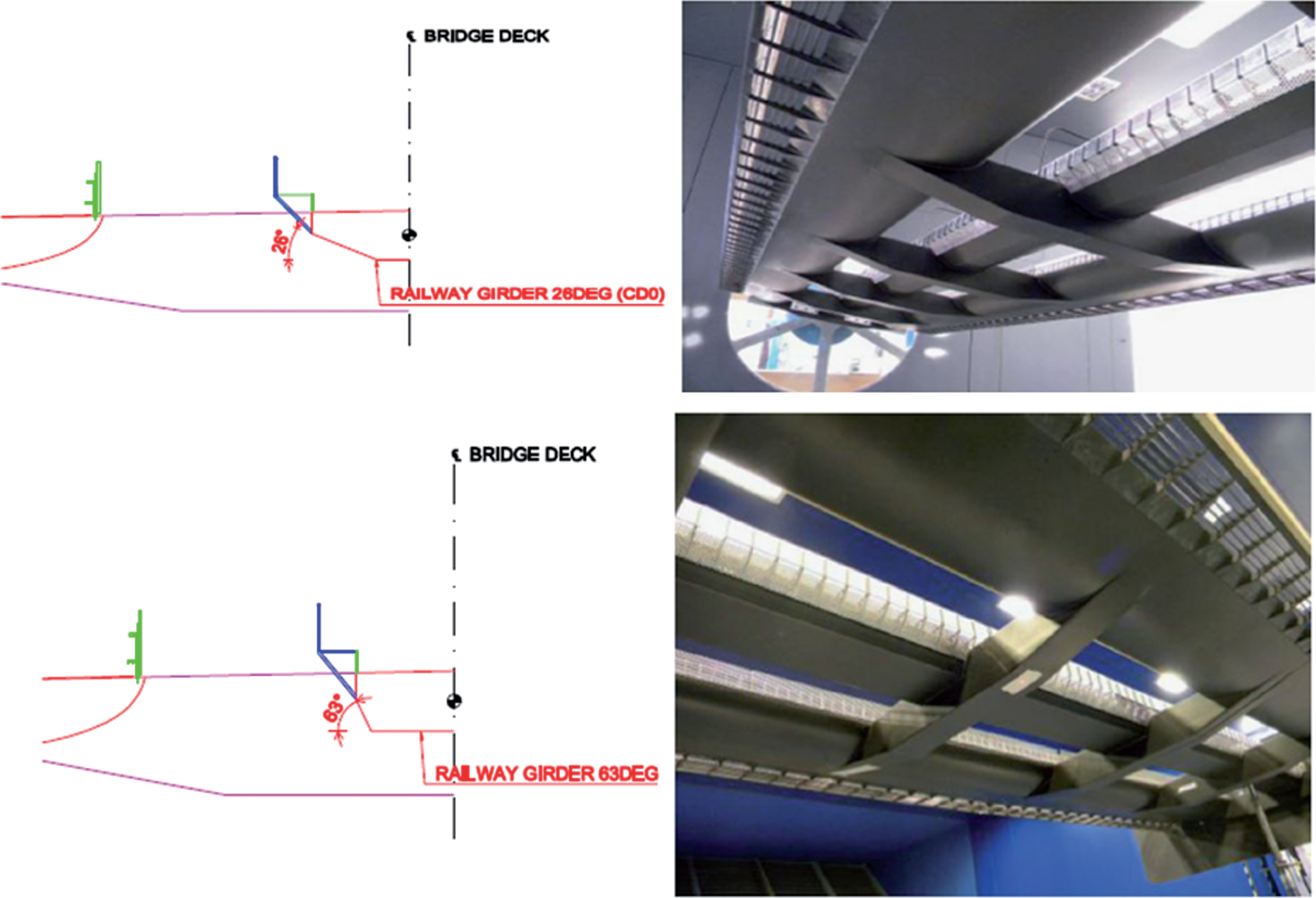
a) MB01: railway girder lateral side slope 26 deg, b) MB021: railway girder lateral side slope 63 deg.
Figure 13 shows the pressure distribution measured on the first model (MB01) when it experiences vortex shedding at V = 4.64 m/s. The dynamic part of the pressure coefficient fluctuations measured at the vortex shedding frequency is reported. The arrows lengths are proportional to the value of the peak pressure coefficient fluctuation. In this condition the mid-span of the model was moving of about 1.33 mm i.e. a nondimensional displacement of 0.001 normalized on the chord B. This representation is useful to appreciate how the vortex shedding mechanism is generated. The separation point moves along the upwind box and the vortex street is driven by the rail box (central one). Figure 13 highlights that there is a strong pressure fluctuation in the gap between the downwind roadway girder and the railway girder. The flow in the gap between the central and the downwind boxes strongly influences the vortex wake. The fluctuating flow between the two girders was observed also through smoke visualization. Figure 14 shows four screenshots caught during the tests.

Screen shots during the flow visualization tests.

Screen shots during the flow visualization tests.
This kind of vortex generation was observed also in Kwok et al. (2012) for a medium/high level of gap width between two twin decks. Kwok identified three sources of vortex shedding for twin-deck bridge: the vortices can shed from the trailing edge of the upstream deck, from the trailing edge of the downstream deck or they can be generated by the gap between the two decks. In this last situation the downstream deck is immersed in the wake of the upstream one and large negative pressures are observed on it due to separated flow. In the present case the gap between the downstream roadway girder and the railway girder seemed to be responsible of the observed vortex shedding and the high level of negative pressure measured on the downstream deck suggest that it can be considered immersed in separated flow.
For the second configuration, MB02, small vortex induced vibrations occur, the modulus is strongly lower than the one measured on the MB01 configuration. For this reason, the shape of the rail box girder has been evaluated fundamental in influencing vortex shedding phenomenon.
At higher wind velocity Model MB02 seems to experience vortex shedding as model MB01, but with a lower level of vibrations when synchronization occurs.
In order to better understand the flow-structure interaction for both the models, the second set-up was designed. Suspended set-up permits to evaluate the dynamic response on vertical direction of the sectional model, at different wind velocities. Only the 0 deg angle of attack was tested. The wind velocity was increased step by step and the dynamic behavior of the deck was measured.
Figure 15 reports the steady state non-dimensional amplitudes (z/B) measured for different structural damping for the configurations MB01 (left) and MB02 (right). The responses have been evaluated as a function of the reduced wind velocity, varying the Scruton number (Sc). r0 corresponds to Sc = 0.1, r2 to Sc = 0.25, r4 to Sc = 0.44.
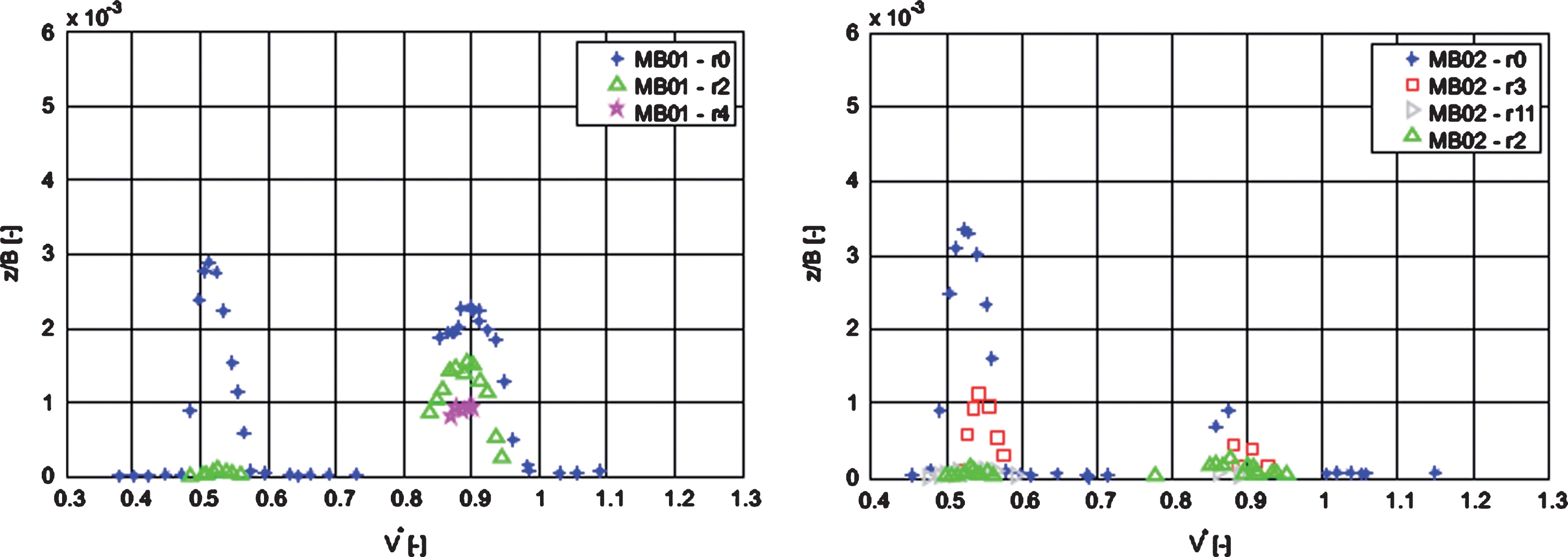
Steady state response: non-dimensional oscillation amplitude, flexural motion as function of the reduced velocity varying the Scruton number (left) MB01 (right) MB02.
While single box deck shapes generally show a single mechanism of vortex shedding, basically related to the vortexes detached in the girder wake, multi box decks may present different vortex shedding phenomena because of the different possibility of flow interactions between the wake of the upwind box and the other boxes. As observed in terms of non-dimensional displacement, two lock-in regions can be identified. The first one is similar for the two models and can be easily controlled increasing non-dimensional damping. The second one is more important for model MB01 and it is characterized by high level of lift coefficient, for the down-wind girder. When vortex shedding occurs also the level of the fluctuating lift force synchronous with the displacement increase (see Zasso et al., 2008).
Model MB02 in correspondence of the first lock in region shows a pressure distribution similar to the one observed for model MB01. In both cases, high suctions were measured especially in the upwind road girder. This confirms the results observed in terms of dynamic response of the two models in correspondence of the first lock in region. On the other hand, in correspondence of the second lock in region, model MB02 experienced very low values of surface pressures: in particular the downwind road girder is characterized by suctions three times lower with respect to the ones measured on model MB01. This behavior confirms the different attitudes of the models to the second vortex shedding mechanism highlighting the more advisable behavior of model MB02 compared to model MB01, in terms of dynamic response.
Twin-box and multi-box girder decks are interesting solutions that, beside good aerodynamic stability features, may have some aerodynamic problems that should be assessed through specific wind tunnel tests.
We presented some example of nonlinearities in the unsteady aerodynamic forces and in responses of twin-box decks, which are very sensitive to several geometric parameters of the deck configuration. A future joint research POLIMI-NTNU will be focused on these topics starting from the deck section reported in Fig. 16, and it will start investigating the gap with and the corner cut effects.
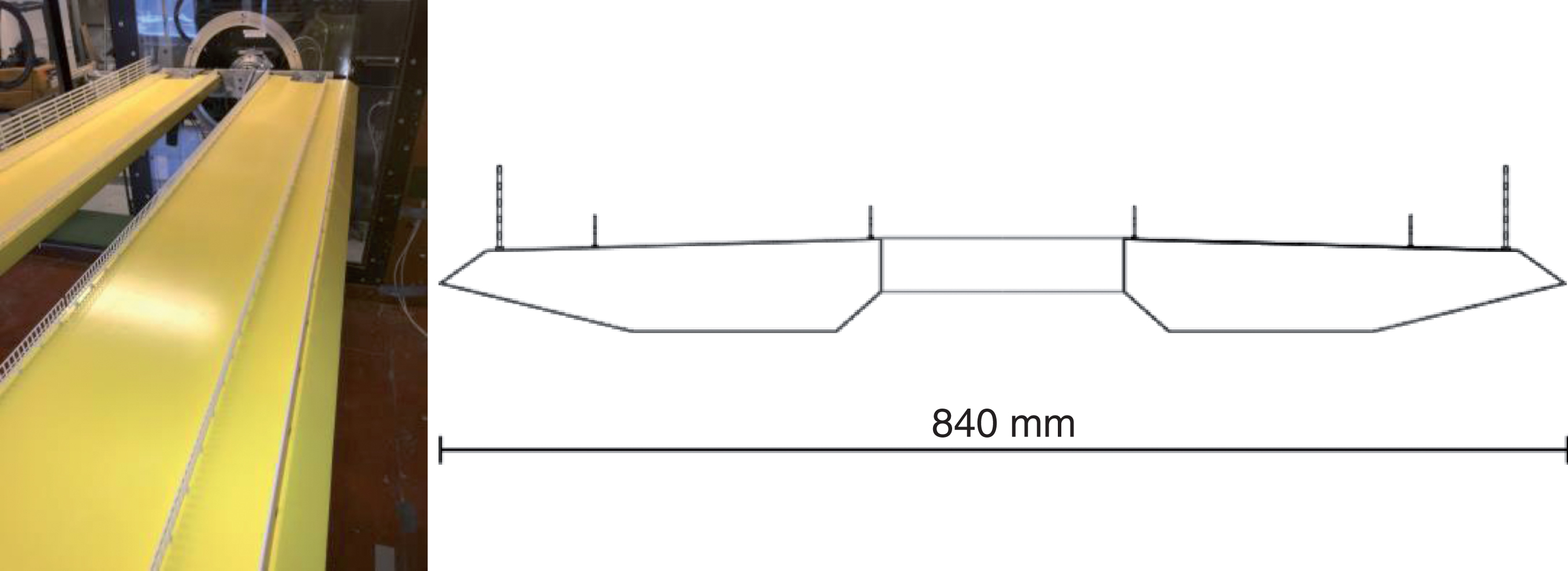
The twin-deck section under study: picture and drawing.
Conflict of interest
None to report.