



Abstract
Marine environmental pollution caused by plastic wastes has been studied for 50 years, although that research has produced limited recommendations regarding reduction, prevention and control of such wastes. The large annual volume of such pollution enters the marine environment in many ways and lasts a long time, causing harm to marine fauna through entanglement and ingestion of toxic components, which can affect their reproductive capacity and the food chain, and negatively impact human health as well. Viet Nam is fourth in the list of the 20 countries discarding the greatest amounts of plastic waste into the sea on an annual basis. This paper provides an overview of research on the sources of marine plastics pollution, and analyses of its impacts on marine life, marine ecosystems and human health. It briefly reports about the quantity of marine plastic waste that washes up in the coastal region of Viet Nam and offers recommendations to help minimise and manage plastic waste generated by ships.
A huge amount of plastic waste is released into the oceans annually. A recent study indicates that it amounts to 4.8–12.7 million metric tons (MMT) per year (Jambeck et al., 2015). The quantity of plastic marine debris discharged into Vietnamese coastal waters is about 0.28–0.73 MMT (Jambeck et al.) so that Viet Nam is among the top 20 countries on the list that describes the quantities of mismanaged plastic waste in 192 countries all over the world. Land-based plastic waste accounts for 80 percent of the total, while the remaining 20 percent is from marine activities, including ships and fishing vessels, which are the main sources of plastic found in the sea (Sherrington, 2016).
Until Annex V of the International Convention for the Prevention of Pollution from Ships, 1973 as modified by the Protocol of 1978 (MARPOL 37/78) was officially put into effect, plastic wastes and other garbage from ships as well as from fishing vessels had been discharged into the marine environment freely (National Research Council, 1995). Since this Annex entered into force in 1988, however, the discharge of all ships’ garbage, including plastic waste, has been strictly regulated – when at sea, ships are forbidden from discharging their plastic waste (International Maritime Organization, 1988). In spite of this strict regulation, however, there is still a gap in plastic waste management.
This paper focuses on research into international conventions dealing with the prevention and control of plastic waste from ships, and Viet Nam’s regulations on this issue.
This article seeks to achieve the following objectives: To review and analyse international conventions and Viet Nam’s regulations related to the prevention and control of plastic waste from ships; To categorise sources of plastic waste in the marine environment; To determine the quantity of plastic waste in the marine environment, in particular in Viet Nam’s coastal waters; To demonstrate the potential effects of marine plastics on marine life and human health; To work out a solution for reducing and controlling plastic waste.
That study summarised by this article was based on a literature review encompassing the collection and analysis of more than 60 academic articles, and a significant number of international conventions, laws and other legal documents. The study employed a theoretical approach, using both qualitative and quantitative data from secondary sources of data.
Literature Review
Many studies over the years have examined the sources of plastic in the marine environment; the impacts of plastic waste on marine life, ecosystems and the economy; and solutions to minimising plastic waste, as well as preventing marine plastic.
Sources of Plastic in the Marine Environment
The most significant sources of plastic in the marine environment are generally believed to be land-based (Sherrington), but such waste also originates from marine activities associated with shipping (Horsman, 1982) and fishing vessels (Merrell, 1980; Coleman and Wehle, 1984; Pruter, 1987; Chen and Liu, 2013). So far, only Horsman has focused on investigating and examining the huge amount of waste, in particular plastic waste, generated and discharged into the marine environment from ships. He provided the data for further studies on the source and impact of ships’ waste on the environment and on their management of plastic waste. Fishing vessels also discharge other types of plastic waste, however, including fishing gear, nets and lines (Merrell). Chen and Liu contributed important data, demonstrating the enormous amount of plastic waste from fishing vessels that would be discharged into the environment if these matters were not subject to strict management, while pointing out that most of the world’s fishing vessels are less than 400 gross tonnage (GT), and therefore do not have to comply with all the provisions of the MARPOL 73/78 Annex V.
Meanwhile, the biggest contribution to studies on the amount of plastic waste dumped from the mainland into the marine environment was conducted by Jambeck et al. (2015). Their figures show that a huge amount of plastic waste is still discharged from the coastal countries annually and their study serves as a basis for conducting research on the harmful effects of plastic waste on marine life, and for studies on preventing and reducing plastic waste in the marine environment.
Impacts on Marine Life and the Economy
Plastic debris is hazardous to all marine life, but particularly to marine animals that may become entangled in it or may ingest it. Entanglement was first generally reported in 1931 in Cojimar Bay, Cuba, where a shark was found entangled in a rubber car tyre (Gudger and Hoffman, 1931). Since then, many studies related to the entanglement of marine wildlife in plastic have been conducted, including on fur seals (Waluda and Staniland, 2013; Page et al., 2004; Arnould and Croxall, 1995); grey seals (Allen et al., 2012); gannets (Votier et al., 2011; Rodríguez et al., 2013); turbot, cod and long-tailed duck (Szulc et al., 2015); turtles (Laist, 1997; Kühn et al., 2015); sea lions (Page et al.; Raum-Suryan et al., 2009); seabirds (Hong et al., 2013; Žydelis et al., 2013); whales (Neilson et al., 2009; Knowlton et al., 2012); and cetaceans generally (Baulch and Perry, 2014).
Regarding ingestion, many researchers have confirmed that a large number of marine animals mistake plastic for food (Day et al., 1985; Laist, 1997; Mrosovsky et al., 2009; Tourinho et al., 2010; Hoarau et al., 2014; van Franeker and Law, 2015; Schuyler et al., 2014). In 1973, the earliest recorded occurrence of plastic in the stomachs of marine wildlife was in sea birds (Rothstein, 1973; later confirmed by Day et al.). However, since then, plastics have also been found in the stomachs of many other marine creatures. Such studies have focused on whales (Stephanis et al., 2013), sea turtles (Bjorndal et al., 1994; Mascarenhas et al., 2004; Mrosovsky et al.), cetaceans (Baulch and Perry), Shearwaters (Lavers et al., 2014) and other marine turtles, birds and mammals (Laist, 1997; Kühn et al.).
Most of the above-mentioned authors got their primary data by surveying, collecting or tracking a particular species, then conducting research, analysis and evaluation. Meanwhile, Laist (1997) and Kühn et al. provide detailed and comprehensive statistics on the numbers, rate and impacts of marine animals entangled in, or ingesting, plastic.
Studies have demonstrated the impacts on marine wildlife of entanglement or ingestion all over the world from Spain (Stephanis et al.) to Korea (Hong et al.) and the South-West Indian Ocean (Hoarau et al.), and from Brazil (Mascarenhas et al.) to the North Atlantic (Knowlton et al.) and Baltic Sea (Szulc et al.). In addition, marine plastic can also serve as a mobile home for some species, and move them to other waters where they may be invasive or cause other impacts on the ecosystem and native creatures (Gregory, 2009; Barnes, 2002; Sheavly and Register, 2007). Barnes conducted research on about 200 items drifting onto the coast of 30 islands, from the Arctic to the Antarctic. He discovered that there were many strange creatures residing in this marine debris. He also estimated that floating objects in the ocean released by humans doubled or even tripled the spread of marine species. The movement of marine debris caused the spread of invasive and/or alien species, threatening native species and biodiversity in many areas.
Studies have also focused on the economic impacts of marine plastic on aquaculture, fishing and tourism (Hagen, 1990; Newman et al., 2015; Sheavly and Register). Newman et al. detailed statistics on the cost of removing marine litter from the coasts of the UK, Belgium and the Netherlands (citing Mouat et al., 2010), South Korea (citing Jang et al., 2014) and specific coastal areas in the US (citing Leggett et al., 2014 on plastic waste in Orange County, California). That study also considered the cost of removing marine litter from UK ports and harbours; the loss of a large amount of crabs killed by fishing nets in Puget Sound, Washington, US; and losses for aquaculture and agriculture. Twenty-five years earlier, Hagen (1990) pointed out how much the US government was spending on cleaning up its coast, and then discussed other economic impacts of various types of plastic waste, including lost fishing equipment that has to be replaced and re-equipping fishing vessels.
Hagen noted that synthetic fishing nets can exist in marine environments for at least six years, and are therefore a long-term threat to marine wildlife. Beyond this, of course, marine debris (including plastic) can also be a threat to vessels, by getting tangled up with rudders or propellers, blocking intake pipes or other hazards (Hagen; National Research Council; Sheavly and Register; Newman et al.). Removing such debris often causes additional damage and therefore additional expense.
Solutions
Many studies deal with the issue of reducing and preventing the discharge of plastic wastes into the environment by shipping and fishing vessels (see, e.g., Bean, 1987; Hagen; Quayle, 1992; Sheavly and Register; Joyner and Frew, 1991; Chen and Liu; Pawar et al., 2016). Hagen studied international conventions, especially Annex V MARPOL 73/78 and US regulations relating to plastic waste, in order to provide suggestions for effective implementation of Annex V, strengthen the effectiveness of Annex V, and prevent and control the amount of plastic waste from ships and fishing vessels. Joyner and Frew also concentrated on analysing the relevant international conventions and regional instruments to provide solutions to this issue, while Chen and Liu provide suggestions for developing waste recycling practices, environmental education, reception facilities at ports, providing rewards and making regulations to improve management of fishing vessels.
Meanwhile, Bean offers an analysis of regulations to prevent the dumping of plastic from vessels and land-based sources. In addition to regulations for preventing and controlling the discharge of plastics into environment, he suggested the production of biodegradable plastics that can be recycled, as a way of minimising plastic waste in the marine environment. However, this depends heavily on the policies and conditions of each country.
To sum up, there are many studies on the sources of plastic in the ocean, and the impacts of plastic on marine wildlife and the economy, as well as the management of plastic waste both from land- and marine-based sources. The above-mentioned studies are the academic basis of, and important secondary data for, the authors’ research by providing a deep insight into the issue. Although Viet Nam is one of the worst countries in the world in terms of discharging plastic waste into the marine environment, however, there are few studies on the impact of these issues in Viet Nam itself. Thus, this article hopes to provide both a theoretical and practical contribution to the problem by offering a brief statistical overview of plastic waste in Viet Nam’s coastal waters, and recommendations for Viet Nam to mitigate plastic waste, in particular, plastic waste discharged from cargo ships, merchant ships and fishing vessels into the marine environment.
Plastic in the Marine Environment
Plastic waste from land sources is discharged into the marine environment either deliberately or incidentally (Jambeck et al.). There are many ways that plastics can enter the ocean, one of these being via rivers. Lebreton et al. (2017) showed that rivers in Asia introduce approximately 67 percent of this annual global flow of plastic waste into the sea. The Yangtze River is the largest source of plastic waste, transferring approximately 330,000 tonnes into the sea in 2015. Jambeck et al. estimated that the total amount of plastic waste from 192 coastal States discharged into the marine environment was 4.8–12.7 MMT. They also predicted that unless plastic waste is better managed, the amount of plastic waste dumped into the sea will increase many times by 2025. The Asian region, especially China, India and Sri Lanka, is a hot spot of inadequate management of such waste (Jambeck et al.).
Meanwhile, marine-based plastic waste comes primarily from marine operations, in particular from merchant ships (Horsman) and fishing vessels (Coleman and Wehle; Good et al., 2010; Chen and Liu). Horsman points out that up to 639,000 plastic containers are discharged into the sea every day, while Coleman and Wehle reveal that fishing vessels discharged more than 52 million pounds (equivalent to 26,000 tons) of plastic packaging material into the marine environment and lost more than 298 million pounds (equivalent to 149,000 tons) of plastic fishing gear, including nets, lines, ropes and buoys. By 2010, the amount of fishing gear discharged into the sea had increased to 640,000 tons according to Good et al. In addition, with most ships in the world’s fishing fleet being less than 400 GT (Chen and Liu), and therefore not required to have a garbage record book (to comply with MARPOL 73/78 Annex V), these vessels are free to discharge waste at sea.
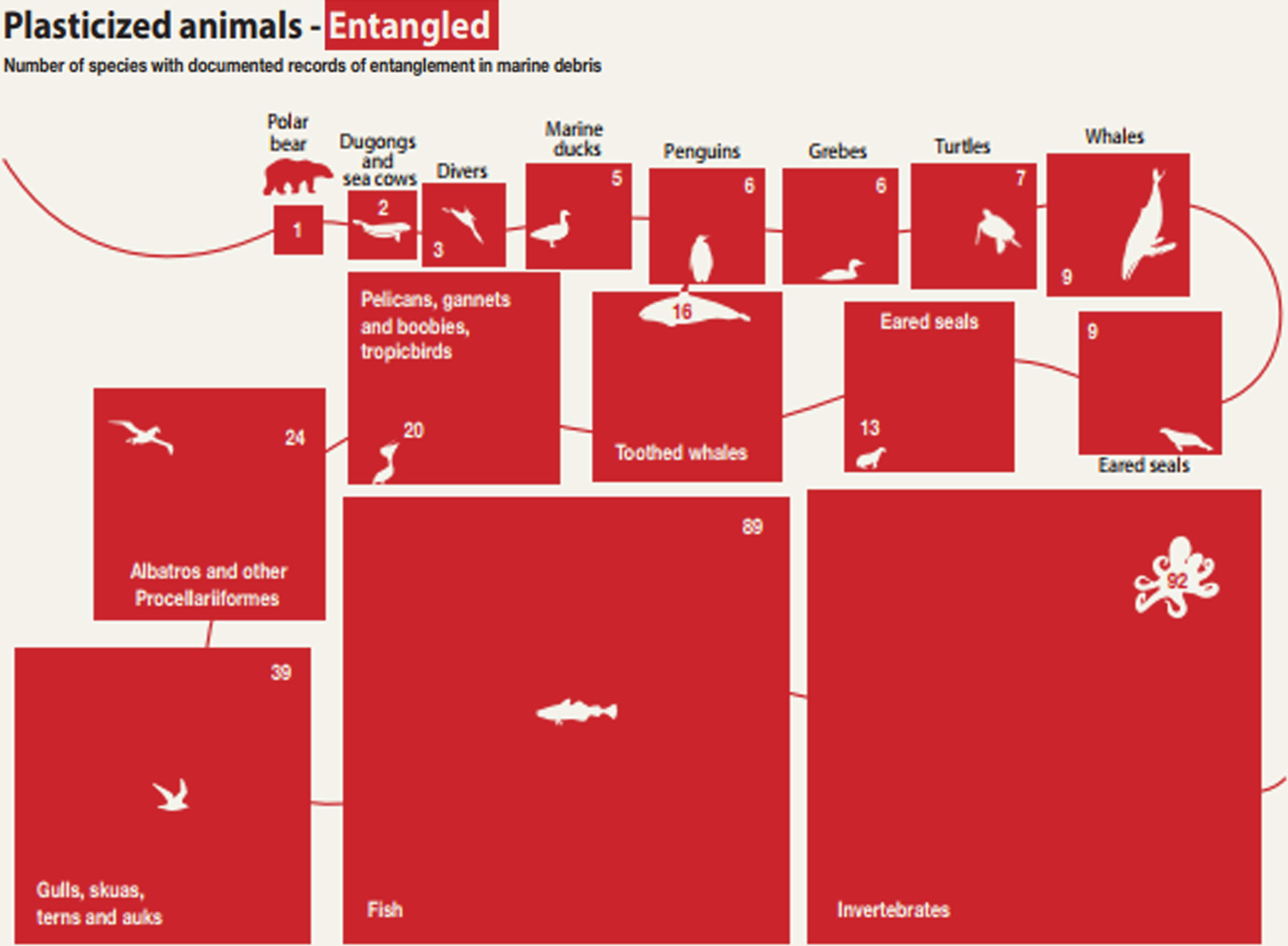
Marine species entangled. (Source: Kühn et al., 2015.)
In addition, a large amount of plastic may be discharged into the marine environment by accident. In 1990, approximately 80,000 Nike brand shoes in containers were lost in a storm in the Pacific Ocean, with at least 1,300 shoes identified as escaping from the container and floating over 2,000 km from Oregon to Queen Charlotte Island (Ebbesmeyer and Ingraham, 1992). The rest probably remained in the container and sank to the bottom of the sea (Ebbesmeyer and Ingraham). In 1992, another accident in the middle of the Pacific Ocean resulted in 29,000 bath toys being dumped into the sea, approximately 400 of which appeared on the coast of southeastern Alaska (Ebbesmeyer and Ingraham, 1994).
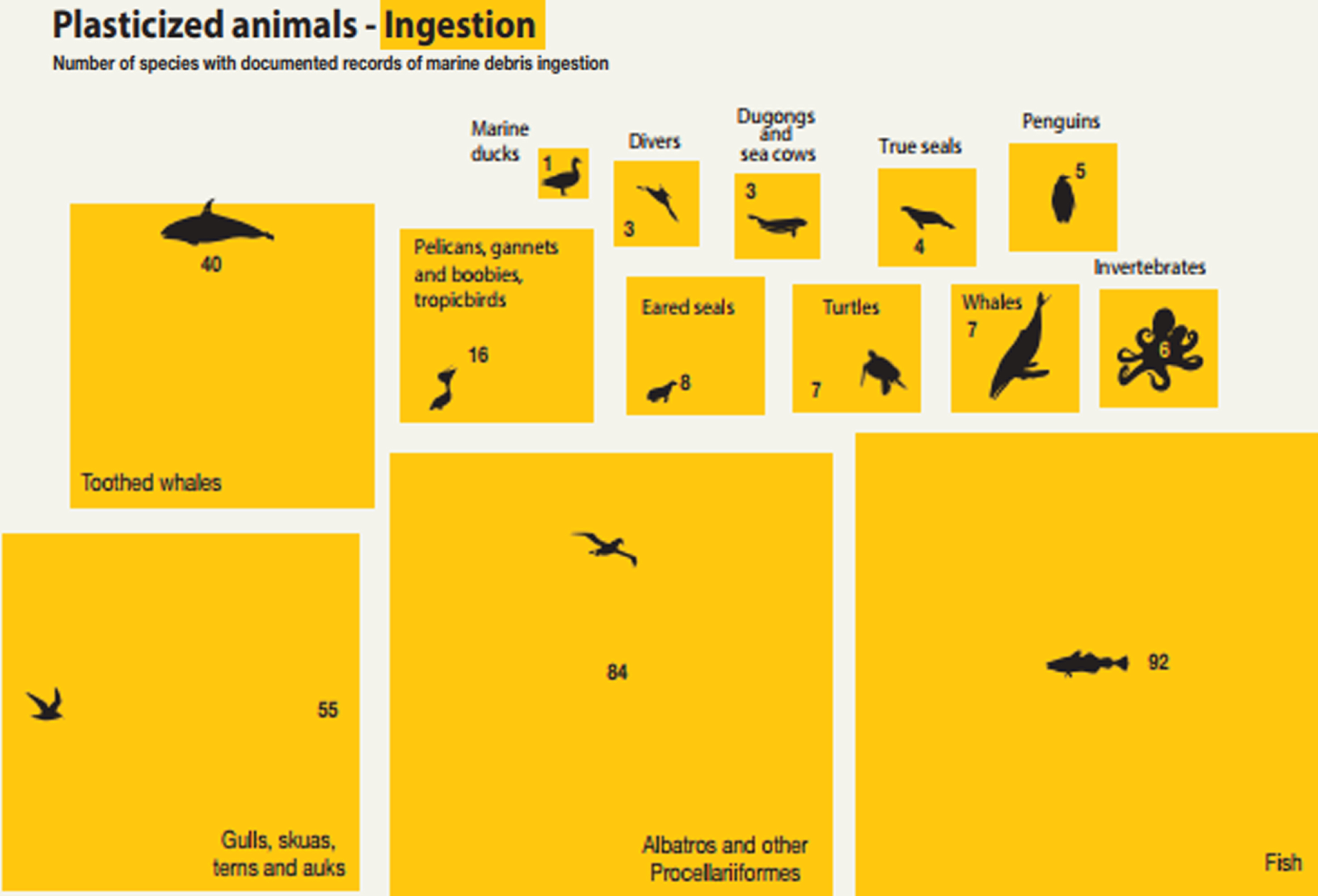
Marine debris ingestion by species. (Source: Kühn et al., 2015.)
To summarise the impacts discussed above, marine plastic waste’s first potential – as a threat to marine life – has been the object of research for many years (Day et al.; Laist, 1987; Ryan, 1990; Quayle; Laist, 1997; Derraik, 2002; Page et al.; Sheavly and Register; Allen et al.; Knowlton et al.; Chen and Liu; Stephanis et al.; Žydelis et al.; Baulch and Perry; Lavers et al.; Kühn et al.). The first victims are marine animals, which, as noted above, get entangled in fishing gear, fishing nets (Kühn et al.), plastic ropes and netting (Gall and Thompson, 2015), balloons, plastic bags, sheets, etc. (Rodríguez et al.). One study reported that 344 species of marine animals were known to have become entangled in plastic debris, including all marine turtle species, 67 percent of seal species, 31 percent of whale species and 25 percent of seabird species (Kühn et al.). Entanglement results in restriction in movement, difficulty in seeking food (Laist, 1997; Allen et al.) and increased vulnerability to predators (Laist, 1997). Efforts to disentangle themselves may cause further injury (Allen et al.) or even total exhaustion followed by death (Laist, 1997). Crabs, octopuses, fish and a number of small marine species also get trapped in marine plastic bags, sheeting and other debris, resulting in injury or starvation (Kühn et al.).
Marine plastic ingestion, discussed above, has also been studied (Laist, 1997; Derraik; Stephanis et al.; Kühn et al.). Townsend’s research indicates that colourful plastics attract the attention of marine animals (Townsend, 2016). According to Kühn et al., 233 species of marine animals have been found with plastics in their stomachs, including all six marine turtle species, 59 percent of whale species, 36 percent of seals, and 40 percent of seabirds. Plastics do not decompose, but rather accumulate in the stomach, reducing the ability of the marine animal to digest food, leading to a loss of appetite, eventually leading to death (Kühn et al.). Plastics can also cause blockages, which damage the intestine and stomach, leading to death (Laist, 1987; Ryan; Derraik; Kühn et al.).
Marine animals can also be affected by the hazardous substances present in plastics (Laist, 1987; Ryan; Sherrington), such as: bisphenol A, polycyclic aromatic hydrocarbons, polychlorinated biphenyls, polybrominated diphenyl and dichlorodiphenyltrichlorothane (Rochman et al., 2013). These toxins not only affect the animal’s stomach directly, but also endanger other organs, such as the liver (Rochman et al.); reduce immunity (Australian Parliament, 2016); cause infertility; and may lead to death (Derraik).
Impacts on marine life are only the beginning of the list of impacts, however. Studies have shown that marine plastics can also have an effect on human health through the food chain (Thompson et al., 2009). Talsness et al. (2009) demonstrated that marine plastics can contribute to cancer, poor reproductive health, imbalanced development in children, and immune dysfunction. Recent research by Gallo et al. (2018) suggests that the consumption of marine products polluted by plastics may cause such phenomena as DNA damage, changes in genes and proteins, cell clotting, loss of cell viability, bone inflammation and lesions in organs. They advised that further research into the impact of plastics, especially micro- and nanoplastic, on endocrine and human health systems should be conducted continuously.
Apart from impacts on marine animals and human health, marine plastics also pose a potential threat to the economy by affecting coastal activities and reducing the economic benefits of fishing in coastal areas (Newman et al.). In response to this, governments have had to allocate significant resources for the clean-up of coastal areas. Sheavly and Register emphasise that many coastal States rely heavily on coastal businesses such as aquaculture, fisheries, tourism, etc., which may suffer losses due to the presence of pollution by marine plastic wastes (Sheavly and Register; Newman et al.). Marine plastics are also responsible for the alteration and even destruction of aquatic habitats, coral reefs and seagrasses (Sheavly and Register). Another issue discussed by Sheavly and Register is the above-mentioned potential of marine plastics to transport marine species from one area to another, where they can endanger the native species.
Finally, marine plastics also cause hazards to ships. For instance, nets, ropes or fishing gear may cause obstruction to ships’ operations, since they will be forced to stop working in order to remove these items when they are entangled or twisted on propellers and rudders, or even carry out repairs where necessary (National Research Council; Newman et al.). Plastic bags are the most common cause of congestion and other problems in water pipe systems (Sheavly and Register).
Marine Plastic in Vietnamese Coastal Areas
Viet Nam is a coastal country with a coastline of 3,260 km, and the sea area is three times larger than the mainland area (Tan, 2017). The pollution of the marine environment in Viet Nam is caused by both land-based and sea-based activities. According to statistics from the Ministry of Natural Resources and Environment, Viet Nam has 3,450 large and small rivers, of which the Mekong is listed amongst the top 20 most polluted rivers in the world, with about 22,800 tons of plastic discharged into the ocean per year (Lebreton et al.). The NGO GreenHub also pointed out that up to 62 percent of the plastic waste found in Vietnamese coastal waters has been discharged into major rivers in Viet Nam such as the Red River Delta, the Mekong Delta, the East, the Southern and Central coast and 71 percent of marine debris is plastics found along the coasts of Viet Nam (Trang Nguyen, 2018).
Amount of plastic waste in the ocean from land-based sources
Amount of plastic waste in the ocean from land-based sources
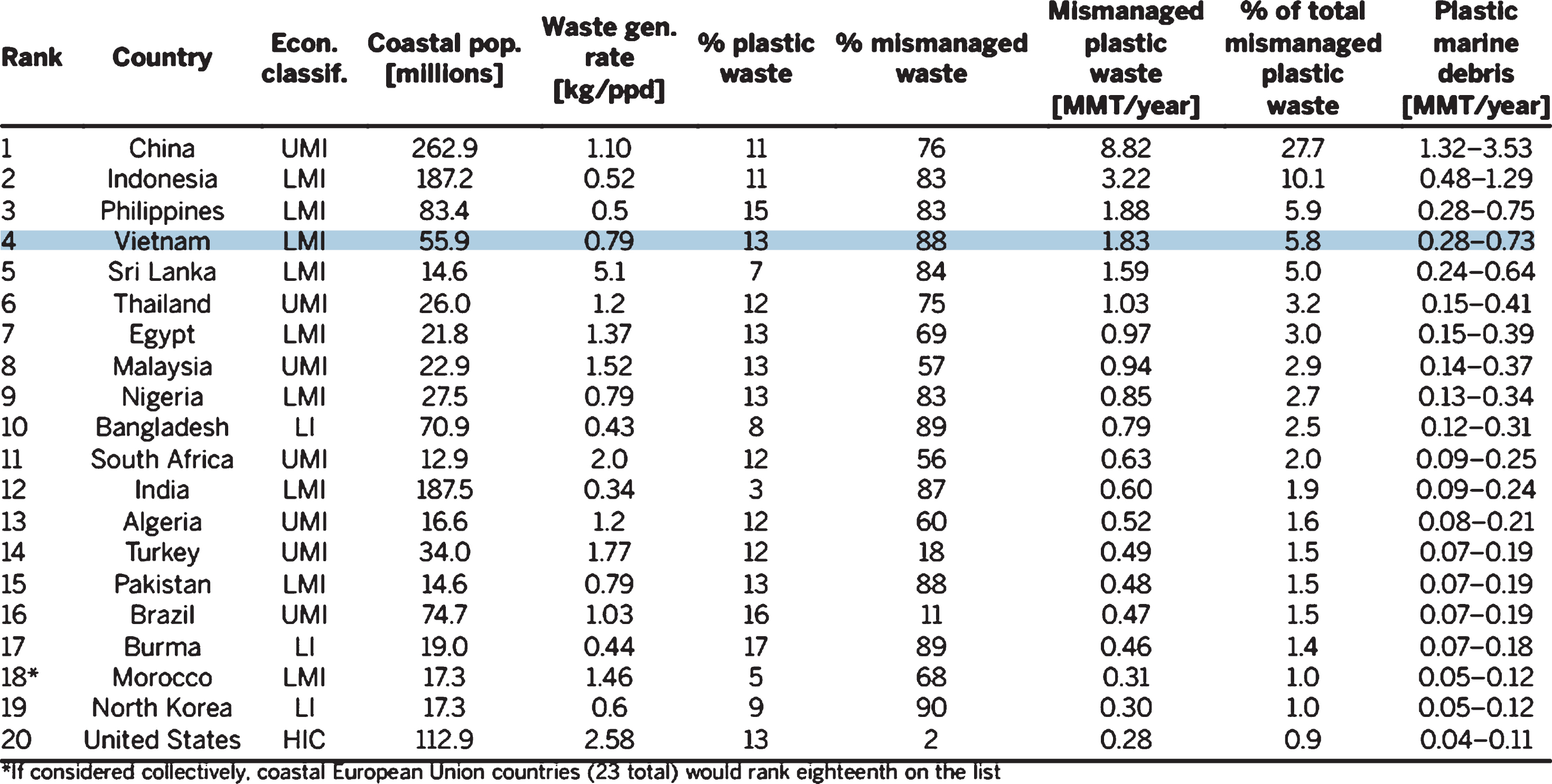
Key: HIC - high income; UMI - upper middle income; LMI - lower middle income; LI - low income; pop. - population; gen. - generation; ppd - person per day; MMT - million metric tons. (Source: Jambeck et al., 2015.)

Predicted top countries mismanaging plastic waste in 2025. (Source: Jambeck et al., 2015.)
The plastic waste generated in Viet Nam is just 3.27 million tons per year, which is a modest amount compared to 38 and 14.5 million tons in the US and Germany, respectively (Jambeck et al.). However, due to its ineffective plastic waste management system, Viet Nam is listed 4th out of the top 20 countries with the worst record for managing their plastic waste, while the US is ranked 20th and Germany is not listed at all (Jambeck et al.).
As depicted in the table above, the average amount of plastic waste dumped into the marine environment is about 0.28–0.73 MMT per year (Jambeck et al.). Jambeck et al. have also predicted that if Viet Nam does not have a proper plastic waste management policy, the country will continue to rank high in the list of mismanaged plastics by 2025.
Meanwhile, the activities of ships at sea, especially merchant ships and fishing vessels, also contribute significantly to the amount of plastic waste in the marine environment (Viet Nam Environment Administration, 2015). According to statistics in the Viet Nam Register, Viet Nam currently is flag State to 1,334 vessels, of which more than 400 are operating on international maritime routes, while the rest operate along the coast. Vietnamese ships are usually old and obsolete, however, and their structures and equipment do not meet the requirements of Annex V of MARPOL 73/78 on the prevention of marine environmental pollution by dumping from ships, especially with regard to plastic wastes (Viet Nam Maritime Administration, 2016). Viet Nam only became an official member of Annex V of MARPOL 73/78 in 2015, so the regulations in this field are still limited and inadequate. Viet Nam is located on an important international maritime route, however, which allows approximately 200 ships to operate on a daily basis (Tan). There is, therefore, a risk of marine pollution caused by plastic waste, as well as other pollutants being discharged from these ships.
Viet Nam also has a fleet of more than 128,000 fishing vessels, of which 24,000 fish on the open sea (Ministry of Agriculture and Rural Development). There are, at present, many shortcomings and deficiencies in the country’s regulation of fishing vessels in regard to the prevention of environmental pollution caused by plastic waste. As a result, like merchant ships, fishing vessels also cause pollution in the sea around Viet Nam, with negative impacts on coral reefs, seagrasses, ecosystems, human health, aquaculture, the fishing industry and tourism (Viet Nam Maritime Administration).
International Laws
From the above analysis, it can be seen that plastic waste pollution is an international problem. In response to this problem, a number of international conventions, bodies and instruments have been developed, with regulations to prevent pollution caused by plastic waste in the marine environment. Primary among these, the United Nations Convention on the Law of the Sea, 1982 (UNCLOS) sets out not only regulations pertaining to national sovereignty, jurisdiction, freedom of navigation, but also regulations for preventing marine pollution and conserving marine species. UNCLOS provides some direct regulations related to preventing pollution of the marine environment with plastic waste. The coastal State has sovereign rights to protect its marine environment by providing regulations on prohibiting the discharge or dumping of wastes including plastic in its territorial waters (Article 19, para. 2(h)) and exclusive economic zone (Article 56, para. l(b)(iii)). Article 117 emphasises that countries must be responsible for preserving marine species even when they exploit these same species (as in fisheries). They are also obligated to cooperate with other countries to carry out this task. Section 5 (Articles 207–212) directly regulates the prevention, mitigation and control of marine pollution from land-based sources, dumping garbage and other wastes at sea and especially pollution caused by ships. Marine pollution by dumping at sea is specifically dealt with by the 1972 Convention on the Prevention of Marine Pollution by Dumping of Wastes and Other Matter (London Convention), which is also overseen by the International Maritime Organization (IMO).
The London Convention mandates control of pollution sources that have a negative impact on the marine environment, harm human health, living resources and marine life when dumped or discharged (Article 1). It also provides lists of prohibited wastes (Annexes I, II and III). In particular, the Convention provides regulations regarding plastics, persistent plastics and other persistent synthetic materials, which may float or last a long time in the marine environment and cause obstacles to fishing, navigation and other legitimate uses of the sea (Annex I, para. 4).
Summary of the discharge provisions of the revised MARPOL 73/78 Annex V
Summary of the discharge provisions of the revised MARPOL 73/78 Annex V
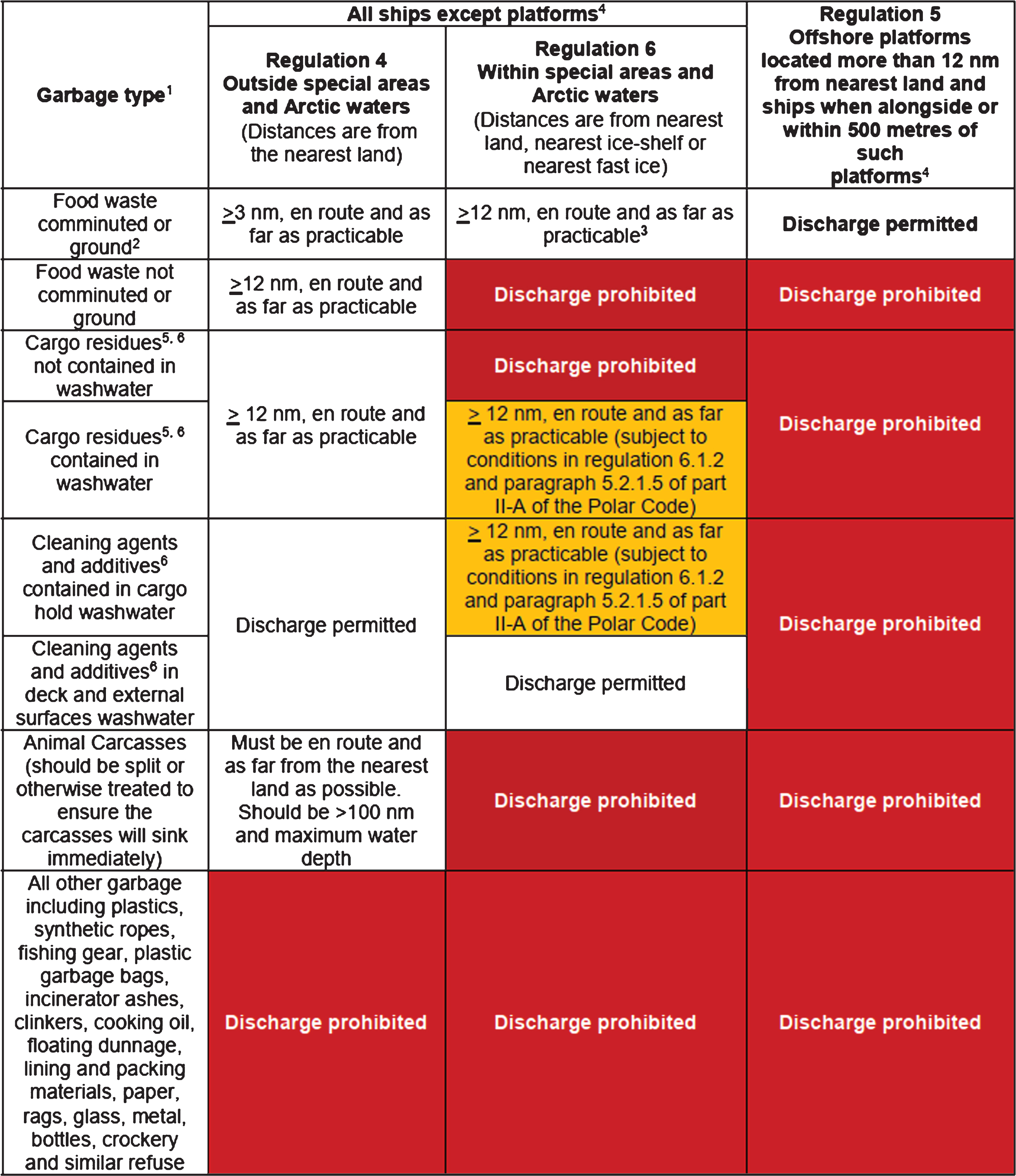
Notes: 1When garbage is mixed with or contaminated by other harmful substances prohibited from discharge or having different discharge requirements, the more stringent requirements shall apply. 2Comminuted or ground food wastes must be able to pass through a screen with mesh no larger than 25 mm. 3The discharge of introduced avian products in the Antarctic area is not permitted unless incinerated, autoclaved or otherwise treated to be made sterile. In polar waters, discharge shall be made as far as practicable from areas of ice concentration exceeding 1/10; in any case food wastes shall not be discharged onto the ice. 4Offshore platforms located 12 nm from nearest land and associated ships include all fixed or floating platforms engaged in exploration or exploitation or associated processing of seabed mineral resources, and all ships alongside or within 500 m of such platforms. 5Cargo residues mean only those cargo residues that cannot be recovered using commonly available methods for unloading. 6These substances must not be harmful to the marine environment. (Source: International Maritime Organization.)
The prevention of dumping is also stipulated in detail and clearly in MARPOL 73/78. The Convention provides direct regulations on the prevention of marine pollution due to various types of pollution from ships: oil (Annex I), noxious liquid substances in bulk (Annex II), harmful substances carried in packaged form (Annex III), discharged sewage (Annex IV), garbage and plastics (Annex V) and air pollution (Annex VI). Annex V MARPOL 73/78 came into force on 31 December 1988 and is an international legal instrument to control the discharge of waste from ships into the marine environment.
Regulation 5 of Annex V specifically addresses garbage generally, with special provisions on plastic waste. The Guidelines for the Implementation of MARPOL Annex V (IMO, 2017) define plastic waste as a separately considered sub-group of Annex V’s broader definition of garbage (which generally includes “all kinds of ... waste ... generated during the normal operation of the ship”): “Plastics ... used for a variety of marine purposes including: packaging, ships construction, disposable eating utensils, bags, sheeting, floats, fishing nets, fishing lines, rope, line, and many other manufactured plastics items”. According to MARPOL Annex V, Regulation 5, it is prohibited to discharge plastic waste into the marine environment no matter where that ship is operating in the ocean.
At this point, it is useful to distinguish between the regulations on discharge in MARPOL Annex V and those in the original London Convention, which applies to land-based waste dumped at sea. By contrast, MARPOL Annex V provides for the prevention of environmental pollution caused by dumping and discharge of wastes generated during ship operation.
MARPOL Annex V is applicable to all types of ships (Regulation 2). Vessels over 100 GT must have a garbage management plan and those over 400 GT must have a garbage record book. Any action related to discharging or burning garbage on the ship must be fully and truthfully recorded and signed by the officer in charge (Regulation 9(3)). The garbage record book must be preserved and carried on board to present when there is a request by a competent authority (Regulation 9(3)). However, as Chen and Liu point out, most of the world’s fishing vessels are under 400 GT, and therefore this gap in regulation of Annex V provides an opportunity for ships to discharge waste, especially plastic waste, into the marine environment.
To date, there has been little effort or progress on waste control, particularly plastic waste management in the marine and coastal environment in Viet Nam (Thang Nguyen, 2017). The Law on Natural Resources and Environment of Sea and Islands was adopted in 2015 (Law No. 82/2015/QH13). In this Law, there is a chapter with regulations on control of marine pollution, oil-spill response, toxic chemicals and dumping at sea (Chapter VI). In accordance with this Law, all sources of pollution, both land-based and marine-based, must be controlled (Articles 45 and 46). Wastes and solid waste from vessels operating on the sea must be collected, classified, managed and discharged to receiving facilities at the port (Article 45). Meanwhile, the source from the mainland must be treated to meet the national environmental technical standards before being discharged into the environment (Article 46). However, plastic waste is not mentioned in this Law.
There are no provisions in other national legal instruments addressing the prevention of marine pollution due to discharges of waste, especially plastic waste, from ships – not even in the Law on Environmental Protection (Law No. 55/2014/QH13), the Maritime Code 2015 (Law No. 95/2015/QH13) or Viet Nam’s adoption of a national Law of the Sea (Law No. 18/2012/QH13). For example, Article 50(1) of the Law on Environmental Protection provides regulations on collection, control, classification, management and disposal of land-based waste but the phrase “plastic waste” is not used.
The Ministry of Science and Technology has adopted regulations detailing the rules for the classification and construction of small-sized fishing vessels (TCVN 7111 : 2002) and for the classification and construction of fishing ships with a length of over 20m (TCVN 6718 : 2000). These rules include regulations on the ship’s pollution prevention system for the marine environment; however, they only apply to the prevention of pollution from oil or oil mixtures without any regulation of plastic waste, fishing nets, fishing gear, etc.
Viet Nam has also issued regulations for foreign fishing vessels operating in the waters of Viet Nam (Decree No. 32/2010/ND-CP)), but this regulation’s relevant provisions use only the common phrase “prohibit environmental pollution” (Article 5). Also appearing in the national Law on Fisheries (Law No. 18/2017/QH14), the similar phrase “environmental protection” is only used to address the passage of fishing vessels into and out of Vietnamese ports (Article 83), and does not allude to any specific regulations for plastic wastes.
Clearly, Vietnamese law on plastic waste is insufficient and limited. As such, it cannot at present be a factor in efforts to curtail the large amount of plastic waste in Vietnamese waters. Complete regulation on the collection, classification, management and disposal of plastic waste is a necessary and urgent task in the current period.
Conclusions and Recommendations
There have been many research projects on the sources, distribution and impact of plastics on the marine environment, showing that plastic waste once discharged into the environment is not only harmful to marine organisms, marine animals, coral reefs and seagrasses, destroying habitats and affecting socio-economic conditions, but also adversely affects human health. Inevitably, plastic will continue to be found everywhere because of its utility – it has become indispensable in our lives. The increasing presence of waste, especially plastic waste, in the marine environment is due to non-compliance with regulations on plastic waste management, which in turn arises from a lack of understanding of the potential harm that plastic waste can cause. Therefore, the most effective way to prevent an increase in plastic waste in the sea is to have a strict regulation on management and treatment of plastic waste. In the maritime field, MARPOL Annex V was adopted to prevent marine pollution from ships. It provides important regulations that can help minimise the discharge of plastic waste. Viet Nam only became a member of MARPOL Annex V in 2014 (Ministry of Foreign Affairs, 2015), and must work to implement it quickly.
The provisions mentioned in Viet Nam’s Maritime Code 2015, Article 128 are inadequate for dealing with the issue of waste from ships. Compared to the regulations in MARPOL Annex V, Maritime Code 2015 offers only common regulations, requiring, for example, that “newly built seagoing vessels must have equipment to protect the environment” and “seaports must have plans and measures to receive and treat waste from ships”. It is clear that this provision is not sufficient to protect the marine environment from pollution due to plastic waste, as well as other types of waste from ships. The 2015 Law on Natural Resources and Environment of Sea and Islands includes a few provisions in Article 45, which state, for example, that “hazardous waste from marine activities must be collected, classified, stored, transported and disposed of in accordance with the law on environmental protection” and “solid waste generated from ships must be strictly managed”. These provisions have still not been supported through the adoption of detailed regulations on waste and plastic waste. It seems that plastic waste has not been given proper attention, so it is essential to amend and supplement regulations on plastic waste in these legal documents.
To implement MARPOL Annex V as well as other regulations of marine pollution caused by ships, Viet Nam issued a Circular No. 07/2018/TT-BGTVT, which addresses maritime safety inspection, maritime security, maritime labour and specifically calls for measures to prevent environmental pollution caused by foreign ships operating in seaport waters and waters under the jurisdiction of Viet Nam (Ministry of Transport, 2018). The Circular applies all the provisions of the international conventions that Viet Nam has joined to enforce the right to inspect and control foreign vessels on marine environmental protection, but it does not apply to Vietnamese ships (Article 2). This gap gives a large number of Vietnamese vessels operating on the domestic routes opportunities to cause pollution by discharging not only garbage, including plastic waste, but also other sources of pollution. In particular, Vietnamese law should strictly require ships under 400 GT and fishing vessels to collect and manage plastic waste.
Viet Nam also needs to revise its National Technical Regulation on Marine Pollution Prevention Systems of Ships (Ministry of Transport, 2016). The standard specifies a series of regulations on ship structure and equipment to prevent marine pollution due to oil, waste water, and toxic substances and ships’ emissions. However, there is no regulation on structure and equipment on the ships that meet the requirements of Annex V on preventing marine pollution discharge from ships. There is no regulation requiring placards, plastic waste management plans or plastic waste record books, and no general regulation prohibits discharging plastic waste into the marine environment.
It is, therefore, essential to develop new regulations, including expanding the types of ships to which the regulations apply. Such regulations should specify the range and types of waste allowed to be discharged, and those that are not allowed under any circumstances; the use of placards; waste management systems; record books; and the establishment of receiving facilities at seaports. These detailed, specific and strict regulations could minimise or perhaps even prevent the disposal of plastic waste at sea.
Environmental pollution is caused mainly by human beings, so raising people’s awareness of potential harms that plastic waste causes to the environment and human health is also indispensable. In the maritime field, the International Convention on Standards of Training, Certification and Watchkeeping for Seafarers is an important convention that requires maritime officers to gain knowledge on the prevention of polluting the marine environment (IMO, 1978). In 2011, IMO developed a course on “Marine Environmental Awareness”, intended to give trainees knowledge of the importance and diversity of the marine environment, as well as an understanding of the impacts of shipping on the environment, and of their personal responsibility to prevent pollution. On-going work is focusing on the production of “unmanned ships”, which can be operated without people on board, and which would thus not generate certain kinds of waste, reducing the phenomenon of waste discharge into the marine environment.
According to the statistical data and model reported by Jambeck et al., countries in Southeast Asia such as Viet Nam, Indonesia, Philippines and Thailand are countries that introduce large amounts of plastic waste into the marine environment. To address these concerns, a conference was held in November 2017, in Phuket, Thailand with over 200 representatives from ASEAN Member States, dialogue and development partners, international organisations, the private sector, researchers and academia, civil society, and local communities, for information exchange, knowledge sharing, and constructive discussion on the challenges and opportunities in addressing the issue of marine debris pollution in the ASEAN region (ASEAN Cooperation on Environment, 2017). The main purpose of the conference was to review the status of marine debris pollution in the ASEAN region, exchange information on existing national policies, identify gaps and challenges, discuss the policy and management solutions, and innovative policy and technology solutions. Therefore, cooperation and exchange of experiences with other countries in the region is also a way for Viet Nam to realise its shortcomings in the management and treatment of plastic waste, in order to improve the regulations on plastic waste gradually.
References
Vietnamese Legislation
National Laws and Decrees
Law No. 18/2017/QH14. Law on Fisheries [in Vietnamese]. See vanban.chinhphu.vn. Law No. 82/2015/QH13. Law on Natural Resources and Environment of Sea and Islands. Available at https://www.economica.vn/Content/files/LAW%26 REG/82_2015_QH13 Law on natural resources and environment of sea and island.pdf. Law No. 95/2015/QH13. Viet Nam Maritime Code [in Vietnamese]. See https://thuvienphapluat.vn. Law No. 55/2014/QH13. Law on Environmental Protection. Available at http://ljip.vn/web/images/stories/enviroment-documents/Law%20on%20Environmental%20Protection%20No%2055.2014.QH13.pdf Law No. 18/2012/QH13. Viet Nam Law of the Sea. Available at https://vietnamlawmagazine.vn/the-2012-law-of-the-sea-of-vietnam-4904.html. Decree No. 32/2010/ND-CP on the Management of Fishery Activities of Foreign Ships in Vietnam’s Sea Areas. Available at https://www.ecolex.org/details/legislation/decree-no-322010nd-cp-on-the-management-of-fishery-activities-of-foreign-ships-in-viet-nams-sea-areas-lex-faoc096515/.
Ministry of Science and Technology
TCVN 7111:2002. Rules for the classification and construction of small fishing vessels [in Vietnamese]. See https://vanbanphapluat.co TCVN 6718:2000. Rules for the Classification and Construction of Fishing Ships (ships of 20 metres and over in length) [in Vietnamese]. See https://vanbanphapluat.co.
Ministry of Foreign Affairs
Notice No. 05/2015/TB-LPQT (2015). The Effect of International Treaties [in Vietnamese]. See https://thukyluat.vn.
Ministry of Transport
Circular No.07/2018/TT-BGTVT. Providing for Ships’ Inspection [in Vietnamese]. See https://thuvienphapluat.vn. QCVN 26:2016/BGTVT. National Technical Regulation on Marine Pollution Prevention Systems of Ships [in Vietnamese]. See https://vanbanphapluat.co.
International Instruments
International Maritime Organization (IMO). 1972. The 1972 Convention on the Prevention of Marine Pollution by Dumping of Wastes and Other Matter (London Convention). See http://www.imo.org/en/OurWork/Environment/LCLP/Pages/default.aspx
IMO. International Convention for the Prevention of Pollution from Ships (MARPOL 73/78) and the Protocol of 1978. See http://www.imo.org/en/About/Conventions/ListOfConventions/Pages/International-Convention-for-the-Prevention-of-Pollution-from-Ships-(MARPOL).aspx
IMO. 1978. International Convention on Standards of Training, Certification and Watchkeeping for Seafarers (STCW Convention). See http://www.imo.org/en/About/Conventions/ListOfConventions/Pages/International-Convention-on-Standards-of-Training,-Certification-and-Watchkeeping-for-Seafarers-(STCW).aspx
IMO. 1988. MARPOL Annex V. See http://www.imo.org/en/OurWork/Environment/PollutionPrevention/Garbage/Pages/Default.aspx
IMO. 2017. The Guidelines for the Implementation of MARPOL Annex V (MEPC). Available at http://www.imo.org/en/KnowledgeCentre/IndexofIMOResolutions/Marine-Environment-Protection-Committee-(MEPC)/Documents/MEPC.295(71).pdf
United Nations Convention on the Law of the Sea, 10 December 1982, 1833 U.N.T.S. 397. Available at https://www.un.org/depts/los/convention_agreements/texts/unclos/unclos_e.pdf.